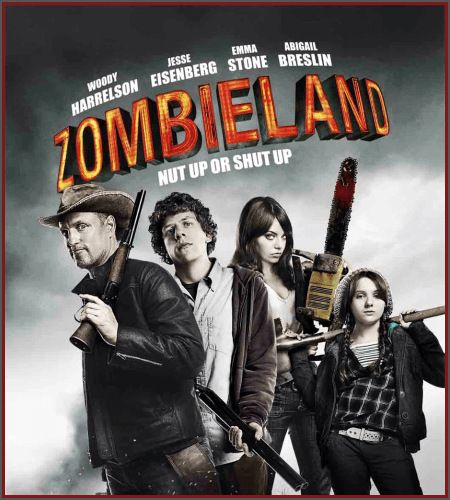
Review: Zombieland (directed by Ruben Fleischer)


Zombies have either oversaturated pop-culture and media or there’s just not been many good entertainment examples with zombies in it. Most zombies films usually end up taking the direct-to-video route or, even worse, the direct-to-cable path. The very good films about zombies are very limited in numbers. For every Shaun of the Dead we get truly awful examples like Zombie Wars, Automaton Transfusion and the Day of the Dead remake. I blame this flood of bad zombie films on what makes the zombie such an interesting monster for filmmakers to use: they’re a blank slate. The zombie as envisioned by Romero are quite young in comparison to other monsters of film. They do not have the culturual and mythical history of vampires and werewolves.

Zombie films are easy to make thus we get every amateur filmmaker thinking they’re the next Romero, pick up a digital camera and attempt to make the next zombie c!assic. What we get instead are dregs which give the genre a bad name. It is a breath of fresh air that Ruben Fleischer (using a screenplay penned by Rhett Reese and Paul Wernick) has made a zombie film which deserves to be seen in a theater and not on video or cable. Zombieland is a fun and hilarious romp which succeeds in delivering what it’s preceding hype had promised and ends up being a very good film despite first-time jitters from a first-time filmmaker.

Zombieland makes no bones about what it’s about right from the get-go. This is not a film where the audience watches the world fight for its existence against the growing undead. No, this film drops the audience to a world that’s beyond gone to hell and one that now belongs to the zombies which explains the title. We’re quickly introduced to the rules which now governs this new world. With narration from the film’s first lead (played by Jesse Eisenberg) we learn the so-called “rules” of how to survive zombieland. There’s a funny and inventive use of on-screen reminders of these rules throughout the film which looks similar to the captions Youtube uploaders add to their videos. The film quickly introduces Columbus’ (the film’s narrator) soon-to-be partner-in-survival. Where Columbus is quite obsessive-compulsive and more than just a touch cowardly Tallahassee (in a hilarious turn by Woody Harrelson) is the reckless, A-type personality and more than the opposite of Columbus. These two unlikely pair soon meet up with a pair of sisters who also happens to be veteran grifters who, on more than one occassion, give our hapless duo trouble in their journey through a devastated landscape.

The film has been called a zombie comedy and will be compared to the successful British zombie-comedy, Shaun of the Dead. While some are not wrong to compare Fleischer’s film to Wright’s the comparison really ends at both being zombie-comedies. While Wright’s film was a zombie film with comedic aspects mixed in it was first and foremost a horror film. Zombieland is the opposite and the way it starts, unfolds and finishes it’s really a comedy road trip like the National Lampoon Vacation films but this time with zombies instead of in-bred relatives, clueless motorists and tourist-traps. The film is quite funny froom beginning to end with the funniest and most hilarious being a surprise cameo of a well-known comedic actor playing himself right around the beginning of the second-half. This sequence got the most laughs and cleverly played up this actor’s particular quirks. Most of the comedy and gags in the film comes courtesy of the aforementioned rules and the interaction between the characters of Columbus, Tallahassee and the two con sisters, Wichita and Little Rock (they use the city of their origins for names throughout the film).

While the film’s story is quite basic what Fleischer and his small cast were able to do with them they did well. There really wasn’t a false note in any of the actors’ performances. Eisenberg and Harrelson played off each other well right from the time the two meet. Emma Stone as the punk-rock older sister Wichita to the younger Little Rock played by wunderkind child actor Abigail Breslin (girl has a future beyond her child role past). The road-trip of a story even has its own little quirks from Tallahassee’s irreverent quest for the final stock of Twinkies to the sisters’ goal of reaching the West Coast and an amusement park called Pacific Playland rumored to be free of the zombie menace.

Zombieland is not without its flaws. Some of the editing in the climacting reel of the film was to uneven at times. There were instances when the film was close to being bogged down but fortunately it never came to that end. The violence and gore in the film wasn’t as high as one would think for a film about zombies that have literally devoured the world. One could almost sense that the filmmakers were hedging their bet when it came to the grue and violence. It seemed as if they were being overly cautious about trying to get an R-rating instead of an NC-17. The film barely makes it past the PG-13 territory. While these flaws could be attributed to jitters and a somewhat unsure first-time director in the overall execution of the film all involved did very well in sticking to the plan.

Even the look of the film makes it seem more big-budgeted than it really was (rumored to be between 9-10 million). Most filmmakers with years to decades of experience make a mess of trying to shot a film fully inn HD using HD-cameras, but Fleischer and his cinematographer Michael Bonvillain acquit themselves in their use of Sony’s Gensis HD camera. The film looks crisp and clear, but without the glaring rough edges HD sometimes gives a film. The use of the Genesis camera makes possible the well-done intro sequence done in slo-mo to the tune of Metallica’s “For Whom the Bell Tolls”.

Zombieland is a good start to what could be a very promising career for one Ruben Fleischer. There’s skill in his work on this film despite some nitpicks that could be seen as flaws. The film in the end was very funny and fun to watch from start to end. While to story was very simplified (this probably helped in minimizing the pitfalls Fleischer had to avoid in his first major film production) with characters that was fleshed out just enough for the audience to connect with the final product delivered on the hypse which preceded this film. Zombie film fans would get a huge laugh and kick out of this very quick under-90 minute production while even those who are not into zombies much would still find themselves laughing and being entertained. Zombieland may not be scary in comparison to some of the great zombie films of past but it more than makes up for that with energy, life and a genius of a cameo scene that would be the talk of the town.

Queen and Mega-Man Together At Last


I think every gamer worth his console and controller knows that old-school awesome includes anything Mega-Man. People who love their rock knows that one must give proper homage to the Mercury, May, Deacon and Taylor…more known as Queen. What would be more awesome than either two? I’m glad you’ve been asking that question. There’s only one good and proper answer: Mega-Man and Queen together.

What better way for the two to come together than what you shall witness below…prepare to GRIN.

10 Best Films of 2009


While some have called 2009 as not being so great in terms of quality films, there have been others who think the year was a very good year for films from start to finish. Not all the best films of 2009 came out during the so-called “awards season” from October thru December. Some of the worst films, in my opinion, were released very late in the year and clearly done so to try and force its way into award contention. While the year of 2009 saw some very good films come out early in the year and, to my surprise, even during the popcorn and brainless season of the summer blockbusters.

My list consists of the 10 films I saw in 2009 which I believe to be the best of all them. Some people will probably agree with me on and some won’t. Some of my picks may have been little seen outside of independent arthouse theaters or film festivals but it doesn’t diminish just how much I think it deserves inclusion in a “best of” list. In the end, I thought these films doesn’t just celebrate what’s great about films but also celebrating those filmmakers who show that when given room to breathe and do things their way magic can still happen.

10. Bad Lieutenant: Port of Call – New Orleans (dir. Werner Herzog)

9. The Messenger (dir. Oren Moverman)

8. Collapse (dir. Chris Smith)

7. Moon (dir. Duncan Jones)

6. Der Baader Meinhof Komplex (dir. Uli Edel)

5. Avatar (dir. James Cameron)

4. Up In The Air (dir. Jason Reitman)

3. District 9 (dir. Neill Blomkamp)

2. Inglourious Basterds (dir. Quentin Tarantino

1. The Hurt Locker (dir. Kathryn Bigelow)

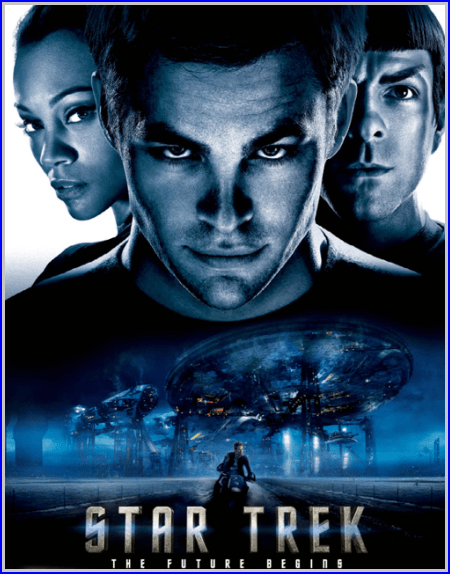
Review: Star Trek (directed by J.J. Abrams)


2009 marks the return of Star Trek franchise to the big-screen. It has been seven years since the last entry in the series with Star Trek Nemesis. The critically-panned and box-office failure of that tenth entry in the film series marked a major low-point for the franchise. The franchise was dead in space with no one seeming to be able to figure out a way to bring the franchise back to big-screen prominence. So, it comes as a surprise that it’s eventual savior happens to be a non-fan of the franchise. J.J. Abrams has confessed to not being a major fan of the series, but wanted to see how he could bring back the franchise to a high bar of standard it had set for itself through the decades of its existence. This latest and eleventh entry in the Star Trek film series marks a drastic improvement over the past decade of film entries in the series. Abrams has crafted an enjoyable and fast-paced film which includes equal amounts of details fans of the franchise love, but also creating a film which would appeal to non-fans as well.

To start off, I’m what one might call a Trekker who has pored over all the details of the franchise. Backstory, character bios and details of the expanded universe is bread-and-butter. When first announced that Abrams would be in charge of trying to bring the franchise back to prominence I was quite skeptical. I’m not the biggest fan and admirer of J.J. Abrams and his work. It didn’t help that his idea to bring in more non-fans to the fold smacked of pandering. I will say that I will be the first to eat my words as Abrams’ Star Trek has been the best entry in the film series for the last 15 or so years. It’s a fresh new take on Gene Roddenberry’s universe which has spanned over four decades starting with the original TV series and continuing with the many novels which continue to churn out year in and year out.

The casting of a relatively unknown actors by Abrams and his crew was a bold move as their performances of iconic characters beloved by tens, if not hundreds, of millions of fans could sink the film and put the final nail in the film series’ efforts to stay up on the big-screen. Fortunately, it is this cast of unknowns who make this film so fun to watch. Chris Pine as James T. Kirk does a fine job of not apeing and micmicking the Kirk of Shatner but instead makes the character his own while at the same time bringing enough of the self-confidence and charm Shatner brought to the role. As good as Pine’s performance as Kirk was the film really belongs to Zachary Quinto’s portrayal of a more conflicted and darker Spock. Where Leonard Nimoy’s work as Spock was more of a mature character whose conflicting dual-nature as an emotional human and logical Vulcan would resurface here and there throughout the decades Quinto’s Spock has that conflicted nature simmering right on the surface. We get a much darker Spock who hasn’t fully accepted his two warring sides. One might even say that this Spock was a much darker portrayal than what had been previously done of the character. Quinto’s performance was a star-making one and should make fans relieved to know that an iconic character was in good hands.

The rest of the ensemble cast do a commendable job in their roles with other stand-out works by Karl Urban as Bones McCoy and Bruce Greenwood as Capt. Pike. Urban, especially, does a remarkable job of channeling DeForrest Kelley’s McCoy without seeming to copy the man. Like Quinto’s Spock, Urban’s McCoy should resonate with fans and non-fans alike. Simon Pegg as Scotty, John Cho as Sulu, Zoe Saldana as Uhura and Anton Yelchin as Chekov all do good work but are not on the screen enough to show what they could really do. With the seeming success of this film I’m sure they’ll have more chance to grab a hold of their characters and make them their own. If there’s a weak link to the cast it would be Eric Bana’s Romulan Nero. The character of Nero wasn’t fully realized beyond the maddened, revenge-fuelled archetype for Bana to truly work his skills on. There’s just not enough in the character to make him a great Star Trek villain. There’s hints of Khan in the role but also hints of weaker villains in the franchise’s history. If the writers had done a better job fully realizing the character for Bana I think Nero would be spoken of on the same level as Khan, but he won’t be and that brings up the other weak link in this film: the writing.

I say the writing is a weak link not because of the dialogue spoken but of the the overall plot of the story. There’s a simple enough plot to hold the film together but writers Orci and Kurtzman tried to create an epic storyline which would keep both loyal fans and new people to the franchise happy. By doing this they oversimplified the story where details were left out that created huge plot holes in the story. Also, the way Kirk’s character meets up with each member of what would become his core group relied too much on timely coincidences. They tried to make each meeting to be a memorable one which ended up with action-sequences that could’ve been left out but added to make the next meeting interesting. Like another origins film of the summer, X-Men Origins: Wolverine, both Orci and Kurtzman tried to lump too much origin details into this prequel. The finished screenplay could easily have used one or two more doctoring to make it a much more leaner and streamlined story.

The good thing was that as simple and pedestrian the story ended up being it did create a way for Abrams to connect both the original stories created by previous films and tv series to this new film which now has given the franchise a new path to move forward on without forgetting the canon established in the previous four decades. Star Trek by Abrams could be compared closely to the James Bond reboot in Casino Royale and the Batman reboot with Batman Begins. All three films share similarities in that all three honors the canon of the expanded universes of their respective franchise but brings enough new ideas and changes to re-imagine the franchises to a new generation of fans. Like those two other films Star Trek has laid the foundation for new stories to be told and not having to worry about continuity problems. Now any future films in the franchise have carte blanche to boldy go where the series hasn’t gone before.

In the end, J.J. Abrams’ Star Trek turned out to be better than expected as he has created a film that is a fun, action-filled ride with a wonderful performance by the ensemble cast of unknowns. Even a weak villain and premise fail to damper and bring down the film. While it is not a great entry to the series it does bring back the franchise to a resounding return to the big-screen that should please most of its loyal fans while appealing to the casual audience. I, for one, cannot wait to see what Abrams has in store for the forseeable future of the crew of the U.S.S. Enterprise.

10 Favorite Comic Books of the Past Decade


The first decade of the new millenium found me in a weird place when it came to one of my big hobbies after high school. From 1989 all the way through the 90’s I was a major comic book reader and collector. I would say that I wouldn’t deny the charge that I might have helped the so-called “comic book speculator era” rise to the forefront of the hobby. Artists like Jim Lee, Whilce Portacio, Todd McFarlane were like rock stars in that era and their titles would fly off the shelves the moment they came out. I and others would buy multiple copies, carefully board and bagged them (but also read them) and wait for their price to go up.

Some titles did go up in price and were sold for a profit thus feeding the notion that I could make a lot of money off of these comic books. I was one of the early adopters of the independent titles which really fed the speculator market. First there was buying up all the early Evil Ernie issues before most of the public got wind of just how awesome (and limited their printing were) then doing the same for William Tucci’s Shi title which I must say really defined a speculator’s dream title. It had buzz to it due to the bad girl art, the story was not bad and had an exotic taste to it and, best of all, the printing on the title character’s first appearance was practically non-existent.

By the time the speculator’s market finally burst it’s bubble and dragged the comic book industry down with it I was pretty much burnt-out on comic books. I still read them and bought the titles whcih caught my eye, but the days of buying every issue of most every title from Marvel/DC/Image were done with. I even stopped buying and reading them in the beginning of the 2000’s. The industry was in a creative rut in the early years of the new decade. While superhero titles were floundering and publishers (small and medium ones) were declaring bankruptcy and selling off properties to the highest bidder a curious thing happened. I got back into comic books and it wasn’t the hero titles which drew me back in but the mature, independent titles from Vertigo, Dark Horse, Image and small-indie publishers.

This was a very good thing since I missed having the books in my hands. I wasn’t buying them now to collect but to read. I still handled them with kid gloves but I wasn’t worried about whether they would turn me a profit anymore. So, for most of the decade I was an indie-fool who pretty much avoided most the titles from Marvel/DC. While I still read some titles from the two main comic book houses it wasn’t on the same level pre-2000’s.

Below is the list of the 10 titles that were my favorite of the decade. Some were considered the best of the decade and some just my favorite because they spoke to me as a reader. This time they will be in order of importance unlike my previous Best/Fave lists.

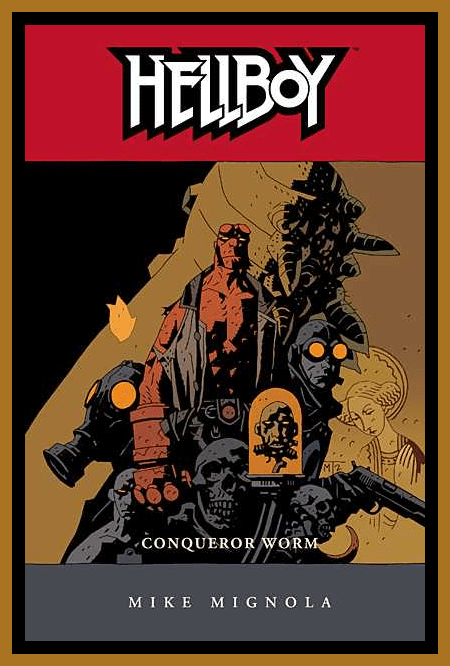
10. Hellboy by Mike Mignola (Dark Horse Comics)

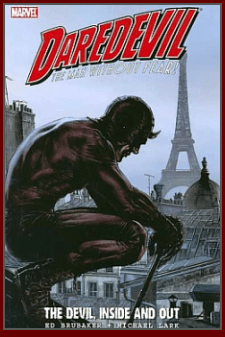
9. Daredevil by Brian Michael Bendis/Ed Brubaker (Marvel Comics)

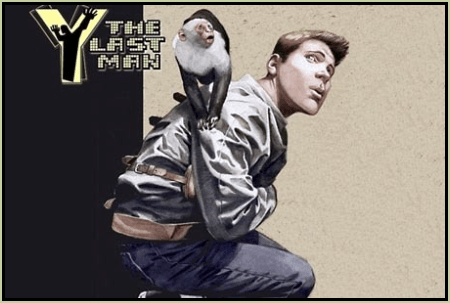
8. Y: The Last Man by Brian K. Vaughn (Vertigo)

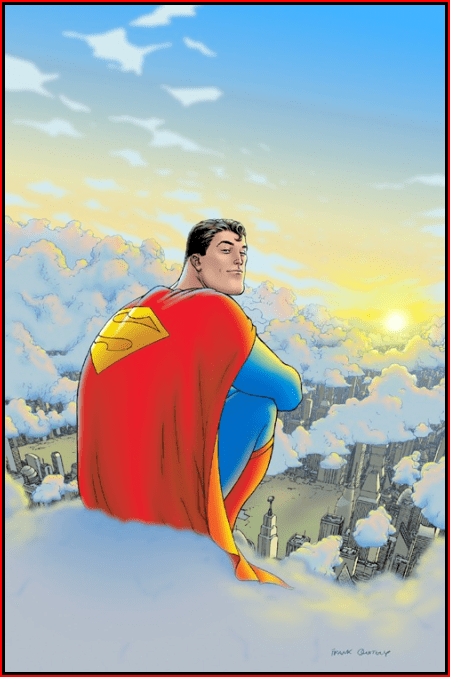
7. All-Star Superman by Grant Morrison (DC Comics)

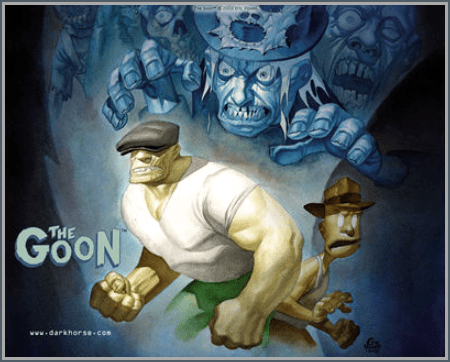
6. The Goon by Eric Powell (Dark Horse Comics)

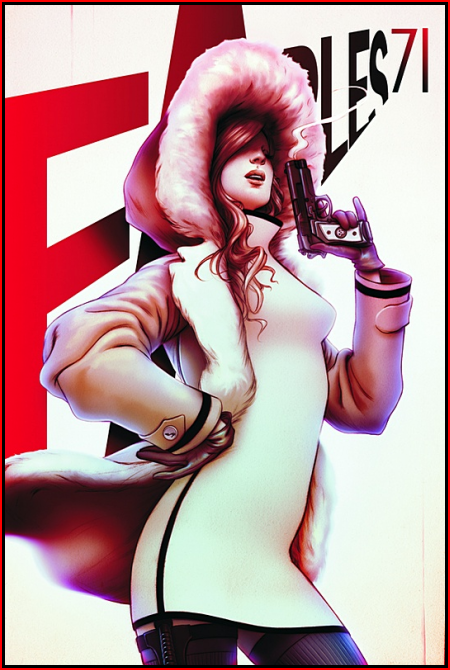
5. Fables by Bill Willingham (Vertigo)

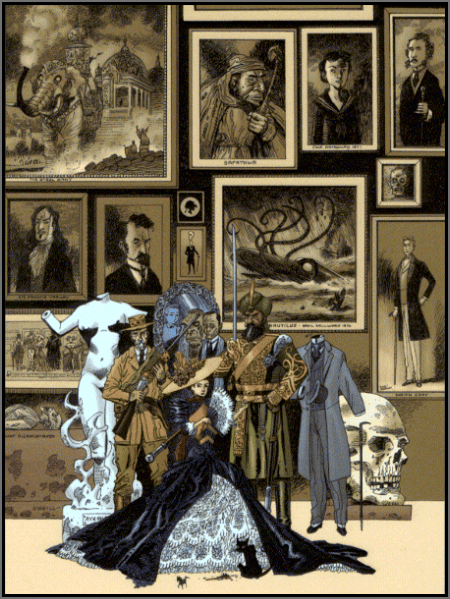
4. The League of Extraordinary Gentlemen by Alan Moore (America’s Best Comics)

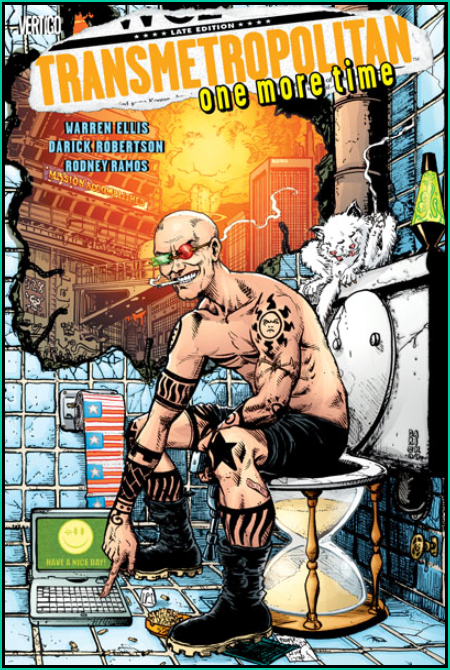
3. Transmetropolitan by Warren Ellis (Vertigo)

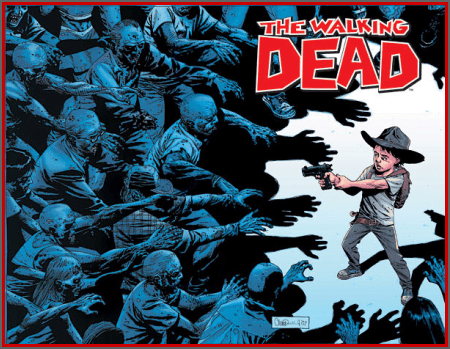
2. The Walking Dead by Robert Kirkman (Image Comics)

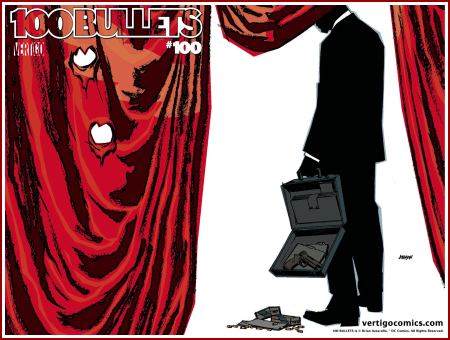
1. 100 Bullets by Brian Azzarello (Vertigo)


Dragon Age: Origins: Awakening Video Game, Expansion Debut Trailer HD


It didn’t take BioWare too long to get the Expansion Trailer up and running. And it’s in prime HD-quality. I’m liking what I see in the trailer. I hope that Alistair is not the “old favorite” from the old crew that will be joining my hot, sexy city elf Grey Warden. She needs her girl Leliana by her side for this expansion. Though I’m sure she wouldn’t mind having Morrigan around as well.

One detail which BioWare fail to mention in their news release for the game is whether it will be download only all across thee platforms or will players be able to order the game with disc and case and all that comes with them. I’m almost afraid to that Gamestop may end up having a special item and/or goodies aplenty for ordering at their site or store. I’m still more than just a tad pissed off that they cutoff pre-orders for their Mass Effect 2 Collector’s editions. Shenanigans I say!! SHENANIGANS!

If the game will be download only I may need to make some room in my Xbox360 HDD or just plain buy one of them newfangled Elites. Having that Elite means playing this expansion on glorious HDMI connection to my HDTV. March 16, 2010 cannot come any faster. Let’s hope this won’t be the only full expansion for this awesome game that is Dragon Age.

via Dragon Age: Origins: Awakening Video Game, Expansion Debut Trailer HD | Game Trailers & Videos | GameTrailers.com.

No full lengths? No problem: Boris in 2009


I got pretty excited when asked to write an article on Boris. After all, 2009 was their best year since Flood. I’m not kidding. In fact, it wouldn’t even be fair for me to describe their new material. I’d just be spoiling it. Instead let me help you piece it all together. Boris revealed 10 new songs last year, totaling 62 minutes and spread out over six different releases. Four of them were to some extent intended to be pieced together into one. The other two are just too good to exclude. Here’s what to look for:

split w/9dw – Golden Dance Classics (2009 Catune)
split w/Torche – Chapter Ahead Being Fake (2009 Daymare)
Japanese Heavy Rock Hits v1 7″ (2009 Southern Lord Records)
Japanese Heavy Rock Hits v2 7″ (2009 Southern Lord Records)
Japanese Heavy Rock Hits v3 7″ (2009 Southern Lord Records)
Japanese Heavy Rock Hits v4 7″ (2009 Southern Lord Records)

The first two are available on cd, but don’t ask me where. The Heavy Rock collection has to the best of my knowledge only been marketed on vinyl. Volume 4 is only available in a limited edition when you order 1-3 as a package from Southern Lord, and consists of a cover of some 1970 single by a band called Earth & Fire. Volume 4 and Chapter Ahead Being Fake both contain one Boris song, and the rest have two. Now go get all of them. If you’re downloading, note that Luna ends abruptly and Tokyo Wonder Land begins abruptly. While I’m not convinced that the former is by design, I have yet to hear of a version that contains the last few seconds of the song.

As for the order you should experience them in, the Heavy Rock Hits follow a logical progression (with the last track of 1 and the first of 2 being the only real downers out of all 10.) The 9dw split was released first, but Tokyo Wonder Land is definitely not an intro track. The abrupt ending and beginning I mentioned make for a logical transition between the very different styles of the two splits, and the monolithic mindfuck that is Luna would make Golden Dance Classics a downer of an outro, so I suggest Chapter Ahead Being Fake – Golden Dance Classics – Heavy Rock Hits as the most logical order to listen in. At least that’s how I queue them up.

Like I said, I don’t want to go into detail about the songs, because they’re really something to experience, not describe. Suffice to say I consider Boris’s 2009 collection as a whole second only to Flood as the best hour of music they’ve yet recorded. Expect to be blown away, beaten into a pulp, chilled back out, then taken on a roller coaster through the extremities of Boris’s present potential, all the while wondering if it’s one big joke. Enjoy what would have easily topped my year-end list could I call it a singular album. And check out the rest of the splits eventually. 9dw and Torche contribute some nice tunes.

For whatever it’s worth, my favorite tracks are Luna, 8, and Black Original. Tokyo Wonder Land comes close.

Slava for great justice…


Necrosomethingorother here, I’m going to be doing periodic album reviews for a while. My first one involves some rather controversial material, but hey, it’s what’s new in the metal world.

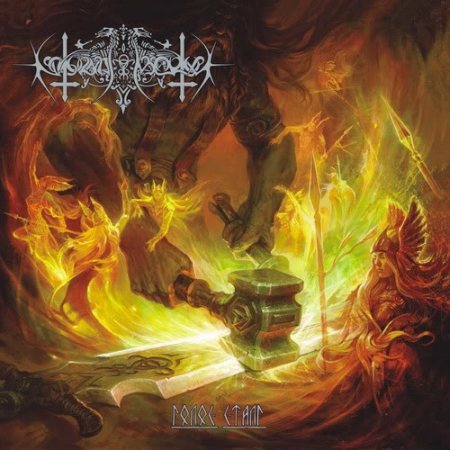
As I write I am acquainting myself with Nokturnal Mortum‘s sixth studio album, leaked Christmas day when I was too busy to notice. The Voice of Steel starts off where the Eastern Hammer EP ended, hurdy gurdies blazing in a mind-blowing intro, and then slowly transitions into some weird amalgamation of pagan nsbm and spacey Pink Floyd guitar solos. It’s still got some battlecry sopilka breakdowns of classic Nokturnal Mortum, the intense tribal drumming that first greeted us on To the Gates of Blasphemous Fire’s Cheremosh, the violin over epic synth that characterized Weltanschauung…
But it also has clean vocals and Pink Floyd guitar solos, and I’m just not sold on them yet. The Voice of Steel is in some ways amazing, in others irritating. It’s a decent album, no doubt about it, but it sure wasn’t what I was hoping for. Nothing would have made me happier than a whole album of the Eastern Hammer remake of Kolyada, and that The Voice of Steel is certainly not.

The album has some real gems, notably Shlyakhom Sontsya. It also has tracks like Moei Mrii Ostrovi that would fit in a lot better on an Amorphis album and just clash entirely with the group’s extremist views. They’re trying to mature musically, but they have to mature mentally first to really pull it off.

Extremism has produced some amazing music over the years. Wrath of the Tyrant, Det Som Engang Var, NeChrist, they all share in common a level of passionate convictions taken so far as murder, arson, or white supremacy. Obviously I don’t have to condone these acts to appreciate their origins, but the musicians have to come to terms with them eventually. Ihsahn seems to recognize his youthful escapades as a childish outlet for his anti-Christian views and now writes more mature music effectively. His album After, another new release, is pretty damn impressive. He can still frown on the Christian culture of servitude without letting it consume him and his innate musical talents. Meanwhile you’ve got Varg writing dissertations on the likelihood of Aryans being an advanced race from outerspace, and I have pretty low expectations of his forthcoming album.

I hear in Knjaz Varggoth’s new music a reflection of this Vargian state of depravity. Their old songs embodied folk, and they believed in it so thoroughly that they took on extremist views, but that was only the lyrical focus. NeChrist was packed with anthems to what the band barely understood, aggression married to mysticism, white supremacy only a catalyst. The aggressive desperation with which they summoned a bygone era made their music a mirror into the past. It was as though the songs they played were ancient melodies shouting, screaming to be heard once again over the clamor of modern rock by any means necessary. I can’t expect another masterpiece like NeChrist, maybe not even something as good as Weltanschauung, but a stylistic evolution means a mental one too, and I hear in songs that combine clean vocals and Gilmour guitars with cries for the motherland the path of Varg, not Ihsahn. It’s hard to appreciate music that’s neither passionate nor mature. The Voice of Steel is not culture triumphant, it’s more like a methodic racial manifesto. Come on Knjaz, either sustain your fire or light a new match, don’t slump into dogma.

For a far more heartfelt nsbm album, check out Temnozor’s 2010 offering, Haunted Dreamscapes.

Confirmed…Dragon Age: Origins expansion due March 2010


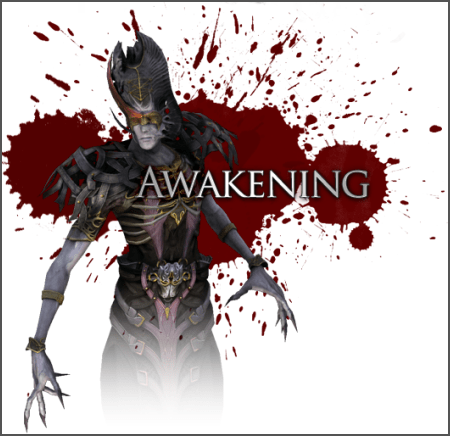
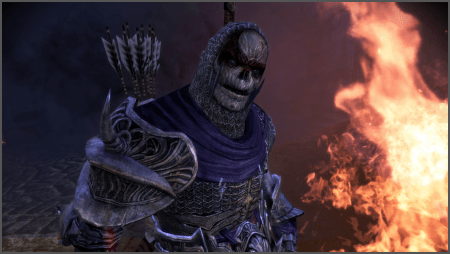
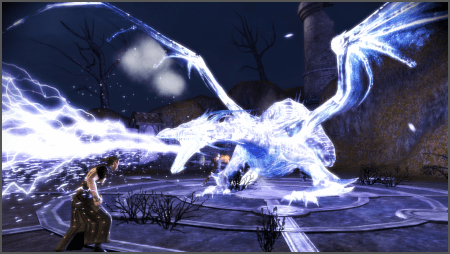
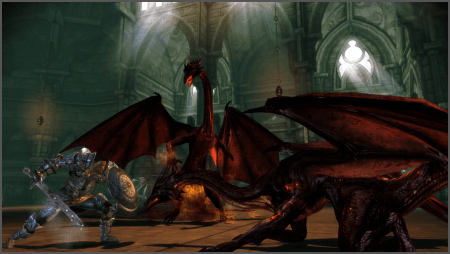
Some good news was just sent out from BioWare this morning. I am talking about confirmation of the first major expansion for Dragon Age: Origins. Unlike the usual DLC’s which have been released and set to be since the game came out in late 2009, this exapnsion will include not just a new quest but a new land to explore, new monsters and enemies to fight and a major storyline quest that should take 15 or so hours to complete. As one can see in the images below there’ll be a new dragon to put one’s combat party to test their mettle on.

It looks like one nice new tweak to the gameplay is to help in rebuilding the Grey Warden’s order in Ferelden which includes a new fortress and I’m assuming recruiting new potential recruits as well. Does this mean a player who brings over their character from the original game will be the one to give out the Testing? I sure hope so! Either way it looks like this expansion will be loaded with hours upon hours of questing and gameplay. With new intelligent Darkspawn to fight. An brand-new construct to take on: The Inferno Golem. Not to mention the aforementioned new dragon to kill going by the title of Spectral Dragon.

The game should be out by March this year and that’s just enough time to play and complete Mass Effect 2 when it comes out at the end of January 2010.

SCREENS

Source: http://dragonage.bioware.com/awakening

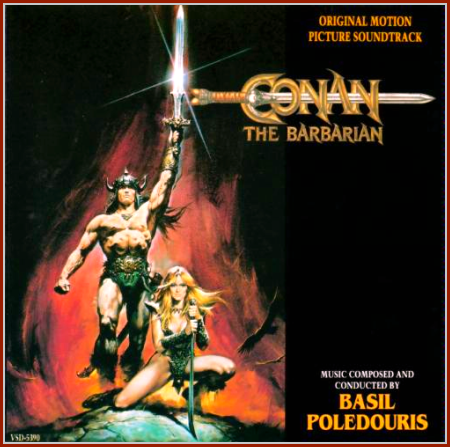
Review: Conan the Barbarian Soundtrack (composed by Basil Poledouris)


In 1982 maverick director John Milius wrote and directed a sword and fantasy epic based on the Robert E. Howard pulp character Conan the Cimmerian. Though some changes were made to the character and his adventures to make a much more accessibe fantasy epic, Milius’ Conan the Barbarian became a smashing success and ushered in the Age of Schwarzenneger. Milius had his leading man and an action-packed script with exotic locales to shoot the film at. Now all Milius needed was someone to compose a film score worthy and complementary to the character and the film. The person he ended up choosing to score his epic would be Basil Poledouris and it would turn out to be a very wise choice.

Basil Poledouris’ took on a different tack in scoring Conan the Barbarian. Instead of just coming up with music as a background to scenes in the film he opted to score the film as if it was an opera. Taking his cue from Wagner and Carl Orff (whose Carmina Burana was a heavily influence in the tracks Riddle of Steel/Riders of Doom and Battle of the Mounds), Poledouris created a score that could stand on its own as a piece of operatic work. His use of leitmotifs to sound the arrival of the main characters was reminiscent of Wagner’s work especially that of Der Ring des Nibelungen. Conan and his archnemesis Thulsa Doom would have their leitmotifs intertwined in the tracks Riddle of Steel/Riders of Doom with their pounding drums, crashing brass and triumphant horn section. This motif would return once more in the Battle of the Mounds track.

Another recurring motif would be the light and airy theme Poledouris came up with for what I call the introspective section of the film. This section of the score made great use of this motif which used less of the drums, brass and french horns in the more militaristic and martial beginning of the film. A trio of tracks made up this section with Theology/Civilization, The Wifeing, and The Leaving/The Search with the first of the trio being a light and playful tune smoothly segueing into the intimate and ultimately mournful middle track of the trio. The third and final section would combine the two towards a determined conclusion to Conan’s introspection of what his decision should be in his quest for vengeance.

Other tracks in the score adds its own personality to the story being told. There’s Gift of Fury which starts off as a slow dirge to the aftermath of Conan’s village being razed by Thulsa Doom’s men to a gradual dramatic crescendo marking the end of young Conan’s innocence and path to bondage and slavery. The other track of note which helped give the scene it was composed for a greater impact would be The Kitchen/The Orgy. This track with its dual personality of Thulsa Doom’s martial motif smoothly transition into a sensuous and decadent, albeit discordant theme showed the dual nature of Conan’s rival. A nature both militaristic and disciplined, but also hedonistic and debased. This was one piece of the score which stood out to show Poledouris’ great understanding of the characters and the subject matter he was scoring for.

Poledouris’ final score for the film works well within the boundaries of the story being told. It both complements the action and thoughts shown on the screen and enhances its dramatic weight. In fact, the symphony and choral work done in the score could be listened to without seeing the images on the screen with just the CD liner as a guide and the story would be easily understood. On its own the score would count as a great symphony which told a story through music. But when combined with the words and images crafted by Milius on-screen it takes on a greater dimension.

Conan the Barbarian was a film that helped usher in Arnold Schwarzenneger as a force in Hollywood. It was also a film which showed that sword and sorcery fantasy could be done seriously and done so with quality in mind. The film and Milius’ choice who to score it would resonate in the film scoring community for years to come as it showed that a film score didn’t have to be just a secondary afterthought in the filmmaking process. Poledouris’ score for Conan the Barbarian still counts as his best to date and remains the standard-bearer for fantasy film scoring. It’s influences could be felt as recent as Peter Jackson’s Lord of the Rings trilogy where film composer Howard Shore uses Poledouris technique of Wagnerian leitmotifs to help tell the story as if it was an opera instead of just a film. A masterful work by a master of his craft that would live long after all the participants in the project are long dead and buried.

Below are videos of the only live concert conducted by Basil Poledouris of the Conan the Barbarian symphonic score.

Part 1: Anvil of Crom/Riddle of Steel/Riders of Doom

Part 2: Gift of Fury/Atlantean Sword/Love Theme

Part 3: Funeral Pyre/Battle of the Mounds

Part 4: Orphans of Doom/The Awakening

Part 5: Anvil of Crom/Encore