Horror Review: Bone Tomahawk (dir. by S. Craig Zahler)


“What is sacred to a bunch of goddamned savages ain’t no concern of the civilized man! We got permission!” — Buddy

Bone Tomahawk (2015) begins in quiet dread. A still horizon, the whisper of wind across rock, a hint of bone under the dust—the American frontier looms like an unfinished thought. This silence sets the tone for S. Craig Zahler’s remarkable debut, a film that wears the form of a Western only to strip it down to nerve and marrow. It’s a story of decency under siege, of men pushing past the last borders of civilization and discovering that what lies beyond is not the unknown, but the origin of everything they thought they’d overcome.

At first glance, the premise seems familiar. When several townspeople vanish from the small settlement of Bright Hope, Sheriff Franklin Hunt (Kurt Russell) leads a rescue expedition into the desert. Riding with him are three others: the injured but determined Arthur O’Dwyer (Patrick Wilson), whose wife has been taken; his tender-hearted deputy, Chicory (Richard Jenkins), whose chatter and old-fashioned kindness soften the film’s bleak austerity; and the self-assured gunman John Brooder (Matthew Fox), a man equal parts gallant and cruel. Together, they represent the moral cross-section of a civilization still trying to define itself—duty, love, loyalty, arrogance.

Their journey outward becomes one of inward descent. Zahler’s script unfolds at a deliberate pace, steeped in stillness and exhaustion. The first half moves like ritual—meandering conversations, humor worn thin by weariness, the small comforts of campfire fellowship flickering against the vast emptiness around them. It’s here that Bone Tomahawk begins its slow transformation. What starts as a rescue Western gradually becomes something deeper and older. By stripping away the romance of exploration, Zahler reveals the frontier not as a space of discovery, but as a place of reckoning—a mirror of the instincts civilization pretends to have tamed.

The film’s most haunting element is its portrayal of the so-called “troglodytes,” the mysterious group believed to be responsible for the kidnappings. They are less a tribe than an incarnation of the wilderness itself—nameless, wordless, and utterly beyond cultural translation. Covered in ash, communicating through the eerie hum of bone instruments embedded in their throats, they seem less human than ancestral, as though the land itself had dragged them upward from its own depths. Zahler refuses to frame them anthropologically or politically; instead, they represent the primal truth the American frontier sought to bury under its myths of order and progress.

Western films, for more than a century, have mythologized the wilderness as an external force—something to conquer. But the “troglodytes” in Bone Tomahawk feel like the soil’s memory of what came before conquest: the savage necessity that built the very myths used to conceal it. They are the frontier’s unspoken ancestry—what remains after all the churches, taverns, and codes of decency are stripped away. Civilization needs them to remain hidden in the canyons, out of sight and unspoken, because their existence contradicts everything the polite narrative of the Old West stands for. They are what progress denies but cannot erase.

Zahler’s restraint strengthens this allegory. He shoots the desert not as backdrop but as evidence—a geographical wound extending beyond the horizon. The wilderness looks stunning but predatory, its stillness full of threat. Even when the posse’s odyssey is free of immediate danger, there’s the growing sense of being consumed: by the sun, by exhaustion, by the quiet knowledge that the world they’re riding into has no use for their notions of law and virtue. Civilization, here, is a pocket of light surrounded by something much older and hungrier.

That hunger, the need to conquer and consume, connects Bone Tomahawk to its spiritual predecessor, Antonia Bird’s Ravenous (1999). Bird’s film transformed the Donner Party’s historical ghosts into an allegory of Manifest Destiny, equating cannibalism with American expansion—the act of devouring land, life, and self under the guise of progress. Zahler continues that lineage with deliberate starkness. For him, violence in the frontier isn’t just literal; it’s foundational, the unacknowledged currency of civilization. Where Ravenous expressed its critique with mordant humor, Bone Tomahawk speaks in solemn tones, observing how every civilized act—the enforcement of law, the defense of home—rests upon the refusal to see what was consumed to create it.

The “troglodytes” embody that refusal incarnate. They are not villains in the traditional sense; Zahler grants them no ideology or explanation, only the primal fact of their survival. In doing so, he flips the Western’s moral equation: the barbarians at the edge of civilization are not invaders, but reminders of its origins. They are ghosts of the violence that founded the frontier, the unspoken proof that the West was never as far from savagery as it claimed. To look upon them is to glimpse the beginning—the raw, lawless reality America buried beneath the idea of itself.

Kurt Russell, magnificent in his restraint, anchors this tension. His Sheriff Hunt evokes a fading kind of decency: measured, fair, and unwavering even in futility. Russell plays him not as a Western hero but as a man committed to honor in a world that no longer rewards it. His calm authority softens only around those he loves and hardens in the face of what he doesn’t understand. In that measured decency lies the film’s aching question: what happens when morality meets something that does not recognize it?

Patrick Wilson’s O’Dwyer embodies faith’s physical agony—a man driven by devotion, limping through a landscape that punishes his determination. Richard Jenkins provides heart and subtle tragedy; his rambling, almost comical musings on aging and loneliness become the story’s moral texture, the sound of humanity scraping against extinction. And Matthew Fox, in his most precise performance, gives voice to the arrogance of the civilized killer—a man who fashions violence as virtue, believing his elegance excuses his cruelty.

Together, the four men form a living cross-section of the West’s moral mythos. Their journey exposes how fragile those ideals become once separated from the safety of town limits. They embody the dream of order confronting the truth of chaos—and the cost of looking too long into the void beyond it.

Zahler’s filmmaking is remarkably self-assured for a debut, and what stands out most is his willingness to trust stillness. There is no manipulated rhythm, no swelling score to guide emotion. The soundscape is shaped by wind, hoofbeats, crackling fires, and quiet voices rattled by exhaustion. The silence itself becomes a spiritual presence, pressing down on the travelers until conversation feels like resistance. Each scene builds tension not through action, but through waiting—the dread of what remains unseen, what civilization has pretended not to hear.

The violence, when it erupts, is unforgettable. Zahler does not linger voyeuristically, yet the weight of what happens lands with moral precision. The horror feels earned—an eruption of the primal into the civilized. Its purpose is not to shock, but to remind: the line between the men of Bright Hope and the people they fear is thinner than they want to believe. The frontier, as Zahler presents it, is not an untouched wilderness but the graveyard of an ongoing denial—the myth of progress stacked atop the bones of the devoured.

In that way, Bone Tomahawk moves beyond the idea of genre blending. It is not merely a “horror Western,” but a meditation on how those two sensibilities spring from the same source. Both depend on the confrontation between safety and the unknown, belief and disbelief. Both are rituals of fear, structured to reassure yet always at risk of unveiling the truth. Zahler’s greatest achievement is the way he strips away that reassurance. By the film’s final stretch, the promises of civilization—hope, faith, righteousness—have been exposed as fragile constructions built atop an ancient void.

And yet, through all its darkness, Zahler allows a flicker of grace. The film’s humanity endures in small gestures: a conversation interrupted by laughter, a hand extended in kindness, the stubborn persistence of dignity in impossible circumstances. Bone Tomahawk never preaches or offers catharsis, but it does something harder—it bears witness. It shows men maintaining decency not because it protects them, but because it defines them. In that endurance lies the film’s quiet heartbeat.

Like Ravenous before it, Bone Tomahawk reimagines cannibalism and frontier brutality not as aberrations, but as mirrors reflecting a truth about the American project: that every step westward demanded erasure, and that what was erased refuses to stay buried. The “troglodytes” linger not only in the canyons but within the culture that feared them—proof that civilization’s polish has always covered the rough, enduring shape of appetite.

By the end, what remains is not revelation or redemption, but silence—the kind that comes after myth collapses. Zahler’s film leaves its characters and viewers alike to confront the space where civilization ends and something older begins. The desert remains untouched, vast and timeless, holding the secret at the center of all Western stories: that progress has always been haunted by the primitive, that the world we built never left the wilderness—it merely disguised it.

Measured, brutal, and strangely tender, Bone Tomahawk stands as both a reclamation and an undoing of the Western myth. It listens to the echoes of the Old West and answers them not with triumph, but with reckoning. In its dust and silence lies a truth older than law or legend: civilization may light its fires, but there will always be something in the dark watching, waiting—the part of us it never truly left behind.

Here Are The 2022 Gotham Winners!


The Gotham Awards were handed out last night and Everything Everywhere All At Once took best picture.  Danielle Deadwyler may have been snubbed by the Spirit Awards but that didn’t prevent the Gothams from honoring her performance in Till.  While the Gothams may not be as strong an Oscar precursor as some of the other groups that will be handing out prizes over the next two months, every win helps.

Here are all the winners:

Breakthrough television under 40 minutes
“Abbott Elementary” (ABC)
“As We See It” (Amazon Prime Video)
“Mo” (Netflix)
“Rap Sh!t” (HBO Max)
“Somebody, Somewhere” (HBO)

Breakthrough television over 40 minutes
“Pachinko” (Apple+)
“Severance” (Apple+)
“Station Eleven” (HBO Max)
“This Is Going To Hurt” (AMC+)
“Yellowjackets” (Showtime)

Television performers:
Bilal Baig (“Sort Of”)
Ayo Edebiri (“The Bear”)
Janelle James (“Abbott Elementary”)
Matilda Lawler (“Station Eleven”)
Britt Lower (“Severance”)
Melanie Lynskey (“Yellowjackets”)
Sue Ann Pien (“As We See It”)
Minha Kim (“Pachinko”)
Zahn McClarnon (“Dark Winds”)
Ben Whishaw (“This Is Going To Hurt”)

Breakthrough nonfiction series
“The Andy Warhol Diaries”
“The Last Movie Stars”
“Mind Over Murder”
“The Rehearsal”
“We Need to Talk About Cosby”

Breakthrough director
Charlotte Wells (“Aftersun”)
Owen Kline (“Funny Pages”)
Elegance Bratton (“The Inspection”)
Antoneta Alamat Kusijanovic (“Murina”)
Beth De Araújo (“Soft & Quiet”)
Jane Schoenbrun (“We’re All Going to the World’s Fair”)

Best screenplay
Kogonada (“After Yang”)
James Gray (“Armageddon Time”)
Lena Dunham (“Catherine Called Birdy”)
Todd Field (“Tár”)
Sarah Polley (“Women Talking”)

Breakthrough performer
Frankie Corio (“Aftersun”)
Kali Reis (“Catch the Fair One”)
Gracija Flipovic (“Murina”)
Anna Diop (“Nanny”)
Anna Cobb (“We’re All Going to the World’s Fair”)

Outstanding supporting performance
Mark Rylance (“Bones and All”)
Brian Tyree Henry (“Causeway”)
Ke Huy Quan (“Everything Everywhere All at Once”)
Raúl Castillo (“The Inspection”)
Gabrielle Union (“The Inspection”)
Nina Hoss (“Tár”)
Noémie Merlant (“Tár”)
Hong Chau (“The Whale”)

Oustanding lead performance
Cate Blanchett (“Tár”)
Danielle Deadwyler (“Till”)
Dale Dickey (“A Love Song”)
Colin Farrell (“After Yang”)
Brendan Fraser (“The Whale”)
Paul Mescal (“Aftersun”)
Thandiwe Newton (“God’s Country”)
Aubrey Plaza “(Emily the Criminal)”
Taylor Russell (“Bones and All”)
Michelle Yeoh (“Everything Everywhere All At Once”)

Best international feature
“Athena”
“The Banshees of Inisherin”
“Corsage”
“Decision to Leave”
“Happening”
“Saint Omer”

Best documentary feature
“All That Breathes”
“All the Beauty and the Bloodshed”
“I Didn’t See You There”
“The Territory”
“What We Leave Behind”

Best feature
“Aftersun”
“The Cathedral”
“Dos Estaciones”
“Everything Everywhere All at Once”
“Tár”

Here Are The 2022 Gotham Nominations!


And just like that, the 2022 Awards Season began.

The 2022 Gotham Nominations were announced earlier today.  While the Gothams have recently started to get some attention as an Oscar precursor, it is important to remember that the Gothams are specifically designed to honor low-budget, independent films.  There’s some very strict rules about which films are eligible and which are not.  So, don’t be shocked at the lack of nominations for something like The Fabelmans.  Spielberg has never been eligible for a Gotham.

If any one film is really going to benefit from these nominations, it’s probably Everything Everywhere All At Once.  Seeing as how it’s been a while since Everything Everywhere came out, the Gotham nominations may (or may not) serve to remind the members of the Academy of the excitement that was generated by the film earlier in the year.

Here are the Gotham nominations for 2022.  The winners will be announced on November 28th.

Breakthrough television under 40 minutes
“Abbott Elementary” (ABC)
“As We See It” (Amazon Prime Video)
“Mo” (Netflix)
“Rap Sh!t” (HBO Max)
“Somebody, Somewhere” (HBO)

Breakthrough television over 40 minutes
“Pachinko” (Apple+)
“Severance” (Apple+)
“Station Eleven” (HBO Max)
“This Is Going To Hurt” (AMC+)
“Yellowjackets” (Showtime)

Television performers:
Bilal Baig (“Sort Of”)
Ayo Edebiri (“The Bear”)
Janelle James (“Abbott Elementary”)
Matilda Lawler (“Station Eleven”)
Britt Lower (“Severance”)
Melanie Lynskey (“Yellowjackets”)
Sue Ann Pien (“As We See It”)
Minha Kim (“Pachinko”)
Zahn McClarnon (“Dark Winds”)
Ben Whishaw (“This Is Going To Hurt”)

Breakthrough nonfiction series
“The Andy Warhol Diaries”
“The Last Movie Stars”
“Mind Over Murder”
“The Rehearsal”
“We Need to Talk About Cosby”

Breakthrough director
Charlotte Wells (“Aftersun”)
Owen Kline (“Funny Pages”)
Elegance Bratton (“The Inspection”)
Antoneta Alamat Kusijanovic (“Murina”)
Beth De Araújo (“Soft & Quiet”)
Jane Schoenbrun (“We’re All Going to the World’s Fair”)

Best screenplay
Kogonada (“After Yang”)
James Gray (“Armageddon Time”)
Lena Dunham (“Catherine Called Birdy”)
Todd Field (“Tár”)
Sarah Polley (“Women Talking”)

Breakthrough performer
Frankie Corio (“Aftersun”)
Kali Reis (“Catch the Fair One”)
Gracija Flipovic (“Murina”)
Anna Diop (“Nanny”)
Anna Cobb (“We’re All Going to the World’s Fair”)

Outstanding supporting performance
Mark Rylance (“Bones and All”)
Brian Tyree Henry (“Causeway”)
Ke Huy Quan (“Everything Everywhere All at Once”)
Raúl Castillo (“The Inspection”)
Gabrielle Union (“The Inspection”)
Nina Hoss (“Tár”)
Noémie Merlant (“Tár”)
Hong Chau (“The Whale”)

Oustanding lead performance
Cate Blanchett (“Tár”)
Danielle Deadwyler (“Till”)
Dale Dickey (“A Love Song”)
Colin Farrell (“After Yang”)
Brendan Fraser (“The Whale”)
Paul Mescal (“Aftersun”)
Thandiwe Newton (“God’s Country”)
Aubrey Plaza “(Emily the Criminal)”
Taylor Russell (“Bones and All”)
Michelle Yeoh (“Everything Everywhere All At Once”)

Best international feature
“Athena”
“The Banshees of Inisherin”
“Corsage”
“Decision to Leave”
“Happening”
“Saint Omer”

Best documentary feature
“All That Breathes”
“All the Beauty and the Bloodshed”
“I Didn’t See You There”
“The Territory”
“What We Leave Behind”

Best feature
“Aftersun”
“The Cathedral”
“Dos Estaciones”
“Everything Everywhere All at Once”
“Tár”

Hailee Steinfeld and Jeremy Renner hit their marks in the Hawkeye Trailer


Hawkeye finds Clint Barton (Jeremy Renner) back in the spotlight when a vigilante similar to the Ronin appears in NYC. This leads him to Kate Bishop (Hailee Steinfeld, Bumblebee), an archer who’s just as good as our Avenger. What she’s into, we don’t know, but it makes for an excellent team up. The show bridges the character we know with the 2005 comic counterpart (with some changes to tie things into the current Marvel Cinematic Universe). With a Christmas setting, part of me hoped that Shane Black had a hand in it some where. Not to worry, as Mad Men and Bridgerton writer/producer Jonathan Igla is the showrunner here.

Hawkeye also stars Brian d’Arcy James (Spotlight), Vera Farmiga (The Conjuring), Zahn McClarnon (Doctor Sleep), Ava Russo (Avengers: Endgame), and Florence Pugh (Black Widow).

Hawkeye premieres on Disney Plus on November 24th.

Film Review: Doctor Sleep (Dir. by Mike Flanagan)


If I asked you about Stephen King’s The Shining, would the book or the film come to mind?

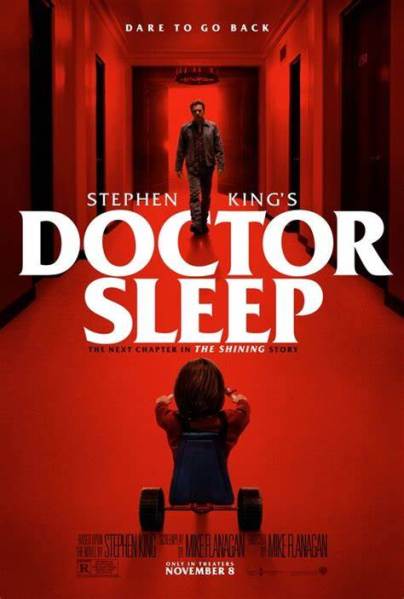
DoctorSleepPosterWhen it comes to adapting Stephen King’s stories to film, it’s not an easy feat. King himself had a problem turning his own short story “Trucks” into something good when he directed Maximum Overdrive. For every great film like Stanley Kubrick’s The Shining, or It-Chapter One, we occasionally get a misstep like The Dark Tower or It-Chapter Two.  As King can sometimes get wordy in his books, I’ve felt the best adaptations were the ones where the director’s own vision came into play. Kubrick made a number or changes to King’s story, including the Grady twins and the hedge maze, which were never in the novel. The film is so widely recognized that most people recall events in the movie, rather than the book. That’s the effect Kubrick had. 
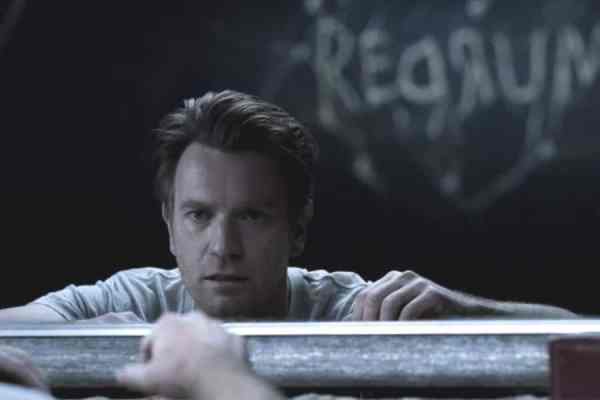
With Doctor Sleep, Mike Flanagan once again proves he’s a fantastic fit for King. The film moves at a great pace, with great performances by Rebecca Ferguson and newcomer Kyliegh Curran. In an age where audiences are typically quiet, the applause that occurred in scenes during last night’s preview screening were great to hear. The film manages to pay homage to Kubrick’s The Shining and King’s Novel of Doctor Sleep while still completely showcasing Flanagan’s vision. Of course, we already knew this from Flanagan taking on King’s own Gerald’s Game and Netflix’s The Haunting of Hill House.  One might even argue that for this film, we may in time recall Flanagan’s tale more clearly than King’s.

Doctor Sleep takes place after the events of The Shining, with Dan Torrance (Ewan McGregor) suffering from the same demons that plagued his father, Jack. Although the keeps to himself, he drinks too much, gets into brawls, and is unable to hold down decent work. Dan is also haunted by the Overlook Hotel, and the power that drew the souls to him known as The Shining. The Shining (or just the Shine) is a coveted power in King’s lore. When a group of nomads that feed on the Shine (in a way that’s reminiscent of Mick Garris’ Sleepwalkers) discover a girl with the same ability, Dan is brought out of hiding. 

Fans of the original Kubrick film will see there’s a lot of love here. You’ll be able to count some of the references to The Shining, from objects in a room to different locales. For casting, Flanagan uses a mixture of old favorites and new faces. You’ll recognize some of them right from the start, such as Bruce Greenwood and Violet McGraw. Others, like Jacob Tremblay (The Predator) are welcome additions. Rather than relying on footage from the original Shining, Flanagan recreates certain elements with new cast members, which I felt worked extremely well here. I’m not sure how others will take it.

Ewan McGregor is good in the role of Dan Torrance, which feels more like his Mark Renton character from Trainspotting than anything else to me.  This isn’t a bad thing, but it works. The film truly belongs to both Rebecca Ferguson (Mission Impossible: Fallout) and Kyliegh Curran. Ferguson’s Rose the Hat is a wicked villain, and she carries the role with a sinister, yet stylish flair. Ferguson has some of the best scenes in the film, particularly when paired with Zahn McClarnon (Midnight, Texas and Westworld), who plays Crow Daddy. Kyliegh Curran chews up the scenes she’s in, easily handling screen time with McGregor and Ferguson like a pro. Rounding out the cast are Cliff Curtis (Sunshine), Carl Lumbly (Mantis) and Emily Alyn Lind (The Babysitter). 

Doctor-Sleep-1

Dan Torrance (Ewan McGregor) can’t run from his past in Mike Flanagan’s Doctor Sleep.

As for the fear factor, there is some terror in the hunt for Abra and the way that the group interact. Doctor Sleep doesn’t have much in the way of jump scares, but makes up for it with some tense moments. I didn’t feel as scared as I did with It-Chapter One, but I cared enough about the characters to worry about how the story was going to turn out. That might be a turn off for those expecting to watch the movie from between their fingers or run out of the theatre screaming. If you enjoyed Flanagan’s other works, such as Hush or Oculus, you’ll be fine.

Speaking of Hush, Doctor Sleep lacks a Kate Siegel cameo. Flanagan is Siegel’s partner in crime (and husband). Together, they’ve been in almost every film they’d done. I’ve gotten used to going “Oh, there’s Kate!”, while watching his films. It’s not an issue at all, but it would’ve been cool to see her.

The camera work for Doctor Sleep is very even, though there are a few special effects scenes that really stand out and picked up some applause (or gasps) once they were over. The one main drawback I had with the film was that it was a little difficult to keep up with all of the locations and time periods early on. Even though everything’s clearly labeled, it took me a moment to recognize just where and when things were occurring. Not a terrible thing, though.

Overall, Doctor Sleep is an easy film to recommend. It has some great performances, and manages to be a great follow up to The Shining, while showing a lot of love for the source material.

Doctor Sleep hits cinemas on Friday, November 8th, and I’ll make a return visit.


Horror Trailer: Bone Tomahawk


Bone Tomahawk

We never have enough horror set in the Old West. It’s a setting that should be rife with infinite possibilities for some very scary storytelling.

When we do get Old West horror they tend to be direct-to-video and low-budget affairs. Now don’t get me wrong low-budget horror sometimes are some of the most effective. The closer it gets to it’s grindhouse roots the better. Then again some do end up being a pile of turds that end up getting relegated in the dollar bin at supermarkets.

My hope is that the latest Old West horror starring Kurt Russell will be the former and not the latter.

Bone Tomahawk made it’s premiere at this year’s Fantastic Fest and from all intents and purpose had a very positive reception to it’s genre mash-up of cowboys vs cannibals. Now what better way to follow-up The Green Inferno but with another cannibal fare set in the dusty plains and canyons of the Old West.