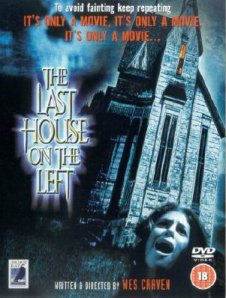
4 Shots From 4 Films: Wes Craven Edition


Today is the birthday of one of the masters of horror. So, here’s wishing Wes Craven a happy birthday.

Now, go out there and check out his films. Here’s a four to try out. It’s got voodoo, a thing from the swamp, a street full of nightmares and, the one that started him off, the very last house on the left.

4 SHOTS FROM 4 FILMS

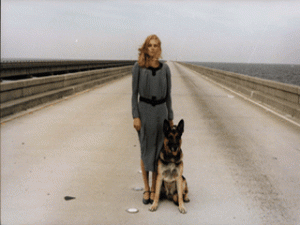
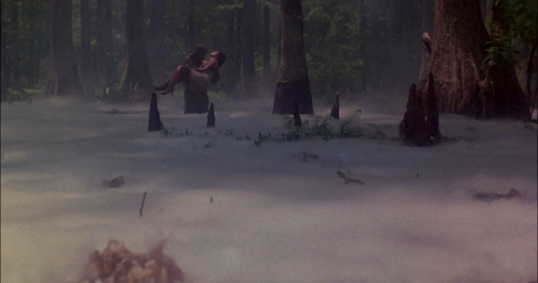
Swamp Thing (dir. by Wes Craven)

Swamp Thing (dir. by Wes Craven)

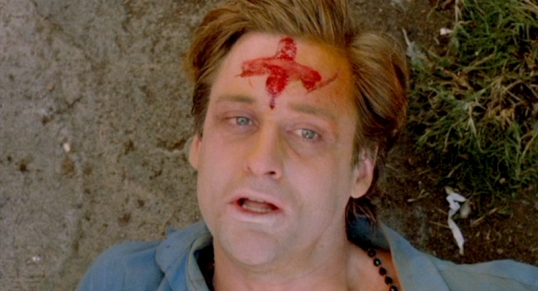
A Nightmare on Elm Street (dir. by Wes Craven)

A Nightmare on Elm Street (dir. by Wes Craven)

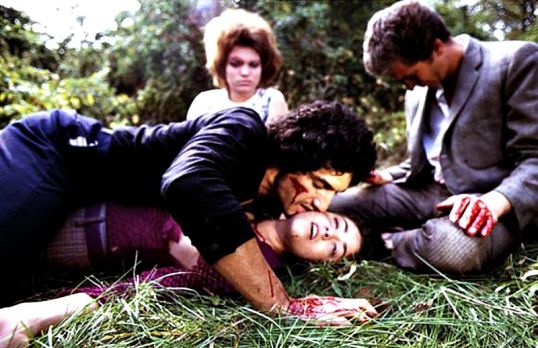
The Last House on the Left (dir. by Wes Craven)

The Last House on the Left (dir. by Wes Craven)

4 Shots From 4 Films: Deadly Blessing, The Journey of Natty Gann, The New World, Cristiada


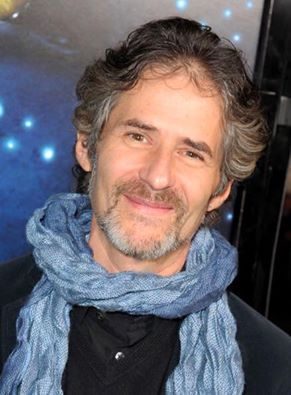
James Horner

4 Shots From 4 Films is just what it says it is, 4 shots from 4 of our favorite films.  As opposed to the reviews and recaps that we usually post, 4 Shots From 4 Films is all about letting the visuals do the talking.

Tonight, the film community is in shock following the news of the passing of award-winning composer James Horner.  Our latest installment of 4 Shots From 4 Films is dedicated to to the memory of this talented artist.

The four shots below all come from films that feature a score composed by the great James Horner.

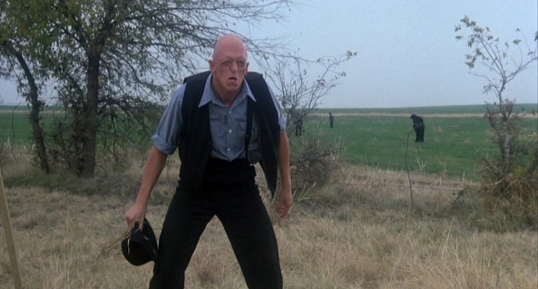
Deadly Blessing (1981, dir by Wes Craven)

Deadly Blessing (1981, dir by Wes Craven)

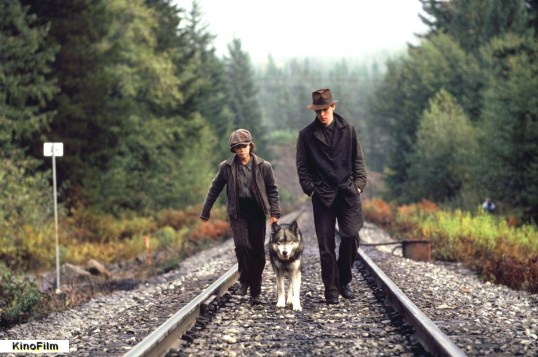
The Journey of Natty Gann (1985, dir by Jeremy Kagan)

The Journey of Natty Gann (1985, dir by Jeremy Kagan)

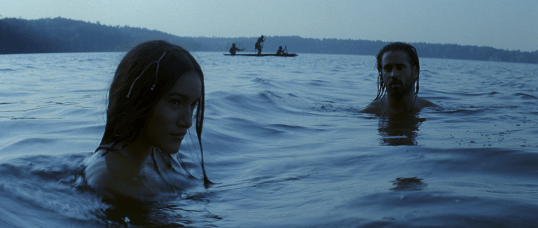
The New World (2005, dir by Terrence Malick)

The New World (2005, dir by Terrence Malick)

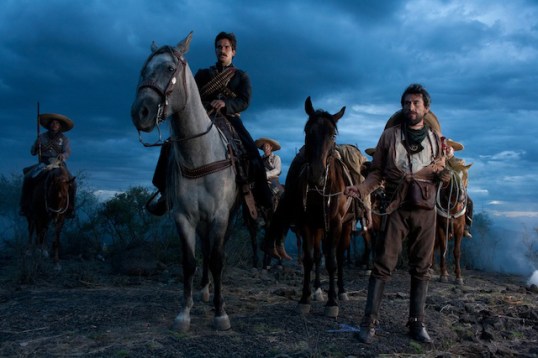
Cristiada, also known as For Greater Glory (2012, dir by Dean Wright)

Cristiada, also known as For Greater Glory (2012, dir by Dean Wright)


Horror Scenes I Love: The Serpent and The Rainbow


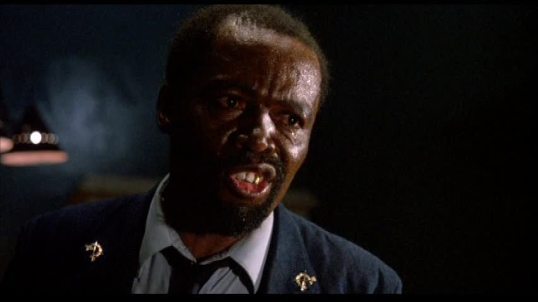
TontonMacoutes

“I want to hear you scream.” — Dargent Peytraud

All I can say about this scene is that I guarantee every guy who watches this will want to cross their legs tight. They may just scream as well just as a reflex action to what happens in the end.

Yet, as one watches this torture scene of the main lead in the film the audience never really sees anything. Everything’s implied and we see signs of what’s about to happen throughout the segment.

The Serpent and The Rainbow continues to be one of my favorite horror films and one of my favorite Wes Craven offerings.

Horror on The Lens: Invitation to Hell (dir by Wes Craven)


Much like yesterday’s offering of Summer of Fear, today’s horror on the lens is a made-for-tv movie directed by Wes Craven.

First televised in 1984, Invitation to Hell is a wonderfully over-the-top depiction of what happens when an engineer (Robert Urich) sells out and goes to work for a big evil corporation.  Long story short, Satan (in the form of Susan Lucci) takes over his family.  Admittedly, this film does start slowly but, in the end, it’s a lot of fun.

Horror on the Lens: Summer of Fear (dir by Wes Craven)


Today’s horror on the lens is a 1978 made-for-TV movie that was directed by Wes Craven.  Originally entitled Stranger In Our House, it was retitled Summer of Fear when it was released into theaters in Europe.  Personally, I think Summer of Fear is a better title.  It has a fun R.L. Stine feel to it.

As for the film itself, it tells the story of what happens when the recently orphaned Julia (Lee Purcell) moves in with her cousins in California.  At first, Julia fits right in with her new family but, slowly and surely, her cousin Rachel (Linda Blair) comes to suspect that Julia might be a witch.  And hey, who can’t relate to that?  Seriously, everyone has that one cousin…

And, it’s actually pretty good.  Working within the confines of what could and could not be shown on TV in the late 70s, Craven managed to make an effective little thriller.

http://www.youtube.com/watch?v=m89fH0w2kc0

Horror Review: The Serpent and The Rainbow (dir. by Wes Craven)


The word zombies conjures up the flesh-eating variety popularized by George Romero’s horror films and the legion of films from others soon after. Prior to 1968’s Night of the Living Dead the word zombies was synonymous more with the gothic-like horror films which took the Haitian voodoo folklore about the recently dead being brought back to life by voodoo priests to act as mindless slaves. It’s this version of the word zombie which Wes Craven decided to explore with his 1988 film adaptation of the Wade Davis non-fiction book The Serpent and The Rainbow. Wes Craven’s film fictionalizes the ideas and treatises put forward in Davis’ book and creates a film which tries to put to light the true horror which lay behind the voodoo folklore regarding zombies.

The film introduces us to the ethnobotanist character of Dennis Alan (played by Bill Pullman) who’s approached by a major pharma-corporation about researching the scientific origins and cause of the voodoo “zombie”. He heads off to Haiti at a time when it’s going through a political upheaval that would lead to the subsequent revolution that topples the dictatorship of that country’s leader, Francois “Baby Doc” Duvalier. During his time in Haiti he investigates story of a patient named Christophe who was reported dead 8 years past but seen recently walking about in a dazed manner. It’s while trying to get a handle on how Christophe was declared dead by authorities but then “resurrected” years later which brings Alan in contact with the local witch doctors who question Alan’s motives but also ridicule him for his narrow viewpoint regarding things which science cannot answer. But through persistence he finally gets one local to assist him in procuring the so-called “zombie powder” used to bring the dead back to life.

The Serpent and The Rainbow shows the real horror about zombification when Alan’s investigations and persistence to acquire the “zombie powder” brings the attention of the country’s secret police (the Tonton Macoutes) and one of it’s leaders and reported voodoo priest in Captain Dargent Peytraud (played by Zakes Mokae in a chilling performance) who warns him repeatedly not to continue. Repeated verbal warning and threats soon become more direct and physical as Alan finds out first-hand why no one in the country dares to speak of “zombies” to an outsider and why Captain Peytraud and his Tonton Macoutes were feared as if they were agents of the evil spirits of their voodoo faith.

Craven does a very good job in taking Wade Davis’ non-fiction book and creating a thrilling and suspenseful piece of horror which suggests that the lead character of Dennis Alan has stepped into a world that was steeped not just in the realm of science but also in the supernatural. The film includes some great scenes which shows Alan experiencing some very horrific nightmares which seems indistinguishable from his waking moments and vice versa. Unlike Craven’s previous work in horror which were imbued with some dark humor but always brutal in it’s depiction of everyday horror, this film rarely goes the gory route though the scenes of torture should make even the most hardened and jaded horror aficionado to squirm in their seat.

The true horror revealed by Craven’s film is the very human figure of Captain Peytraud and his Tonton Macoutes who use the local populace’s fear of “zombification” and how Peytraud has taken advantage of these people’s voodoo beliefs to control the public and keep themselves in power. It’s horror that many recognize and understand yet heightened even more with the addition of a local religious practice that’s relatively unknown and misunderstood by outsiders (especially by those in the West). The film never truly answers the question raised in the beginning of the film of whether the practice of “zombification” is wholly scientific and pharmacological in origins and cause or does religion and the supernatural has a hand in making the process occur. Even after the climactic encounter between Alan and Captain Peytraud in the end of the film only brings more questions which Craven seems to relish in not letting his film answer on either side of the discussion.

The Serpent and The Rainbow is one of those films during the 1980’s which never really got a fair shake from critics and the audience but has since gained quite a following in the years since it’s release. It’s actually one of Craven’s more subtle works during that period of time where violence in the film was the exception instead of the rule as in his past films. It’s a film which continues to gain fans as more and more younger film fans discover the film. Sometimes the word zombies doesn’t conjure up the typical flesh-eating variety but instead one even more horrific since it’s one based on real-life. Sometimes reality can be scarier than what we can conjure up in our minds. The Serpent and The Rainbow is one film which does a great job in supporting that.

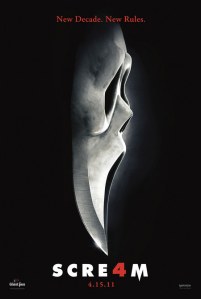
Film Review: Scream 4 (dir. by Wes Craven)


Before I start, note that Scream 4 is also referred to as Scre4m. While this is true and cool in a hacking/cyberpunk sort of way, I refuse to call it that as it just erodes my writing ability (which is rough enough as it is). I keep that up by the end of the year, everything I write will have numbers in it.

Compared to some of his earlier attempts, Scream 4 is pretty much a triumph for Wes Craven. With Kevin Williamson’s help, they manage to take the fourth part of a story and turn it into something remarkably enjoyable and surprising. The audience at my showing loved the way it started and ended. Although it retreads some of the older themes of the series, it does so in a way that almost makes fun of itself and the genre it’s a part of. Since it’s not taking itself too seriously, the audience doesn’t have to either.

Scream 4 basically brings what’s left of the remaining cast back to the tale. The Arquette’s (Courtney Cox and David) have returned as Gail Weathers-Riley and Sheriff Dewey Riley, respectively. Neve Campbell returns to form after a long hiatus, and really, it’s almost as if none of them ever left. The film starts off in a way where it pays homage to the original Drew Barrymore opening while still managing to keep it fresh. Cameos by Anna Paquin and Kristen Bell help to move that along.

After the events of the last three films (ten years of time in the movie), Sidney Prescott (Campbell) has managed to put her life back together by writing a novel about being a survivor. Thanks to Gail’s book on the Woodsboro murders and the multiple “Stab” movies that were created for them, the town has become famous for something it really shouldn’t be. Ghostface masks are a dime a dozen now, yearly Stab marathons are all the rage and the town kind of looks at it all like Crystal Lake – people died there, sure, but it’s just so much to say “I was there!”.

Sidney’s fame did little for her niece, Jill (Emma Roberts) and her friends, Kirby (a short hairdo wearing Hayden Panettiere) and Olivia (Marielle Jaffe). Having to grow up as a relative to the most famous person in town means everyone has something to ask her about Sidney when she returns to Woodsboro on her book tour. The younger trio keep their distance from Sidney as they consider her trouble. After all, all these deaths seem to occur when she’s around or has something to do with her. However, when a new rash of murders start when Sidney arrives, everyone has something to worry about. What follows is a bloodbath in typical Scream fashion, and as always, just about everyone is a suspect.

The Positives:

– Conspiracy Theory

What worked for me in Scream 4 was the conspiracy aspect. Williamson paints a picture that basically says “Here’s your cast. Any one of them could be the killer. Can you figure out who?”. The misdirection isn’t on a Harry Potter like level, but it does serve a purpose here. By the time everything was brought out, I found myself nodding and smiling. It’s actually worth it to ride out the movie to get to the big reveal. Without giving anything away, both that reveal and the story behind it was damn near excellent.

-Sidney as Ripley

Another good thing about the film is that Sidney is pretty much a powerhouse here. She takes on the Ghostface without too much fear. So much so that it sometimes seems like she’s like a Jason Bourne type character. It’s nice that she’s able to hold her own, though after 3 films, you’d expect the character to probably do that.

– Remembering the Original

Another element that proved useful was the homages to the original Scream films. There are a few scenes that even if you only watched the Original Scream, you’ll recognize them instantly. Some serious recognition goes to Panettiere’s Kirby, who at one point spits out the name of nearly 30 horror films in the space of a minute. All in all, it might seem like rehashing, but the context they were set up in were enough to warrant a whispered “Wow” from me. Maybe I’m just easily impressed. Craven also managed to bring back Roger L. Jackson (Mojo Jojo from The Powerpuff Girls) as the voice of the Ghostface Killer. So much fun to hear his voice again after all these years. That was definitely a plus.

The Negatives:

Not a lot of Bodies Hitting the Floor.

If Scream 4 suffers from any problems, it’s that there really isn’t that much of a body count. Granted, I wasn’t expecting anything like Dead Alive or Dawn of the Dead, but as slasher films go, it’s pretty light on the numbers, and as always, most of the people who are dispatched are done well, but I left the theatre wondering if there weren’t just a few more people who could have been taken out. That, and outside of the main players, I didn’t really care about the rest of the cast. They were pretty much cannon fodder for Ghostface.

– The Rules have Changed, but aren’t Exactly Enforced

While the movie seemed to be big on changing what the rules for how horror movies go, they weren’t really mind-blowing. In some ways, it seemed it was useful, but perhaps it would have been better to simply say that there were no rules and leave it at that. The rules here didn’t seem as enforced as the first film. Anything kind of goes.

Overall, Scream 4 is a fun ride, and quite possibly the best entry in the series since the first Scream. It peppers original elements with a few new ideas. It’s not all perfect and there some moments that are over the top, but in the end, it’s refreshing when compared to the 2nd and 3rd parts of the series.

6 More Trailers Exploit The 70s


Now that Thanksgiving has come and gone, it’s time for another installment of Lisa Marie’s Favorite Exploitation and Grindhouse Trailers.  Today, all 6 of our trailers come from the 70s.  That’s actually kind of a coincidence but it’s as close to a theme as I could find so let’s go with it.

1) Superchick

Let’s start things off on a positive, empowering note with the trailer for Superchick.  This appears to be an only-in-the-70s type film.  For one thing, the narrator says “stewardess” instead of “flight attendant.”  What a pig.  (Just kidding…I think stewardess has kind of a nice retro sound to it, to be honest…)

2) Satan’s Cheerleaders

“Are you kidding?  I’m no maiden.  I’ve been a cheerleader for three years…”  Would I find this trailer as amusing if my older sister hadn’t been a cheerleader at the same time that I was going through my whole goth ballerina phase?  Probably.  I haven’t seen the actual film but, for whatever reason, I suspect it doesn’t quite live up to the trailer.

3) Countess Dracula

Ingrid Pitt, who died on the 23rd on the month, helped to bring Hammer films fully into the 20th Century with this film and the Vampire Lovers.  Here she plays the infamous Elisabeth Bathory.

4) Don’t Answer The Phone

This is not a trailer to watch if you’re in a paranoid state-of-mind.  This is a pretty bad movie but it does feature one of the best “psycho” performances of all time from the late character actor, Nicholas Worth. 

5) The House That Vanished

I have mixed feelings about including this one because it’s a TV spot as opposed to an actual theatrical trailer.  But I’m including it anyway because it is the epitome of everything I love about 70s exploitation.  The film is actually an English film that was entitled Scream and Die! which, in all honesty, sounds like a pretty good title to me.   However, by the time it was released in the States, Wes Craven’s Last House On The Left was making a lot of money and every horror film was retitled with a House-themed title.  Also, the “it’s only a movie…” chant is lifted directly from the advertising campaign for Last House On The Left.

6) Ruby

Finally, let’s end with Ruby.  This is yet another one where I haven’t seen the actual movie but from the trailer, it appears to be a proud part of the grindhouse tradition in that it not only rips off Carrie but The Exorcist as well.

BONUS TRAILER:

Yes, I’m including a bonus trailer!  Why?  Because I love you, that’s why.

This is for Michael Almereyda’s haunting and odd vampire film, NadjaNadja was released in 1994 but it features Peter Fonda so it might as well be from the 70s.

And, since I have to end everything on an even number (it’s a long story), here’s another bonus trailer just so we end up with 8 trailers instead of 7.  This is another unconventional, New York vampire tale — Vampire’s Kiss.  This is also known as the movie where Nicolas Cage actually ate a live cockroach while being filmed.  (Personally, I think of it as being the precursor to Mary Harron’s American Psycho.)

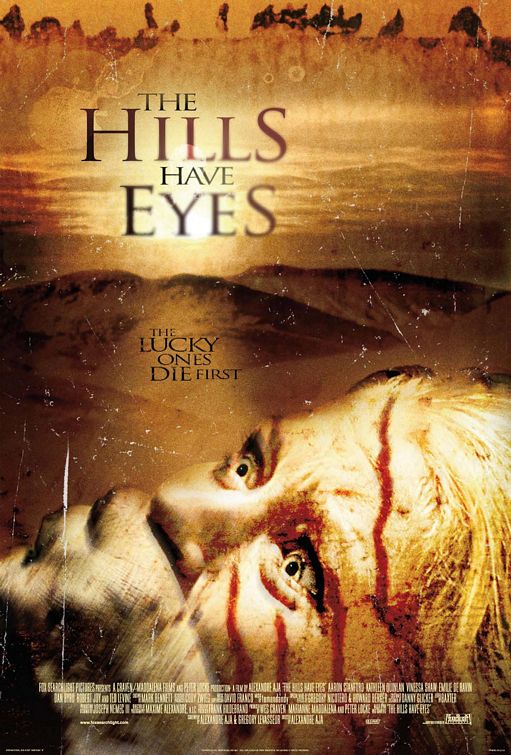
Review: The Hills Have Eyes (dir. by Alexandre Aja)


Many people have issues about remakes and reboots. They see it as unnecessary and a proof that the film industry has run out of ideas. I can’t say that either points have no validity to them, but I disagree with both.While all genres of film have had it’s share of remakes and reboots its the horror section of the film aisle which has seen the most. This shouldn’t come as a shock since horror has always been ripe for remakes. The stories in horror films have always been quite simple and producers take advantage of this by remaking them for a new generation. Take the simple set-up, change the time and setting with a new cast of cheap, unknown actors and you got yourself a horror flick which should make back its budget and make its filmmakers a profit.

While most horror remakes usually range from average to truly dreadful there comes a time when one comes out of the horror remake heap to actually show promise and quality not seen in its remake brethren. One such film is in the Alexandre Aja directed and Wes Craven produced The Hills Have Eyes. Aja’s The Hills Have Eyes is the rare horror remake in that its more than a match to Wes Craven’s original and, at times, surpasses it.

Alexandre Aja first burst onto the horror-cinema scene with his ambitious and grisly homage to grindhouse horror: Haute Tension. Haute Tension was one nasty piece of horror filmmaking which brought to mind 70’s and early 80’s horror exploitation and grindhouse mentality. Aja’s directorial debut was a no-hold-s-barred punch and kick to the stomach that was overtly violent and sublimely painful for the audience to watch. Aja was soon tapped by Wes Craven to lead the remake project of his own The Hills Have Eyes and to Aja’s growing reputation as a rising star of horror, he grew as a filmmaker and more than earned this reputation.

Aja’s The Hills Have Eyes follows pretty much the very same story and characters as the original. This remake has abit more of a political sense to its storytelling in that it doesn’t just pit the basic premise of civilized humans versus the primal inbred, mutant hill dweller, but also the different demographics of red state versus blue state. This theme was hammered through to the audience through the subsurface conflict between Big Bob Carter’s (well-played by industry veteran Ted Levine) red state gung-ho ex-detective and his son-in-law Doug’s (X2‘s Aaron Stafford) pacifist mentality. I think this new wrinkle in the original’s sparse and tight story was unnecessary and unsubtly done. I really didn’t want to know what political leanings and motivations the Carter family members followed. What I did care about was how they would react to the outside forces that was soon to menace and attack them.

The first half of the film was very deliberate in its set-up as it slowly built up the tension and dread as the Carter family’s journey through a supposedly short-cut through the desert put them closer and closer to the dangerous people who dwelt amongst the hills bordering the desert road. Once the family becomes stranded in the middle of nowhere the fun begins for horror-aficionados. For those who have seen the original this remake doesn’t deviate from the main story. The hill people who, up until now have only been glimpsed through quick shadowy movements across the screen, were the true cause of the family’s predicament attack in a brutal and grisly fashion. None of the Carter family members were spared from this attack. From Big Bob Carter, his wife Ethel, their three children, son-in-law and young granddaughter they all suffer in one form or another. The night attack on the camper is the main highlight of the film and shows that Aja hasn’t lost his touch for creating a horror setpiece that doesn’t hold back. From the brutal rape of the Carter’s youngest daughter Brenda to the sudden deaths of several Carter family members. This sequence was both fast-paced and chaotic in nature. It also helped push the definition of what constitute a very hard R-rating. Just like Zombie’s The Devil’s Rejects and Roth’s Hostel, The Hills Have Eyes pushed the limits and boundaries of what the MPAA has allowed so far in terms of on-screen violence when it was first released in 2006. I’m very surprised that some of the violence and deaths in this film made the final cut. This film definitely brings back the 70’s style horror.

The cast for this remake was one high point that the original didn’t have. Where Craven had a very inexperienced cast for the original film. Aja had the luxury of a bigger budget to hire a more competent and able group of actors. A cast that was led by Ted Levine who shined in his role as the patriarch of the civilized Carters. Kathleen Quinlan as the mother of the bunch soldiers on even though its almost predestined in films such as this that she would be one of the doomed. The two daughters as played by Vinessa Shaw and Lost’s Emilie De Ravin were quite good in roles that involved some very graphic rape sequences. Much kudos must go to De Ravin for having to perform through her scene during the trailer-camper attack. But the two actors who excelled in the film has to be pacifist turned avenging angel Doug as played by Aaron Stafford. We see in his character Doug the lengths a civilized human being would go through to survive and protect those he cares for. Even if this means resorting to becoming more brutal and primal than the inbred, mutant hill dwellers. It’s in Doug’s character where the basic premise of the clash of the modern with the primitive comes close to matching the same theme in the original. To a smaller degree this was also echoed in the Carter’s teenage son Bobby. Dan Byrd of Entourage plays Bobby Carter and its in him we see the level-headedness of the family. Despite all the horror and carnage he has seen the hill dwellers have inflicted on his family, Bobby remains somewhat calm and even-keeled to protect what is left of his family. The only drawback as to the cast itself was that the opposing family seemed to have been shortchanged. In the original we actually got to understand some of the motivations that drove the hill dwellers to prey on unsuspecting travelers through their area. In this remake the hill dwellers seem more like superhuman monsters and boogeymen. It didn’t bother me as much, but then it also lessened the impact of the story’s basic premise of civilization versus primitives.

Lastly, the look of the film helps add to the grindhouse nature of Aja’s remake. The film has an oversaturated look and feel that took advantage of the desert location and the high-sun overhead. This oversaturation of the film’s look also lends some credence to its grindhouse sensibilities. It looked, felt and acted like something made during the late 70’s and early 80’s. For most fans of horror it would really come down to the special-effects used to show the death and violence’s impact on the audience. Once again, Greg Nicotero and his crew at KNB EFX house show that they’re the premiere effects house. The make-up used to show the mutant effects on the survivors of the original inhabitants of the hills was excellently done. The same goes for the gags used to show the many brutal and messy deaths of both families.

There’s no denying that The Hills Have Eyes was all about pain when boiled down to its most basic denominator. This film is all about pushing the boundaries and piling on violence upon violence. The Hills Have Eyes is not a film that tells us violence solves nothing. Here it does solve the problem for the Carter clan and is also the only avenue of survival of the remaining Carters. The same goes for the nuclear survivors and their offspring who stayed in the irradiated zones that was their home. This film is all about survival and the levels and heights individuals would take to achieve it.

The Hills Have Eyes might not be the original second helping some have expected from Aja after his brilliant, if somewhat flawed first major film with Haute Tension, but it does show his growth as a filmmaker and his clean grasp of what makes horror cinema truly terrifying and uncomfortable. Two ingredients that makes for making a genre exploitation fare into something of a classic. I’m sure that outside of the horror-aficionado circles this film will either be met with indifference or disgust, but for those who revel in this type of filmmaking then it’s a glorious continuation of the grindhouse horror revival that began with Aja’s own Haute Tension, continued by Zombie’s The Devil’s Rejects, Roth’s Hostel  and continues to live each and every year with the many direct-to-video releases of cheap, but very good horror films. It truly is a great time to be a fan of horror and Aja’s The Hills Have Eyes more than holds its own against Craven’s original.

10 (Plus) Of My Favorite DVD Commentary Tracks


It seems like I’m always taking a chance when I listen to a DVD commentary track.  Occasionally, a commentary track will make a bad film good and a good film even better.  Far too often, however, listening to a bad or boring commentary track will so totally ruin the experience of watching one of my favorite movies that I’ll never be able to enjoy that movie in the same way again.  I’ve learned to almost always involve any commentary track that involves anyone credited as being an “executive producer.”  They always want to tell you every single detail of what they had to do to raise the money to make the film.  Seriously, executive producers suck. 

However, there are more than a few commentary tracks that I could listen to over and over again.  Listed below are a few of them.

10) Last House On The Left (The Original) — Apparently, there’s a DVD of this film that features a commentary track in which stars David Hess and Fred Lincoln nearly come to blows while debating whether or not this movie should have been made.  The DVD I own doesn’t feature that commentary but it does feature a track featuring writer/director Wes Craven and producer Sean S. Cunningham.  The thing that I love about their commentary is that they both just come across as such nice, kinda nerdy guys.  You look at the disturbing images onscreen and then you hear Cunningham saying, “We shot this scene in my mom’s backyard.  There’s her swimming pool…”  Both Craven and Cunningham are remarkably honest about the film’s shortcomings (at one point, Craven listens to some of his more awkward dialogue and then says, “Apparently, I was obsessed with breasts…”) while, at the same time, putting the film’s controversy into the proper historical context.

9) Burnt Offerings — When Burnt Offerings, which is an occasionally interesting haunted house movie from 1976, was released on DVD, it came with a commentary track featuring director Dan Curtis, star Karen Black, and the guy who wrote the movie.  This commentary track holds a strange fascination for me because it, literally, is so mind-numbingly bad that I’m not convinced that it wasn’t meant to be some sort of parody of a bad commentary track.   It’s the commentary track equivalent of a car crash.  Curtis dominates the track which is a problem because he comes across like the type of grouchy old man that Ed Asner voiced in Up before his house floated away.  The screenwriter, whose name I cannot bring myself to look up, bravely insists that there’s a lot of nuance to his painfully simple-minded script.  Karen Black, meanwhile, tries to keep things positive.  The high point of the commentary comes when Black points out that one actor playing a menacing chauffeur is giving a good performance (which he is, the performance is the best part of the movie).  She asks who the actor is.  Curtis snaps back that he doesn’t know and then gets testy when Black continues to praise the performance.  Finally, Curtis snaps that the actor’s just some guy they found at an audition.  Actually, the actor is a veteran character actor named Anthony James who has accumulated nearly 100 credits and had a prominent supporting role in two best picture winners (In the Heat of the Night and Unforgiven).

8 ) Cannibal Ferox — This is a good example of a really unwatchable movie that’s made watchable by an entertaining commentary track.  The track is actually made up of two different tracks, one with co-star Giovanni Lombardo Radice and one with director Umberto Lenzi.  Lenzi loves the film and, speaking in broken English, happily defends every frame of it and goes so far as to compare the movie to a John Ford western.  The wonderfully erudite Radice, on the other hand, hates the movie and spends his entire track alternatively apologizing for the movie and wondering why anyone would possibly want to watch it.  My favorite moment comes when Radice, watching the characters onscreen move closer and closer to their bloody doom, says, “They’re all quite stupid, aren’t they?”

7) Race With The Devil Race with the Devil is an obscure but enjoyable drive-in movie from the 70s.  The DVD commentary is provided by costar Lara Parker who, along with providing a lot of behind-the-scenes information, also gets memorably catty when talking about some of her costars.  And, let’s be honest, that’s what most of us want to hear during a DVD commentary.

6) Anything featuring Tim Lucas — Tim Lucas is the world’s foremost authority on one of the greatest directors ever, Mario Bava.  Anchor Bay wisely recruited Lucas to provide commentary for all the Bava films they’ve released on DVD and, even when it comes to some of Bava’s lesser films, Lucas is always informative and insightful.  Perhaps even more importantly, Lucas obviously enjoys watching these movies as much as the rest of us.  Treat yourself and order the Mario Bava Collection Volume 1 and Volume 2.
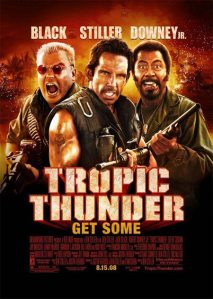
5) Tropic Thunder — The commentary track here is provided by the film’s co-stars, Jack Black, Ben Stiller, and Robert Downey, Jr.  What makes it great is that Downey provides his commentary in character as Sgt. Osiris and spends almost the entire track beating up on Jack Black.  This is a rare case of a great movie that has an even greater commentary track.

4) Strange Behavior — This wonderfully offbeat slasher film from 1981 is one of the best movies that nobody seems to have heard of.  For that reason alone, you need to get the DVD and watch it.  Now.  As an added bonus, the DVD comes with a lively commentary track featuring co-stars Dan Shor and Dey Young and the film’s screenwriter, Bill Condon (who is now the director that Rob Marshall wishes he could be).  Along with providing a lot of fascinating behind-the-scenes trivia, the three of them also discuss how Young ended up getting seduced by the film’s star (Michael Murphy, who was several decades older), how shocked Condon was that nobody on the set seemed to realize that he’s gay, and why American actors have so much trouble speaking in any accent other than their own.  Most memorable is Young remembering the experience of sitting in a theater, seeing herself getting beaten up onscreen, and then listening as the people sitting around her cheered.

3) Imaginationland — As anyone who has ever listened to their South Park commentaries knows, Matt Stone and Trey Parker usually only offer up about five minutes of commentary per episode before falling silent.  Fortunately, those five minutes are usually hilarious and insightful.  Not only are Parker and Stone remarkably candid when talking about the strengths and weaknesses of their work but they also obviously enjoy hanging out with each other.  With the DVD release of South Park’s Imaginationland trilogy, Matt and Trey attempted to record a “full” 90-minute commentary track.  For the record, they manage to talk for 60 minutes before losing interest and ending the commentary.  However, that track is the funniest, most insightful 60 minutes that one could hope for.

2) Donnie Darko — The original DVD release of Donnie Darko came with 2 wonderful commentary tracks.  The first one features Richard Kelley and Jack Gyllenhaal, talking about the very metaphysical issues that the film addresses.  Having listened to the track, I’m still convinced that Kelley pretty much just made up the film as he went along but its still fascinating to the hear everything that was going on his mind while he was making the film.  However, as good as that first track is, I absolutely love and adore the second one because it features literally the entire cast of the movie.  Seriously, everyone from Drew Barrymore to Jena Malone to Holmes Osborne to the guy who played Frank the Bunny is featured on this track.  They watch the film, everyone comments on random things, and it’s difficult to keep track of who is saying what.  And that’s part of the fun.  It’s like watching the film at a party full of people who are a lot more interesting, funny, and likable than your own actual friends.

1) The Beyond — This movie, one of the greatest ever made, had one of the best casts in the history of Italian horror and the commentary here features two key members of that cast — Catriona MacColl and the late (and wonderful) David Warbeck.  The commentary, which I believe was actually recorded for a laserdisc edition of the film (though, to be honest, I’ve never actually seen a “laserdisc” and I have my doubts as to whether or not they actually ever existed), was recorded in 1997, shortly after the death of director Lucio Fulci and at a time when Warbeck himself was dying from cancer.  (Warbeck would pass away two weeks after recording this commentary).  This makes this commentary especially poignant.  Warbeck was, in many ways, the human face of Italian exploitation, a talented actor who probably deserved to be a bigger star but who was never ashamed of the films he ended up making.  This commentary — in which MacColl and Warbeck quite cheerfully recall discuss making this underrated movie — is as much a tribute to Warbeck as it is to Fulci.  Highpoint: MacColl pointing out all the scenes in which Warbeck nearly made her break out laughing.  My personal favorite is the scene (which made it into the final film) where Warbeck attempts to load a gun by shoving bullets down the barrel.  The wonderful thing about this track is that Warbeck and MacColl enjoy watching it too.