Scenes That I Love: Aguirre Declares Himself To Be The Wrath of God


In honor of Werner Herzog’s birthday, today’s scene that I love comes from one of his best films.  1972’s Aguirre, The Wrath of God not only established Herzog as a major filmmaker but it also showed that he was the director who could get the best out of the notoriously difficult Klaus Kinski.

In this scene, Kinski plays the mad conquistador, Aguirre.  Lost with his men in the Amazon, Aguirre establishes control over the dwindling expedition.

4 Shots From 4 Films: Special Werner Herzog Edition


4 Or More Shots From 4 Or More Films is just what it says it is, 4 shots from 4 of our favorite films. As opposed to the reviews and recaps that we usually post, 4 Shots From 4 Films lets the visuals do the talking!

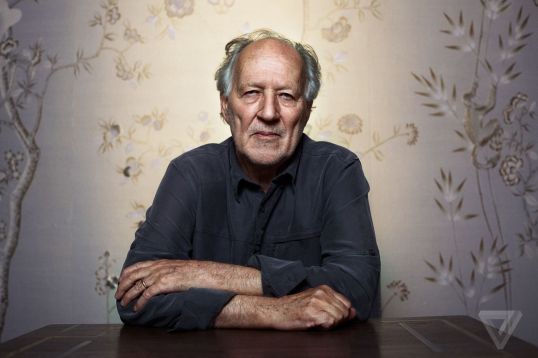
Today, the Shattered Lens wishes a happy birthday to one our favorite directors, the great Werner Herzog!  It’s time for….

4 Shots From 4 Werner Herzog Films

The Enigma of Kaspar Hauser (1974, dir by Werner Herzog, DP: Jörg Schmidt-Reitwein)

Stroszek (1977, dir by Werner Herzog, DP: Thomas Mauch)

Woyzeck (1979, dir by Werner Herzog, DP: Jorg Schmidt-Reitwein)

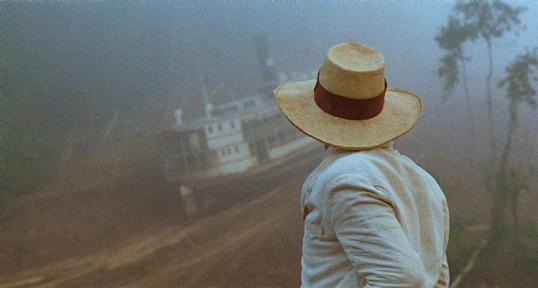
Fitzcarraldo (1982, dir by Werner Herzog, DP: Thomas Mauch)

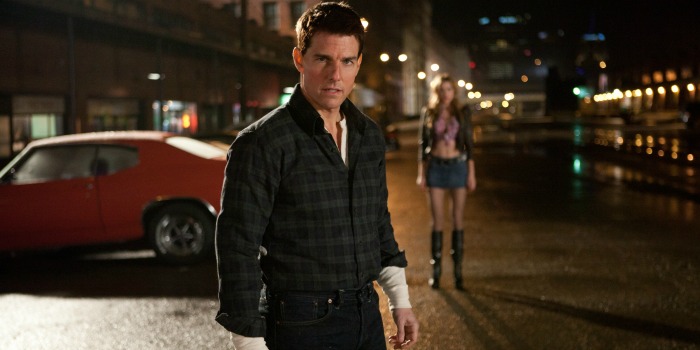
Brad reviews JACK REACHER (2012), starring Tom Cruise!


In honor of Tom Cruise’s 63rd birthday, I decided to revisit the 2012 film JACK REACHER. Cruise stars as the title character in the film version of the Lee Child novel “One Shot.” The story follows Reacher, a former military investigator, who gets pulled into the case of James Barr (Joseph Sikora), a sniper who supposedly killed five people in a random shooting in Pittsburgh. Although all the evidence is neatly stacked up against Barr, the sniper just has one request for his defense, “Get Jack Reacher.” Emerging from a self-imposed hiding, Reacher teams up with Barr’s defense attorney Helen Rodin (Rosamund Pike), to try to figure out what in the hell is going on. Once he has access to the evidence, and based on what he already knows about James Barr, Reacher immediately starts tearing holes in the case being presented by Police Detective Calvin Emerson (David Oyelowo) and District Attorney Alex Rodin (Richard Jenkins). Reacher’s own investigation uncovers a conspiracy involving a mysterious criminal organization led by the evil, and partially deformed Zec (Werner Herzog), whose plans are violently enforced by his badass henchman Charlie (Jai Courtney). It seems they have orchestrated the shooting to appear random, but they were really just after one person, Oline Archer (Susan Angelo), whose construction company is vital to their criminal enterprise. With the help of defense attorney Rodin, as well as the owner of an Ohio shooting range, former Marines Corps Gunnery Sergeant Martin Cash (Robert Duvall), Reacher is determined to bring the real killers to justice!

I remember there being some controversy surrounding the announcement that Tom Cruise would be starring as Jack Reacher. Dedicated readers of Lee Child’s books didn’t seem to appreciate that Cruise’s physical stature is not even close to the way the character is described. If I was an avid fan of the books, I would definitely understand the concern, but I’ve never read a single book in the series. This is one of those instances where my lack of reading experience allows me to completely enjoy the film, because Tom Cruise is flat out excellent. He’s smart, funny, a badass lone wolf of justice, and completely believable. I’d go so far as to say that the primary reason I love this film is Tom Cruise’s incredible star turn as Jack Reacher. With the choice of Tom Cruise or another actor who more closely resembles the Reacher from the book, I’m going with Cruise 10 out of 10 times. With that said, I’m also happy for the purists out there that the new REACHER series on Amazon, which began in 2022 and is still going strong, addresses this “size controversy” in it’s casting. I’ve heard good things about the series, and I’ll eventually get around to watching it as well.

Aside from Tom Cruise’s magnetic central performance, I find JACK REACHER to be a truly entertaining movie, and I don’t think we get enough of those these days. It has exciting and fun action scenes, a sly sense of humor, chillingly evil bad guys who get their comeuppance at the end, and an incredible supporting cast. Thinking back on it now, Rosamund Pike as the defense attorney, Werner Herzog as the evil villain, and Robert Duvall as the “cranky old Robert Duvall” character are the supporting performances that stand out the most to me, but all the casting choices are good. With his shepherding of the “Mission: Impossible” series, director Christopher McQuarrie has proven himself to be an expert at delivering fun movies, and he delivered big time here for film audiences a few years before taking on his first impossible mission.

In summary, I don’t really have a single negative thing to say about JACK REACHER. Most of the negative things I’ve read online have been due to the disappointment that some viewers have felt based on the differences between the books and the movie. I just know that I still watch it every couple of years and enjoy it immensely each time. JACK REACHER is one of my favorite films of its decade!

4 Shots From 4 Films: Special 1982 Edition


4 Or More Shots From 4 Or More Films is just what it says it is, 4 shots from 4 of our favorite films. As opposed to the reviews and recaps that we usually post, 4 Shots From 4 Films lets the visuals do the talking!

Today, we pay tribute to the year 1982 with….

4 Shots From 4 1982 Films

Fitzcarraldo (1982, dir by Werner Herzog, DP: Thomas Mauch)

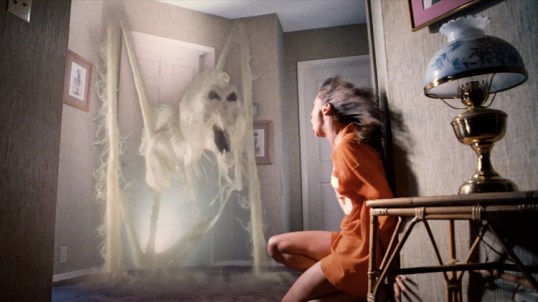
Poltergeist (1982, dir by Tobe Hooper, DP: Matthew Leonetti)

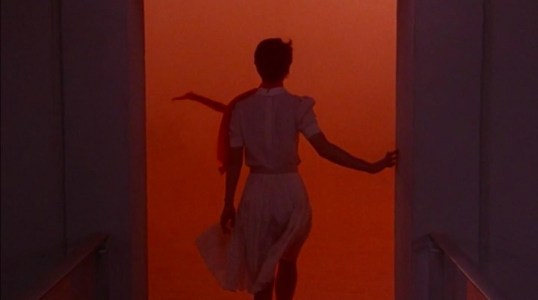
Cat People (1982, dir by Paul Schrader, DP: John Bailey)

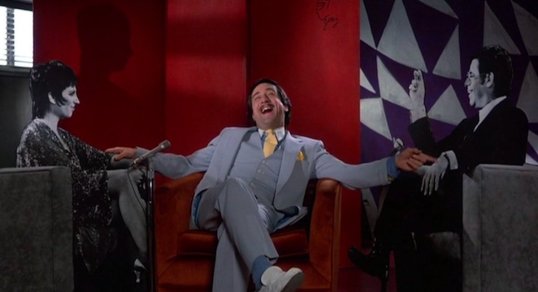
King of Comedy (1982, dir by Martin Scorsese, DP: Fred Schuler)

4 Shots From 4 Films: Special New Orleans Edition


4 (or more) Shots From 4 (or more) Films is just what it says it is, 4 (or more) shots from 4 (or more) of our favorite films. As opposed to the reviews and recaps that we usually post, 4 (or more) Shots From 4 (or more) Films lets the visuals do the talking.

Today, the Shattered Lens pays homage to the greatest of Mardi Gras cities, New Orleans!

4 Shots From 4 New Orleans-Set Films

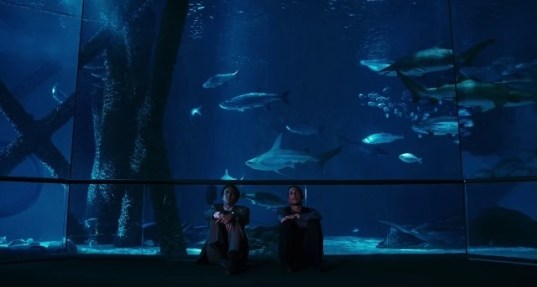
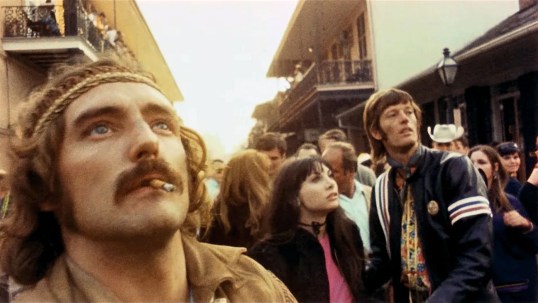
Easy Rider (1969, dir by Dennis Hopper, DP: Laszlo Kovacs)

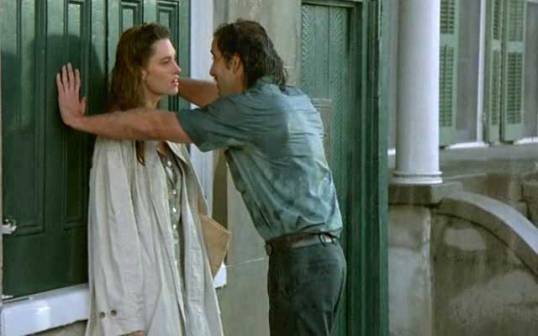
Zandalee (1990, dir by Sam Pillsbury, DP: Walt Lloyd)

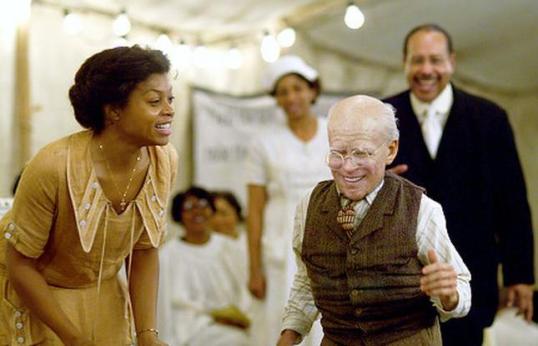
The Curious Case of Benjamin Button (2008, dir by David Fincher, DP: Claudio Miranda)

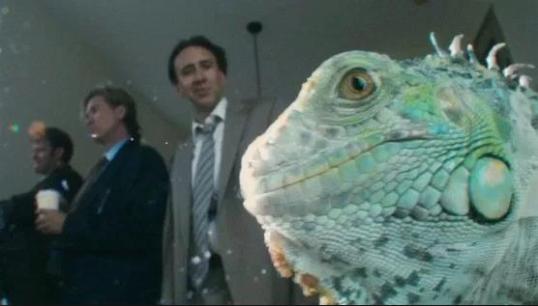
Bad Lieutenant: Port of Call New Orleans (2009, dir by Werner Herzog, DP: Peter Zieitlinger)


Film Review: Woyzeck (dir by Werner Herzog)


First released in 1979 and directed by the great Werner Herzog, Woyzeck takes place in a small German town in the 19th century.  It’s the type of town where everyone knows everyone else and not much happens.  As is mentioned towards the end of the film, it’s been a while since the town has seen a “real murder.”

Franz Woyzeck (Klaus Kinski) is a soldier who lives in the town.  He’s had a son with Marie (Eva Mattes), despite not being married to her.  For that, Woyzeck’s Captain (Wolfgang Reichmann) continually tells him that he is immoral.  Woyzeck replies that the poor cannot afford morals.  To make extra money, Woyzeck does odd jobs for the Captain and he’s agreed to serve as an experimental test subject for the Doctor (Willy Semmelrogge).  The Doctor, who looks down on Woyzeck, has put Woyzeck on a diet of only peas.  He’s curious to see what this does to Woyzeck’s physical well-being but he has no interest in the fact that Woyzeck is obviously going mad.

Woyzeck, who, at the start of the film, is already hearing voices and talking about his apocalyptic visions, comes to suspect that Marie is cheating on him with a handsome Drum Major (Josef Bierbichler).  While the film does make it clear that the Drum Major is interested in Marie, whether or not she’s actually cheating is left ambiguous.  Woyzeck may believe that she is but Woyzeck also believes that he’s having visions of the end of the world so who knows whether one should trust his opinion.  Eventually, Woyzeck’s madness leads to tragedy and another ambiguous ending.  (The ambiguity reflects not only Werner Herzog’s customary aesthetic but also the fact that the film is based on a fragment of an unfinished play.)

What drives Woyzeck mad?  Was he born mad or was he driven mad by his jealousy over the Drum Major?  Does he truly love Marie or, as someone who has very little to his name, does he just want to possess her?  Is he driven crazy by the inequality all around him or is he just looking for an excuse to justify his own disturbed thoughts?  Herzog does not provide a definitive answer.  Why Woyzeck goes mad is less important than the fact that the community around him is thoroughly and totally indifferent to the fact that he’s obviously losing his mind.  The Captain lectures him as him as if he’s merely a teenager who needs to grow up.  The Doctor only cares about Woyzeck as a test subject.  Even Marie seems to be indifferent to his instability.

With each scene shot in one take and featuring a largely stationary camera, Woyzeck captures the claustrophobic feeling of being trapped in one’s circumstances.  Woyzeck is desperate to escape both his circumstances and his madness but Herzog makes it clear that Woyzeck has nowhere to go.  He’s trapped in his life and his fate feels almost pre-ordained.  This film is dark, even by the standards of Werner Herzog,  However, it also features one of Klaus Kinski’s rare sympathetic roles.  It’s not surprising that Kinski is convincing as a madman as Kinski is often said to have been a bit mad in real life as well.  What stands out is just how good a job Kinski does at playing the rather meek and subservient side of Woyzeck.  Woyzeck features one of Klaus Kinski’s best performances.

In My Best Fiend, Herzog said (one hopes jokingly) that he was often tempted to have Kinski killed.  Woyzeck shows us why we should be happy that he didn’t.

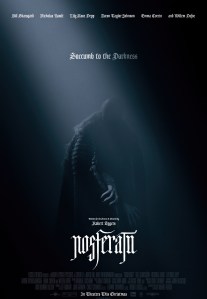
Film Review: Nosferatu (dir. by Robert Eggers)


I stepped out of the doors of the Regal Times Square yesterday, feeling giddy as a schoolkid. In my hands were a custom popcorn bucket and an Orlock Funko-Pop. I thoroughly enjoyed Robert Eggers Nosferatu and Christmas Morning was a delight. It was Film Euphoria. It was as if Halloween had one last gift to give, one final end of film zinger, and give it did.

At my early morning showing for Robert Eggers Nosferatu, we had at least one fellow who fell asleep and snored through the bulk of the film. Not loud enough to be disruptive, but it almost mimicked the strange purring sounds of the film’s antagonist. Granted, I understand. My showing was around 10a.m. on Christmas Morning and perhaps they partied hard the night before. Anything’s possible. Still, part of me likes to think that a person walking into a Robert Eggers film may have some expectations. With only three films under his belt – The Witch, The Lighthouse, and The Northman, regular audiences know that he has a taste for the macabre (perhaps even the unhinged), usually employs a slow burn when it comes to pacing and works with a great deal of light and shadow. If either of his previous films worked for you, Nosferatu‘s a near perfect fit for his style. If you’re not a fan of Eggers work, nor a fan of the previous renditions of Nosferatu, there’s little here that will make you change your mind (save for just a little more gore, perhaps). It’s a little hard to spoil a story that’s more than a century old, but Eggers makes enough changes to keep the film from being the exact note for note story as before. Is it scary? Yes. Is there blood? Sure, but none of it is in the ‘jumpscare every other second’ variety. If that’s what you’re looking or hoping for, none of the Nosferatu’s (including this one) will deliver that and you will be quite disappointed. This is a prime cut of wagyu beef, not your everyday sirloin.

As most know, Nosferatu was essentially stolen from Bram Stoker’s Dracula. The original – Nosferatu: A Symphony of Horror was a silent film released back in 1922 by F. W. Murnau. Although the story was written and changed to fit German audiences, elements were still very close to Stoker’s and the Stoker Family tried to get rid of it. Copies were burned, but like that Jumanji box, it managed to slither through the years, gaining popularity to the point of Canonization. If Film History is your thing, I highly recommend watching the 1922 film, if you haven’t already. It amazes me how most of what they did was accomplished (my favorite scene being Orlok prepping his coffins for his trip). At the time of this writing, the movie is currently available on Amazon Prime. For me, I love the 1979 update by Werner Herzog, Nosferatu The Vampyre. There are a few minor changes in the plot, but it’s just as powerful.

Thomas Hutter (Nicholas Hoult, Mad Max: Fury Road) is married to his lovely wife Ellen (Lily-Rose Depp, The King) in the town of Wisborg. Ellen suffers from fits of melancholia, which cause her to either spurt morbid tales or put her in convulsive fits. He’s looking for a way to improve his financial station with his bride while keeping her problems hushed, and has found a great opportunity from his boss, Herr Knock (Simon Burney, Mission Impossible: Rogue Nation). It appears a wealthy old man wishes to move to Wisborg and purchase an estate there. The only stipulation is that he is infirm and cannot make the journey. Thomas is charged with traveling to the Carpathian mountains, where he is to visit Count Orlock at his home with the deeds and contracts. During his trip, Thomas is warned of the dangers ahead, but proceeds full on, meeting the Count and his strange ways. Upon learning of Ellen and her beauty, the Count sets off a chain of events that will put all of Wisborg at risk. Can the Count be stopped in time?

There’s so much love in this production, it seems. It certainly has the atmosphere down. Cinematographer Jarin Blaschke, who worked on all of Eggers previous films, weaves some magic with light that in some scenes rival Alejandro Amenabar’s The Others. Lanterns and candles are blinding, while at the same time, you might find yourself squinting to see the figure in the shadows. I had a few “look around the screen” moments while watching it. There’s absolutely nothing to complain about from a visual standpoint, it’s just beautiful. It’s also quite dark in nature. We’re dealing with vampires, possession and the occult, which Eggers takes in a few extremes (particularly through Skarsgard, Depp and Burney). Ancient tomes? Check. Romani banishing the darkness with Garlic? Check. Consecrating the soil? Done. The sound design in the film is nice, particularly with the breathing and talking for Orlok, which felt like it travelled through the audience. Blood squelches, screams are crisp. There’s little more I can say there, really. I was entertained and transported.

The cast is wonderful. The only thing I’ve ever watched Lily-Rose Deep do was Yoga Hosers, and she’s come a long way from that. Ellen is a tortured character, and Deep rides this through – fits, convulsions and all – to a point where you may wonder if she was really okay on set. We follow Nicholas Hoult’s Thomas as he moves from quiet reservation to curious disbelief and then ultimately, just full on terrified. Even the smaller roles work. Simon Burney’s character becomes repulsive. Emma Corrin, who had a fun turn earlier this year in Deadpool & Wolverine has good moments, along with Aaron Taylor-Johnson (Kraven the Hunter). Then there’s Dafoe. It never hurts to have Willem Dafoe in your lineup. This is his third film with Eggers and he’s come something of a lucky charm as Prof. Ebenhart von Franz. As the Van Helsing of the story, Dafoe is a treat to watch on screen, especially when paired with Ralph Ineson from The Witch. I could watch the two of them as detectives solving Gothic/Victorian X-Files in their own series or movies.

As Orlock, Bill Skarsgard (John Wick 4) really melts into the role, giving the character a low near constant purr and a voice that enunciates every word. Perhaps it was just me, but I did have a bit of a problem figuring out what Orlock was saying at some points. It improved as the story went on, though. Orlock’s look does veer from the traditional, through. That’s a jolt in itself. While he looks more like the Draugr in Skyrim or in Eggers own The Northman, I found myself thinking of “Taserface” in Guardians of the Galaxy, Vol. 2. If you can get past that feeling, it still works. It’s a creepy character and Skarsgard does it justice, I felt.

Clocking in at about 2 hours and 12 minutes, it’s considered the longest Nosferatu film. I found this odd because were a number of sequences the original and remake had that Eggers missed (like the loading of the coffins). The film is cut pretty well, for what it’s worth, though I’m not sure what they could have removed to trim scenes down.

If the film has any faults, any problems, there was one. The one weird misstep in all of this is a sex scene that seemed just a little out of place. I understand why it happened, and how it was supposed to fuel the story, but it comes on so fast and fierce that I sat there in the audience whispering…”Wait…what’s happening…Whoa…now? Here? Why?” Mind you, this is coming from someone who watched Shame more than once when it was first released. That, if anything, might freak a few people out if they’re not ready for it. Either that, or I’m becoming prudish in my old age.

Overall, I loved Nosferatu. If it weren’t so expensive to get out to a theatre, I’d make another run at it. As a remake, it easily stands toe to toe with John Carpenter’s The Thing and Chuck Russell’s The Blob as one you can sit on the shelf next to those who came before it. It’s a worthy adaptation, with moments of sheer dread and some that may push a boundary or two.
Horror Scenes That I Love: The Danse Macabre in Werner Herzog’s Nosferatu


Since today’s horror on the lens was the original Nosferatu, it feels appropriate that today’s scene of the day should come from Werner Herzog’s 1979 remake.  In this scene, Lucy (Isabella Adjani) observes firsthand the madness that has come to the town of Wismar, along with the vampire and ship full of  plague-carrying rats.  While the people of the town have a last supper and celebrate their impending doom, Lucy tries to figure out a way to save them from Klaus Kinski’s Dracula.

This scene is a perfect example of how the director of a remake can both pay respectful homage to his source material while also bringing his own concerns to the story.

The Films of 2024: Orion and the Dark (dir by Sean Charmatz)


In 1995, an 11 year-old boy named Orion (voiced by Jacob Tremblay) lives in Philadelphia.

He has two loving parents.  He lives in a nice house.  He has his fist crush, on his classmate Sally (voiced by Shino Nakamichi).  He has a bully (voiced by Jack Fisher) who enjoys giving him a hard time and he has several notebooks full of his thoughts and drawings.  He also has a lot of fears.

Indeed, it’s his fears that largely define Orion.  Some of his fears are understandable.  I don’t like wasps or murder clowns either.  Some of his other fears are a bit more elaborate.  He’s scared of his bully but he’s even more scared of fighting his bully because he might accidentally break the bully’s nose and drive a piece of bone into the bully’s brain, therefore killing him.  His biggest fear, however, is his fear of the Dark.

In fact, Orion spends so much time talking about how much he hates the dark and how scared he is of the dark that Dark (Paul Walter Hauser) appears to him in human form and explain that he’s getting tired of Orion blaming him for anything.  Dark takes Orion with him as he travels across the world, bringing darkness to various countries and overseeing various other elements, like Sweet Dreams (Angela Bassett), Unexplained Noises (Golda Rosheuvel), Insomnia (Nat Faxon), Quiet (Aparna Nancherla), and Sleep (Natasia Demetriou).  Dark shows Orion that there’s no need to scared of the dark and that everyone involved is just doing their job.  Orion comes to understand and appreciate Dark but, when he makes the mistake of saying that he still kind of likes Light (voice by Ike Barinholtz) better, it leads to a lot of hurt feelings and resignations….

If this sounds a bit weird, one should keep in mind that the story is being told by the adult Orion (voiced by Colin Hanks) to his daughter, Hypathia (Mia Akemi Brown).  Adult Orion is telling the story to help Hypathia deal with her own fears and it soon becomes obvious that he’s making it up as he goes along.  Hypathia is aware of this and has no hesitation about calling out the stuff that doesn’t make any sense.  And when Orion proves incapable of coming up with a satisfactory ending for his story, Hypathia jumps into the story herself in an attempt to bring it all to a proper conclusion.  But once she’s in the story, can she get back out?

Orion and the Dark may sound like a standard “conquer your fears and believe in yourself” animated film but the script was written by Charlie Kaufman and, in typical Kaufman fashion, the story is full of twists and turns and more than a few moments of commentary on the whole act of storytelling itself.  There’s actually a lot going on in Orion and the Dark, with the film ultimately becoming a tribute to the power of imagination and to all of the parents-turned-storytellers in the world.

I’m a bit notorious for crying while watching animated films and I will say that Orion and the Dark brought tears to my eyes more than a few times.  It’s an incredibly sweet movie, one that can be appreciated by both children and adults.  It’s a movie about not just conquering fears but also using those fears to make oneself stronger.  The final message is that light cannot exist without the dark and vice versa but that’s okay.  There’s much to love in the light but the dark can be lovable too.  Fear is a part of life but it’s not the only part of life.

Creatively-animated and featuring a strong cast of voice actors, Orion and the Dark is definitely one to check out.

Horror Scenes That I Love: Klaus Kinski in Nosferatu


From the 1960s until his death in the early 90s, German actor Klaus Kinski was known for being the enfant terrible of world cinema.  Kinski was a volatile talent, an often angry and occasionally violent performer who specialized in playing extreme characters and who reportedly took pride in his ability to drive directors crazy.  Kinski appeared in good films and bad films and, in every one of them, he gave the type of unique performance that only he was cable of giving.

Kinski is best-remembered for his work with his frenemy, Werner Herzog.  When Herzog and Kinski weren’t making films together, they were often criticizing each other in the press and sending one another death threats.  In the documentary My Best Fiend, Herzog documented his partnership with Kinski.  Even while Herzog talked about the time that he went to Kinski’s home with the intent of killing him, Herzog’s affection for his frequent star was obvious.  Klaus Kinski was one of a kind.

In Werner Herzog’s 1980 film, Nosferatu, Kinski played the role of Dracula.  In this scene, she comes to visit Isabelle Adjani’s Lucy.