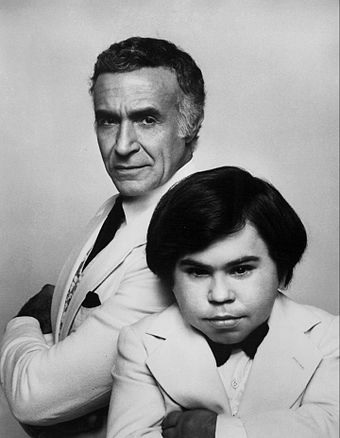
Welcome to Retro Television Reviews, a feature where we review some of our favorite and least favorite shows of the past! On Tuesdays, I will be reviewing the original Fantasy Island, which ran on ABC from 1977 to 1984. Unfortunately, the show has been removed from most streaming sites. Fortunately, I’ve got nearly every episode on my DVR.
Welcome to the sixth season of Fantasy Island!
Episode 6.1 “Curse of the Moreaus/My Man Friday”
(Dir by Bob Sweeney, originally aired on October 16th, 1982)
A new season has begun and the fifth season’s Julie experiment is officially over. Mr. Roarke is back and Tattoo is once again his only assistant. Julie is not only missing but she’s not even mentioned in this episode. Personally, I think Julie went to college on the mainland or maybe she married Gopher from the Love Boat. Either way, Julie is gone and Fantasy Island is back to normal.
This week’s fantasies both felt familiar. It was another haunted house fantasy and another “secretary-becomes-the-boss fantasy.” After spending nearly ten years as a secretary at an ad agency, Linda Whitney (Pamela Hensley) has watched as her stupid boss, Ed Turner (Avery Schrieber) has taken credit for all of her ideas and as everyone has gotten promoted but her. Linda wants to be an executive and fortunately, Mr. Roarke knows the president of her company. Linda has received a promotion to the executive suite. She has 48 hours to prove herself or she’ll be “demoted” back to secretary.
(Demoted is in scare quotes because, right out of college, I worked as an administrative assistant and let me just say that a good assistant is the most important person in any office.)
What’s odd about this fantasy is that Mr. Roarke arranges for Linda’s office to be transported to Fantasy Island. But all of Linda’s co-workers are transported to the Island as well. In fact, the entire building seems to now be on Fantasy Island. I mean, at this point, we all know that Mr. Roarke can pretty much do anything but even this seems a bit extreme for a fantasy that is clearly established as not being something that’s just happening in Linda’s head. Mr. Roarke is somehow transporting office buildings now. Were Linda’s co-workers given any warning before being transported to the Island?
It’s not easy being an executive. Her old boss wants her to fail. All of her former secretarial colleagues want her to fail. Can Linda get land the big account? Sure, she can. Luckily, she has a male secretary named Jack Friday (James Houghton) to help out! By the end of the episode, Linda has come to realize that she treated the handsome Jack almost as poorly and objectified Jack almost as much Ed Turner did to her. Then again, Jack does introduce himself by saying that he likes working for women because they have “better legs.” All that said, I liked the fantasy. I liked that Linda kept her promotion. I liked that she worked with Jack without falling in love with him. I like that she left the Island on her own, satisfied with her new career.
As for the other fantasy, Jack Moreau (Stuart Whitman) is haunted by nightmares in which he kills his wife, Kathy (Barbara Rush). Agck! It turns out that Moreau men are cursed. They murder their wives on their 50th birthday. Jack failed to mention this to Kathy when they got married. That’s probably grounds for divorce. Anyway, Mr. Roarke sends them to spend Jack’s birthday weekend in the Moreau plantation, where they are watched by a mysterious servant (Raymond St. Jacques) who seems to be all about driving Jack to murder his wife. Fortunately, Jack does not murder his wife. Kathy tells Jack that she loves him and the curse is broken. Hey, that was easy! That said, I enjoyed this fantasy. The Fantasy Island haunted house stories always have a lot of atmosphere to them. They’re fun to watch.
This was a good start of the season. It was nice to see Tattoo and Roarke joking again. Tattoo points out that a good boss needs good people working for him and Tattoo’s absolutely right.
Welcome to Late Night Retro Television Reviews, a feature where we review some of our favorite and least favorite shows of the past! On Mondays, I will be reviewing CHiPs, which ran on NBC from 1977 to 1983. The entire show is currently streaming on Freevee!
This week, Baker meets an old friend and Ponch is nearly commits a crime.
Episode 1.10 “Highway Robbery”
(Dir by Nicholas Colasanto, originally aired on December 1st, 1977)
There’s a man on a motorcycle who is driving up and down the highways of California. Whenever he comes across a traffic jam, he pulls up to people’s car and snatches whatever he can. One man loses his wallet and his watch. A woman has her purse taken. When Ponch and Baker arrest him, the thief is revealed to be Leo Norrison (David Wilson), an old high school classmate of Baker’s.
Baker and Leo used to play on the school’s football team. As Baker explains it, Leo was the student that everyone looked up to. He was “Mr. Most Likely To Succeed.” However, Leo fell on hard times after high school. He won a scholarship to play football in college but then he flunked the entrance exam. He joined the army but ended up losing his temper and striking his captain. Now, with a dishonorable discharge on his record, Leo is unemployable and bitter.
Baker offers to help Leo out and Leo seems to appreciate the offer. But, soon enough, Leo is back to stealing purses. When Baker and Ponch arrest him for a second time, it’s clear that Leo will not be getting any more chances at redemption.
Wow, what a sad story for an episode of CHiPs! Larry Wilcox can be a bit of a stiff actor but he actually did a really good job in this episode. Baker couldn’t believe that his high school hero was now a petty criminal and Leo couldn’t believe that Baker had ever looked up to him. As I watched this episode, I found myself wondering how many of my old high school classmates were now in jail.
Of course, this episode wasn’t all sad. For instance, there was a rather lengthy scene that centered around a minor accident involving a traveling circus. One of the circus’s elephants helped to pull a truck over to the side of the road. Good elephant!
And then there was Ponch’s storyline. In this episode, Ponch is even more cringey than usual. He has grown obsessed with a model in an ad for suntan lotion, to the extent that he’s constantly putting on suntan lotion and he has a cut-out of the ad hanging in his locker. When Ponch learn that the model is a friend of Getraer’s family, Ponch begs Getraer to set him up on a blind date. Getraer says it’s not a good idea but Ponch insists. Finally, Getraer relents.
Ponch shows up at the model’s house and discovers that Getraer is already there, having a glass of brandy with the model’s father (James Beach). They tell Ponch that “Janey” will be right down. When Janey (Wendy Fredericks) finally does come down to meet her date, Ponch is shocked to discover that …. SHE’S 15!
Getraer mention that Janey looks older in photographs. Baker and two other officers — Fitz (Lew Saunders) and Grossman (Paul Linke, a future series regular) — step into the living room and start laughing. Getraer laughs. Janey’s father laughs. Janey accepts Ponch’s flowers and then rests her head on his shoulder as the credits role….
So, just to repeat — SHE’S FIFTEEN!
Obviously, Ponch didn’t know that but still, it’s bizarre to see Janey’s father laughing about a 30 year-old showing up at the house to go on a date with his fifteen year-old daughter. Getraer essentially set Ponch up to potentially commit a felony and everyone thinks its hilarious. As the end credits rolled, I kept expecting Chris Hansen to step in the room and demand that everyone have a seat and explain what exactly it is they though they were doing.
Weird episode. The stuff involving Leo was surprisingly well-done for this show. The stuff with Ponch was truly cringe-inducing. I mean, even if Janey had been an adult, Ponch’s obsession with her would have been creepy. In the end, Baker’s friend went to jail and Ponch was thoroughly humiliated. I guess it all balances out.
Welcome to Retro Television Reviews, a feature where we review some of our favorite and least favorite shows of the past! On Tuesdays, I will be reviewing the original Fantasy Island, which ran on ABC from 1977 to 1986. The entire show is currently streaming on Tubi!
This week, Tattoo is nice and Mr. Roarke is understandably suspicious.
Episode 3.2 “Goose For The Gander/Stuntman”
(Dir by Cliff Bole, originally aired on September 14th, 1979)
This episode opens with Tattoo being very nice and polite to Mr. Roarke and asking if there is anything that he can do to help Roarke as they head out to meet the plane. It says a lot about how much Roarke hates his assistant that Roarke’s immediate reaction is to suspect that Tattoo has done something wrong and is trying to escape being punished as a result. By the end of the episode, Roarke learns that Tattoo is freaking out because Tattoo saw a classified ad announcing that Roarke was looking for a new “assistant manager,” and Tattoo feared he was going to be fired. Mr. Roarke has a good laugh over that. Roarke enjoys anything that makes Tattoo’s life miserable.
As for the fantasies, this is another week where we get one silly fantasy and one serious fantasy.
The silly fantasy involves Marjorie Gibbs (Doris Roberts), who owns a truck stop in Arizona. A new highway is being put in and all of Marjorie is going to have to relocate her diner. Unfortunately, that is going to cost money that Marjorie does not have. All of Marjorie’s customers tipped in and raised enough money to send Marjorie to Fantasy Island so that she can compete in a cooking contest and win a huge cash prize.
Can Marjorie win the contest? It’s not going to be easy, as one of her competitors is a sneaky French chef (Vito Scotti) and the judge (Hans Conried) is one of those food snobs. Fortunately, Marjorie strikes up a friendship with another diner owner, Joe Lange (Abe Vigoda). Joe supports Marjorie and helps her to win, even after the French chef steals one of Marjorie’s recipes! They also fall in love and save a goose from becoming a meal. Awwwwww! This was a silly but sweet fantasy. Doris Roberts and Abe Vigoda made for a good comedic team.
As for the serious fantasy, it’s all about stunts. Retired stuntman Peter Rawlings (Dale Robertson) comes to the island with his wife, Norma (Dana Wynter). Norma thinks this is just a normal vacation but Peter actually wants to come to the island because his son, Bill (Grant Goodeve), is the stunt coordination for a film that is shooting there. Bill has lived his whole life in his father’s shadow and Peter fears that Bill’s desire to pull off the biggest stunt of all time will lead to his death. Peter also discovers that Bill’s insecurity has led to him becoming a tyrant on the set. In fact, as soon as Peter shows up, Bill is fired and Peter is named the new stunt coordinator. Can father and son set aside their differences and pull off a truly spectacular stunt?
Of course they can. This is Fantasy Island.
This was one of those episodes that pretty much succeeded on the charm of the cast alone. Neither one of the fantasies was particularly interesting. We were told that Marjorie and Joe’s food was the best but, since we couldn’t taste it, we had no way of knowing for sure. And the big stunt really didn’t look all that special. But Doris Roberts, Dale Robertson, and Abe Vigoda all gave charming performances so, in the end, I was happy everything worked out.
Next week: Tattoo gets a fantasy! Roarke better watch out!
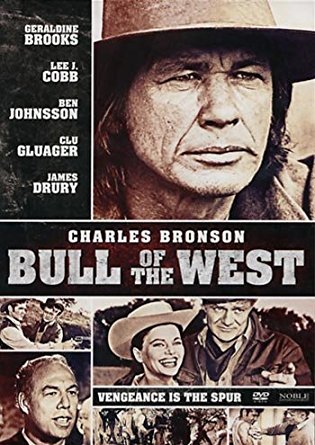
Welcome to the American frontier. The time is the 1880s and men and women everywhere are heading out west in search of their fortune. While stowing away on a train, veteran cowboy Johnny Wade (Brian Keith) meets the naive Steve Hill (Gary Clarke) and becomes a mentor to the younger man. Johnny teaches Steve how to shoot a gun and, when they get off the train at Medicine Bow, Wyoming, they get jobs working on the ranch of Georgia Price (Geraldine Brooks). When Georgia and Johnny plot to overgraze the land, Steve must decide whether he’s with them or with a rival rancher, Judge Garth (Lee J. Cobb).
At the same time, Ben Justin (Charles Bronson) has arrived in town with his son, Will (Robert Random), and his new wife (Lois Nettleton). Ben is determined to start his own ranch but, because of his taciturn and stubborn personality, he alienates the Cattleman’s Association, which led by Judge Garth and Bear Suchette (George Kennedy). Will wants to help his father but Ben keeps pushing him away. It’s up to Judge Garth’s foreman, the Virginian (James Drury), to bring the family together.
Just like The Meanest Men In The West,The Bull of the West was created by editing together footage from two unrelated episodes of The Virginian. It works better for the Bull of the West because the two episodes had similar themes and the footage mixes together less awkwardly than it did in The Meanest Men In The West. But Bull of the West is still just a TV show edited into a movie. The main reason to see it is because of all the familiar western faces in the cast. Along with Bronson, Keith, Cobb, and Kennedy, keep an eye out for Ben Johnson, DeForest Kelley, and Clu Gulager.
“I got something for your mother and Sonny and a tie for Freddy and Tom Hagen got the Reynolds Pen…” — Kay Adams (Diane Keaton) in The Godfather (1972)
It probably seems strange that when talking about The Godfather, a film that it is generally acknowledged as being one of the best and most influential of all time, I would start with an innocuous quote about getting Tom Hagen a pen.
(And it better have been a hell of a pen because, judging from the scene where Sollozzo stops him in the street, it looked like Tom was going all out as far as gifts were concerned…)
After all, The Godfather is a film that is full of memorable quotes. “Leave the gun. Take the cannoli.” “I’m going to make him an offer he can’t refuse.” “It’s strictly business.” “I believe in America….” “That’s my family, Kay. That’s not me.”
But I went with the quote about the Reynolds pen because, quite frankly, I find an excuse to repeat it every Christmas. Every holiday season, whenever I hear friends or family talking about presents, I remind them that Tom Hagen is getting the Reynolds pen. Doubt me? Check out these tweets from the past!
But all that love also makes The Godfather a difficult film to review. What do you say about a film that everyone already knows is great?
Do you praise it by saying that Al Pacino, Robert Duvall, James Caan, Diane Keaton, Marlon Brando, John Cazale, Richard Castellano, Abe Vigoda, Alex Rocco, and Talia Shire all gave excellent performances? You can do that but everyone already knows that.
Do you talk about how well director Francis Ford Coppola told this operatic, sprawling story of crime, family, and politics? You can do that but everyone already knows that.
Maybe you can talk about how beautiful Gordon Willis’s dark and shadowy cinematography looks, regardless of whether you’re seeing it in a theater or on TV. Because it certainly does but everyone knows that.
Maybe you can mention the haunting beauty of Nina Rota’s score but again…
Well, you get the idea.
Now, if you somehow have never seen the film before, allow me to try to tell you what happens in The Godfather. I say try because The Godfather is a true epic. Because it’s also an intimate family drama and features such a dominating lead performance from Al Pacino, it’s sometimes to easy to forget just how much is actually going on in The Godfather.
The Godfather tells the story of the Corleone Family. Patriarch Vito Corleone (Marlon Brando) has done very well for himself in America, making himself into a rich and influential man. Of course, Vito is also known as both Don Corleone and the Godfather and he’s made his fortune through less-than-legal means. He may be rich and he may be influential but when his daughter gets married, the FBI shows up outside the reception and takes pictures of all the cars in the parking lot. Vito Corleone knows judges and congressmen but none of them are willing to be seen in public with him. Vito is the establishment that nobody wants to acknowledge and sometimes, this very powerful man wonders if there will ever be a “Governor Corleone” or a “Senator Corleone.”
Vito is the proud father of three children and the adopted father of one more. His oldest son, and probable successor, is Sonny (James Caan). Sonny, however, has a temper and absolutely no impulse control. While his wife is bragging about him to the other women at the wedding, Sonny is upstairs screwing a bridesmaid. When the enemies of the Corleone Family declare war, Sonny declares war back and forgets the first rule of organized crime: “It’s not personal. It’s strictly business.”
After Sonny, there’s Fredo (John Cazale). Poor, pathetic Fredo. In many ways, it’s impossible not to feel sorry for Fredo. He’s the one who ends up getting exiled to Vegas, where he lives under the protection of the crude Moe Greene (Alex Rocco). One of the film’s best moments is when a bejeweled Fredo shows up at a Vegas hotel with an entourage of prostitutes and other hangers-on. In these scenes, Fred is trying so hard but when you take one look at his shifty eyes, it’s obvious that he’s still the same guy who we first saw stumbling around drunk at his sister’s wedding.
(And, of course, it’s impossible to watch Fredo in this film without thinking about both what will happen to the character in the Godfather, Part II and how John Cazale, who brought the character to such vibrant life, would die just 6 years later.)
As a female, daughter Connie (Talia Shire) is — for the first film, at least — excluded from the family business. Instead, she marries Sonny’s friend Carlo Rizzi (Gianni Russo). And, to put it gently, it’s not a match made in heaven.
And finally, there’s Michael (Al Pacino). Michael is the son who, at the start of the film, declares that he wants nothing to do with the family business. He’s the one who wants to break with family tradition by marrying Kay Adams (Diane Keaton), who is most definitely not Italian. He’s the one who was decorated in World War II and who comes to his sister’s wedding still dressed in his uniform. (In the second Godfather film, we learn that Vito thought Michael was foolish to join the army, which makes it all the more clear that, by wearing the uniform to the wedding, Michael is attempting to declare his own identity outside of the family.) To paraphrase the third Godfather film, Michael is the one who says he wants to get out but who keeps getting dragged back in.
And finally, the adopted son is Tom Hagen (Robert Duvall). Tom is the Don’s lawyer and one reason why Tom is one of my favorite characters is because, behind his usual stone-faced facade, Tom is actually very snarky. He just hides it well.
Early on, we get a hint that Tom is more amused than he lets on when he has dinner with the crude Jack Woltz (John Marley), a film producer who doesn’t want to use Johnny Fontane (Al Martino) in a movie When Woltz shouts insults at him, Tom calmly finishes his dinner and thanks him for a lovely evening. And he does it with just the hint of a little smirk and you can practically see him thinking, “Somebody’s going to wake up with a horse tomorrow….”
However, my favorite Tom Hagen moment comes when Kay, who is searching for Michael, drops by the family compound. Tom greets her at the gate. When Kay spots a car that’s riddled with bullet holes, she asks what happened. Tom smiles and says, “Oh, that was an accident. But luckily no one was hurt!” Duvall delivers the line with just the right attitude of “That’s my story and I’m sticking to it!” How can you not kind of love Tom after that?
And, of course, the film is full of other memorable characters, all of whom are scheming and plotting. There’s Clemenza (Richard S. Catellano) and Tessio (Abe Vigoda), the two Corleone lieutenants who may or may not be plotting to betray the Don. There’s fearsome Luca Brasi (Lenny Montana), who spends an eternity practicing what he wants to say at Connie’s wedding and yet still manages to screw it up. And, of course, there’s Sollozzo (Al Lettieri, playing a role originally offered to Franco Nero), the drug dealer who reacts angrily to Vito’s refusal to help him out. Meanwhile, Capt. McCluskey (Sterling Hayden) is busy beating up young punks and Al Neri (Richard Bright) is gunning people down in front of the courthouse. And, of course, there’s poor, innocent, ill-fated Appollonia (Simonetta Stefanelli)…
The Godfather is a great Italian-American epic, one that works as both a gangster film and a family drama. Perhaps the genius of the Godfather trilogy is that the Corleone family serves as an ink blot in a cinematic rorschach test. Audiences can look at them and see whatever they want. If you want them and their crimes to serve as a metaphor for capitalism, you need only listen to Tom and Michael repeatedly state that it’s only business. If you want to see them as heroic businessmen, just consider that their enemies essentially want to regulate the Corleones out of existence. If you want the Corleones to serve as symbols of the patriarchy, you need only watch as the door to Michael’s office is shut in Kay’s face. If you want to see the Corleones as heroes, you need only consider that they — and they alone — seem to operate with any sort of honorable criminal code. (This, of course, would change over the course of the two sequels.)
And, if you’re trying to fit a review of The Godfather into a series about political films, you only have to consider that Vito is regularly spoken of as being a man who carries politicians around in his pocket. We may not see any elected officials in the first Godfather film but their presence is felt. Above all else, it’s Vito’s political influence that sets in motion all of the events that unfold over the course of the film.
The Godfather, of course, won the Oscar for best picture of 1972. And while it’s rare that I openly agree with the Academy, I’m proud to say that this one time is a definite exception.


 Welcome to the American frontier. The time is the 1880s and men and women everywhere are heading out west in search of their fortune. While stowing away on a train, veteran cowboy Johnny Wade (Brian Keith) meets the naive Steve Hill (Gary Clarke) and becomes a mentor to the younger man. Johnny teaches Steve how to shoot a gun and, when they get off the train at Medicine Bow, Wyoming, they get jobs working on the ranch of Georgia Price (Geraldine Brooks). When Georgia and Johnny plot to overgraze the land, Steve must decide whether he’s with them or with a rival rancher, Judge Garth (Lee J. Cobb).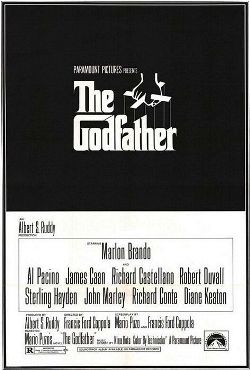
 Through the Shattered Lens