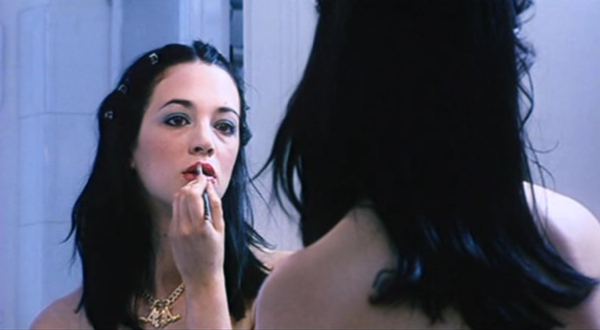
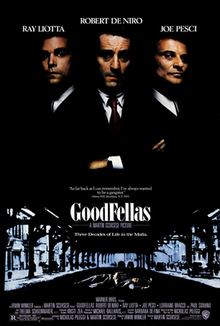
Lisa Marie Reviews An Oscar Nominee: Goodfellas (dir by Martin Scorsese)


First released in 1990 and continuously acclaimed ever since, Goodfellas did not win the Oscar for Best Picture.

I’m always a bit surprised whenever I remember that.  Goodfellas didn’t win Best Picture?  That just doesn’t seem right.  It’s not the other films nominated that year were bad but Goodfellas was so brilliant that it’s hard to imagine someone actually voting for something else.  Seriously, it’s hard to think of a film that has been more influential than Goodfellas.  Every gangster film with a soundtrack of kitschy tunes from the 6os and 70s owes huge debt to Goodfellas.  Every actor who has ever been cast as a wild and out-of-control psycho gangster owes a debt to Joe Pesci’s performance as Tommy DeVito.  When Ray Liotta passed away two years ago, we all immediately heard him saying, “I always wanted to be a gangster.”  Robert De Niro’s Jimmy Conway remains the epitome of the ruthless gangster.  For many, Paul Sorvino’s neighborhood godfather redefined what it meant to be a crime boss.  Lorraine Bracco made such an impression as Karen Hill that it somehow seemed appropriate that she was one of the first people cast in The Sopranos, a show that itself would probably have not existed if not for Goodfellas.  Frank Sivero, Samuel L. Jackson, Tobin Bell, Debi Mazer, Vincent Gallo, Ileana Douglas, Frank Vincent, Tony Sirico, Michael Imperioli, Tony Darrow, Mike Starr, Chuck Low, all of them can be seen in Goodfellas.  It’s a film that many still consider to be the best of Martin Scorsese’s legendary career.  Who can forget Robert De Niro smoking that cigarette while Sunshine of Your Love blared on the soundtrack?  Who can forget “Maury’s wigs don’t come off!” or “Rossi, you are nothing but whore!?”  Who can forget the cheery Christmas music playing in the background while De Niro’s Jimmy Conway grows more and more paranoid after pulling off the biggest heist of his career?
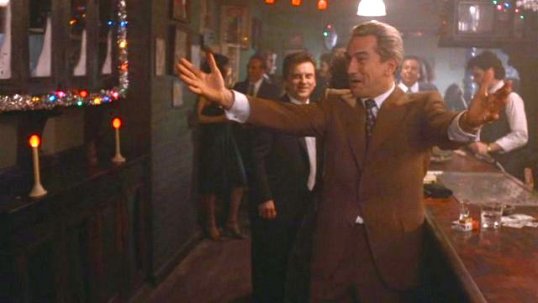
Plus, it’s a Christmas movie!

And yet, it did not win Best Picture.

Myself, whenever I’m sitting behind a garbage truck in traffic, I immediately start to hear the piano coda from Layla.  For that matter, whenever I see a helicopter in the sky, I flash back to a coke-addled Henry Hill getting paranoid as he tries to pick up his brother from the hospital.  Whenever I see someone walking across the street in the suburbs, I remember the scene where Henry coolly pistol-whips the country club guy and then tells Karen to hide his gun.  I always remember Karen saying that she knows that many of her best friends would have run off as soon as their boyfriend gave them a gun to hide but “it turned me on.”  It would have turned me on as well.  Henry might be a gangster and his friends might be murderers but he doesn’t make any apologies for who he is, unlike everyone else in the world.

But it did not win Best Picture.

How many people have imitated Joe Pesci saying, “How am I funny?”  How many times did Pesci and Frank Vincent have to listen to people telling them to “go home and get your fucking shinebox?”  A lot of people remember the brutality of the scene where Pesci and De Niro team up to attack Vincent’s crude gangster but I always remember the sound of Donavon’s Atlantis playing on the soundtrack.
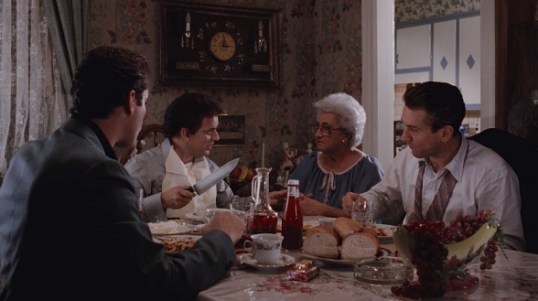
And then there’s Catherine Scorsese, showing up as Tommy’s mom and cooking for everyone while Vincent struggles to escape from the trunk of a car.  “He is content to be a jerk,” Tommy says about Henry Hill.  Just a few hours earlier, Tommy was apologizing to Henry for getting blood on his floor.

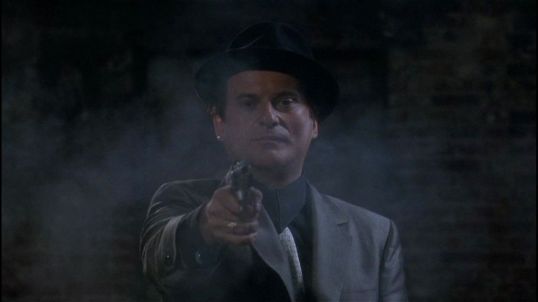
Goodfellas is a fast-paced look at organized crime, spanning from the 50s to the early 80s.  Ray Liotta plays Henry Hill, who goes from idolizing gangsters to being a gangster to ultimately fearing his associates after he gets busted for dealing drugs.  It’s a dizzying film, full of so many classic scenes and lines that it feels almost pointless to try to list them all here or to pretend like whoever is reading this review doesn’t remember the scene where the camera pans through the club and we meet the members of the crew.  (“And then there was Pete The Killer….”)  Goodfellas is a film that spend two hours showing us how much fun being a gangster can be and then thirty minutes showing us just how bad it can get when you’re high on coke, the police are after you, and you’ve recently learned that your associates are willing to kill even their oldest friends.  No matter how many times I watch Goodfellas, I always get very anxious towards the end of the film.  With the music pounding and the camera spinning, with Henry looking for helicopters, and with all of his plans going wrong over the course of one day, it’s almost a relief when Bo Dietl points that gun at Henry’s head and yells at him, revealing that Henry has been captured by the cops and not the Gambinos.  Karen desperately running through the house, flushing drugs and hiding a gun in her underwear, always leaves me unsettled.  It’s such a nice house but now, everything is crashing down.

There’s a tendency to compare Goodfellas to The Godfather, as their both films that re-imagine American history and culture through the lens of the gangster genre.  I think they’re both great but I also think that they are ultimately two very different films.  If The Godfather is sweeping and operatic, Goodfellas is the film that reminds us that gangsters also live in the suburbs and go to cookouts and that their wives take care of the kids and watch movies while the FBI searches their home.  If The Godfather is about the bosses, Goodfellas is about the blue collar soldiers.  The Godfather represents what we wish the Mafia was like while Goodfellas represents the reality.
Goodfellas is one of the greatest films ever made but it lost the Best Picture Oscar to Dances With Wolves, a film that left audiences feeling good as opposed to anxious.  To be honest, Martin Scorsese losing Best Director to Kevin Costner feels like an even bigger injustice than Goodfellas losing Best Picture.  One can understand the desire to reward Dances With Wolves, a film that attempts to correct a decades worth of negative stereotypes about Native Americans.  But Scorsese’s direction was so brilliant that it’s truly a shame that he didn’t win and that Lorraine Bracco didn’t win Best Supporting Actress.  It’s also a shame that Ray Liotta wasn’t nominated for playing Henry Hill.  At least Joe Pesci won an Oscar for redefining what it meant to be a gangster.

Goodfellas is proof that the best film doesn’t always win at the Oscars.  But it’s also proof that a great film doesn’t need an Oscar to be remembered.
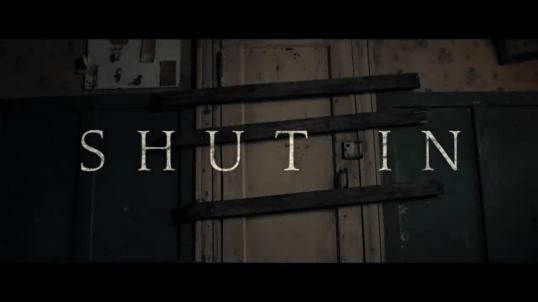
Film Review: Shut In (dir by DJ Caruso)


Shut In is not a political movie.

It’s important to point that out because much of the online reaction to Shut In will be totally political.  That’s because it’s the second film to have been produced by The Daily Wire.  And yes, Ben Shapiro is listed as one of the film’s producers.  For many, it doesn’t matter that the film’s script appeared on The Black List of the best unproduced scripts in Hollywood.  (Of course, some notoriously terrible movies have been made out of the scripts that appeared on The Blacklist — remember Cedar Rapids? — so maybe it’d be best not to call too much attention to that.)  It won’t matter that the script was initially purchased by a major studio or that Jason Bateman (who is hardly a right-wing media figure) was originally set to direct it before the project was delayed by the pandemic.  All that will matter is that the film was produced by the Daily Wire and therefore, it will be judged as being some sort of political statement.

Indeed, when the film’s premiere was streamed on YouTube earlier tonight, I kept one eye on the movie and another eye on the chat comments.  About 80% of them were from people saying, “Let’s go Brandon!”  18% were from people saying, “Biden 2024 Harris 2028.”  And 2% of the comments were from some group of weirdoes who were obsessed with Liz Cheney.  The film itself might not be political but the film’s audience definitely was and probably will continue to be so.  I imagine most hardcore online liberals will automatically hate the film because of who produced it while most hardcore online conservatives will be tempted to overpraise it and cite it as proof that a good film can be made outside of the Hollywood system.  It’s tempting to say that’s just the way of the world nowadays but, to be honest, it’s really just the way of the extremely online world.  Most people won’t care one way or the other.  They’ll just view it as a being an effective thriller.

And, make not doubt about it, Shut In is not a bad film.  It’s an effectively tense thriller, one that has plenty of suspense and which makes good use of its limited budget.  If it’s never quite a great film, that’s because there’s a few pacing and plausibility issues, especially early on in the film.

Shut In stars Rainey Qualley as Jessica, a former dug addict who has escaped from her abusive ex and who is now trying to start a new life, with her young daughter and her newborn son, in an isolated farmhouse.  Unfortunately, when her ex, Rob (Jake Horowitz), and his scummy friend, Sammy (Indie film legend Vincent Gallo, making his first film appearance in ten years), show up at the house, Jessica ends up getting locked in the pantry while Rob and Sammy ransack the house and, most importantly, steal her phone so she can’t call for help.  Trapped in the pantry, Jessica tries to figure out a way to escape while also trying to instruct her young daughter on how to take care of her baby brother.  The whole time, of course, she’s aware that Sammy and Rob could return at any minute.

Director D.J. Caruso does a good job of building and maintaining tension throughout the film.  The majority of the film’s action takes place in that pantry and, just like Jessica, we find ourselves forced to try to interpret the sometimes random footsteps and snippets of conversation that we hear throughout the house.  Rainey Qualley, who is the daughter of Andie MacDowell and who has a Southern accent that is almost as prominent as her mother’s, is sympathetic in the role of Jessica and does a good job of playing up not only her fear but her strength.  Jessica is a survivor and it’s difficult not to admire her as she searches for a way to escape.  Vincent Gallo is older but still as uniquely photogenic as he was during his indie heyday.  He’s memorably creepy as Sammy.

As I said, it’s not a flawless film.  It takes a while for things to really get going and, towards the end of the film, a few of the characters behave in ways that defy logic.  One key moment depends on a character surviving something that, by all logic, should have easily killed them.  It may not be a political film but there are a few bits of heavy-handed religious symbolism, including an injury that deliberately calls to mind stigmata.  That said, when Jessica finally begins to fight back, it’s an enjoyably cathartic moment.

Shut In is an effective thriller and a determinedly non-political one.  If nothing else, it’ll keep you out of the pantry.

Film Review: Basquiat (dir by Julian Schnabel)


Basquiat.  I love this movie.

I Shot Andy Warhol was not the only 1996 film to feature Andy Warhol as a character.  He was also a prominent supporting character in Basquiat.  In this film, he’s played by David Bowie and Bowie gives a far different performance than Jared Harris did in I Shot Andy Warhol.  Whereas Harris played Andy as a detached voyeur, Bowie’s performance is far more sympathetic.  (Of course, it should be noted that Harris and Bowie were playing Andy Warhol at very different points in the artist’s life.  Harris played the younger, pre-shooting Warhol.  Bowie played the older, post-shooting Warhol.)

Then again, it’s not just Andy Warhol who is portrayed more positively in Basquiat than in I Shot Andy Warhol.  The entire New York art scene is portrayed far more positively in Basquiat.  Whereas I Shot Andy Warhol was a film about an outsider who was destined to forever remain an outsider, Basquiat is a film about an outsider who becomes an insider.  On top of that, Basquiat was directed by a fellow insider, painter Julian Schnabel.

The film itself is a biopic of Jean-Michel Basquiat (very well played by Jeffrey Wright), the graffiti artist who, in the 1980s, briefly became one of the superstars of the New York art scene.  However, it’s less of a conventional biopic and more of a meditation on what it means to be an artist.  Throughout the film, Basquiat looks up to the New York skyline and sees a surfer riding a wave across the sky.  The image itself is never explicitly explained.  We never learn why, specifically, Basquiat visualizes a surfer.  But then again, that’s what makes the surfer a perfect symbol of Basquiat’s artistic sensibility and talent.  It’s a reminder that, while we can appreciate an artist’s work, only the artist can truly understand what that work is saying.  All attempts to try to explain or categorize art are as pointless as trying to understand why that surfer is in the sky.  Ultimately, the why is not as important as the simple fact that the surfer is there.

The film follows Basquiat as he goes from living on the streets to being a protegé of Andy Warhol’s and, until he overdosed on heroin, one of the shining lights of the New York art scene.  Along the way, Basquiat struggles to maintain a balance between art and the business.  In one of the key scenes of the film, an empty-headed suburbanite (Tatum O’Neal) looks at Basquiat’s work and whines that there’s too much green.  She just can’t handle all of that green.

Basquiat’s friendship with Andy Warhol provides this film with a heart.  When Bowie first appears — having lunch with a German art dealer played by Dennis Hopper — one’s natural instinct is to assume that Bowie as Warhol is stunt casting.  However, Bowie quickly proves that instinct to be wrong.  As opposed to many of the actors who have played Andy Warhol over the years, Bowie gives an actual performance.  Instead of resorting to caricature, Bowie plays Warhol as being mildly bemused by both his fame and the world in general.

Basquiat also develops a close friendship with another artist.  Gary Oldman may be playing a character named Albert Milo but it’s obvious from the moment that he first appears that he’s playing the film’s director, Julian Schnabel.  If there was any doubt, Schnabel’s studio stands in for Milo’s studio.  When Milo shows off his work, he’s showing off Schnabel’s work.  When Albert Milo introduced Basquiat to his parents, the nice old couple is played by Julian Schnabel’s actual parents.  It’s perhaps not surprising that Albert Milo is presented as being one of the most important and popular artists in New York City.  In a film full of bitchy characters, Albert Milo is unique in that literally everyone likes and respects him.  And yet Gary Oldman gives such a good and heartfelt performance that you can’t hold it against the character that he happens to be perfect.  There’s a small but touching scene in which Albert Milo and his daughter share a dance in front of one of Schnabel’s gigantic canvases.  Of course, Milo’s daughter is played by Julian Schnabel’s daughter.

The entire cast is full of familiar actors.  Willem DaFoe appears as a sculptor.  Christopher Walken plays a hilariously vapid interviewer.  Courtney Love plays a groupie.  Benicio Del Toro plays Basquiat’s best friend.  Parker Posey shows up as gallery owner Mary Boone.  Michael Wincott plays Rene Ricard, the somewhat infamous art critic who was among the first to celebrate the work of both Basquiat and Schnabel.  For once, the use of familiar actors does not sabotage the effectiveness of the film.  If anything, it helps to explain why Basquiat was so determined to make it.  There’s a magical scene where a then-unknown Basquiat peeks through a gallery window and sees Andy Warhol, Albert Milo, and Bruno Bischofberger.  However, the film’s audience sees David Bowie, Gary Oldman, and Dennis Hopper.  What both Basquiat and the audience have in common is that they’re both seeing bigger-than-life stars.

Basquiat is an often magical and poignant film and I absolutely love it.

Following The Amazon Prime Recommendation Worm #8: Oliviero Rising (2007), A Scandalous Journey (2002), Little Lili (2003), Blindspot (2008)


I had to get these four out before they completely faded from my memory. We do have more misleading Amazon Prime posters, which I know is what you really come for with these posts so I will try not to disappoint. Sadly, I do have the first film on this list to bring you. I think it will end up being the worst movie I see this year. It will really take something awful to beat it. Here we go!

Screen Shot 2016-03-30 at 5.18.06 PM

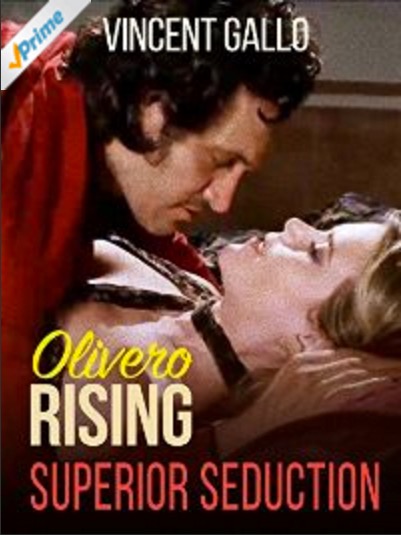
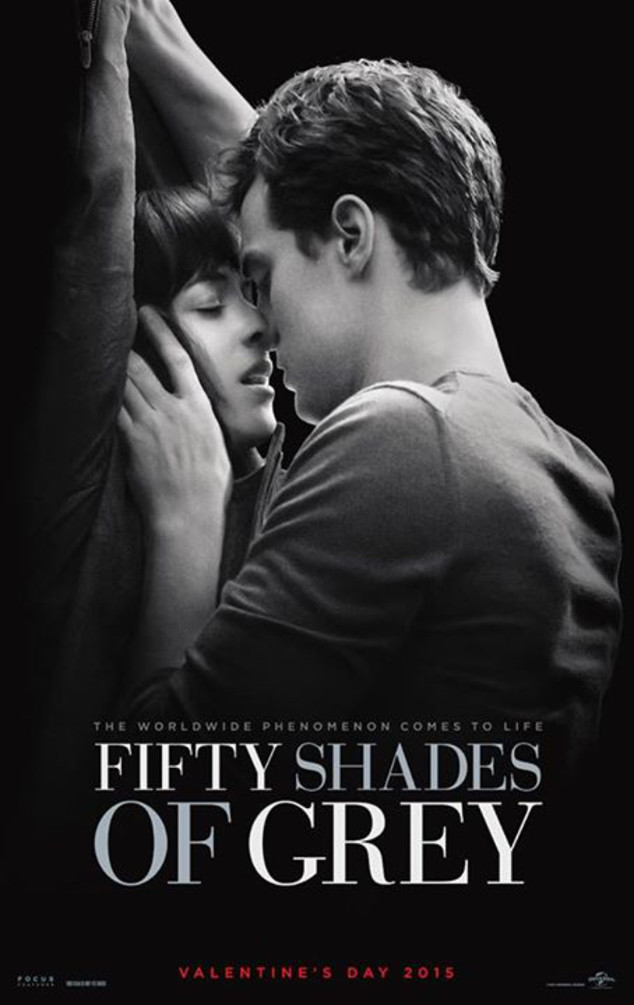
Oliviero Rising (2007, dir. Riki Roseo) – I know you can’t hear it, but I am chuckling as I am writing this. First off, that’s a scene from the very end of the film. Second off:

rs_634x1005-141114095132-10644711_665591963557478_6990185292071945908_n

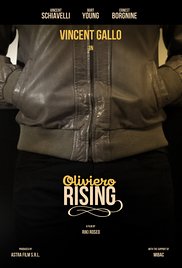
Thirdly, they didn’t even get the right title in their fake poster. Here’s the realistic poster for the movie. Sort of.

MV5BMjEyMTkxMjIyNF5BMl5BanBnXkFtZTcwNTM1Mjg1OA@@._V1_UY268_CR4,0,182,268_AL_

Fourth, the plot summary on IMDb has nothing to do with the movie: “A young and charming employee (Gallo) finds himself victim of an ‘office intrigue’ engineered by his attractive female boss.” Finally, I’m pretty sure that the “Rising” in Oliviero Rising refers to Vincent Gallo’s penis. I’m not kidding. The story is about Gallo getting over his mentally induced erectial disfunction. Shall we talk about this a bit? It does have a scene I can’t avoid telling you about. Shivers just ran down my spine.

Usually when I write about these movies I just watch them on the big screen so I don’t have screenshots to share. Sometimes there’s that rare film that causes me to stop and switch to my iPad. This was one of them. As a result, I do have a few of them to share.

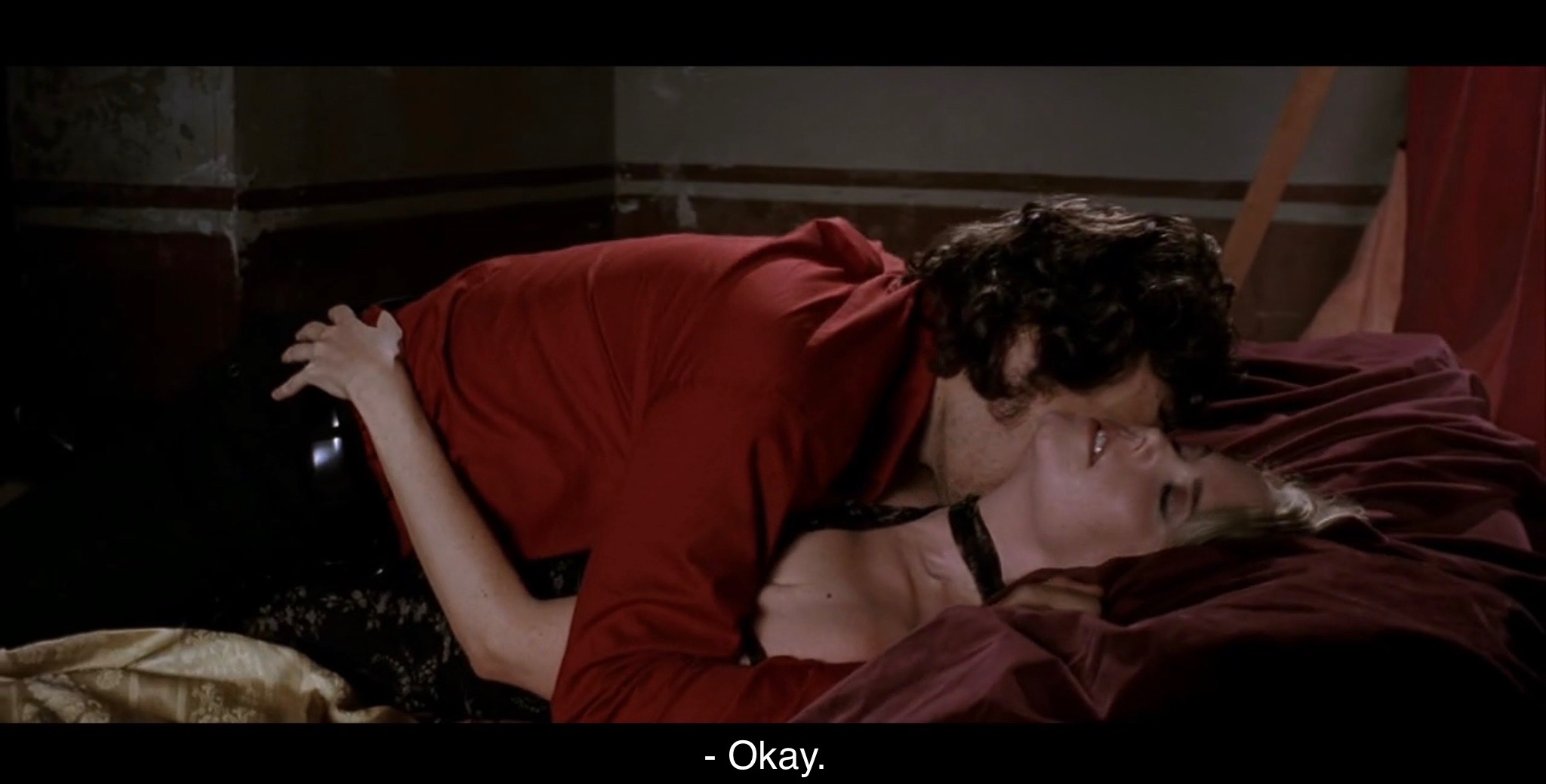
The movie begins and we meet Oliviero who appears to drive a tuck for a living. We see him stop the truck and lift up air without showing the actual person in the scene. I’m pretty sure that Gallo wasn’t present for this scene or any of the truck driving parts. We see later that air is a baby porcupine. After a really weird and inappropriate scene with a psychiatrist, Gallo and his family are off to Italy. They are there for a family funeral. Nothing really happens there except bad directing. Here’s the “highlights”, if I dare to call them that.

IMG_9649

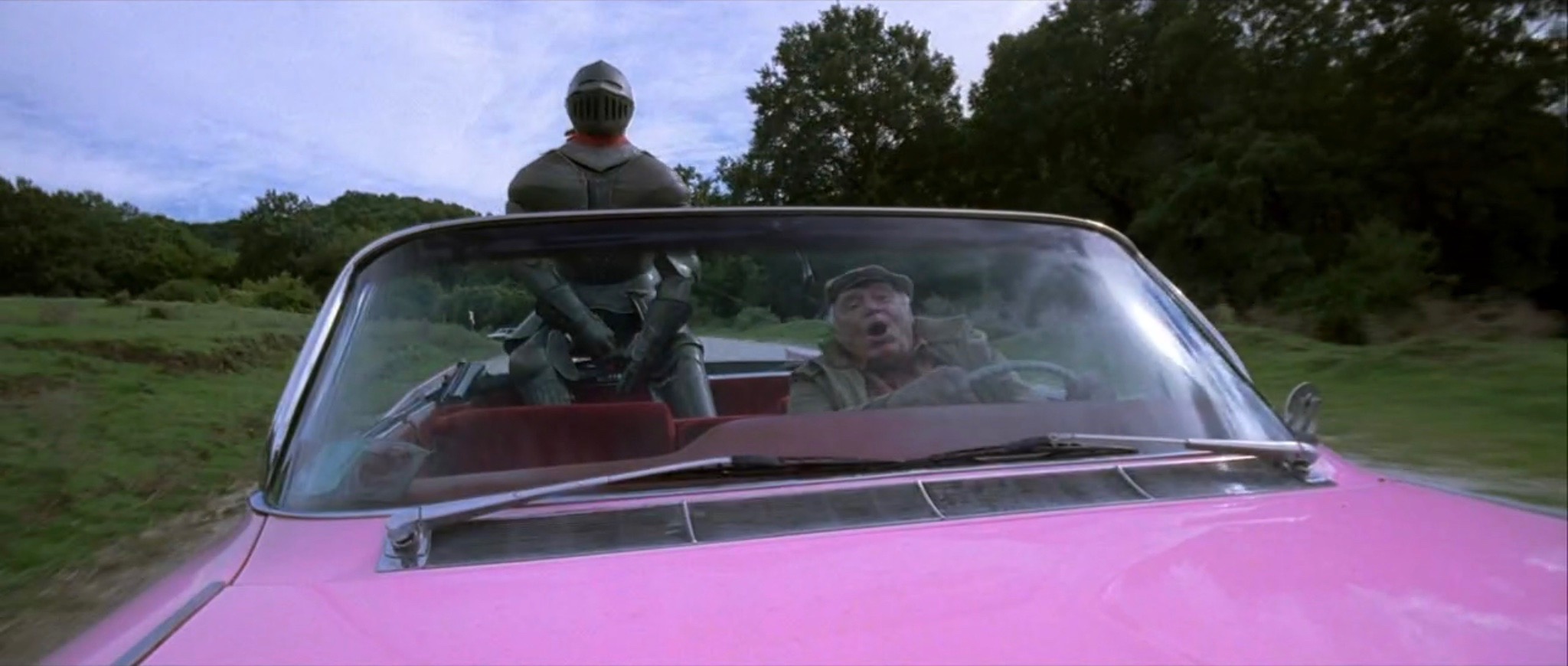
Ernest Borgnine riding while singing in a pink cadillac with a suit of armor in the back seat.

IMG_9650

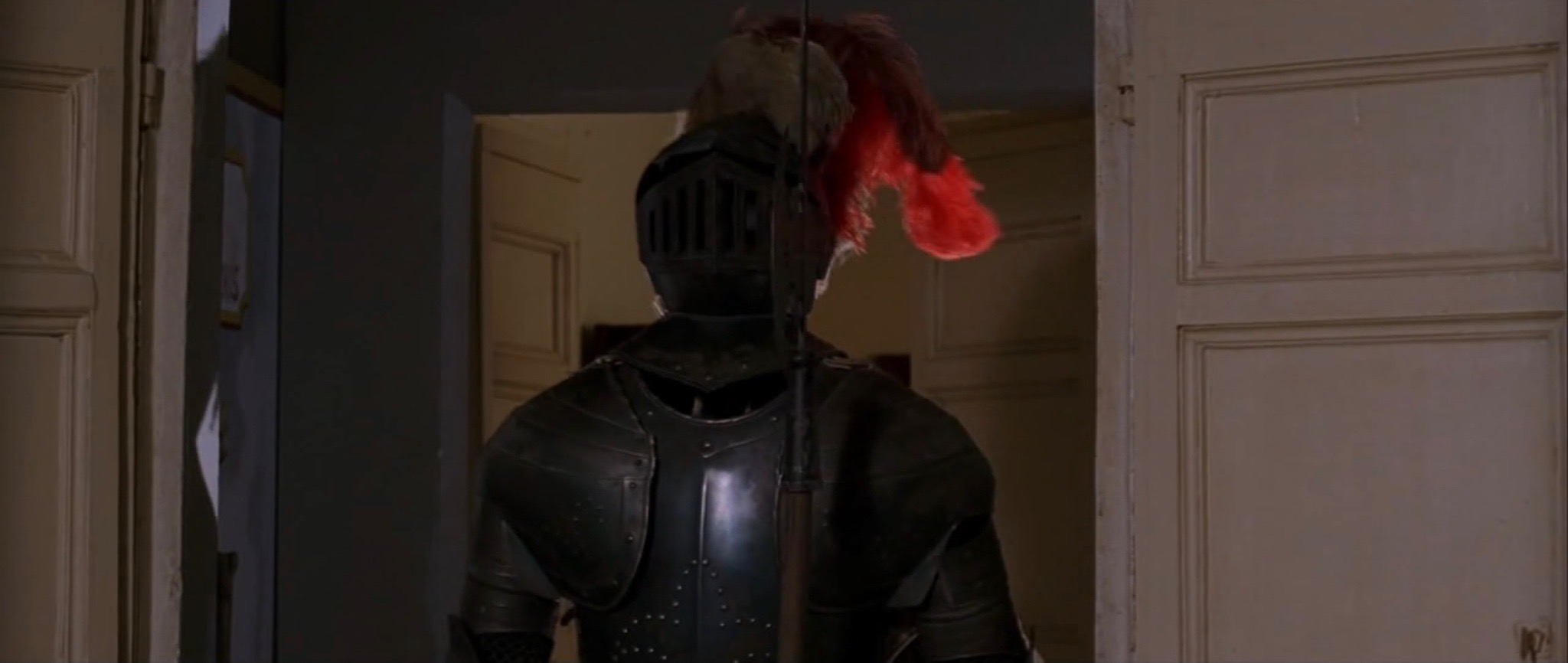
A small jump cut as Ernest Borgnine rolls in the armor because either he wasn’t actually there or he knocked it over so they reshot it from the point where it fell over. There is a lot of lazy and awkward editing in this movie. Some of it very obviously done because not all the actors were there or sets couldn’t be used at the time they were needed.

IMG_9659

IMG_9660

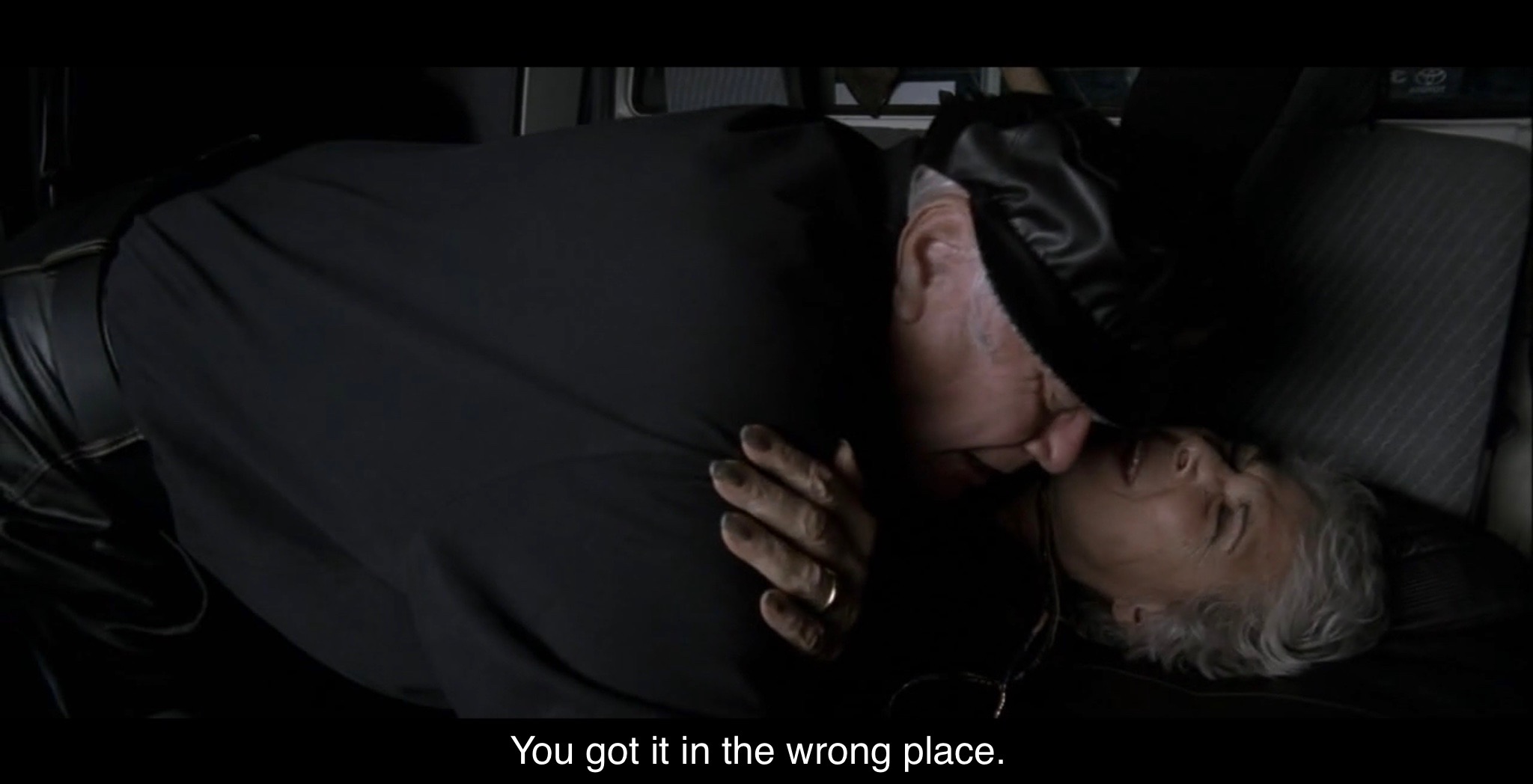
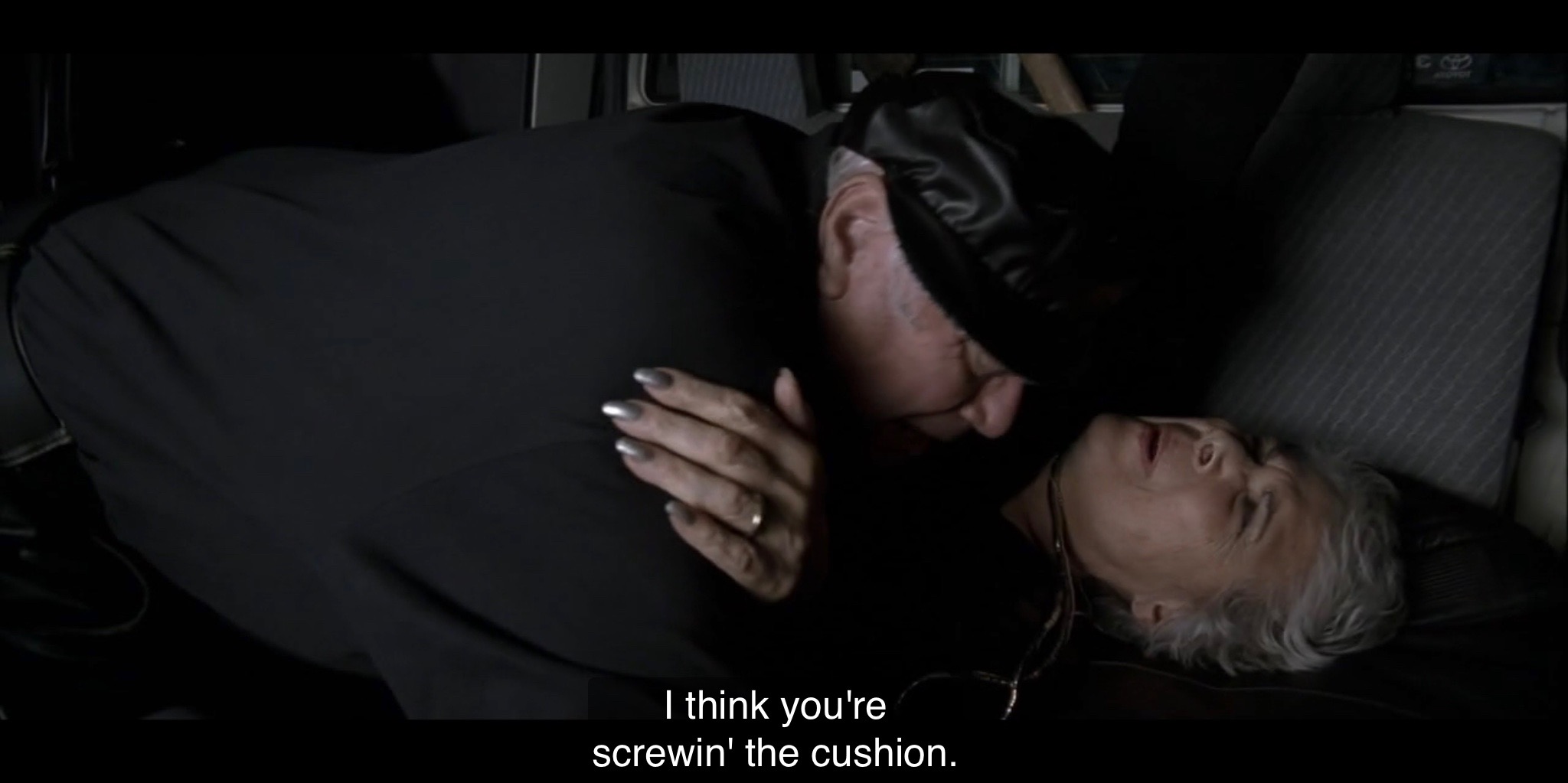
Enest Borgnine not putting his penis into her vagina meaning he is screwin’ the cushion. I know Borgnine shows up in many different films in much the same way Whoopi Goldberg does, but this? Why? Why? Why?

IMG_9668

This is the “Superior Seduction” the poster was referring to.

IMG_9654

She tries to seduce him, which he has no interest in.

I must apologize, but I don’t have the scene with Vincent Schiavelli who you may recall as the angry subway ghost from Ghost (1990). He is trying to help Oliviero get over his ED. He actually stops, looks into the camera, and lectures women in the audience about their alleged worship of the penis. First off, I’m sure lesbians are rather indifferent towards the penis. They probably just feel men’s pain for all the weird things it does out their control. If a straight girl leaves you because you can’t get it up or keep your penis hard, then she is a horrible person. She is the guy who leaves a straight girl because her sex drive has taken a dip. Penises are weird. People with that equipment are not lying or exaggerating when they say it has a mind of its own. It takes a fair amount of work to try and get any modicum of control of it during sex. However, none of this translates to worship of the penis.

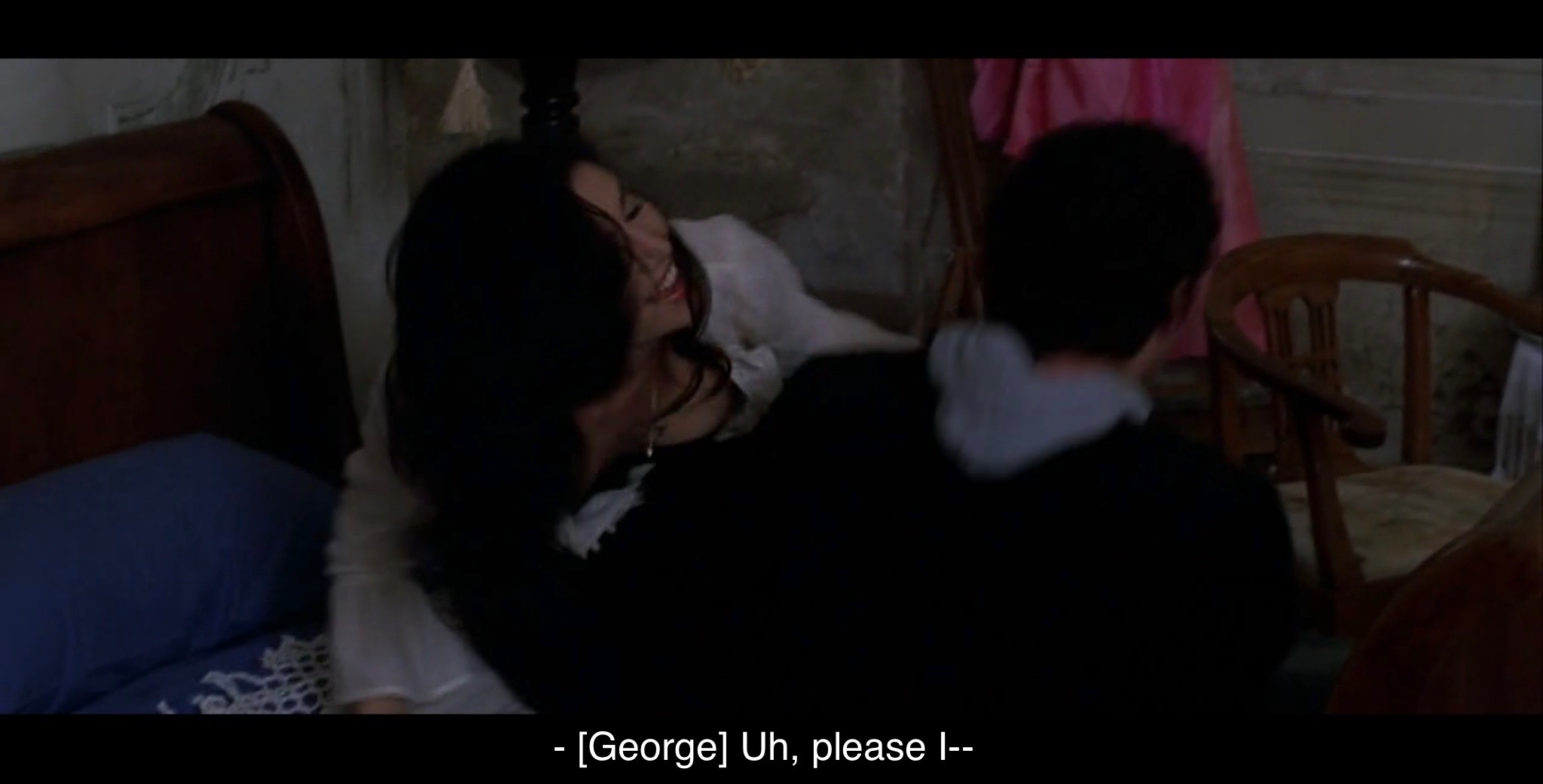
There is also the scene where Gallo’s wife has sex with his girlfriend because he can’t get it up for her. Seriously. Wife gets frustrated, goes right over to the girlfriend’s room, and they have sex while Gallo is in the hallway.

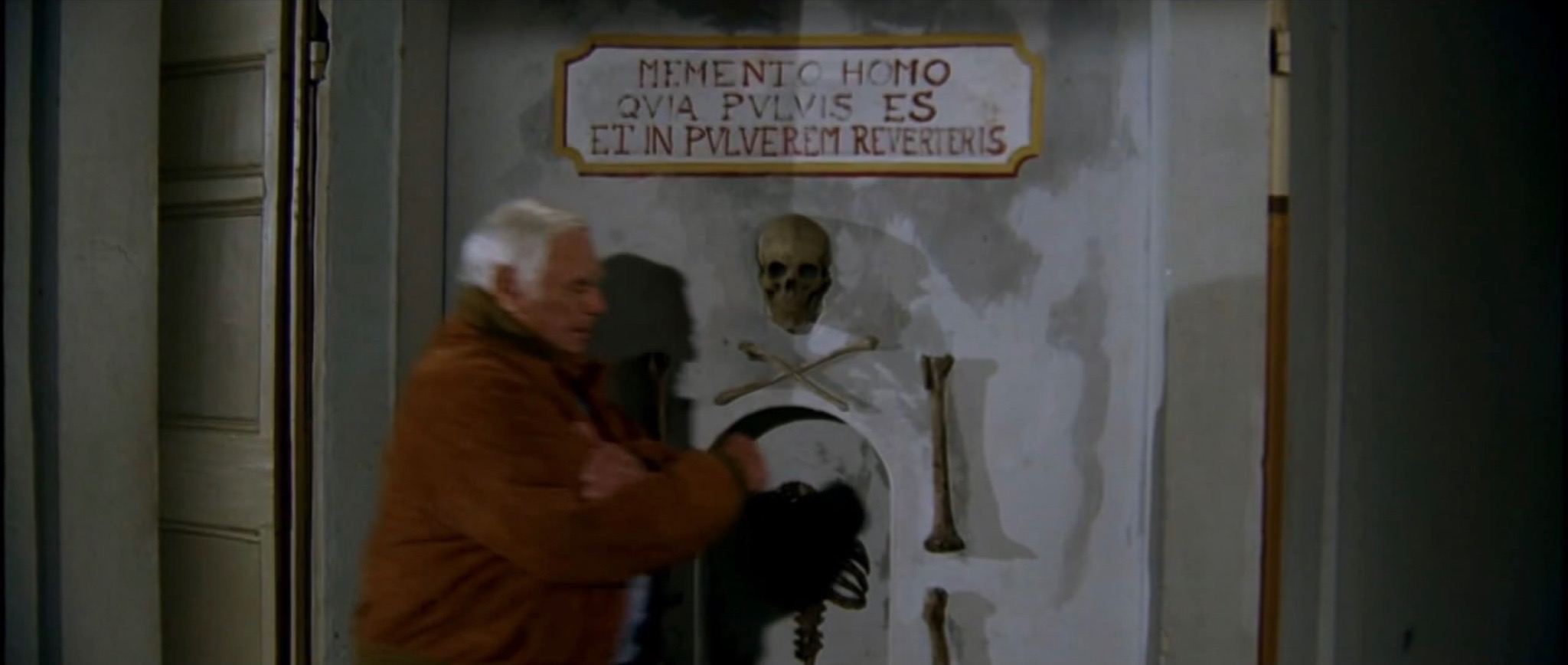
I think Ernest Borgnine summed up my feelings about this movie when he walks past the bones in the castle and tells them, “fuck you”.

IMG_9671

Screen Shot 2016-03-30 at 6.12.57 PM

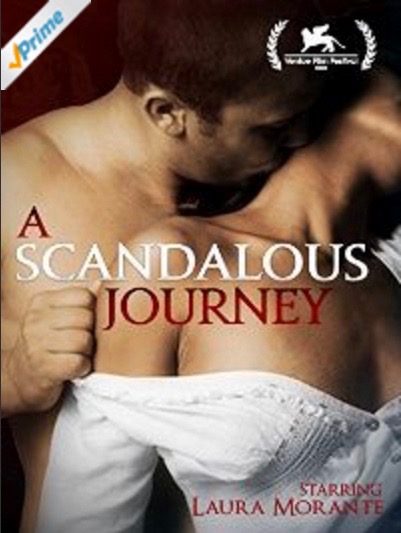
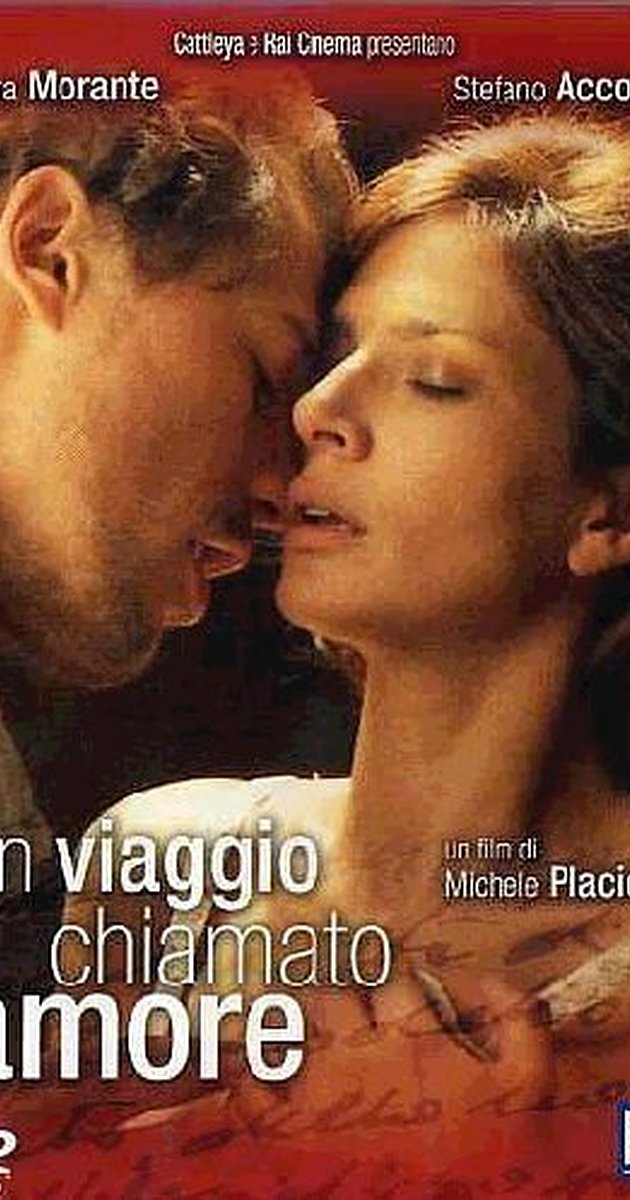
A Scandalous Journey (2002, dir. Michele Placido) – If by scandalous you mean the story of a woman who writes poetry, meets a guy, then seems to stop writing, and instead supports her now mentally disturbed husband who also writes before he winds up in a mental institution. It’s not scandalous in the slightest. It has a beginning and an end. So I guess it technical it is a journey since they don’t stay in one spot the whole time. That’s really it. The rest is just how much you like good performances in a really boring story that grates on your nerves. I wish I could provide you with more details, but this was so incredibly forgettable that I can’t. I remember the next one more and it was forgettable, but at least it had an irredeemable asshole that the film is blind to seeing as such. That made it stick in my mind more. Even the more realistic poster is misleading.

MV5BMTQzNjIzOTI2NF5BMl5BanBnXkFtZTcwMzk4NDQzMQ@@._V1_UY1200_CR98,0,630,1200_AL_

You basically get a film made by an Italian director who probably wishes this was still the era of films like The Night of the Shooting Stars (1982) or 1900 (1976). It isn’t. Moving on.

Screen Shot 2016-03-30 at 6.33.35 PM

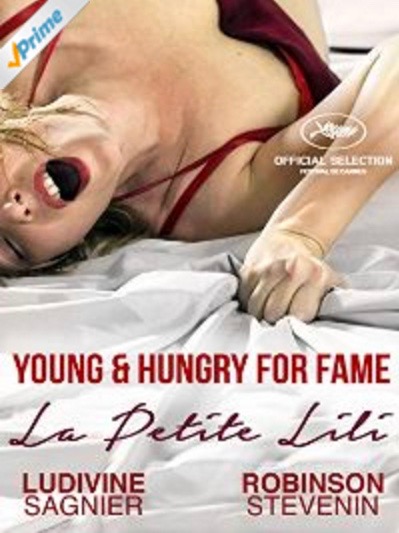
Little Lili (2003, dir. Claude Miller) – Wow! They’re “Young & Hungry For Fame.” I could understand if they were just young, but also hungry for fame? This is clearly going be story about Ludivine Sagnier who is so hungry for fame that she’ll sleep with Robinson Stevenin to get to the top. I mean what else are you going to read from that poster? Well, I read that this is a movie based on a play by Chekov about a young pretentious self-loving asshole who makes a shitty short film that his family defends as if he is some guardian of pure unadulterated cinema as characters wander around to make sure we spend way too much time with this twit before the movie decides it has no idea how to redeem the character so it suddenly leaps over many years where he is now going to reshoot the events of the film on an artificial looking set that belongs in a Douglas Sirk movie before the film finally ends. That’s what I see. I also see that dickwad we are told to cheer for not listed on the poster. That character is played by Bernard Giraudeau who of course went on to do next to nothing after this film rather then the two actors whose names are on the poster. Oh, and after it leaps over all that time, he’s still a jerk who looks down with contempt at people who dare to not make shitty foreign films like the one you will be seeing if you watch this movie. Also, it continues to remind you of better directors, films, and actors throughout. I think I even spotted a reference to Rohmer’s film Claire’s Knee (1970). Amazing! Stay as far as you can from this garbage. I want the film that poster promised me. It sounds stupid, but I doubt it’s as bad as this thing was.

Screen Shot 2016-03-30 at 6.47.20 PM

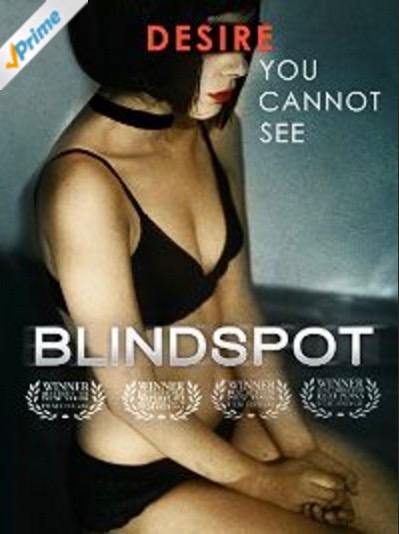
Blindspot (2008, dir. Ad Bol) – The poster is certainly accurate about “You cannot see.” I could barely make out the opening scenes because they were so dark. That was followed by the remainder of the film that I couldn’t understand. The movie begins with a woman doing a weird dance before she wakes up. It was a nightmare. Then we see a guy take a woman hostage in a room. I thought things were going to progress there, but then it seemed to come apart when they were talking, but it was in a voiceover while they were in clearly different places. After that, it goes off to tell the story of some guy who gets involved with a woman who died and her sister who needs to confront her father about him abusing both of them as children. There are some affairs in here. How any of this ties together, especially with the opening scenes, I have no idea. It’s a confusing mess. I wanted to scream at the director that if he didn’t know how to this kind of non-linear plot, then to stop trying. It didn’t help that it would suddenly cut at odd times. There is also an audio lead-in that I think was the only one in the movie and it only adds to the viewer’s frustration. Hell, this could have been linear, but it was so disorienting that I couldn’t tell. Skip!

Sadly, I can’t recommend a single one of these this time. Maybe I’ll have better luck next time.

Embracing the Melodrama #49: Scarlet Diva (dir by Asia Argento)


Scarlet Diva

I’ve always loved Asia Argento because, as both an actress and a public personality, she is tough, hard, and sexy all at the same time.  She’s not one of those actresses who feels the need to hide who she really is.  Watching her on-screen, you realize that she doesn’t give a fuck whether you like her or not.  Instead, she’s going to do whatever it is that she wants to do and, if you’re lucky, you might get to watch.  Some hold her responsible for the erratic output of Dario Argento’s post-Opera career but those people far too often fail to take into account that Asia, with her naturally off-center presence, has often been the most interesting thing about Dario’s later films. (Say what you will about Trauma, The Stendhal Syndrome, and Mother of Tears, they’re all better with Asia than without her.)  Asia Argento is one of those talented actresses who could never have played Ophelia because no one would ever believe that she would so easily drown.  Instead, she’d simply pull herself out of the water and then go kick Hamlet’s ass for being so indecisive.

In the year 2000, Asia Argento made her directorial debut with the underrated Scarlet Diva.  In Scarlet Diva, Asia plays Anna Batista, a 24 year-old Italian actress who, having won both acclaim and awards in Italy, is now being tempted with offers to come out to Hollywood.  Over the course of this frequently (and intentionally) disjointed film, Anna is forced to deal with the dark reality of being young, rich, and famous.  (Yeah, yeah, I know you’re rolling your eyes but just calm down…)  After being told that she’ll costar with De Niro, she finds herself playing Cleopatra in a hilariously bad movie that does not co-star Robert De Niro.  She meets a sleazy producer (Joe Coleman) who invites her to his hotel room and then promptly undresses and demands that she “earn” a part in his next film.  Anna runs from him and the naked producer chases after her with the camera focused (in close-up) on his hairy ass all the way.  While dealing with all of that, Anna also find time to visit her best friend in Paris, just to discover that she has spent the last two days bound and gagged in bed.  She also buys drugs underneath a highway overpass and suffers from frequent dream sequences and flashbacks to growing up with her mentally unstable mother (played by Asia’s real-life mother, Daria Nicolodi).

And yet, during all of this, Anna can still find happiness because she thinks that she’s in love with rock star Kirk Vaines (Jean Sheperd, playing a role that was written for Vincent Gallo).  When Anna discovers that she’s pregnant, she decides not to have her usual abortion and instead to keep the baby.  However, when Kirk reacts to Anna’s news with indifference, it leads to one of the longest (and most emotionally raw) running sequences that I have ever seen, as the pregnant Anna flees down the streets of Rome…

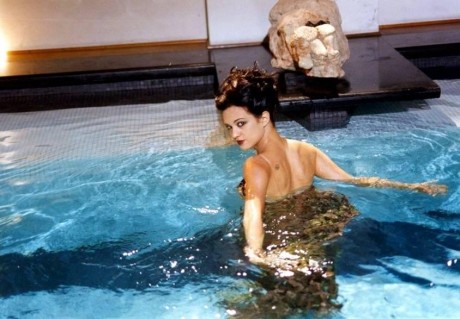
asia_argento_-_scarlet

Just to judge from the movies that various actor have made about the trials of being a star, fame is a special sort of Hell, the type that is dominated with surreal dream sequences and frequent claustrophobia.  That’s certainly true of Scarlet Diva, which is perhaps one of the most self-indulgent films ever made.  And yet, it’s that very self-indulgence that makes Scarlet Diva so much more watchable and, in its own way, likable than most debut films from actors-turned-directors.  For all the drama and pain that Anna goes through, Asia Argento seems to understand just how narcissistic this film truly is and, in a few scenes, it’s evident that she’s gently mocking her own “poor me” self-indulgence.

Ultimately, Asia seems to be saying that Anna (and probably, at the time she made this film, Asia herself, since she has said that this film is partially autobiographical) is her own worse enemy.  Hence, this film — which was made with an admirable lack of concern about going too far or for being TMI — is a massively cathartic work for all of the rest of us who are also occasionally our own worst enemy.

Yes, Scarlet Diva may be a self-indulgent, narcissistic film.  It’s also a very brave and honest film that deserves a lot more praise and attention than it has received.

Scarlet Diva