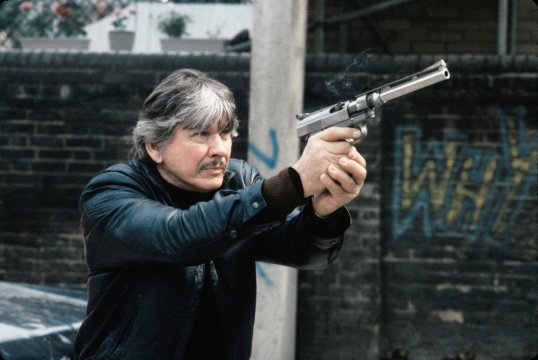
Lisa Marie’s Six Favorite Charles Bronson Films


Brad listed his top Bronson films so I guess I should list mine!  Below are my six favorite Bronson films.  (Why 6?  Because Lisa doesn’t do odd numbers!)

Now, to make clear, I’m not the Bronson expert that Brad is so I will picking from a smaller pool of selections.  But no matter!  Let’s do this!
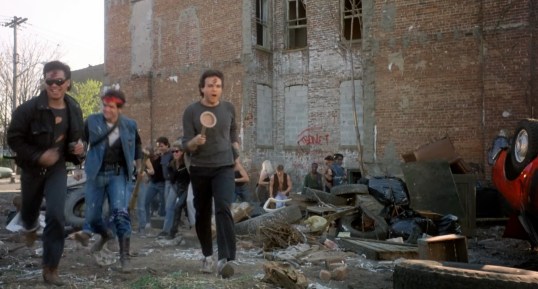
6. Death Wish III (1985, dir by Michael Winner) 

Yes, I have to start with Death Wish III.  The Death Wish sequels are definitely a mixed bag but Death Wish III was wonderfully over-the-top, a film that cheerfully dropped Bronson in the middle of an absurd circus and allowed him to tame the lions, as it were.  I will always love this film for the presence of Plunger Guy, a bad guy who heads into battle carrying a plunger.
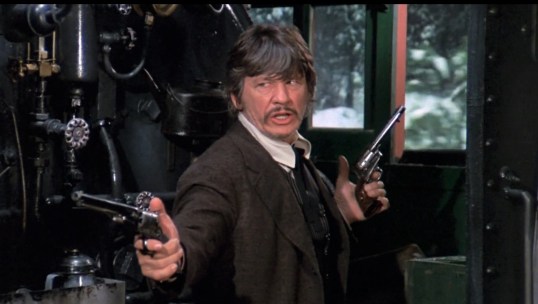
5. Breakheart Pass (1975, dir by Tom Gries)

This is an enjoyable mix of a western, a murder mystery, and an adventure film.  Charles Bronson is a mysterious man on a snowbound train.  Charles Durning, Ben Johnson, Richard Crenna, Jill Ireland, and Ed Lauter co-star and everyone — especially Johnson and Durning — bring a lot to their roles.  This may not be one of Bronson’s best-known films but it is one of his most enjoyable and Bronson himself is at his most likable.
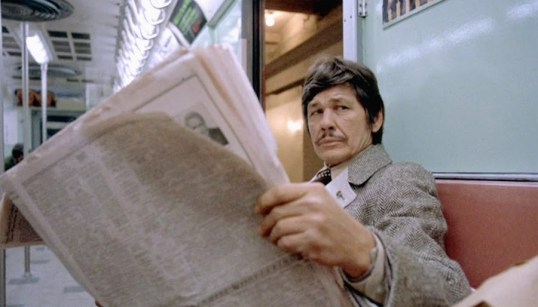
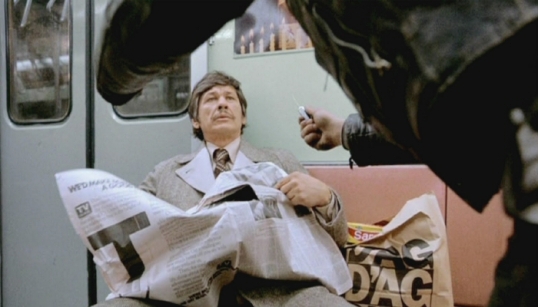
4. Death Wish (1973, dir by Michael Winner)

“My heart bleeds a little for the less fortunate,” Bronson’s Paul Kersey says at the start of the film and those of us watching immediately say, “C’mon, Charlie, really?”  That said, one reason why Death Wish works as well as it does is because Bronson actually gives a very good and very emotionally honest performance as a man who finally snaps and starts to take the law into his own hands.  (I love the barely veiled contempt that’s present whenever Paul talks to his son-in-law.)  Not surprisingly, considering that it was directed by Michael Winner, Death Wish is an often-sordid film that doesn’t have a hint of subtlety.  But it’s also brutally effective, a film that captures the way a lot of people feel when they hear about reports of out-of-control crime.  Even today, it’s easy to see why Death Wish was the film that finally Bronson a star in the United States.
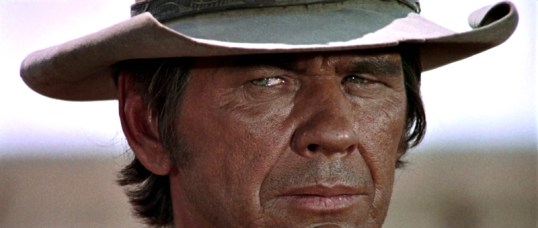
3. Once Upon A Time In The West (1968, dir by Sergio Leone)

Bronson plays Harmonica in the most epic of all of Sergio Leone’s spaghetti westerns.  Leone pays homage to the American western while also gleefully subverting it.  The quiet and unemotional Bronson is the film’s hero.  Henry Fonda is the sadistic villain who guns down a child.  Jason Robards is an outlaw.  While I don’t consider it to be quite as good as either The Good, The Bad, or the Ugly or Once Upon A Time In America, Once Upon A Time In The West is still one of Leone’s masterpieces.
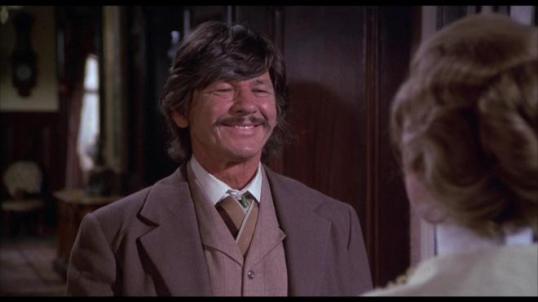
2. From Noon Till Three (1976, dir by Frank D. Gliroy)

For all of his reputation for being a tough guy who didn’t show much emotion, there was no denying Bronson’s love for his second wife, Jill Ireland.  From Noon Till Three brings Bronson and Ireland together in a film that is a third western, a third romantic comedy, and a third social satire.  It’s a film that gives Bronson a chance to show off his romantic side and it might leave you surprised!  The film also featured Jill Ireland’s best performance in a Bronson film.  I always highly recommend this one.  It’s proof that there was more to Bronson than just shooting the bad guys.
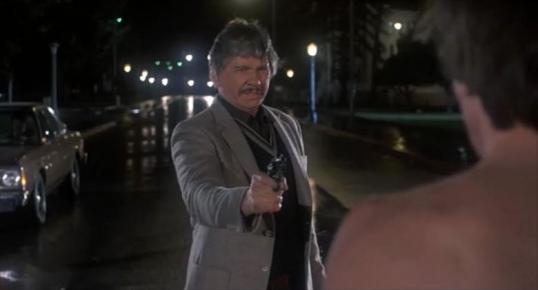
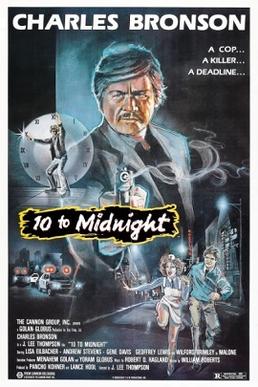
  1. Ten To Midnight (1983, dir by J. Lee Thompson)

This is the ultimate 80s Bronson film and one that I like for a reason that might surprise you.  On the one hand, you’ve got Bronson as a tough cop, Andrew Stevens as his liberal partner, and Gene Davis as the disturbingly plausible serial killer, Warren Stacy.  Bronson is great as the world weary cop.  His scenes with Stevens are amusing and, at times, even poignant.  (It helps that Stevens was the rare co-star that Bronson liked.)  Davis is terrifying and the film’s final moments are very emotionally satisfying.  (“No, we won’t.”)  But the reason why I love this film is because of the relationship between Bronson’s cop and his daughter, who played by Lisa Eilbacher.  Their scenes together — testy but loving — are well-acted by both actors and they always make me think of me and my Dad.  Ten To Midnight is the Bronson film that actually makes me cry.
4 Shots From 4 Films: Special Raquel Welch Edition!


4 Shots From 4 Films is just what it says it is, 4 shots from 4 of our favorite films. As opposed to the reviews and recaps that we usually post, 4 Shots From 4 Films lets the visuals do the talking!

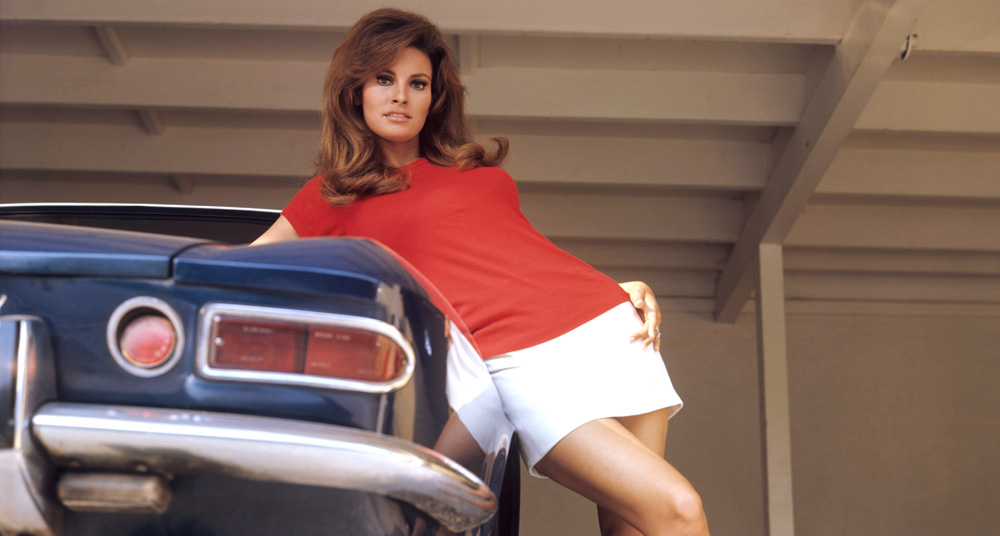
In remembrance of the great Raquel Welch.

4 Shots From 4 Films

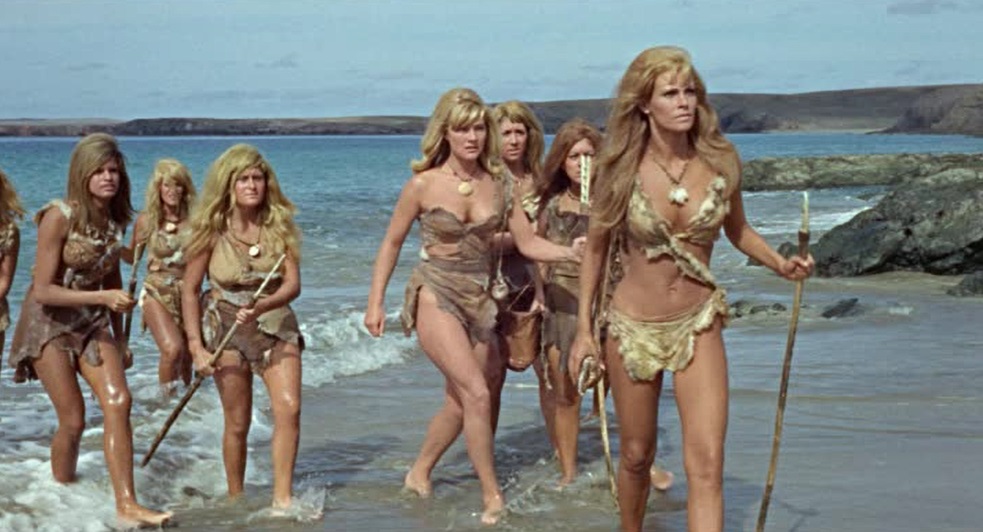
One Million B.C. (1967, directed by Don Chaffey)

Fathom (1967, directed by Leslie H. Martinson)

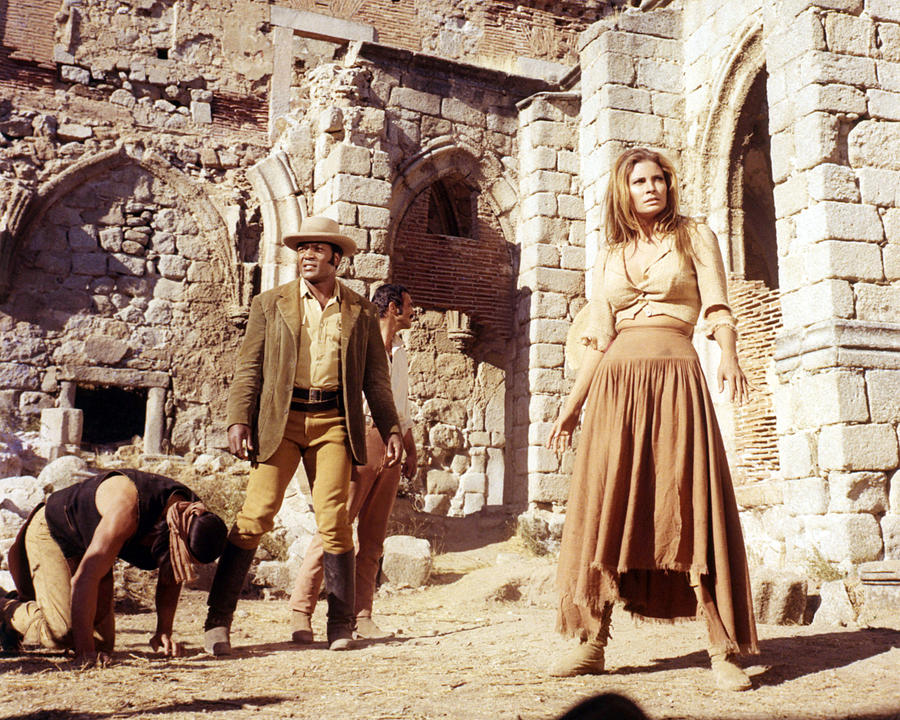
100 Rifles (1969, directed by Tom Gries)

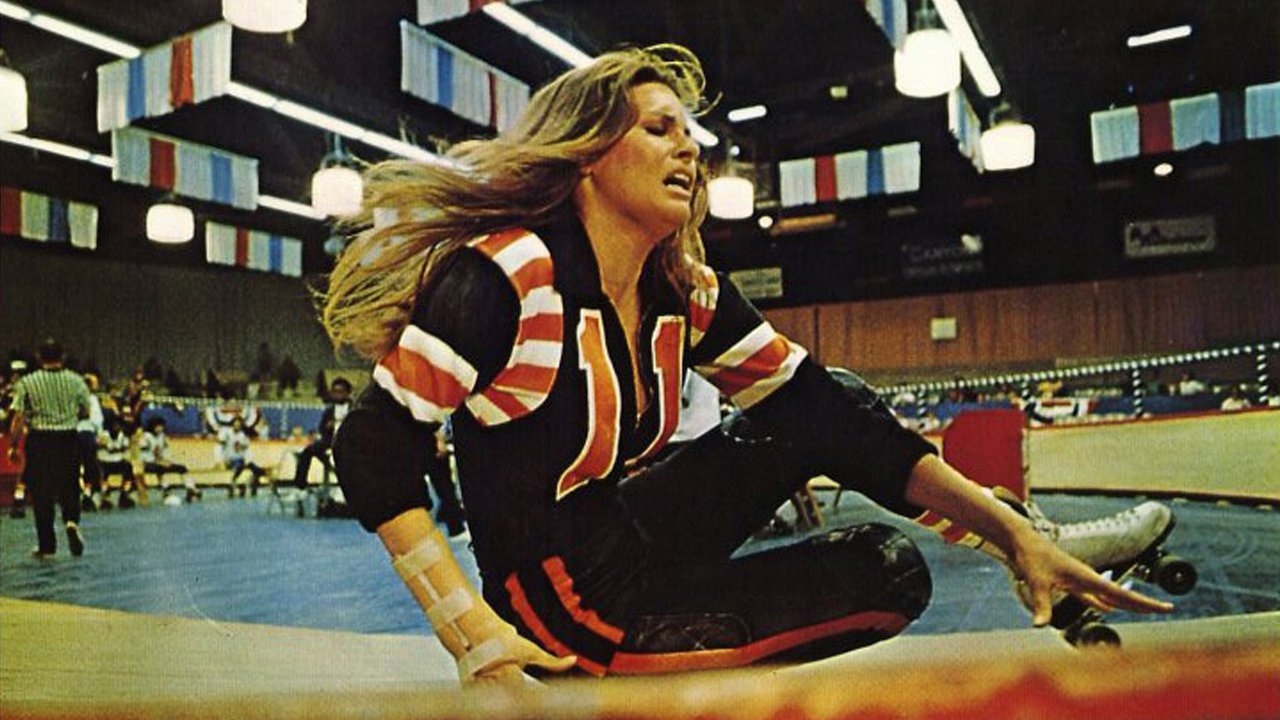
Kansas City Bomber (1972, directed by Jerrold Freedman)

Retro Television Review: The Glass House (dir by Tom Gries)


Welcome to Retro Television Reviews, a feature where we review some of our favorite and least favorite shows of the past!  On Sundays, I will be reviewing the made-for-television movies that used to be a primetime mainstay.  Today’s film is 1972’s The Glass House!  It  can be viewed on YouTube.

The Glass House starts with three men arriving at a location that will define the next few months of their lives.

Brian Courtland (Clu Gulager) is a veteran of the Vietnam War.  He spent part of his service working as a guard in the brig.  Now that he’s back in the United States and in need of a regular paycheck, he has gotten a job working as a prison guard.  Courtland is not naive about where he’s going to be working or who he is going to be working with.  But he is an idealist, one who tries to treat everyone fairly and who hopes that he will be able to do some sort of good in his new position.

Alan (Kristoffer Tabori) is a young man who has been arrested for selling marijuana.  He is quiet and just hoping to serve his time and then get on with his life.  His fellow prisoners have different plans for him.

Finally, Jonathan Paige (Alan Alda) is a liberal professor who, in a moment of rage, accidentally killed a man in a fight.  Convicted of manslaughter, Paige enters the prison in a daze and cannot stop flashing back to the one moment that changed his life forever.  Paige is assigned to work in the pharmacy, where he meets a prisoner-turned-activist named Lennox (Billy Dee Williams).  Paige struggles to retain his humanity despite the harsh conditions.

All three of the men find themselves having to deal with the attentions of Hugo Slocum (Vic Morrow), the predatory “king” of the prison.  Slocum expects Paige to help him run drugs though the the pharmacy.  Slocum preys on Alan and sends his gang to punish him when Alan refuses Slocum’s advances.  And Slocum expects that Courtland will just be another corrupt guard who agrees to look the other way when it comes to Slocum’s activities.  Courtland, however, turns out to have more integrity than anyone was expecting.

The Glass House opens with a title card, informing the viewer that the film was shot at an actual prison and that the majority of the people in the film were actual prisoners.  Not surprisingly, The Glass House does feel authentic in a way that a lot of other films about incarceration does not.  The prison is claustrophobic and dirty, with every crack in the wall reminding the prisoners and the viewer that no one cares about what happens there.  The extras have the blank look of men who understand that showing any emotion will be taken a sign of a weakness.  Made in 1972, at a time when America was still struggling to integrate, The Glass House takes place in an almost totally segregated world.  The black prisoners stick together.  The white prisoners stick together.  Everyone understands that’s the way that it will always be and, as we see by the end of the film, that’s the way the guards and the warden (Dean Jagger) prefer it because that means almost any incident can be written off as a being “a race riot.”

The real actors amongst the population do a good job of blending into the surroundings.  Alda, Williams, and Tabori all give good performance while Vic Morrow is truly menacing in the role of the vicious Slocum.  Slocum may not be particularly bright but, because he has no conscience, he is uniquely suited to thrive in a world with no morality.  The film’s best performance comes from Clu Gulager, who does a great job of portraying Courtland’s growing disgust with how the system works.

Though it’s over 50 years old, The Glass House is a still a powerful look at life on the fringes.  Society, for the most part, doesn’t really care much about what happens to the incarcerated.  This film makes a strong case that we probably should.  One is left with little doubt that, even if relatively harmless prisoners like Paige and Campbell survive being locked up with men like Slocum, they’ll still be incapable of returning to the “real world” afterwards.  The viewer, like Brian Courtland, is left to wonder how much corruption can be tolerated before enough is enough.

4 Shots From 4 Films: Special Charles Bronson Birthday Edition


4 Or More Shots From 4 Or More Films is just what it says it is, 4 shots from 4 of our favorite films. As opposed to the reviews and recaps that we usually post, 4 Shots From 4 Films lets the visuals do the talking!

Today is the 100th anniversary of the birth of an actor who is very popular here at the Shattered Lens, Charles Bronson!  In honor of the momentous occasion, we now pay tribute to the one and only Bronson with….

4 Shots From 4 Charles Bronson Films

Death Wish (1974, dir by Michael Winner, DP: Arthur Ormitz)

Mr. Majestyk (1974, dir by Richard Fleischer DP: Richard Kline)

Breakheart Pass (1975, dir by Tom Gries, DP: Lucien Ballard)

10 To Midnight (1983, dir by J. Lee Thompson, DP: Adam Greenberg)

4 Shots From 4 Films: Special Raquel Welch Edition!


4 Shots From 4 Films is just what it says it is, 4 shots from 4 of our favorite films. As opposed to the reviews and recaps that we usually post, 4 Shots From 4 Films lets the visuals do the talking!

Today, we wish a happy birthday to the one and only Raquel Welch!

4 Shots From 4 Films

One Million B.C. (1967, directed by Don Chaffey)

Fathom (1967, directed by Leslie H. Martinson)

100 Rifles (1969, directed by Tom Gries)

Kansas City Bomber (1972, directed by Jerrold Freedman)

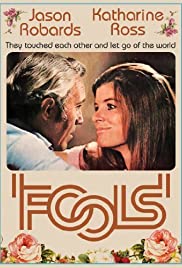
Fools (1970, directed by Tom Gries)


What the Hell, 1970?

In this self-conciously hip and with-it portrait of life in San Francisco at the tail end of the hippie era, Jason Robards plays Matthew South, a veteran B-movie actor who is fed up with everyday life and who is prone to long monologues about how the machines are taking over.  (Just imagine how Matthew would feel about the world today.)  When Matthew gets into an argument with two people in a park, Anais Appleton (Katharine Ross) comes to his rescue and soon, they’re in the middle of a falling in love montage.  Actually, there are several falling in love montages and they’re almost all scored by Kenny Rogers and the First Edition.  It’s easy listening with a hippie tinge.

Fools follows Matthew and Anais as they wander around San Francisco and have several strange encounters, none of which make much sense.  For instance, there’s a scene where two FBI agents suddenly burst into the room and then admit that they’re at the wrong address.  Why is that scene there?  What does it mean?  Later, Matthew and Anais go to a dentist and they listen to a patient try to seduce her psychiatrist (who is played by Mako).  Why is that scene there?  What does any of it mean?  Everywhere that Matthew and Anais go, they see evidence that society is dumb and that the answer to all life’s problems is a love song from Kenny Rogers.  Matthew never stops talking and Anais never stops looking pretty (she’s Katharine Ross after all) but neither ever becomes a strong enough character to ground Fools in any sort of reality.  It’s a movie that preaches nonconformity while so closely imitating A Thousand Clowns and Petulia that the entire thing feels like plagiarism.

Anais has a husband, an emotionally distant lawyer named David (Scott Hylands).  David isn’t prepared to let Anais leave him, no matter how tired she is of their marriage.  He hires a detective to follow Anais around.  It all leads to an act of violence that doesn’t fit the mood of anything that’s happened before.  Cue another falling love montage before the end credits role.

Fools is one of those films that probably would never have been made without the success of Easy Rider.  Everyone wanted a piece of the counterculture in 1970 and Fools tries so hard that it’s painful to watch.  Of course, neither Matthew nor Anais are really hippies.  They do eventually come across some hippies playacting in the street.  One of them is played by future David Lynch mainstay Jack Nance so that’s pretty cool.  Otherwise, Fools deserves to stay in 1970.


A Movie A Day #141: Breakheart Pass (1975, directed by Tom Gries)


California.  The 1870s.  Sheriff Pearce (Ben Johnson) boards a train with his prisoner, an alleged outlaw named John Deakin (Charles Bronson).  The train is mostly full of soldiers, under the command of Major Claremont (Ed Lauter), who are on their way to Fort Humboldt.  The fort has suffered a diphtheria epidemic and the soldiers are supposedly transporting medical supplies.
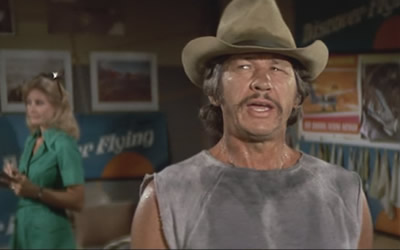
However, it’s not just soldiers on the train.  There’s also Gov. Fairchild (Richard Crenna) of Nevada, his fiancée (Jill Ireland), the Reverend Peabody (Bill McKinney), and a conductor named O’Brien (Charles Durning).  As the train continues on its journey, it becomes obvious that all is not as it seems.  People start to disappear.  A man is thrown from the train.  Two cars full of soldiers are separated from the train and plunge over a cliff.  There is also more to Deakin than anyone first realized and soon, he is the only person who can bring the murderers to justice.

In both real life and the movies, Charles Bronson was the epitome of a tough guy, so it’s always interesting to see him playing a more cerebral character than usual.  There are some exciting and surprisingly brutal action scenes, including a scene where Bronson fights a cook (played by former professional boxer Archie Moore) on top of the speeding train, but Breakheart Pass is more of a murder mystery than a typical action film.  If Louis L’Amour and Agatha Christie had collaborated on a story, the end result would be much like Breakheart Pass.  Bronson spends as much time investigating as he does swinging his fists or shooting a gun.  It’s not a typical Bronson role but he does a good job, showing that he could think as convincingly as he could kill.  Acting opposite some of the best character actors around in the 70s, Bronson more than holds his own.

Apparently, back in 1975, audiences were not interesting in watching Bronson think so Breakheart Pass was a disappointment at the box office and it is still not as well known as Bronson’s other films.  However, even if you’re not already a fan of the great Bronson, Breakheart Pass is worth discovering.

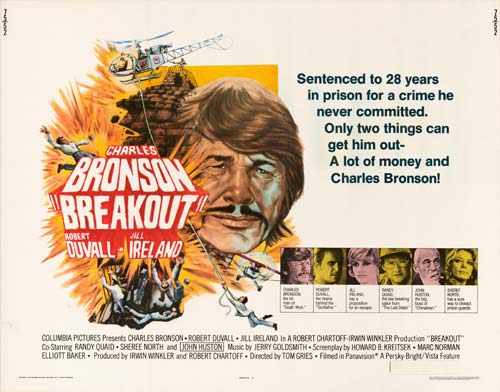
Let’s Go to the Drive-In with Charles Bronson in BREAKOUT (Columbia 1975)


gary loggins's avatarcracked rear viewer

Charles Bronson  finally achieved superstar status in the 1970’s after years of toiling in supporting parts thanks to drive-in fare like THE MECHANIC, MR. MAJESTYK, and the DEATH WISH films. 1975’s BREAKOUT had a bigger budget, a better than average cast, and major studio support, but at it’s heart it’s still a drive-in movie, albeit a cut above the usual action flick.

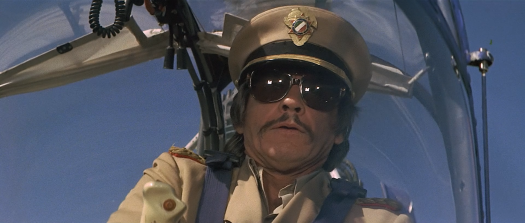
Bronson casts aside his normal stoic, stone-faced screen persona as Nick Colton, a somewhat shady pilot/mercenary who’ll do anything for a buck. Charlie’s quite a charmer here, displaying a sense a humor and talking a lot more than usual. He’s in rare form, getting to display his acting chops, honed through over two decades in the business, and is obviously having a good time in the role.

Nick is hired by Ann Wagner to rescue  her husband Jay, framed by his own grandfather and sentenced to a ruthless Mexican pennitentary…

View original post 399 more words

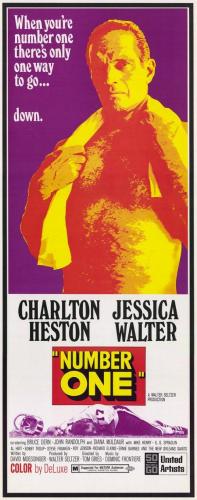
A Movie A Day #32: Number One (1969, directed by Tom Gries)


number-oneQuarterback Cat Catlan (Charlton Heston) used to be one of the greats.  For fifteen years, he has been a professional football player.  He probably should have retired after he led the New Orleans Saints to their first championship but, instead, the stubborn Cat kept playing.  Now, he is 40 years old and struggling to keep up with the younger players.  His coach (John Randolph) says that Cat has another two or three years left in him but the team doctor (G.D. Spradlin who, ten years later, played a coach in North Dallas Forty) says that one more strong hit could not only end Cat’s career but possibly his life as well.  Two of former Cat’s former teammates (Bruce Dern and Bobby Troup) offer to help Cat find a job off the field but Cat tells them the same thing that he tells his long-suffering wife (Jessica Walter).  He just has to win one more championship.
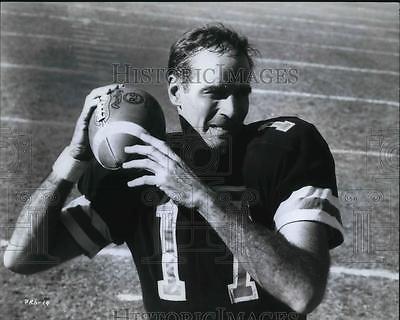
Number One is unique for being one of the first movies to ever take a look at the dark side of professional football.  At 40, Cat is facing an uncertain future.  His years of being a star have left him unprepared to deal with life in the real world.  He has no real friends and a wife who no longer needs him.  This would seem like a perfect role for Heston, who always excelled at playing misanthropes.  Heston is convincing when he’s arguing with his wife or refusing to sign an autograph but, surprisingly, he is thoroughly unconvincing whenever he’s on the field.  For all of his grunting and all the lines delivered through gritted teeth, Heston is simply not believable as a professional athlete, even one who is past his prime.  (When he played the 40 year-old Cat, Heston was 46 and looked like he was 56.)  Whenever Cat throws a football, he’s played by Heston in close-ups and very obviously replaced by real-life Saints quarterback Billy Kilmer for the long shots.  A football film is only as good and convincing as the football action and, on that front, Number One leaves much to be desired.

The 1969 press photo displays Heston's throwing technique.

This 1969 press photo displays Heston’s throwing technique.

Two final notes: For the scene in which Cat is tackled by three Dallas Cowboys (all played by actual players), Heston requested that the players actually tackle him.  Heston ended up with three broken ribs.

Finally, Number One was made the cooperation of the New Orleans Saints and features several players in the cast.  When Number One was filmed, the Saints were still a relatively new expansion team.  Cat is described as having already led the Saints to a championship but it would actually be another 40 years before the Saints would finally make their first trip to the Super Bowl.