Retro Television Review: The American Short Story #17: The Greatest Man In The World


Welcome to Retro Television Reviews, a feature where we review some of our favorite and least favorite shows of the past!  On Saturdays, I will be reviewing The American Short Story, which ran semi-regularly on PBS in 1974 to 1981.  The entire show can be purchased on Prime and found on YouTube and Tubi.

This week, The American Short Story comes to a close.

Episode #17: The Greatest Man In The World

(Dir by Ralph Rosenbaum, originally aired in 1981)

In this adaptation of a James Thurber short story, a country boy named Jack Smurch (Brad Davis) briefly becomes a celebrity when he breaks Charles Lindbergh’s record for flying nostop around the world.  Two reporters (Reed Birney and John McMartin) are assigned to write a glowing profile of him.  The U.S. Secretary of State (William Prince) wants to make him a symbol of America.  The only problem is that Smurch himself is a violent and dull-minded habitual criminal who can barely fly his plane and who almost crashes when he comes in for a landing at the end of his flight.  Before he took off in his plane, the only person who cared about Smurch was his girlfriend (Carol Kane).  Even Smurch’s own mother says that she hopes that he crashes and drowns.  But once he manages to land, Smurch becomes a hero.  As the saying goes, print the legend.

Smurch, unfortunately, isn’t smart enough to play along with the hero routine.  At a meeting with the Secretary of State and the President (who is implied to be FDR), Smurch proves to be so obnoxious that he’s tossed out of a window.  He plunges to his death but he dies an American hero.

The final episode of The American Short Story was also the best, a wonderfully dark satire on the media and our cultural need for heroes.  Brad Davis’s naturally obnoxious screen presence — the same presence that made audiences enjoy seeing him get tortured in Midnight Express — is put to good use here.  Jack Smurch is such a jerk that you really can’t blame anyone for tossing him out that window.  If nothing else, it got him to stop talking.

The American Short Story was, overall, an uneven series.  Too often, the episodes failed to really capture the tone and style that made the original stories so memorable.  That said, there were a few good episodes, like this one.  If nothing else, perhaps this series inspired people to read the original stories for themselves.  That would have been the best possible outcome.

Next week …. something new will premiere in the time slot!  What will it be?  I’ll give you a clue — it’s set on the beach but it’s not Pacific Blue.  Let’s just say that some people stand in the darkness….

Retro Television Review: The American Short Story #16 “The Jilting of Granny Weatherall”


Welcome to Retro Television Reviews, a feature where we review some of our favorite and least favorite shows of the past!  On Saturdays, I will be reviewing The American Short Story, which ran semi-regularly on PBS in 1974 to 1981.  The entire show can be purchased on Prime and found on YouTube and Tubi.

This week, The American Short Story adapts a short story by Katherine Anne Porter.

Episode #16 “The Jilting of Granny Weatherall”

(Dir by Randa Haines, originally aired 1980)

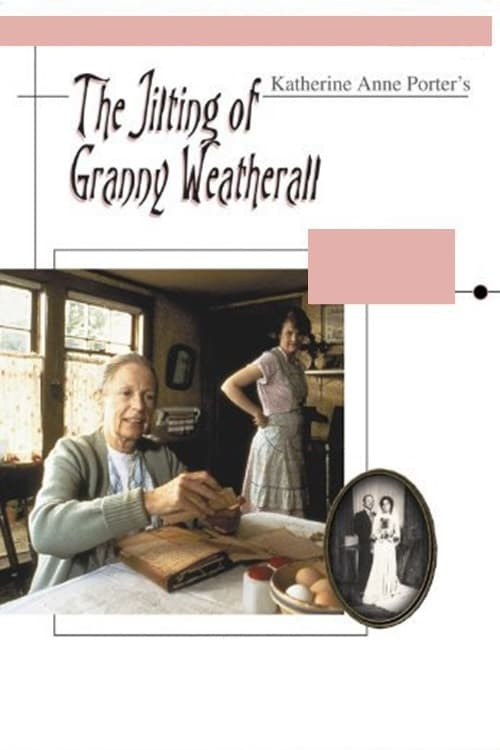
Granny Weatherall (Geraldine Fitzgerald) is dying.  While the doctor tries to comfort her and the priest tries to provide salvation, Granny obsesses on cleaning her house and getting everything in its proper place.  She thinks about how her adult daughter, Cornelia (Lois Smith), is incapable of keeping the house as clean as Granny Weatherall believes it should be.  Memories of the past and hallucinations of the present flood her mind and she remembers the time that she was jilted by a suitor and she thinks about how she has to live long enough to destroy the letters that he once wrote her.  But the coldness of death is always hovering in the background….

This episode moved a bit slowly but it was effective due to the performance of Geraldine Fitzgerald and also Randa Haines’s direction, which kept the viewer unsure of whether they were seeing reality or if they were just seeing Granny Weatherall’s dying thoughts.  The short story itself is written as a stream-of-consciousness and Haines does her best to capture that feeling in her adaptation.  One of the main problems with The American Short Story has been that most of the adaptations have struggled to capture the tone of the original stories.  The Jilting of Granny Weatherall’s visuals come very close to recreating the power of Katherine Anne Porter’s words.

Next week, The American Short Story wraps up with an adaptation of a James Thurber short story.

Retro Television Review: The American Short Story #15: The Sky Is Gray


Welcome to Retro Television Reviews, a feature where we review some of our favorite and least favorite shows of the past!  On Saturdays, Lisa will be reviewing The American Short Story, which ran semi-regularly on PBS in 1974 to 1981.  The entire show can be purchased on Prime and found on YouTube and Tubi.

This week, we have an adaptation of a 1963 short story.

Episode #15: The Sky Is Gray

(Dir by Stan Lathan, originally aired in 1980)

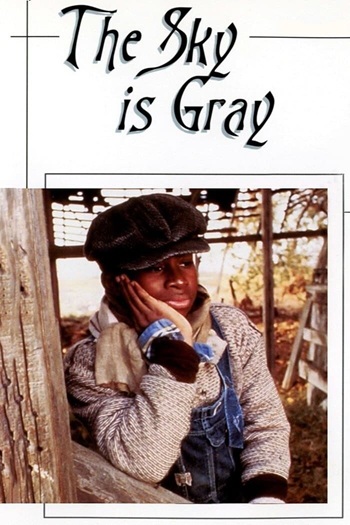
This adaptation of an Ernest Gaines short story takes place in Louisiana during the 1940s.  James (James Bond III) is a young black child who lives on a farm.  His father is overseas, serving in the Army during World War II.  His mother (Olivia Cole) is a stern but loving woman who is trying to raise the sensitive James in a world where one often has to depend on their inner strength to survive.  When James comes down with a toothache, he and his mother travel to a nearby town so he can see the dentist.  From having to stand in the back of the bus to listening to a debate between a priest and a militant in the dentist’s office, it’s an eye-opening journey for James.  When the white receptionist at the dentist’s office arbitrarily cancels James’s appointment and tells him and his mother to come back tomorrow, the two of them seek shelter.  James discovers how strong his mother is when they’re harassed by a pimp (Reuben Collins).  He also learns that there is unexpected kindness in the world when a white store owner invites him and his mother inside to give them shelter from the cold and windy day.  During one trip to the dentist, James learns that the world is far more complicated than he originally knew.

This was an okay adaptation of Gaines’s acclaimed short story.  Young James Bond III gave a good performance as James and the episode was full of scenes that visually captured the feel of being an outsider.  That said, as was often the case with this series, the adaptation was so straight-forward that it didn’t really capture the nuance of Gaines’s writing.  In the short story, Gaines put the reader right into James’s head.  The adaptation doesn’t really do that.  A heavy-handed musical score doesn’t help matters but, with all that in mind, this was still an effective coming-of-age tale.

Retro Television Review: The American Short Story #13: Barn Burning


Welcome to Retro Television Reviews, a feature where we review some of our favorite and least favorite shows of the past!  On Saturdays, Lisa will be reviewing The American Short Story, which ran semi-regularly on PBS in 1974 to 1981.  The entire show can be purchased on Prime and found on YouTube and Tubi.

This week, we have an adaptation of a William Faulkner short story.

Episode #13: Barn Burning

(Dir by Peter Werner, originally aired in 1980)

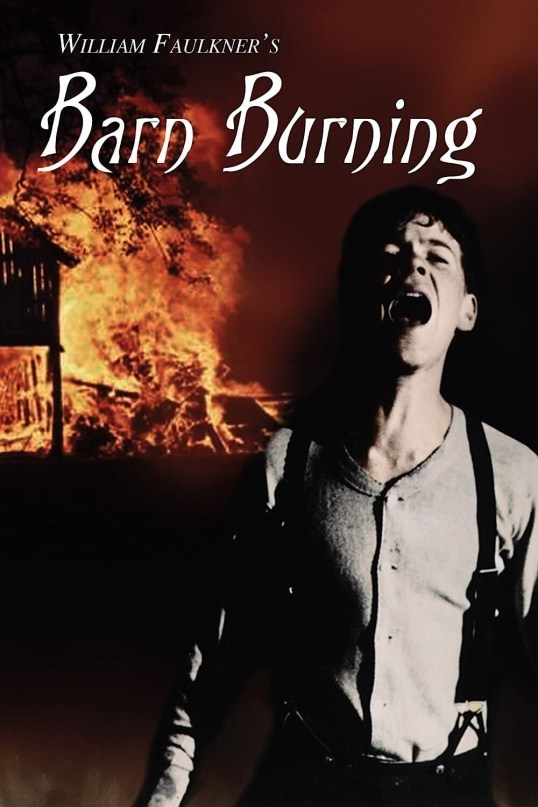
The year is 1895 and everyone in Yoknapatawpha County, Mississippi knows that Abner Snopes (Tommy Lee Jones) is no good.  The taciturn and bitter Abner is notorious for burning down the barns of those who he feels have mistreated him.  When Abner is dragged into the Justice of the Peace’s courtroom (which also happens to be a general store), he’s only acquitted because the judge and the prosecutor realize it would be unfair to force Abner’s young son, Sartoris “Sarty” Snopes (Shawn Whittington), to testify against him.  Abner and his family are ordered to move to another town but Abner avoids any legal punishment.  Despite that, Abner still accuses Sarty of thinking about betraying him.

This episode follows Sarty as he tries to understand his abusive father, a man who is offended over being told to wash a rug that he intentionally damaged that he plots to burn down another barn.  (The owner of the rug is played by Jimmy Faulkner, the grandson of William Faulkner.)  Sarty wants his father’s love but it soon becomes clear that Abner is too angry and resentful to love anyone.  The story ends with a fire and an ambiguous tragedy, leaving both the fate of Abner and the future of Sarty unclear.

With his shifting viewpoints and his internalized style of narration, William Faulkner is not an easy writer to adapt to the screen.  With Barn Burning, director Peter Werner takes a straight-forward approach to Faulkner’s short story.  While Werner’s film might lack the nuance that was brought to the tale by Faulkner’s stream-of-consciousness style, it does work as a portrait of living with an angry man who is determined to let the world know that he’s not going to be pushed around anymore.  Tommy Lee Jones gives a strong, intimidating, and ultimately charismatic performance as Abner, a tyrant who only shows emotion when he feels that he’s been treated disrespectfully.  The story takes place in the ruins of the Old South and capture the struggle between the forced gentility of the old aristocracy and the crassness of the future, represented by Abner and his family.

This was a strong episode that truly did justice to William Faulkner’s short story.

Retro Television Review: The American Short Story #12: The Man That Corrupted Hadleyburg


Welcome to Retro Television Reviews, a feature where we review some of our favorite and least favorite shows of the past!  On Saturdays, Lisa will be reviewing The American Short Story, which ran semi-regularly on PBS in 1974 to 1981.  The entire show can be purchased on Prime and found on YouTube and Tubi.

This week, we have an adaptation of a Mark Twain novella.

Episode #12: The Man That Corrupted Hadleyburg

(Dir by Ralph Rosenblum, originally aired in 1980)

In this loose adaptation of one of Mark Twain’s darkest novellas, Robert Preston stars as The Stranger.  When we first meet The Stranger, he’s looking down on the small town of Hadleyburg and it’s hard not to notice that he looks a lot like Mark Twain.  The Stranger explains that the people of Hadleyburg consider themselves to be honest and free of sin.  The town’s motto is “Lead us not into temptation!”  The Stranger has a plan to test them.

Riding into town, the Stranger stops at the home of Edward and Mary Richards (Tom Aldredge and Frances Sternhagen).  The Stranger gives them a sack that he claims is filled with $40,000 worth of gold bars.  The Stranger says that he was once a poor man and someone in Hadleyburg gave him $20 and some meaningful advice.  Now that’s he rich, he wants to pay back the person who helped him.  The Stranger explains that there is an envelope inside the sack.  In the envelope, the Stranger has written out the advice he was given by his benefactor.  The Stranger’s instruction is for the man who helped him to write out that advice and give it to Rev. Burgess (Fred Gwynne), who recently lost his church when the citizens of Hadleyburg tired of him calling them out for their hypocrisies.  The honest man who remembers the advice he gave the Stranger will be very rich as a result.  The Stranger then leaves.

News of the sack and the gold travels throughout town and eventually the rest of the nation.  The most powerful families in Hadleyburg, including the Richards family, receive a letter telling them that the advice given to the stranger was “You are far from being a bad man, go and reform.”  Burgess is soon swamped by notes, all featuring that same phrase.  At the town meeting, Burgess reads each note, revealing that everyone wrote down the same phrase and that none of the town leaders is as honest as they claim.

The Man That Corrupted Hadleyburg is one of Twain’s most stinging satires, featuring an ending that is surprisingly dark.  This adaptation takes a much lighter approach to the material, altering Twain’s ending to something much more gentle and friendly.  Unfortunately, changing the ending causes the adaptation to lack the bite of the original short story.  Twain’s portrayal of greed and guilt instead becomes a mild story about a quirky town that learns a lesson.  It’s well-acted, especially by Fred Gwynne, but this adaptation doesn’t honor Twain’s intentions.  It just doesn’t add up to much.

Retro Television Review: The American Short Story #11: Paul’s Case


Welcome to Retro Television Reviews, a feature where we review some of our favorite and least favorite shows of the past!  On Saturdays, Lisa will be reviewing The American Short Story, which ran semi-regularly on PBS in 1974 to 1981.  The entire show can be purchased on Prime and found on YouTube and Tubi.

This week, Eric Roberts appears in an adaptation of a Willa Cather short story.

Episode #11: “Paul’s Case”

(Dir by Lamont Johnson, originally aired in 1980)

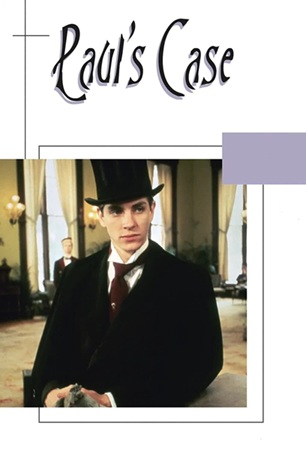
At the turn of the century, Paul (Eric Roberts) is a young man from Philadelphia who struggles academically and who just doesn’t seem to fit in anywhere.  He comes from a poor family but he wants people to think of him as being rich and worry-free.  He gets a job working at a theater and finally experiences a life other than the dreary one forced on him by his father.  But eventually, Paul steals money from his job and uses it to go to New York.  In New York, he lives out his fantasy of being rich and free but, after a few days, he realizes that the fantasy is only temporary.  With his father coming to the city to claim him, Paul throws himself in front of train.

Based on a story by Willa Cather, Paul’s Case is an effective and heart-breaking entry in The American Short Story series.  It feature a very early performance from Eric Roberts.  Roberts was only 24 years old when he played Paul and he gives a poignantly vulnerable performance as a young man who simply does not fit in with the world in which he’s been born.  He’s too delicate, too much of a “dandy,” for his father’s unimaginative (and homophobic) world but he’s also not rich enough to truly be a part of the exciting world that he discovers in the theater and in New York.

Perfectly capturing the tone of the source material and featuring an excellent turn from Eric Roberts, Paul’s Case is The American Short Story at its best.

Previous Eric Roberts Films That We Have Reviewed:

  1. Star 80 (1983)
  2. Runaway Train (1985)
  3. To Heal A Nation (1988)
  4. Best of the Best (1989)
  5. Blood Red (1989)
  6. The Ambulance (1990)
  7. The Lost Capone (1990)
  8. Best of the Best II (1993)
  9. Love, Cheat, & Steal (1993)
  10. Voyage (1993)
  11. Love Is A Gun (1994)
  12. Sensation (1994)
  13. Dark Angel (1996)
  14. Doctor Who (1996)
  15. Most Wanted (1997)
  16. Mercy Streets (2000)
  17. Raptor (2001)
  18. Rough Air: Danger on Flight 534 (2001)
  19. Strange Frequency (2001)
  20. Wolves of Wall Street (2002)
  21. Border Blues (2004)
  22. Mr. Brightside (2004)
  23. Six: The Mark Unleased (2004)
  24. We Belong Together (2005)
  25. Hey You (2006)
  26. Depth Charge (2008)
  27. Amazing Racer (2009)
  28. The Chaos Experiment (2009)
  29. In The Blink of an Eye (2009)
  30. Bed & Breakfast (2010)
  31. Enemies Among Us (2010)
  32. The Expendables (2010) 
  33. Sharktopus (2010)
  34. Beyond The Trophy (2012)
  35. The Dead Want Women (2012)
  36. Deadline (2012)
  37. The Mark (2012)
  38. Miss Atomic Bomb (2012)
  39. Assault on Wall Street (2013)
  40. Bonnie And Clyde: Justified (2013)
  41. Lovelace (2013)
  42. The Mark: Redemption (2013)
  43. The Perfect Summer (2013)
  44. Self-Storage (2013)
  45. Sink Hole (2013)
  46. A Talking Cat!?! (2013)
  47. This Is Our Time (2013)
  48. Bigfoot vs DB Cooper (2014)
  49. Doc Holliday’s Revenge (2014)
  50. Inherent Vice (2014)
  51. Road to the Open (2014)
  52. Rumors of War (2014)
  53. Amityville Death House (2015)
  54. Deadly Sanctuary (2015)
  55. A Fatal Obsession (2015)
  56. Las Vegas Story (2015)
  57. Stalked By My Doctor (2015)
  58. Enemy Within (2016)
  59. Hunting Season (2016)
  60. Joker’s Poltergeist (2016)
  61. Prayer Never Fails (2016)
  62. Stalked By My Doctor: The Return (2016)
  63. The Wrong Roommate (2016)
  64. Dark Image (2017)
  65. The Demonic Dead (2017)
  66. Black Wake (2018)
  67. Frank and Ava (2018)
  68. Stalked By My Doctor: Patient’s Revenge (2018)
  69. Clinton Island (2019)
  70. Monster Island (2019)
  71. The Reliant (2019)
  72. The Savant (2019)
  73. Seven Deadly Sins (2019)
  74. Stalked By My Doctor: A Sleepwalker’s Nightmare (2019)
  75. The Wrong Mommy (2019)
  76. Exodus of a Prodigal Son (2020)
  77. Free Lunch Express (2020)
  78. Her Deadly Groom (2020)
  79. Top Gunner (2020)
  80. Deadly Nightshade (2021)
  81. The Elevator (2021)
  82. Just What The Doctor Ordered (2021)
  83. Killer Advice (2021)
  84. Megaboa (2021)
  85. Night Night (2021)
  86. The Poltergeist Diaries (2021)
  87. The Rebels of PT-218 (2021)
  88. Red Prophecies (2021)
  89. A Town Called Parable (2021)
  90. Bleach (2022)
  91. Dawn (2022)
  92. My Dinner With Eric (2022)
  93. 69 Parts (2022)
  94. The Rideshare Killer (2022)
  95. D.C. Down (2023)
  96. Aftermath (2024)
  97. Bad Substitute (2024)
  98. Devil’s Knight (2024)
  99. The Wrong Life Coach (2024)
  100. When It Rains In L.A. (2025

Retro Television Review: The American Short Story #10 “The Golden Honeymoon”


Welcome to Retro Television Reviews, a feature where we review some of our favorite and least favorite shows of the past!  On Saturdays, Lisa will be reviewing The American Short Story, which ran semi-regularly on PBS in 1974 to 1981.  The entire show can be purchased on Prime and found on YouTube and Tubi.

Episode #10: The Golden Honeymoon (1980, directed by Noel Black)

Hey, guest reviewer here!  Don’t worry, Lisa will return next week.  Next week’s episode has got Eric Roberts in it and she told me there’s no way she’s going to miss that!

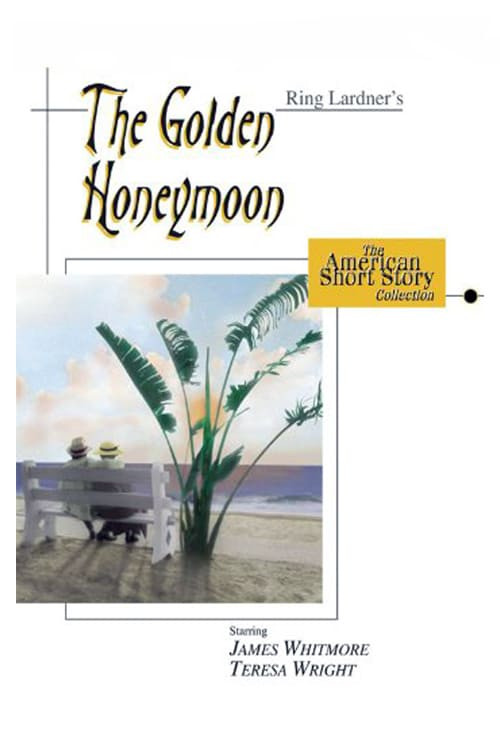
This episode is an adaptation of a short story by the author Ring Lardner, who was a member of the Algonquin Round Table and whose son won an Oscar for writing the script for the movie version of M*A*S*HThe Golden Honeymoon about an old couple (James Whitmore and Teresa Wright) who celebrate their 50th anniversary by going on a “golden honeymoon” to Florida.  While there, they meet the wife’s old flame (Larry Loonin) and Whitmore feels like he has to win his Wright all over again.  Whitmore and Loonin play a lot of different games, like shuffleboard and checkers.  You know you don’t want to get between a group of elderly people playing checkers!  Wright gets frustrated with Whitmore but they make up by the end of the episode.  They bicker but they love each other.

I have not read the original short story on which this episode is based.  Ring Lardner was famous for his wit and he probably could have found a lot of comedic moments in two old romantic rivals having an intense checkers game.  The episode itself reminded me of those films that my high school English teachers would always show in class.  “You are going to love this,” the teacher always says and then the members of the class sit there in stony silence as they watched the slowest, most visually static program imaginable.  This episode was not just boring.  It was PBS boring.

I don’t want to be to negative, though.  I like both James Whitmore and Teresa Wright.  Whitmore was the elderly prisoner in The Shawshank Redemption.  Teresea Wright was in several classic Golden Age  films.  In The Golden Honeymoon, they were believable as an old married couple, who constantly argue but still clearly love each other.

Retro Television Review: The American Short Story #9: Soldier’s Home


Welcome to Retro Television Reviews, a feature where we review some of our favorite and least favorite shows of the past!  On Saturdays, I will be reviewing The American Short Story, which ran semi-regularly on PBS in 1974 to 1981.  The entire show can be purchased on Prime and found on YouTube and Tubi.

This week, we have an adaptation of a short story by Ernest Hemingway.

Episode #9 “Soldier’s Home”

(Dir by Robert Young, originally aired in 1977)

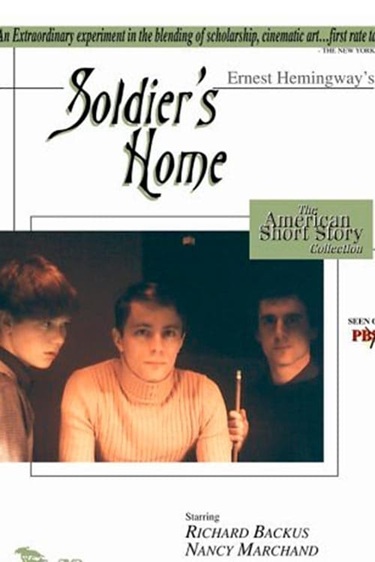
Having gone from attending college to serving in the Army during the Great War, Harold Krebs (Richard Backus) returns home to Oklahoma.  He arrives home later than most of the other soldiers who served.  (He stayed in Europe until 1919.)  As a result, there’s no big parade waiting for him.  Everyone in town seems to have moved beyond the war and they no longer have much of a desire to talk about it.

Harold, who was once a popular and optimistic member of the town’s social set, no longer feels that he fits in.  He feels detached, watching people as they go about their lives but never feeling any desire to join them.  His mother (Nancy Marchand) pushes him to go out and date and have a good time but Harold feels lost, regardless of how much she prays for him.

Ernest Hemingway’s short story was one of the first to realistically deal with the feelings of soldiers returning from combat.  Though Harold doesn’t talk much about his experiences, one can tell that he saw and experienced things that left him scarred.  After surviving the horror of The Great War, there’s no way Harold can just slip back into his normal routine.

The adaptation sticks closely to Hemingway’s story.  Unfortunately, it doesn’t really find the visual style necessary to capture the power of Hemingway’s words.  Hemingway was a deceptively simple storyteller and Robert Young’s film is a fairly straight-forward portrait of a young man who doesn’t want to do anything, one that fails to truly capture the subtext of Hemingway’s story.  Richard Backus’s blank-eyed acting style worked well when he was playing a member of the undead in Deathdream but, in this one, he just makes ennui seem boring and petulant.  Nancy Marchand, not surprisingly, is far stronger in the role of his well-meaning but clueless mother.

As was almost always the case when it came to attempts to adapt Hemingway, it’s best just to read the original.

Lisa Marie’s Week In Television: 7/20/25 — 7/26/25


1st & Ten (Tubi)

I reviewed 1st & Ten here!

American Manhunt: O.J. Simpson (Netflix)

Another year, another OJ documentary.  I binged this 2025 docuseries on Monday.  On the one hand, the story has been told and re-told so many times that it’s debatable whether any documentary will ever have anything new to add.  (And now that O.J. Simpson is dead, no one’s pretending that he was framed or that he was ever looking for the “real killers” anymore.)  On the other hand, the story itself such an important moment in American cultural history that there’s nothing wrong with examining it for a second or tenth time.  I appreciated that the docuseries took the time to talk about who Nicole Brown and Ron Goldman were as people before they were murdered by OJ.  (And make no mistake, that’s exactly what happened.)

The American Short Story (YouTube)

I reviewed this week’s episode here!

Big Brother 27 (24/7, CBS, Paramount Plus, Pluto TV)

I wrote about Big Brother here!

Black Sabbath: Up Close and Personal (Night Flight Plus)

On Saturday morning, Jeff and I joined our friend Pat in watching this 2007 documentary about Black Sabbath.  Some of the members were interviewed for the documentary.  Ozzy Osbourne was not (instead the documentary used archival interviews to get his thoughts) but, for the most part, everyone was very complimentary to him.  Personally, I liked the steady and straight-forward beat of the band’s music.

CHiPs (Prime)

I reviewed CHiPs here!

Degrassi High (Tubi)

I reviewed Degrassi High here!

Diff’Rent Strokes (Tubi)

I watched two episodes on Thursday.  In one, Kimberly Drummond (Dana Plato) went to a ski lodge with her friends and was considering losing her virginity when suddenly — surprise! — her father (Conrad Bain) decided to join her.  The second episode featured Willis (Todd Bridges) starting high school and being told that he had smoke weed to be cool.  Willis actually did get high in this episode and it’s amazing just how stoned he managed to get in just a few seconds.  Anyway, Mr. Drummond told Willis to stay off the grass.  This episode was disturbing because one of the high school stoners was wearing jeans so tight that …. well, let’s just say that it showed off more of him than was perhaps typical for network television.

Fantasy Island (DVR)

I reviewed Fantasy Island here!  Laurence is really letting me down as Mr. Roarke’s new servant.

Fred and Rosemary West: A British Horror Story (Netflix)

I watched this three-episode true crime docuseries on Sunday and Monday.  Fred and Rosemary West were a seemingly ordinary couple who actually murdered an untold number of young women and buried them out back under their patio.  Watching the docuseries, I was reminded a bit of the Paul Bernardo/Karla Homalka case, except in this case Fred tried to keep the police from discovering Rosemary’s role in the murders.  Fred ended up committing suicide.  Rosemary is still in prison.  It was a disturbing case.  Watching the docuseries, my heart broke for all of their victims.

Freddy’s Nightmares (Plex)

I reviewed Freddy’s Nightmares here!

From Rock Star To Killer (Netflix)

I watched this French docuseries, about the murder of actress of Marie Trintignant on Tuesday.  It was a sobering film, one that explored how many people refusing to believe that Marie’s famous boyfriend could also be a viscous abuser.  I minored in French in college so I watched the first episode without subtitles and I discovered that my French has gotten really rusty.  The remaining episodes, I watched the dubbed versions and I have to say that the dubbing was so poorly executed that I have to wonder if it was done by AI.

Gone Girls: The Long Island Serial Killer (Netflix)

On Tuesday, I watched this 2025 docuseries, which dealt with the infamous (and still largely unsolved) Long Island serial killer case.  To be honest, I’ve seen so many documentaries and dramatizations of this story that I kind of doubt there’s really anything new to learn about it.  That said, I appreciated that the series devoted so much time to profiling the victims and showing us who they were before they became a part of a cold case.  The victims of these crimes are so often overlooked or outright dismissed.

Good Morning, Miss Bliss (Prime)

My review of the second episode of Indiana Saved By The Bell will drop in about 90 minutes.

Gordon Ramsay’s Secret Service (Hulu)

On Saturday, I watched a two-part episode in which Gordon helped out three sisters who had taken over their late father’s restaurant.  On the one hand, I’m the youngest of four sisters so I could relate to the family dynamics that I saw in this episode.  On the other hand — yech!  Mice and roaches in the food!  I’m never eating out again.

Her Last Broadcast: The Abduction of Jodi Huisentruit (Hulu)

This true crime docuseries explored the disappearance of Iowa news anchor Jodi Huisentruit.  Along with giving us the details of her life and disappearance, the series also presented us with four potential suspects.  I’ve read some criticism online that the four suspects were all cleared of involvement by the police investigation or, in at least one case, was actually just a person of interest rather than a suspect.  It’s a tragic story, nonetheless.

Highway to Heaven (Tubi)

This week’s episode …. agck!  I reviewed it here.

Homicide: Life On The Street (Peacock)

I reviewed Homicide here!

It’s Always Sunny in Philadelphia (FX & Hulu)

The Lawyer returned!  After being a little bit disappointed in the first two episodes of the new season, my faith was renewed by the third episode.  Not only did the Lawyer return but we also got Dennis and Mac pretending to be EMTs, Dee screwing up yet another job, and Charlie turning into a demanding chef.  That’s the Sunny that I love!

The second episode that I watched this week, in which the Gang dealt with the consequences of dumping baby oil in a local waterway, I also enjoyed.  I always like it when Dennis tries to do his whole slick, corporate spokesman routine.

I’m still getting used to the Rob Mac name change.

The Love Boat (Paramount Plus)

This week was a Thanksgiving cruise!  I can’t wait for the holidays!  I reviewed the episode here!

Malibu CA (YouTube)

Oh, how I hate this show.  Anyway, I wrote about the latest episode here.

Miami Vice (Prime)

This week’s episode was all about trying to retrieve stolen bull semen.  I swear, the stuff I watch for this site!  I reviewed it here.

New York Post Presents: Luigi Mangione: Martyr or Monster (Tubi)

I watched this documentary on Saturday because I was bored.  It presented the facts of the case without digging too deeply.  I remember that when Brian Thompson was shot, a lot of my friends were (and, in many cases still are) sympathetic to Luigi Mangione and they were always a little surprised that I wasn’t, especially after everything I went though when the insurance company evicted my Dad from his rebab facility.  Myself, I don’t believe in killing and I’m not going to praise a cold-blooded murder just because the shooter wrote some dumbass manifesto.  As for Luigi, if it wasn’t for his smile, most people wouldn’t care about him.

Night Flight (Night Flight Plus)

On Friday night, Jeff and I joined our friend Pat in watching an episode of this pop culture digest from the late 80s.  The episode opened with a look at “Satan Rock,” (Hi, Ozzy, hi, Iron Maiden) and then it went on to feature the hottest music videos of 1988.  As a history nerd and a student pop culture, I always enjoy watching artifacts like this.

Pacific Blue (Tubi)

Bleh.  Bicycles.  The bike cops were especially obnoxious this week.  I reviewed Pacific Blue here!

St. Elsewhere (Hulu)

Depressing episode, this week.  I reviewed St. Elsewhere here!

TMZ Investigates: What Happened to Justin Bieber (Tubi)

I was bored this afternoon so I watched this TMZ special.  Justin appears to be going through some problems.  The TMZ team considered that it could be drug-related.  Personally, I think fame does strange things to people, especially with today’s bizarrely obsessive celeb-driven culture.  Of course, having the TMZ folks following him around probably isn’t helping Justin’s mood.

TMZ Investigates: What Happened To Liam Payne (Tubi)

I watched this on Saturday.  TMZ investigates the tragic death of Liam Payne and it’s exactly what you would expect from TMZ.  There’s a lot of speculation, a lot of faux concern, and ultimately the whole thing leaves the viewer feeling a bit icky.

Trainwreck: The Astroworld Tragedy (Netflix)

I generally enjoy Netflix’s Trainwreck series.  I watched this entry on Friday.  It dealt with the death of nine people during a Travis Scott performance at Astroworld in 2021.  This documentary didn’t dig too deeply into how it happened, beyond suggesting that the majority of the blame should be assigned to the show’s promoters.  The desperate chant of “Stop the Show!” was haunting.

Trainwreck: The Cult of American Apparel (Netflix)

On Friday, I watched this documentary about the rise and fall of American Apparel.  It was weird essentially seeing my high school years turned into a “back in the day” documentary.  I guess this is what it feels like to realize you’re not getting younger.

Trainwreck: The Mayor of Mayhem (Netflix)

Rob Ford, a brash populist, is elected mayor of Toronto and makes a name for himself as a bigger-than-life reformer.  Then, he gets caught on camera smoking crack and everything falls apart.  This was my favorite of the Trainwreck documentaries that I watched, largely because Rob Ford was such a fascinating character.  I’ve read some comments online from some people who think that this documentary went a little bit too easy on Ford.  Maybe it did.  I’m not Canadian so I don’t know.  I just know it was an interesting story.

Trainwreck: P.I. Moms (Netflix)

The latest Trainwreck as is also perhaps the most pointless.  A reality show falls apart before the first episode even premieres.  The P.I. Moms, who would have been featured on the show, all argued that they deserved to be taken seriously and that they weren’t just acting for the camera but, at the same time, none of them came across as being particularly sincere so it was hard to have much sympathy for them.  It was a documentary about a bad reality show that felt like a bad reality show.

True Crime Arizona: Finding Robert Fisher (Tubi)

In 2001, it’s believed that Robert Fisher, a Navy veteran and former firefighter, murdered his wife and his two children, set his house on fire, and then disappeared into the Arizona wilderness.  Fisher has been a fugitive for 24 years and, while some speculate that he either committed suicide or died in the wilderness, people all over the country still regularly report spotting him.  This special took a look at Fisher’s crime and offered a few theories of how he managed to disappear.  The Fisher case has haunted me ever since I first learned about it and this special reminded me of why.  Fisher seemed like the type of guy you would want for a neighbor because he was good with tools and he had a clean-cut look.  Instead, he turned out to be a killer/  Personally, I think Fisher still out there.  Much like John List (the real-life inspiration for Jerry Blake in The Stepfather films), he’s probably got a new family and a new identity.  I have faith he’ll be captured eventually.

True Crime Arizona: The Missing (Tubi)

This episode looked at the cases of several indigenous women who had disappeared in Arizona and took a look at why their disappearances rarely seem to get the media attention that other true crime stories too.  This was well-produced and thought-provoking.

True Crime Arizona: Notorious Killers (YouTube)

I was so impressed by the True Crime Arizona episodes that I saw on Tubi that I then looked for more on YouTube.  This 23-minute episode took a look at some of Arizona’s most notorious killers.  I think I missed my calling.  I’d love to host True Crime Texas.

Retro Television Review: The American Short Story Episode 8 “The Blue Hotel”


Welcome to Retro Television Reviews, a feature where we review some of our favorite and least favorite shows of the past!  On Saturdays, I will be reviewing The American Short Story, which ran semi-regularly on PBS in 1974 to 1981.  The entire show can be purchased on Prime and found on YouTube and Tubi.

This week, we have an adaptation of a Stephen Crane short story.

Episode 1.8 “The Blue Hotel”

(Dir by Jan Kadar, originally aired in 1977)

In the dying days of the Old West, a train pulls into a station in a small frontier town.  Getting off the train, a Cowboy (John Bottoms), an Easterner (Geddeth Smith), and a Swede (David Warner) head to the town’s only hotel.  A blizzard is coming and the three men are seeking shelter for the night.  The owner of the hotel, Scully (Rex Everhart), is happy to provide it.  As the men wait for dinner to be served, they play a card game with Scully’s son, Johnnie (James Keach).

At first, the game plays out without incident.  The men are all friendly, with the exception of the Swede.  The Swede remains quiet and seems distrustful.  After a few hands of the game, the Swede accuses Johnnie of cheating.  Over the next few hours, as the wind howls outside, the Swede rants and raves.  Convinced that the wild west is truly full of outlaws and that it’s all exactly like the dime-store novels that he read before boarding the train, he cannot bring himself to accept that the men mean him no harm.  It all leads to violence and tragedy.

This episode made excellent use of the shadowy Blue Hotel and the desolate wind blowing outside.  Over the course of an hour, the hotel went from being a friendly shelter to an ominous location that seemed to pulse with paranoia.  David Warner gave a strong performance as the unstable Swede and the final act of violence (which was changed slightly from the short story’s original conclusion) comes as a genuine shock as does the final twist in the tale.  The Blue Hotel becomes a look at how people unknowingly shape their own destiny, for better or worse.