Brad reviews THE FIRM (1993), starring Tom Cruise!


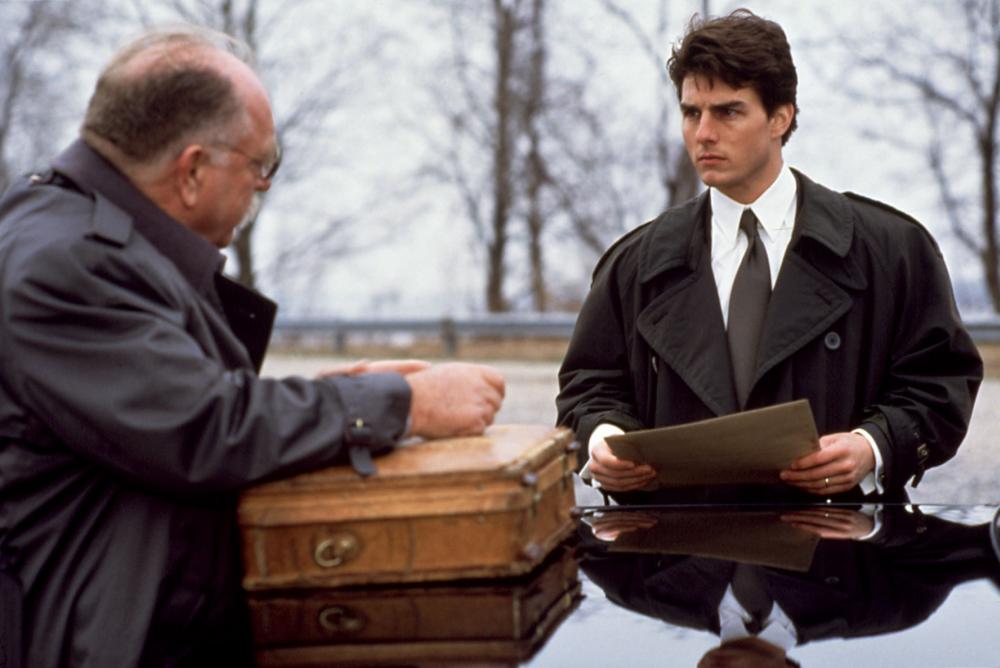
In honor of Tom Cruise’s 63rd birthday, I decided to watch THE FIRM, which is based on the 1991 novel from author John Grisham. Cruise stars as the brilliant Harvard law graduate Mitch McBride, who convinces his wife Abby (Jeanne Tripplehorn) to move to Memphis, TN, so he can join the prestigious Memphis law firm of Bendini, Lambert & Locke. With the help of his veteran mentor Avery Tolar (Gene Hackman), Mitch seems to be excelling at his job, and everything is just so perfect. Unfortunately, the good times don’t last as Mitch starts to notice some suspicious stuff going on with the firm, beginning with the mysterious deaths of two of his fellow attorneys. He’s soon approached by FBI agents, led by Wayne Tarrance (Ed Harris), who tell him that there are nefarious deeds taking place at the firm, including the laundering of money for the Chicago mob. When Mitch starts questioning the activities of the firm, he finds himself the subject of blackmail and intimidation from the firm’s security officer William Devasher (Wilford Brimley) because the firm will do anything to protect its secrets. Mitch is soon caught between betraying his corrupt employers, who are threatening to kill him, and the FBI, who is pressuring him to expose the firm’s criminal activities. Not wanting to lose his life, go to jail, or get disbarred, Mitch devises an extremely risky plan to outsmart the firm and the FBI, but is even he brilliant enough to pull this one off?!

Back in the early 90’s, it seemed that every other movie being released was adapted from a John Grisham novel, and the very first of those adaptations was THE FIRM in 1993. Extremely successful at the box office, THE FIRM grossed over $270 million worldwide, setting the stage for five new movies based on Grisham novels over the next five years. THE FIRM was not only financially successful, it’s also an extremely effective movie that showcases a 30-year-old Tom Cruise at his very best. Director Sydney Pollack crafted a creepy and paranoid thriller, using a slow-burn buildup that relies on Cruise’s ability to believably go from naïve and starstruck at the beginning, to scared and desperate during the middle portion of the film, and ultimately to resourceful and intelligent at the end, as he navigates the dangerous situations he finds himself in. It’s a dynamic, intense performance, and even with a huge supporting cast of excellent actors around him, Cruise dominates every frame of this film. Other performances that stand out to me are Jeanne Tripplehorn as Mitch’s wife Abby, Wilford Brimley as the firm’s enforcer, Gary Busey and Holly Hunter as a private investigator and his administrative assistant from Little Rock, and David Strathairn as Mitch’s jailbird brother in Arkansas. Gene Hackman is good in his role as Mitch’s corrupted mentor Avery Tolar, but his character is not one of my favorites from the legendary actor. His character has accepted his corruption and learned to cope with it over the years through alcohol and womanizing, just so he can keep making the money. He knows better and that’s the part that ultimately makes him the most pathetic. Ed Harris is also good in the film as the FBI Agent, but his character is kind of an asshole, and it’s fun to see Mitch outsmart him.

I also like the Memphis, Tennessee locations showcased in THE FIRM, locations that I’ve been to many times, such as Beale Street, Mud Island, and The Peabody Hotel. Early in the movie, Cruise’s character flips right along with the “Beale Street flippers,” popular Beale Street entertainers who perform nightly for tips. I’ve given them some of my cash over the years! And the chase sequence that starts at Mud Island and spills over into downtown Memphis is one of the most exciting parts of the movie. My home state of Arkansas even gets in on the action when Mitch meets FBI agent Wayne Tarrance at the Southland Greyhound Park located in West Memphis, Arkansas. The greyhound race track no longer exists at that location, as the final dog race was held on December 31, 2022. The site has now become the Southland Casino, one of three operating casinos in Arkansas, with the other two being the Oaklawn Casino in Hot Springs and The Saracen Casino in Pine Bluff. I also like the fact that the sleazy private investigator, played by Gary Busey, is from Little Rock, Arkansas. I commute to Little Rock daily to work at my accounting and tax firm, and it’s fun imagining that there could be an “Eddie Lomax” somewhere around here.

THE FIRM may not be a perfect film… some fat could have been trimmed out as it runs for over two and a half hours, a lot of time for a “thriller;” and while effective on paper, I also can’t help but wonder if the resolution would have worked quite as well in real life as it’s portrayed in the film. I still love the movie and consider it to be one of Tom Cruise’s best. I revisit it quite often, and I’m glad his birthday gave me another excuse to watch it again today!

Retro Television Review: Miami Vice 3.5 “The Good Collar”


Welcome to Retro Television Reviews, a feature where we review some of our favorite and least favorite shows of the past!  On Mondays, I will be reviewing Miami Vice, which ran on NBC from 1984 to 1989.  The entire show can be purchased on Prime!

This week, even more innocent lives are destroyed by an unwinnable war on drugs.

Episode 3.5 “The Good Collar”

(Dir by Mario DiLeo, originally aired on October 24th, 1986)

This week’s episode of Miami Vice tells the story of several wars playing out on the streets of Miami.

One of the wars is the skirmish between two street gangs, made up exclusively of teenagers.  Led by Count Walker (Samuel Graham), the Regular Fellas are pushing drugs and even forcing a promising football star named Archie Ellis (Keith Diamond) to deliver a package of black tar heroin for them.  The Regular Fellas are at war with The Apostles.  Among the members of the Apostles is Ramirez (Jsu Garcia), an undercover cop who is actually 23 but who is pretending to be seventeen.

When Crockett and Tubbs bust Archie, all three of them find themselves dragged into the National War On Drugs.  Assistant State Attorney William Pepin (Terry Kinney) wants to take Count Walker down, if just so he can claim a rare victory.  When Archie helps Crockett and Tubbs make a bust and also saves them from getting shot in a back alley, Pepin agrees to drop all the charges against Archie.  But after Ramirez is blown up by the Regular Fellas, Pepin decides that he’s going to go ahead and charge Archie unless Archie wears a wire and gets Count Walker to confess to his crimes.

Crockett, the former football star, is outraged by Pepin’s decision to put Archie in danger.  Crockett even offers to doctor the records so that Archie’s arrest will be dismissed by the courts.  However, Archie refuses.  Archie says that he’s responsible for his own mistakes and he’ll deal with the consequences.  Unfortunately, in this case, the consequences involve Archie being shot and killed by Count Walker, though not before getting Walker to confess on tape.  Walker is arrested and his gang is destroyed but at the cost of Archie’s life.  Pepin is happy.  Ramierz’s supervisor, Lt. Lee Atkins (John Spencer), is happy.  But social worker Ed McCain (Charles S. Dutton) blames Crockett for Archie’s death.  And Archie’s grandmother slams the door in Crockett’s face when he attempts to come by to pay his final respects.

What a dark episode!  However, it does get to the truth of the matter.  There was no way to win the War on Drugs.  Even the victories in this episode feel hollow.  Regular viewers of Miami Vice would have understood that someone else would eventually step into the vacuum left by Walker’s arrest.  Meanwhile, Archie — a good kid with the athletic talent necessary to win a college scholarship and have a chance to escape from the poverty that he grew up in — is shot and killed because a state’s attorney needed to notch up at least one victory.  Miami Vice was at its best when it was cynical and it doesn’t get much more cynical than this heartbreaking episode.

Film Review: Extremely Wicked, Shockingly Evil, and Vile (dir by Joe Berlinger)


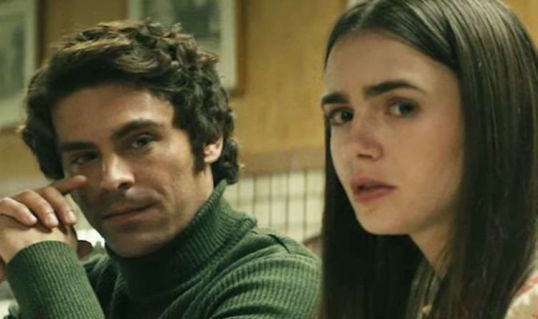
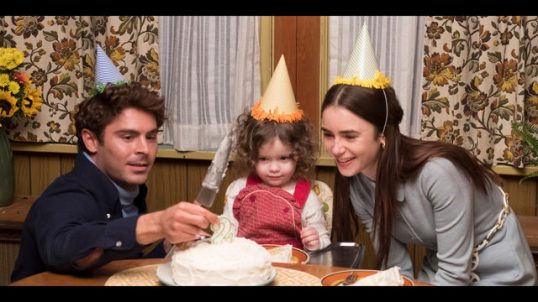
Early on in the new Netflix film, Extremely Wicked, Shockingly Evil, and Vile, there’s a scene in which Liz Kendall (Lily Collins) and her sister, Joanna (Angela Sarafyan) go to a bar.  Through some rather heavy-handed dialogue, we learn that Liz has just broken up with her boyfriend, that she has next to zero self-confidence, and that she’s a single mother.  She doesn’t think that there’s a man anywhere who would be interested in her.  Joanna responds by pointing out that there’s one man who appears to be very interested.  In fact, he hasn’t taken his eyes off of Liz since they entered the bar.

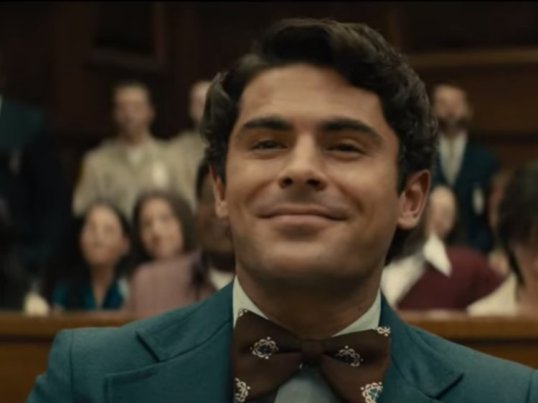
That man’s name is Ted (Zac Efron) and, at first, he seems like he’s too good to be true.  He’s charming.  He’s a law student.  He appears to love spending time with Liz’s daughter.  He looks like Zac Efron.  Perfect, right?

Of course, we know something that Liz doesn’t.  We know that Ted is Ted Bundy and that, eventually, he’s going to become one of America’s notorious serial killers, a symbol of evil so potent that, more than 30 years after he was executed by the state of Florida, he continues to get movies made about him.

Because we know who and what Ted is, we spend the first fourth of the movie cringing at everything that makes Liz happy.  For instance, Liz is shocked to discover that Ted apparently loves her daughter but we’re just like, “Oh my God, that’s Ted Bundy!  GET YOUR DAUGHTER AWAY FROM TED BUNDY!”  Liz thinks it’s romantic when Ted makes breakfast for her but we’re just staring at the big kitchen knife in his hand.  When Liz and Ted make love, only we notice the blank look on Ted’s face as he looks down at Liz and we find ourselves wondering what’s happening in his mind.

The film is told largely through Liz’s eyes and, with one exception, we never see Bundy actually committing any of his crimes.  (That’s a good thing, by the way.  We already know who Ted Bundy was and what he did.  There’s no need to sensationalize the very real pain that he caused.)  Like Liz, we find out about Bundy’s crimes through news reports and arrest records.  For instance, when Bundy is arrested for attempted kidnapping in Utah, Liz doesn’t find out about it until a story appears in the local Seattle newspaper.  When Liz demands to know why he didn’t tell her what was happening, Bundy gives her a bullshit story about how he’s being framed and how his lawyer is going to get the case thrown out.  We know that Ted’s lying but Liz believes him because …. what else is she going to do?  Is she going to believe that this perfect man who seems to love both her and her daughter is actually a sociopathic monster?

The film follows Bundy from one trial to another, as he’s charged with crimes across country.  It shows how this superficially charming law student became something of a media celebrity.  (When a reporter asks him if he’s guilty, Bundy grins and asks if the reporter is referring to a comic book that he stole when he was in the fifth grade.)  Bundy escapes.  Bundy is arrested.  Bundy escapes again.  Bundy eventually ends up being tried in Florida, where he revels in the attention.  When Liz loses faith in him, Bundy replaces her with an unstable woman named Carole Ann (Kayla Scodelario).  However, even while Carole Ann is dutifully delivering statements from Bundy to the press, Bundy is still calling Liz and begging her to believe that he’s innocent and he’ll soon be freed from prison.

Why is it so important to Bundy that Liz believe in him?  Is he just entertaining himself by manipulating her or, in his relationship with her, does he see the type of normalcy that he desires but knows he’s incapable of ever achieving?  Towards the end of the film, Liz comes close to asking Bundy if he was planning on killing her the first night that they met.  She doesn’t and it’s doubtful that Bundy would have given an honest answer but it’s still a question that hangs over every minute of this film (as does Liz’s physical resemblance to the majority of Bundy’s victims).

Though the film may be told from Liz’s point of view, she’s often comes across as just being a meek bystander, watching as the darkness of Ted Bundy envelops her world.  The film itself seems to be far more interested in Ted Bundy and his twisted celebrity.  Zac Efron plays Bundy as someone who knows how to be charming and who is good enough at imitating human emotions that he’s managed to keep the world from noticing that he’s essentially hollow on the inside.  Bundy has gotten so used to acting out a role that, even when he’s on trial for his life, he can’t resist the temptation to turn the courtroom into his own stage.  He demands to defend himself and, though he initially proves himself to be a good lawyer, his demands and his questions become progressively more flamboyant and self-destructive.  It’s as if he’s gotten so caught up in playing his role that he’s incapable of recognizing the reality of his situation.  He performs for the jury, the judge, and the television audience, treating the whole thing as if he’s just a character in a movie.  It’s only when he has no choice but to accept that he’s been caught and he’s never going to escape that Bundy finally shows some human emotion.  He cries but his tears are only for himself.  It’s a chilling performance and Zac Efron deserves every bit of praise that he’s received.

Unfortunately, the film itself doesn’t really tell us anything that we didn’t already know.  Director Joe Berlinger is best-known as a documentarian and he talks a “just the facts” approach to the story.  We don’t really get any insight into how a monster like Ted Bundy could come to exist.  Outside of Efron’s revelatory performance, there’s not much here that couldn’t be found in any of the other films that have been made about Ted Bundy.

(Interestingly enough, as I watched the film, it occurred to me that Ted Bundy was a monster who could have only thrived in a pre-Internet age.  For all the books and movies that portray him as being some sort of cunning genius, Bundy actually wasn’t that smart.  He approached two of early his victims in a public place and introduce himself as being “Ted,” usually within earshot of a handful of witnesses.  He was so brazen that the police even ended up with a sketch that pretty much looked exactly like him.  In all probability, the only way that Ted Bundy avoided getting arrested in Seattle was that he moved to Utah, where his crimes were unknown and the sketch wasn’t readily available.  Today, of course, that sketch and Ted’s name would be on Twitter and Facebook as soon as they were released by the police.  My friend Holly would probably retweet the sketch and say, “Do your thing, twitter!”  He would have been identified and arrested in just a matter of time.  Instead, Bundy committed his crimes at a time when news traveled slower and law enforcement agencies were not in constant communication with each other.)

The good news is that Extremely Wicked is not, as some feared, a glorification of Ted Bundy.  He’s a monster throughout the entire film.  Zac Efron proves himself to be a far better actor than anyone’s ever really given him credit for being.  It’s a flawed film but, at the very least, it’s also a disturbing reminder that sometimes, darkness hides behind the greatest charm.


Insomnia File No. 15: George Wallace (dir by John Frankenheimer)


What’s an Insomnia File? You know how some times you just can’t get any sleep and, at about three in the morning, you’ll find yourself watching whatever you can find on cable? This feature is all about those insomnia-inspired discoveries!

George Wallace

If, after watching Promise last night, you discovered that you were still suffering from insomnia, you could have watched the very next film that premiered on TCM.  That film was the 1997 biopic, George Wallace.

Like PromiseGeorge Wallace was originally made for television.  Also, much like Promise, George Wallace is a character study of a conflicted man who makes many people uncomfortable and it’s also well-acted by a cast of veteran performers.  That, however, is where the similarities end.  Whereas Promise was ultimately a rather low-key and human drama, George Wallace is an epic.  Clocking in at nearly 3 hours and telling a story that spans decades, George Wallace attempts to use one man’s life story as a way to tell the entire story of the civil rights movement.

That’s a tremendously ambitious undertaking, especially for a film that had to conform to the demands of 1990s television.  Therefore, it’s probably not surprising that the movie, as a whole, is uneven.  It’s not a bad movie but, at the same time, it doesn’t quite work.

First off, we need to talk about who the historical George Wallace was.

(Here’s where I get to show off my amazing history nerd powers.  Yay!)

George Wallace served a total of four terms as governor of Alabama.  A protegé of a populist known as “Big Jim” Folsom, Wallace first ran for governor in 1958.  He campaigned as a moderate who supported integration and, as a result, he was defeated by the KKK’s endorsed candidate, John Patterson.  (Oddly enough, a fictionalized version of Patterson was the hero of the classic and racially progressive 1955 film, The Phenix City Story.)  When Wallace ran again in 1962, he ran as an outspoken segregationist and defeated his former mentor, Jim Folsom.  Infamously, Wallace is the governor who stood in the schoolhouse door and announced that Alabama would never accept integration.  Unable to succeed himself, Wallace arranged for his wife, Lurleen, to be elected as governor.  Lurleen subsequently died in office, succumbing to cancer while Wallace was running for President as the candidate of the American Independent Party.  (As of this writing, Wallace is the last third party presidential candidate to carry any states.)  Reelected governor in 1970, Wallace married Folsom’s niece and made another presidential run.  However, after a string of primary victories, that campaign was cut short when Wallace was shot and crippled by Arthur Bremer.  (Bremer would serve as the inspiration for Robert De Niro’s Travis Bickle in Taxi Driver.)  Confined to a wheelchair, Wallace served as governor until 1978 and, in 1976, ran for President one final time.  After being out of office for four years, he was elected Governor for one final term in 1982.  Late in life (and, it should be pointed out, long after integration had been generally accepted as the law of the land), Wallace renounced his segregationist past and publicly apologized for standing in the schoolhouse door.  During his final campaign for governor, he won a majority of the black vote and he proceeded to appoint more blacks to state positions than any governor before him.

George Wallace lived a long, dramatic, and interesting life and he’s still a very controversial figure.  Who was the real George Wallace?  Was he a political opportunist who used racism to further his career?  Was he truly a racist who saw the error of his ways and repented or did he only pretend to renounce his former beliefs once they were no longer popular?  And, even if Wallace was sincere in his regret, did he deserve to be forgiven or should he always be remembered as the villainous caricature that Tim Roth portrayed in Selma?  If we forgive or make excuses for the actions of a George Wallace, do we run the risk of diminishing the success and importance of the civil rights movement?

And I, honestly, have no answers to those questions.  Unfortunately, neither does George Wallace.  But before we get into that, let’s consider what does work about this film.

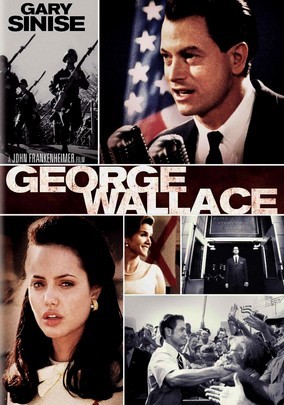
George Wallace opens in 1972 with Wallace campaigning in Maryland.  Wallace is played by Gary Sinise and his second wife, Cornelia, is played by a very young Angelina Jolie.  Sinise and Jolie both give brilliant performances, perhaps the best of their respective careers.  Sinise plays Wallace as a calculating and charismatic politician who is also a very angry man.  Throughout every second of his performance, we are aware of Wallace’s resentment that his political success in Alabama has potentially made him unelectable in the rest of the country.  Watching Sinise as Wallace, you see a man who believes in himself but doesn’t necessarily like the person that he’s become.  Meanwhile, Jolie plays Cornelia like a Southern Lady MacBeth and watching her, I remembered how, at one time, Angelina Jolie really did seem like a force of nature.  The Angelina Jolie of George Wallace is the wild and uninhibited Jolie of the past (the one who once said, “You’re in bed, you’ve got a knife, shit happens.”), as opposed to the safe and conventional Jolie of the present, the one who is currently directing rather stodgy movies like Unbroken and By The Sea.

After Wallace is shot, the film goes into flashback mode.  We watch as Wallace goes from being a liberal judge to being the segregationist governor of Alabama.  Mare Winningham plays Lurleen Wallace while Joe Don Baker plays Big Jim Folsom.  They all do a pretty good job but the flashback structure is so conventional (and so typical of a made-for-tv biopic) that it makes the film a bit less interesting.

There’s also a character named Archie.  Played by Clarence Williams III, Archie is literally the only major black character in the entire film.  He is portrayed as being a former convict who has been hired to serve as Wallace’s valet.  While Wallace plots to thwart the civil rights movement, Archie stands in the background glowering.  At one point, he’s even tempted to kill Wallace.  However, after Wallace is shot, Archie helps to take care of him.  The film suggests that being shot and subsequently cared for by Archie is what led to Wallace renouncing his racist views.  (The film also suggests that Wallace was never that much of a racist to begin with and, instead, was just so seduced by power that he would say whatever he had to say to win an election in Alabama.)

At the end of the film, we’re informed that almost everyone in the film was real but that Archie was fictional.  The problem, of course, is that the film is suggesting that the fictional Archie is responsible for the real-life Wallace both rejecting racism and apologizing for the all-too real consequences of racism.  The film ends with the realization that the filmmakers were so convinced that audiences would not be able to accept an ambiguous portrait of a public figure that they created a fictional character so that Wallace could have a moment of redemption.

(It also doesn’t help that a film about civil rights only features one major black character and that character is a fictional valet who doesn’t get to say much.)

In the end, the film doesn’t seem to be certain what it’s trying to say about Wallace and the meaning of his dramatic life.  That said, I enjoyed watching George Wallace because of the acting and because, as a history nerd, I always enjoy seeing historical figures portrayed on-screen, even if the filmmakers don’t seem to be quite sure what they’re tying to say about them.

George Wallace was directed by John Frankenheimer, a good director who, it appears, was constrained by the demands of 1990s television.  If George Wallace were made today, it would probably air on HBO and would probably be allowed to take more of a firm stand one way or the other on Wallace’s character.  That said, it would probably also be directed by Jay Roach who, to put it lightly, is no John Frankenheimer.

Anyway, George Wallace doesn’t quite work but it’s definitely interesting.  Watch it for Gary and Angelina!

Previous Insomnia Files:

  1. Story of Mankind
  2. Stag
  3. Love Is A Gun
  4. Nina Takes A Lover
  5. Black Ice
  6. Frogs For Snakes
  7. Fair Game
  8. From The Hip
  9. Born Killers
  10. Eye For An Eye
  11. Summer Catch
  12. Beyond the Law
  13. Spring Broke
  14. Promise