The TSL’s Horror Grindhouse: Diary of the Dead (dir by George Romero)


I have to admit that I was a little bit hesitant about watching the 2007 film, Diary of the Dead.

It wasn’t that I don’t like zombie movies.  In fact, it was the complete opposite.  I love zombie films and Night of the Living Dead is one of my favorites.  George Romero, of course, went on to make several sequels to Night of the Living DeadDawn of the Dead, Day of the Dead, and Land of the Dead are certifiable horror classics.  However, I had heard mixed things about the two zombie films that Romero directed after Land of the Dead.  Seeing as how Diary of the Dead was Romero’s second-to-last film before he passed away in 2017, I was worried that I would watch the film and discover that I hated it.  I didn’t want experience anything that would tarnish Romero’s cinematic legacy.  It didn’t help my expectations that Diary of the Dead is a found footage film and the conventions of the found footage genre tend to get on my last nerve.

(Seriously, nothing makes me throw a shoe at a screen quicker than the sound of someone in a horror movie saying, “Are you filming this?”)

But you know what?

I did watch Diary of the Dead and it’s actually not bad.  It may not reach the heights of Romero’s other zombie films but it’s definitely a worthwhile companion piece.  It opens with news reports about the start of the zombie apocalypse, meaning that Diary of the Dead is meant to take place at roughly the same time as Night of the Living Dead.  (Never mind that Diary of the Dead is full of references to YouTube and blogs and other things that most people probably couldn’t even imagine when Night of the Living Dead first came out.)  A group of film students are in the woods, filming a terrible mummy movie when they first hear reports of the dead coming back to life.  Some say that there’s no way it could be true.  Others say that something must be happening but surely the dead aren’t actually coming back to life.  They soon discover that the dead have indeed returned.

We follow the students as they travel across Pennsylvania, trying to find a place that’s safe from the Dead and discovering that there’s literally no such place left in America.  Along the way, they also discover that the government has no intention of telling the people the truth about what’s happening.  In fact, a group of national guardsmen turn out to be just as dangerous as the zombies.  In their efforts to survive, the students are forced to rely on an underground network of bloggers and video makers.

Diary of the Dead has all of the usual zombie mayhem that you would expect from a film like this but, at the same time, it’s got a lot more on its mind than just the dead returning to life.  Much as he did with Land Of The Dead, Romero uses Diary of the Dead to comment on the state of America under the Patriot Act.  With the government using the zombie apocalypse as an excuse to suspend civil liberties and increase their own power, the film’s characters are forced to depend on new and independent information sources.  It’s not hard to see the parallel that Romero is making between the War on the Living Dead and the War on Terror.  As well, making all of the characters film students allows for some discussion about whether or not horror films should simply concentrate on being scary or whether they should also attempt to deal with real-world issues.  The film leaves little doubt where Romero came down on that issue.

On the negative side, Diary of the Dead struggles a bit to overcome the limitations of its low budget and none of the characters are as compelling as Ben in Night of the Living Dead or Fran in Dawn of the Dead.  At times, you find yourself wishing that Diary of the Dead featured just one actor who was as into their role as Duane C. Jones or Ken Foree were in Night of the Living Dead and Dawn of the Dead, respectively.  But Diary of the Dead still features enough zombies and enough of Romero’s trademark political subtext to be an acceptable addition to Romero’s vision of the apocalypse.

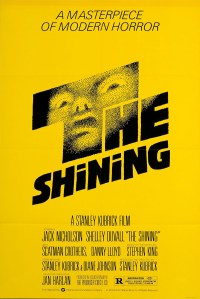
Horror Scenes That I Love: Jack Torrance Explains The Donner Party


This scene, of course, is from 1980’s The Shining.

Technically, this is  before Jack Torrance met the ghosts and started to lose his mind but, in this scene, you can tell that Jack’s already getting a little bit tired of his family.  Jack Nicholson’s delivery of, “See?  It’s okay.  He heard it on the television,” gets me every time.

Night Surf, Review By Case Wright


NS

Where do stories come from? Not important or interesting.  Why are some stories shot out like a cannonball from an artist’s brain in a matter of days like Kerouac’s “On The Road” and even written on a scroll; whereas, some stories take a decade or more of developing until they are born like Stephen King’s The Stand?  Very Important and Very Interesting!  I will not be discussing King’s opus The Stand, but rather how it evolved from Night Surf.

Night Surf was written for the University of Maine literary magazine in 1969 when King was twenty-two.   Night Surf introduces us to the plague that kills off mankind and how people can be pulled to darkness when no one is looking. The disease is even called “A6” just as it was called in The Stand, but The Stand didn’t get published until 1978.  Why did it take so long for The Stand to incubate and his other stories seem to shoot from him like they are on a sluice?

I see this dichotomy in my own writing.  For some stories, I’ll get pieces of dialogue and scenes in my head that kick around for years, but I don’t know how they fit together like a jigsaw puzzle with too many smooth edges.  I can’t speak for Stephen King, but for me the longer developing stories occur when I’m picking at something personal like an emotional wound that’s been puffed out by pus, but not yet ready to drain.  I guess I just want to hold onto the pain; maybe, King does too?

Night Surf takes place on the New England coastline when summer’s ending, but it’s not just the leaves dying on the trees; humanity is blowing out from a massive viral extinction event.  The disease is called A6- a superflu.  In The Stand, he refers to the virus also as Tube Neck and Captain Trips.  The world is not quite dead yet, but it’s getting there.  The story is narrated by Bernie who is spending humanity’s last days at a beach town.  At first, the group believes that they are immune from the disease and demonstrate their superior immunity with the most primitive act of all: Human Sacrifice.  A man who’s dying from the flu comes to their town and, instead of caring for him and helping him die, they burn him to death in a bonfire.

Why burn him?  They describe it almost like a sacrifice to the beach itself.  The act seemed to me to be more like a line in the stand between the dying world and themselves.  The mere mortals are simply cord wood and can be used for fuel.  Their perception as the kings of humanity is vindicated by their health because they are immune and the rest of humanity perished.  It harkens to the idea of the Puritans where the Select were touched by God and were guaranteed success in life and VIP treatment on the ethereal plane.  Of course, the Puritans would balk at using lesser people as a duraflame.

Soon after burning the flu victim alive, Bernie realizes that one of his comrades has A6 symptoms and will soon die, indicating all of them might expire soon.  The story forces us to look at what allows us to be moral.  Are we only good because society will punish us if we are bad?  It could be argued that they looked at the immolation as a last hurrah, but I think that is wrong because at the time in the story, they believed they were immune.  If their friend had developed symptoms before the unlucky traveler arrived, would they see him as their brother or would they have burned them both to adamantly declare their superiority?

The theme of people being seduced to darkness is throughout The Stand, but in this story, they don’t get the devil made me do it excuse; the group murdered because they could and felt like doing it.  After the immolation, we return to Bernie’s backstory, humanizing him even more.  It seems King is saying that this horrendous act was just another act in a number of countless acts that Bernie did from birth to his upcoming demise.  Maybe doing evil is just as common as getting the paper? I hope not, but as the great philosopher Bobby Dylan said, It’s not dark yet, but it’s getting there.

This story is more relevant to me today than when I first read it years ago.  What makes it more difficult for me is that the people in the story are just so normal.  I hope none of my readers will ever have to do this, but I’ve looked right into the face of evil once and the man looked like he could have been a cousin.  When I remember the encounter, it still chills me to the bone.  I met a Bernie once; maybe, you have too, but you didn’t know it.

The Lawnmower Man, Review by Case Wright


LMW

The “Lawnmower Man” by Stephen King really makes me understand the power of peyote.  Stephen King has is very open about his drug and alcohol addiction and in the 1970s even regular folks were dabbling in the Yayo.  In fact, he has said that he doesn’t remember writing The Shining.  In those days, he would use cotton balls up his nose from the constant nose bleeds from his cocaine use.  The Lawnmower Man  has to be seen in this context.

Harold Parkette is a typical suburban man.  He’s lawn obsessed and needs to make it purdy.

Sidenote: This story takes me back to me youth.  In my football and track days, I would mow lawns and split wood to make extra cash.  I would never wear a shirt because I would get hot.  I never understood until later why only the wives would call me to do the yard work, would make really odd excuses to give me extra lemonade, and cash. A lot of times they’d just sit on their porch, watch, and occasionally wave. 

The Lawnmower Man is not that kind of story.  Harold gets an odd landscaper who starts working and then Harold takes a nap.  When Harold wakes, he sees that the lawnmower is moving on its own and the lawnmower man is eating the clippings.  The image that stuck with me the most is that grass was growing on the lawnmower man’s teeth- yuck. The Lawnmower Man reveals himself to be the Greek God Pan and proceeds to eat Harold.

This story is just plain weird.  Pan was into wine and sex, not landscaping.  Also, I get the economy can be tough, but if you’re a god wouldn’t you do better than a solo landscaping biz? All around, I’m very confused.

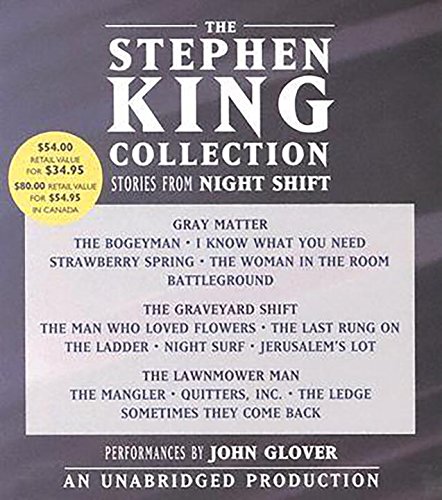
The Ledge, Review by Case Wright


SK NS.jpg

The Ledge by Stephen King is a masterclass in realistic suspense.  I’ve never been forced by a mom boss to circumnavigate a highrise with crazy gusts, but I believe that it would be like this story.

Stan Norris is an Ex-Con now Tennis Pro who is love with a mobster – Cressner’s wife.  Stan is a parolee and fell for the mobster’s wife and helped her escape to they could run off together.  Unfortunately, Cressner captures Stan and says that he put heroin in Stan’s trunk.  He can either go back to prison or circumnavigate a ledge around his high rise.  If he succeeds, he gets Cressner’s wife, Twenty-Grand, and freedom.  If he fails, he’ll be a pain for the street cleaners.

There’s a reason I joined a land based military branch; heights are not great.  Stan does not have these qualms.  He agrees and faces freezing wind and a diseased pigeon who starts pecking at his right ankle….yuck.  Pigeons are nasty.  Side note: they are totally unprotected in any city and state. Therefore, if you’re hungry, feel encouraged to take one out and braise it!  

He manages to get around the building and back inside, but Cressner is waiting for him and slightly broke the deal.

The story reads like an anecdote or almost a confession.  I highly recommend reading the story or listening to the John Glover audiobook performance.

Strawberry Spring – The Youtube Video!!!, Review By Case Wright


ss2

Sometimes films are done poorly.  Sometimes films stay true to the source material. Sometimes they are just kinda fun.

This adaptation of Stephen King’s- “Strawberry Spring” is just kinda neat.  I was looking for Strawberry Spring images online for my post and here this was.  It’s a High School student film of Strawberry Spring.  It’s just straight up fun. All of his friends are obviously in the film and the director did a pretty good job.

The story of Strawberry Spring is that a serial killer slasher is on the loose at a New England liberal arts school in the 60s.  The narrator is more than unreliable; he is a possible suspect.  The Strawberry Spring refers to a false spring that occurs in New England similar to a blackberry winter where warm weather occurs and then a severe nor’easter hits.  The book makes a point that a mist appears before the murders and that the mist itself is likely sapient who infects the narrator, causing him to kill.  The campus is terrorized by a series of murders and then when the Strawberry Spring ceases, so do the murders.

This student film tries to dramatize the story and although there a bit of overused fog machine sequences, it deserves a lot of credit.  There was obviously a lot of effort put in and I give a tip of the hat to these young artists.

You can watch it here and if you have 15 minutes to definitely check it out!!!

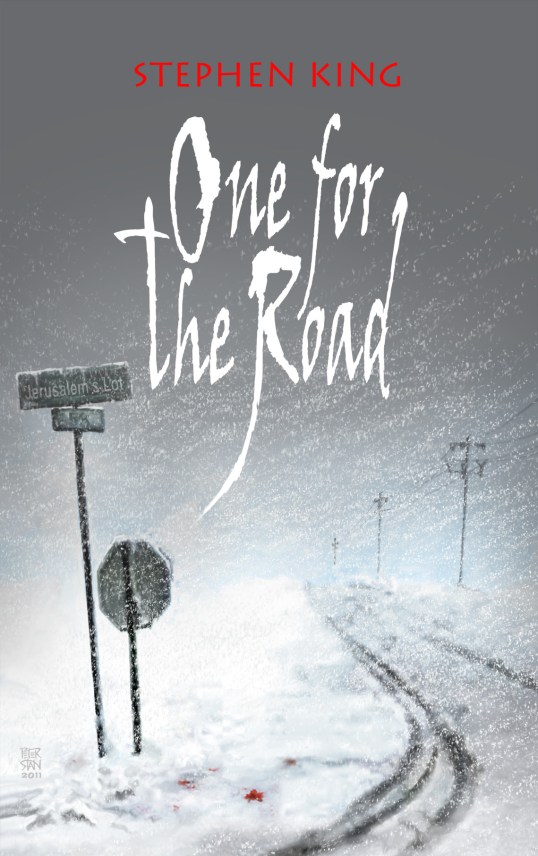
Horror Review: “One for the Road” (by Stephen King)


Stephen King’s writing style in “One for the Road” exemplifies his mastery of atmosphere, character voice, and narrative restraint. While much of his later work often invests heavily in world-building over long stretches, this short story demonstrates his ability to deliver a rich, immersive experience in a concise format. His choices here, both stylistic and structural, serve the story’s central purpose: to convey unspoken dread and the inevitability of evil.

The story serves as a chilling epilogue to ’Salem’s Lot, set during a brutal New England winter many years after a fire destroyed the infamous town. Told by Booth, an elderly local from nearby Falmouth, it begins in the warm familiarity of Herb Tookey’s bar, where Booth and Herb are longstanding fixtures. Their evening is interrupted when Gerald Lumley, cold and near collapse, stumbles in. Lumley explains that his car broke down in the snow miles away, and that he left his wife and daughter in the vehicle while seeking help. Tension deepens when he reveals the breakdown happened near Jerusalem’s Lot—a place everyone in the area fears but rarely discusses. Despite knowing the dangers, Booth and Herb reluctantly agree to help him return.

Their journey into the storm is both physically taxing and emotionally tense, as the two locals understand all too well what they might find. As they approach the outskirts of The Lot, King uses sparse detail and implication to build dread. By the time they reach Lumley’s car, the supernatural horror makes itself known, hammering home the message that evil never truly dies—it lingers, waiting for an opportunity to strike.

King’s decision to frame “One for the Road” within a harsh New England winter is critical to its success. The cold itself becomes an antagonist—slowing movement, reducing visibility, and draining the characters’ strength—adding a physical urgency to the supernatural threat. Snowstorms are a recurring motif in his work (The ShiningStorm of the Century) because they isolate the characters, making escape impossible and forcing confrontation with whatever is lurking nearby. The blizzard in this story intensifies feelings of claustrophobia, despite the vastness of the open, rural landscape.

King also makes the setting deeply familiar for his readers. Falmouth feels like a lived-in place, with its bar, locals who know one another’s routines, and whispered legends about The Lot. The story doesn’t waste time describing Jerusalem’s Lot in detail; instead, its horrors exist in the margins, in what the locals refuse to say.

The choice of Booth as the first-person narrator adds authenticity and intimacy. Booth speaks with the cadence of an elder New Englander—practical, reserved, and hardened by experience. Readers never doubt that this is the account of someone who understands the local history and its dangers. The conversational delivery, sprinkled with regional colloquialisms, draws the reader into the moment rather than presenting a polished, detached recounting.

Rather than sensationalizing The Lot’s horrors, Booth lets them linger unsaid. King understands that withholding explicit details can fuel imagination more effectively than extravagant description. This restraint makes the story’s climax more impactful because the dread has been steadily fed through implication.

The story’s pacing is deliberate but tight. King introduces the danger early—Lumley’s car is stranded near Jerusalem’s Lot—then uses the journey back to extend suspense. The structure mirrors a descent into darkness: starting in the relative safety of Herb Tookey’s bar, venturing into the blizzard, and finally confronting the true horror at the edge of The Lot. King avoids unnecessary subplots, instead focusing on a single mission: rescuing Lumley’s family. This gives the narrative relentless forward motion while allowing tension to rise in small increments.

One of King’s most notable thematic choices is the portrayal of evil as a constant, indestructible force. In ’Salem’s Lot, that evil once emanated from the Marsten House, a decaying mansion that served as both the symbolic and literal heart of darkness. By the time of “One for the Road,” however, the Marsten House has been burned down and stripped of its power. Yet, rather than eradicating the evil, its essence has expanded outward—the town itself has inherited its malign influence. The Lot has effectively become the new Marsten House, and its ruined streets and frozen remains now radiate the same dark gravity that once resided solely within those walls. King transforms the geography of evil: what was once contained in a single haunted house has transposed itself over the entire landscape, infecting the air, the snow, and the silence with something sentient and waiting.

King also plays with the tension between duty and self-preservation. Booth and Herb could have ignored Lumley’s plea. Their choice to help—despite knowing what might await them—aligns with King’s recurring motif that true courage lies in facing evil with no guarantee of victory.

Even when weaving atmosphere, King exercises a tight control over detail. The bar scene is economical: we know just enough about Herb, Booth, and their friendship to trust their dynamic. The blizzard is described vividly but without purple prose. This brevity forces the reader to focus on what matters—the growing realization that Lumley’s family is in mortal danger. The vampires themselves receive minimal “screen time,” a deliberate choice that allows the prior suspense to make their eventual appearance all the more devastating.

As a companion piece, “One for the Road” functions as both a continuation and a tonal reinforcement of ’Salem’s Lot. Rather than tying up loose ends, King emphasizes that nothing was truly resolved. Evil is only temporarily held back, and the destruction of the town did not remove its blight. By telling the story through outsiders who skirt the edge of The Lot without entering deeply into it, King preserves the town’s mystique, forcing readers to imagine the horrors that remain—an imaginative space where dread thrives long after the last page.

Nightmares and Dreamscapes: From the stories of Stephen King, Battleground, Review by Case Wright


bg4.jpg

Happy Horrorthon!!! I decided to do a bit of a hybrid review of one of my favorite stories:  “Battleground” by Stephen King.  This book is part of a short story anthology in Night Shift.  Battleground was written in 1972 by King.  This was back in the days when he wasn’t just hungry, he was starving.  He was working in laundries, substitute teaching, maybe even a paper route.  This particular work was published in Cavalier, which was a low-rent Playboy.  In those days, he would sell stories to Swank – a low-rent Penthouse as well.  Many of these stories were real gems or at least gems in the rough.  For example, Night Surf (Cavalier and Night Shift) evolved into his opus The Stand about a decade later.  Battleground was made into a 52 minute long episode of the above short-lived series (watch them on youtube before they are taken down!!!).

This episode starred William Hurt and like the short-story there is ZERO dialogue, giving the episode a silent movie feel that is very compelling.  Throughout the episode, you only hear ambient noise or grunts or yells, but no spoken dialogue.  In fact, even when a newscaster is announcing that a murder has taken place, it’s done with subtitles.  This is as close to genius television as it gets.  I was truly saddened that it was not renewed.

The episode depicts William Hurt as a nameless hitman who is taskered to kill a toymaker.  He does.  When Hurt goes back home to his San Francisco condo, he receives a package.  Inside the package is compilation of army men and “additional surprises”.  These aren’t your grandpa’s plastic army men; however, they are alive and they have cruel intentions for Mr. Hurt!

Within moments of opening the package, the army men attack William Hurt in very Army like fashion. They take a covered position under Hurt’s couch and open fire, forcing William to flee to the bathroom.  This solace is short-lived because they have mini-howitzers.  Yes, I was primed to like this one.  There are even mini-helicopters that attack Hurt and they send nasty notes to one another demanding and refusing surrender.

The battle to avenge the toy maker’s death continues even out to the ledge of the building, which is likely an Easter Egg to another King story “The Ledge”.  Hurt prevails against the army men, but there are two more “Additional Surprises” 1) a commando who very resourceful and 2) a mini thermonuclear device.  The mini thermonuclear device is the only dumb part of the story because there is no such thing as a tiny Thermonuclear reaction – these are atoms we’re fusing or splitting afterall.  If detonated (regardless of its “mini” nature) , it would’ve destroyed all of San Francisco, but let’s give King- a liberal arts major- a break on that one because it’s still a fun story.

I will review a few more of these stories that were in Night Shift or episodes from this show.

Happy Halloween!!!!

Book Review: ‘Salem’s Lot by Stephen King


The town of Jerusalem’s Lot, Maine has two new arrivals.

One is Ben Mears, a successful writer who, we’re told, even has his own FBI file.  (Apparently, it only consists of a report that he once attended an anti-war rally.)  Ben spent part of his childhood is Jerusalem’s Lot and, upon returning, he discovers a small but friendly town.  Sure, there’s some drama going on behind closed doors.  There’s the sleazy real estate agent, for instance.  And then there’s the Catholic priest who, naturally, has lost his faith.  And then there’s the unhappy teenage mother and, of course, there’s the usual collection of alcoholics, adulterers, and cranky bus drivers.  Maybe Jerusalem’s Lot isn’t that friendly after all….

The other new arrival is Kurt Barlow.  Barlow’s from Austria and he’s moved into the old Marsten House.  (The Marsten House, like most old houses that you come across in Stephen King novels, used to belong to a notorious gangster.)  Barlow’s going to be opening up an antique store.  Interestingly enough, hardly anyone ever seems to see Barlow.  His business partner, Richard Straker, claims that Barlow is often away on buying trips.

Anyway, the townspeople have a lot more to worry about than what’s going on with Kurt Barlow.  For instance, a lot of people are disappearing.  And even those who aren’t vanishing are growing ill and having a bad reaction to sunlight.  Hmmm …. what could possibly be going on?

First published in 1975, ‘Salem’s Lot was Stephen King’s second published novel and it actually holds up better than most of his recent work.  It’s interesting to read ‘Salem’s Lot after Carrie, just to see how much King grew as a writer in between the two books.  Whereas King often seemed uncomfortable with the plot of his first novel and tended to hold Carrie White at a distance, he dives right into ‘Salem’s Lot.  It’s not just that King is obviously more comfortable writing about a male writer than a teenage girl.  It’s also that King creates a town that seems so real that we feel as if we could find it on a map.  King tells his story with such enthusiasm and confidence that it doesn’t matter that ‘Salem’s Lot is a fairly predictable and traditional vampire story.

Clocking in at a briskly paced 440 pages, ‘Salem’s Lot is quite a bit longer and more detailed than Carrie without, at the same time, getting bogged down in the type of stylistic self-indulgence that has come to typify a lot of King’s recent work.  (One gets the feeling that if King wrote ‘Salem’s Lot today, it would be a 1,200 page novel and that Barlow wouldn’t show up until page 900.)  King does a good job of offering up little snippets of life in Jerusalem’s Lot, just enough to make sure we have enough knowledge to mourn the eventual death of the town.  ‘Salem’s Lot takes Dracula, drops him in the middle of a small town melodrama, and the results are still entertaining to this very day.

Horror Trailer: Pet Sematary


Pet Sematary

It looks like one of the advantages of It being such a success in the box-office in 2017 was the return of Stephen King film adaptations. It’s not just in the theaters that we’ve seen this latest run in Stephen King films, but on streaming services like Netflix (Gerald’s Game and 1922) and Hulu (Castle Rock series).

Now we have the first trailer for the remake of the Stephen King cult classic film Pet Sematary set to come out early April 2019. The film will star Jason Clarke in the role of Louis Creed with John Lithgow playing the role of Jud Crandall (a role made famous by the late, great Fred Gwynne).

One thing that the trailer has shown me that I approve of is the fact they finally cast the correct cat in the role of the Creed family’s beloved cat Church. The original film a Russian Blue was picked for the role when in the book it was a Maine Coon. From a quick glimpse in the trailer it looks like we’re getting a pissed off Maine Coon in the role of Church.