For better or worse, Awards Season started today with the announcement of the Gotham nominations. The Gothams are supposed to honor independent films, though the line between studio and independent is now so thin that it’s sometimes difficult to tell which is which.
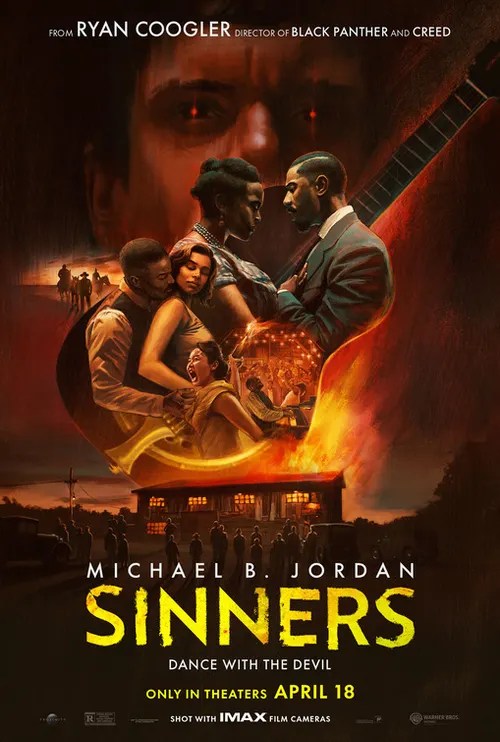
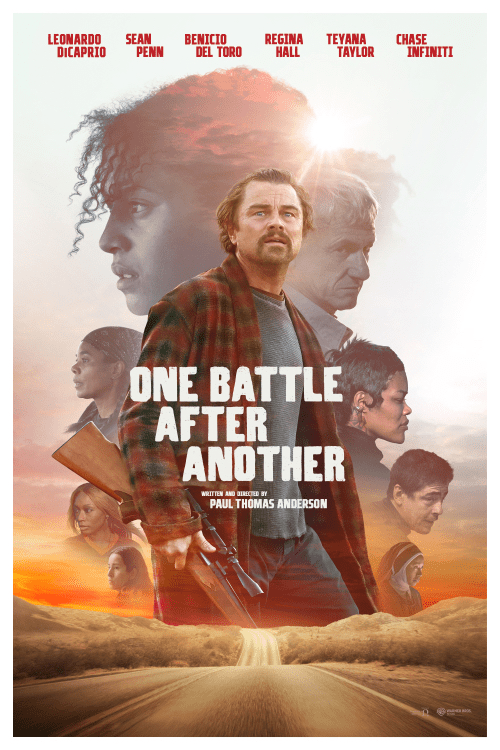
In the past, the Gothams honored obscure films and also low-budget films that captured the public’s imagination. This year, they gave the majority of their nominations to One Battle After Another, a big-budget film that starred a slew of Hollywood heavyweights. Meanwhile, Sinners, a genuinely independent feature, received one nomination.
It’s debatable how much of a precursor the Gothams are. They’re a critic-selected award and it’s always the guild awards that serve as the best precursors. Still, it always helps to be mentioned somewhere.
Here are the 2025 Gotham nominations!
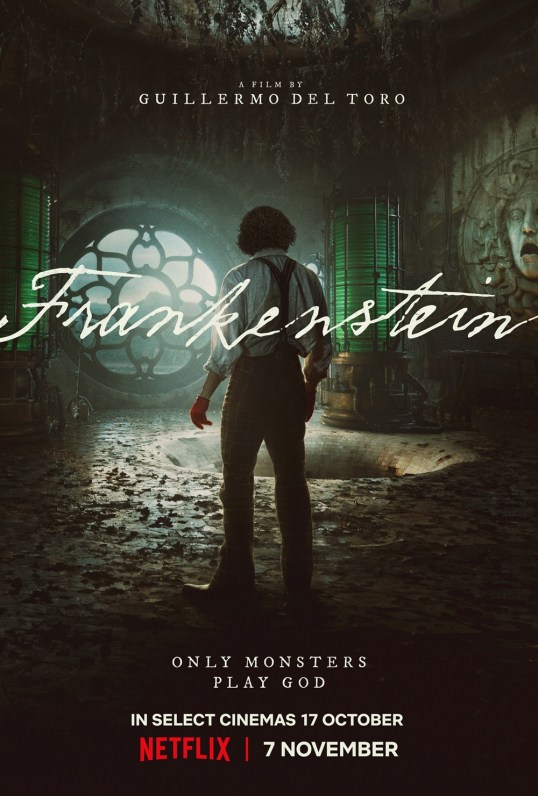
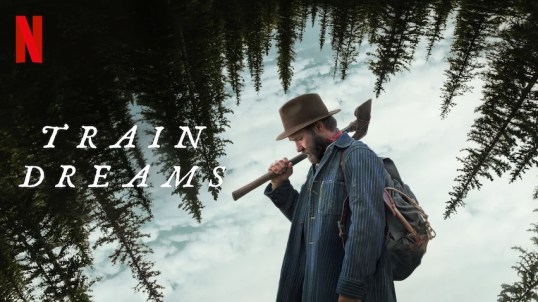
Best Feature Bugonia East of Wall Hamnet If I Had Legs I’d Kick You Lurker One Battle After Another Sorry, Baby The Testament of Ann Lee Train Dreams
Best Director Mary Bronstein – If I Had Legs I’d Kick You Jafar Panahi – It Was Just an Accident Kelly Reichardt – The Mastermind Paul Thomas Anderson – One Battle After Another Oliver Laxe – Sirât
Outstanding Lead Performance Jessie Buckley – Hamnet Lee Byung-hun – No Other Choice Rose Byrne – If I Had Legs I’d Kick You Sopé Dìrísù – My Father’s Shadow Ethan Hawke – Blue Moon Jennifer Lawrence – Die My Love Wagner Moura – The Secret Agent Josh O’Connor – The Mastermind Amanda Seyfried – The Testament of Ann Lee Tessa Thompson – Hedda
Outstanding Supporting Performance Benicio Del Toro – One Battle After Another Jacob Elordi – Frankenstein Inga Ibsdotter Lilleaas – Sentimental Value Indya Moore – Father Mother Sister Brother Wunmi Mosaku – Sinners Adam Sandler – Jay Kelly Andrew Scott – Blue Moon Alexander Skarsgård – Pillion Stellan Skarsgård – Sentimental Value Teyana Taylor – One Battle After Another
Best Original Screenplay If I Had Legs I’d Kick You It Was Just an Accident The Secret Agent Sorry, Baby Sound of Falling
Best Adapted Screenplay No Other Choice One Battle After Another Pillion Preparation for the Next Life Train Dreams
Best International Feature It Was Just an Accident No Other Choice Nouvelle Vague Resurrection Sound of Falling
Best Documentary Feature 2000 Meters to Andriivka BLKNWS: Terms & Conditions My Undesirable Friends: Part I – Last Air in Moscow The Perfect Neighbor Put Your Soul on Your Hand and Walk
Breakthrough Director Constance Tsang – Blue Sun Palace Carson Lund – Eephus Sarah Friedland – Familiar Touch Akinola Davies Jr. – My Father’s Shadow Harris Dickinson – Urchin
Breakthrough Performer A$AP Rocky – Highest 2 Lowest Sebiye Behtiyar – Preparation for the Next Life Chase Infiniti – One Battle After Another Abou Sangaré – Souleymane’s Story Tonatiuh – Kiss of the Spider Woman
As September comes to a close, the Oscar picture is clearing up a bit. The early word on some films is very strong. The new Paul Thomas Anderson film is being massively hyped online, though I get a Killers of the Flower Moon/Brutalist vibe from a lot of the coverage. Meanwhile, films that were once seen as surefire contenders are falling to the wayside.
And, with that inspiring introduction out of the way, here are my predictions for September.
As August comes to a close, the Oscar picture is clearing up a bit due to the festivals. The early word on some films is very strong. Meanwhile, films that were once seen as surefire contenders are falling to the wayside.
And, with that inspiring introduction out of the way, here are my predictions for August.
As July comes to a close, the Oscar picture is still pretty fuzzy. To be honest, it’s hard to get that excited about any of the contenders that have been mentioned. It all pretty much sounds like more of the same, with the exception of Sinners.
Anyway, with that inspiring introduction out of the way, here are my predictions for July.
Click here for my April and May and June predictions!
We’re taking just a short break from our Eastwood-a-thon so that I can share my Oscar predictions for May.
As I say every month, don’t read too much into anything this early in the year. I do think Sinners has a decent chance of getting nominated, despite being released early in the year. And since Cannes has now emerged as a semi-reliable precursor, you’ll find a lot of this year’s winners mentioned below. That said, in all probability, the actual Oscar nominations will look completely different from what’s below. That’s part of the fun of doing monthly predictions!
I should note that Clint Eastwood is apparently working on another film. Given how quickly he directs, he might be directing this year’s next sudden contender.
Star Wars fans have been very critical of Disney’s stewardship of the franchise since Star Wars: The Last Jedi landed with a monumental thud with the hardcore fanbase. There hasn’t been much to celebrate anything Star Wars under Disney with a few exceptions like Star Wars: Rogue One, The Mandalorian and Skeleton Crew. One Star Wars series that drew critical acclaim from fans and critics alike was Tony Gilroy’s series looking at the origins of one of the main characters from Rogue One and that would be the series Andor.
It was series that no one really wanted since it didn’t involve any of the legacy characters. Yet, under Tony Gilroy’s masterful hands it turned into one of the best shows on Disney+ and, if I daresay, one of the best on tv the year it came out.
It’s going to be almost three years since the first season premiered and, even though the long wait could’ve been a detriment, the second season has been one of the most-anticipated by Star Wars fans. Season 2 of Andor just got it’s first trailer it fetures a very non-Star Wars’y kind of music but very appropriate considering what the season will be about.
I, for one, never thought Steve Earle’s song of rebellion, “The Revolution Starts…” would be the clarion call to start the revolution.
Andor: Season 2 is set for an April 22, 2025 release.
The trailer for Denis Villeneuve’s Dune Part Two was just released. We’re seeing some new faces in Florence Pugh as Princess Irulan, Austin Butler as Feyd, Lea Seydoux as Lady Margot and Christopher Walken as the Padishah Emperor Shaddam IV. I like Javier Bardem’s Stilgar telling Paul to “Keep things simple.” here. So far, it’s looking good!
For many years, The Man Who Killed Don Quixote was a film best known for not having been made.
In the past, we’ve used the Icarus Files as a way to write about filmmakers who flew too close to the sun of their own ambition and who plunged down to the sea as a result. However, in the case of The Man Who Killed Don Quixote, the sun is not director Terry Gilliam’s ambition. Instead, the sun is a combination of shady financiers, natural disasters, and film industry silliness that seemed to all conspire to keep Gilliam from making his film. And yet, unlike the real Icarus, Gilliam insisted on continuing to fly, regardless of how many times he crashed into the ocean.
Terry Gilliam first started to talk about adapting Migel de Cervantes’s Don Quixote into a film in the late 80s. The tale of a Spanish nobleman who becomes convinced that he’s fighting giants when he’s actually only jousting with windmills, Don Quixote sounded like an obvious project for Gilliam. Gilliam’s films have always dealt with the power and importance of imagination. However, it’s often forgotten that Gilliam’s protagonists are often both saved and eventually destroyed by fantasy. (One need only think about the end of Time Bandits, in which the young main character goes on the journey of a lifetime but then watches as his parents blow up in front of him.) It’s easy to forget that Don Quixote dies at the end of Cervantes’s tale, having regained his sanity and having announced that his niece will be disinherited if she marries a man who has ever read a book about chivalry.
From 1990 to 1997, Gilliam started pre-production on his version of Don Quixote several times, just for the production to be canceled. Sometimes, this was due to Gilliam not being able to get the budget that he felt would be necessary to bring his vision to life. Frustrated with the Hollywood studio system, Gilliam wanted to raise the money for and make his movie in Europe but this turned out to lead to a whole new set of financial and regulatory complications.
Filming finally started on the film in 2000, with Jean Rochefort playing a former film actor who thinks that he’s Don Quixote and Johnny Depp playing the director who fills the role of Sancho Panza. Unfortunately, as shown in the poignant documentary Lost in La Mancha, the production seemed to be almost cursed from the start. The footage from the first day of shooting was unusable, due to planes flying overhead. The 2nd day of shooting was ruined by a flash flood that swept away much of the set. Jean Rochefort injured himself and, despite his best efforts to act through the pain, he had to step away from the role. Filming was suspended in 2000 and, for the next 16 years, Gilliam tried to find a way to get the stalled film started up again. Many actors came and went, including Robert Duvall and, most promisingly, John Hurt. Hurt agreed to play the role of Quixote but, just when it seemed that the film was finally going to go into production, Hurt passed away from pancreatic cancer. A few months later, the original Quixote, Jean Rochefort, also passed away. The film went back into limbo.
Finally, in 2016, a producer named Paulo Branco offered to fund the film. Pre-production started up again, this time with Adam Driver in the Sancho Panza role and Michael Palin playing Quixote. However, the project was soon once again stalled, as Branco wanted creative control of the film. When Branco slashed both the budget of the film and Palin’s already reduced salary, Gilliam denounced Branco’s actions. Branco suspended production but, by this point, Gilliam had already hooked up with another set of producers. Jonathan Pryce replaced Michael Palin as Don Quixote and, finally, Terry Gilliam’s The Man Who Killed Don Quixote was filmed!
Once filming was complete, however, Paulo Branco popped up yet again. Claiming that he owned the rights to the story and not Terry Gilliam, he sued to keep the film from being distributed. The courts ruled in Branco’s favor but Gilliam countered that he hadn’t used one frame of footage that had been shot while Branco was serving as producer and that, while Branco had the rights to his version of The Man Who Killed Don Quixote, he did not have the rights to Gilliam’s. While the lawyers argued, Amazon Studios withdrew from an agreement to distribute the film. Once the case was finally settled, The Man Who Killed Don Quixote was finally given a haphazard release in a few countries, often in edited form.
And that’s a shame because The Man Who Killed Don Quixote is a delight. It’s a film that is both playful and snarky, a celebration of imagination that also serves as a satire of Hollywood narcissism. Adam Driver plays Toby Grummett, a director who returns to a Spanish village to direct an big-budget, epic adaptation of Don Quixote. Ten years earlier, as a student filmmaker, Grummett shot a previous adaptation of Don Quixote in the same village. When he tracks down the old shoemaker (Jonathan Pryce), who starred in his student film, he discovers that the shoemaker thinks that he is Quixote and that he’s become something of a tourist attraction.
And from there, the film follows Don Quixote as he takes Toby on a quest to fight giants and protect the helpless and to live a life of chilvary. Along the way, Toby finds himself getting caught up in Quixote’s elaborate fantasy world. It leads to a lot of comedy but there’s also something rather poignant about the old shoemaker’s attempts to be a hero and Toby rediscovering the love of fantasy and the imagination that he had when he was a film student. And yet, it would be a mistake to assume that this film is simply a light-hearted fantasy. The laughs are tinged with melancholy. The enemies that Quixote and Toby meet are not just imaginary giants. This a film that mixes comedy and tragedy in a way that few other films have the courage to do so.
As is typical with Gilliam’s later films, it bites off a bit more than it can chew but it’s still hard not to get caught up in it. Driver and Pryce are both wonderfully cast and the film’s satire of the film business carries a sting to it. Watching the film, it becomes apparent that Gilliam sees himself as being both Quixote and Toby. The film’s ending seems to be Gilliam’s defiant message that he will always choose to fight the giants.