4 Shots From 4 Films is just what it says it is, 4 shots from 4 of our favorite films. As opposed to the reviews and recaps that we usually post, 4 Shots From 4 Films is all about letting the visuals do the talking.
4 Shots From 4 Films
4 Shots From 4 Films is just what it says it is, 4 shots from 4 of our favorite films. As opposed to the reviews and recaps that we usually post, 4 Shots From 4 Films is all about letting the visuals do the talking.
4 Shots From 4 Films
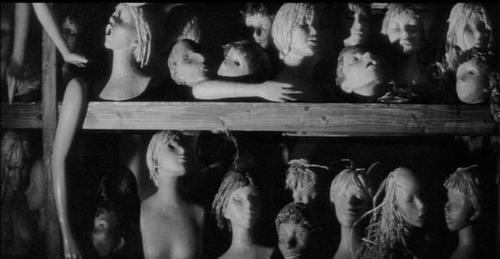
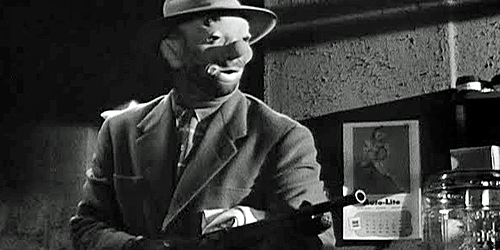
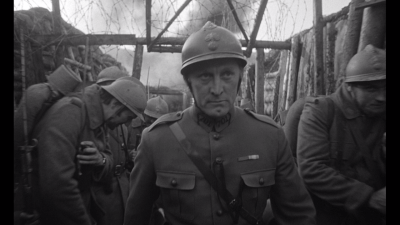
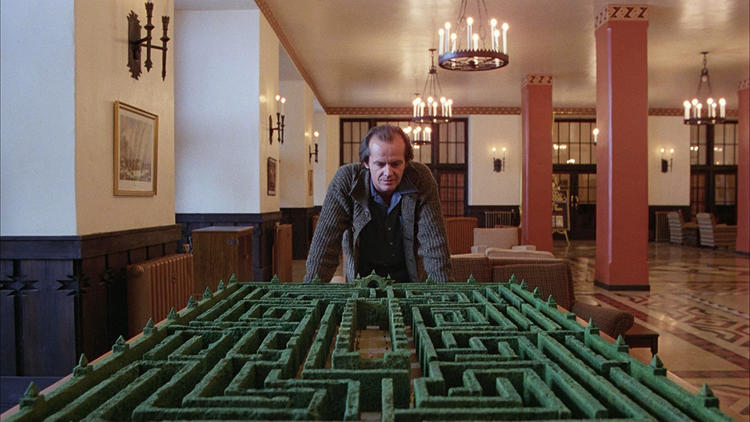
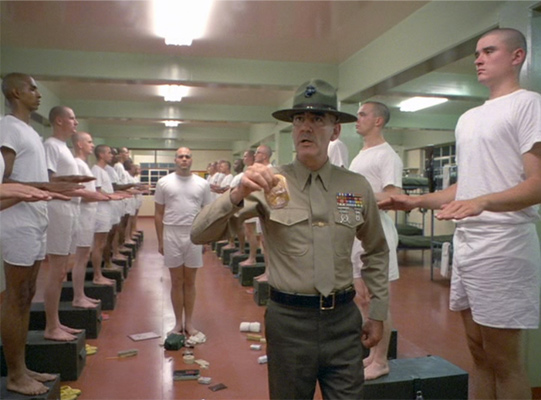
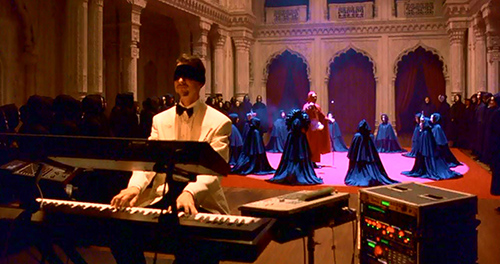
4 Shots From 4 Films is just what it says it is, 4 shots from 4 of our favorite films. As opposed to the reviews and recaps that we usually post, 4 Shots From 4 Films is all about letting the visuals do the talking. Stanley Kubrick was born on this date in 1928. Beginning as a photographer, Kubrick moved to motion pictures and became one of the most influential filmmakers in history. Here are 4 Shots from the early career of Stanley Kubrick, movie maker:

Fear and Desire (1953)

Killer’s Kiss (1955)

The Killing (1956)

Paths of Glory (1957)
“It was in the reign of George III that the aforesaid personages lived and quarreled; good or bad, handsome or ugly, rich or poor, they are all equal now.”
— Barry Lyndon (1975)
As I may have mentioned yesterday on this site, Texas has finally caught up with the rest of this frozen country. Starting on Sunday night, it has finally been cold and wintry down in my part of the world! For two days straight, schools have been closed and the streets have been covered in ice. And, even though the temperature got slightly above freezing today, I have been told that I can expect to wake up tomorrow morning to a snowy wonderland.
And I hope that’s the case because I would love to stay home on Wednesday! Ever since the 31 Days of Oscar began, I have recorded so many movies off of TCM that I am running dangerously close to running out of space on the DVR. The best thing about being snowed (or iced) in is that it gives me an opportunity to watch some of those films.
For instance, I spent this afternoon watching the 1975 best picture nominee Barry Lyndon. And when I say that I spent an afternoon, I mean that literally. Clocking in at a little over 3 hours, Barry Lyndon is a film that’s so long that it even provides an intermission so the you can stand up and stretch your legs.
Seriously, I was really thankful for that intermission.
Which not to say that Barry Lyndon is a bad film. Far from it! It’s actually one of the best films to be included in this year’s 31 Days of Oscars. While I may have no first hand knowledge of what it was like to live in the 1700s, I can now say that I definitely have a clue on account of the fact that I’ve seen Barry Lyndon.
Directed by the great Stanley Kubrick and based on a novel by William Makepeace Thackery, Barry Lyndon tells the story of a penniless Irishman Redmond Barry (Ryan O’Neal) who, following a duel with a wealthy British captain, is forced to flee from his home. After being robbed by a highwayman, Barry joins the British army but, upon being sent to fight in Germany, discovers that he has no love for combat. As such, Barry deserts but is then captured by and forced to enlist in the Prussian Army. Once the war ends, Barry is order to spy on a professional gambler who the Prussians suspect might, himself, be a spy. Barry and the gambler soon become partners and travel around Europe together. However, Barry has decided that he now wants to marry into wealth and he gets that chance when he meets the Countess of Lyndon (Marisa Berensen), whose husband is dying.
And that’s when the intermission kicks in.
When we come back, Redmond Barry is now known as Barry Lyndon and appears to have everything that he’s ever wanted. However, while Barry may have been naturally lucky when he was poor, the opposite is true once he’s rich. Despite his new station in life, Barry is never truly accepted by his wife’s circle of friends. Furthermore, his son, Bryan (David Morley) is injured while out riding a horse and Lady Lyndon has a nervous breakdown as a result. Meanwhile, Barry’s stepson, Lord Bullington (Leon Vitali), hates him and spends most of his time plotting ways to get rid of his stepfather.
And, naturally enough, it all leads to one final duel in a barn, in which two men point guns while surrounded by the deafening sounds of hundreds of pigeons cooing.
I’m at something of a disadvantage when it comes to reviewing Barry Lyndon because I watched it on television and Barry Lyndon is one of those films that demands to be seen on a big screen. For all of the dramatic moments and satirical asides (this film has a wonderfully snarky narrator), Barry Lyndon is ultimately most concerned with recreating the past as authentically as possible. Watching this film, you really do feel as if you’ve traveled back to the 18th Century, where all of the rooms are lit by candle light and one’s station in life can be determined by the ornateness of his or her costume.
As I watched Barry Lyndon, I had to wonder — whatever happened to Ryan O’Neal? I recently saw O’Neal in a film called The List and it was hard to believe that the terrible actor from that film was the same guy who starred in Barry Lyndon. Kubrick may not have a reputation for being an actor’s director but Ryan O’Neal gives a great performance in Barry Lyndon. (Compare O’Neal’s performance in the earlier Love Story to his performance here and you’ll see how good a job Kubrick did when it came to directing O’Neal.) When we first meet Barry, he is an almost passive aggressive character, a cunning guy who has the patience necessary to wait for his opportunity to advance. It’s only during the second half of the film that Barry becomes a truly sympathetic character, redeemed by both his love for his son and the fact that all of his enemies are even worse than him. The strength of Ryan O’Neal’s performance can be found in the fact that Barry can be both amoral and sympathetic at the same time.
So, I’m glad that the streets were icy on Tuesday. I’m thankful because it gave me a chance to watch Barry Lyndon.
And yes, I’m also very thankful for that intermission.
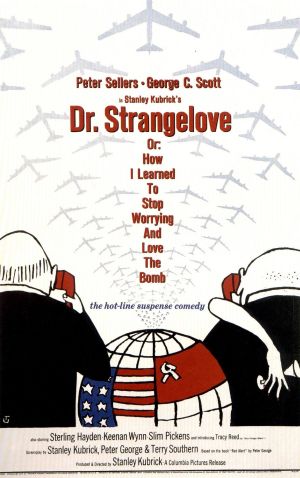
“Gentlemen! You can’t fight here! This is the war room!” — President Merkin Muffley (Peter Sellers) in Dr. Strangelove: Or How I Learned To Stop Worrying And Love the Bomb (1964)
The next time you hear someone bragging about how their favorite politician is an intellectual who always acts calmly and rationally, I would suggest that you remember the example of President Merkin Muffley, one of the many characters who populate the 1964 best picture nominee, Dr. Strangelove or How I Learned To Stop Worrying and Love the Bomb.
As played by Peter Sellers, Merkin Muffley is the epitome of rational political action. Speaking in a steady (if somewhat muffled) midwestern accent and always struggling to remain calm and dignified, Muffley keeps order in the War Room as the world edges closer and closer to apocalypse.
Just consider, for example, this scene where President Muffley calls the Russian leader (the nicely named Dimitri Kissoff) and explains that a little something silly has happened.
As Muffley explains in the above scene, Gen. Jack D. Ripper (Sterling Hayden) has gone crazy. Convinced that the Russians have been sapping his precious bodily fluids, Gen. Ripper has ordered a nuclear strike on Russia. Unfortunately, Russia has built a Doomsday Machine that, should Russia be bombed, will destroy the world.
While Muffley is at fist skeptical about a doomsday machine, his advisor, Dr. Strangelove (also played by Peter Sellers), explains that the doomsday machine not only exists but that it’s actually a pretty good idea. The wheelchair-bound Dr. Strangelove speaks in a German accent and appears to have lost control over the left side of his body. At random moments, his left arm shoots up in a Nazi salute. At other times, his hand tries to strangle him. Making these surreal moments all the more memorable is the fact that nobody in the War Room seems to notice or question them.
And, while it’s always tempting to dismiss a character like Dr. Strangelove as being an over-the-top caricature, the fact of the matter is that, following the end of World War II, several Nazi scientists ended up working for the U.S. government. In many ways, the U.S. space program was the creation of a bunch of real-life Dr. Strangeloves.
Of course, President Muffley and Dr. Strangelove aren’t the only roles played by Peter Sellers in this film. Sellers also plays Lionel Mandrake, a British officer who — as the result of an office exchange program — happens to be at Burpelson Air Force Base at the same time that Gen. Ripper orders the attack on Russia.
As famous as his Sellers’s performances as Dr. Strangelove and President Muffley may be, I actually think Mandrake is his best performance in the film. In many ways, Mandrake is the audience’s surrogate. He’s the one who gets to hear Ripper’s rambling explanation for why he launched an attack on Russia. He’s the one who has to try to convince the hilariously unhelpful Col. Bat Guano (Keenan Wynn) to help him find a quarter so he can call the Pentagon.
(“You’re gonna have to answer to the Coca-Cola company,” Guano says, before shooting open a Coke machine to get change.)
Sellers plays Mandrake as a parody of the traditional, stiff upper lip British army officer. Not only does that allow some great humor as Mandrake keeps a calm demeanor while listening to Ripper’s increasingly crazed monologue but it also allows Mandrake to be the only sane man in the movie.
(Of course, the whole point of Dr. Strangelove is that the world’s become so insane that one sane man can not make a difference. )
Sellers earned a best actor nomination for playing three different roles and he deserved it but, for me, the two best performances in the film come from Slim Pickens and George C. Scott.
Pickens, of course, is the bomber pilot who ends up riding an atomic bomb like a bull in a rodeo. As a character, Maj. Kong may be a bit too much of a spot-on stereotype but Pickens brings such sincerity to the role that it doesn’t matter. Oddly enough, you feel almost happy for him when he rides that bomb to his death. You know that’s exactly how he would have wanted to go out.
And then there’s George C. Scott, playing the role of Gen. Buck Turgidson. From the safety of the War Room, Turgidson looks forward to nuclear war and worries when President Muffley invites the Russian ambassador to join them. (“But he’ll see the big board!” Turgidson exclaims.) Turgidson is both hilariously stupid and hilariously confident. Perhaps my favorite Turgidson moment comes when he trips, falls, and stands back up without once losing his paranoid train of thought.
(Though he doesn’t have a big role, James Earl Jones makes his film debut in Dr. Strangelove. The way he delivers the line “What about Major Kong?” makes me laugh every time.)
50 years after it was first released, Dr. Strangelove remains a comic masterpiece of a nightmare, a film that proves that political points are best made with satire and not sermons.
HAPPY NEW YEAR!
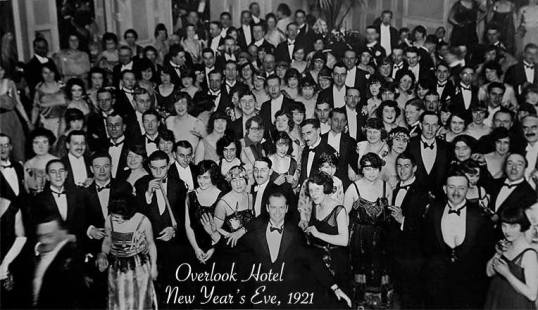
What better way to end 2014 than through one of my favorite scenes from Kubrick’s film adaptation of The Shining.
For those who have watched the film they understand the impact of this scene. For those still needing to see this classic piece of horror filmmaking then what better way to open up the new year than making a resolution to finally sit down and watch The Shining.
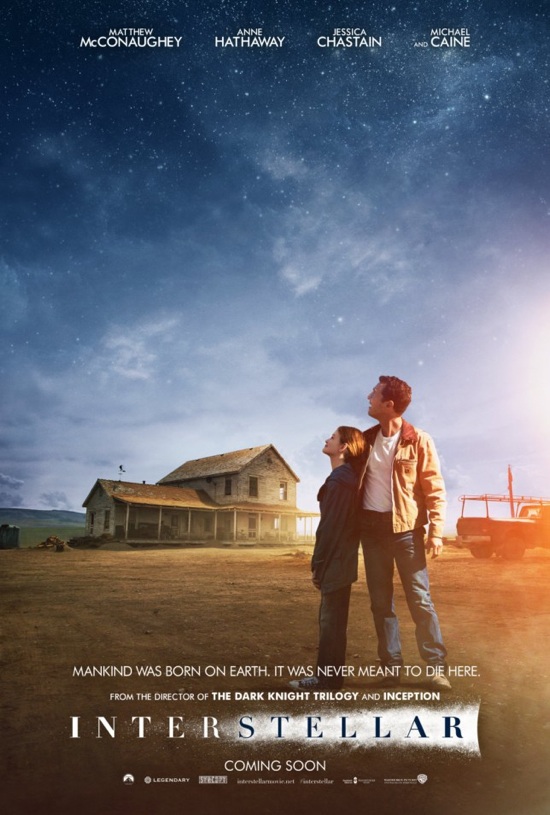
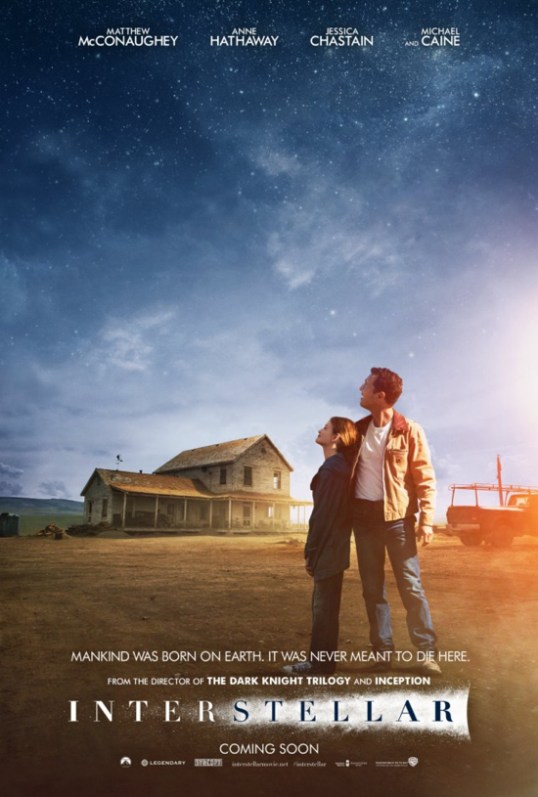
It would be disingenuous of me to not start this review by saying that I went into ‘Interstellar’ with a clear and present bias. Not towards Nolan – though I think he is a wonderful director who has not yet made a truly bad film. But a bias towards the scientific theories and potential themes I expected – based on trailers and the concept of the film – that it would explore. I have always been very interested in astronomy and astrophysics – and have a soft spot for science fiction films with a strong emotional core (‘Close Encounters of the Third Kind’, ‘Contact’). So when I headed to the theater I knew I was walking a very fine line (one that many reviewers walk but won’t admit to). If the film met (even marginally) my high expectations then it would in no doubt lead to high praise that bordered on hyperbole – and if it didn’t – if it disappointed – then it would cause a reaction a lot more negative than it really needed to be.
Where did ‘Interstellar’ ultimately fall? Hyperbole…or disappointment? Well luckily for me it was the former…to a fairly strong degree. I’ll say it now – this is not just probably my favorite film of the year so far, but like with ‘Gravity’ and ‘The Tree of Life’ (yes, more on that later) in recent years, this may fall within my favorite films of all time. It is a dazzling, visually stunning, emotionally resonant and incredibly well made sci-fi space epic – one with the power to keep you on the edge of your seat one minute and in tears the next. It explores big ideas about the cosmos while also staying incredibly grounding with an intimate story about family, regret, sacrifice and love. Like I said…hyperbole.
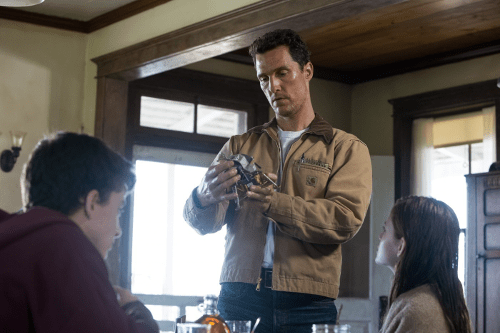
The film takes place in a not so distant future in which the world is becoming unlivable. After population growth, climate shifts and diseases ravishing crops, the world is struggling to produce enough of what little food sources they have left – which means a heavy reliance on corn farms. It is very bleak future where dust from dust storms covers everything, and the only focus of mankind is struggling to survive with what they know and have. Innovation, free thinking and exploration are at a standstill – and unless schools deem you smart enough to go on to a university, your only career prospective is farming.
Matthew McConaughey stars as Cooper, a widower and former pilot who now owns a farm where he lives with his two young children. He does his best to provide for his family but clearly wants more for them than what the current world can provide. After finding a mysterious message in his daughter Murph’s room, Cooper finds himself being recruited by what is left of NASA. They are secretly putting together a mission to journey through a wormhole that has appeared near Saturn. They do not know how it got there but they do know that beyond it is a solar system with some potentially habitable planets. They want Cooper to pilot an expedition through the wormhole to explore these planets and see if one is suitable to set up a new human colony. Cooper reluctantly agrees, even though it means leaving his children behind. He knows that the journey could kill him or – due to the laws of relatively – that by the time he does return his children may be much older than he is or already dead. But the fate of the human race – including his son and daughter – relies on finding a new home. So he sets out with a team of astronauts – and one pretty funny robot – on a journey that will take them farther than any humans have ever gone. The decision devastates his young daughter Murph – who he had a close relationship with – and it sets her out on a journey of her own to save humanity in a way she believes her father couldn’t.
To go into much more detail of the plot would ruin much of the experience. But I will say it becomes a fast paced and exciting journey. It does sometimes fall back on the usual genre tropes but there is never a dull moment; and it all builds up to an emotional and rewarding conclusion.
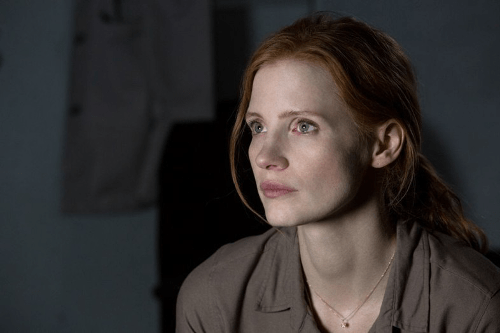
The performances are truly superb. For all his technical mastery, Nolan is also an actors’ director and he gets the most out of his casts. McConaughey is at his best here – which is saying a lot considering his work in recent years. The emotion he brings is on a whole different level than anything he has done before. Jessica Chastain, who plays the adult Murph, also has a strong presence. Both actors wear the burden of their decisions and regrets on their shoulders, and you can see it in every scene. They are the heart and soul of the film. Hathaway also did a wonderful job – as did Wes Bently, Michael Caine, and David Gyasi.
The score from Hans Zimmer is loud and heart pounding. He always manages to perfectly convey the intensity of some truly exciting set pieces – while also slowing down to capture the emotions of the more intimate moments, and this score is no different.
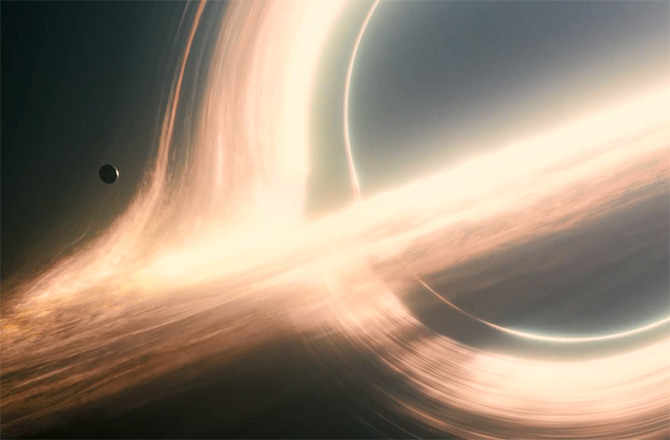
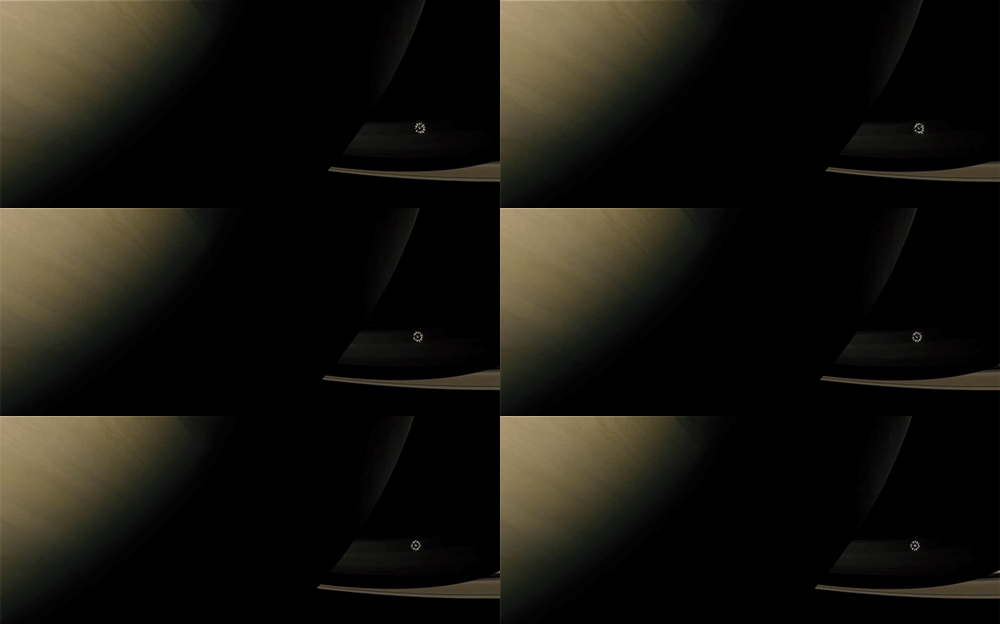
The visuals are absolutely stunning. The effects (most of them created through practical means) were influenced by physicist Kip Throne – who also oversaw a lot of the science in the film – and the result is dream-worthy space imagery. Interestingly, the depictions of the wormhole and black hole in ‘Interstellar’ are considered to be the most accurate ever created. The results are gorgeous, especially on a big screen – with one scene with Saturn making me all teary eyed.
Below the spectacle and hard science is an emotionally resonant tale of exploration and human ambition that puts its faith not only in science but also the human soul. Does it become heavy handed at times? Of course! This is a space opera – a science fiction epic – with a big budget, big ideas, big name actors, big visuals and so the emotions at times match that. The first 40 minutes or so do a fantastic job setting up the bond between Cooper and his daughter. It is a wonderful relationship – but a complex one filled with love, anger and regret. It is also the backbone of the story and Nolan builds the emotion from there.
Like with ‘The Tree of Life’ (I told you I was going here), the juxtaposition of dazzling space images and the exploration of the cosmos with this grounded and intimate family story about love and nature make for a challenging but truly rewarding experience. One that asks big questions about our relationship with each other and the universe we inhabit; and examines how the flow and clash of such things as love and instinct with nature can change and inspire us for better or worse. Nolan does seem to want to show how love has the ability to conquer and transcend even the harshest things nature and its laws can throw at us. It is almost fitting then that Chastain stars in each, and has a roll in both stories that could be almost viewed as similar – as the focal point of love that guides the main character and the audience. And like with ‘The Tree of Life’ I can totally understand why people would not like ‘Interstellar’. Neither are films for everyone. I believe most reviews I have seen are so mixed because ultimately ‘Interstellar’ relies so heavily on the emotions at the core of the story that it was inevitable that it wouldn’t connect with some people. You have to be open to some extreme sentimentalism, which just isn’t the case for everybody.

I won’t go into much detail over the film’s final act, but I think it makes perfect sense within the logical and emotional progression of the story – though some critics disagree. They seem to think that Nolan’s often straight forward hard science approach is too stern and takes the wonder and ambiguity out of his stories and I found that to not be the case with ‘Interstellar’. Mainly because the ending does in fact have some level of ambiguity – but what it does explain adds a level of wonder and hope that would be lost had it been open ended. I will also say that I find it absolutely absurd that some critics who praise and accept the ending to’2001: A Space Odyssey’ have dismissed this one for being too convoluted or even nonsensical…as if those couldn’t also be said of the ending of Kubrick’s film.
But again maybe this is all just me. As I warned you, hyperbole was expected and I think this review lived up to that. I truly loved the film. It generated in me the same feeling of wonder, excitement and curiosity I got from the spectacle and emotions of ‘Close Encounters of the Third Kind’ and ‘Contact’ –the realism of ‘Gravity’ – and the complexity and mind bending theories of ‘2001: A Space Odyssey’. Throw in with that the connections I felt it had with such films as ‘The Tree of Life’ and there was no way I wasn’t going to love it. This is cinema at its finest. Whatever flaws it might have I can easily overlook due to not only how moving and entertaining of an experience it all is – but also because it is just so damn ambitious. Whether you see it on a large IMAX screen or not, you’ll be moved in one way or another.
Now, I don’t usually do this but I would like to end by quickly addressing the small group of people who have been crying sexism before the film even got its wide release. Apparently, because the lead is a scruffy male and the film is about the will power of mankind to journey off and explore the unknown, that it is somehow a male centric film that is about masculinity above all else. If the idea of human endeavor, innovation, the struggle to survive, and the pursuit of knowledge brings to your mind nothing but masculinity and male dominance then blame society – not the film – because it was clearly not its intentions and really is just not even remotely the case here. You could easily replace McConaughey’s character with a female lead (like in ‘Contact’) and the narrative, emotional and thematic results would be EXACTLY the same. This all seems even more ridiculous given the fact that the female characters play a much more important role than any of the men. Their work, decisions and perspective essentially save the day. It isn’t until the men view the situations and universe through them that they are able to succeed.
I have also been thrown off by the complaints of Nolan’s reliance on “daddy issues” or the “dead wife/spouse” tropes, and fail to see how these (which I admit are often present in his films) should at all matter when they fit so well into the story and are so emotionally effective. Not to mention Cooper being a widower has nothing to do with any decision he makes; and the relationship Murph has with him is far more complex than simply being “daddy issues”. It is actually a wonderfully realized one, with Nolan drawing experience from the relationship he has with his own daughter.
But why are these even being brought up by people, so early and with such vigor? Do not get me wrong, I understand and appreciate the opinions of those who simply did not like it…but for the few who have criticized it for the aforementioned reasons I just cannot wrap my head around where they are coming from. Sexism is often an issue in cinema and film making as a whole and something that could clearly be worked on…but it just does not apply to ‘Interstellar’ in any way. And I say this as someone who isn’t a Nolan fan boy. Yes, I appreciate his work – he has made some truly great films – but I am not one of those who think he is the best director working right now. But it is hard to not be disappointed and confused by the fact that every time he releases a film there are tons of articles that pop up to critique what would otherwise be completely ignored in other films – or in some case they critique things they didn’t even care about in his other films. Maybe this is just the price a director like him faces. His work tends to be so popular that critics seem to try extra hard to make their voices heard – an attempt to quell the masses of fans excited to see it – by overreaching in their criticism. This is made all the more disheartening when you consider he is one of a very few filmmakers willing to take such big risks to make smart and ambitious films. But maybe I am wrong. Please, let me know your thoughts!
———
A couple weeks ago site music writer necromoonyeti wrote up quite an article about what just makes a piece of music a “horror music”.
Using some of what necromoonyeti wrote about I decided to look at some horror and non-horror films with music that evokes that sense of terror and horror that sometimes come from music that we wouldn’t associate with such emotions. It’s a much more difficult task than one would think. Yet, while I didn’t find one of those non-traditional pieces of horror music I did come across one that I should’ve used in this segment a long time ago.
The latest “Song of the Day” is a piece of disturbing music titled “Polymorphia” by Polish composer Krzysztof Penderecki.
This musical composition has been used in two classic horror films (some would say some of the best in their genre) to help build the sense of horror and dread for the audience. The two films in question would be William Friedkin’s The Exorcist and Stanley Kubrick’s The Shining. I know that in the former it more than added to that film’s creeping dread from the moment the song came on. It made one feel like Hell itself was about to break through the screen. It’s that sense that one’s skin was sensing something evil was afoot.
I found a particular youtube video that used this song and the chosen imagery to great effect. I dare anyone to watch the video, listen to the music in a dark room and in the middle of the night while alone.
For my first horror review of October, I want to tell you about a movie that was directed by one of my favorite Italian filmmakers, Lucio Fulci. That movie is the unjustly neglected Gato nero, or the Black Cat.
In The Black Cat (loosely — and I do mean loosely — based on Edgar Allan Poe’s short story), the great David Warbeck plays a detective who is sent to a small English village to investigate a series of mysterious deaths. Corpses are turning up covered in scratches. A man crashes his car after a black cat suddenly shows up in the passenger’s seat. A young couple is found dead in a locked-up boathouse. Evidence suggests that the killer entered through a small air vent. No human could fit through that vent but…how about a cat? Warbeck enlists the aid of a visiting American photographer (Mimsy Farmer) to investigate the crimes and he soon comes across a half-crazed medium (Patrick Magee) who just happens to own an adorable, if ill-tempered, black cat…
Fulci is well-known for directing such seminal (and gory) horror films as Zombi 2 and The Beyond trilogy. The Black Cat was made during the same period of time as his more infamous films but it has never received as much attention. Perhaps that’s because The Black Cat almost doesn’t feel like a Fulci film. The gore is played down, the plot is coherent and (for a Fulci film) surprisingly linear, and the film even has a playful sense of humor to it. Indeed, this often feels more like a minor, if entertaining, Hammer film than a Fulci film. However, visually, this film is clearly the work of Lucio Fulci. With his constantly prowling camera following isolated characters through dark streets and passageways, Fulci manages to make a small English village feel just as menacing as the dying Caribbean island from Zombi 2. For all the attention given to Fulci as a “master of gore,” the true strength of his best films came from Fulci’s ability to create a palpable atmosphere of dread. Fulci used gore as a tool but not as a crutch and if The Black Cat is a minor Fulci film, it’s still a film that proves that he was a far better director than even many of his fans give him credit for.
The Black Cat is surprisingly well-acted by a cast that’s made up of an appealing combination of Fulci regulars and English B-movie veterans. I read an old interview in which Warbeck complained that he felt his performance here was “boring,” but actually he was the perfect lead for this type of film, likable and with enough of a sense of humor to keep you watching. Al Cliver may not be a household name but he and his blonde mustache seemed to show up in just about every movie Fulci made and he shows up here as well. This time, he’s playing a local English constable and he’s no more believable here than he was playing a scientist in The Beyond or a boat captain in Zombi 2. Still, any true Fulci fan will always be happy to see Cliver show up in a Fulci film because — much like familiar but bland wall paper — he lets us know that we’re home. Patrick Magee is probably best known for his over-the-top performance as Mr. Alexander in A Clockwork Orange. Magee goes just as much over-the-top here but, just as in A Clockwork Orange, Magee’s performance fits in perfectly with the film he’s appearing in. Much as Stanley Kubrick contrasted Magee’s performance with Malcolm McDowell’s more subtle work, Fulci contrasts Magee’s theatrical approach with the more relaxed performances of Warbeck and Farmer. Did I just compare Lucio Fulci to Stanley Kubrick? Yes, I did and I stand by it.
However, the real star of this film is the black cat. Trust me, this black cat (or black cats as I imagine several were used) is both adorable and blood-thirsty. I still say that our cat Doc is the cutest black cat in the world but this film’s murderous feline comes in a very close second.
Today’s scene I love is from Stanley Kubrick’s 1980 horror masterpiece The Shining. No matter how many times I see that film, it still scares me and, for whatever the reason, the two little girls standing in that hallway scare me the most. Here they are.