The scene below is, of course, from Stanley Kubrick’s 1980 masterpiece, The Shining.
In this scene, Jack Torrance (Jack Nicholson) stumbles into the Overlook Hotel’s ballroom, still fuming over having been accused of abusing his son. A recovering alcoholic, Jack sits at the bar and thinks about how he would give up his soul for just one one drink. And, on cue, Lloyd (Joe Turkel) appears.
As I was watching this scene, it occurred to me that, way back in 1980, there probably was some guy named Lloyd who saw this movie in a theater and was probably totally shocked when Jack suddenly stared straight at him and said, “Hey, Lloyd.”
The brilliance of this scene is that we never actually see Lloyd materialize. We see him only after Jack has seen him. So, yes, Lloyd could be a ghost. But he could also just be a figment of Jack’s imagination. Jack very well could just be suffering from cabin fever. Of course, by the end of the movie, we learn the truth.
Everyone always talks about Jack Nicholson’s performance as Jack. Some people love it and some people hate it. (I’m in the first camp.) However, let’s take a minute to appreciate just how totally creepy Joe Turkel is in this scene. Turkel was a veteran character actor and had appeared in two previous Kubrick films, The Killing and Paths of Glory. Two years after appearing in The Shining, Turkel played what may be his best-known role, Dr. Eldon Tyrell in Blade Runner.
From Stanley Kubrick’s The Shining, here’s Jack Nicholson and Joe Turkel:
I’m a little bit late in posting this but I’m happy to correct that oversight now.
Doctor Sleep is a film that I’m very much looking forward to seeing. Doctor Sleep is a sequel to Stephen King’s The Shining and it’ll be interesting to see which version of The Shining that director Mike Flanagan will decide to honor with this film, King’s original novel or Stanley Kubrick’s far superior film version. Kubrick’s film is one of the best horror movies ever made but Stephen King has always been very vocal in his dislike for it.
(Personally, I think a lot of King’s distaste for the film comes down to jealousy over the way that Kubrick improved on King’s original story. Whereas The Shining is a good book that sometimes gets bogged down with King’s usual shtick, Kubrick’s film is a pop horror masterpiece.)
Judging from the just-released final trailer for Doctor Sleep, it looks like director Mike Flanagan will be building on Kubrick’s vision as opposed to King’s. As you can probably already guess, that’s fine by me. Flanagan is one of the best horror directors working right now and Ewan McGregor would appear to be perfectly cast in the role of grown-up Danny Torrance.
Doctor Sleep will be playing in theaters on November 8th. (That’s the day before my birthday so I have a feeling I know what my free movie at the Alamo Drafthouse is going to be.) Here’s the final trailer!
This scene, of course, is from 1980’s The Shining.
Technically, this is before Jack Torrance met the ghosts and started to lose his mind but, in this scene, you can tell that Jack’s already getting a little bit tired of his family. Jack Nicholson’s delivery of, “See? It’s okay. He heard it on the television,” gets me every time.
Stanley Kubrick’s The Shining is unique in that it’s a horror film that freaks me out every time that I see it. Even though I’ve sat through the film so many times that I now practically have it memorized, The Shining still scares me.
And, to be honest, a lot of that has to do with the daughters of Charles (or was that Delbert) Grady. Early on, we’re told that the previous caretaker, Grady, went crazy from the isolation and ended up killing his daughters with an axe. And yet, if his daughters are dead, what are they doing in the hallway of the Overlook Hotel, inviting poor little Danny Torrance to come play with them!?
AGCK!
Seriously, this scene freaks me out every time that I see it.
Before Stanley Kubrick became Stanley Kubrick, he made a pair of low-budget crime dramas in the mid-50’s that are standouts in the film noir canon. The second of these, THE KILLING, is a perfect movie in every way imaginable, showing flashes of the director’s genius behind the camera, featuring just about the toughest cast you’re likely to find in a film noir, and the toughest dialog as well, courtesy of hard-boiled author Jim Thompson.
THE KILLING is done semi-documentary style (with narration by Art Gilmore), and follows the planning, execution, and aftermath of a two million dollar racetrack heist. Sterling Hayden plays the mastermind behind the bold robbery, a career criminal looking for one last score. He’s aided and abetted by a moneyman (Jay C. Flippen ), a track bartender (Joe Sawyer ), a teller (Elisha Cook Jr. ), and a crooked cop (Ted de Corsia ). He…
Audiences love them but the Academy has never quite felt the same way. True, there have been a few horror films nominated. The Exorcist was a major contender. Jaws was nominated. So was The Sixth Sense. Silence of the Lambs won.
But, for the most part, horror films have struggled to get Academy recognition. While the Academy has recently shown a willingness to honor science fiction, the horror genre has yet to benefit from the decision to increase the number of best picture nominees.
Because I love horror and I love movies and I love lists, here are ten horror films that I think deserved a best picture nomination:
One of the most popular and influential horror films of all time, Frankenstein was sadly ignored by the Academy. It’s certainly better remembered than the film that won best picture of 1931, Cimarron.
2. Psycho (1960)
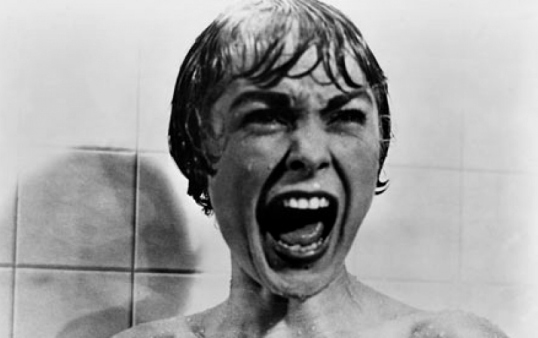
Psycho may have received nominations for best director, supporting actress, cinematography, and art design but the film that made people afraid to take showers did not receive a nomination for best picture. The winner that year was a legitimate classic, The Apartment. But it’s hard not to feel that Psycho should have, at the very least, received a nominations over the other 4 films nominated.
George Romero’s zombie classic may have set the standard for zombie movies to come but it was not honored the Academy. The Academy was more comfortable with Oliver!
Few sequels have been nominated for best picture. Dawn of the Dead definitely should have been one of them. Who wouldn’t want to see, at the very least, Tom Savini’s speech as he accepted his special award for best makeup?
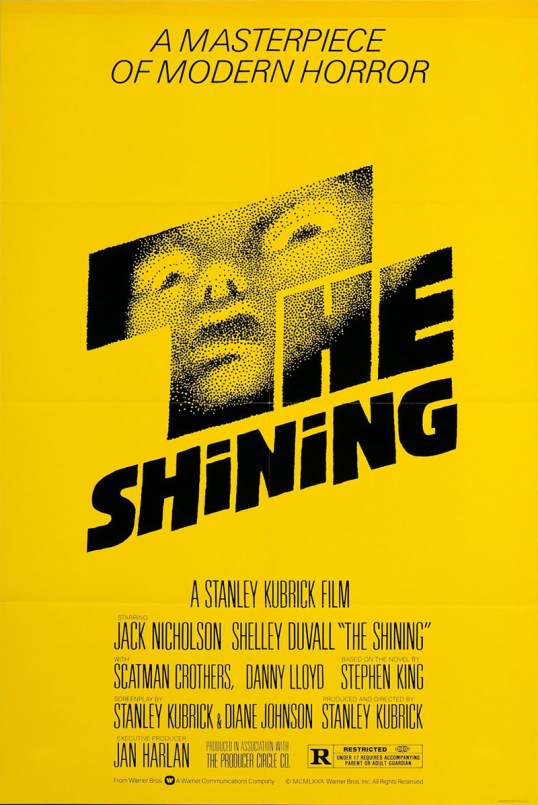
8) The Shining (1980)
Stanley Kubrick’s film may be recognized as a classic now but the reviews, when it was first released, were mixed. So, I guess we shouldn’t be surprised that it wasn’t given any recognition by the Academy. It’s a shame because I’ve watched The Shining a few dozen times and it still scares the Hell out of me.
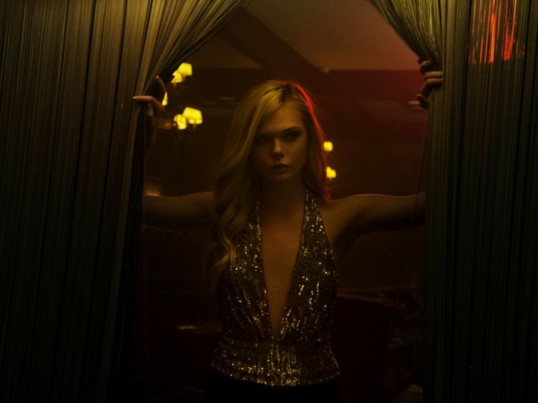
Is Nicholas Winding Refn’s The Neon Demon truly a horror movie? It’s close enough. Though the film opened to mixed reviews, it’ll be recognized as a classic in another ten years.
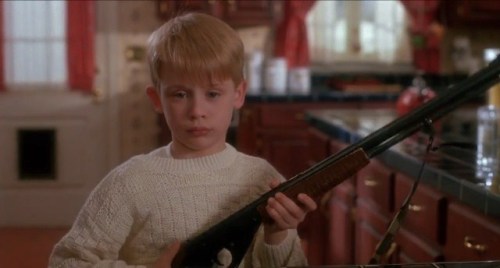
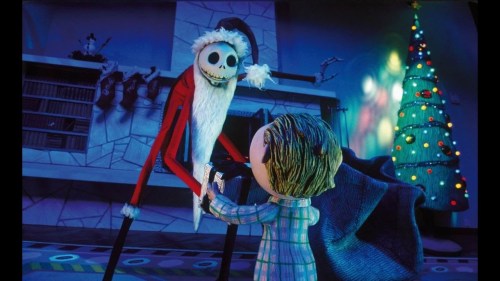
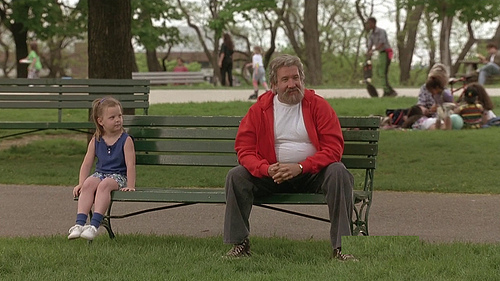
4 Shots From 4 Films is just what it says it is, 4 shots from 4 of our favorite films. As opposed to the reviews and recaps that we usually post, 4 Shots From 4 Films is all about letting the visuals do the talking.
4 Shots From 4 Holiday Films
Home Alone (1990, dir by Chris Columbus)
The Nightmare Before Christmas (1993, dir by Henry Selick)
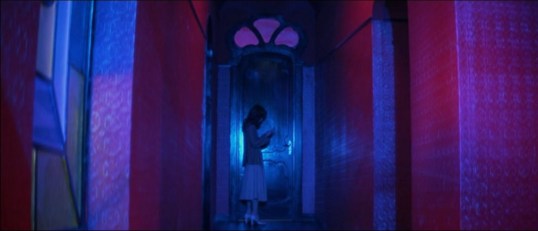
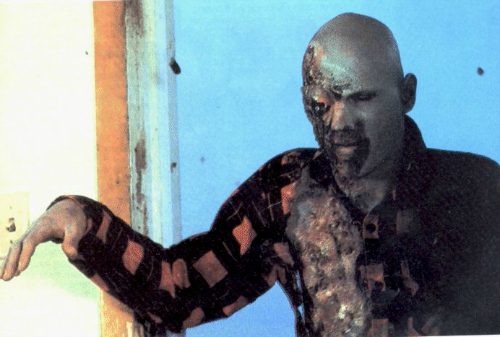
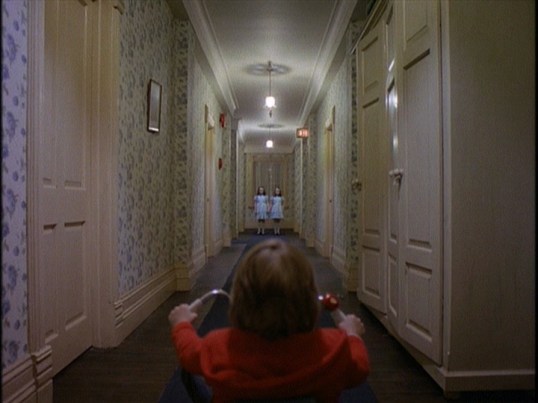
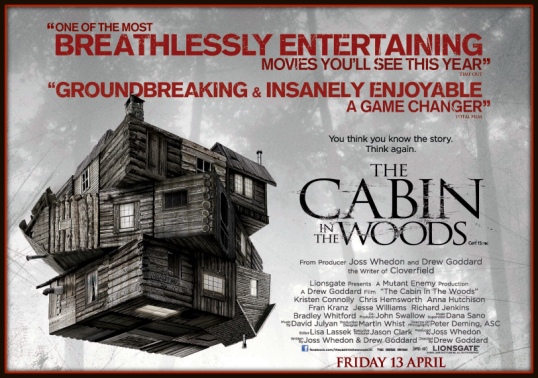
This October, I’m going to be doing something a little bit different with my contribution to 4 Shots From 4 Films. I’m going to be taking a little chronological tour of the history of horror cinema, moving from decade to decade.
It may seem strange, at first, that I am including the 1971 best picture nominee, A Clockwork Orange, in a series of Back to School reviews. Certainly, Stanley Kubrick’s iconic adaptation of Anthony Burgess’s novel is not usually described as being a film about juvenile delinquency but that’s exactly what it is.
Many viewers tend to forget that Alex (played by Malcolm McDowell, who was nearly 30 at the time) and his three droogs are all meant to be teenagers. (Only Michael Tarn, who played Pete, was actually a teenager at the time the film was shot. Warren “Dim” Clarke and James “Georgie” Marcus were both in their late 20s.) There’s even a lengthy scene in which Alex is interrogated by a social worker, P.R. Deltoid (Aubrey Morris). Viewers are usually so surprised when Deltoid suddenly grabs Alex’s crotch that they forget that the whole reason Deltoid even came to the flat was to find out why Alex had been skipping school. (“Pain in my gulliver,” was Alex’s oft-quoted excuse.)
So, make no mistake about it. Among other things, A Clockwork Orange is a film about both the problem of juvenile delinquency and the continuing debate concerning what the authorities should do about it. Stylistic and philosophical differences aside, A Clockwork Orange comes from the same cinematic family tree that’s given us everything from Rebel Without A Cause to Bully to Spring Breakers.
Of course, that’s not all that A Clockwork Orange is about. It’s a Kubrick film, which means that there’s several different layers to work through and multiple interpretations for what we see on-screen. For those who may not be familiar with the film, it takes place in a recognizable but futuristic England. (One of my favorite theories is that A Clockwork Orange was about what was happening on Earth while David Bowman was becoming the starchild in 2001: A Space Odyssey.) It’s a violent world, one where there appears to be significantly fewer people around than in the past. The streets are deserted and bombed out. Occasionally, when Alex returns to his home, he passes a mural of idealized working men creating a new world. This rather banal work of Socialist realism has been defaced by obscene drawings and mocking graffiti.
Teenage Alex spends his nights hanging out with his friends (or, as he calls them, droogs), Pete, Georgie, and Dim. They drink at the Korova Milk Bar and wear obscenely oversized codpieces, signifying this society’s obsession with outsized masculinity. When they speak (and when Alex narrates the film), they do so in a rhyming slang called Nadsat. Under Alex’s sociopathic leadership, they spend their nights raping women, beating the homeless, and fighting with other gangs. When Alex is not with his droogs, he enjoys lying around the house and listening to Beethoven (or “Ludwig Van” as he calls him).
After being betrayed by his droogs (who have tired of Alex’s cockiness), Alex ends up imprisoned for murder. However, Alex is offered an early release if he’s willing to take part in the Ludovico Treatment. For two weeks, Alex is drugged and forced to watch violent and sexual films while the music of Beethoven plays in the background. As a result of the treatment, Alex grows physically ill at the thought of both violence and sex but he can also no longer listen to Beethoven. Arguably, as a result of being cursed of his anti-social tendencies, he has lost the only non-destructive thing that he enjoyed.
Over the objections of the prison chaplain (who argues that robbing Alex of his free will is not the same as rehabilitating him), Alex is sent back into the real world and he quickly discovers that he now has no place in it. His parents have rented his room out to a boarder who is now more of a son to them than Alex ever was. The streets are full of men who were previously tormented by Alex and who now wants revenge. In perhaps the film’s most brilliant moment, Alex discovers that his former droogs are now members of the police force. Though they may now be wearing uniforms, Dim and Georgie are still as destructive and dangerous as Alex once was. The difference is that Alex was caught and cured whereas Dim and Georgie discovered they could do just as much damage as authority figures as they did as juvenile delinquents.
In fact, the only people who now care about Alex are the political dissidents who hope to use Alex to discredit the government. However, the dissidents aren’t particularly worried about Alex’s well-being either. He’s just a prop to be used for their own ambitions. Even worse, for Alex, is the fact that one of the dissidents is Mr. Alexander (Patrick Magee), a writer who lost both his ability to walk and his wife to an earlier assault committed by Alex…
(Interestingly enough, Mr. Alexander’s boyguard is played by David Prowse, who later become the ultimate symbol of government oppression when he was cast as Darth Vader in Star Wars.)
A Clockwork Orange is a brilliant film but it’s one about which I have very mixed feelings. On the one hand, you can’t deny the power of the film’s imagery. How many times has just the opening shot — of McDowell staring at us while wearing one fake eyelash — been imitated on TV and in other movies? How much of the film’s dialogue — from “pain in my gulliver” to “the old in-out” — has lived on long past the movie? Regardless of how many times I’ve seen A Clockwork Orange, the film’s electronic score (from Wendy Carlos) never ceases to amaze me. Finally, it’s a film that argues that free will is so important that even a sociopath like Alex must be allowed to have it and that, as the chaplain argues, true goodness comes from within and cannot be manufactured or regulated by a government agency. (It’s also a film that suggests that the government would be just as quick to use the Ludovico Treatment not just on the evil Alexes on the world but on anyone who dared to dissent from the party line.) As I’m something of a “Freedom of Choice” absolutist, that’s a message to which I responded.
(At the same time, A Clockwork Orange does not argue that Alex’s actions should be free of consequences. If anything, the film’s message seems to be that things would have been better for literally everyone if the government had just left Alex in jail, as opposed to trying to “fix” what was wrong with him.)
And yet, I have mixed feelings about A Clockwork Orange. I guess my main issue is that the film doesn’t always play fair. Malcolm McDowell is allowed to give a charismatic and well-rounded performance as Alex but nearly everyone else in the film is directed and written as a one-dimensional caricature. Whereas Anthony Burgess’s novel emphasized the very real damage that Alex did to his victims, the film tends to surround Alex with comedic grotesqueries. By both making Alex the only fully developed character in the entire film and then casting the energetic and charismatic Malcolm McDowell in the role, the film seems, at times, to come dangerously close to letting Alex off the hook for his worst crimes. It also leaves the film open to the oft-repeated charge of glamorizing sex and violence. (According to Roger Lewis’s biography of the author, that was Anthony Burgess’s opinion of the film.) For the record, I don’t think A Clockwork Orange is an immoral film but I understand why some people disagree.
For that reason, A Clockwork Orange remains a controversial film. In fact, I’m somewhat surprised that this subversive and deliberately confrontational film was nominated for best picture. It was only the 2nd (and last) X-rated film to receive a best picture nomination. Though it lost to The French Connection, A Clockwork Orange continues to be a powerful and controversial film to this day. Perhaps the biggest indication of A Clockwork Orange‘s success is that it’s still being debated 45 years after it was first released.







 Through the Shattered Lens