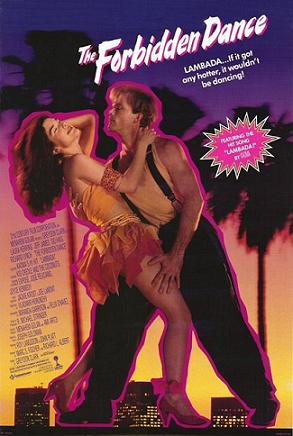
Today’s scene that I love comes from my favorite Greydon Clark movie, 1990’s The Forbidden Dance!
And remember — this film is dedicated to the preservation of the rain forest.
Today’s scene that I love comes from my favorite Greydon Clark movie, 1990’s The Forbidden Dance!
And remember — this film is dedicated to the preservation of the rain forest.
Welcome to Retro Television Reviews, a feature where we review some of our favorite and least favorite shows of the past! On Tuesdays, I will be reviewing the original Fantasy Island, which ran on ABC from 1977 to 1984. The show is once again on Tubi!
This week, I really missed Tattoo.
Episode 7.19 “”Lost and Found/Dick Turpin’s Last Ride”
(Dir by Bob Sweeney, originally aired on April 7th,1984)
Stung by the discovery that her husband has cheated on her, Sheila McKenna (Carol Lynley) comes to Fantasy Island, looking for revenge. Her husband, Frank (Adam West), follows her and tries to save his marriage. Sheila is tempted to cheat with Frank’s business partner. Fortunately, Mr. Roarke is there to show Frank the error of his ways and, for some reason, Sheila ends up forgiving him and they leave the Island with their marriage stronger than ever.
This storyline is one that I perhaps would have been more invested in if Sheila McKenna had not been played by Carol Lynley. Lynley was the most frequent guest star on Fantasy Island. She was never particularly memorable but, in this episode, she gives a performance that can only be described as bad. Delivering her lines without a hint of emotion (and forget about having any chemistry with West), Lynley comes across as if she under the influence of serious narcotics. I was genuinely worried about her health. I didn’t really care much about her marriage.
As for the other storyline, singer Tom Jones stars as mild-mannered accountant Jack Palmer. Palmer idolizes the legendary Welsh highwayman, Dick Turpin. Roarke sends him into the past so that he can actually be Dick Turpin. Tom Jones as Turpin sings almost all of his dialogue. Jack’s wife (Dianne Kay) is also sent into the past and is kidnapped by Sid Haig.
The Dick Turpin storyline was the sort of thing that Fantasy Island did well in the past. However, despite some surprisingly strong production values, it just kind of fell flat in this episode. A big problem is that this was the type of story that would have been perfect for Tattoo but, unfortunately, the show replaced Herve Villechaize with Christopher Hewett. I have nothing against Christopher Hewett. From what I’ve read, he was apparently a very devout Catholic who was loved by all. But the switch-over from Villechaize to Hewett was definitely the moment that Fantasy Island stopped being a fantasy to watch.
It’s hard to believe that I’m nearly done with this series. I’ve been reviewing it since 2022! It’s brought me a lot of joy but, as I make my way through the final episodes of season 7, I’m ready to finally move on.

“What is sacred to a bunch of goddamned savages ain’t no concern of the civilized man! We got permission!” — Buddy
Bone Tomahawk (2015) begins in quiet dread. A still horizon, the whisper of wind across rock, a hint of bone under the dust—the American frontier looms like an unfinished thought. This silence sets the tone for S. Craig Zahler’s remarkable debut, a film that wears the form of a Western only to strip it down to nerve and marrow. It’s a story of decency under siege, of men pushing past the last borders of civilization and discovering that what lies beyond is not the unknown, but the origin of everything they thought they’d overcome.
At first glance, the premise seems familiar. When several townspeople vanish from the small settlement of Bright Hope, Sheriff Franklin Hunt (Kurt Russell) leads a rescue expedition into the desert. Riding with him are three others: the injured but determined Arthur O’Dwyer (Patrick Wilson), whose wife has been taken; his tender-hearted deputy, Chicory (Richard Jenkins), whose chatter and old-fashioned kindness soften the film’s bleak austerity; and the self-assured gunman John Brooder (Matthew Fox), a man equal parts gallant and cruel. Together, they represent the moral cross-section of a civilization still trying to define itself—duty, love, loyalty, arrogance.
Their journey outward becomes one of inward descent. Zahler’s script unfolds at a deliberate pace, steeped in stillness and exhaustion. The first half moves like ritual—meandering conversations, humor worn thin by weariness, the small comforts of campfire fellowship flickering against the vast emptiness around them. It’s here that Bone Tomahawk begins its slow transformation. What starts as a rescue Western gradually becomes something deeper and older. By stripping away the romance of exploration, Zahler reveals the frontier not as a space of discovery, but as a place of reckoning—a mirror of the instincts civilization pretends to have tamed.
The film’s most haunting element is its portrayal of the so-called “troglodytes,” the mysterious group believed to be responsible for the kidnappings. They are less a tribe than an incarnation of the wilderness itself—nameless, wordless, and utterly beyond cultural translation. Covered in ash, communicating through the eerie hum of bone instruments embedded in their throats, they seem less human than ancestral, as though the land itself had dragged them upward from its own depths. Zahler refuses to frame them anthropologically or politically; instead, they represent the primal truth the American frontier sought to bury under its myths of order and progress.
Western films, for more than a century, have mythologized the wilderness as an external force—something to conquer. But the “troglodytes” in Bone Tomahawk feel like the soil’s memory of what came before conquest: the savage necessity that built the very myths used to conceal it. They are the frontier’s unspoken ancestry—what remains after all the churches, taverns, and codes of decency are stripped away. Civilization needs them to remain hidden in the canyons, out of sight and unspoken, because their existence contradicts everything the polite narrative of the Old West stands for. They are what progress denies but cannot erase.
Zahler’s restraint strengthens this allegory. He shoots the desert not as backdrop but as evidence—a geographical wound extending beyond the horizon. The wilderness looks stunning but predatory, its stillness full of threat. Even when the posse’s odyssey is free of immediate danger, there’s the growing sense of being consumed: by the sun, by exhaustion, by the quiet knowledge that the world they’re riding into has no use for their notions of law and virtue. Civilization, here, is a pocket of light surrounded by something much older and hungrier.
That hunger, the need to conquer and consume, connects Bone Tomahawk to its spiritual predecessor, Antonia Bird’s Ravenous (1999). Bird’s film transformed the Donner Party’s historical ghosts into an allegory of Manifest Destiny, equating cannibalism with American expansion—the act of devouring land, life, and self under the guise of progress. Zahler continues that lineage with deliberate starkness. For him, violence in the frontier isn’t just literal; it’s foundational, the unacknowledged currency of civilization. Where Ravenous expressed its critique with mordant humor, Bone Tomahawk speaks in solemn tones, observing how every civilized act—the enforcement of law, the defense of home—rests upon the refusal to see what was consumed to create it.
The “troglodytes” embody that refusal incarnate. They are not villains in the traditional sense; Zahler grants them no ideology or explanation, only the primal fact of their survival. In doing so, he flips the Western’s moral equation: the barbarians at the edge of civilization are not invaders, but reminders of its origins. They are ghosts of the violence that founded the frontier, the unspoken proof that the West was never as far from savagery as it claimed. To look upon them is to glimpse the beginning—the raw, lawless reality America buried beneath the idea of itself.
Kurt Russell, magnificent in his restraint, anchors this tension. His Sheriff Hunt evokes a fading kind of decency: measured, fair, and unwavering even in futility. Russell plays him not as a Western hero but as a man committed to honor in a world that no longer rewards it. His calm authority softens only around those he loves and hardens in the face of what he doesn’t understand. In that measured decency lies the film’s aching question: what happens when morality meets something that does not recognize it?
Patrick Wilson’s O’Dwyer embodies faith’s physical agony—a man driven by devotion, limping through a landscape that punishes his determination. Richard Jenkins provides heart and subtle tragedy; his rambling, almost comical musings on aging and loneliness become the story’s moral texture, the sound of humanity scraping against extinction. And Matthew Fox, in his most precise performance, gives voice to the arrogance of the civilized killer—a man who fashions violence as virtue, believing his elegance excuses his cruelty.
Together, the four men form a living cross-section of the West’s moral mythos. Their journey exposes how fragile those ideals become once separated from the safety of town limits. They embody the dream of order confronting the truth of chaos—and the cost of looking too long into the void beyond it.
Zahler’s filmmaking is remarkably self-assured for a debut, and what stands out most is his willingness to trust stillness. There is no manipulated rhythm, no swelling score to guide emotion. The soundscape is shaped by wind, hoofbeats, crackling fires, and quiet voices rattled by exhaustion. The silence itself becomes a spiritual presence, pressing down on the travelers until conversation feels like resistance. Each scene builds tension not through action, but through waiting—the dread of what remains unseen, what civilization has pretended not to hear.
The violence, when it erupts, is unforgettable. Zahler does not linger voyeuristically, yet the weight of what happens lands with moral precision. The horror feels earned—an eruption of the primal into the civilized. Its purpose is not to shock, but to remind: the line between the men of Bright Hope and the people they fear is thinner than they want to believe. The frontier, as Zahler presents it, is not an untouched wilderness but the graveyard of an ongoing denial—the myth of progress stacked atop the bones of the devoured.
In that way, Bone Tomahawk moves beyond the idea of genre blending. It is not merely a “horror Western,” but a meditation on how those two sensibilities spring from the same source. Both depend on the confrontation between safety and the unknown, belief and disbelief. Both are rituals of fear, structured to reassure yet always at risk of unveiling the truth. Zahler’s greatest achievement is the way he strips away that reassurance. By the film’s final stretch, the promises of civilization—hope, faith, righteousness—have been exposed as fragile constructions built atop an ancient void.
And yet, through all its darkness, Zahler allows a flicker of grace. The film’s humanity endures in small gestures: a conversation interrupted by laughter, a hand extended in kindness, the stubborn persistence of dignity in impossible circumstances. Bone Tomahawk never preaches or offers catharsis, but it does something harder—it bears witness. It shows men maintaining decency not because it protects them, but because it defines them. In that endurance lies the film’s quiet heartbeat.
Like Ravenous before it, Bone Tomahawk reimagines cannibalism and frontier brutality not as aberrations, but as mirrors reflecting a truth about the American project: that every step westward demanded erasure, and that what was erased refuses to stay buried. The “troglodytes” linger not only in the canyons but within the culture that feared them—proof that civilization’s polish has always covered the rough, enduring shape of appetite.
By the end, what remains is not revelation or redemption, but silence—the kind that comes after myth collapses. Zahler’s film leaves its characters and viewers alike to confront the space where civilization ends and something older begins. The desert remains untouched, vast and timeless, holding the secret at the center of all Western stories: that progress has always been haunted by the primitive, that the world we built never left the wilderness—it merely disguised it.
Measured, brutal, and strangely tender, Bone Tomahawk stands as both a reclamation and an undoing of the Western myth. It listens to the echoes of the Old West and answers them not with triumph, but with reckoning. In its dust and silence lies a truth older than law or legend: civilization may light its fires, but there will always be something in the dark watching, waiting—the part of us it never truly left behind.

I, for one, am tired of the stereotype that women cannot drive.
I’m a woman and I can tell you right now that I am an above average driver. I’ve only had one major accident. Admittedly, I did smash into a parked car but it was raining and I really couldn’t see that well because I was driving convertible and the window was fogged up. Plus, whoever parked that car must have done a bad job and left it sitting out in the middle of the street. For the record, my convertible flipped over on impact so the parked car did far more damage than I did.
Other than that, I usually manage to stop in time for red lights. I’ve only driven through a few stop signs and that was just because I didn’t notice them. I’ve very rarely been given a speeding ticket. Instead, the police have always been very polite about just giving me a warning. And yes, it is true that I have trouble with curbs and turns and going in reverse and all that but I’ve seen plenty of men do the same thing.
The statistics show that, while women are involved in more accidents, the accidents are more likely to be fatal if a man is driving. Men are also more prone to get upset and pull a gun during a road rage incident whereas women just give other drivers the finger. Women are not inherently bad or dangerous drivers. The one exception, at least down here in Texas, are middle-aged women who drive SUVs with faded Beto stickers. You really don’t want to get stuck behind one of them in traffic.
I found myself thinking about the misogyny behind the “women-are-bad-drivers” stereotype as I watched 1979’s Death Car On The Freeway. Death Car On The Freeway features a madman who is so sick of women driving in Los Angeles that he starts using his Dodge van to cause them to have accidents. We don’t actually see his face or really learn much about him. What we do see are his black-gloved hands on his steering wheel, which is a nifty homage to the giallo genre. (Giallo killers have a thing for black gloves.) Whenever the driver does try to force a woman into a fatal accident, he pops in an 8-track of hyperactive fiddle music. The fiddle has never sounded more menacing than it does in Death Car On The Freeway. It’s almost like prog rock fiddling. Imagine a country western fiddler who has just done a mountain of cocaine and you’ll get a feeling for this guy’s taste in music.
News reporter Shelley Hack thinks that the public has the right to know that there’s a man causing women to crash their cars. Her ex-husband, played to smarmy perfection by George Hamilton, thinks that Shelley should quit her current job and come work with him. Meanwhile, police inspector Peter Graves is concerned that the media going to start a panic and make it more difficult for him to track down the “Freeway Fiddler.” (One gets the feeling that Graves feels this entire mess could have been avoided if women had never been allowed to drive in the first place.) At one point, Hack meets with a defensive driver instructor and he’s played by the film’s director, Hal Needham.
Oh, how I love this film! Seriously, it’s got car chases, car crashes, 70s outfits, George Hamilton, Peter Graves, and a genuinely frightening villain. This is one of those films where you might be tempted to be dismissive. Folks like Dinah Shore, Sid Haig, and Abe Vigoda show up in small roles, reminding you that this really is a 70s made-for-TV movie. But then, that fiddling explodes on the soundtrack, that van starts tailgating someone, and Death Car On The Freeway suddenly becomes a cinematic nightmare. It’s not a surprise that Hal Needham was able to stage some impressive driving stunts in Death Car On The Freeway. That was Hal Needham’s thing. But Needham also manages to craft a compelling and, at times, genuinely frightening film. Anyone who has ever glanced into their rearview mirror and suddenly realized that another vehicle is following them will be able to relate to the fear of the Fiddler’s victims.
This is a great movie and a reminder that women are not the most dangerous drivers on the streets. Unless, of course, they’re driving an SUV with a faded Beto sticker….
Welcome to Retro Television Reviews, a feature where we review some of our favorite and least favorite shows of the past! On Tuesdays, I will be reviewing the original Fantasy Island, which ran on ABC from 1977 to 1984. Unfortunately, the show has been removed from most streaming sites. Fortunately, I’ve got nearly every episode on my DVR.
This week, William Shakespeare comes to the Island! Smiles, everyone, smile!
Episode 6.12 “The Tallowed Image/Room and Bard”
(Dir by Carl Kugel, originally aired on January 29th, 1983)
This week, we have another two fantasies and, interestingly enough, they both involve time travel.
Movie star Angela Marckham (Laraine Stephens) wants to be taken seriously as an actress. She asks Roarke to send her back in time so that she can appear in one of Shakespeare’s plays. However. something goes wrong when Roarke attempts to open up the time travel portal and instead, Shakespeare (Robert Reed) ends up in the modern era.
“Be this Heaven or Hell?” Shakespeare demands.
“This is Fantasy Island,” Tattoo replies.
Shakespeare is happy to have escaped England because he was on the verge of being killed by the Earl of Norfolk (Lloyd Bochner). Angela puts Shakespeare to work writing a scene for her but Shakespeare announces that he cannot use a “word processor” and needs a quill pen. Luckily, quills can be bought at the Fantasy Island gift shop! Shakespeare then gets writers block. Angela really should just demand a refund. Her fantasy is a bust. No traveling to the past. No play. Shakespeare is kind of a jerk. But then the Earl of Norfolk shows up on Fantasy Island and, with his life now in danger, Shakespeare discovers that can write again. Hooray!
This fantasy felt familiar but, then again, the same can be said for many of the episodes of Fantasy Island that I’ve recently watched. After six seasons, any show would start to repeat itself. In this case, neither Angela nor Shakespeare are particularly sympathetic. Roarke has the patience of the saint.
Meanwhile, Andy Durant (Ray Buktenica) goes back to Victorian-era London so that he can meet a model whose picture fascinates him. Andy meets Pamela Gentry (Angela Landers) but is shocked to discover that she is about to fall victim to the mad owner of a wax museum. Frederick Kragan (Cesar Romero) kills his models and then disguises them as wax figures. (If this sounds familiar, it’s because it’s basically a remake of House of Wax.) Kragan’s assistant, Otto, is played by Sid Haig! Can Andy save Pamela’s life and expose Kragan’s crimes?
This was a fairly entertaining episode. I actually kind of liked the idea of Shakespeare being a cranky jerk, even if there was nothing particularly British about Robert Reed’s performance. Then again, there’s also nothing British about the performances of Audrey Landers, Cesar Romero, or Sid Haig. This was an odd episode but the House of Wax fantasy had a lot of old school Hammer film atmosphere to it. And, for those who enjoy Roarke/Tattoo comedy, this episode had a bit more than usual. Between Tattoo trying to help Shakespeare and Roarke laughing off Angela’s very justified anger over her fantasy not being fulfilled, this was a very good Roarke/Tattoo episode.
Overall, this was a good trip to the Island.
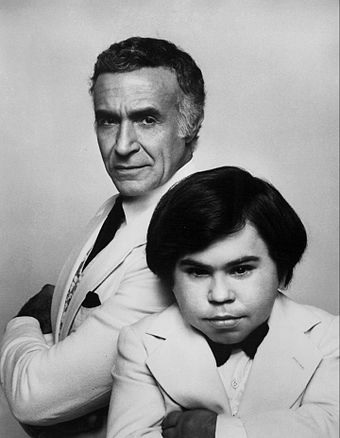

It took me a while to really appreciated Jackie Brown.
I was nineteen and in college when I first watched the movie. A friend rented it and we watched it with the expectation that it would be another Tarantino film that would be full of violence, fast music, and stylish characterizations. And, of course, Jackie Brown did have all three of those. But it was also a far more melancholy film than what we were expecting and compared to something like Kill Bill, Jackie Brown definitely moved at its own deliberate pace. That’s a polite way of saying that, at times, the film seemed slow. It seemed like it took forever for the story to get going and, even once it became clear that Jackie Brown (Pam Grier) and Max Cherry (Robert Forster) were going to steal from Ordell Robbie (Samuel L. Jackson), it still felt like an oddly laid back heist. Robert de Niro, the film’s biggest star, played a guy who seemed to be brain dead. Bridget Fonda brought an interesting chaotic energy to the film but her character was disposed of in an almost off-hand manner. The whole thing just felt off. I appreciated the performances. I appreciated the music on the soundtrack. But I felt like it was one of Tarantino’s weaker films.
As I’ve gotten older, I’ve come to better appreciate Jackie Brown. First released in 1997 and adapted from a novel by Elmore Leonard, Jackie Brown finds Quentin Tarantino at his most contemplative. Indeed, Tarantino wouldn’t direct anything quite as humanistic until he did Once Upon A Time In Hollywood. If the heist seemed rather laid back, that’s because Jackie Brown really isn’t a heist film. It’s a film about aging, starring two icons of 70s exploitation. Robert Forster was 56 when he played bail bondman Max Cherry while Pam Grier was 48 when she was cast as Jackie Brown, the flight attendant turned smuggler. Jackie and Max two middle-aged people faced with a world that doesn’t really make much sense to them anymore. (Obviously, it’s easier for me to understand them now than it was when I was nineteen and I felt like the future was unlimited.) Max bails people out of jail and it’s obvious that he still has a shred of idealism within him. He actually does care about the people he gets out of jail and he’s disgusted by Ordell’s callous attitude towards the people who work for him. Jackie is a flight attendant who, when we first see her, looks like she could have just stepped out of a 1970s airline commercial. Ripping off Ordell isn’t just something that she’s doing for revenge or to protect herself, though there’s certainly an element of both those motivations in her actions. This is also her chance to finally have something for her. Jackie and Max are two lost souls who find each other and wonder where the time is gone. All of those critics who have wondered, over the years, when Quentin Tarantino would make a mature movie about real people with real problems need to rewatch Jackie Brown.
Of course, it’s still a Quentin Tarantino film. And that means we get a lot of scenes of Samuel L. Jackson talking. This is one of Jackson’s best performances. Ordell is definitely a bad guy and most viewers will be eager to see him get his comeuppance but, as played by Jackson, he’s also frequently very funny and definitely charismatic. One can understand how Ordell lures people into his trap. Jackson loves to watch video tapes of women shooting guns. He allows De Niro’s Louis to crash at his place and the scene where Ordell realizes that Louis is thoroughly incompetent is brilliantly acted by both men. And then you have Bridget Fonda, as a force of pure sunny chaos. Jackson, De Niro, and Fonda are definitely a watchable trio, even if the film rightly belongs to Pam Grier and Robert Forster.
The older I get, the more I appreciate Jackie Brown. This is the film where Tarantino revealed that there was more to his artistic vision than just movie references and comic book jokes. This film takes Tarantino’s style and puts it in the real world. It’s Tarantino at his most human.
Today’s scene that I love comes from my favorite Greydon Clark movie, 1990’s The Forbidden Dance!
Yes, this scene is technically a spoiler. It’s got music! It’s got dancing! It has some deeply questionable stereotypes and some obvious virtue signaling! It has that classic line, “We should just boycott their ass!” It’s got Sid Haig! It’s got everything you could ever hope for!
And remember — this film is dedicated to the preservation of the rain forest.
Che Guevara!
By most accounts, Che Guevara epitomized the excesses and the hypocrisies of the extreme Left. He spoke of the class struggle while remaining an elitist himself. He oversaw thousands of executions and advocated for authoritarian rule. In his writings, he frequently revealed himself to be a racist and a misogynist. By arguing that the Russians should be allowed to bring nuclear missiles to Cuba, he brought the world to the brink of destruction. However, he also died relatively young and he looked good on a t-shirt. Decades after he was executed by the Bolivian Army in 1967 (or was it the CIA?), he remains an icon for college students and champagne socialists everywhere.
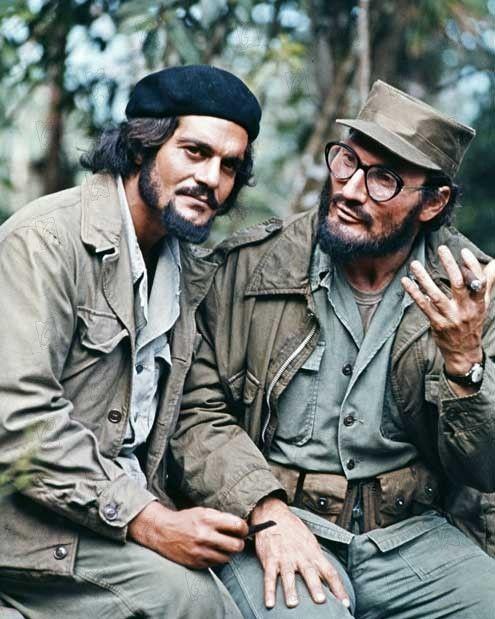
The film about Che! was released in 1969, two years after his death. Starring the Egyptian actor Omar Sharif as Che Guevara, Che! opens with Guevara already a martyr and then quickly gives way to flashbacks. Various actors pretending to be Cuban appear and speak directly to the audience, debating Che Guevara’s legacy. Some describe him as being a violent thug who killed anyone who displeased him. Others describe him as a visionary doctor who sacrificed his comfortable existence for the people. It’s a rather conventional opening and one that hints that Che! is going to try to have it both ways as far as Che’s legacy is concerned. But it’s still effective enough. A montage of soldiers and rebels creates the proper feeling of a society on the verge of collapse.
And then Jack Palance shows up.
Palance first appears creeping his way through the Cuban jungle with a group of soldiers behind him. Palance is chomping on a cigar and he wears the intense look of a man on a mission. My initial reaction was that Palance was playing one of the CIA agents who sent to Cuba to try to assassinate Fidel Castro or to set up the Bay of Pigs invasion. I kept waiting for him to look at the camera and launch into a monologue about why, for the safety of America, he had been dispatched the topple Cuba’s communist government. Imagine my shock when Omar Sharif called Palance, “Fidel.”
Yes, that’s right. Jack Palance plays Fidel Castro! As miscast as the suave Omar Sharif is as Che Guevara, nothing can prepare one for seeing Jack Palance playing Fidel Castro. Needless to say, there is nothing remotely Cuban or even Spanish about Jack Palance. He delivers his lines in his trademark terse Jack Palance voice, without even bothering to try any sort of accent. (And, needless to say, both he and Sharif speak English through the entire film.) Anyone who has ever seen a picture of a young Fidel Castro knows that, while he shared a family resemblance with Justin Trudeau, he looked nothing like Jack Palance. Eventually, Palance puts on a fake beard that makes him look even less like Castro. When one of our narrators mentions that Castro was a great speaker, the film cuts to a scene of Palance spitting out communist slogans with a noted lack of enthusiasm. When Castro takes control of Cuba, Palance looks slightly amused with himself. When Che accused Castro of selling out the revolution, Palance looks bored. It’s a remarkably bad piece of casting. Seeing Palance as Castro feels like seeing John Wayne as Genghis Khan. Thank goodness Hollywood never tried anything that silly, right? Anyway….
As for the rest of the film, it hits all the expected notes. The film was made in the very political year of 1969, a time when the New Left was ascendant and many considered Che Guevara to be a hero. However, since this was a studio production, Che! tries to appeal to both college radicals and their parents by taking a “both sides” approach to Che Guevara. Here’s Che teaching an illiterate farmer how to read. Here’s Che overseeing a bunch of dissidents being executed. Here’s Che getting angry at Castro for not being properly enthusiastic about housing Russian nuclear missiles. Here’s Che talking about a moral revolution. Here’s Che trying to start an unwanted war in Bolivia. Here’s Che talking to Sid Haig — hey, Sid Haig’s in this film!
Like so many mainstream political films of the 60s and today, Che! tries to be political without actually taking any firm positions. One is tempted to say that is the film’s downfall. Of course, the film’s real downfall is casting Jack Palance as Fidel Castro.
There’s no way to recover from that.
“The Don is Dead!” shouts the title of this 1973 film and it’s not lying.
After the powerful and respect leader of the Regalbuto crime family dies, the Mafia’s governing body meets in Las Vegas to debate who should be allowed to take over the family’s operations. Frank Regalbuto (a smoldering Robert Forster) wants to take over the family but it’s agreed that he’s still too young and hot-headed. Instead, control of the family is given Don Angelo DiMorra (Anthony Quinn), an old school Mafia chieftain who everyone agrees is a man of respect. Don DiMorra will serve as a mentor to Frank while Frank’s main enforcers, The Fargo Brothers, will be allowed to operate independently with the understanding that they will still respond if the mob needs them to do a job. Tony Fargo (Forrest) wants to get out of the rackets all together while his older brother, Vince (Al Lettieri), remains loyal to the old ways of doing things.
Frank is not happy with the arrangement but he has other things to worry about. He knows that there’s a traitor in his family. While he and the Fargo brothers work to uncover the man’s identity so that they can take their revenge, Don Angelo falls in love with a Vegas showgirl named Ruby Dunne (Angel Tompkins). However, Ruby is engaged to marry Frank and, when Frank returns from taking care of the traitor, he is tipped off as to what has been happening in his absence. Frank goes crazy, nearly beating Ruby to death. Don Angelo declares war on Frank and the Fargo brothers are forced to decide which side they’ll serve.
In the 1970s, almost every crime film was either a rip-off of The French Connection or The Godfather. The Don Is Dead is unique in that it attempts to rip off both of them at the same time. The film opens French Connection-style with a couple of hoods trying to double-cross Frank during a drug deal, leading to shoot-out. (Keep an eye out for Sid Haig as one of Frank’s men.) The film is full of scenes that are meant to duplicate the gritty feel of The French Connection though, needless to say, none of them are directed with the cinema verité intensity that William Friedkin brought to that classic film. Meanwhile, Anthony Quinn plays a character who is very much reminiscent of Don Vito Corleone, even pausing at one point to tell Frank that “drugs are a dirty business.” The Godfather‘s Abe Vigoda and Al Lettieri show up in supporting roles and Robert Forster gives a performance that owes more than a little to James Caan’s Oscar-nominated turn as Sonny Corleone. (Interestingly enough, both Quinn and Forster were among the many actors considered for roles in The Godfather.)
Unfortunately, the film itself is slowly-paced and never really draws us into the plot. Director Richard Fleischer, who directed a lot of films without ever developing a signature style, brings none of the intensity that William Friedkin brough to The French Connection nor can he duplicate Francis Ford Coppola’s operatic grandeur. The Don is Dead plays out like a particularly violent made-for-TV movie. There’s a lot of talented people in the cast but they’re defeated by thinly drawn characters. Robert Evans often said that Coppola was hired to direct The Godfather because, as an Italian-American, he would bring an authenticity to the material that a non-Italian director would not be able to do. The Don Is Dead would seem to indicate that Evans knew what he was talking about.
Right now, on Tubi, you can find a film that the service says is titled Bundy Reborn. It’s a horror film, one that centers on a medical student named David O’Hara (played by the film’s director, Matthan Harris) who turns into a serial killer. Struggling with the trauma of having witnessed his father (Bill Moseley) murder his younger sister, David kidnaps Melissa Daniels (Lindsay Hightower) and then disappears into the night when Melissa is rescued by Inspector Lorenzo (the one and only Giovanni Lombardo Radice). Nine months later, David comes out of hiding after Melissa gives birth to their child. David once again kidnaps Melissa and kills several other people as well.
It’s pretty much a standard serial killer film. Despite the title, it has little to do with Ted Bundy. In fact, Bundy isn’t even mentioned in the film. David, like Bundy, is a handsome serial killer who went to college. But, whereas Bundy killed because he enjoyed it, David is trying to recreate a family that was destroyed by his equally sociopathic father. There’s a germ of an interesting idea to be found in this film. For all of his crimes and his evil actions, David really is just carrying on the family tradition. Can evil be passed down genetically? Or would David be perfectly normal if he just hasn’t witnessed his father killing his sister? Those are legitimate questions that this film raises and then promptly seems to forget about. The title, however, suggests that David is literally Ted Bundy in a new body and that’s simply not the case here.
Indeed, the film was originally released under a totally different title, The Inflicted. That title worked well with this film’s portrayal of a son who inherited his murderous compulsions from his father. David has been inflicted with the same evil that his father carries in his heart. The Inflicted is an honest title but, at the same time, it’s not a title that’s going to grab the audience. It’s a title that feels a bit too generic. Bundy Reborn, on the other hand, is an acknowledgement of the fact that Ted Bundy is a particularly macabre part of the American pop cultural landscape. As evil and worthy of hate as Ted Bundy may have been, viewers just can’t get enough of him. Ted Bundy never had much of a chance to pursue his political ambitions but today, more people probably know who Ted Bundy was then know that Connecticut Senator Richard Blumenthal lied about serving in Vietnam.
As for the film, the plot is full of contrivances and moments that just don’t make much sense. For horror fans, it is a chance to see several icons in one film, though most of them have extremely small roles. That said, it’s nice to see a usually villainous actor like Sid Haig cast as a kindly psychiatrist. Bill Moseley is properly menacing as David’s father. Doug Bradley seems to be enjoying himself as an FBI agent. As for Giovanni Lombardo Radice, how can you not smile when he’s onscreen? Radice’s Italian accent may seem out of place in a film that is shot and was made in North Texas. But Radice had an undeniable screen presence and he looked good wearing a trenchcoat and holding a gun. He simply was Lorenzo.
On a persona note, this film was shot in my part of the world. Several scenes were shot in my hometown. Several other scenes were filmed in the town where I went to college. When Inspector Lorenzo gets a call about David’s activities, I immediately yelled, “Oh my God, he’s at the Shops at Legacy!” Later, my heart ached when I saw that the hospital that Melissa was taken to was the same hospital that my father was taken to immediately after his car accident back in May. I recognized almost every location in the film as some place that I had been personally and that was definitely kind of exciting.
Finally, let’s all just be happy that Bundy has not been reborn but instead was apparently cremated and dumped out over some anonymous swimming pool somewhere.
 Through the Shattered Lens