Review: Torchwood: Miracle Day Ep. 05 “The Categories of Life”


We’ve now reached the halfway point of the latest season of Torchwood. While the previous four episodes in this season has been quality work there’s been a small, but growing number of the show’s fans who saw the series as not as good season 3, Torchwood: Children of Earth, and that the addition of more American characters and transplanting the team to the US had lessened the show to some degree. I can’t say if these fans are right or not, but this midway point episode goes a long way to really giving Torchwood: Miracle Day the punch it really needed to put the season from just very good to something on the level of season 3.

The team has now split up into three working groups with Gwen headed back to Wales to try and get her ailing father from becoming just another statistic in the so-called “Outflow Camps” being set up by world governments with the help of the pharma-transnational PhiCorp. Her brief reunion with Rhys and her baby girl makes for some fun moments, but it doesn’t last long as Gwen gets right down to the business of “rescuing” her father from the very people tasked to help him. Their plan seemed like something that would never succeed, but seeing the chaos at the newly created “Outflow Camps” really helped in believing that Gwen and Rhys could actually pull off their rescue of her father. It’s not the danger of being discovered which puts her father in greater danger but the “Miracle Day” situation itself which does it and from that development in this episode’s story thread do we get a clue as to the darker nature of the hidden modules being built in these camps.

It’s during the plot thread involving Rex, Esther and Dr. Vera (who had decided earlier in the episode that she had a better chance to help people if she helped Rex with his plans) in California which was the strongest thread in the episode. We get to see first-hand through the eyes of Vera and Rex just how unprepared the government really was even in setting up these PhiCorp “Outflow Camps”. Camps which have been designed to house those who have been given new categories to describe their “Miracle Day” status. Category 1 being those who were braindead but still alive for some reason (including those who have been horrifically mangled in some fashion). Category 2 being people who have survived a fatal event and still alive and conscious (Rex for example) with Category 3 being everyone else who are healthy and no need for extensive care.

It’s during Vera’s tour with an unctuous, inept camp administrator that the true nature of the camps come to light. It serves less as a place to help ease the overcrowding in hospitals, but more of a concentration camp to segregate those labeled Cat 1 and 2 from the general population who make up Cat 3. It’s also in this plot thread that we see for the first time the horrific nature of the secret camp modules that Rhys had heard being called “burn units”. I wasn’t surprised that the writers decided to go all the way with demonstrating the nature of the modules with one of the season’s lead characters with still half a season to go, but it was a major gut-punch and should change how the Torchwood team goes about exposing not just PhiCorp, but those behind it and the true nature and agenda of “Miracle Day”.

The third plot thread in this episode was the weakest of the three as we see Capt. Jack continue in his attempt to understand Oswald Danes and his role in whats going on, but also use him to try and expose PhiCorp.  I’ll be the first to admit that I was wrong in thinking Pullman’s performance as Danes would smooth itself out, but with five episodes in the season already in the can his character (as interesting as this character still remains to be) just looks and behaves like a bad caricature of an unhinged villain. Maybe Pullman will pull back on the scenery-chewing long enough to actually appear as the dangerous, albeit tortured, foil for the team, but I’m losing hope. This thread does show that whatever sympathy Jack may have had for Danes just went out the window as the very person he’s trying to use has just set himself up to be the face of “Miracle Day” and the cult growing around his personality.

“The Categories of Life” was still the best episode to date for this new season of Torchwood despite the weakness that is Oswald Danes. It explored the subject matter that’s dear to many (health care in the country or lack thereof) and themes of how in times of crisis people will flock to whoever is speaking the loudest (even if the message is one that is not for the benefit of people) and give those in power the blank check to do whatever needs to be done to keep the masses a false sense of hope and security.

Torchwood: Miracle Day still hasn’t reached the epic greatness that was season 3’s Torchwood: Children of Earth, but with five more episodes to go it’s making a strong push to try and equal it. Whether it does or spectacularly fail in the attempt should make the second half of the season worth watching.

1st Episode: “The New World”

2nd Episode: “Rendition”

3rd Episode: “Dead of Night”

4th Episode: “Escape to L.A.”

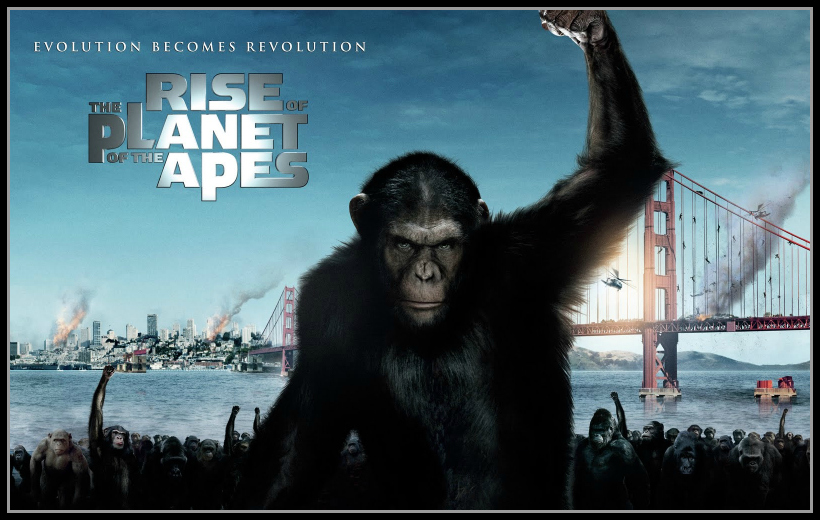
Review: Rise of the Planet of the Apes (dir. by Rupert Wyatt)


In 2001, Tim Burton released his highly-anticipated remake of the classic 1968 film adaptation of Pierre Boulle’s sci-fi novel which would ultimately be called, Planet of the Apes. Fans of the series were excited to see what idiosyncrasies Burton would add to the series which had petered out decades before. What people were hoping for and what they ended up getting were polar opposites. The film in of itself wasn’t an awful film, but it wasn’t a good one and many saw it as average at best and bad at it’s worst. Any plans to sequelize this remake fell by the wayside. It took almost a decade until a decision was made to continue the series in a different direction.

British filmmaker and writer Rupert Wyatt would be given the task to rejuvenate for a second time the Planet of the Apes franchise. He would be working with a screenplay written by Rick Jaffa and Amanda Silver which would take the 4th film in the series, Conquest of the Planet of the Apes, and rework it for a much more current setting. The film was to be called Rise of the Apes and would star James Franco, John Lithgow and Frieda Pinto. As time went by the film would be renamed Rise of the Planet of the Apes. Despite having such an awkward sounding titles the film would end up to be one of the best films of the summer of 2011, if not one of the best of the year.

The film begins with a harrowing sequence in the jungles of Central Africa as poachers capture several chimpanzees to be sold as medical test subjects. Some of these chimps end up at a genetics research lab outside of San Francisco where one Will Rodman (James Franco) is working to find a cure to Alzheimer. He sees the encouraging result in one chimp he has named “Bright Eyes” (due to the side-effect to the test subject’s eyes taking on green flecks to their irises) and pushes for the next step and that’s human testing. The ensuing pitch to the company’s board of directors doesn’t go as planned as Bright Eyes goes on a violent rampage leading to her being put down and the project shelved. Her reaction they soon find out has less to do with the breakthrough treatment and more of a maternal instinct to protect her baby she secretly gave birth to. Will takes the baby chimp home in secret temporarily, but soon becomes attached to it as does his Alzheimer stricken father (John Lithgow) who names it Caesar.

The first third of the film sees Caesar showing an inherited hyper-intelligence from his genetically-treated mother. Caesar becomes an integral part of the Rodman household even to the point that Will has taught Caesar to call him father. It’s a family dynamic which would help mold Caesar into something more than just a wild animal. He begins to show signs of humanity which would become bedrock of his decision later in the film to turn become the revolutionary that the film has been leading up to the moment Caesar gets sent to a primate sanctuary after a violent encounter with a boorish neighbor to end the first reel of the film.

It’s during the second reel which sees Caesar realize that while he may as smart (maybe even smarter) than the humans he would never be a part of that world. In the sanctuary he learns that his very uniqueness has set him apart from the other primates. He sees the abuse inflicted on his fellow primates and longing to be back to his “home” with Will turns to a focus need to free himself and his people. He does this in the only fashion he knows would succeed. With the help from a couple canisters containing the aerosol-based treatment which increased his mother’s intelligence, Caesar frees everyone from the sanctuary and takes the fight to the humans as they make for the wilds of the Muir Redwood Forest north of San Francisco.

Rise of the Planet of the Apes might look to be an action-packed film from how the trailers and tv spots has been pushing the film, but it actually only has three major action sequences and they’re integral to each third of the film in helping advance the story. These were not action for the sake of having action on the screen. Writers Jaffa and Silver do a great job in figuring out that the real strength of the film would be Caesar’s journey from precocious ape child, rebellious teen and then his final unveiling as the leader of a people who have shaken off the shackles of medical research and their forced sacrifice for the greater good.

The film was never about the humans played by Franco, Pinto and Lithgow. It was always about Caesar and the film hinged on the audience believing Caesar as a character. In that regard, the work by WETA Digital should be commended as should Andy Serkis’ performance as Caesar. Serkis’ motion capture performance goes beyond just mimicking the movement of an ape. His own acting as Caesar comes through in even in the digital form of Caesar. In fact, the film never had a real ape used during filming. From Caesar right up to the scarred ape Koba every ape in the film was the work of WETA Digital’s furthering the motion capture work they had done in Peter Jackson’s Lord of the Rings trilogy and James Cameron’s Avatar. Never once during the two hour running time of the film did I ever not believe I was watching apes on the screen. Every emotion Caesar goes through during the film was able to show through facial expressions and body language.

It’s the strength of Serkis’ mo-cap work and the overall execution of Caesar’s character by WETA which also highlighted the one major weakness of the film through it’s underdeveloped human characters. Whether it was Franco’s benevolent Dr. Frankenstein-like Will Rodman right up to his greedy, amoral boss in the company (played by David Oyelowo), all the human’s in the film were very one-note and mostly served to propel Caesar’s story forward. At times, Franco actually seemed to be just as he was during his hosting gig during the Academy Awards earlier in the year. These were not bad performances by the actors involved. They were just there and part of it was due to how underwritten their characters were.

To help balance out this flaw in the film’s non-ape character would be the beautiful work by the film’s cinematographer in Andrew Lesnie. He has always been well-known for beautiful, majestic panoramic shot of the world as he had demonstrated in Jackson’s Lord of the Rings trilogy. He does the same for this film as we see some beautiful shots of the Muir Redwood forest, of San Francisco’s skyline and in the climactic battle on the Golden Gate Bridge. The city of San Francisco and it’s iconic red-hued bridge and the surrounding area has never been shot as gorgeous as Lesnie has done with his DP work on this film.

Even with some of the characters in the film being underwritten the film succeeds through Rupert Wyatt’s direction which keeps the film moving efficiently, but also bringing out the emotional content of the film’s script in an organic way. Film has always been about manipulating the audience’s  emotions. It’s when a director does so and make it seem normal is when such manipulation doesn’t come through for those watching to feel. Then add to this Serkis’ exceptional work as Caesar with some major digital artistry from the folks over at WETA Digital and Rise of the Planet of the Apes does rise above it’s B-movie foundation into something that should live beyond the summer and for years to come.

Rise of the Planet of the Apes does a great job and a long way towards wiping off the bad taste left behind by Tim Burton’s failed attempt to remake the franchise. We didn’t need something exotic and idiosyncratic to give the franchise a fresh breath of life. It seems all it needed was a very good story, some exceptional work from Andy Serkis and WETA Digital and a filmmaker knowing how to tell the story in a natural fashion and not fall into the temptation to go into shock and awe to tell it. Rise of the Planet of the Apes is a film that could stand-alone, but it does something that many trying to create film franchises never seem to do right: it makes people want to see what happens next in the lives of Caesar and his apes.

Trailer: The Darkest Hour (Official)


Timur Bekmambetov is not the director of this upcoming alien invasion film The Darkest Hour. The director is actually one Chris Gorak, but the trailer is definitely pushing Bekmambetov’s name as if he is the director. Then again I think the film does seem to have Bekmambetov’s stylistic flourishes written all over it.

The Darkest Hour looks to be set in Russia from beginning to end as we follow a group of young Americans on vacation and hitting up all the party night spots in Moscow. This makes for an interesting premise in that we see an alien invasion from a wholly different perspective. It’s an alien invasion seen through the Russian perspective even if half the cast are American tourists.

I hadn’t heard much about this film until now, but after seeing the trailer I’m definitely going to run out and see it when it comes out.

The Darkest Hour is set for a December 23, 2011 release date.

Review: Torchwood: Miracle Day Ep. 04 “Escape to L.A.”


Torchwood: Miracle Day has been very casual in revealing the cause and ultimate agenda behind the so-called “Miracle Day” event which has turned everyone on the planet Earth with a unique form of immortality. There’s been speculation from new and old fans alike about the cause and reason. Some think it’s aliens from the future. Some believe it to be a government experiment that went terribly wrong. One thing the previous and third episode in this new season did dole out was that a major pharmaceutical company, PhiCorp, seemed to have been aware of the arrival of “Miracle Day” and planned accordingly even to the point of infiltrating governmental agencies to deflect suspicion from them. Which brings us to the fourth and latest episode: “Escape to L.A.”.

This fourth episode sees the latest incarnation of the Torchwood team arriving in Los Angeles with a plan to infiltrate one of PhiCorp’s many headquarters around the country and steal a server which may hold the information they need to expose the company to the world and finally get down to the bottom of what “Miracle Day” truly is. To say that PhiCorp has become more than just an ovelry opportunistic megacorporation after this episode would be an understatement. This episode had everything for pretty much all spectrum of Torchwood fans. It had some very emotional and quieter moments for some of the main characters (such as Esther Drummond and Rex Matheson). For those wanting a bit more action this episode had it as well as the team’s plans to infiltrate the PhiCorp server room runs across a few stumbling blocks in the form of a creepy hired assassin in the form of one C. Thomas Howell. There’s even a few lighter and funnier moments involving the team’s search for a base of operations while in L.A. with Rex sarcasticly commenting that Jack was trying to turn everyone he meets gay with Jack’s retort admitting to just such.

“Escape to L.A.” also continues to delve into the growing role of Oswald Danes (Bill Pullman still hamming it up as the twitchy, but smarter than he looks pedophile-murderer) in this new season’s scheme of things. While the last episode threw off the cloak of repentance Danes had shown on live TV this latest episode shows Danes as quite devious in trying to keep himself in what he thinks is the only way to protect himself from those who still thinks he owes society for what he had done. The interesting thing about what Danes does in this episode was that it put a voice into one of the themes being explore in this season. Danes sees those still living when they should be dead just like him being herded into places (abandoned hospitals and camps being built by PhiCorp) to be away from those still living in truth. It was interesting that he would be the voice for this theme and a counter to the fearmongering of a Tea Party politico in the form of Mayor Ellis Hartley Monroe (Mare Winningham). For once in this series, so far, I think many wouldn’t be too far off in saying they were rooting for Danes. He was the lesser of two evils in this episode even though it looks like it will be the catalyst which will propel Pullman’s character into the cult leader the season’s marketing had been hinting at.

While the episode wasn’t as good as episode 3’s “Dead of Night” it was still a very strong episode. This was an episode that actually added more pieces to the mystery of “Miracle Day” and just how far-ranging PhiCorp’s (and what could be others as hinted at cryptically in the episode’s final moments) role as the main antagonist for this new season. From how the episode ended for the Torchwood team it looks like we might see the team back on British soil as Gwen must now deal with her father’s safety.

The season continues to improve with each new episode and it’s a good thing this episode gave out more than just dribbles of clues. With only 6 more episodes to go it was high time the series went into the next gear as it races towards the answer to the question of “What is Miracle Day?”.

1st  Episode: “The New World”

2nd Episode: “Rendition”

3rd Episode: “Dead of Night”

Review: Torchwood: Miracle Day Ep. 03 “Dead of Night”


Torchwood: Miracle Day has now reached it’s third episode and we’re beginning to see a few more clues as to the truth about the so-called “Miracle Day” event which automatically made everyone on the planet Earth immortal (with the exception of the planet’s previous lone immortal Capt. Jack Harkness who became mortal instead). The series has been a bit slow about the reveals and dropping of clues and with only 10-episodes to this season it’s going to be interesting to see how Davies and his writers will tie things up when the tenth episode rolls around.

“Dead of Night” is the name of this latest episode and it’s actually quite an apropo title. The episode happens mostly at night and it’s during the darkness of night that we get a glimpse at some of the darker sides of some of the characters on the show. First, we see the team on the run after the bungled attempt by CIA deputy director Friedkin (Wayne Knight) to apprehend Matheson and the remaining Torchwood team at Dulles International. It’s interesting to notice how Rex and his fellow agent in Esther Drummond seemed out of sorts realizing that they’ve been betrayed by the very agency they work for (and maybe the very country they serve loyally) while both Jack and Gwen seem to take it all in stride as if they’ve been there and done that. Some have mentioned that the show doesn’t seem to be classic Torchwood and I can see where they’re coming from. The additions of the American characters to the team and the transplanting to US soil has created a different tone to the show which seem to be harder for the veteran fans to accept at the moment.

It’s definitely not the writing or the acting which has given this show an almost dual nature and feel. Tonight’s episode was written by Jane Espenson (who helped write the excellent sixth episode of Game of Thrones, “A Golden Crown”) and the flow of the show seemed to have improved for the previous one. Most of the set-up’s been completed and now the team is up and running once again with a new problem to solve. It’s that very problem which drives this episode as Jack and his new team begin to uncover one of the major clues that goes a long way into explaining the true nature of “Miracle Day”. I do think that finding out a major pharmaceutical conglomerate might have had a hand or knew in advance about “Miracle Day” wasn’t too much of a surprise. The way the episode paints PhiCorp and their plans for their wonder drug seems like the bad dream for everyone trying to overhaul the nation’s health care system for the better.

The show further explores Capt. Jack Harkness’ current situation as he begins to accept the fact that he’s finally dying (aging being the correct term people would use, but not for one so used to being immortal) and he doesn’t do as well as some would want him to. His emotional and drunken late-night call to Gwen after a one-night’s dalliance with a stranger picked up at a club brings back some emotional baggage and the sexual tension between the two. There’s an almost air of desperation in John Barrowman’s performance in this scene which should show new fans to the show that the series won’t be all about action and intrigue. There’s a reason the series has cultivated such a rabid fanbase and it’s been the performance by the actors, first and foremost. Eve Myles performance as Gwen on the receiving end of Harkness’ call were at times empathic, sad and frustrated as if she thought this was something the two were past but now have been brought back to the surface.

The other major performance of the night belongs to Bill Pullman’s pedophile murderer, Oswald Danes. His character still continues to be the show’s cipher. We’re still not sure what to think of Danes. He’s being made out to be a sympathetic character in one moment then a devious manipulator trying to find whatever advantage he could get his hands on to keep himself safe. We finally do get an idea who Danes is during a confrontation between him and Harkness and it spoke volumes at just how banal evil really is and it’s current face happens to be Bill Pullman’s. It’s going to be interesting to see how Danes, PhiCorp and “Miracle Day” will tie together once this season gets deeper into it’s main story.

“Dead of Night” was better than the last episode but still shows some growing pains as the writers are still coping with some of the major changes to the show’s usual tone. While some long-time fans of the show seem to not be as accepting of these changes I think it’s these changes that show’s growth in the series and such things do take time to find their footing. I expect more growing pains in the coming episodes, but I do think that this episode goes a long way into  establishing the melding of old Torchwood with the new Torchwood.

1st episode: “The New World”

2nd episode: “Rendition”

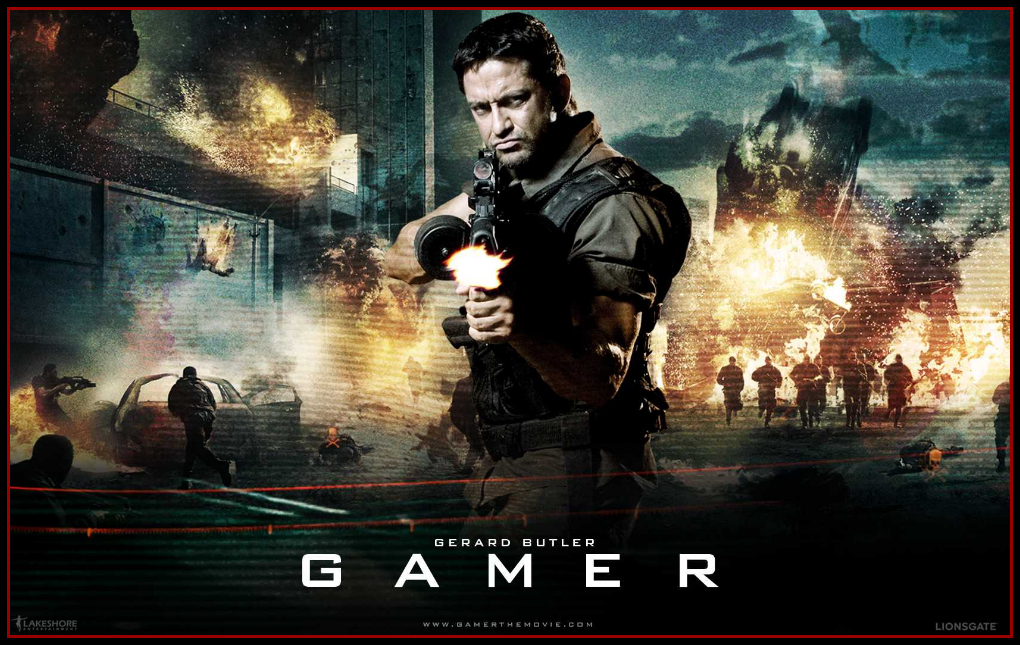
Review: Gamer (dir. by Neveldine/Taylor)


No one will ever mistake the writer-director duo of Neveldine/Taylor (Mark Neveldine and Brian Taylor) as the next Coen Brothers, but they definitely have made their mark in creating entertaining films which some have called exploitative, pandering to the lowest common denominator and exercises in excess. Maybe these critics are right, but they also seem to view the films by these two filmmakers through the narrow-minded lens of their elistist and so-called cineaste sensibilities. They won’t be the next Coen Brothers but they’re way ahead of other so-called filmmaker duos such as The Spierig Brothers (Undead and the pretentious and awful Daybreakers) or The Strause Brothers (AvP: Requiem and the awful Skyline). They came onto the scene with their cult classic action thrillers Crank and it’s sequel, Crank: High Voltage.

Their third film took the gaming influences so inherent in their first two films (which for all intents and purpose were video games that happened to be film) and went the next step. Gamer is all about a near-future world where two games with on-line social media foundations have become the rage of the entertainment world. One is a game called “Society” that looks to be the nightmare evolution of privacy advocates everywhere to the on-line virtual world Second Life and The Sims. It is the other game in this film which makes up the foundation of the film’s plot. “Slayers” takes the ultra-popular multiplayer on-line experiences of games such as Call of Duty and HALO to the next level by allowing gamers to actually control real people (inmates sentenced to death) to act as their avatars in a real-life battlefield arena with real weapons and real deaths.

These games which have become the obsession of hundreds of millions of people worldwide are the brainchild of the film’s antagonist. Michael C. Hall plays the creator of these games and his performance looks to combine the sociopathic charm of his Dexter character with that of Steve Jobs is the latter was openly honest about his douchebag tendencies. Playing his opposite is the character of Kable who happens to be the reigning champion of the game Slayers and who knows a secret that could tear down the billion-dollar empire created by Castle. Gerard Butler plays the desperate but very capable inmate Kable who just wants to survive past the final match and earn his freedom thus return to his wife and young daughter on the outside.

Gamer posits the question of how far are we willing to go to experience realism in our games and entertainment. With the game Society people pay to be able to control other people in a social setting (albeit in a controlled area). These so-called avatars will do anything and everything their real-life controllers tell them to do. In the film these avatars get paid to become virtual slaves and with most people signing up for the job being the socially desperate. Their situation is not so dissimilar from the condemned inmates who populate the game Slayers. The film hits the audience with a sledgehammer that these virtual entertainments have become popular worldwide because people have stopped looking at these “volunteers” as real people. Morality has been replaced by the need for instant gratification by way of these virtual on-line systems.

The film doesn’t make any apologies for the heavyhanded delivery of it’s message and also doesn’t skimp on the entertainment side of the equation. Neveldine/Taylor have shown that they have a certain flair for creating visual chaos and action on the screen. Their unique visual style does look like something out of a video game especially those from hyperrealistic shooters such as Call of Duty and its ilk. The filmmakers have always accomplished the high-quality visual look of their films despite the low to modest budget given to them by the studios they’re working for. Gamer is no exception and the film benefits from the decision by these two filmmakers to continue working with the Red One digital cameras thus allowing them to add in the visual effects right into the shot scenes the very same day of shooting.

It’s this very style of hi-tech guerrilla filmmaking which makes Neveldine/Taylor this current era’s Cormans. Unlike most low-budget filmmakers they don’t use the size of their budget to dictate how their films turn out visually, aurally and narratively. The first two this film succeeds in ways that makes an audience think the film was higher budgeted than it really was. The third would depend on the viewer whether the film succeeds or not. For those who seem intent on viewing every film as if they were made to be worthy of high awards and accolades would probably dismiss and hate this piece of exploitation cinema. Gamer succeeds in a narrative sense because it delivers on the promise of telling a story about a world where free will has been seconded to control in the need of a population in search of a the next virtual playground. It’s a heady premise that has been explored in past films such as the Matrix Trilogy and another film similar to this one which came out weeks later in Surrogates.

Gamer doesn’t have the philosophical and existential sermoning in combination with futuristic action sequences as the Wachowski Brothers’ trilogy, but it does have the same visceral action DNa as those three films and also more entertaining than the Bruce Willis vehicle Surrogates. This film will appeal to the very people who it condemns as sheep to the rising tide of on-line control in entertainment, but then that’s what all exploitation films tend to do best. Cater to the very people it uses as examples of what’s wrong in society and build an entertaining film around them and what they represent.

The film’s cast revolves around Gerard Butler and Michael C. Hall and the roles they play. Whether its Amber Valletta playing Kable’s desperate wife who has sold herself to become a controllable avatar in Society to try and earn enough to get her young daughter back or to Logan Lerman playing the role of Simon the gamer who controls Kable during the Slayer matches. They all do enough with their roles to keep their characters from becoming less than one-notes. Again, for some having a film with characters that are quite basic and one-note might make for a bad film, but when put into context of the story being told they’re quite good and needed to become motivators for Butler’s character.

In the end, Neveldine/Taylor have made a modern day exploitation and grindhouse film in Gamer without having to resort to the visual tricks used in the Rodriguez/Tarantino grindhouse homage film Grindhouse. A film doesn’t need to have film scratches, overexposed film stock, scratchy audio track or missing film reels to be grindhouse. It just have to espouse the very nature of the films which made up the kind of films which became prime example of grindhouse/exploitation cinema. Gamer won’t win any awards, but I suspect that more people who saw it were entertained by it’s blatant, in-your-face entertainment than would normally admit to it. It’s a film that has cult status and guilty pleasure written all over it.

Plus, this film is definitely worth at least a curiosity viewing if just to see the musical number performed by Michael C. Hall at the climactic sequence near the end of the film. I don’t think any film has ever combined gratuitous violence, musical dance numbers using bloodied death row inmates and Michael C. Hall singing Frank Sinatra’s “Ive Got You Under My Skin“. That sequence alone is worth a rental or Netflix Instant streaming.