(The opinions in this review are mine and mine alone. They reflect the feelings of Lisa Marie Bowman and not the feelings of any other editor on this site. To prove that the opinions below are solely mine, check out this very positive review of Avatar that was posted on this very site last December.)

In case you didn’t already know this from my previous reviews, I’m going to confess something here. I hated Avatar. It was probably my least favorite film of 2009. How much did I hate Avatar? Well, I didn’t care much for The Hurt Locker either but I still cheered when it won best picture because it meant that Avatar didn’t.
Most of my friends and family loved Avatar and, I’m proud to say, that none of them have allowed our difference of opinion to effect our relationship. Indeed, most Avatar fans have been very tolerant of my dissenting views. However, there’s always an exception. From the 1st time I ever openly admitted to disliking Avatar, I have had to deal with a small but vocal group of people who not only disagree but apparently feel that I’ve committed a crime against humanity. So, why bring it up now? Because on Thursday, Avatar is going to be released on DVD and Blu-ray. In honor of that event, here are 10 reason why I personally hated Avatar.
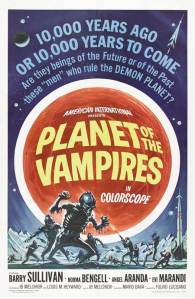
1) Ironically enough, most people who love Avatar will probably agree with the majority of my criticisms. They’ll argue that yes, the story is predictable and yes, James Cameron is heavy-handed as both a writer and a director but none of that matters because of all the brilliant visual effects. They’ll argue that Cameron made a whole different world, Pandora, come to life. To a certain extent, they’re right. Cameron does manage to make Pandora believable and wow, Pandora certainly turns out to be a boring planet. Seriously, does that jungle cover the entire freaking planet? However, regardless of my personal feelings about Pandora, James Cameron is hardly the 1st director to make an alien world believable. Peter Jackson did it with his Lord of the Rings trilogy and the same can, arguably, be said of the Narnia films. Even earlier, Mario Bava did it with Planet of the Vampires and he did it with a lot less money. Of course, none of these films were in 3-D but so what? Just because the mundane appears to be inches in front of your nose doesn’t make it any less mundane.
2) Speaking of mundane, wouldn’t you be let down if, when you first met the members of a totally alien race, they all turned out to be a bunch of movie stereotypes? The Na’vi appear to have developed their entire culture as the result of a steady diet of Hollywood westerns, New Age self-help books, and some 16 year-old’s half-assed understanding of what it means to be a Pagan. I remember when I first saw Avatar, it was impossible for me not to compare it unfavorably with District 9, a film that addressed many of the same themes and issues as Avatar but did it with a much lower budget and a much more intelligent script. This was especially evident when one compares Avatar’s Na’vi with District 9’s prawns. While the prawns were believable as both individual characters and as representatives of a totally alien race, the Na’vi are essentially the reflections of James Cameron’s sophomoric noble savage fantasies.
3) District 9 wasn’t the only great science fiction film to come out in 2009. There was also Moon, which featured a great performance by Sam Rockwell and excellent direction from Duncan Jones. When /Film asked Jones for his opinion of Avatar, Jones replied, “…at which point in the film did you have any doubt what was going to happen next?” It’s a good question.
In all honesty, I’m a horror girl. I haven’t seen much science fiction and therefore, I’m not as well acquainted with the genre’s clichés as I am with horror. However, I can still say that, at no point, did anything that happened in Avatar take me by surprise.
Of course, some of my favorite movies were (and are) very predictable. Georges Polti argued that there were really only 36 basic plots available to use in fiction so its understandable that you’re going to come across the same one used several times. However, a predictable plot can be forgiven if maybe that plot features at least a few interesting characters or maybe an occasional unexpected line of dialogue. Avatar, however, can’t even manage this. Our hero is an impulsive man of action. The villains are all evil because … well, they just are. In the manner of most oppressed races in American film, the Na’vi are noble savages who require a white guy to come save them. The only lines of dialogue that I remember are the ones that made me roll my eyes. I’m talking about stuff like a bunch of 22nd century marines being greeted with “You’re not in Kansas anymore.” Well, that and “I see you,” which was apparently included in the script so that it could serve as the title of a syrupy theme song.
4) Strangely enough, even though the movie took absolutely no narrative risks, it was still full of plot holes and things that just didn’t make much sense.
For instance, why does Quaritich promise to give Jake back his legs (“your real ones”)? I mean, does Quaritich have them sitting in a freezer somewhere?
As part of his deal with Quaritich, Jake agrees to make videos about the Na’vi. Oddly enough, it appears that he’s still making the videos even after he turns against Quaritich and you have to wonder exactly why. Also, Jake records many of these videos in an isolated, apparently one-room outpost occupied by him and two other scientists yet the scientists are later shocked and outraged when told that Jake was making the videos. Okay, what did they think he was doing all that time? Were they just not listening to what he was saying?
What exactly was the backstory of Sigourney Weaver’s character and when exactly did she join Sully in the Na’vi camp? And why were the Na’vi willing to let her into their tribe when they would only grudgingly accepted Sully even after the Goddess selected him? I mean, if Weaver already had such a great relationship with the Na’vi, it seems like she could have saved a lot of time by just taking Sully straight to them. (Editor’s Note: According to the comments below, this issue actually was addressed in the film. — LMB)
Sully, after the final battle, decides to stay on Pandora and he might as well since the Tree of Souls (good God!) transferred his soul into his Na’vi body. But what’s in it for Max and Norm? We seem them at the end (though really, Norm should be dead) standing there pointing guns at all the humans that are leaving. Norm, at least, could still probably hang out in his avatar but what about Max? Why is Max, who has had nothing to do with Na’vi, so quick to join the revolution?
I’m sure a lot of this is because scenes were edited out and I know that Cameron has a reputation for reinserting those scenes once his movies come out on DVD and blu-ray. Well, more power to him.
5) The film suffers from a really bad case of the white man’s burden disease. This is another one of those films where a caucasian character befriends an oppressed minority and, with remarkably little dissent, manages to appoint himself as the leader of that minority. It’s a fantasy, one in which members of the bourgeoisie (like James Cameron) can live out their childhood fantasies of being outlaws without having to worry about (unlike actual “outlaws,”) being punished for taking their stand.
Once again, it’s hard not to compare Avatar with District 9. Both of them feature lead characters who are transformed into aliens. The difference is that, with the exception of one brief scene, Jake Sully accomplishes the transformation rather easily and quickly becomes the best Na’vi there is while in District 9, poor Sharlto Copley is terrified by the process and, even though it does lead to him understanding the prawns (and ironically, learning how to show a little humanity), the movie never pretends that Copley isn’t losing his own individuality in the process of transforming.

6) The lead character is named Jake Sully. Did James Cameron get frustrated and just use a Random Generic Movie Hero Name Generator to come up with that? I wonder if Nick Sully was Cameron’s 2nd choice. It’s not that there’s anything wrong with either name. It’s just that it feels so generic. Of course, the leader character is going to be named Jake and, of course, he’s not going to be an intellectual and, of course, Sigourney Weaver’s going to spend the whole movie making sarcastic comments about how stupid he is. Speaking of which…
7) Sigourney plays Dr. Grace Augustine. Her character and her performance are typical of a rather annoying Hollywood tradition, that of portraying any “strong” female as a total and complete bitch. If you want the audience to know they’re supposed to take a woman seriously, have that woman spend the entire movie pissed off about something, as if the only way a woman can be strong is by sacrificing anything that might make her unique. Now, there’s a lot I could say about why, from a cultural perspective, American movies often seem to be so conflicted about how to portray any woman who is neither an Eve nor a Lillith. But in the case of Avatar, its hard not to feel that it comes down to screenwriter Cameron’s inability to make any of his characters interesting unless something nearby is exploding.
8 ) And while we’re on the subject of misunderstood women…okay, let’s say you discover a planet and this planet is a lush, beautiful paradise. Why the Hell would you then call it Pandora? Yes, I understand that newly discovered planets are usually named after mythological figures. But there’s still usually some sort of vague logic behind the names. For instance, Mars was named after the God of War because of its red hue. Venus was often considered to be the most beautiful star in the sky. Mercury has the fastest orbit. Jupiter’s the biggest planet. Pluto (before it got downgraded) was considered the darkest and coldest of the planets. Pandora, however, was the woman who opened up the jar that released everything terrible, evil, and destructive into the world. Why would anyone name a planet after her? It’s possible, of course, that all the good names were taken. Of course, it’s also possible that this is just another example of how thuddingly obvious Avatar is in its symbolism and subtext.
9) Speaking of obvious, what about the villain played by Stephen Lang? More specifically, what about that accent? It’s true that Cameron doesn’t exactly encourage his villains to be subtle. Just check out Billy Zane in Titanic. Zane, however, at least appeared to be having a little fun at his director’s expense. He, alone among the cast, seemed to realize that Titanic was a silly melodrama and so he gave something of a silly performance. It’s no great secret that it’s often more important to have a good villain than to have a good hero. A good villain usually has some sort of motivation beyond just being the villain. This is something that Cameron has never seemed to be able to grasp. Whenever I see a military figure show up in a James Cameron movie, I get the same feeling that I get whenever a preacher shows up in a Stephen King novel. Automatically I know that they’re going to turn out to be evil and I find myself dreading having to even waste the time with the “shocking” discovery of that evil.
10) Perhaps most importantly, this is a movie that wants to preach peace but celebrate war. Avatar contains all the trendy environmental messages that you’d expect from a Hollywood film but — even though director Cameron seems to be in a state of denial about it — the film’s heart is with its villanous soldiers. Much as how Titanic, for all the rhetoric about the passengers in third class, was really only interested in portraying the lives (and deaths) of those in first class, Avatar spends a lot of time talking about trees but is much more interested in blowing them up with the destruction of the Home Tree serving as the money shot.
To be honest, I don’t mind a little hypocrisy when it comes to movies. Most exploitation films celebrate hypocrisy. The filmmakers knew it and, for the most part, the audiences knew it. The fact that a movie like Child Bride could be advertised as “an important movie every parent must see!” became something of a shared joke between the filmmaker and his audience. Rather than being hypocritical, the exploitation filmmaker is simply inviting his audience to join in a conspiracy against the forces of dullness.

Unfortunately, Avatar is not an exploitation film. If Avatar was simply a B-movie, none of the my previous complaints would matter. They would add to the film’s rogue charm. Avatar, however, is too expensive to be considered an exploitation film. And James Cameron, as he proved when he went ballistic over Kenneth Turan’s negative review of Titanic and as he has continued to prove with his recent comments regarding global warming, does not have the sensibility of a B-movie maker. Arguably, he once did. This is a man who, after all, did the special effects for Galaxy of Terror and made his directorial debut with Piranha II. The Terminator was a great B-movie, right down to the accusations of plagiarism from Harlan Ellison. However, as he’s become the most financially succesful director in history, Cameron has lost that B-movie sensibility.
In other words, James Cameron takes himself seriously now and that, ultimately, is the main reason I hated Avatar. It just takes itself too damn seriously.
Yes, I’ve read quite a few favorable reviews that have argued that Avatar‘s sole purpose is to entertain and that people like me who occasionally expect unique characters and an interesting story should just lie back and enjoy it. I’ve seen the term “popcorn epic” used in quite a few reviews.
I’m sorry but I’m not buying it. If Avatar was truly setting out to be a “popcorn epic,” than I’d be a lot more willing to cut it some slack. However, when the script contains lines about how on Earth, humans have “destroyed all the green,” and when the villains are accused of launching a “shock and awe” campaign, it’s ludicrous to then argue that Avatar isn’t setting itself up to be judged by a higher standard.
It becomes hard to escape the fact that Cameron, regardless of how well he handles the special effects, has essentially made a stupid movie about deep issues.
As I said before, the majority of the people I know love Avatar. I don’t hold it against them or think any less of them because, ultimately, movies are a subjective experience. Whether or not a movie is good has less to do with the actual movie and more to do with the person watching it.
It would be nice to have the same courtesy extended to me . Since I first revealed my opinion of Avatar on a non-Avatar related message board, I have found myself frequently attacked by little fanboys who apparently cannot handle the fact that one human being didn’t enjoy Avatar. I’ve been told that, as a female, I can’t be expected to understand Avatar. I’ve been accused of being “unimaginative,” “a snob,” “a bitch,” and my personal favorite “the type of cunt who cried at the end of the Blind Side.”
I realize the risk I’m taking by openly admitting my dislike of Avatar but then again, movies are supposed to inspire conversation and not just pavlovian agreement. So, in conclusion, I’ll just admit that yes, I am female and yes, I did cry at the end of The Blind Side, and yes, I hated Avatar.

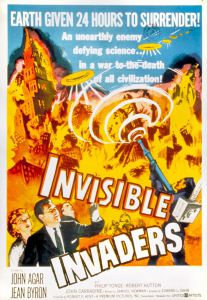
 Army Major Bruce Jay is sent to whisk Penner and company to a secret atomic lab. There, the scientists work diligently to figure out a way to stop the zombie invasion. It’s learned that by disrupting the alien’s molecular structure with high pitched sound waves, they leave their host bodies and die. Building a sonic ray gun (and how they built it so fast is beyond me), they successfully knock off a horde of the marauding monsters. Our heroes have the zombie cure and save the world from certain death.
 Despite it all, I still liked INVISIBLE INVADERS. As a connoisseur of bad movies, I thought it was fun in a dopey kind of way. If you’re a fan of stuff like PLAN 9 FROM OUTER SPACE, TEENAGERS FROM OUTER SPACE, BEAST OF YUCCA FLATS, or a die-hard John Agar fan, you’ll enjoy INVISIBLE INVADERS. I did (guess there’s just no accounting for good taste!)


 Stand Alone Complex lies much closer to the root of my music series, because some of the key issues it tackles have since arisen online in the real world. Everyone is well familiar with the use of V for Vendetta-styled Guy Fawkes masks in protests originating from the internet, but there is a decent chance you have also caught a glimpse of an odd blue smiley face among the rabble. The Laughing Man image originates from Stand Alone Complex, where it functions as a mask employed anonymously by individuals taking public action independently of each other. At first, an advocate for social justice uses it to disguise himself while committing a ‘terrorist’ act, but the image quickly overreaches his motives. Others commit unrelated political sabotage under the guise. Corporations employ it to discredit their competitors. Pranksters use it as a sort of meme, forming the shape with chairs on a rooftop and cutting it into a field as a crop circle, for instance. The image has no concrete meaning, and everyone who uses it essentially ‘stands alone’, but the public perceive the Laughing Man as a single individual.
 Ghost in the Shell has remained a uniquely relevant franchise in science fiction because it got so many ideas right. In 1989, at a time when internet was still a novelty of college libraries, the manga offered a world of total connectivity, where every human and device belonged to a global network. In 2002, Stand Alone Complex introduced the Laughing Man, and shortly afterwards the real world knew an equivalent. Whether this bodes well for the franchise’s dabblings into cyborg technology, only time can tell, but history has certainly made an inherently fascinating fictional world all the more compelling. In the Ghost in the Shell universe, science has fully bridged the gap between computers and neural systems, allowing electronic implants to directly convert wireless digital information into stimuli compatible with the senses. The average citizen possesses visual augmentations which allow them to directly browse the internet via voice command. More complex technology delves deeper, creating a sort of sixth sense whereby users can engage a network through thought command. Some individuals, especially accident victims with the means to afford it, might have their entire bodies replaced by neurally triggered machine components.
 Through the Shattered Lens