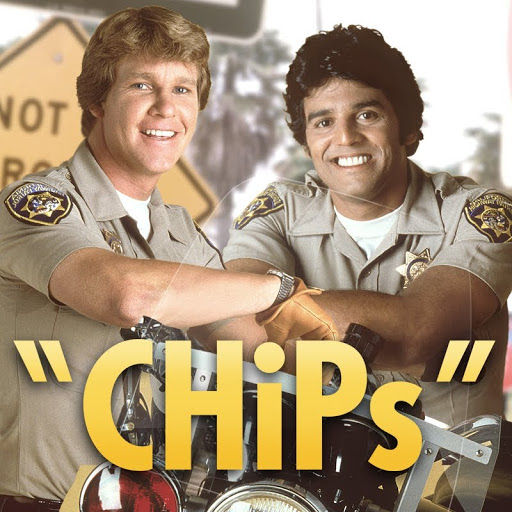
Welcome to Late Night Retro Television Reviews, a feature where we review some of our favorite and least favorite shows of the past! On Mondays, I will be reviewing CHiPs, which ran on NBC from 1977 to 1983. The entire show is currently streaming on Prime!
This week, we finally meet Barizca’s family.
Episode 4.18 “The Hawk and the Hunter”
(Dir by Leslie H. Martinson, originally aired on April 5th, 1981)
In this episode, we learn a little bit more about Officer Barizca. Played by Brodie Greer, Barizca has been an important member of the ensemble since the first season but, up until this point, we really haven’t learned much about his life outside of driving a patrol car and directing traffic at crash sites.
It turns out that Barizca’s father, Pete (Sandy McPeak), is a crop duster. When it becomes clear that Pete is getting too old to fly his airplane, Barizca takes a leave of absence from the Highway Patrol so that he can help out. Hopefully, Barizca will find the courage to finally tell his father that it’s time to retire.
Meanwhile, there’s an environmentalist nutjob named Lyle (Dwight Schultz) who is convinced that the Barizcas are spreading poison with their airplane. Lyle has been sending threats to Pete so, eventually Barizca flies over Lyle and covers him in pesticide to help the Highway Patrol arrest him. So, I guess Lyle really is going to die now.
At the end of the episode, Pete retires and Barizca returns to patrolling the highways.
This was an okay episode, in that the scenery was nice and I did appreciate that the show made an effort to focus on something other than Ponch being the best at everything. Dwight Shultz was believably unhinged as Lyle and there was an interesting tension between him and Baker as both of them were Vietnam vets. Unfortunately, the Barizcas themselves just weren’t that interesting. This episode was a case of “You’ve seen one strained father-son relationship, you’ve seen them all.”
That said, I hope next week’s episode will introduce us to Grossman’s family.
This 1979 true crime drama opens in Los Angeles in 1963.
Rookie Detective Karl Hettinger (John Savage) has just joined the Felony Squad and met his new partner, Ian Campbell (Ted Danson, making his film debut). Ian is a tall, somewhat eccentric detective, the type who practices playing the bagpipes in the basement and who takes Hettinger under his wing.
Meanwhile, Jimmy Smith (Franklyn Seales) has just been released from prison. The nervous and easily-led Jimmy almost immediately runs into Gregory Powell (James Woods), a small-time hood with delusions of grandeur. Powell is the type who talks a big game but who really isn’t even that good of a thief. Smith and Powell form an uneasy criminal partnership. They are easily annoyed with each other but they also share an instant bond. Though the film doesn’t actually come out and say what most viewers will be thinking, there’s a lot of subtext to a brief scene where Powell appears to caress Smith’s shoulder.
One night, Hettinger and Campbell are kidnapped by Smith and Powell. Smith and Powell drive them out to an onion field. Because he’s misinterpreted the Federal Kidnapping Act and incorrectly believes that he and Smith are already eligible for the death penalty because they kidnapped two police officers, Powell shoots and kills Campbell. (The close-up image of Campbell falling dead is a disturbing one, not the least because he’s played by the instantly likable Ted Danson.) Hettinger runs and manages to escape. He saves his life but he’s now haunted by the feeling that he abandoned his partner.
The rest of the film deals with the years that follow that one terrible moment in the onion field. Treated as a pariah by his fellow cops, Hettinger sinks into alcoholism and eventually becomes a compulsive shoplifter. Smith and Powell, meanwhile, use a variety of tricks to continually escape the death penalty and to keep their case moving through the California justice system. Powell, for instance, defends himself and then later complains that he had incompetent counsel. Smith, meanwhile, is defended by the infamous Irving Karanek, a legendary California attorney who specialized in filing nuisances motions. (Later Karanek found a measure of fame as Charles Manson’s attorney. Eventually, he had a nervous breakdown in 1989, lived in his car, and was briefly suspended by practicing law.) While Smith and especially Powell quickly adjust to being imprisoned, Hettinger spends the next decade trapped in a mental prison of guilty and bitterness.
Based on a non-fiction book by Joseph Wambaugh, The Onion Field is a compelling look at a true crime case that continue to resonate today. The film can be a bit heavy-handed in its comparisons between the two partnerships that define the story. Both Hettinger and Smith are young and neurotic men who find themselves working with a more confident mentor. The difference is that Hettinger’s mentor is the cool, composed, and compassionate Ian Campbell while Smith’s sad fate is to be forever linked to the erratic Gregory Powell. While the film may have the flat look of something that was made for television, it’s elevated by the performances of its lead actors. James Woods give an especially strong performance as the cocky Powell, a loser in the streets who becomes a winner behind bars. Over the course of the film, he goes from being a joke to being the prisoner that others come to for legal advice. John Savage, meanwhile, poignantly captures Hettinger’s descent as the trauma from that night leaves him as shell of the man that he once was.
The film’s supporting cast is full of familiar faces. Christopher Lloyd and William Sanderson show up as prisoners. Ronny Cox plays the detective in charge of the onion field investigation. David Huffman plays a district attorney who is pushed to his breaking point by the obstructive tactics of Smith’s attorney. Priscilla Pointer play Ian Campbell’s haunted mother. All of them do their part to bring this sad story to life.
The Onion Field is a chillingly effective true crime drama and a look at a murder that was inspired by one man’s inability to understand federal law.
Welcome to Retro Television Reviews, a new feature where we review some of our favorite and least favorite shows of the past! On Fridays, I will be reviewing St. Elsewhere, a medical show which ran on NBC from 1982 to 1988. The show can be found on Hulu!
This week, William Daniels claims the show as his own.
Episode 1.2 “Bypass”
(Dir by Thomas Carter, originally aired on November 9th, 1982)
“Hey, it’s Tim Robbins!”
Yes, the future Oscar winner shows up in the second episode of St. Elsewhere, playing a rich kid-turned-terrorist named Andrew Reinhardt. Reinhardt, who no doubt learned all about Marxism during his first semester away at college, set off a bomb in a bank, killing two people and putting a woman named Kathleen McCallister into a coma. Both Reihnhardt and McCallister have been brought to St. Eligius. While Kathleen’s husband, Stephen (Jack Bannon), sobs in the hallway, Reinhardt acts like a petulant brat in his hospital room.
With the nurses refusing to change his sheets or even give him his morphine shots, it falls to Dr. Morrison to take care of him. Reinhardt is not at all appreciative and Morrison finds himself conflicted. How is he supposed to give proper medical treatment to someone who he despises? Morrison is so conflicted that he even goes to Dr. Westphall. Westphall responds by telling a long story about a time that he fell in love with a patient. I’m getting the feeling that Morrison feeling conflicted and Westphall telling long stories are both going to be regular features on this show.
(The correct answer to Morrison’s question about how he can take care of a bad person is as follows: It’s your job and you’re getting paid to do it.)
This episode also gave the viewer a chance to get to know Dr. Craig, the very talented but very egotistical head of surgery who is played by the great William Daniels. Dr. Craig holds a press conference to inform reporters about the conditions of both Reinhardt and Kathleen McCallister and declares that, despite its bad reputation, “St. Eligius is the place to be!” He then proceeds to get angry when the press is more interested in talking to the surgeon who actually saved Kathleen’s life than to him.
Dr. Craig browbeats a Mr. Broadwater (Robert Costanzo) into getting bypass surgery done. The surgery appears to have been a success but it’s hard to ignore that Craig essentially bullied the guy into getting a major operation, one that could have killed him if the least little thing had gone wrong. Resident Victor Ehrlich (Ed Begley, Jr.) assists in the operation and, at one point, Dr. Craig intentionally head butts him when Ehrlich cannot name all of the arteries leading into the heart. It’s a bit aggressive but, on the plus side, Ehrlich does learn all of the names. Afterwards, Dr. Craig brags about how his own son is following in his footsteps and tells Mr. Broadwater’s son that some day, a new Dr. Craig will operate on him. In other words, Dr. Craig is kind of a jerk but he’s good at what he does and he’s played by William Daniels so it’s hard to hold anything against him.
There were other subplots playing out in the background, the majority of which just seemed to be there to remind us that St. Elsewhere is an ensemble show and that, just because someone isn’t a major character in this episode, that doesn’t mean they won’t be important later on. Psychiatrist Hugh Beale (G.W. Bailey) attempted to learn how to swim and ended up taking a class with a bunch of children. Dr. Fiscus (Howie Mandel, the least convincing doctor ever) held court in the cafeteria and claimed that the hormones used in processing food were causing children to develop earlier than ever before. Dr. Peter White (Terrence Knox) wandered around with a bunch of X-rays and begged everyone he met to help him understand what he was (or wasn’t) seeing. If nothing else, this episode did a good job of capturing the idea of the hospital as being a place that’s always busy.
For the most part, though, it was Dr. Craig who carried this episode. While Morrison and Westphall ponderously considered the implications of doing their jobs, Craig was an arrogant, angry, and brilliant dynamo and William Daniels’s high-energy performance was a pleasure to watch. Whenever the episode started to slow down, Dr. Craig would liven things up by yelling at someone. The hospital was lucky to have Dr. Craig and St. Elsewhere was lucky to have William Daniels.
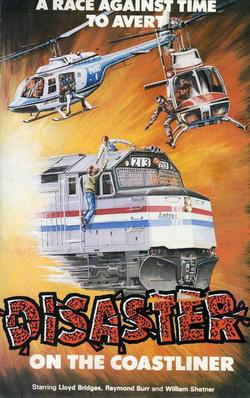
A completely computerized passenger train is traveling across the country, with the Vice President’s wife as one of the passengers. When Jim Waterman (Paul L. Smith), a man who blames the railroad for the death of his family, manages to hijack the train he plans to ram into a locomotive until his demands a met. He wants railroad president Estes Hill (Raymond Burr) to take responsibility for the crash that killed his wife and children. With Waterman determined to crash the two trains, it falls to dispatchers Al Mitchell (Lloyd Bridges) and Roy Snyder (E.G. Marshall) to try to figure out a way to stop the collision. Helping them out on the train is a con artist named Stuart Peters (William Shatner!) who may be wanted by the police but who is still willing to do whatever it takes to save his fellow passengers.
Disaster on the Coastliner is an above-average made-for-TV disaster movie. Even though it was obviously made for a low-budget and that the majority of the money was probably spent on securing the B-list cast, there are enough shots of the train careening on the tracks to bring happiness to the hearts of most disaster movie fans. The cast is full of the type of people who you would typically expect to find in a movie like this, people like Raymond Burr, Lloyd Bridges, and William Shatner. Bridges, interestingly enough, gives the same performance here that he gave in Airplane! and when he starts ranting about how everything’s computerized, he sounds like he could be reciting dialogue from that film. The only difference is that Airplane! was a comedy while Disaster On The Coastliner is meant to be a drama. Raymond Burr also does a good job hamming it up as the president of the railroad. He spends most of the movie sitting behind his desk and looking annoyed, which was pretty typical of Burr in the years after Perry Mason and Ironside.
For a lot of people, the main appeal of this film will be seeing what William Shatner was doing in between Star Trek movies. This is a typical early 80s Shatner performance, when he was still trying too hard to win that first Emmy but also when he had just starting to develop the self-awareness necessary to poke fun at his own image. Shatner really digs into the role of a conman with a heart of gold. He delivers his lines in his trademark overdramatic style but, in scenes like the one where he sheepishly discovers that a door that he’s been pounding on was unlocked all the time, Shatner actually seems to be in on the joke. Shatner also did his own stunts in this film, including one where he had stand on top of a speeding train. In his autobiography, Shatner wrote that he wasn’t even wearing a safety harness in the scene so give it up for Bill Shatner. That took guts!
Fast-paced and agreeably unpretentious, Disaster On The Coastliner is an enjoyable runaway train movie.
The year is 1963. The month is November. The city is Dallas. The President of the United States, John F. Kennedy, is coming to visit and two very different men have very different reactions. An eccentric and lonely strip club owner, Jack Ruby (Michael Lerner), worries about an anti-Kennedy ad that has just appeared in the Dallas Morning News. Another loner, a strange man named Lee Harvey Oswald (Frederic Forrest), is busy making plans of his own. When Kennedy is assassinated, history brings Ruby and Oswald together in a way that a shattered nation will never forget.
This is a curious one. It was made for television and, according to Wikipedia, its original running time was 180 minutes. The version that I saw, on VHS, was barely 90 minutes long so obviously, the version I saw was heavily edited. (In the 70s, it was common for made-for-TV movies to be reedited for both syndication and overseas theatrical release.) Maybe that explains why Ruby and Oswald felt do disjointed. In the version I saw, most of the emphasis was put on Jack Ruby running around Dallas and getting on people’s nerves. Very little time was devoted to Oswald and the film was almost entirely stolen by Lerner. Michael Lerner is a familiar character actor. You may not know his name but you will definitely recognize his face. Lerner was convincing and sometimes even sympathetic as the weaselly Ruby. Ruby and Oswald supported the Warren Commission’s findings, that Oswald killed Kennedy and Ruby shot Oswald out of a sense of loyalty to Jackie Kennedy. Michael Lerner’s performance was so good that he almost made that theory plausible.
One final note, for fans of WKRP in Cincinnati: Gordon Jump and Richard Sanders, best known as Arthur Carlson and Les Nessman, were both in Ruby and Oswald, though they did not share any scenes together.
Why, on June 3rd, did Billie Joe McAllister jump off of the Tallahatchie Bridge in Mississippi?
That was the question that was asked in Ode to Billie Joe, a 1967 country song by Bobbie Gentry. In the song, the details were deliberately left inconclusive. Why did Billie Joe commit suicide? No one knows. All they know is that he was a good worker at the sawmill and, the weekend before jumping, he was seen standing on the bridge with a teenage girl and apparently, they dropped something down into the river below. The song suggests that the girl and the narrator are one in the same but even that is left somewhat vague.
Ode to Billie Joe was a hit when it was first released, largely because it’s story could be interpreted in so many different ways. Why did Billie Joe kill himself? Maybe it was because he didn’t want to be drafted. Maybe it was because he and his girlfriend had killed their baby and tossed it off the bridge. Maybe it was because he was hooked on Dexedrine and his doctor wasn’t available to renew his prescription. It could be any reason that you wanted it to be.
However, in 1976, when Ode to Billie Joe was turned into a movie, ambiguity would not do. As opposed to the song, Ode To Billy Joe had to answer the question as to why Billy Joe jumped into that river. In the movie, 18 year-old Billy Joe (Robby Benson) works at the sawmill and spends his time courting 15 year-old Bobbie Lee Hartley (Glynnis O’Connor). Bobbie Lee’s father (Sandy McPeak) says that she’s too young to have a “gentleman caller,” even though Bobbie Lee insists that she’s “15 going on 34 … B cup!” Bobbie Lee warns Billy Joe that her father is liable to shoot his ears off but Billy Joe insists that he doesn’t need ears because he’s in love with her. That’s kind of a sweet sentiment, even though I don’t think Billy Joe would look that good without ears.
(Whenever I complain about how Southerners in the movies always seem to have two first names, my sister Erin replies, “Yeah, that’s really annoying, Lisa Marie.” So, I won’t make a big deal about it this time…)
One night, Billy Joe and his friends go out and Billy Joe ends up getting drunk. He disappears for several days and when he shows up again, something has definitely changed. After unsuccessfully trying to make love to Bobbie Lee, Billy Joe tells her what happened that night he got drunk. Billy Joe had sex with a man, something that he has been raised to view as being the ultimate sin. When Billy Joe is later pulled out of the river, the entire town wonders why he jumped off the bridge and how Bobbie Lee was involved…
Ode to Billy Joe, which aired last Tuesday on TCM, is a better-than-average film, one that I was surprised to have never come across in the past. That doesn’t mean that it’s a perfect movie. Robby Benson, in the role of Billy Joe, gives an absolutely terrible performance. You can tell that Benson was trying really hard to do a good job but, often, he goes totally overboard, making scenes that should be poignant feel melodramatic. Though it probably has more to do with when the film was made than anything else, the film is also vague about Billy Joe’s sexuality. Is Billy Joe in denial about his identity? Is he deeply closeted or was he in such a drunken stupor that he was taken advantage of? Ode to Billy Joe does not seem to be sure. By committing suicide, Billy Joe joins the ranks of gay movie characters who would rather die than accept their sexuality. Obviously, he had to jump off that bridge because that’s what the song said he did but there’s a part of me that wishes the movie had featured someone commenting that they never actually found Billy Joe’s body and then the final scene could have taken place 16 years later, with Bobbie Lee living as a hippie in San Francisco and just happening to spot Billy Joe walking down the street, hand-in-hand with his boyfriend.
Here’s what does work about the movie. Glynnis O’Connor gives a great and empathetic performance as Bobbie Lee. The scenes with her father and her mother (played by Joan Hotchkis) have a very poignant and wonderful realness to them. Though I’ll always be a city girl at heart (well, okay — a suburb girl), I spent some time in the country when I was growing up. And while I was never quite as isolated as Bobbie Lee (who lives in a house with no electricity or plumbing) and the film took place in the past, I could still relate to many of Bobbie Lee’s experiences. The film may have been made in 1976 and set in 1952 but life in the country hasn’t changed that much.
For instance, there’s this great scene where Bobbie Lee’s father is trying to drive across the bridge. The only problem is that there’s a bunch of drunk shitkickers on the bridge, sitting in their pickup truck and blocking his way. It’s a very tense scene, one that I found difficult to watch because, when I was growing up in Arkansas, Oklahoma, Louisiana, and South Texas, I saw the exact same thing happen more times than I care to admit. In the country, no one backs down. Scenes like that elevated Ode To Billy Joe to being something more than just another movie based on a song.
Finally, there’s a beautiful scene towards the end of the film, between Bobbie Lee and a character played by an actor named James Best. I won’t spoil the scene but it’s a master class in great acting. (Best also played one of the sadistic villains in Rolling Thunder, another good 70s film about life and death in the country.)
Though I wasn’t expecting much from it, Ode to Billy Joe was a pleasant surprise. It’s not perfect but it’s still worth watching.
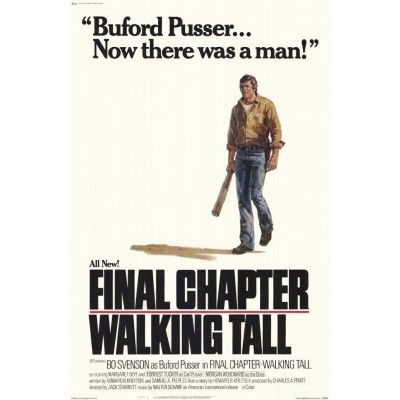
For one last time, Buford Pusser is back! The 1977 film Walking Tall: Final Chapter ends the story that was begun in Walking Tall and continued in Walking Tall Part II.And it turns out that the final chapter is pretty much just like the previous two chapters. In fact, I’m tempted to just tell you go reread my review of Walking Tall Part II because that review works just as well for most of the Final Chapter.
Final Chapter starts with footage from the first Walking Tall, with Bo Svenson awkwardly inserted in place of Joe Don Baker. Once again, we watch as Elizabeth Hartman is shot in the back of the head and Svenson — in the role of Buford Pusser — is shot in the face. Oh my God, we think, how many times can the exact same thing happen to the exact same character!?
Oh wait — it turns out that Buford is just remembering the death of his wife. Buford is still haunted by that day and he’s still out for vengeance. For the next hour or so, we follow Buford as he and his deputies blow up moonshiners across Tennessee. After each arrest, an attorney shows up and yells at Buford for violating everyone’s civil rights. In response, Buford smirks until the attorney gets so mad that he decides to run for sheriff himself.
Buford doesn’t give his opponent much of a chance. As one of his deputies puts it, this guy is just a “bleeding heart liberal.” (But if he’s so liberal, what’s he doing in Tennessee? Off with you, sir — return to Vermont!) Instead of campaigning, Buford spends his time hunting down more moonshiners. When he discovers that one moonshiner is also an abusive father, he personally drives the man’s son down to the local orphanage. Oddly enough, Buford does not offer to adopt the kid himself.
Anyway, to the shock of everyone, Buford is not reelected. No longer sheriff, he struggles to find a full-time job and makes plans to run in the next election. One of the moonshiners shows up and taunts Buford until Buford is forced to beat him up in the middle of the street. The new sheriff show up and demands to know what happened. None of the townspeople are willing to snitch on Buford. Good for them!
After about an hour and a half of this, something interesting actually happens. A film producer drives up to the Pusser Farm and tells Buford that he wants to make a movie out of his life. “We’re going to tell the story exactly how it happened!” the producer assures him. In the next scene, Buford is advising the director of Walking Tall on how to properly film a car chase.
And you know what? These scenes of Buford watching his life story be filmed are actually rather charming. For the only time in the series, Bo Svenson actually appears to be having fun in these scenes. And, when Buford runs from a theater while watching the recreation of his wife’s murder, it’s actually a very effective moment.
Anyway, there’s not much running time left after all of that. We see Buford sign a contract to play himself in the sequel and, by this point, we all know what happened afterward. Buford was killed in a mysterious car accident. But fear not! The film opens with a heavenly choir and Svenson’s voice booming from the heavens so we all know that Buford Pusser is arresting moonshiners in Heaven.

 The year is 1963. The month is November. The city is Dallas. The President of the United States, John F. Kennedy, is coming to visit and two very different men have very different reactions. An eccentric and lonely strip club owner, Jack Ruby (Michael Lerner), worries about an anti-Kennedy ad that has just appeared in the Dallas Morning News. Another loner, a strange man named Lee Harvey Oswald (Frederic Forrest), is busy making plans of his own. When Kennedy is assassinated, history brings Ruby and Oswald together in a way that a shattered nation will never forget.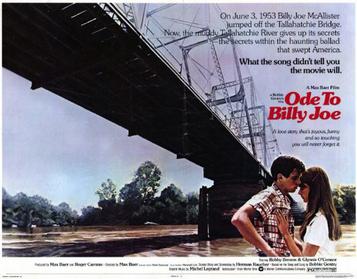
 Through the Shattered Lens