For today’s music video of the day, we have the second video for Duran Duran’s Lonely In Your Nightmare.
Both videos were directed by Highlander’s Russell Mulcahy.
For today’s music video of the day, we have the second video for Duran Duran’s Lonely In Your Nightmare.
Both videos were directed by Highlander’s Russell Mulcahy.
This is one of two videos for Duran Duran’s Lonely In Your Nightmare. In this one, Simon Le Bon finds old photographs and remembers a past relationship that might have just been someone’s dream. Lonely In Your Nightmare appeared on Rio, one of the defining albums of the early 80s.
Before he made a little film called Highlander, director Russell Mulcahy was Duran Duran’s video director of choice in the early 80s and, of course, he worked with many other bands as well. His stylish music videos dominated MTV and set the template for which most subsequent videos would come.
Enjoy!
Directed by Russell Mulcahy, the video for Wild Boys cost over a million pounds, which was considered to be an astronomical sum in 1984. Both the video and the song is based on the William S. Burroughs novel, The Wild Boys. Mulcahy had long-wanted to adapt the book into a film and the song was written to serve as a part of the soundtrack of the proposed film. (The film itself was never made.)
The costumes in the video were left over from The Road Warrior. The video, featuring all of the members of Duran Duran being tortured in different ways, was controversial but ultimately very popular.
Enjoy!
4 Or More Shots From 4 Or More Films is just what it says it is, 4 shots from 4 of our favorite films. As opposed to the reviews and recaps that we usually post, 4 Shots From 4 Films lets the visuals do the talking!
Today would have been Sean Connery’s 95th birthday. It’s time for….
4 Shots From 4 Sean Connery Films
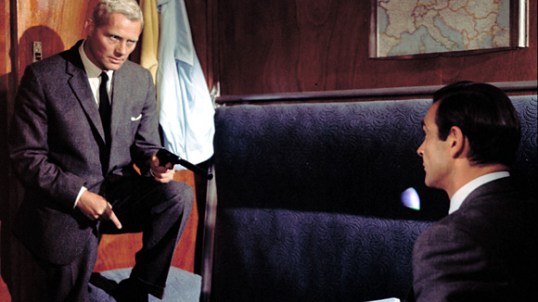
From Russia With Love (1963, dir by Terence Young, DP: Ted Moore)
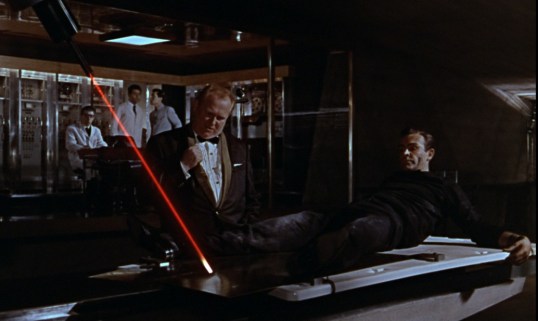
Goldfinger (1964, dir by Guy Hamilton, DP: Ted Moore)
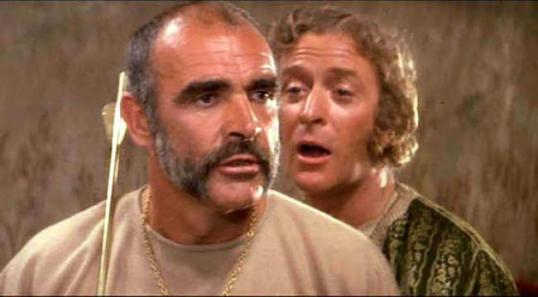
The Man Who Would Be King (1975, dir by John Huston, DP: Oswald Morris)
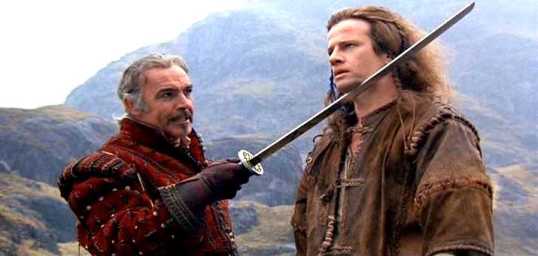
Highlander (1986, dir by Russell Mulcahy, DP: Gerry Fisher)
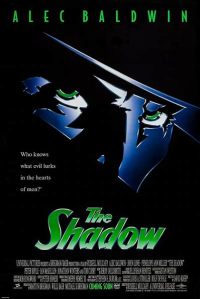
As Guilty Pleasures go, The Shadow is a movie that has absolutely everything you need for a fun, campy ride. An Al Leong cameo, alongside James Hong? Check. Heroes and Villains taking time out to discuss their wicked plans (and how they’ll be stopped) over a glass of fine American Bourbon? Check. Early 90s Era CGI? Mark it down. Duel Wielding Pistol shooting action? Got it. Tim Curry just being there? Sweet.
After the wild success of Tim Burton’s Batman in 1989, Hollywood was scrambling to squeeze what they could out of the Superhero Movie. The Punisher, with Dolph Lundgren, would come out the same year. We’d end up with The Rocketeer (one of my personal favorites), BarbWire, Dick Tracy,The Crow, The Mask, and The Phantom, among others leading into the mid-90s. Among these was 1994’s The Shadow, based off the 1930’s character from Walter B. Gibson. Pre-dating all of the before mentioned characters (including DC’s Batman by almost a decade), The Shadow started as a series of radio stories before moving on to other forms of media. The movie didn’t do very well on it’s original release. Much like the magic that clouds men’s minds, audiences were more enraptured with The Crow months before and The Lion King. Some may remember a Shadow movie was made, but it was eclipsed by more popular films at the time.
At the same time, there were major advances happening in audio technology, thanks to a tiny Universal film called Jurassic Park. Jurassic Park helped to usher in an update in sound quality known as The Digital Experience (which we now know as DTS for short). As theatres coverted to the new sound system, various films in the early to mid nineties would make use of it, such as The Crow, The Mask, Timecop and The Shadow. By the time my family picked up their first Laserdisc player, DTS quality sound was available at home. My dad had a series of speakers lined around the living room of our house so that regardless of where you sat, the sound would move around you. One of the best tests of it was with John Carpenter’s The Thing, where Blair is standing off against the crew. The gunfire from his pistol would richochet from the front to the rear speakers, making the kids duck down.
The Shadow also made of use of this in certain areas, particularly with the way voices carried in a room. The part with Shiwan Khan’s voice moving over the city at night was amazing to hear with the right sound system. Just about any scene where The Shadow spoke had this sweet spatial effect that I loved.
The Shadow is the tale of Ying Ko (Alec Baldwin, The Getaway), a.k.a. Lamont Cranston. Living high in the Opium Fields of Tibet, he is a man of darkness, having inflicted great evil over time. Kidnapped and brought to a Tulku (a wise man) who has decided it’s time for redemption, Cranston is taught to cloud men’s minds, bending people to his will and to hide every aspect of himself save for one thing, his Shadow. He then returns seven years later to that “most wretched lair of villainy we know as” New York City, for we all know that the weed of crime bears bitter fruit.
Cranston spends most of his nights at The Cobalt Club with his Uncle Wainwright (Jonathan Winters, It’s a Mad, Mad, Mad, Mad World), who also happens to be the Police Commissioner. It allows him to keep up appearances while making sure the police don’t put The Shadow in their spotlight. When he meets the beautiful Margot Lane (Penelope Ann Miller, The Relic), he’s not only smitten, but finds her ability to read minds a dangerous threat to him.
When a metal casket from Tibet arrives at the New York Museum of Natural History, it reveals Shiwan Khan (John Lone, The Last Emperor), the last descendant of Genghis Khan. Gifted with the same abilities as Cranston, Khan has plans for the city and the world. He would rather have Cranston join him than to kill him. This turns the story into a classic Bond-like cliche where the hero and villain spend the bulk of the movie explaining their plans.
Enjoying the successes of Death Becomes Her and Jurassic Park, writer David Koepp was on a roll. The Shadow doesn’t take itself too seriously. Koepp and director Russell Mulcahy (Highander) splash moments of light comedy at just about every turn, mostly through the witty banter between characters. Some are over the top, particularly with Tim Curry’s character, while others are more subtle, like with Ian McKellan (The Lord of the Rings). If you’re looking for a serious drama in your superhero film, this isn’t it. Additionally, there are one or two elements that make no sense whatever. Mongol warriors walking around in full armor that no one ever seems to notice and taking rides in taxicabs (unless we assume they’re masked by Khan’s magic).
Most of the movie was filmed on the Universal Studios New York backlot, which explains why some scenes look like they were borrowed from Walter Hill’s Streets of Fire (that also used it years before). The mystical Tibetan Phurba dagger that echoes the disposition of its owner was a variant of the one used in Eddie Murphy’s The Golden Child in the late 80s.
if the movie’s climax between The Shadow and Khan feels a bit abbreviated, it’s because of a last minute change in filming. The original plan for the ending involved a series of mirrors, but an earthquake earlier in the year caused damage to the props the production team planned to use. So, what we get is a quicker scene, still falling in line with Mulcahy’s penchant for glass shattering, but leaving the audience to partially wonder what we could have had if everything worked out.
Finally, the real gem in all this is Jerry Goldsmith’s score. Although out of print, you can still find most of the tracks on YouTube, and the songs keep the immersion flowing. While I don’t see the film getting any kind of remakes in the near future, it’s nice to know everything came together (as well as it could) for this entry. Then again, who knows?
Previous Guilty Pleasures
Directed by Russell Mulcahy, the video for Wild Boys cost over a million pounds, which was considered to be an astronomical sum in 1984. Both the video and the song is based on the William S. Burroughs novel, The Wild Boys. Mulcahy had long-wanted to adapt the book into a film and the song was written to serve as a part of the soundtrack of the proposed film. (The film itself was never made.)
The costumes in the video were left over from The Road Warrior. The video, featuring all of the members of Duran Duran being tortured in different ways, was controversial but ultimately very popular.
Enjoy!
The music video for Kim Carnes’s Voyeur is another music video that was initially banned from MTV and other music shows because it was considered to be too suggestive. The video features Kim Carnes watching and being watched in a red light district.
This was another video directed by Highlander’s Russell Mulcahy, who perhaps did more than anyone to perfect the early music video aesthetic.
Enjoy!
For today’s music video of the day, we have the second video for Duran Duran’s Lonely In Your Nightmare, to go along with the first.
Both videos were directed by Highlander’s Russell Mulcahy.
This is one of two videos for Duran Duran’s Lonely In Your Nightmare. In this one, Simon Le Bon finds old photographs and remembers a past relationship that might have just been someone’s dream. Lonely In Your Nightmare appeared on Rio, one of the defining albums of the early 80s.
Director Russell Mulcahy was Duran Duran’s video director of choice in the early 80s and, of course, he worked with many other bands as well. His stylish music videos dominated MTV and set the template for which most subsequent videos would come. He also directed a little film called Highlander.
Enjoy!
On August 1st, 1981, MTV premiered. Over the course of 24 hours, 116 unique music videos were played on MTV. Yes, there was a time when the M actually did stand for music.
The first video that MTV played was from The Buggles and so was the second-to-last video that was aired on the channel’s 1st day of broadcast. Like Video Killed The Radio Star (and many of the other videos that aired on August 1st, 1981), Living In A Plastic Age was directed by Russell Mulcahy.
Enjoy! There’s just one more video to go!
The First Videos Shown on MTV:
 Through the Shattered Lens