Late Night Retro Television Review: CHiPs 3.20 “Tow Truck Lady”


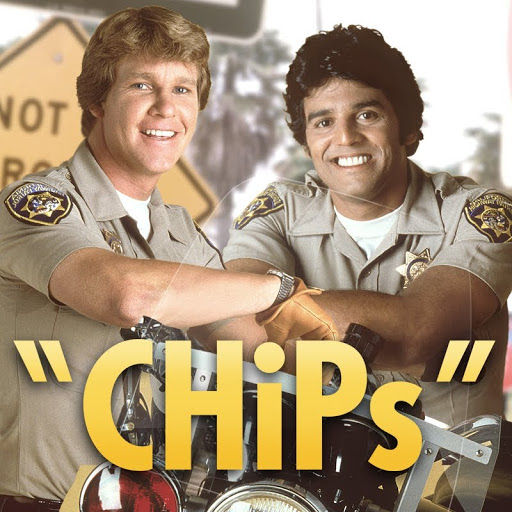
Welcome to Late Night Retro Television Reviews, a feature where we review some of our favorite and least favorite shows of the past!  On Mondays, I will be reviewing CHiPs, which ran on NBC from 1977 to 1983.  The entire show is currently streaming on Prime!

Larry Wilcox sits in the director’s chair for this week’s episode!

Episode 3.20 “Tow Truck Lady”

(Dir by Larry Wilcox, originally aired on February 9th, 1980)

Danny (Chris Robinson) is a tow truck driver who is short on cash, in debt to a loan shark, and being forced to pay off his debt by stealing cars for the mob.  Danny happens to be friends with Ponch and Jon.  Ponch and Jon take it upon themselves to look after Danny’s daughter, Marla (Tonya Crowe), while Danny is out working.  Of course, Danny is actually committing crimes during that time.

This was one of those episodes where a guest character, whom we’ve never seen before, suddenly becomes the main character and it throws off the entire episode.  The majority of the episode is Danny arguing with the loan shark and Marla acting precocious.  Jon and Ponch weren’t really that involved, until the big chase at the end of the episode.  I guess it makes sense.  Larry Wilcox was busy directing and I imagine Wilcox was probably more than happy to have a chance to point the camera at someone other than at Erik Estrada.  From what I’ve read, the two co-stars may have played best friends but they couldn’t stand each other in real life.  Wilcox apparently felt that the producers always sided with Estrada and it is impossible to deny that the show, which began with Baker and Ponch evenly matched, had become the Ponch Show by the time the third season rolled around.

(I should note that this episode does feature a pretty exciting highway smash-up, featuring cars flying through the air in slow motion.  I always love that slo mo of doom!)

In the end, Danny does the right thing and turns on the loan shark.  The loan shark is arrested.  So is Danny.  Baker says that he’ll arrange for Marla to live with his friend, Ellen (Liberty Godshall), until Danny gets out of prison.  It’s entirely probable that Marla is going to be traumatized for the rest of her life but Ponch and Baker still share a good laugh at the end of the episode.  Being a member of the Highway Patrol is fun!

Retro Television Reviews: The Feminist and the Fuzz (dir by Jerry Paris)


Welcome to Retro Television Reviews, a feature where we review some of our favorite and least favorite shows of the past!  On Sundays, I will be reviewing the made-for-television movies that used to be a primetime mainstay.  Today’s film is 1971’s The Feminist and The Fuzz!  It  can be viewed on YouTube!

At first glance, Jane Bowers (Barbara Eden) and Jerry Frazer (David Hartman) don’t have much in common.

Jerry is a cop, though he’s attending night school with the hope of someday becoming a lawyer.  Jerry is an old-fashioned law and order man.  He expects the law to be followed.  He’s also the type who definitely believes that there are clear differences between men and women.  As he explains it, there are some thing that men are just better at.  Jerry is dating Kitty (Farrah Fawcett), who works as a waitress at the local Playboy Club.

Dr. Jane Bowers is a pediatrician and a proud feminist, one who takes it personally when a cop like Jerry refuses to give her a parking ticket just because she’s a woman.  She wants to be treated as an equal in all matters.  She’s dating Wyatt Foley (Herb Edelman), an attorney who still lives with his mother and who constantly goes out of his way to let everyone know that he’s an ally.  Jane’s best friend is Dr. Debby Inglefinger (Jo Anne Worley), who has decided that it’s time to lead a protest at the Playboy Club.

The only thing that Jerry and Jane have in common is that they both desperately need an apartment but apparently, apartments were not easy to find in San Francisco in the early 70s.  Fortunately, a hippie (Howard Hesseman) has just been evicted from his apartment because the landlord (John McGiver) didn’t like the fact that he was constantly having overnight guests.  Jane and Jerry both end up at the apartment at the same time, with Jane getting offended by Jerry’s refusal to give her a traffic ticket.  (Jerry makes the mistake of saying that he’s going to let her off “with a warning.”  He wouldn’t give a warning to a man!  Seriously, though, who in their right mind would actually demand a ticket?  Those things cost money.)  Even though they take an instant dislike to each other, Jane and Jerry still decide to pretend to be husband and wife so that they can rent the apartment together.  With their busy schedules, they figure that they’ll never have to see each other.  They won’t even know the other is around.

Of course, it doesn’t work out like that.  Jane allows Debby to hold a consciousness raising meeting at the apartment.  (Future director Penny Marshall appears as a participant.)  Meanwhile, Jerry lets a prostitute (Julie Newmar) stay at the apartment, just to keep her off of the streets for the night.  The landlord is getting suspicious.  So, for that matter, is Jane’s father (Harry Morgan).  And, as you probably already guessed, Jerry and Jane are falling in love.

With its hippies and its militant feminists and its jokes about the Playboy Club, The Feminist and the Fuzz is a film that practically yells, “1971!”  Unfortunately, script’s attempt to turn the film’s rather predictable plot into a Neil Simon-style jokefest never quite works.  The “humorous” dialogue feels forced and the film’s 75-minute run time doesn’t do it any favors, as we never really have the time to get to know Jerry or Jane as human beings.  Instead, they just remain “The Fuzz” and “The Feminist.”  As a result, it’s not that easy to care about whether or not they actually get together.  Some of the supporting performances are amusing.  Barbara Eden manages to avoid turning Jane into a caricature of a humorless activist but poor David Hartman is stiff as a board and in no way convincing as a veteran cop.

The main thing I took away from this movie is that the Playboy Clubs were exceptionally tacky.  Way back in 2011, NBC actually tried to air a drama series that took place at a Playboy Club in the 60s.  (This was when every network was trying to come up with the next Mad Men.)  The pilot started with creepy old Hugh Hefner assuring the viewers that, “Everybody who was anybody wanted to be a member of the club.”  I mean, seriously?  What a strange world.

Hanging By A Thread (1979, directed by Georg Fenady)


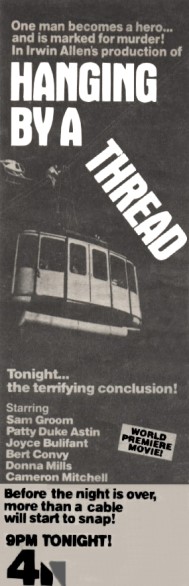
A group of old friend who call themselves the Uptowners’ Club (yes, really) want to go on a picnic on top of a remote mountain.  The only problem is that they have to ride a cable car up to the mountain and there are reports of potentially bad weather.  It’s not safe to ride in a cable car during a thunderstorm.  Drunken ne’er-do-well Alan (Bert Convy) doesn’t care and, since his family owns both the mountain and the tramway, his demands that he and his friends be allowed to ride the cable car are met.  One lightning strike later and the members of the Uptowners’ Club are stranded in a cable car that is perilously suspended, by only a frayed wire, over treacherous mountain valley.

With no place to go, there’s not much left for the members of the Uptowners’ Club to do but bicker amongst themselves and have lengthy flashbacks that reveal every detail of their own sordid history.  Paul (Sam Groom) is angry with Alan because Alan is now engaged to his ex-wife (Donna Mills).  Sue Grainger (Patty Duke) is angry with everyone else because they don’t want to admit how their old friend Bobby Graham (Doug Llewellyn) actually died.  The other members of the Uptowners’ Club are angry because there’s not much for them to do other than watch Duke and Convy chew on the scenery.  Because of the supposedly fierce winds, someone is going to have to climb out on top of the cable car and repair it themselves.  Will it be Paul or will it be cowardly drunk Alan?  On top of everything else, Paul is set to enter the witness protection program and has got hitmen who want to kill him.

This made-for-TV disaster movie was produced by Irwin Allen.  Are you surprised?  It’s also three hours long and amazingly, Leslie Nielsen is not in it.  It’s hard to understand how anyone could have produced a cable car disaster film and not given a role to Leslie Nielsen.  Cameron Mitchell’s in the film but he’s not actually in the cable car so it’s a missed opportunity.  Any film that features Patty Duke detailing how her friends got so drunk that they ended up killing the future host of The People’s Court is going to at least have some curiosity value but, for the most part, Hanging By A Thread gets bogged down by its own excessive runtime and lack of convincing effects.  Hanging By A Thread came out at the tail end of the 70s disaster boom and it shows why the boom didn’t continue into the 80s.

Bloody Good Show: Robert Quarry as COUNT YORGA, VAMPIRE (AIP 1970)


gary loggins's avatarcracked rear viewer

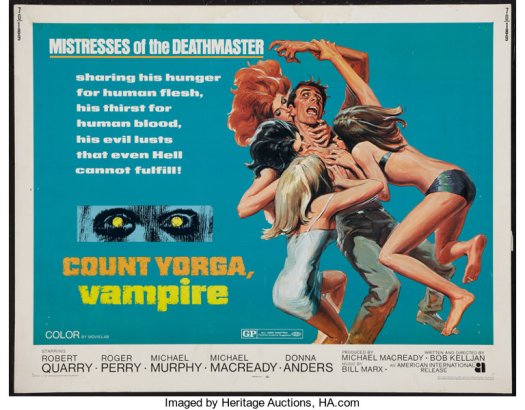
Robert Quarry’s screen career wasn’t really going anywhere by 1970. He had a good part in 1956’s soapy noir A KISS BEFORE DYING , but mostly he was relegated to uncredited bits in movies and guest shots on episodic TV. Quarry kept busy on the stage, until being approached by producer/actor Michael Macready to star in THE LOVES OF COUNT IORGA, originally envisioned as a soft core porn flick with horror elements. The actor said he would accept the job but only if it were turned into a straight modern-day vampire tale, and thus was born COUNT YORGA, VAMPIRE, launching Quarry into a new phase as a 70’s horror movie icon.

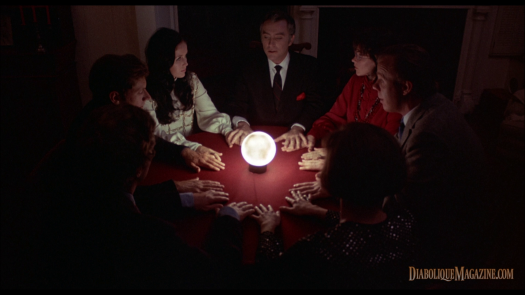
The plot is an updated version of Stoker’s DRACULA, with a few changes. Here, the Bulgarian-born Count Yorga is a recent transplant to California, and we first meet him conducting a séance on behalf of Donna, whose late…

View original post 758 more words