Icarus File No. 24: Express to Terror (dir by Dan Curtis)


The year was 1979 and Fred Silverman, the president of NBC, had an idea.

How about a television series in which each week’s episode would depict a different group of passengers going on a trip?  The passengers would all be dealing with their own stories, some of which would be dramatic and some of which would be humorous.  With any luck, some of them might even fall in love over the course of their journey!

To keep the audience interested, the show would also feature a cast of regular characters, the crew.  Edward Andrews would play the captain, a sensible and by-the-book type.  Robert Alda played Doc, the doctor who was also a bon vivant.  Patrick Collins was the goofy purser.  Nita Talbot played Rose, the perky director of entertainment.  Michael DeLano was the bartender who always had the best advice for the passengers….

Does this sound familiar?

If you think that it sounds like Fred Silverman just ripped off The Love Boat …. well, you’re wrong.  The Love Boat took place on a boat.  Supertrain took place on a train.

At the time that Supertrain went into production, it was the most expensive television production of all time.  Before the pilot film was even shot, NBC had spent ten million dollars on the Supertrain sets.  Not only was a fake train built but two models were also constructed for the shots of the train moving through the countryside.  At the time, the assumption was that the costs would be easily covered by the money that NBC stood to make from broadcasting the 1980 Summer Olympics.  Unfortunately, Jimmy Carter decided that the U.S. would be boycotting the Olympics as a way to protest Russia’s invasion of Afghanistan.  The only thing that kept NBC from going bankrupt was that the BBC was apparently run by someone even more incompetent than Fred Silverman.  The BBC paid $25,oo per episode for the rights to air Supertrain in the UK.  Supertrain proved to be such a disaster that the BBC never actually aired the episodes that they had purchased.

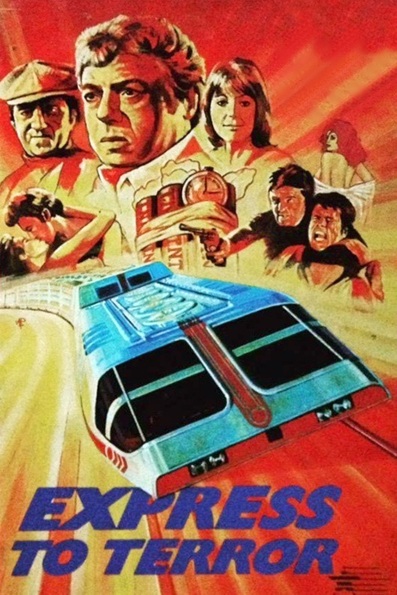
1979’s Express to Terror was the pilot to Supertrain.  (It was later released in some territories as a stand-alone film.)  Directed by horror impresario Dan Curtis (who was also brought in to produce the series), Express to Terror opens with an apparently drunk Keenan Wynn playing the role of railway baron Winfield Root.   Winfield loudly announces to a group of nervous investors that he has created ” an atom-powered steam turbine machine capable of crossing this country in 36 hours!”  A few months later, Supertrain sets off from New York to Los Angeles.

The main thing that one notices about the train is that it’s incredibly tacky.  For all the money that Winfield Root (not to mention NBC) poured into the thing, it looks awful.  The cabins are bland and also seem to be constantly shaking as the train rumbles over its tracks.  Whereas The Love Boat featured glorious shots of passengers enjoying themselves on an open-air deck, Express to Terror features a lot of shots of passengers trying to squeeze their way through narrow and crowded hallways.  There’s a disco car, which sounds like fun but actually looks like a prom being held in a locker room.  There’s a swimming pool but you can’t really lay out by it because it’s on a train.  Winfield is among the passengers and he continually refers to the train as being “Supertrain” in conversation, which just sounds dumb.  “The next person who stops Supertrain,” he announces “will be walking to L.A!”

The main drama features Steve Lawrence as Mike Post, a Hollywood agent with a gambling problem who thinks that someone on the train is trying to kill him.  Actually, the assassin is after a different Mike Post (Don Stroud) but that Mike Post is a criminal who, after entering the witness protection program, changed his name to Jack Fisk.  The criminal Post is hoping that the agent Post will be killed by mistake.  The criminal Mike Post has a girlfriend named Cindy (Char Fontane) who falls in love with the agent Mike Post.  Fred Williamson appears as a football player-turned-assassin.  George Hamilton plays a Hollywood executive.  Don Meredith is the alcoholic best friend of the agent Mike Post.  Stella Stevens is on the train as a diva.  So is Vicki Lawrence, playing a naive innocent.

Express to Terror tries to mix comedy and drama but it doesn’t really work because the “Good” Mike Post doesn’t really seem to be worth all the trouble.  Steve Lawrence gives a mind-numbingly bad performance in the role and, as a result, “Good” Mike Post really isn’t any more sympathetic than “Bad” Mike Post.  The main problem is that “Good” Mike Post comes across as being a coward and there’s only so much time that you can watch a coward act cowardly before you lose sympathy for him.  Being scared is one thing.  Being so dumb that accidentally gets your fingerprints on a knife that’s just been used to kill a man is another thing.

As for the members of the crew — the captain, the doctor, the bartender, and such, they take a back seat to the drama of the two Mike Posts.  It’s a bit odd because no one on the train — not even Winfield Root — seems to be that upset by the fact that one of their passengers is murdered while the train is going through a tunnel.  You would think that everyone would be worried about the future of Supertrain at that point.  A murder is not good for publicity but Winfield Root is oddly unconcerned about it.  I swear, light rail people are almost as heartless as bicyclists!

Of course, the worst thing about Express to Terror is that it promises terror but it doesn’t deliver.  When I see a the word “terror” in a film directed by Dan Curtis, I expect a little terror!  Other than Steve Lawrence’s overacting, there really wasn’t anything particularly terrifying about Express to Terror.

As for Supertrain, it ran for nine episodes and was promptly canceled.  Fred Silverman left NBC and spent the rest of his career as an independent producer.  Supertrain’s tracks got too close to the sun and they nearly took down a network.

Previous Icarus Files:

  1. Cloud Atlas
  2. Maximum Overdrive
  3. Glass
  4. Captive State
  5. Mother!
  6. The Man Who Killed Don Quixote
  7. Last Days
  8. Plan 9 From Outer Space
  9. The Last Movie
  10. 88
  11. The Bonfire of the Vanities
  12. Birdemic
  13. Birdemic 2: The Resurrection 
  14. Last Exit To Brooklyn
  15. Glen or Glenda
  16. The Assassination of Trotsky
  17. Che!
  18. Brewster McCloud
  19. American Traitor: The Trial of Axis Sally
  20. Tough Guys Don’t Dance
  21. Reach Me
  22. Revolution
  23. The Last Tycoon

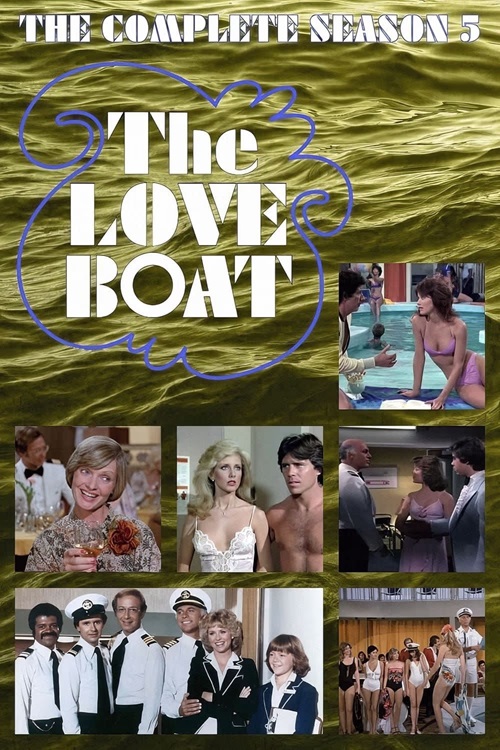
Retro Television Review: The Love Boat 5.12 “Take a Letter, Vicki/The Floating Bridge Game/The Joy of Celibacy”


Welcome to Retro Television Reviews, a feature where we review some of our favorite and least favorite shows of the past!  On Wednesdays, I will be reviewing the original Love Boat, which aired on ABC from 1977 to 1986!  The series can be streamed on Paramount Plus!

Set sail for adventure, your mind on a new romance….

Episode 5.12 “Take a Letter, Vicki/The Floating Bridge Game/The Joy of Celibacy”

(Dir by Richard Kinon, originally aired on December 12th, 1981)

Captain Stubing notices that Vicki seems to be depressed.  He asks his crew if they have any idea what’s wrong with her.

Actually, he could have just asked me.  Why is Vicki depressed?  Maybe it’s because she’s a teenage girl who spends all of her time on a boat surrounded by people who are all at least twenty to thirty years older than her?  Maybe it’s because she doesn’t have any friends her own age?   Maybe it’s because Julie’s now too coked up to be the surrogate mother figure that she was during the previous two seasons?  Seriously, there’s a lot reasons why Vicki might be depressed but they all have on solution.  Let Vicki go to school on the mainland and allow her to have some friends her own age!

The crew, however, thinks that the Captain should just hire Vicki to be his secretary.  Stubing agrees.  Vicki is happy to have a job and she immediately does the exact same thing that I would do under those circumstances.  She rearranges the captain’s entire office.  The Captain can’t find anything but personally, I think his office does look better once everything has been straightened up.  A messy office leads to a messy mind and, on a cruise ship, a messy mind can lead to a collision with an ice berg.

Vicki then issues a cheerful memo, telling all the members of the crew that they should give the Captain a daily run-down of their plans for the day.  Again, I think that makes total sense.  The crew, however, is outraged.  The Captain is worried that Vicki is taking her position too seriously but he doesn’t know how to fire her.  (When did Captain Stubing become a wimp?  This is a weird episode.)  The crew decides to give Vicki so much work that she’ll quite out of frustration but they discover that Vicki is determined to do a good job.  No one knows what to do….

LET HER HAVE FRIENDS HER OWN AGE AND A NORMAL LIFE!  THAT’S THE ONLY THING YOU HAVE TO DO!

Anyway, the overworked Vicki eventually falls asleep on the job.  The Captain uses that as an excuse to fire her.  Vicki smiles because she didn’t really enjoy the job in the first place.  Usually, the relationship between the Captain and Vicki is one of the better elements of The Love Boat but this episode left me feeling really bad for Vicki.  She’s really missing out on the best years of her life.

As for the other two stories, neither was very interesting.  A bridge club made up of four widows takes the cruise and are shocked when one of them (played by Nanette Fabray) decides she would rather spend time with a handsome dentist (Robert Alda) than play bridge.  My question here is why would you spend money to play bridge on a cruise while you could just play at home for free.  If you’re on a cruise, enjoy the scenery!  Don’t just play bridge.  Meanwhile, Barry Styles (Jim Trent) pretended to be a big believer in celibacy in order to get “ice queen” Linda Trent (Carlee Watkins) to fall for him.  Doc and Gopher made a bet on whether or not he would be successful.  DOC!  GOPHER!  You two know you’re better than that!

This week’s cruise was just sad.  The bridge club wasted a lot of money.  Linda was the center of a misogynistic bet.  Vicki is still going to be lonely and depressed next week.  What a sad trip on The Love Boat.

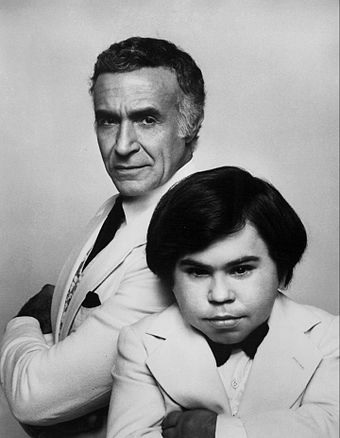
Retro Television Reviews: Fantasy Island 1.11 “Reunion/Anniversary”


Welcome to Retro Television Reviews, a feature where we review some of our favorite and least favorite shows of the past!  On Tuesdays, I will be reviewing the original Fantasy Island, which ran on ABC from 1977 to 1986.  The entire show is currently streaming on Tubi!

This week, Fantasy Island is all about confronting the mistakes of the past.

Episode 1.11 “Reunion/Anniversary”

(Dir by Allen Baron and John Newland, originally aired on April 29th, 1978)

Before I talk about the two fantasies in this episode, here’s a bit of trivia.  This episode was originally intended to be the first episode of the series.  That perhaps explains why it has a tone that is more similar to the original TV movie than to the more light-hearted episodes that followed.  Just as in the made-for-TV movie, Mr. Roarke is a bit of an enigma in this episode, one who has little trouble manipulating his guests in order to get the results that he wants.  This episode even ends with Tattoo saying, “Thank God,” and Mr. Roarke replying with a mysterious half-smile.  Roarke isn’t quite as sinister as he was in the TV movie but he’s also not quite the cheery host that he would become in later episodes.  Roarke, at one point, also mentions that he has people who research everyone’s fantasy before choosing whether to grant it.  That’s certainly different from later episodes, in which the fantasies are apparently available to anyone who can pay or who has been lucky enough to win Roarke’s sympathy.

Of course, when it came time to air the first season of Fantasy Island, this episode got pushed back and it aired as the eleventh episode.  As a result, it presents a bit of a change-of-pace from the episodes that aired the weeks before.  One can only imagine how someone who decided to start watching the show because of the fantasy where Don Knotts played a private eye reacted to this episode, in which four guests were stalked by a murderer who wore giallo-style black gloves.

The guests being stalked by the murderer are Agnes (Pamela Franklin), Hannah (Hilarie Thompson), Carol (Michele Lee), and Jill (Sue Loyon).  They are all members of the Honeybees, a group of former high school cheerleaders who are having a ten-year reunion.  Their fantasy is to spend the weekend at a recreation of the Beehive, a cabin where they used to hang out while in high school.  Of course, every one of them has a dark secret and, after one of the Honeybees is apparently blown up in a nearby barn, the three remaining Honeybees have to solve the mystery.  It all gets fairly dark and sordid but, fear not!  Mr. Roarke shows up and even takes part in some hand-to-hand combat before revealing the truth about what is going on at the Beehive.

(Again, this is not something that we would normally expect from Mr. Roarke.)

Meanwhile, troubled couple Toni (Lucie Arnaz) and Tom Elgin (Ronny Cox, looking slightly embarrassed) come to the island for their anniversary!  Toni wants to relive the weekend that they got married, when they were still happy and before Tom became a drunk.  All of their old friends are invited to the island and soon, Tom is flirting with another woman while Toni is flirting with another man.  Mr. Roarke even invites Rev. Allen (Stuart Nisbet), the man who performed the original wedding ceremony.  The reverend explains that, due to a mix-up at the licensing office, he wasn’t actually legally allowed to perform marriages when Toni and Tom get married so it turns out that Tom and Toni have been living in sin all this time!  Now, Tom and Toni have to decide whether to get married for real or to go their separate ways.

I vote for separate ways, just because they really do seem to be miserable together.  However, it turns out that Mr. Roarke has a plan to keep this awful couple together.

The decision to move this episode from the start of the season to the latter half was definitely a good one.  It was probably a bit too dark and dramatic to really work as the premiere episode but, as the 11th episode, it provides a nice change-of-pace.  After several comedic and somewhat shallow episodes, this episode emphasizes the dramatic side of Fantasy Island.  In this episode, the ultimate lesson appears to be that fantasies are fun but that it’s far more important to deal with the real world.  In other words, Fantasy Island is a nice place to visit but only Mr. Roarke and Tattoo should live there.

International Horror Film Review: Lisa and the Devil (dir by Mario Bava)


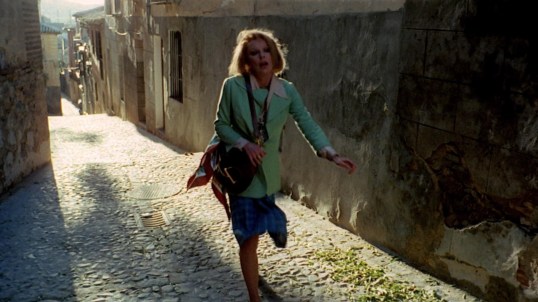
Originally filmed in 1972 and tragically not seen the way it was intended to be seen until years after Mario Bava’s death, Lisa and the Devil tells the story of Lisa (Elke Sommer), a tourist who is visiting the city of Toledo, Spain with a friend.  From the first minute we see Lisa walking through the streets of the city, something seems to be off.  The city seems strangely deserted.  The streets themselves seem menacing, in much the same way that streets of Vienna did in The Third Man.

Lisa leaves her tour group and goes in a store.  A menacing, bald man (Telly Savalas) gives Lisa a strange look as he buys a dummy.  The man resembles a portrait of the devil that Lisa saw earlier.  Running from the shop, Lisa runs into another man (Espartaco Santoni) who appears to be following her.  The man appears to fall to hi death but, despite that, the man will return later.  People have a way of returning in Lisa and the Devil.

Lisa’s tour group appears to have vanished.  She eventually runs into a seemingly friendly couple (Sylvia Koscina and Eduardo Fajardo) who, along with their driver (Gabriee Tinti), agree to take Lisa back to her hotel.  But instead, they somehow end up outside of a dilapidated, mannequin-filled mansion.  When the car breaks down, the group is invited to spend the night by the Countess (Alida Valli, who also appeared in The Third Man), who lives in the mansion with her strange but handsome son, Maximilian (Alessio Oriano).  Maximilian is still mourning his ex-girlfriend, Elena.  Elena, we’re told, bore a striking resemblance to Lisa.

However, it turns out that the Countess and Maximilian are not alone in the mansion.  Also living in the house is the Countess’s second husband, Carlos, who just happens to be the same man that was following Lisa in the city!  And finally, there’s the butler, Leandro, who is the same man who Lisa earlier saw in the shop!

Lisa and the Devil is one of my favorite Italian horror films.  Yes, some of that is because I shared the same name as the movie’s main character and I love it when people say my name a lot.  But I would love this film even if Elke Sommer was playing someone named Annalise or Tiffany.  Mario Bava said that this film, or at least his version of the film, was one of his most personal works and the entire movie does feel like a puzzle that only one person could possibly solve.  In the movie, only Leandro seems to full understand what’s happening in both the city and the house.  In real life, it’s likely that only Mario Bava understood everything that happened in the film.  The film mixes a giallo mystery (because people do soon start to die the mansion) with a surreal exploration of memory, regret, sin, and guilt.  The movie plays out like a waking dream, leaving us to wonder just who exactly Lisa truly is and who the Devil of the title might be.  It’s easy to spot the Devil.  It’s less easy to spot which parts of the film are meant to be reality and which parts might simply be happening in Lisa’s mind.

Unfortunately, the film’s producer had no idea what to do with Bava’s surreal masterpiece.  The few people who saw the film were baffled.  The Italian censors demanded massive cut for both sex and violence and, as a result, Lisa and the Devil was one of the few Bava films not to get a theatrical release in his native country.  It apparently did play in South Korea and Spain, though the Spanish version did not feature Bava’s original, mind-twister of an ending.

Even worse, for the film’s American release, the film’s producer requested that Bava add some exorcism scenes so that the film could take advantage of the popularity of The Exorcist.  By now realizing that his preferred version of the film would probably never be seen, Bava agreed.  With the help of his son, Lamberto, Mario Bava shot several scenes featuring Elke Sommer acting possessed while a priest played by Robert Alda tried to exorcise the demon.  The original Lisa and the Devil footage was presented as being scenes from the dimension Lisa’s soul had been sent to while the demon controlled her body.  The film was retitled House of Exorcism in Amercia.  And here’s the thing — House of Exorcism is hardly a bad movie.  Bava is Bava, afterall.  Sommer does a convincing job acting possessed and the mix of new and old footage is edited together fairly well.  But it’s still not the film that Bava set out to make.

Sadly, Bava’s original version of Lisa and the Devil would not get a proper video release until decades after his death.  It’s not always an easy film to follow.  I’ve seen it several times and there are still things about it that I still don’t fully understand.  It’s a surreal masterpiece, one that is perhaps not meant to be fully understood and the type of dream-film that shows why Bava is one of the few directors that David Lynch has regularly cited as being an influence on his own work.  Lisa and the Devil is a trip through a world dominated by dark and disturbing things and it’s one of the best Italian horror films to come out of the 70s.  Thankfully, it can now be seen the way that Bava intended.


Spider-Man Strikes Back (1978, directed by Ron Satlof)


When three college students decide to prove the folly of the nuclear arms race by stealing enough plutonium to make a nuclear bomb of their own, it’s up to Spider-Man (Nicholas Hammond) to sort them out!  He better do it quickly, too, because the police suspect that the plutonium may have been stolen by a grad student named Peter Parker.

However, Spider-Man is not the only person who wants that bomb.  The evil Mr. White (Robert Alda) also wants the bomb, though he’s not planning on using it to make the case for world peace.  Instead, he plans to blackmail the government into giving him a fortune in gold.  Now, Parker not only has to clear his own name but he has to keep Mr. White from blowing up Los Angles while, at the same time, preventing a nosy reporter (Joanna Cameron) from figuring out that he’s really Spider-Man.

Spider-Man Strikes Back was released as a feature film in Europe and was advertised as being a sequel to Spider-Man.  Gullible audiences who paid money to see it ended up sitting through a two-part episode of the Amazing Spider-Man TV show, albeit one that was edited into a 90-minute movie and which didn’t have stop for commercial interruption.

Spider-Man Strikes Back highlights exactly what went wrong with the first attempt to do a live action version of Spider-Man.  There were several members of Spider-Man’s regular rogues’ gallery who could have stolen that bomb and threatened Los Angeles.  It sounds like a typical Sinister Six plot.  Even the Kingpin, on a bad day, might be tempted to get in on that action.  Instead, the villain is a bland arms dealer named Mr. White.  CBS reportedly refused to use any classic Spider-Man villains because they wanted to keep the show grounded in reality but the minute Spider-Man crawled up a skyscraper for the first time, the network should have forgotten about trying to keep it real.

To repeat what I said in my review of Spider-Man, Nicholas Hammond is miscast as everyone’s favorite webcrawler.  Hammond is likable but he doesn’t come across as being at all insecure and it’s Spider-Man’s insecurities that distinguished him from other comic book heroes.  Spider-Man Strikes Back also suffers because it’s clear that much of the Spider-Man footage was reused from the pilot film.

I still enjoyed watching Spider-Man Strikes Back, though.  When I was a kid, Spider-Man was my favorite and, even in something like this, it’s still fun to watch him climbing up buildings and webbing up crooks.  Though there’s nothing cinematic about Spider-Man Strikes Back and it’s clearly just an extended episode of a TV show, I still liked that the climax took place in an preserved old west ghost town.  That was just strange enough to work.

Though Spider-Man Strikes Back was not as successful at the European box office as Spider-Man, it still did well enough that one more feature film would be crafted from the Spider-Man TV show, Spider-Man: The Dragon’s Challenge.

Horror Film Review: The Devil’s Hand (dir by William J. Hole, Jr.)


Rick Turner (Robert Alda) has a problem.

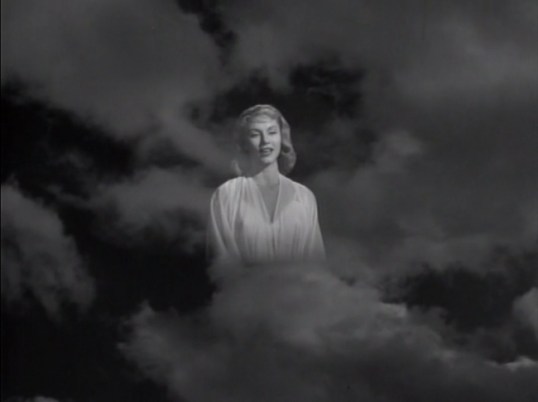
Because he’s continually haunted by strange dreams, Rick hasn’t been getting much sleep.  As he explains to his incredibly understanding girlfriend, Donna (Ariadna Welter), the dreams involve a vision of a beautiful woman named Bianca (Linda Christian), who appears to be standing in the clouds while wearing a sheer negligee and calling out to him.

Donna insists that it’s probably nothing but Rick says that, after his last dream, he felt himself being drawn to a doll shop in downtown Los Angeles.  When Rick and Donna go down to the shop, they discover a doll of Bianca sitting in the window.  The owner of the shop, Frank (Neil Hamilton), insists that Rick came in earlier and specifically requested that Frank design the doll so that he could send it as a gift to another woman.  You would think that would upset Donna but she’s more interested in the fact that she’s found a doll that looks exactly like her.

Well, you can probably guess what happens.  Eventually, the doll that looks like Donna ends up pinned to the wall of the shop and Donna ends up in the hospital with a mysterious illness.  Rick manages to track down the real-life Bianca, who greets him in her apartment while wearing the same negligee from Rick’s dreams.  Bianca explains to Rick that she’s been reaching out to him because she wants him to join a cult that worships “Gamba, the Great Devil Dog.”

It turns out that the cult meets in the back of Frank’s doll shop.  Rick attends a meeting with Bianca and discovers that the cult is made up of exclusively of beautiful young women and bland, middle-aged men.  He even gets to witness a near-human sacrifice involving a wheel that’s studded with knives.  As Bianca explains it, Gamba sometimes turns the knives into rubber and then sometimes, he doesn’t.  Gamba’s unpredictable like that.

Bianca explains that Rick can have everything he wants if he just gives his soul over to the Devil Dog.  But what about Donna, who is still in the hospital?

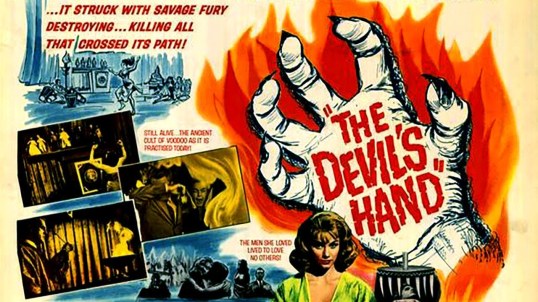
The Devil’s Hand is a low-budget but occasionally effective horror film from 1962.  (Apparently, it was originally filmed in 1959 but it wasn’t released until 3 years later.  Linda Christian later said that she never actually got paid for appearing in this film, as the production company apparently ran out of money during filming.)  Oddly enough, the film opens with extremely cheerful surf music, which leads you to suspect that you’re about to see some sort of weird beach comedy.  Instead, The Devil’s Hand turns out to be a film about a cult operating in the shadows of Los Angeles.

The cult is probably the most interesting thing about the film.  Though the film doesn’t specifically call attention to this fact, it’s hard not to notice that most of the male cult members appear to be either accountants or middle-management types, the type who wear cheap suits and too much cologne.  It’s impossible not to be amused by the idea of a bunch of middle class nobodies gathering in the back of a doll shop so that they can worship the Great Devil Dog.  Neil Hamilton and Linda Christian are both perfectly cast as the leaders of the cult.  Hamilton is properly menacing while Christian seems to be having fun tempting Rick into the darkness.

Unfortunately, Rick’s not a very likable protagonist.  Even though his girlfriend is in the hospital, Rick doesn’t have any problem with going to the horse track and playing the stock market with Bianca.  In short, Rick comes across as being a bit of a jerk and you can’t help but feel that Donna might be better off without him.

Anyway, The Devil’s Hand is an entertaining occult film, one that’s definitely not meant to be taken too seriously.  It’s only 71 minutes long so it really plays more like an extended episode of an old anthology show than anything else.  (It just needs a narrator.)  The story moves quickly and you’ll never forget those accountants in the back of the doll shop.

Hand-y Man: Peter Lorre in THE BEAST WITH FIVE FINGERS (Warner Brothers 1946)


gary loggins's avatarcracked rear viewer

Warner Brothers was in at the beginning of the first horror cycle with DR. X and MYSTERY OF THE WAX MUSEUM , both starring Lionel Atwill. The studio concentrated more on their gangster flicks, Busby Berkeley musicals, swashbuckling epics, and the occasional highbrow films with George Arliss and Paul Muni, but once in a while they’d throw horror buffs a bone: Karloff in 1936’s THE WALKING DEAD, ’39’s THE RETURN OF DR. X (no relation to the original, instead casting Humphrey Bogart as a pasty-faced zombie!), and a pair of scare comedies from ’41, THE SMILING GHOST and THE BODY DISAPPEARS.

Come 1946, Warners took another stab at horror with THE BEAST WITH FIVE FINGERS, a psychological thriller about a dead pianist’s crawling hand out for murderous revenge… well, sort of. The movie was assembled by a host of horror vets, directed by Robert Florey (MURDERS IN THE RUE MORGUE…

View original post 623 more words