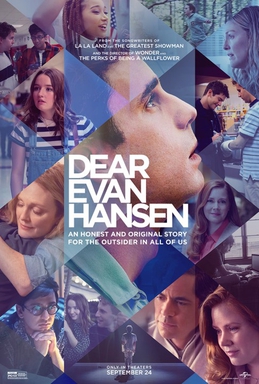
The Films of 2021: Dear Evan Hansen (dir by Stephen Chbosky)


Last night, I finally watched Dear Evan Hansen.

Dear Evan Hansen is the film adaptation of the Tony-award winning Broadway musical of the same name.  Recreating his stage role, Ben Platt plays Evan Hansen, a teenager who suffers from social anxiety and who is mistaken for having been the best friend of Connor Murphy (Colton Ryan), a troubled classmate who committed suicide after stealing a letter that Evan had written to himself.  (Somewhat awkwardly, it was also a letter in which Evan somewhat obliquely wrote about the crush that he had on a member of Connor’s family.)  When the letter is subsequently found on Connor’s body, it’s assumed that it’s a suicide note that Connor meant for Evan.  Evan, who is in love with Connor’s sister, Zoe (Kaitlyn Dever), allows everyone to believe that he and Connor were friends.  Connor’s mother, Cynthia, (Amy Adams) and his stepfather (Danny Pino) adopt Evan as a sort of replacement for their dead son.  Cynthia views Evan as being the only way that she’ll ever understand what Connor was going through and Evan continually reassures that Murphys that Connor really did love all of them and that he was trying to change his life for the better.  With the Murphys now treating Evan as a member of their own family, Evan’s mother (Julianne Moore) feels that her son is now ashamed of her.  And Evan’s classmate, Alana (Amandla Stenberg), launches a movement to raise money to preserve the apple orchard where Evan claims that he and Connor spent all of their time together.

As a musical, Dear Evan Hansen was very popular.  As a film, it doesn’t work and it doesn’t work for all the reasons that everyone assumed that it wouldn’t work.  Believe me, I wanted it work.  From the minute that the trailer first dropped, the reaction to the film has been so overwhelmingly negative that I was really hoping that the film itself would turn out to be an overlooked gem.  I was really hoping that this would be one of those underappreciated films that just needed a few brave champions.  Instead, it turned out to be not terrible in the way that Cats was terrible but still too flawed to be considered a success.

First off, the plot itself doesn’t transition well from the stage to film.  There’s too many holes and there’s too many places in the story where you find yourself wondering why you should care about Evan and his problems.  Those plot holes may not have been as big of a problem when the story was presented on the stage because watching any story play out against an artificial backdrop requires a certain suspension of disbelief.  But, on film, seeing Evan attending an actual school and walking down an actual street and visiting an actual house, you’re much more aware of how inauthentic the story feels.  Evan’s actions rarely make sense and it’s difficult to accept that anyone, even Connor’s emotionally desperate parents, would believe the stories that Evan concocts about his friendship with Connor.  On stage, you could perhaps accept that Zoe would buy that Evan and Connor were friends who confided in each other despite the fact that Evan doesn’t seem to know anything about Connor’s family or home life.  On screen, especially when one considers the fierce intelligence that Kaitlyn Dever brings to the role of Zoe, it’s a bit more difficult to believe.

The other big problem with the film is Ben Platt is too old for the role of Evan.  Platt first played the role in 2015, when he was 23.  He won a Tony and certainly, he deserves a lot of credit for creating the role from the workshop phase all the way to Broadway.  Now, however, he’s 28 and he looks considerably older.  So much of what Evan does is acceptable only if you believe that he’s an immature 17 year-old who is desperately looking for a place and a family where he belongs.  The same actions go from being poignant to being creepy when they’re done by someone who appears to be in his mid-30s.  While Platt has a great singing voice and shines in the musical numbers, he’s a bit too mannered when he just has to recite dialogue.  He’s still giving a stage performance, even though he’s now playing the role on film and everyone around him is giving a film performance.  Platt’s talent is undeniable but he’s miscast here and casting him opposite performers who can actually still pass for teenagers doesn’t help the situation at all.

(When I watched the film, I thought that obvious age difference between Ben Platt and Kaitlyn Dever occasionally made the scenes between Evan and Zoe uncomfortable to watch.  Then I did some research and discovered that Dever is only three years younger than Platt.  It’s just that Dever still looks like a teen while Platt looks very much like an adult.  And there’s no shame in looking your age.  Someone just needs to cast Platt in an adult role.)

In Platt’s defense, the film doesn’t really make perfect use of any of the members of its talented cast.  Amy Adams is such a good actress but the film casts her as a stereotypically flakey rich suburbanite who flitters from one trend to another.  Julianne Moore and Amandla Stenberg are similarly wasted, playing characters who have potential but who are never quite given as much to do as they deserve.  Of the cast, Kaitlyn Dever is the stand-out, even though Zoe is a bit of an inconsistent character.  Initially, she seems like the one person willing to call out everyone on their BS and then, just as suddenly, she’s oddly forgiving of someone who essentially manipulated her emotions for his own benefit.

Not surprisingly, Dear Evan Hansen works best when people are singing.  Ben Platt and Colton Ryan bring so much energy to Sincerely, Me that I briefly had hope that the film was turning itself around.  Unfortunately, that wasn’t the case but still, it’s a good production number.  Unfortunately, the rest of the movie doesn’t really live up to it.
A Blast From The Past: The Other Fellow’s Feelings (dir by Arthur H. Wolf)


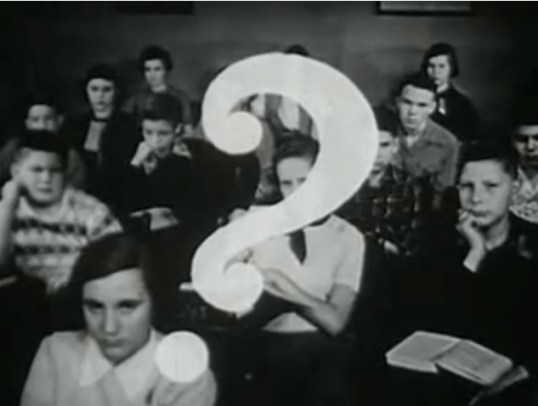
Why is Judy crying in class?

She says it’s because Jack “won’t stop teasing me.”  Is Jack to blame or does Judy need to toughen up?  Should Jack’s classmates have said, “Lay off?”  Should Judy’s friends have tattled to the teacher?  Should Judy have teased Jack back?  What would you do?

This short film from 1951 considers all of those issues and yet, it’s hard not to feel that the ultimate message is that Judy needs to stop taking everything so personally.  Sorry, movie.  Sorry, judgmental narrator.  I disagree.  Myself, I think the skinny kid with the glasses should have followed through with his threat to beat Jack up.  Up until I was 12, I had a really severe stutter so I know what Judy was going through.  Fortunately, in my case, I also had three older sisters and a bunch of overprotective cousins that were always looking after me.  Judy doesn’t seem to have that type of support system.  To be honest, in most cases like this, I put the blame on the teachers.  Jack and Judy are sitting up at the front of the class so there’s really no excuse for no one noticing what was going on.

This short film is another one that feels like a Herk Harvey production but it was actually directed by Arthur Wolf.  My favorite shot is the entire class staring at the camera while the narrator asks, “What would you do?”  Seriously, someone’s in a lot of trouble once these kids come to a consensus on who is to blame.

From 1951, it’s time to consider …. The Other’s Fellow’s Feelings.

Music Video of the Day: I Want Your Love by Chic (1979, directed by ????)


I can relate to the title of this song, as I think almost everyone can.  The love of the title doesn’t just have to refer to romantic love.  It can also just mean being loved as in being appreciated or admired or praised or …. well, really whatever you mean for it to mean.  There’s all sorts of love out there.  Everyone wants to be loved and sometimes, that mean exhausting yourself trying to see every movie released in one year in just two weeks.  Not that I’m speaking from personal experience, of course…. heh heh…. 

Watching this video, I found myself a bit upset with myself for having never learned how to play the violin.  It’s a neat little instrument and there’s no way you can’t look transcendent while playing it.  Oh well.  We’ll chalk that up as missed opportunity, I guess.  To be honest, I have a feeling I’d end up putting out someone’s eye with that big bow that they use so I guess it’s for the best that I never learned.

Good song, though.  You can dance to it.  You can laugh to it.  You can cry to it.  This song came out in 1979 and, as we all know, the 70s were the best!

Enjoy!

I want your love
I want your love
I want your love
I want your love


Do you feel like you ever want
To try my love and see how well it fits?
Baby, can’t you see when you look at me
I can’t kick this feelin’ when it hits


All alone in my bed at night
I grab my pillow and squeeze it tight
I think of you and I dream of you all of the time
What am I gonna do?


I want your love
I want your love
I want your love
I want your love


I want your love
I want your love
I want your love
I want your love


Sometime, don’t you feel like you
Never really had a love that’s real?
Well, here I am and who’s to say
A better love you won’t find today


Just one chance and I will show you love
Like no other, two steps above
On your ladder I’ll be a peg
I want your lovin’, please don’t make me beg


I want your love
I want your love
I want your love
I want your love


I want your love
I want your love
I want your love
I want your love


I want your love
I need your love
I’ll share my dreams and make you see
I’m really there, your love I need


I want your love
I need your love
Just like the birds need sky above
I’ll share my dreams and make you see
I’m really there, your love I need


I want your love
I want your love
I want your love
I want your love


I want your love
I want your love
I want your love
I want your love

Music Video of the Day: Jive Talkin’ by The Bee Gees (1975, dir by ????)


Yes, everyone, I am still in a 70s-type of mood.  I imagine this will be the case for the rest of January.  Once February comes around, I’ll probably be in a Canadian mood so get ready for a lot of songs off of the Degrassi soundtrack.

Anyway, this video is for Jive Talkin’, which was I guess one of the Bee Gees’s earliest disco songs.  (Apparently, they were originally a non-disco band, which I just can’t imagine what that was like.  Yes, I know that it would be very easy for me to listen to their non-disco music.  That’s not the point.  The 70s are all about disco and dancing.  The 70s didn’t need any folk rock.)  Jive Talkin’ is one of those songs that feels like it should have been written for the Saturday Night Fever soundtrack but it actually came out two years before that film appeared in theaters.  That said, it does appear in Saturday Night Fever.  Unfortunately, the song did not appear in Stayin’ Alive.  That’s a shame since that film was all about jive and I think Frank Stallone could have done wonders with it.

Enjoy!

It’s just your jive talkin’
You’re telling me lies, yeah
Jive talkin’
You wear a disguise
Jive talkin’
So misunderstood, yeah
Jive talkin’
You really no good
 
Oh, my child
You’ll never know
Just what you mean to me
Oh, my child
You got so much
You’re gonna take away my energy
 
With all your jive talkin’
You’re telling me lies, yeah
Good lovin’
Still gets in my eyes
Nobody believes what you say
It’s just your jive talkin’
That gets in the way
 
Oh my love
You’re so good
Treating me so cruel
There you go
With your fancy lies
Leavin’ me lookin’
Like a dumbstruck fool
With all your
 
Jive talkin’
You’re telling me lies, yeah
Jive talkin’
You wear a disguise
Jive talkin’
So misunderstood, yeah
Jive talkin’
You just ain’t no good
 
Love talkin’
Is all very fine, yeah
Jive talkin’
Just isn’t a crime
And if there’s somebody
You’ll love till you die
Then all that jive talkin’
Just gets in your eye
 
Jive talkin’
You’re telling me lies, yeah
Good lovin’
Still gets in my eyes
Nobody believes what you say
It’s just your jive talkin’
That gets in the way
 
Love talkin’
Is all very fine, yeah
Jive talkin’, just isn’t a crime
And if there’s somebody
You’ll love till you die
Then all that jive talkin’
Just gets in your eye, yeah yeah
 
Oh jive talkin’
Jive talkin’
Oh jive talkin’

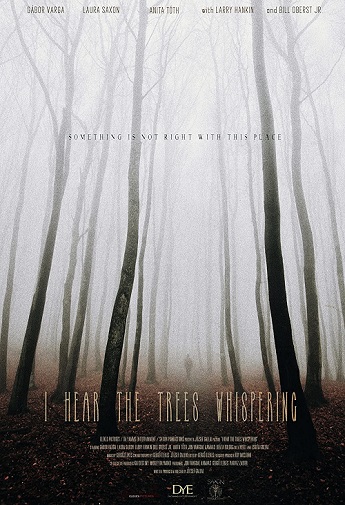
Film Review: I Hear The Trees Whispering (dir by Jozsef Gallai)


A man named Will (Gabor Varga) has a new job. He spends his days in the wilderness, living in a small cabin and essentially keeping an eye out for anyone who might need help or who might be doing something that they shouldn’t be doing. His only company is his supervisor, June (Laura Saxon). He never meets June. He just hears her voice as he spends his days exploring the forest. Her voice sounds familiar to him, like someone from his recent past,

Will is a man hiding from the traumas of that past. His wife died in a tragic accident. His daughter is currently being raised by her grandfather (Larry Hankin). Will has next to no contact with her. He says it’s better that way. June tells him that almost everyone who accepts a job in the forest is trying to avoid something or escape some sort of tragedy. The forest is where people go to disappear.

June also explains that strange things are hidden in the forest,. Will comes across creepy and deserted buildings. He finds a backpack and makes a shocking discovery when he searches it. Some nights, he thinks that he might see a figure in the distance trying to give him some sort of coded message.

The latest film from director Joszef Gallai, I Hear The Trees Whispering is full of atmosphere. The majority of the film is shot from Will’s point of view. Indeed, we never see Will’s face. Instead, we hear his voice and occasionally, we see his hands while he’s searching for something. It’s a technique that puts us directly into Will’s mind. Just as he’s lost in the wilderness, so are we. Just as he’s hearing strange noises and trying to see where they’re coming from, so are we. It’s a technique the allows the film to capture the forest in all of it ominous beauty. One can see why Will would want to escape to the forest while also understanding how the isolation could drive someone to the point of madness. However, there’s another reason why the majority of the film is shot from WIll’s point of view, one that I won’t spoil beyond to say that it all pays off in an unexpected but effective twist during the film’s third act.

With a 78-minute running time, I Hear The Trees Whispering moves at a deliberate pace, Once again, it’s a film that’s far more concerned with setting the proper atmosphere and developing the characters of Will and June than with tossing in any cheap jump scares. The audience’s fear and anxiety comes from the fact that it’s impossible to watch the film without imagining how you would react if you found yourself in the same situation. Would you have the courage to leave the cabin and see where the noises were coming from? I probably wouldn’t but Will doesn’t really have a choice. He’s as much a prisoner of fate as he is a prisoner of his tragic past. Just as Jack Torrance was always meant to be the caretaker of the Overlook Hotel, Will was always meant to search the forest in search of answers.

As I mentioned earlier, there’s a big twist in the third act, one that I guarantee will take you by surprise and which will force you to reconsider everything that you’ve previously seen. That’s what a good twist does!

I Hear The Trees Whispering is an effectively atmospheric thriller, one that will leave you thinking long after the end credits have rolled.

Music Video of the Day: The Joker by Steve Miller Band (1973, dir by ????)


You know the lyrics.

You know the bassline.

You know the “waa waa” effect.

Even if you don’t know all the lyrics or you don’t know the name of the song or even the band, you do know that, in the 70s, someone was a picker, grinner, a smoker, and a midnight toker.  Someone got their loving on the run.

I once took a creative writing class with an older student who claimed that he once met the Steve Miller Band in a bar.  He said they were a cool group of guys, even in their older years.  I’m not sure if he was telling the truth (it was creative writing, after all) but it was still a good story.

Why was this song not used in The Dark Knight, I ask you.  We all know that Heath Ledger could sing.  Imagine him singing this while holding up a mirror to the face of Aaron Eckhart.  Or, if Heath didn’t want to sing it, Eric Roberts was in that film as well.  Who wouldn’t want to watch Eric Roberts cover this song?  Missed opportunities.

Enjoy!

Some people call me the space cowboy, yeah
Some call me the gangster of love
Some people call me Maurice
‘Cause I speak of the pompatus of love a


People talk about me baby
Say I’m doin’ you wrong, doin’ you wrong
Well, don’t you worry, baby, don’t worry
‘Cause I’m right here, right here, right here, right here at home


‘Cause I’m a picker
I’m a grinner
I’m a lover
And I’m a sinner
I play my music in the sun
I’m a joker
I’m a smoker
I’m a midnight toker
I sure don’t want to hurt no one
I’m a picker
I’m a grinner
I’m a lover
And I’m a sinner
I play my music in the sun
I’m a joker
I’m a smoker
I’m a midnight toker
I get my lovin’ on the run
Ooh, whoo, ooh, whoo


You’re the cutest thing that I ever did see
I really love your peaches
Wanna shake your tree
Lovey dovey, lovey dovey, lovey dovey all the time
Ooh wee baby, I’ll sure show you a good time


‘Cause I’m a picker
I’m a grinner
I’m a lover
And I’m a sinner
I play my music in the sun
I’m a joker
I’m a smoker
I’m a midnight toker
I get my lovin’ on the run
I’m a picker
I’m a grinner
I’m a lover
And I’m a sinner
I play my music in the sun
I’m a joker
I’m a smoker
I’m a midnight toker
I sure don’t want to hurt no one

Ooh, whoo, ooh, whoo


People keep talkin’ about me baby
Say I’m doin’ you wrong
Well don’t you worry, don’t worry, no don’t worry mama
‘Cause I’m right here at home
You’re the cutest thing I ever did see
I really love your peaches
Wanna shake your tree
Lovey dovey, lovey dovey, lovey dovey all the time
Come on baby now, I’ll show you a good time

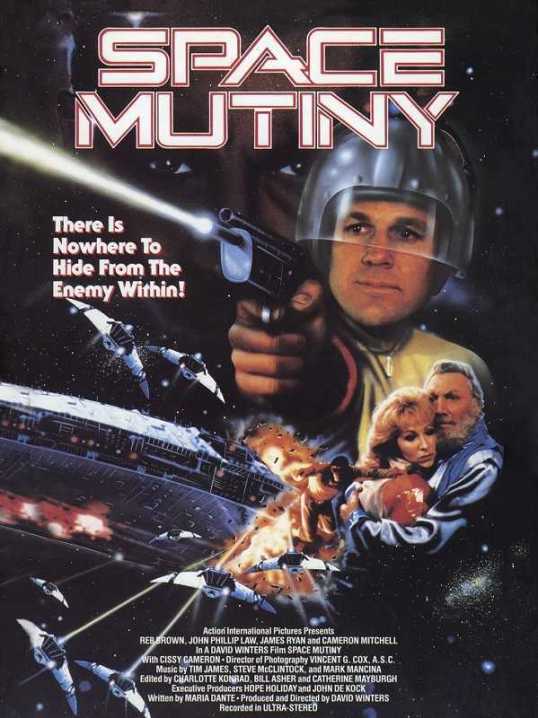
The TSL’s Grindhouse: Space Mutiny (dir by David Winters)


“Arggggh!”

— Dave Ryder (Reb Brown) in Space Mutinty (1988)

Space Mutiny, a sci-fi epic from 1988, is full of dialogue about all sorts of political and philosophical concerns but none of it is quite as memorable as the quote above.  Dave Ryder says, “Argggggh!” a lot over the course of Space Mutiny.  He’s the newly appointed head of security for the Southern Sun, a gigantic spaceship that has spent the last 260 years traveling from Earth to a new planet.  Being head of security is important because there are some people on the Southern Sun who are plotting a mutiny.  Dave Ryder decides that the most effective way to battle the mutineers is to yell loudly and frequetly.  “ARGGGGGH!’ Ryder yells whenever he’s being shot at.  “ARGGGGGGGH!” he screams when he finds himself on a very slow and gradual collision course with the head of the mutineers.

When Dave isn’t saying stuff like, “Argggggh!,” he’s saying stuff like, “Go!  Go!  Go!”  When the bad guys open fire on him and his men, it’s time for them to “Go!  Go!  Go!”  When the mutineers are being chased, Dave is quick to tell everyone to “Go!  Go!  Go!”  He’s like the physical fitness trainer from Hell.  He never actually yells “Feel the burn!” but you can be damn well sure that he’s thinking it.  In fact, there’s a point in the movie where “Feel the burn!” actually would have been a good line.  Dave and his girlfriend, Lea (Cissie Cameron), set a mutineer on fire.  It’s actually a bit of a sadistic scene and it doesn’t come across as being the big hero moment that it’s obviously meant to be.  But, then again, Dave isn’t yelling because he’s a nice guy.  He’s yelling because he’s played by Reb Brown.  Reb Brown yelled all the way through Strike Force Commando.  Why wouldn’t he do the same for Space Mutiny?

Of course, Dave isn’t the only person barking out orders on the Southern Sun.  Cameron Mitchell plays the ship’s captain, a wise old man who looks like Santa Claus.  John Phillip Law is Kalgon, the main mutineer.  He laughs a lot.  Cissie Cameron is the captain’s daughter.  She falls for Ryder, despite the fact that she appears to be old enough to be Ryder’s mother.  (In real life, Reb Brown and Cissie Cameron are married and Cissie is only a few years older than Reb.  In Space Mutiny, she’s stuck with an unflattering hair style and is made up to look like an aging cheerleading coach.)  There’s also a woman who works on the ship’s bridge.  She’s killed in one scene, just to mysteriously turn up alive in the scene that follows.  In space, no one can hear the script supervisor.  Finally, there’s a group of alien witches who board the ship and spend the entire movie dancing in front of a ball of electricity.  Since they don’t actually interact with any of the main characters, it’s obvious that they were added to pad out the film’s running time.

One of the more interesting things about Space Mutnity is that Kalgon actually has a point.  It does seem kind of stupid to spend several hundred years traveling to just one planet when there’s other planets nearby that the ship could just as easily reach.  Indeed, the mission of the Southern Sun never makes that much sense and the Captain seems to be delusional in his insistence that it does.  The Captain’s unending faith and his long-flowing beard makes him come across like a minor biblical prophet, the type who always had to ask a major prophet to interpret his visions for hm.  The Captain does not come across like someone who really knows what he’s doing.  I don’t care how much Ryder screams, Kalgon had a point!

Today, Space Mutiny is best known for being featured on an episode of Mystery Science Theater 3000 and for later being taken apart by the Rifftrax crew.  Space Mutiny, though, is such an extremely silly movie that you really don’t even need any professionals to help you snark your way through it.  The film offers up such a treasure trove of material then even the most humorless among your friends will be a comedic genius by the time it ends.  It’s a fun movie, made even more so by the fact that the filmmakers apparently meant for the film to be taken seriously.  There’s a lot of talk about important issues like freedom, duty, and faith.  In the end, what you’ll remember is the screaming.

The Films of 2021: God’s Not Dead: We The People (dir by Vance Null)


Here’s the story so far:

In 2014, a film called God’s Not Dead was released.  Produced by PureFlix Entertainment, it was a big, messy, and often confusing movie about a college student who challenged the claim of an atheist professor that God never existed.  While the student was debating the professor, countless other characters were wandering around campus and having their own faith-related dramas.  The main theme of God’s Not Dead appeared to be that only bitterness could explain disbelief and that everyone on the planet secretly wants to be a Christian.  It was not a particularly good movie but it was a surprise hit at the box office.  After spending years being ridiculed in nearly every mainstream film ever released, hardcore evangelicals finally had a movie that ridiculed the other side.

In 2016, God’s Not Dead 2 came out.  God’s Not Dead 2 was so heavy-handed that it actually managed to make the original film appear balanced and fair.  As opposed to the previous film, God’s Not Dead 2 was overtly political, telling the story of a teacher who is put on trial for encouraging a student to pray.  Again, it wasn’t a very good film but it did have two things going for it: a sincere lead performance from Melissa Joan Hart and an amazingly over-the-top villainous turn from Ray Wise as the prosecutor.  Most prosecutors would be smart enough to just argue that the teacher’s actions violated the law and perhaps offer a deal so that they wouldn’t have to waste their time with a lengthy trial.  Instead, Wise’s prosecutor practically cackles that he’s going to prove to the jury that “God is dead.”  Not surprisingly, the jury responded with “That’s a little above our paygrade.”

After all of that, 2018’s God’s Not Dead: A Light In The Darkness was a surprisingly low-key affair.  Largely eschewing the overt political content of the previous installment, the third God’s Not Dead film returned the story to campus and followed the efforts of Rev. David Hill (played by David A.R. White, the franchise’s producer) to keep his church from being closed down.  Of all the films, the third God’s Not Dead probably comes the closest to being a conventional film.  It even admits that not all atheists are evil and acknowledges that there is a legitimate constitutional argument to be made for not having a church on campus.  Because it didn’t feature any villains as memorable Ray Wise, A Light In The Darkness is also probably the most boring of all the films.  It also underwhelmed at the box office, a sign that the novelty of seeing a Christian film in a theater had worn off for even the film’s target audience.

And that brings us to God’s Not Dead: We The People, which had a three-day exclusive theatrical engagement in October of 2021.  As you can probably guess from the title, the fourth God’s Not Dead returns to the political themes of the second film.  Congress is thinking about infringing on the rights of parents to homeschool their children.  Rev. Hill and a group of parents (one whom is played by Antonio Sabato, Jr.) head to Washington D.C. so that they can testify in front of a Congressional hearing that’s being chaired by a smug liberal played by legitimate actor William Forsythe.  Isaiah Washington appears as a congressman who supports homeschooling and who thinks the education system needs to be reformed.  (“He’s that Congressman from Texas!” one character exclaims.)  Judge Jeanine Pirro plays a judge who is originally against homeschooling but who changes her mind after her daughter argues with her because, in the world of God’s Not Dead, not a single atheist or skeptic has any sort of firmly held conviction that can’t be overturned by an argument that would be more appropriate for a community college Intro to Philosophy class.  The film ends with the reverend giving an impassioned speech while Forsythe glowers and Washington stares on in beatific appreciation.

As you can probably guess, God’s Not Dead: We The People is total and complete propaganda, full of strawman arguments and moralizing.  Speaking as someone who is not a fan of the government or its tendency to try to interfere in people’s lives, even I watched the film and thought, “Okay, this is just a little too heavy-handed for me.”  Director Vance Null takes a vaguely Oliver Stone-style approach to the film, editing in random shots of American flags and patriotic monuments while the film’s characters discuss how the founding fathers felt about religion.  To be honest, when it comes to how its presented, the film’s propaganda is not that different from the type of propaganda that regularly appears in more mainstream films.  The film’s flashy editing and one-sided view of the world isn’t that much different from Adam McKay’s post-Big Short filmography.  Ending the film with a passionate speech that leaves all of the main character’s opponents with nothing to say in response may be a cliché but it’s a cliché that Aaron Sorkin knows well.  All of the cameos from the characters who appeared in the previous film may feel a bit random but it’s not that much different from when Marvel used to sneak Robert Downey, Jr. into every film they made.  If nothing else, the people behind the God’s Not Dead franchise have learned the first rule of business: watch what the successful do and copy them.

All of that aside, God’s Not Dead: We The People is not a particularly interesting film.  The editing may be flashy but the pace is still slow and the final hour of the film is basically just people testifying in front of a congressional committee.  The film is less concerned with converting the skeptical and more about rallying the faithful to vote in 2022.  That’s always been my main problem with the propaganda films of both the left and the right.  It’s always less about making a case and more about vanquishing any shred of doubt from those who already largely agree with the film’s message.  Ideological purity tests do not make for enlightening or memorable entertainment.

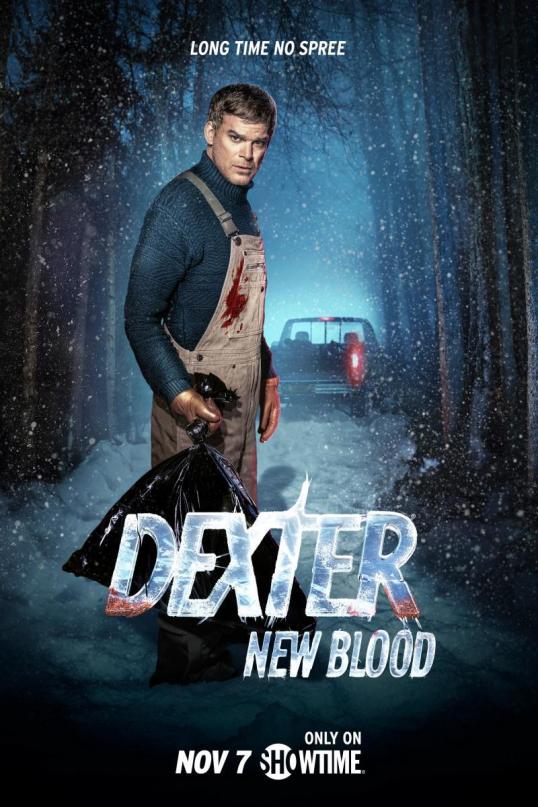
TV Review: Dexter: New Blood 1.10 “Sins of the Father” (dir by Marcos Siega)


I’ve been thinking about the finale of Dexter: New Blood for about three days now.  I’m going to guess that if you’re a Dexter fan, you’ve already seen it so I’m going to just talk about what happened without posting any spoiler warnings.  I hate spoiler warnings anyways.

Harrison shot and apparently killed Dexter.  Now, I have to admit that, when Harrison first showed up during the first episode, my initial thought was that Harrison was going to end up killing Dexter for the same reason that Dexter had killed so many others.  And, as other have pointed out, the entire show was pretty much leading up to either Harrison killing Dexter or Dexter being forced to kill Harrison.  So, really, I guess I should be happy that the show followed its storyline to its only logical conclusion.  I can certainly respect the show for staying true to itself but respect and happiness don’t always go together.

To be honest, even though I knew that it should happen, I really thought there was no way that the show would actually do it.  I was so used to Dexter being able to get out of any situation that I just naturally assumed that he would be able to do it again.  And if Dexter had managed to escape from the jail without killing Logan in the process, I think Dexter probably could have pulled it off.  But, by killing Logan, Dexter broke Harry’s code.  Dexter revealed that the code was really just a part of his own sociapathic ritual.  It wasn’t something that he truly obeyed,  Instead, it was something that he used to justify his dark urges.

Harrison realized what Dexter had done and, as a result, Harrison shot him.  I didn’t necessarily buy the idea that Dexter would just stand there and encourage his son to kill him.  That was a bit convenient and it required Dexter to have a conscience, which is something that we all know he didn’t have.  Even Dexter’s comment that he had never felt love until the minute Harrison pulled the trigger felt like another case of Dexter what he knew the audience wanted to hear.

My main issue with the episode wasn’t so much Harrison shooting Dexter as it was what happened next.  Allowing Harrison to escape and agreeing to cover up what he did was totally out-of-character for Angela.  Angela, who has shown that she’s willing to arrest anyone in town regardless of how close she may be to them, had no problem wiping Harrison’s prints off the gun and tossing him some money for his journey.  It didn’t make any sense.  Angela barely knows Harrison.  How does she know that Harrison didn’t help Dexter with the murders?  Also, after Angela discovered that Dexter was a murderer, did it not occur to her that there might be something strange about the stabbing at the school?  Is Angela okay with Harrison driving off to freedom while the kid that Harrison tried to murder is destined to always be remembered as a potential school shooter?  I can accept Harrison shooting Dexter.  I can even respect it.  But I cannot accept that Angela would let him get away with it.

There were other loose ends that bothered me.  Why was Edward Olsen such an important character in the first few episodes?  Why did he mysteriously vanish?  Why did the show seem to building up to a twist about Audrey’s parentage, just to abandon the whole thing an episode later?  How did Kurt manage to capture Molly, who was more or less aware that Kurt was a killer and certainly wouldn’t go anywhere willingly with him.  Considering that this episode appeared to be the definitive end of Dexter’s story, those loose ends are frustrating.

That said, it was a well-directed episode.  Michael C. Hall was riveting and genuinely frightening in the scenes where he manipulated Angela and Logan.  The final montage of the faces of everyone innocent person who died as a result of Dexter’s actions was an emotional moment and I’m glad to see that Doakes was included with Deb, Rita, LaGuerta, Lundy, and all the rest.  Doakes always got a raw deal.

Dexter: New Blood was a success.  Even the fact that I have mixed feelings about how it ended is proof of how well executed this revival was.  (Trust me, I could have hardly cared less when Dexter sailed into that hurricane, so fed up was I with the show at the time.)  And, between you and me, I’m not convinced that Dexter’s dead.  Yes, he was shot.  Yes, he didn’t look good.  But Harrison drove away before the paramedics arrived.  Dexter’s survived a lot.

At the very least, Ghost Dex would be amusing….

Music Video of the Day: The Night Chicago Died by Paper Lace (1974, dir by ????)


Paper Lace was a British band.  None of them were from Chicago.  None of the had ever been to Chicago.  Certainly none of them had a father who was a cop in Chicago or a mother who cried and prayed the night that Chicago died.

In fact …. CHICAGO DIDN”T EVEN DIE!

Well, it came close once.  There was that whole fire that was caused Mrs. O’Leary’s cow.  I’ll be honest, though.  I think the cow was innocent.  I think Mrs. O’Leary just forgot to turn off the stove and she was too embarrassed to admit it.  So, the cow got blamed.

But that’s not what this song is about.  The song is about a huge gunfight between the police and the members of Al Capone’s gang.  However, the Chicago police never got into a gunfight with the Chicago Outfit, largely because Capone owned the cops.

I would also point out that, according to a friend of mine from the area, Chicago doesn’t even have an east side!

So, maybe the song isn’t historically accurate.  Listen, I’m from Dallas.  I know what it’s like when people assume that they know everything that they need to know about your city.  I know how annoying it is. I can’t tell you how many movies I’ve seen that supposedly take place in North Texas but which have big mountains in the background or people exploring caves.  There are no mountains in North Texas!  There is no east side in Chicago.

But, on the plus side, The Night Chicago Died has a killer bass line and you can sing along with it.  That’s always a good thing.  Plus, the drummer looks like he might have been a magician in his spare time.

Enjoy!

My daddy was a cop on the east side of Chicago
Back in the U.S.A. back in the bad old days


In the heat of a summer night
In the land of the dollar bill
When the town of Chicago died
And they talk about it still
When a man named Al Capone
Tried to make that town his own
And he called his gang to war
With the forces of the law


I heard my mama cry
I heard her pray the night Chicago died
Brother what a night it really was
Brother what a fight it really was
Glory be!
I heard my mama cry
I heard her pray the night Chicago died
Brother what a night the people saw
Brother what a fight the people saw
Yes indeed!


And the sound of the battle rang
Through the streets of the old east side
‘Til the last of the hoodlum gang
Had surrendered up or died
There was shouting in the street
And the sound of running feet
And I asked someone who said
“‘Bout a hundred cops are dead!”


I heard my mama cry
I heard her pray the night Chicago died
Brother what a night it really was
Brother what a fight it really was
Glory be!
I heard my mama cry
I heard her pray the night Chicago died
Brother what a night the people saw
Brother what a fight the people saw
Yes indeed!


And ther was no sound at all
But the clock upon the wall
Then the door burst open wide
And my daddy stepped inside
And he kissed my mama’s face
And he brushed her tears away


The night Chicago died
Na-na na, na-na-na, na-na-na-na-na
The night Chicago died
Brother what a night the people saw
Brother what a fight the people saw
Yes indeed!


The night Chicago died
Na-na na, na-na-na, na-na-na-na-na
The night Chicago died
Brother what a night it really was
Brother what a fight it really was
Glory be!


The night Chicago died
Na-na na, na-na-na, na-na-na-na-na
The night Chicago died
Brother what a night the people saw
Brother what a fight the people saw
Yes indeed!