14 Days of Paranoia #5: Payback (dir by Brian Hegeland)


The 1999 film, Payback, opens with Porter (Mel Gibson) lying on a kitchen table while a grubby-looking doctor digs two bullets out of his back.  The scene takes place in almost nauseating close-up, with the emphasis being put on the amount of pain that Porter endures to get rid of those bullets.  Immediately, we know that Porter is not someone who can safely go to a regular hospital.  Porter is someone who exists in the shadows of mainstream society.

He’s also someone who spends a lot of time getting beaten up.  Even back when he was still a big star, Mel Gibson always seemed to spend a good deal of his films getting beaten up and tortured in various ways and that’s certainly the case with Payback.  Porter gets punched.  Porter gets shot.  Porter has a encounter with an over-the-top dominatrix (played by Lucy Liu).  At one point, Porter allows two of his toes to be smashed by a hammer, just so he can trick the his enemies into doing something dumb.  As played by Gibson, Porter stumbles through the film and often looks like he’s coming down from a week-long bender.  It’s interesting to think that Payback is a remake of 1967’s Point Blank, which starred Lee Marvin as Walker, an unflappable career criminal who never showed a hint of emotion or weakness.  Porter, on the other hand, is visibly unstable and spends the entire film on the verge of a complete mental collapse.  A lot of people try to kill Porter and Porter kills almost all of them without a moment’s hesitation.

(Of course, both Porter and Point Blank‘s Walker are versions of Parker, a career criminal who was at the center of several crime novels written by Donald “Richard Stark” Westlake.)

After helping to pull off a $140,000 heist from a Chinese triad, Porter was betrayed and left for dead by his former friend Val Resnick (Gregg Henry) and his wife, Lynn (Deborah Kara Unger).  Porter, who just wants the $70,000 cut that he was promised, starts his quest for the money by tracking down Val and Lynn, and then continues it by going after the three bosses (played by William Devane, James Coburn, and Kris Kristofferson) of “The Outfit,” a shadowy organization that Val had gotten involved with.  Along the way, Porter deals with a motely crew of corrupt cops, violent criminals, and sleazy middlemen.  (David Paymer has a memorable bit as a low-level functionary with atrocious taste in suits.)  Porter also hooks up with a prostitute named Rosie (Maria Bello), who might be the only person that he can actually trust.

I have mixed feelings about Payback.  (So did director Brian Hegeland, who was reportedly fired towards the end of shooting and later released a far different director’s cut.)  Though the film does a good job of capturing the visual style of a good neo-noir, the story itself is so violent and grim that it actually gets a little bit boring.  The film’s advertising encouraged audiences to “Get ready to root for the bad guy,” but there’s really no reason to root for Porter.  He’s an inarticulate and ruthless killer with no sense of humor.  If anything, the people that he kills seem to be far more reasonable and likable than he does.  In Point Blank, Lee Marvin may have been a bastard but he was good at what he did and you at least got the feeling that he wouldn’t go after any innocent bystanders.  In Payback, Porter is such a mess that his continued survival is largely due to dumb luck.  It’s hard to root for an idiot.

That said, the film does do a good job of capturing the feeling of people living on the fringes of society.  The Outfit is not a typical Mafia family but instead, a collection of businessmen who work out of nice offices and, in the case of William Devane’s Carter, come across as being more of a senior executive than a crime boss.  (James Coburn and Kris Kristofferson, meanwhile, come across as being two former hippies who made it rich on Wall Street.  They’re elderly versions of Abbie Hoffman and Jerry Rubin.)  The film does a good job of creating a world where no one trusts anyone and everyone is being watched by someone.  In one memorable scene, the three men sent to watch for Porter discover that he’s been watching them the entire time.  Never forget to look over your shoulder to see who might be following.

Flaws and all, this 1999 film does a good job of capturing the atmosphere of paranoia that, for many, would come to define the early part of the 21st Century.

14 Days of Paranoia:

  1. Fast Money (1996)
  2. Deep Throat II (1974)
  3. The Passover Plot (1976)
  4. The Believers (1987)

Retro Television Review: Fantasy Island 4.14 “The Chateau/White Lightning”


Welcome to Retro Television Reviews, a feature where we review some of our favorite and least favorite shows of the past!  On Tuesdays, I will be reviewing the original Fantasy Island, which ran on ABC from 1977 to 1984.  Almost the entire show is currently streaming on Daily Motion.

This week, we get a bad fantasy and a good fantasy.  Smiles, everyone!

Episode 4.14 “The Chateau/White Lightning”

(Dir by Leslie H. Martinson, originally aired on February 7th, 1981)

The first of this week’s fantasies involves the McAllister clan and the Scroggins clan, two feuding families from Appalachia who both come to Fantasy Island with the same fantasy.  They want to find the formula for a legendary type of moonshine called White Lightning.  The McAllisters are led by Clora (Carolyn Jones) and include her children, Ruth Ann (Wendy Schaal), Amos (Ed Begley, Jr.), and Otis (Richard Lineback).  The Scroggins are led by Norris (George Lindsey) and include his sons, R.J. (Randy Powell) and Bobby Joe (Ernie Lively).

Since both families have the same fantasy and they both want the recipe for themselves….

What?  Yes, this the bad fantasy.

Anyway, Mr. Roarke gives them a map that will lead them to White Lightning still on Fantasy Island.  The two families race to be the first to reach the still, not realizing that the still is guarded by an old man with a rifle and that old man is Mr. Roarke in a fake beard.

You will probably not be surprised to learn that Mr. Roarke pretending to be a moonshiner is the best part of this fantasy.  Seriously, I hope everyone involved with this series appreciated the dedication that Ricardo Montalban brought to bringing even the most ridiculous of scenes to life.

This was a dumb fantasy and, from the minute the two families stepped off the plane, it was obvious that they’re going to end up setting aside their differences and working together.  The hillbilly stuff just felt out of place on Fantasy Island.  Let’s move on and let’s do so quickly.

The other fantasy is a bit more fun.  Vicky Lee (Pamela Franklin) is writing a book about her grandmother, a silent screen actress who died under mysterious circumstances.  Her fantasy is to interview her grandmother’s former co-star, Claude Duncan, who lives in seclusion in a Fantasy Island chateau.  Mr. Roarke tries to dissuade her from entering the chateau and warns her that her fantasy might be dangerous in ways that she could never imagine.  Vicky says that she can take care of herself.

In the chateau, she meets Karl Dixon (David Hedison), who looks exactly like Claude Duncan!  She assumes that Karl must be Claude’s grandson but the audience knows better.  For one thing, we’ve noticed the statue of Pan in the chateau’s courtyard and we’ve also noticed that its eyes glow whenever something strange happens.  It turns out that Claude Duncan and Karl Dixon are one in the same!  Claude has remained young by offering up sacrifices to Pan.  And it appears that he’s planning on making Vicky his latest sacrifice.

Vickey Lee’s fantasy was silly but entertaining, in the way that the best episodes of Fantasy Island often are.  I always prefer the fantasies that have an element of the supernatural and that’s certainly the case with this one.  At one point, Duncan even claims that Mr. Roarke has no power in the Chateau, which leads me to once again wonder about who truly rules Fantasy Island.  If Mr. Roarke was truly in control of Fantasy Island, why would he allow Claude Duncan to live there?  In an interview, Ricardo Montalban suggested that Fantasy Island was a form of Purgatory and that Mr. Roarke was more of a caretaker than a ruler.  This fantasy would certainly suggest that to be true.

(The fantasy also features a charmingly weird scene where Mr. Roarke suddenly appears on a television screen in the chateau so he can tell Vicky that she’s in danger.  Strange Mr. Roarke is the best Mr. Roarke.)

So, this week gave us one bad fantasy and one good fantasy.  Fortunately, the good fantasy was really, really good.

Late Night Retro Television Review: CHiPs 1.15 “Surf’s Up”


Welcome to Late Night Retro Television Reviews, a feature where we review some of our favorite and least favorite shows of the past!  On Mondays, I will be reviewing CHiPs, which ran on NBC from 1977 to 1983.  The entire show is currently streaming on Freevee!

This week, Ponch and Baker hit the beach!

Episode 1.15 “Surf’s Up”

(Dir by Georg Fenady, originally aired on January 19th, 1978)

At the beginning of this week’s episode, Ponch and Baker are miserable.

Los Angeles, the city that they’ve taken an oath to protect, is no longer as friendly as it once was.  The highways are congested.  The chases are long and tedious.  The citizens don’t seem to appreciate the highway patrol’s hard work.  When Baker is forced to throw a reckless driver on someone else’s hood in order to arrest him, the owner of the car (Fran Ryan) yells at him for scratching her car and threatens to sue the department.

Ponch and Baker need a break!

At first, Getraer is dismissive of their concerns.  He points out, quite sensibly, that he can’t approve their request for a temporary transfer just because they’re having a bad day.  They work in Los Angeles and not every day is going to be a perfect day.

“Thanks a lot, pal,” Ponch snaps.

“I’m your sergeant,” Getraer starts, “if you want a pal….”

“Join the Police Athletic League, we know,” Baker says.

Fortunately, for Ponch and John, the Malibu division has a few men who have gotten the flu so Getraer, realizing that he doesn’t want to have to listen to Ponch and Jon whine for a whole week, finally agrees to giving them a temporary transfer.

The rest of the episode follows Ponch and John as they patrol Malibu.  It turns out that Malibu has the same problems as Los Angeles but it’s also closer to the beach.  (“You can hear the ocean from headquarters!” an excited Ponch says.)  Not only do Ponch and Baker stop a car theft (and save the baby who was trapped in the back seat) but they also catch a gang of van thieves.  Ponch also takes a few kids from the neighborhood to Disneyland, in order to make up for having incorrectly accused one of them of having stolen a radio and bunch of sunflowers.

Of course, we don’t actually see Ponch at Disneyland.  We just hear about afterwards.  What we do see is Ponch and Baker hanging out on the beach and trying out a jet ski.  As I watched this episode, it occurred to me that CHiPs really wasn’t a police show as much as it was an hour long commercial for California.  The theme of this episode appeared to be, “Even if Los Angeles is too crowded and smoggy for you, you can still go to Malibu, meet and date two flight attendants, and conquer the ocean on a jet ski!”  And really, this show is at its most effective when it focuses on being a travelogue.  I imagine quite a few people watched this episode in 1978 and thought to themselves, “I have to get to Malibu!”

Scenery aside, this is a bit of a dull episode.  The van thieves were not particularly impressive villains and even the show’s famous chase scenes felt a bit perfunctory.  As a drama, this episode fell flat but it worked wonderfully as a commercial.

14 Days of Paranoia #4: The Believers (dir by John Schlesinger)


When it comes to unfortunate and dumb ways to die, getting electrocuted while standing in a puddle of spilled milk would seem to rank fairly high on the list.  Unfortunately, it’s exactly what happens to the wife of Cal Jamison (Martin Sheen) during the first few minutes of 1987’s The Believers.

Traumatized by his wife’s death (and probably also by all of the people asking, “Wait a minute, she was standing in milk?”), Cal relocates from Minneapolis to New York City.  Accompanying him is his young son, Chris (Harley Cross).  Upon arriving in New York, Cal starts a tentative new relationship with artist Jessica Halliday (Helen Shaver) and he also gets a job working a psychologist for the NYPD.

And several members of the NYPD are going to need a good psychologist because they are investigating a series of brutal and ritualistic murders.  All of the victims are children around Chris’s age and the murders are so grisly that even a hardened cop like Lt. Sean McTaggart (Robert Loggia) finds himself traumatized.  When Detective Tom Lopez (Jimmy Smits, in one of his first roles) discovers one of the bodies, he has an apparent mental breakdown and starts to rant and rave about an all-powerful cult that Tom claims is committing the murders.

After Tom commits suicide, his ravings are dismissed as being the product of a mentally ill man.  However, Cal is not so sure and starts to investigate on his own.  What he discovers is a cult made up of a motely mix of wannabe gangsters and members of high society.  While his friends and lovers either die or lose their minds around him, Cal discovers that the cult is actually closer to both him and his son than he ever realized.

An odd film, The Believers.  On the one hand, there’s plenty of creepy scenes, including one in which Jessica gets a truly disturbing skin condition.  The scenes in which Cal discovers that his friends have lost their minds as a result of the Cult are frequently sad and difficult to watch.  Robert Loggia has scene that brought tears to my eyes.  The mix of street witchery and upper class power lust is nicely handled and, as always, Harris Yulin makes for an effective villain.  The Believers creates an ominous atmosphere of paranoia, one in which you really do come to feel that no one in the film is quite who they say they are.

And yet, it’s obvious that director John Schlesinger — whose previous films included Darling and the Oscar-winning Midnight Cowboy — had more on his mind than just making an effective Omen-style horror film.  He also tries to deal with Cal coming to terms with the death of his wife and Chris coming to terms with the idea of Cal dating someone new and all of those scenes of straight-forward domestic drama feel out-of-place in what should have been an energetic and grisly B-movie.  In those ploddingly earnest scenes, Schlesinger seems to be trying almost too hard to remind us that he’s not really a horror filmmaker and they just feel out of place.

If there was ever a movie that called for the unapologetic and wickedly sardonic directorial vision of David Cronenberg, it was The Believers.  As it is, The Believers is an intriguing but frustratingly uneven mix of paranoia, witchcraft, and domestic melodrama.

14 Days of Paranoia:

  1. Fast Money (1996)
  2. Deep Throat II (1974)
  3. The Passover Plot (1976)

Retro Television Review: Miami Vice 2.3 “Whatever Works”


Welcome to Retro Television Reviews, a feature where we review some of our favorite and least favorite shows of the past!  On Mondays, I will be reviewing Miami Vice, which ran on NBC from 1984 to 1989.  The entire show is currently streaming on Tubi!

This week, we learn how Sonny affords all of those wonderful toys.

Episode 2.3 “Whatever Works”

(Dir by John Nicolella, originally aired on October 4th, 1985)

Have you ever wondered how Sonny Crockett afford that nice Ferrari on just a cop’s salary?  To be honest, it hadn’t really occurred to me.  I just assumed that everyone in the 80s owned a Ferrari.  I’ve been more concerned with how Sonny manages to maintain his undercover identity despite the fact that he spends almost all of his time hanging out with his fellow cops.  I mean, surely, someone in the Miami underworld has noticed that “Sonny Burnett” sure does seem to have a lot of friends who worked Vice.

Regardless, in this episode, we learn that Sonny doesn’t actually own the Ferrari.  Instead, it’s a vehicle that the department loans to Sonny so that he can maintain his cover.  Apparently, the Ferrari once belonged to an actual drug dealer.  Unfortunately, the Miami Police Department desperately needs to make some money at their next police auction so Maxwell Dierks (Robert Trebor), a weaselly bureaucrat, decides to repossess Sonny’s Ferrari and auction it off.

Sonny spends most of this episode obsessing on his car.  While the rest of the Vice Squad laughs at Sonny’s misfortune, local informant Izzy Moreno tries to trick Dierks into giving him the car so that he can return it to Sonny.  I hope Sonny appreciates who his true friends are.  Anyway, Castillo eventually pulls some strings to save Sonny’s car.  Maybe Sonny should have gone to him in the first place but, then again, Castillo is kind of intimidating.  He literally never smiles.

While Sonny is obsessing on his car, someone is killing cops and leaving behind Santeria charms.  Despite having grown up in Florida and being a veteran vice detective, it appears that Sonny has never before heard of Santeria.  However, Castillo and Tubbs know all about it.  Castillo is even friends with a Santeria priestess (Eartha Kitt) who explains that the killers did not view the cops as being policemen but instead as being fellow criminals.

It turns out that there’s a group of cops who have been shaking down drug dealers and now, they’re being killed one-by-one.  For all the talk of Santeria, the solution to the problem is actually pretty straight forward.  The Vice squad tracks down the people doing the killing and, after a shoot-out, the bad guys surrender.  And that’s the end of that.

Oh, this episode.  It had potential but it just fell flat.  The Santeria stuff felt tacked on and it was pretty obvious that the episode’s writers were more interested in Sonny trying to get his car back than in the episode’s main storyline.  Even the Eartha Kitt cameo felt a bit perfunctory.

On the plus side, this episode did feature a band singing Bang A Gong in the middle of a bar fight.  That was pretty cool.  The band was called Power Station and apparently, it was an off-shoot of Duran Duran.  What’s interesting is that the members of the band are portrayed as being old friends of Sonny, to the extent that they applaud him as he beats up a bad cop.  It brings a real “The name is Dalton” energy to the scene.

This week’s episode was a bit disappointing but next week’s episode is apparently a classic.  I look forward to watching and reviewing Out Where The Buses Don’t Run.

Icarus File No. 14: Last Exit To Brooklyn (dir by Uli Edel)


Welcome to Brooklyn!

The year is 1952 and one neighborhood in Brooklyn is on the verge of exploding.

A thug named Vinnie (Peter Dobson) holds court at a local bar.  (His associates include the moronic Sal, who is played by a very young Stephen Baldwin.)  Some nights, Vinnie and his associates mug people for money.  Sometimes, they just attack people for fun.

A strike at the local factory has entered its sixth month, with management showing no sign of compromising and Boyce (Jerry Orbach), the head of the union, showing little concern for the men who are now struggling to feed their families.  The local shop steward, Harry Black (Stephen Lang), is a self-important braggart who never stops talking about how he’s the one leading the strike.  At home, Harry ignores his wife, with the exception of a violent quickie.  On the streets, Harry embezzles money from the union and uses it to try to impress the men that he would rather be spending his time with.  But even the men who Harry considers to be friends quickly turn on him when he is at his most pathetic.

Big Joe (Burt Young) is a proud union member who is shocked to discover that his teenage daughter (Ricki Lake) is 8-months pregnant.  Despite being out-of-work and not caring much for Tommy (John Costelloe), Joe puts together the wedding that appears to be the social event of a shabby season.  But even at the reception, violence lurks below the surface.

Georgette (Alexis Arquette) is a transgender prostitute who loves Vinnie, even after he and his idiot friends stab her in the leg while playing with a knife.  Beaten at home by her homophobic brother (Christopher Murney), Georgette sinks into drug addiction.

Tralala (Jennifer Jason Leigh) is an amoral prostitute, one who specializes in picking up military men and then arranging from them to be mugged by Vinnie and his gang.  Sick of being exploited by Vinnie, Tralala heads to Manhattan and meets Steve (Frank Military), an earnest soldier from Idaho.  For the first time, Tralala is treated decently by a man but Steve is set to ship out to Korea in a few days and, as he continually points out, there’s a chance that he might not return.  For all of the happiness she finds in Manhattan, Tralala is continually drawn back to her self-destructive life in Brooklyn.

First released in 1989 and directed by Uli Edel (who directed another film about desperation, Christiane F.), Last Exit To Brooklyn is based on a controversial novel by Hubert Selby, Jr.  In fact, it was so controversial that the novel was banned in several countries and, for a while, was listed as being obscene by the U.S. Post Office.  I read the novel in the college and it is indeed a dark and depressing piece of work, one that offers up very little hope for the future.  It’s also brilliantly written, one that sucks you into its hopeless world and holds your interest no matter how bleak the stories may be.  Due to its reputation, it took over 20 years for Last Exit to Brooklyn to be adapted into a film.

The film is actually a bit more positive than the book.  One character who appears to die in the book manages to survive in the film.  The wedding subplot was a minor moment in the book but, in the film, it’s made into a major event and provides some mild comedic relief.  That said, the film is definitely dark.  Almost every character is greedy and angry and those who aren’t are victimized by everyone else.  Unfortunately, the film lacks the power of Selby’s pungent prose.  As a writer, Selby held your attention even when you want to put the book away.  When it comes to the film, the lack of Selby’s voice makes it very easy to stop caring about the characters or their stories.  Even with the attempts to lighten up the story, the film is still so dark that it’s easy to stop caring.  The non-stop bleakness starts to feel like a bit of an affectation.

And that’s a shame because there are some brilliant moments and some brilliant performances to be found in Last Exit To Brooklyn.  An extended sequence where the police fight the striking workers is wonderfully directed, with the police becoming an invading army and the men on strike being transformed from just factory workers to rebels.  The scene where Boyce informs Harry that he’s not as important as he thinks is wonderfully acted by both Jerry Orbach and Stephen Lang.  As Tralala, Jennifer Jason Leigh gives a raw and powerful performance, whether she’s shyly accepting Steve’s kindness or drunkenly exposing herself to a bar full of lowlifes.  In many ways, Tralala is the most tragic of all the characters to be found in Last Exit to Brooklyn.  She’s tough.  She’s angry.  But, in the end, she’s ultimately the victim of men who are too stupid to understand anything other than aggression.  The neighborhood applauds her when she confidently walks past a line of cops and strikebreakers but the same people who cheered for her later try to destroy her.

The film ends on an ambiguous note, with a peace that feels very temporary.  The message seems to be that men are at their worst when they’re bored so perhaps it’s best to keep them busy, whether with a job or perhaps a wedding.  It’s a flawed film but it sticks with you.

Previous Icarus Files:

  1. Cloud Atlas
  2. Maximum Overdrive
  3. Glass
  4. Captive State
  5. Mother!
  6. The Man Who Killed Don Quixote
  7. Last Days
  8. Plan 9 From Outer Space
  9. The Last Movie
  10. 88
  11. The Bonfire of the Vanities
  12. Birdemic
  13. Birdemic 2: The Resurrection 

Blast From The Past: Warren G. Harding Is Sworn In As Our Greatest President


Happy Presidents Day!

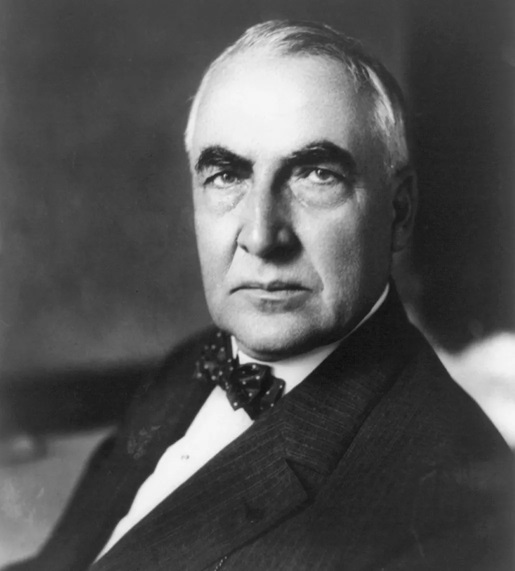
Since today is Presidents Day, I wanted to take a moment to acknowledge and honor my favorite president, Warren G. Harding of Ohio.  The former newspaper editor-turned-Senator was elected in 1920, by one of the largest landslides in American history.  (Interestingly enough, his opponent was another newspaper man from Ohio, James Cox.)  Harding was elected on a platform that promised a “return to normalcy” after the authoritarian excesses of Woodrow Wilson.  He was the first president to be elected in a national election in which all states allowed women to vote and he overwhelmingly won their vote.  A politician who remembered his friends and who had little trouble entertaining his constituents in his office, Warren Harding epitomized everything that was fun about the early 1920s.

And we have actual newsreel footage of Warren Harding’s inauguration!  For today’s blast of the past, here is newsreel footage of my favorite President renewing America’s greatness.  This footage is over 100 years old and, in all seriousness, it shows why film is so important.  The video below is not just a short movie of someone taking the oath of office in Washington, D.C.  Instead, it’s a portal into the past.  At a time when history itself is often altered to fit whatever the current narrative may be, it’s good that we can still see things for ourselves.

Music Video of the Day: Bathory by Trobar De Morte (2024, dir by Visual Noise Barcelona)


Today’s very atmospheric music video of the day comes to us from Spain.  Watching this video, ask yourself how many movies, books, and songs have been inspired by the life and crimes of Elisabeth Bathory.  She may have been executed but it appears she still achieved the macabre immortality that she craved.

Enjoy!

Late Night Retro Television Reviews: Degrassi Junior High 2.7 “Bottled Up”


Welcome to Late Night Retro Television Reviews, a feature where we review some of our favorite and least favorite shows of the past!  On Sunday, I will be reviewing the Canadian series, Degrassi Junior High, which aired on CBC and PBS from 1987 to 1989!  The series can be streamed on YouTube!

This week, Kathleen gets her moment in the spotlight!

Episode 2.7 “Bottled Up”

(Dir by Kit Hood, originally aired on February 15th, 1988)

At the start of this week’s episode of Degrassi Junior High, Kathleen (Rebecca Haines) comes home from school all excited.  She has been named to Degrassi’s academic team and will be appearing on Canada’s number one academic game show, Quest For The Best!

Unfortunately, her mother (played by Sheila Brogren, the real-life mother of Stefan Brogren, who played Snake) is too drunk and incoherent to congratulate her.  And Kathleen’s father is away on business.  When Kathleen talks to him on the phone, it becomes obvious that he spends a lot of time away from home, leaving Kathleen alone with her alcoholic mother.

The next day, at school, Kathleen meets with the other members of the academic team so that they can practice for their upcoming appearance.  (Of course, Caitlin’s a member of the team because Caitlin was a member of every non-criminal group at Degrassi.)  Ms. Avery hands them a VHS tape (because it’s the 80s) of Quest For The Best‘s previous episode so that they can check out their competition.  The only problem is that Degrassi Junior High only has one VCR (seriously, Canada?) and it’s broken.  Caitlin has a VCR at her home but she explains that her family also has company over.  (I’m not sure why that would matter but whatever.  Caitlin’s perfect family was always hosting a political dissident or two.)  Who else has a VCR?  Hey, how about Kathleen!?  Apparently, her family just got a new VCR and everyone at school knows this because Kathleen made the mistake of bragging about it.

Kathleen says that her mother is sick.  Caitlin insists that Kathleen let them use her VCR.  In other words, Caitlin won’t let the team use her VCR because her family has company but she has no problem with going over to Kathleen’s house and bothering her mother, despite the fact that Kathleen has basically made it sound as if the woman is on the verge of death.

Reluctantly, Kathleen allows everyone to come over to her house but she asks that everyone try to be quiet while watching the tape.  But, as quiet as everyone tries to be, Kathleen’s mom still comes downstairs with a glass of booze.  Kathleen is mortified while everyone else quickly leaves.

The next day, at school, Caitlin asks Rick what she should do about Kathleen’s alcoholic mom.  Rick, quite sensibly, points out that it’s not Caitlin’s place to do anything.  When Caitlin ignores Rick’s advice and tries to talk to Kathleen about it, Kathleen tells her to leave her alone and I am totally on Kathleen’s side here.  Caitlin may mean well but she has no idea what Kathleen is going through.

On the day of filming, Kathleen is stunned to discover that she forgot to bring her Degrassi Junior High sweater to the taping.  She desperately calls her mom and asks her to bring the sweater from home.  Her mother agrees and then passes out drunk.  Kathleen goes to the taping and stares at the empty chair that was reserved for her mom.  Luckily, Rick is at the taping and he hands Kathleen his sweater.  Awwwww!

Largely thanks to Kathleen, Degrassi Junior High defeats Liberman High.  Yay!  But — oh no!  Kathleen’s mother has still not shown up and night has fallen.  Kathleen starts to walk home, just for Rick to join her.  (Rick was going to spend time with his Caitlin, his sometimes girlfriend, but again, she has company at home.)  Rick is the one who ends up talking to Kathleen about her mother, explaining that he has similar issues with his father.

At home, Kathleen confronts her drunk mom about missing the taping and gets smacked as a result.

The next day, at school, Caitlin again tries to talk to Kathleen about her mother but when Kathleen says she doesn’t want to talk about it, Caitlin gets an attitude and says she doesn’t care anymore.  Rick then walks into the classroom and Kathleen makes it a point to thank him for his advice.  She says she’s going to call social services for help with her mom.  In the episode’s best moment, Kathleen thanks Rick for walking her home.  Caitlin suddenly turns around in her seat.  “You walked her home?”

Way to go, Kathleen!  Seriously, in the past, Kathleen has usually been the least likable character on Degrassi but, after seeing how judgmental and self-righteous Caitlin can be, there’s something deeply satisfying about Kathleen finally one-upping her.  Add to that, Kathleen and Rick make for a surprisingly well-matched couple.  I totally hope Rick dumps Caitlin for Kathleen.

On a serious note, this episode was an example of what Degrassi did so well.  It took a character like Kathleen, who has been such an antagonist in all of her other appearances, and it showed that she was human just like everyone else.  Kathleen’s constant bragging and her own judgmental style was shown to be her way of dealing with having a truly terrible situation at home.  With this episode, Degrassi Junior High not only dealt with the pain of having an alcoholic parent but also reminded its audience that we’re all human.  Judge not, lest ye be judged.

I guess I should mention the B-plot.  Scooter and his friend Max (Joshua Whitehead) want to be cool so they follow Rick around.  When they discover Rick smokes, Max gets a pack of cigarettes and they give smoking a try.  They end up coughing a lot.  It was kind of silly, to be honest.  But I did find it interesting that Rick could both inspire Kathleen to get help for her mother and Scooter to start smoking.  Rick’s a powerful guy.

14 Days of Paranoia #3: The Passover Plot (dir by Michael Campus)


First released in 1976 and based on a book that had come out ten years previously, The Passover Plot is a film that asks, “What if Jesus was a political revolutionary who faked his own death?”

Even when the film was first released, that wasn’t a particularly novel or new theory.  Ever since the Crucifixion, there have been conspiracy theorists who have claimed that the entire thing was staged.  Indeed, the early days of the Church were defined by conflicts between different sects debating the true nature of Jesus, with those who believed that he was the son of God and that he had risen from the dead eventually winning out over sects who claimed that Jesus was not divine or that he had actually escaped from the Romans and was instead hiding out in Egypt or even on the island that would eventually become known as Britain.  (The fact that so many Gnostics and other heretics were executed by the Church and their texts suppressed only served to lend them credibility with future theorists.)  Still, every few decades, some new book or film will claim that Jesus faked his death or married Mary Magdalene and gullible people will act as if this is somehow a new argument.  It’s been over 20 years since all of that Da Vinci Code nonsense convinced bored suburbanites across America that they could be experts on both boxed wine and historical conspiracy theories.  We’re about due for a new version of the old story.

As for The Passover Plot, it features Zalman King as Yeshua of Nazareth, an angry young man who dreams of the day when Judea will be free of the Romans.  Having a knowledge of the prophecies of a messiah and also knowing that he is descended from King David, Yeshua specifically patterns his life after the prophecies and presents himself as being not just another revolutionary but instead as being sent by God.  However, he is also aware that it will be necessary for him to “die” and “rise from the dead,” so he goes out of his way to force the hand of Pontius Pilate (Donald Pleasence).  Having seen plenty of crucifixions when younger, Yeshua arranges for the local revolutionaries to drug him so that he’ll appear to be dead.  When he later wakes up, everyone will believe that he has returned from the dead.  The film ends with several title cards, all arguing that the Gospels were written long after Yeshua’s death (“Mark lived in Italy!” one title card proclaims with almost comical indignation) and were subsequently rewritten by “unknown” hands.

The Passover Plot is a weird combination of biblical epic and conspiracy thriller.  Scenes of Yeshua preaching feel as if they could have come from any traditional Biblical epic but they are awkwardly placed with scenes of Yeshua having secret, melodramatic meetings with various conspirators.  It would make for an interesting contrast if not for the fact that the film itself is so slowly paced and boring.  Zalman King, who is best-known for his subsequent career as a softcore filmmaker, spends a lot of time yelling and smoldering intensely but he still doesn’t have the charisma or screen presence necessary to be convincing in the role.  In the scene were he’s meant to be passionate, he shrieks with such abandon that he makes Ted Neeley’s performance in Jesus Christ Superstar feel restrained.  This film asks us to believe that people would not only abandon their previous lives to follow Yeshua but that they would also take part in an elaborate conspiracy that could have gone wrong at any time.  For that to be believable, Yeshua needs to be played by someone who doesn’t come across like the drama student that everyone dreads having to do a scene with.  Far more impressive is Donald Pleasence, whose portrayal of a ruthless and unfeeling Pilate is a marked contrast to some of the more sympathetic interpretations of the character that tend turn up in the movies.

On the plus side, the film does look good.  It was shot on location in Israel and there is a certain authenticity to the film’s recreation of the ancient world.  Along with Pleasence, character actors like Scott Wilson (as Judas!) and Dan Hedaya get a chance to shine.  But otherwise, The Passover Plot is too slowly paced and kooky for its own good.  Conspiracy theorists never seem to understand that the more elaborate a conspiracy theory becomes, the less convincing it is to anyone who isn’t already a true believer.  In the end, how one feels about the film’s conclusions will probably be connected to how one already views Jesus and the Church.  The Passover Plot is not a film that’s going to convince anyone who wasn’t already convinced.

14 Days of Paranoia:

  1. Fast Money (1996)
  2. Deep Throat II (1974)