14 Days of Paranoia #2: Extreme Justice (dir by Mark L. Lester)


What type of justice?

Extreme justice, y’all!

In this 1993 film, Lou Diamond Phillips stars as Jeff Powers.  Who is Jeff Powers?  He’s a cop!  He wants to keep the street safe!  Sometimes, he knows that you have to be willing to break the rules!  He’s a cop who does things his way!

Okay, is that enough exclamation points?  I’m not just using them to be obnoxious.  The film is pretty much just one big exclamation point.  The action is hyperintense and the film is full of characters who always seem like they’re just one step away from exploding.  No one in this film is particularly calm or laid back.  From the start, everything is dialed to eleven and it just keeps going higher and higher.

After Jeff is put on probation for roughing up a suspect, he receives an invitation to join an elite squad of detective.  Led by the charismatic Detective Dan Vaughn (Scott Glenn, giving a performance that is so over-the-top that he yells straight at the camera at one point), the Special Investigative Section is the best of the bed.  Upon joining, Jeff finds himself a member of a sacred fraternity of law enforcers.  Working with men like the always amused Detective Larson (Yaphet Kotto) and the somewhat paranoid Angel (Andrew Divoff), Jeff finds himself tracking some of the biggest criminals in the city.

What Jeff also discovers is that SIS does more than just arrest criminals.  The SIS has been given an unofficial license to kill and they end up executing as many people as they take to jail.  Often times, Vaughn will tells the men to allow a crime to be committed so that they can then dispense their own brand of justice.  In the film’s most disturbing scene, the members of SIS wait until after a woman has been raped in an alley before they move to neutralize her attackers.  When Jeff finally decides that he can’t be a part of all this and tries to reveal what’s going on, he discovers that the SIS has some support in some very high places.  Who cares if the SIS is allowing crimes to be committed or if an innocent person occasionally gets caught in the crossfire?  At least they’re taking care of the criminals!

Extreme Justice is a crude and energetic film and one that is based on some of the stories that spread about the LAPD’s RAMPART division in the 90s.  That the film works is a testament to the performances of Phillips, Kotto, and Glenn and also the direction of Mark L. Lester.  An exploitation vet who occassionally made big studio action films as well, Lester keeps the pace moving at breakneck speed and, even more importantly, he allows both sides to have their say.  While Jeff is upset about SIS’s methods, Detective Vaughn is correct when he says that his unit is targeting the worst of the worst.  It makes for an unusually intelligent exploitation film, one that leaves the audience with a lot to consider.  How far would you go to keep your neighborhood safe?

Previous entries in 2025’s 14 Days Of Paranoia:
  1. The Fourth Wall (1969)

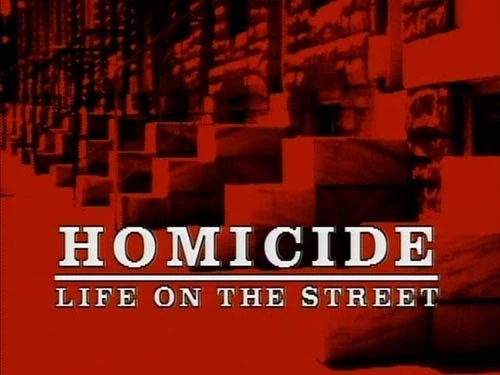
Retro Television Review: Homicide: Life On The Street 3.3 “Extreme Unction”


Welcome to Retro Television Reviews, a feature where we review some of our favorite and least favorite shows of the past!  On Sundays, I will be reviewing Homicide: Life On The Street, which aired from 1993 to 1999, on NBC!  It  can be viewed on Peacock.

This week, the White Glove Killer is discovered.

Episode 3.3 “Extreme Unction”

(Dir by Keith Gordon, originally aired on October 28th, 1994)

For all the hours that Pembleton and the other detectives put in and for all the motives that were considered and the suspects were interviewed, the murderer of Katherine Goodrich and two other women is captured not through deductive brilliance but because she herself enters the police station.

When Pamela Wilgis (Lucinda Jenney) first enters the station, she claims to have just witnessed two men dumping the third victim.  Pembleton is dismissive of her until she mentions the white gloves, a detail that has not been released to the public.  While Pembleton talks to her, the other detectives check out Pamela’s apartment and discover 12 sets of white cotton gloves hanging in her bathroom.  Pamela is the murderer.

When Pembleton asks Pamela about the gloves, Pamela suddenly starts speaking in an Irish accent.  Later, she starts speaking like an angry and rebellious child.  Later still, she reverts to being a wide-eyed innocent who says she had no idea how she ended up in the interrogation room.  Pembleton is convinced that she’s faking her alternate personalities but, despite his best efforts, he can never get her to actually confess that she committed the murders.

From the start, Homicide has emphasizes the role of luck in solving murders.  The majority of the show’s murders are solved precisely because someone thought they could outsmart the police or because they made a very obvious error.  For all of Pembleton’s strengths in the Box, his interrogation technique works best when he’s dealing with someone who doesn’t understand how the system works.  Pamela, on the other hand, obviously understands what he’s trying to do.  She knows the system and she knows how to game it.  Pamela does eventually confess but not Pembleton.  Instead, she does an interview with the obnoxious reported played by Tony Todd, blaming her crimes on the abuse she suffered as a child and her dissociative disorder.  Pembleton’s pride is hurt but he also finds himself struggling with his faith.  How can Pamela, after killing three saintly women, now avoid paying for her crimes?  Even with the thrilling interrogation scene between Pembleton and Pamela and the excellent performances of Andre Braugher and Lucinda Jenney, it’s all feels a bit anticlimactic.  But it also feels appropriate for the world in which Homicide takes place.

This episode also wrapped up a few other plotlines.  Munch, Bayliss, and Lewis finally own their bar.  Good for them.  I’m not really a bar person or a drinker but I probably would have enjoyed visiting the Waterfront whenever Munch was working the bar.  Even more importantly, Felton returned to his mentally unstable wife.  And again, that’s a good thing if just because I was getting sick of listening to Felton whine about his marriage.  So was Kay.

This episode was effective enough.  The scenes between Andre Braugher and Lucinda Jenney alone made the episode memorable.  At the same time, as I watched, it occurred to me that, if this episode had aired during the first season, the White Glove Murders probably never would have been solved.  If Adena Watson had died during the third season, one can be sure Bayliss would have gotten a confession out Risley Tucker.

Next week, we find out why Detective Crosetti has yet to return from Atlantic City.

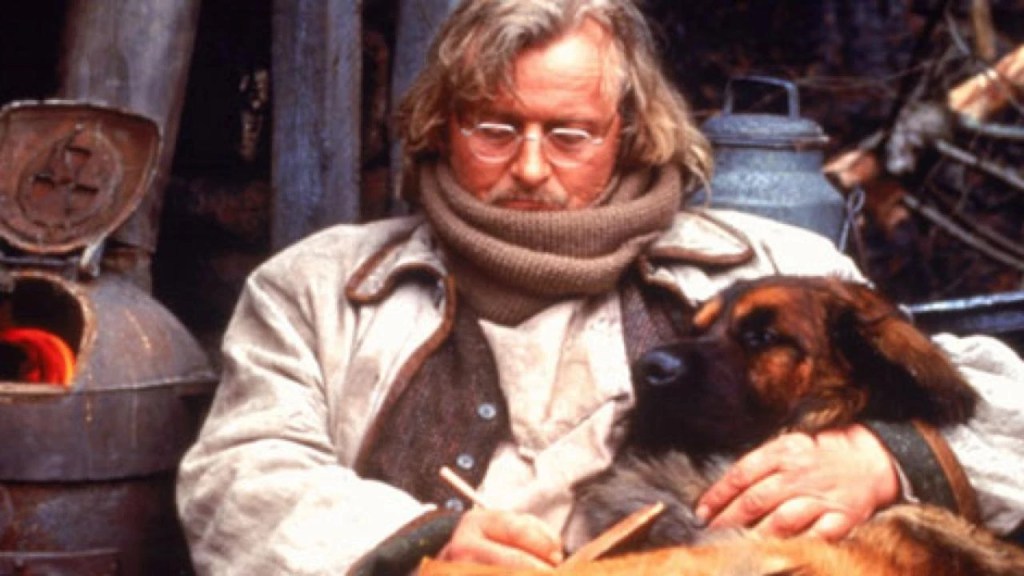
THE CALL OF THE WILD (1997) – Rutger Hauer stars in this version of the classic Jack London novel!


THE CALL OF THE WILD (1997) is based on Jack London’s classic story about Buck, a domesticated dog who lived the first four years of his life on the regal estate of Judge Miller. In 1897, he’s kidnapped and shipped up north to the frozen arctic regions where powerful dogs are in high demand. And Buck, a St. Bernard-Scotch Collie mix, is as powerful as it gets. 

On his journey, we see Buck fall into the hands of three different masters. First, he’s purchased by a dispatch courier for the Canadian government named Perrault (Luc Morissette) whose sled driver is Francois (Robert Pierre Cote). Perrault and Francois are kind to the dogs, but life is still harsh as they carry their dispatches across the snowy, frozen north. Buck sees a dog killed by other dogs for the first time. This is where he first learns that only the strong survive, and he soon has to prove it when he’s forced to fight and kill Spitz, the lead dog of the team. Unfortunately, circumstances require Perrault to sell Buck and his sled team to a group of greenhorns led by Hal (Charles Edwin Powell), his sister Mercedes (Bronwen Booth) and her husband Charles (Burke Lawrence). These morons have no business looking for gold in the Yukon. They have no clue as to what they’re doing and seem to be leading the group to certain death. Starving, tired, and sensing disaster, Buck is lucky that the group arrives at the camp of John Thornton (Rutger Hauer) just in the nick of time. Collapsing at the doorstep of Thornton’s tent, Buck refuses to get up and go any further. As Hal begins to beat Buck with a stick, even going so far as pulling his gun to shoot him, Thornton forcibly takes Buck from the morons. With Thornton, Buck has finally found his “human.” John Thornton nurses Buck back to health and the two become inseparable. Buck has found love for the first time with Thornton and will not let him out of his sight for fear he might lose him. Then something strange happens, he starts feeling a call from the forest, and the promise of a freedom he’s never known before. His love for Thornton is strong, but is it as strong as the call of the wild? 

Even though this 1997 version of THE CALL OF THE WILD is narrated by Richard Dreyfuss and includes the great actor Rutger Hauer in its cast, the true star of this film is Buck the dog. We really pull for Buck as we see him adapt to his new way of life after he’s stolen from his comfortable southern home. As hard as it is to see the animals kill the weakest among them, these are important lessons for Buck. His new world is no place for the weak, and he decides that he will never be weak again. Even though Buck has gotten tough, it’s still a relief when he ends up with John Thornton, the Hauer character. My favorite part of the film is when the two take off together in search of gold. Hauer is only in the film for about thirty minutes, but the relationship he shares with Buck is the highlight of the film as far as I’m concerned.

The last thing I want to mention about the film is that it’s directed by Peter Svatek. Svatek’s next film, BLEEDERS (aka HEMOGLOBIN) would also star Rutger Hauer, and he would follow that up with SILVER WOLF, starring Roy Scheider. For what it’s worth, the man definitely had something going for him since he was able to work with talents like Hauer and Scheider! 

I’ve never read Jack London’s novel, but I have read that this version of THE CALL OF THE WILD may be the most faithful adaptation of the book out there. If that’s truly the case or not, I still really enjoyed this adaptation, and it’s an easy recommendation from me. 

Late Night Retro Television Review: Check It Out! 3.7 “He’s No Heavy, He’s My Brother”


Welcome to Late Night Retro Television Reviews, a feature where we review some of our favorite and least favorite shows of the past!  On Saturdays, I will be reviewing the Canadian sitcom, Check it Out, which ran in syndication from 1985 to 1988.  The entire show is currently streaming on Tubi and Peacock!

Hey, Howard has an older brother!  I wonder how this will work out….

Episode 3.7 “He’s No Heavy, He’s My Brother”

(Dir by Alan Erlich, originally aired on  October 25th, 1987)

In this episode, we meet Howard’s brother, George (Gary Krawford).  George is an extremely wealthy money manager who lives in Switzerland.  At the start of the episode, he is fired because his employers want to hire a younger man who they can pay less.

Dejected, George returns to Canada.  He visits Howard at the store.  Because George doesn’t specify that he was fired, Howard assumes that George is dying.  Howard reveals that their father always liked George better.  George eventually reveals that he’s not dying and that, being worth five million dollars, he doesn’t need a job in Howard’s store.  Good for George.  I’m happy for him.

George buys Howard’s apartment building.  He then tells Howard that he’s a month behind on his rent.  Howard jokes about George evicting him.  George evicts Howard.  End of episode.

This was a weird episode.  I’m going to assume that the show’s producers were thinking of making George a regular character on the show and this episode was perhaps an attempt to reboot the entire series into a show that would focus 0n the rivalry between the Bannister brothers.  According to the imdb, though, this is the only episode in which George appeared.  Watching this episode, it occurred to me that the entire third season, so far, has featured epiosdes about characters who only appeared once or twice before vanishing.  The third season has been an improvement over the previous season but it’s still obvious that the show was still struggling to figure out what it actually wanted to be about.  This has not only led to a messy continuity but also a few unresolved cliffhangers.  Last episode, it appeared Jack Christian was going to get his own store.  In this episode, he’s still assistant manager at Howard’s store and no mention is made of last week’s events.

The strangest thing about this episode, though, is the show’s insistence that Howard is only in his forties when Don Adams was clearly in his sixties.  George is introduced as being Howard’s older brother but actor Gary Krawford was nearly 20 years younger than Adams and he looked it, too.

Strange, strange episode.  Considering George never again appeared after this episode, it’s probably best not to worry too much about it.  This episode might end with Howard getting evicted (and seriously, the man manages a store, shouldn’t he able to cover his rent?) but I have a feeling we’ll never hear about it again.

Either that or Howard will be forced to live in the store, which is what he pretty much does already.  The important thing is that it will all work out.

Lisa Marie’s Week In Television: 2/9/25 — 2/15/25


Abbott Elementary (Wednsesday Night, ABC)

I loved the science fair episode, which I watched on Hulu on Wednesday afternoon!  Ava is my favorite character so I enjoy any episode that deals with her troubled past, her unique principal style, and the moments where she actually turns out to be good at her job.

I also enjoyed the latest episode of Abbott, with Ava helping out the other schools and Jacob giving an impassioned speech to the school board that will probably come back to haunt him at some point in the future.  After the previous season’s somewhat uneven mix of episodes, it’s nice to see Abbott Elementary going strong again!

Be My Valentine, Charlie Brown (Apple TV+)

Erin and I watched this on Thursday.  It’s a holiday tradition!  You can read Erin’s review here!

Dark (Netflix)

Case and I finished up season two this week.  Onward to the season three next week!

Extracted (Monday Night, Fox)

In this new reality show, out-of-shape people go into the wilderness and try not to die.  From a control room, their family members watch and debate whether or not to pull them out of the game.  On Wednesday, I watched the first two episodes on Hulu.  The show is ludicrous but it’s entertaining, as most good reality shows are.  I would hope that my family would pull me out after the first ten minutes.

Kitchen Nightmares (Tuesday Night, Fox)

Finally leaving the ugly restaurants of New Orleans, Chef Ramsay helped out an ugly restaurant in Houston.  Seriously, how does the show find these ugly places?  This time, the restaurant owner got mad at Ramsay and even called him into the storeroom for a talk.  Ramsay was still able to get through to her and save the restaurant.  Yay!

Scamanda (Hulu)

On Tuesday, I watched the second episode of Scamanda, which revealed a bit about Amanda’s background and also her husband.  The episode suggested that Amanda based her scam off of her husband’s stepdaughter from his first marriage and her very real battle with Leukemia.  Not only does this show how twisted Amanda was but it also indicates that her husband was very much a part of her scheme.  The second episode was marked improvement over the first.  I’m looking forward to the third.

The Story Behind (Tubi)

I watched two episodes.  One featured the story behind Beverly Hills 9o210.  The other was the story behind Full House.  Neither really told me anything that I didn’t already know.

Super Bowl LXI (Sunday Night, Fox)

The only thing more boring than the game were the commercials.  A lot of people are making a big deal about Taylor Swift getting booed at the game.  The Swifties are in an uproar but, honestly, it’s an American tradition to boo celebs at sporting events, especially ones who are only there because they’re dating a player.  Taylor’s apparent shock at being booed has become a meme but it was actually a very relatable and human moment.  I prefer Taylor’s “What’s going on?” to the celebs who either pretend to not to care or the ones who go into a rage mode the minute they have to deal with public opinion.

Watched and Reviewed Elsewhere:

  1. Check It Out (review coming)
  2. CHiPs
  3. Fantasy Island
  4. Friday the 13th
  5. Highway to Heaven
  6. The Love Boat
  7. Malibu CA
  8. Miami Vice
  9. Monsters
  10. Pacific Blue
  11. St. Elsewhere
  12. Welcome Back Kotter

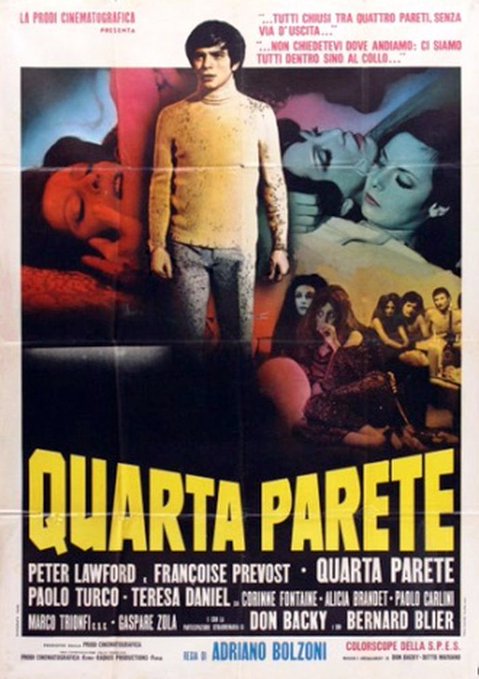
14 Days of Paranoia #1: The Fourth Wall (dir by Adriano Bolzoni)


First released in 1969, The Fourth Wall opens with a series of photographs.

The grainy photographs all appear to have been taken at a political protest in London.  The protestors are holding signs that say something about leaving Nigeria alone but the exact cause that is being supported is still left vague.  Eventually, after viewing several photographs of long-haired college students holding signs, we reach some photographs of the police violently breaking up the protest and carting several of the protestors off to jail.

Amongst the protestors is a young Italian named Marco Baroni (Paolo Turco).  Marco has spent the past four years in London, studying and apparently becoming politically active.  However, it is time for him to return to Italy.  When he reaches his home, we discover that, for all of his talk of protest and revolution, Marco comes from a wealthy, upper class family.  Papa Baroni (Peter Lawford) is a businessman who is willing to bankrupt even his best friends and who openly flaunts the affair that he’s having with his Swedish secretary.  Marco’s mother, Christiana (Francoise Prevost) spends her time in a haze of alcohol and ennui.  Marco’s younger sister, Marzia (Tery Hare), is a fashion model who has become infamous for a serious nude photographs that were taken by the enigmatic Lona (Corraine Fontaine).  Marzia’s room is full of picture of herself.  When Marco returns home, she greets him more as if he were long-distance boyfriend than her brother.  As the film progresses, it becomes clear that there is more to Marco and Marzia’s relationship than just sibling closeness.

It’s an odd and meandering film.  Marco, having had his consciousness raised in London, is disgusted by his family’s decadence and hates the fact that his father seems to represent everything that he was arrested for protesting in the UK.  At the same time, as much as Marco whines about the sins of his family, he finds himself repeatedly drawn to Marzia and her wild lifestyle.  At one point, Marco finds himself observing a group of student radicals who can’t even agree on what they want to protest.  At another point, he walks in on one of Marzia’s parties and watches as a rather tame orgy breaks out.  This is the type of film where Marco spends a lot of time complaining about Marzia being more interested in hedonism than politics but the camera itself lingers on the nonstop nudity and the sight of Lona and Marzia kissing.  For all of the film’s political pretensions, director Adriano Bolzoni obviously understood that sex sells better than speeches.

Bolzoni, himself, was not primarily a political filmmaker.  The majority of his films were a mix of giallo thriller and spaghetti westerns.  There are hints of the giallo genre in this film, with its vibrant colors and its shots of Marco slowly losing his mind as the full extent of his family’s decadence becomes clear to him.  (That said, it’s hard not to laugh at the scene in which Marco runs through the rain while screaming, “NO!” over and over again.)  The instrumental score is pure Spaghetti western, leading to some unintentionally funny moments.  When Marco spots his father with his mistress, the mix of a zoom lens and a musical sting that sounds like it was lifted from a Sergio Leone showdown is more likely to leave you laughing than gasping.  There are other scenes that are scored to songs that were apparently written to sound like Simon & Garfunkel’s contributions to The Graduate soundtrack.

As pretentious as the film is — and make no mistake, this is a very pretentious film — The Fourth Wall does do a good job of capturing Marco’s growing sense of unease as he returns home convinced that he’s figured out the world just to discover that no one else really cares about his politics, his ideals, or his outrage.  Marco goes from being stridently idealistic to drowning in his own paranoia and it’s hard not to regret that Paolo Turco was a bit of a dull actor because, with better casting, the character’s descent would have been truly heartbreaking.  Peter Lawford plays Papa Baroni with just the right amount of ruthless charm.  He might be the epitome of everything that Marco is against but just watching him, you know that Papa Baroni is always going to get exactly what he wants.  It doesn’t matter how much Marco whines or how many meetings Marco goes to or even how the film’s final burst of violence plays out.  Papa Baroni will always thrive and survive.

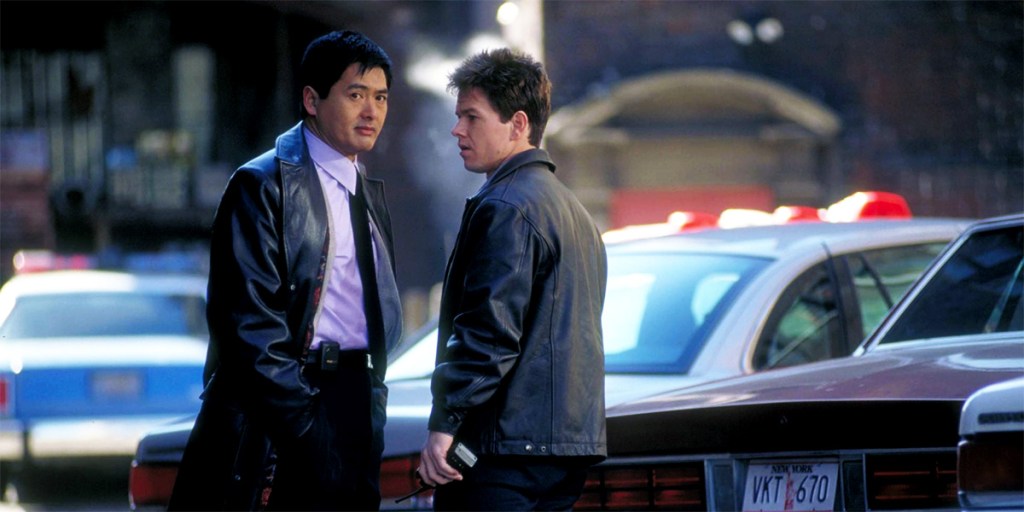
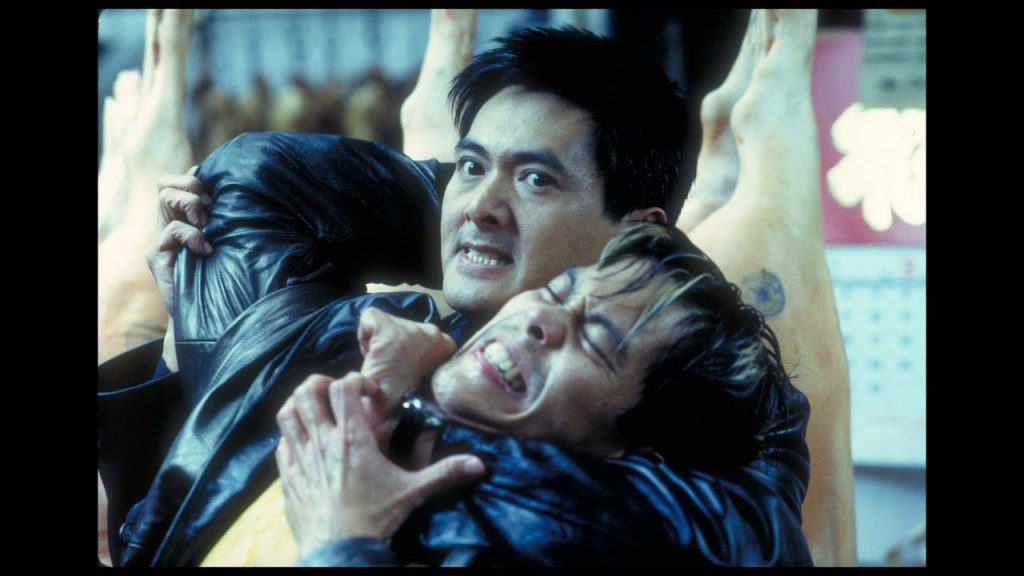
THE CORRUPTOR (1999) – Chow Yun-Fat and Mark Wahlberg fight corruption in Chinatown!


In the late 90’s, I was all in on actor Chow Yun-Fat. Having only discovered his excellent Hong Kong film work a couple of years earlier, I was so excited to see what kind of splash he would make in American films. I loved his first American film THE REPLACEMENT KILLERS (1998), but I will admit it was an exercise in style over substance, and it really didn’t show off his acting abilities. Chow was working hard to improve his English language skills during this time, but that limited his performance the first time around. As I settled into my seat on the film’s opening weekend at the box office in March of 1999, I was hoping to see the Chow Yun-Fat I loved from his Hong Kong movies. But more on that later…

THE CORRUPTOR opens with a bomb going off in Chinatown, followed by a sidewalk assassination in broad daylight. It seems there’s a turf war being fought between a street gang called the Fukienese Dragons, led by Bobby Vu (Byron Mann), and a Chinese criminal organization called the Tung Fung Benevolence Association, led by Uncle Benny Wong (Kim Chan) and Henry Lee (Ric Young). We then meet Nicholas Chen (Chow Yun-Fat), a heroic, highly decorated NYPD cop who runs the Asian Gang Unit. His unit is tasked with trying to keep the peace in Chinatown, but with all the recent violence, they’re clearly failing. Knowing he needs more help, Chen requests additional manpower and gets the young and eager Danny Wallace (Mark Wahlberg). The two men don’t hit it off immediately as Chen had wanted a more experienced, Asian cop. Over time, however, Chen begins to trust Wallace and begins to let him into the inner workings of the unit. 

We soon find out that things are much more complicated in Chinatown police work than they might have appeared at first. Chen is not quite as heroic as initially presented. He’s a morally conflicted man who wants to do good work for the people of Chinatown, but in the process, he’s compromised himself by taking sides and forming a delicate alliance with Uncle Benny and Henry Lee. And Danny isn’t quite the young, green cop he was presented as either. In fact, he’s been secretly tasked by Internal Affairs to monitor Chen and his unit. As Wallace sees what’s really going on in Chinatown, and after Chen saves his ass on multiple occasions, it becomes harder and harder for him to do his job and build a case against Chen. As the film reaches its conclusion in this world of grey, we will see if Chen and Wallace can work together and take down Henry Lee and Bobby Vu, who have formed an alliance to take over Chinatown’s criminal activities. And we will find out what Wallace will do with the information he has on Chen.

I’m a big fan of THE CORRUPTOR, and the primary reason is the excellent performance of Chow Yun-Fat. No other American made action film showed off the extraordinary charisma that made him a superstar in Asia in the 1980’s. In this film, Chow is able to play both sides of the law and still remain incredibly likable. He pulls this balancing act off in a way that appears effortless, and yet there are very few actors in the world who are capable of doing it. Mark Wahlberg had emerged as a major film star a couple of years earlier with the runaway success of BOOGIE NIGHTS (1997). I think he’s very good in this film as well, as his character must reconcile his ideals against the reality of fighting crime in such a dangerous environment. There’s a scene near the end where Chen has been informed that Wallace is internal affairs and confronts him about it. Wahlberg is incredible in the scene, setting the stage for the exciting resolution of the film.

THE CORRUPTOR has several excellent action set-pieces, beginning with a shootout at a lamp shop. This is when I knew this movie was going to present the Chow Yun-Fat I know and love. His personality is displayed in the scene, along with his two guns blazing in slow motion. There’s also an intense car chase through crowded streets and a final showdown on a cargo ship that really stood out to me. Director James Foley was probably hired based on his prior work that showed an ability to deal with moral ambiguity in films like AT CLOSE RANGE (1986) and GLENGARRY GLEN ROSS (1992). While he wouldn’t be my first directorial choice for an action film, he does a fine job in my opinion. 

Overall, I recommend THE CORRUPTOR to any person who likes Chow Yun-Fat, Mark Wahlberg, or an entertaining action film. It’s not in the league of Chow’s best Hong Kong films, but it is his best American action film, because it actually gives him a strong character to play. That went a long way with me. 

I’ve included the trailer for the film below:

Late Night Retro Television Review: Friday the 13th: The Series 3.3 “Demon Hunter”


Welcome to Late Night Retro Television Reviews, a feature where we review some of our favorite and least favorite shows of the past! On Fridays, I will be reviewing Friday the 13th: The Series, a show which ran in syndication from 1987 to 1990. The entire series can be found on YouTube!

This week, a bunch of new characters show up!  What the Hell!?

Episode 3.3 “Demon Hunter”

(Dir by Armand Mastroianni, originally aired on October 14th, 1989)

I have read that one of the biggest mistake that aspiring screenwriter make when they attempt to create a compelling spec script for their favorite show is that they’ll often introduce new characters.  Instead of focusing on the established stars of the show, they’ll have a new character show up and suddenly become the center of the story.  It’s a mistake because, no matter how good the script may be, it doesn’t work as an episode of the series that the writer is trying to get a job with.  Showrunners don’t want a writer who can write about new characters.  They want a writer who can work within the framework of what the show has already established.

This week’s episode of Friday the 13th feels very much like a failed spec script.

Make no mistake.  Jack and Micki are in it.  They spend the entire episode at Curious Goods, where they are originally seen putting a cursed dagger in the vault.  With Ryan having been transformed into a child in the previous episode, Micki makes Jack a partner in the shop.  Johnny Ventura (played by new series regular Steve Monarque) is also in this episode, though he’s called to the store a bit later than Micki and Jack.  I guess Johnny is now a part of the group, even if he doesn’t have a job at the shop.  For all the time the show spent establishing Johnny as being an edgy delinquent during the second season, this episode finds Johnny as a rather conventional leading man.  He listens to a baseball game and, at one point, he’s seen making a model ship.

That said, the majority of the episode is dominated by a bunch of new characters.  The Cassidys are a family of militia types who, having rescued Bonnie Cassidy (Allison Mang) from a bunch of cultists, are now on the run from a demon that is determined to kill them.  The Cassidys have some sort of demon tracker device that leads both them and the demon to Curious Goods, where Micki, Jack, and Johnny join in the effort to destroy the demon.  The Cassidys are so prominently featured in this episode and take up so much screentime that the episode almost feels like a backdoor pilot about them.  The Cassidys are even featured in black-and-white flashbacks that show us how they rescued Bonnie.

The problem, of course, is that we don’t know the Cassidys so its a bit jarring to see them take over the episode.  After what happened in the previous episode, I think most viewers would have a lot of questions about what happened after Jack, Micki, and Johnny returned from France.  For instance, what did they do with Ryan?  Did they drop Ryan off with his mother?  Did they leave him in France?  We don’t find out in this episode and it’s actually kind of insulting to anyone who has spent the previous two seasons getting wrapped up in Ryan and Micki’s adventures.  Instead of answering the questions that they had to know that viewers would be asking, the show’s writers expect us to care about the Cassidys.

Even without John D. LeMay, Robey and Chris Wiggins had a likable chemistry.  Micki and Jack were the strongest thing this series had gone for it as the start of season 3.  Why push them to the side for a family that we’ve never seen before and will probably never see again?  As far as guessing what the rest of Season 3 will be like is concerned, it’s not a good sign.

Hopefully, I’ll be proven wrong in the weeks to come.