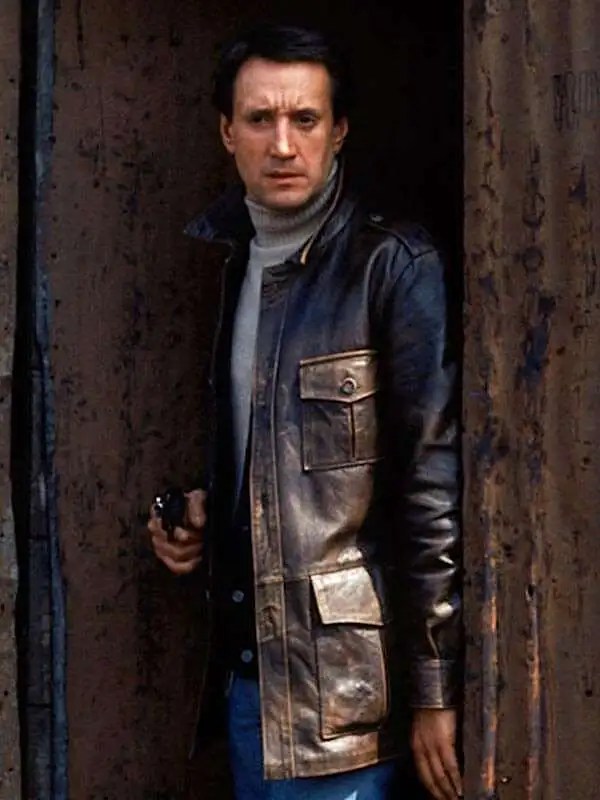
THE SEVEN-UPS (1973) – Roy Scheider in a gritty 70’s cop thriller!


I’m guessing it started with JAWS (1975) and JAWS 2 (1978) since they played often on Fox-16 out of Little Rock when I was a kid, but I’ve been a fan of actor Roy Scheider for as long as I can remember. He’s one of those actors who has his own section in my massive collection of physical movie media. I’ve read about every film he’s ever made, and I’ve watched most of them. Surprisingly, THE SEVEN-UPS is the first Roy Scheider film I’ve written about on The Shattered Lens. 

NYPD detective Buddy Manucci (Roy Scheider) leads a team of elite cops, known as the “seven-ups.” They’ve acquired this nickname because most of the criminals they arrest receive sentences that are 7 years and longer, which makes their superiors on the force very happy. Granted, the team does use a variety of unorthodox methods to find and arrest the criminals, which can also rub their superiors and some of their fellow cops the wrong way. Buddy’s childhood friend Vito Lucia (Tony Lo Bianco), an undertaker by trade who has his finger on the pulse of the criminal activities in his community, serves as an important snitch for the team, with his information often leading to major busts. Unbeknownst to Buddy, prominent members of various organized crime families and other white-collar criminals start getting kidnapped and held for ransom in the community. Buddy’s unaware of the full extent of the kidnappings, but he asks his old friend / snitch Vito about this when he actually witnesses the abduction of a crooked bail bondsman he’s following named Festa. We know that Vito is the mastermind behind all of the kidnappings, and his two main henchmen, Moon (Richard Lynch) and Bo (Bill Hickman), are impersonating cops just long enough to confuse and abduct the various criminals. When the Seven-Ups stake out a funeral meeting of various mobsters in the area, squad member Ansel (Ken Kercheval) is killed as part of a screwed-up abduction attempt. Buddy spots Moon and Bo trying to flee the area and tries to chase them down in an incredible car chase that ends when Buddy is almost decapitated in a violent collision with a parked 18-wheeler. With one of their own dead and with the wild chases through the streets, the members of the team are placed on suspension and even investigated as suspects for the kidnappings. Not content to just lay low during their suspensions, the seven-ups continue to try to figure out what’s going on, doing whatever it takes to get the information they need. When Buddy and his group start applying incredible pressure to some of the local mobsters about who shot Ansel, he gets information that ties the killing and the kidnappings to his friend Vito. This time when he meets with Vito, Buddy feeds him false information, thus setting a trap to bring the whole operation down.

After viewing THE SEVEN-UPS again for the first time in a while, it continues to be my opinion that this movie is severely underrated. It’s a great cop film from the early 70’s, anchored by an excellent lead performance from Roy Scheider, who’s wearing one of the coolest leather jackets in the history of cinema. Coming in hot off the heels of THE FRENCH CONNECTION (1971), and with many connections to the Oscar winner, it seems that somehow this great film has fallen through the cracks over the years. I mean, how often do you hear people talk about this movie? THE SEVEN-UPS is directed by Philip D’Antoni, his only directorial credit, although he did serve as the Producer for both BULLITT (1968) and THE FRENCH CONNECTION. D’Antoni clearly values a good car chase sequence. THE SEVEN-UPS contains a thrilling car chase, which really isn’t that big of a surprise when you learn that stunt coordinator Bill Hickman, who plays the bad guy Bo in this film, coordinated the car chase sequences in BULLITT and THE FRENCH CONNECTION. This film features my personal favorite car chase sequence from any film that I’ve seen to date. Don Ellis composed the memorable musical score, a service that he also provided in THE FRENCH CONNECTION. I point out all of these ties to THE FRENCH CONNECTION because, in my humble opinion, the talent behind that film created another classic in THE SEVEN-UPS. 

Complimenting Roy Scheider’s lead performance, THE SEVEN-UPS has a strong supporting cast. Tony Lo Bianco, Ken Kercheval (of DALLAS fame), Bill Hickman, and Richard Lynch are all quite memorable in their respective roles. I also like the 1973 New York City setting for the film. In movies like this and the following year’s DEATH WISH, we get to see a New York that no longer exists. To me, this only adds to the gritty realism of the film. 

Overall, THE SEVEN-UPS is a movie I recommend without any reservations. If you’re a fan of 70’s cop thrillers, you simply can’t go wrong with this one. 

I share the trailer for THE SEVEN-UPS below:
Late Night Retro Television Review: CHiPs 3.9 and 3.10 “Drive, Lady, Drive”


Welcome to Late Night Retro Television Reviews, a feature where we review some of our favorite and least favorite shows of the past!  On Mondays, I will be reviewing CHiPs, which ran on NBC from 1977 to 1983.  The entire show is currently streaming on Prime!

This week, it’s a special two-hour episode of CHiPs!

Episodes 3.9 and 3.10 “Drive, Lady, Drive”

(Dir by Don Weis, originally aired on November 10, 1979)

The police at nearby Palma Vista are on strike and the state of California has agreed to allow some members of the Highway Patrol to patrol the town until the strike is over.  Getraer assigns Baker, Ponch, Bear, and some new guy named Lenny (Leon Isaac Kennedy) to head over to the town,  Baker is named the OIC, which I eventually figured out stood for “Officer in Charge.”  Getraer knows better than to give the job to Ponch.

Ponch, by the way, is back!  After being absent for two episodes due to Erik Estrada actually injuring himself in a motorcycle crash, Ponch returns in this episode and he goes through the entire episode with this huge grin on his face as if he’s saying, “You know you missed me.”  Ponch’s return means that Baker is once again relegated to being the strong, silent partner who doesn’t really get to do anything.  In fact, Baker crashes his motorcycle early on in this episode, as if the show was trying to tell us, “See?  It could happen to anyone!”

The striking cops accuse Baker, Ponch, Bear, and Lenny of being scabs and strike breakers.  I’m not really a fan of public sector unions.  (When it comes to the police striking, my hero is Calvin Coolidge, who came to fame when he broke up a policeman’s strike in Massachusetts.)  Still, it felt strange to watch the show’s heroes cross that picket line.  That would definitely not happen on television today.

There’s a lot going on in Palma Vista.  There’s some rich kids who keep joyriding in a dune buggy and who think they can escape prosecution by crossing the city limits.  (Joke’s on them!  The Highway Patrol has jurisdiction everywhere!)  There’s some truck hijackers who are setting up a headquarters in town.  There’s an angry city councilman (Michael Conrad) who doesn’t feel his children should be held accountable for their actions.

That said, the majority of this two-hour episode centered on a stock car race and one of the racers, Candi Wright (Kelly Harmon).  Will Candi win the big race or will she lose to her friendly rival (and possible future romantic partner) Don Croyden (Jordan Clarke)?  Will Ponch be able to both date her and do his job?  And most importantly, will she be able to adopt a traumatized little girl (played by Tracey Gold) who Candi discovered outside of a burning house?  That’s a lot of storylines for someone who wasn’t even a regular cast member and a part of me wonders if maybe this episode was meant to be a secret pilot for a Candi Wright television series.  It would explain a lot.

This really was a basic episode of CHiPs, with the only real difference being that it was two-hours long for some reason.  A lot of what happened in the episode, especially the racing footage, felt like filler.  There was really no need for this to be a double-sized episode.  It also doesn’t help that, as opposed to the lovely Los Angeles scenery that we usually see, this episode took place in a rather ugly town.  There was some appropriately spectacular crashes but, in the end, this episode ran too long and felt a bit pointless.  Get the Highway Patrol back on the highways!

14 Days of Paranoia #3: The Lincoln Conspiracy (dir by James L. Conway)


When it comes to conspiracy theories involving presidential assassinations, the theories surrounding JFK may get all the attention but it’s the theories surrounding the death of Abraham Lincoln are usually far more plausible.

Unless, of course, it’s the theories that are pushed in the 1977 docudrama, The Lincoln Conspiracy.

A mix of documentary-style narration and really cheap-looking historical reenactments, The Lincoln Conspiracy essentially indicts almost everyone who was alive in 1865 as being a part of either the conspiracy or the subsequent cover-up.  Really, it’s remarkable how many historical figures are implicated in this film.

With the Civil War coming to a close, President Lincoln (John Anderson) hopes to pursue a generous reconstruction policy for the former Confederate States.  Secretary of War Edwin Stanton (Robert Middleton), Senator Ben Wade (Dick Callinan), and a host of other are all opposed to this plan, both because they want vengeance and they also want to make as much money as possible off of the Southern cotton fields.  They come up with a plan to impeach Lincoln but, in order to draw up the articles, they have to make sure that Lincoln is not seen for a few days.  When Col. Lafayette Baker (John Dehner) discovers that an actor named John Wilkes Booth (Bradford Dillman) is planning on kidnapping Lincoln, Stanton and his conspirators decide to give Booth their unofficial support.  However, when the plan changes at the last minute and Stanton decides that it would actually be a bad idea to kidnap Lincoln, an angry Booth decides to just kill Lincoln, Andrew Johnson, and William Seward.

Booth succeeds in shooting Lincoln and making his escape.  The other members of Booth’s group all fail in their assignments.  Andrew Johnson becomes president.  Though grievously wounded, William Seward survives.  Booth flees to Canada and …. oh, you thought Booth died?  No, that was just a look alike who was shot by a bizarre soldier named Boston Corbett.  By allowing everyone to believe that Booth was killed, Stanton is able to cover up any role he and his allies played in inspiring the assassination.  Unfortunately, Col. Baker keeps a diary and it seems like he might be planning on revealing the truth but he dies mysteriously before he can.

(And, to give the film some credit, Col. Baker’s sudden death at 41 was an odd one.  And, though it’s not really explored in the film, Boston Corbett, the man who shoot Booth, really was a weirdo who was described by contemporaries as being a religious fanatic who castrated himself and claimed to hear the voice of God.)

It’s a big conspiracy theory that is presented in The Lincoln Conspiracy.  In fact, it’s a bit too big to really be taken seriously.  The film pretty much accuses everyone in Washington of having a part in the assassination.  The film itself has the cheap look of a community theater production and the use of Dr. Samuel Mudd as a narrator only adds to the film’s silliness.  If you’re a fan of gigantic and thoroughly implausible conspiracy theories, as I am, the film is entertaining in its way.  If nothing else, Bradford Dillman certainly looks like how most people probably imagine John Wilkes Booth to have looked.  Otherwise, The Lincoln Conspiracy is far-fetched and not at all realistic, which is why I assume that a lot of people in 1977 probably believed every word of it.

Previous entries in 2025’s 14 Days Of Paranoia:

  1. The Fourth Wall (1969)
  2. Extreme Justice (1993)

Retro Television Review: Miami Vice 3.18 “Lend Me An Ear”


Welcome to Retro Television Reviews, a feature where we review some of our favorite and least favorite shows of the past!  On Mondays, I will be reviewing Miami Vice, which ran on NBC from 1984 to 1989.  The entire show can be purchased on Prime!

This week, Crockett and Tubbs are both spectacularly bad at their jobs.

Episode 3.18 “Lend Me An Ear”

(Dir by James Quinn, originally aired on February 27th, 1987)

This week’s episode of Miami Vice centers around Steve Duddy (John Glover), an eccentric former cop-turned-surveillance expert.  When the Vice Squad has trouble bugging the home and phone lines of a mysterious Greek criminal named Alexander Dykstra (Yorgo Voyagis), Crockett and Tubbs approach Duddy for help.  Little do they know that Dubby is also on Dykstra’s payroll.  Duddy sells them the bugs that they plant in Dykstra’s home.  Then Dykstra calls Duddy and Duddy removes them.  Dykstra doesn’t know that Duddy works for the cops and the cops don’t know that Duddy works for Dykstra.

It sounds like a pretty good deal for Steve Duddy, no?  But when Duddy witnesses Dykstra commit a murder that was caused by Dykstra using one of Duddy’s voice analyzers to discover whether or not her girlfriend was lying about cheating on him, Duddy decides to try to take down Duddy.  First, he calls the homicide department and, using a device to disguise his voice, he reports that Dykstra just killed someone.  When that doesn’t work, he splices together some recordings to make it appear as if Dykstra is setting up a crime.  When that doesn’t work and Dykstra decides to take out Duddy, Duddy just kills Dykstra and his men.  Crockett and Tubbs arrest him, charging him with interfering with an investigation.  The charges are ultimately dropped but, when Duddy returns to his home, he finds a video message from Crockett.  “I’ll be watching you!” Crockett says.

This was a strange episode, if just because the main theme seemed to be that the members of the Vice Squad weren’t that smart.  Not only were they repeatedly fooled by Duddy but also Dykstra as well.  Really, anyone with as much experience as Crockett and Tubbs should have been able to figure out what Duddy was doing.  Duddy’s reaction when he heard the 9-11 call (“Sounds like someone’s altering their voice!” Duddy says) should have been a dead giveaway that Duddy knew more than he was telling.  And yet, somehow, Crockett and Tubbs didn’t figure out anything strange was happening until the episode was nearly over.

Dykstra, incidentally, was not a drug dealer.  He was a money launderer and he really didn’t make much of an effort to hide that fact.  I figure it out pretty quickly.  But, again, it took Crockett and Tubbs nearly the entire episode to figure out what Dykstra’s business actually was.  Crockett and Tubbs just had a really off-week with this episode.

On the plus, John Glover was memorably odd as Duddy.  Up until he discovers Dykstra is a murderer, Duddy is having the time of his life playing both sides against each other and it’s actually kind of entertaining to watch.  Apparently, this was Duddy’s only appearance on Miami Vice.  That’s a shame because his character definitely had potential.

Next week: Viggo Mortensen, Annette Bening, and Lou Diamond Phillips all stop by Miami!

Late Night Retro Television Review: Degrassi High 1.12 “Natural Attraction”


Welcome to Late Night Retro Television Reviews, a feature where we review some of our favorite and least favorite shows of the past!  On Sunday, I will be reviewing the Canadian series, Degrassi High, which aired on CBC and PBS from 1989 to 1991!  The series can be streamed on YouTube!

Welcome back to Degrassi Hiiiiiiiiiiiigh!

Episode 1.12 “Natural Attraction”

(Dir by Kit Hood, originally aired on January 23rd, 1990)

This week’s episode of Degrassi High centers around the Farrell twins.  I always have a bit of an issue with the Farrell twin episodes because I can never remember which one had the abortion and, beyond that, they’re really not that interesting as characters.  I know that one is more talkative than other and that the one who didn’t have an abortion ended up making out with Wheels at a party.  But again, personality-wise, they’re both kind of boring characters.

Anyway, this week, Erica is dating an 11th grader who reminds her of the boy who impregnated her over the summer.  (“Who does he remind me of?”  “Kyle, from the summer.”  “Oh yeah!”)  Heather is concerned that Erica is going to get pregnant again and they’re going to have to take another trip to the abortion clinic and once again run into that old woman with plastic fetus doll.  Erica doesn’t think her abortion was that big of a deal but it haunts Heather, who feels that she took part in a murder by accompanying Erica to the clinic.

And I will say this.  Particularly when compared to the way Degrassi: The Next Generation and Netflix Degrassi dealt with the issue of abortion, Degrassi High deserved a lot of credit for treating both sides fairly.  No one — whether they agree with Erica’s decision or not — is reduced to being a caricature on this show and that’s something that I personally appreciate.  That doesn’t necessarily make the Farrell twins any more interesting than they were before but even that feels like a good move on the show’s part.  Not everyone who has an abortion is interesting.  Sometimes, they’re kind of boring and have a habit of glaring at anyone who talks to their twin.

As for the rest of this episode, I’m going to guess that the show’s “stars” must have been on vacation because it’s pretty much dominated by students who usually don’t get storylines.  Dorothy (Annabella Waugh) encourages her friend Tessa Campanelli (Kirsten Bourne) to ask Scooter to the school dance.  This is the first episode to give Tessa storyline and, while it’s not much of a story, it is interesting for those of us who know the important role that Tessa is going to eventually play in the history of Degrassi.  As for Scooter, he doesn’t know how to slow dance so his friend Bart teaches him.

Meanwhile, Alison (Sara Holmes) and Amy (Jacy Hunter) get into a fight over the fact that Amy is going to the dance with Snake, despite the fact that Alison used to like Snake.  They end up getting into a big argument and throwing all of the clothes that they’ve borrowed from each other all over the girl’s restroom.  I could relate because, going to high school with my sister one grade above me, we certainly had our fights and arguments about …. well, exactly the same thing that Alison and Amy were fighting about.  But, at the same time, this is really the first episode in which Alison and Amy have been major characters.  I like that Degrassi High was an ensemble show but there were definitely times when the show would suddenly push a character into the spotlight without giving the audience any opportunities to get to know the character ahead of time.  For instance, I had totally forgotten that Alison liked Snake.  Doesn’t she knows that Snake is destined to marry Spike?

Next week, Joey discovers he has a learning disability!

14 Days of Paranoia #2: Extreme Justice (dir by Mark L. Lester)


What type of justice?

Extreme justice, y’all!

In this 1993 film, Lou Diamond Phillips stars as Jeff Powers.  Who is Jeff Powers?  He’s a cop!  He wants to keep the street safe!  Sometimes, he knows that you have to be willing to break the rules!  He’s a cop who does things his way!

Okay, is that enough exclamation points?  I’m not just using them to be obnoxious.  The film is pretty much just one big exclamation point.  The action is hyperintense and the film is full of characters who always seem like they’re just one step away from exploding.  No one in this film is particularly calm or laid back.  From the start, everything is dialed to eleven and it just keeps going higher and higher.

After Jeff is put on probation for roughing up a suspect, he receives an invitation to join an elite squad of detective.  Led by the charismatic Detective Dan Vaughn (Scott Glenn, giving a performance that is so over-the-top that he yells straight at the camera at one point), the Special Investigative Section is the best of the bed.  Upon joining, Jeff finds himself a member of a sacred fraternity of law enforcers.  Working with men like the always amused Detective Larson (Yaphet Kotto) and the somewhat paranoid Angel (Andrew Divoff), Jeff finds himself tracking some of the biggest criminals in the city.

What Jeff also discovers is that SIS does more than just arrest criminals.  The SIS has been given an unofficial license to kill and they end up executing as many people as they take to jail.  Often times, Vaughn will tells the men to allow a crime to be committed so that they can then dispense their own brand of justice.  In the film’s most disturbing scene, the members of SIS wait until after a woman has been raped in an alley before they move to neutralize her attackers.  When Jeff finally decides that he can’t be a part of all this and tries to reveal what’s going on, he discovers that the SIS has some support in some very high places.  Who cares if the SIS is allowing crimes to be committed or if an innocent person occasionally gets caught in the crossfire?  At least they’re taking care of the criminals!

Extreme Justice is a crude and energetic film and one that is based on some of the stories that spread about the LAPD’s RAMPART division in the 90s.  That the film works is a testament to the performances of Phillips, Kotto, and Glenn and also the direction of Mark L. Lester.  An exploitation vet who occassionally made big studio action films as well, Lester keeps the pace moving at breakneck speed and, even more importantly, he allows both sides to have their say.  While Jeff is upset about SIS’s methods, Detective Vaughn is correct when he says that his unit is targeting the worst of the worst.  It makes for an unusually intelligent exploitation film, one that leaves the audience with a lot to consider.  How far would you go to keep your neighborhood safe?

Previous entries in 2025’s 14 Days Of Paranoia:

  1. The Fourth Wall (1969)

Retro Television Review: Homicide: Life On The Street 3.3 “Extreme Unction”


Welcome to Retro Television Reviews, a feature where we review some of our favorite and least favorite shows of the past!  On Sundays, I will be reviewing Homicide: Life On The Street, which aired from 1993 to 1999, on NBC!  It  can be viewed on Peacock.

This week, the White Glove Killer is discovered.

Episode 3.3 “Extreme Unction”

(Dir by Keith Gordon, originally aired on October 28th, 1994)

For all the hours that Pembleton and the other detectives put in and for all the motives that were considered and the suspects were interviewed, the murderer of Katherine Goodrich and two other women is captured not through deductive brilliance but because she herself enters the police station.

When Pamela Wilgis (Lucinda Jenney) first enters the station, she claims to have just witnessed two men dumping the third victim.  Pembleton is dismissive of her until she mentions the white gloves, a detail that has not been released to the public.  While Pembleton talks to her, the other detectives check out Pamela’s apartment and discover 12 sets of white cotton gloves hanging in her bathroom.  Pamela is the murderer.

When Pembleton asks Pamela about the gloves, Pamela suddenly starts speaking in an Irish accent.  Later, she starts speaking like an angry and rebellious child.  Later still, she reverts to being a wide-eyed innocent who says she had no idea how she ended up in the interrogation room.  Pembleton is convinced that she’s faking her alternate personalities but, despite his best efforts, he can never get her to actually confess that she committed the murders.

From the start, Homicide has emphasizes the role of luck in solving murders.  The majority of the show’s murders are solved precisely because someone thought they could outsmart the police or because they made a very obvious error.  For all of Pembleton’s strengths in the Box, his interrogation technique works best when he’s dealing with someone who doesn’t understand how the system works.  Pamela, on the other hand, obviously understands what he’s trying to do.  She knows the system and she knows how to game it.  Pamela does eventually confess but not Pembleton.  Instead, she does an interview with the obnoxious reported played by Tony Todd, blaming her crimes on the abuse she suffered as a child and her dissociative disorder.  Pembleton’s pride is hurt but he also finds himself struggling with his faith.  How can Pamela, after killing three saintly women, now avoid paying for her crimes?  Even with the thrilling interrogation scene between Pembleton and Pamela and the excellent performances of Andre Braugher and Lucinda Jenney, it’s all feels a bit anticlimactic.  But it also feels appropriate for the world in which Homicide takes place.

This episode also wrapped up a few other plotlines.  Munch, Bayliss, and Lewis finally own their bar.  Good for them.  I’m not really a bar person or a drinker but I probably would have enjoyed visiting the Waterfront whenever Munch was working the bar.  Even more importantly, Felton returned to his mentally unstable wife.  And again, that’s a good thing if just because I was getting sick of listening to Felton whine about his marriage.  So was Kay.

This episode was effective enough.  The scenes between Andre Braugher and Lucinda Jenney alone made the episode memorable.  At the same time, as I watched, it occurred to me that, if this episode had aired during the first season, the White Glove Murders probably never would have been solved.  If Adena Watson had died during the third season, one can be sure Bayliss would have gotten a confession out Risley Tucker.

Next week, we find out why Detective Crosetti has yet to return from Atlantic City.

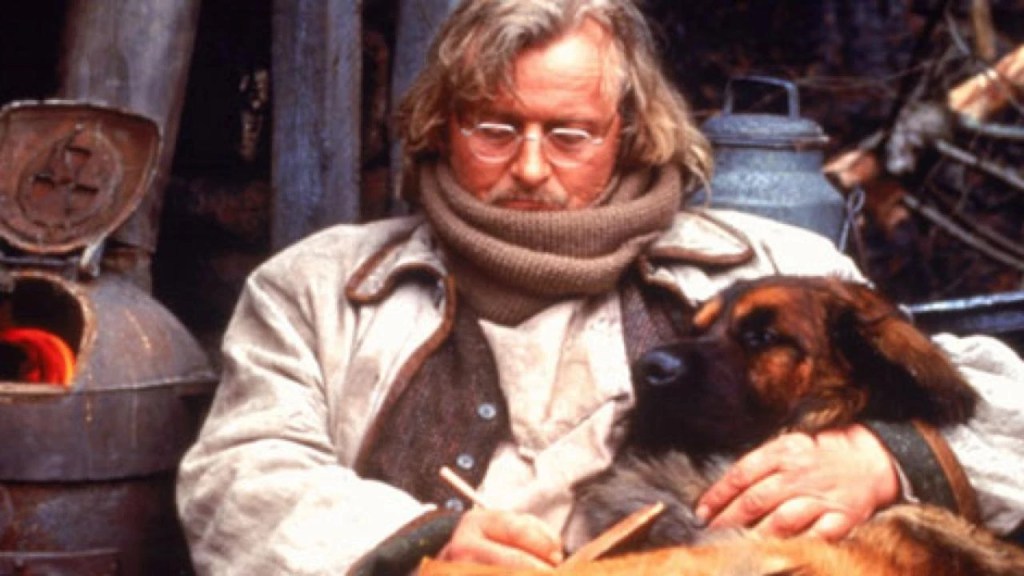
THE CALL OF THE WILD (1997) – Rutger Hauer stars in this version of the classic Jack London novel!


THE CALL OF THE WILD (1997) is based on Jack London’s classic story about Buck, a domesticated dog who lived the first four years of his life on the regal estate of Judge Miller. In 1897, he’s kidnapped and shipped up north to the frozen arctic regions where powerful dogs are in high demand. And Buck, a St. Bernard-Scotch Collie mix, is as powerful as it gets. 

On his journey, we see Buck fall into the hands of three different masters. First, he’s purchased by a dispatch courier for the Canadian government named Perrault (Luc Morissette) whose sled driver is Francois (Robert Pierre Cote). Perrault and Francois are kind to the dogs, but life is still harsh as they carry their dispatches across the snowy, frozen north. Buck sees a dog killed by other dogs for the first time. This is where he first learns that only the strong survive, and he soon has to prove it when he’s forced to fight and kill Spitz, the lead dog of the team. Unfortunately, circumstances require Perrault to sell Buck and his sled team to a group of greenhorns led by Hal (Charles Edwin Powell), his sister Mercedes (Bronwen Booth) and her husband Charles (Burke Lawrence). These morons have no business looking for gold in the Yukon. They have no clue as to what they’re doing and seem to be leading the group to certain death. Starving, tired, and sensing disaster, Buck is lucky that the group arrives at the camp of John Thornton (Rutger Hauer) just in the nick of time. Collapsing at the doorstep of Thornton’s tent, Buck refuses to get up and go any further. As Hal begins to beat Buck with a stick, even going so far as pulling his gun to shoot him, Thornton forcibly takes Buck from the morons. With Thornton, Buck has finally found his “human.” John Thornton nurses Buck back to health and the two become inseparable. Buck has found love for the first time with Thornton and will not let him out of his sight for fear he might lose him. Then something strange happens, he starts feeling a call from the forest, and the promise of a freedom he’s never known before. His love for Thornton is strong, but is it as strong as the call of the wild? 

Even though this 1997 version of THE CALL OF THE WILD is narrated by Richard Dreyfuss and includes the great actor Rutger Hauer in its cast, the true star of this film is Buck the dog. We really pull for Buck as we see him adapt to his new way of life after he’s stolen from his comfortable southern home. As hard as it is to see the animals kill the weakest among them, these are important lessons for Buck. His new world is no place for the weak, and he decides that he will never be weak again. Even though Buck has gotten tough, it’s still a relief when he ends up with John Thornton, the Hauer character. My favorite part of the film is when the two take off together in search of gold. Hauer is only in the film for about thirty minutes, but the relationship he shares with Buck is the highlight of the film as far as I’m concerned.

The last thing I want to mention about the film is that it’s directed by Peter Svatek. Svatek’s next film, BLEEDERS (aka HEMOGLOBIN) would also star Rutger Hauer, and he would follow that up with SILVER WOLF, starring Roy Scheider. For what it’s worth, the man definitely had something going for him since he was able to work with talents like Hauer and Scheider! 

I’ve never read Jack London’s novel, but I have read that this version of THE CALL OF THE WILD may be the most faithful adaptation of the book out there. If that’s truly the case or not, I still really enjoyed this adaptation, and it’s an easy recommendation from me.