With yesterday’s news, this simply had to be today’s song of the day.
Listening to Avril brings back so many memories.
Enjoy!
Welcome to Late Night Retro Television Reviews, a feature where we review some of our favorite and least favorite shows of the past! On Thursdays, I will be reviewing Highway to Heaven, which aired on NBC from 1984 to 1989. The entire show is currently streaming on Tubi and several other services!
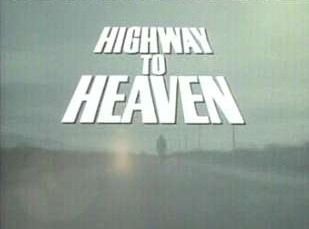
This week, Jonathan and Mark are back in Los Angeles.
Episode 3.23 “Heavy Date”
(Dir by Michael Landon, originally aired on March 18th, 1987)
Jonathan and Mark’s latest assignment finds them in Los Angeles, where they share an apartment in a building that is managed by Marge Davis (Peggy Pope). Marge, a widow, is upset that her son, Gary (Patrick O’Bryan), doesn’t seem to have any direction in life. When Gary loses his job, Marge kneels down and puts her head in the oven. Uhmm …. okay. Suicide humor, that’s great, I guess.
Alice Hartman (Lorie Griffin) shows up in Los Angeles and takes an apartment in the building. Alice is seven months pregnant. Her mother has created a cover story, that Alice has gone to Europe for the summer. Instead, Alice has gone to Los Angeles so she can have the baby and give it up for adoption without her father finding out. Jonathan works his magic and manipulates Gary and Alice into falling in love. When Alice has her baby, Gary asks her to marry him and says that he wants to help her raise the baby. So, I guess the nice couple who wanted to adopt the baby are just out of luck.
This episode was a bit odd. When Alice first comes to Los Angeles, she says she’s seven months pregnant. The episode takes place over a longer period of time than usual and Alice eventually has the baby. At no point does Alice ever appear to be pregnant. She wears baggy clothes but still, there’s only so much that an extra-large sweater can conceal when you’re that pregnant. There was also a weird scene where Gary, pretending to be the baby’s biological father, lied to the adoptive parents and claimed that he was on probation and that his mother was in a mental institution. The show played it for laughs but again, the couple seemed so nice and happy about the idea of adopting that Gary’s lies just felt cruel. And, for a show that was all about an angel on a mission from God, it’s interesting that Gary’s actions went unpunished. If anything, he was rewarded for them.
(Seriously, the couple that wanted to adopt Alice baby, they were so nice! That the episode just kind of pushed them aside really didn’t feel right. I get that Jonathan and Mark’s assignment was to help Alice and Gary but Gary is kind of a jerk and Alice is kind of immature. Whose going to help the Wallaces, who sincerely wanted to give the baby a good home?)
This episode was obviously heartfelt. For once, Michael Landon is the sole credited writer so one gets the feeling that this episode’s story and message both meant a lot to him. (That said, Landon’s approach to the story makes the message come across as being less pro-family and more anti-adoption.) In the end, the main problem is that neither Gary nor Alice really seem worthy of all of the effort that Jonathan is putting into the assignment. It’s hard not to feel that maybe Jonathan and Mark needed to help everyone out and not just Alice and Gary.
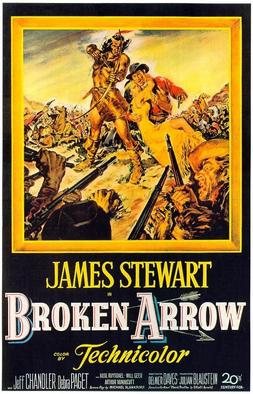
The 1950 film, Broken Arrow, takes place in the years following the Civil War.
Having survived the war, frontier scout Tom Jeffords (James Stewart) just wants to get away from his fellow countrymen for a while. During the Civil War, Jeffords saw the worst that humanity had to offer and the experience has left him cynical about the idea of bringing civilization to the American frontier. Tom just wants to be left alone. Still, when he comes across a 14 year-old Apache who has been shot in the back, Tom stops to help. Though wounded, the Apache still tries to attack him. He’s learned not to trust the white man. Broken Arrow is a film that suggests that he has good reason not to. Indeed, Broken Arrow was one of the first major Hollywood productions to attempt to treat the American Indians with sympathy and fairness.
Tom saves the Apache’s life and reunites him with his tribe. When the Apaches attack and kill a group of nearby gold prospectors, they allow Tom to live but they warn him to stay out of their territory. However, circumstances make it impossible for Tom to do that. When Tom arrives in Tucson, the citizens are incredulous that he allowed the Apache child to live. When Tom learns the Apache language and customs and marries an Apache woman named Sonseeahry (Debra Paget), it causes the other whites to distrust him even more. However, it is Tom’s eventual friendship with the Apache chief Cochise (Jeff Chandler) that eventually lands Tom in the middle of the conflict between the Apaches who want to preserve their way of life and the white men who want their land.
Broken Arrow is a well-intentioned film, in the way that mildly liberal films from the 50s tended to be. The U.S. government and its citizens are criticized for breaking their promises and their treaties to the Apache but the film’s ultimate message is one of compromise and understanding. The bigoted whites may be the villains but then again, so is Geronimo (Jay Silverheels) for refusing to accept Cochise’s desire for peace. Cochise is the film’s hero specifically because he calls for setting aside differences and living in peace with the white man, despite his own distrust of their leaders. The majority of the extras were Apache, though Neither Jeff Chandler nor Debra Paget were of Native descent. Both of them give good performances that largely avoid the stereotypes of the time. Chandler received his only Oscar nomination, for Best Supporting Actor, for his performance in this film.
That said, the unnominated Jimmy Stewart dominates the film and that’s not really surprising. (It should be noted that, while Stewart was not nominated for this film, he was nominated for his performance in Harvey, that same year.) Stewart may have first found fame as the happy and go-lucky face of Middle America but his experiences in World War II left a definite mark on him. He returned from the war a much more serious figure and every character that he played (even the lovable Elwood in Harvey) had more than a hint of melancholy to him. Stewart plays Tom as being a troubled soul, someone who is still struggling to come to terms with the destruction and cruelty that he saw during the Civil War. There’s an authenticity to Stewart’s performance, leaving little doubt that he understood exactly what Tom was going through. Broken Arrow ends on a note of compromise and racial harmony but it’s a sad film because we know what waits in the future for Cochise and his people. Tom Jeffords fights to bring peace to the frontier but it’s a peace that won’t last. And, as played by Stewart, Tom seems to understand that better than anyone.
Welcome to Retro Television Reviews, a feature where we review some of our favorite and least favorite shows of the past! On Thursdays, I will be reviewing Malibu CA, which aired in Syndication in 1998 and 1999. Almost the entire show is currently streaming on YouTube!

Yes, this is from the first season. I don’t care. I refuse to waste my time looking for a second season advertisement.
Jason humiliates himself again.
Episode 2.12 “Jason’s Deal”
(Dir by Gary Shimokawa, originally aired on January 22nd, 1990)
I guess Jason’s supposed to be a rock star now. His CD has been released and he’s given a $20,000 advance by a guy (Christian Zimmerman) from the record company. He proceeds to rent out an apartment of his own and spends a ton of money decorating it. Will success spoil Jason Collins!?
Actually, failure spoils Jason Collins. His CD only sells 70 copies and he’s dropped by the label. He has to move back home. Scott, Murray, and Alex are all angry because of the way he treated them when he thought he was a star. He even lied so that he throw an industry party rather than hang out with his brother and their dorky friends. Of course, the party was attended by Jason’s record company boss so maybe some understanding is in order here. Scott, Murray, and Alex forgive him but only after reading, in the paper, that Jason has been dropped by the record company. Would an obscure, generic singer getting dropped by a record company really be front page news?
(Speaking of which, maybe Jason’s CD would have sold if he and the record company had actually done something to …. oh, I don’t know, PROMOTE IT!? Jason doesn’t go on the radio. He doesn’t go on tour. He doesn’t go on TRL. Seriously, Jason, what did you think was going to happen?)
Meanwhile, Lisa (the character, not me) acts like a total bitch because her friends is dating Traycee. Believe me, I don’t like tossing that word around (especially as an insult) but there’s really no other way to describe Lisa’s behavior. Lisa’s friend, Curtis (James Castle Stevens), really likes Traycee and Lisa’s reaction is to act like a stuck-up snob. Curtis is an environmentalist and Traycee is keeping him from saving the rain forest! Or maybe Curtis is just realizing that there’s nothing one person can do to save the rain forest and, since he’s kind of a wimpy nerdy guy, he should enjoy life while he’s still young. Either way, it’s really none of Lisa’s business.
Oh, this storyline annoyed me! It’s a little bit difficult to fairly judge anyone’s performance on Malibu CA. That said, Brandon Brooks, Priscilla Inga Taylor, and Edward Blatchford all manage to give decent performance despite the bad dialogue and dumb plotting. Trevor Merszei (who played Scott) is giving a considerably better performance during the second season than he did during the first. Meanwhile, Marquita Terry (who plays Lisa) is consistently terrible in a way that’s noticeable even by the standards of a Peter Engel-produced sitcom.
Eventually, Tracyee encourages her friend to go to the rain forest and Jason moves back home. So, Jason will not be a rock star and Scott will not be going to the Olympics. Instead, they’re destined to forever be busboys in their father’s restaurant. It couldn’t happen to a group of more deserving people.
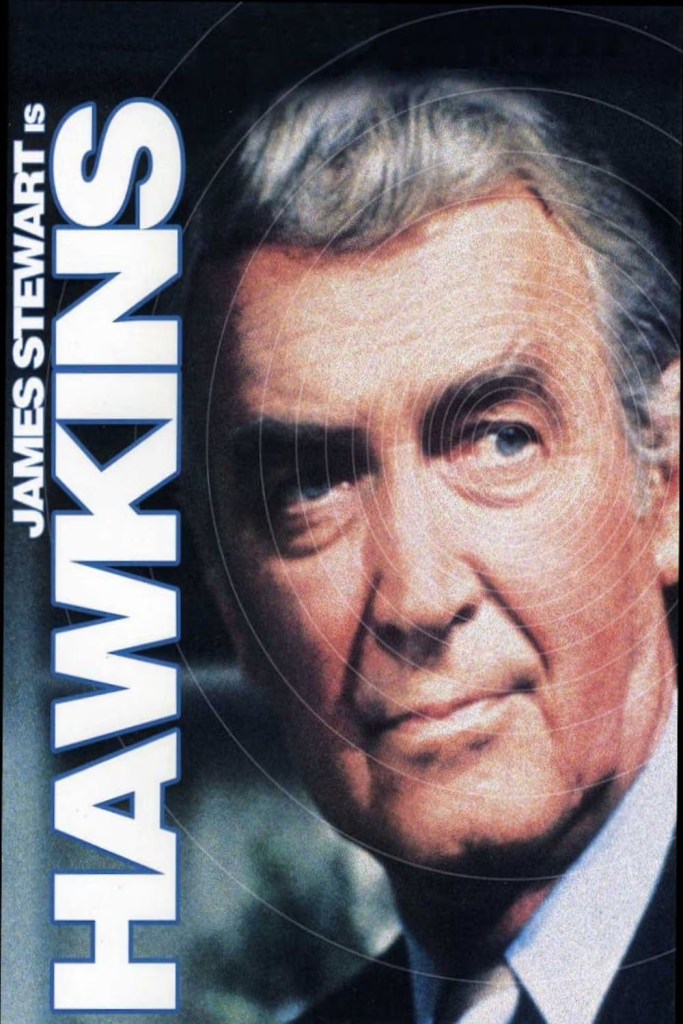
In this pilot episode of the TV-Movie series HAWKINS, Jimmy Stewart plays Billy Jim Hawkins from the fictional town of Beauville, West Virginia, who just happens to be the best defense lawyer in the business. A former prosecutor who changed sides, he has a perfect record for getting his clients off. Billy Jim gets a call to come out to Los Angeles when an heiress, Edith Dayton-Thomas (Bonnie Bedelia), is charged with the murder of her dad, stepmom, and stepdaughter. Billy Jim and his team, which is basically just his cousin R.J. Hawkins (Strother Martin), set about getting to know all the people in her life. There’s the family lawyer Carl Vincent (Robert Webber) who’s been dipping his hand in the family till while also carrying on an affair, much to the chagrin of his wife Vivian (Antoinette Bower). There’s Edith’s aunt Julia (Kate Reid), who doesn’t seem to have a very strong opinion of her now deceased brother in law and was seen arguing with him on the day of his murder. And there’s Edith herself, whose diary would indicate that she hated her dad and her stepmom so much that she wanted them dead. She also just happens to have the reputation for being a little strange and / or crazy. The evidence seems to be stacked against Edith, but Billy Jim doesn’t get to charge those extremely high legal fees for nothing. If anyone can get to the bottom of the case, it’s him.
I’ll just go ahead and say that Jimmy Stewart and the character of Billy Jim Hawkins are a match made in heaven. Any person who has seen him in the classic Otto Preminger film ANATOMY OF A MURDER (1959) knows how great he is at playing a down home defense attorney. He excels in the role, and he’s reason alone to invest in the DVD collection from Warner Brothers Archive like I did several years back. It’s so fun watching him question people in his easy going, slow talking, country boy way which almost always leads to the discovery of exactly what he needs to know. And Strother Martin is perfect as his cousin and associate, one of 174 first cousins, according to Billy Jim himself. You see, one of the interesting things about Billy Jim’s family is that he’s one of 14 kids, with 52 nieces and nephews to go along with all those first cousins. That’s some fun character history for a guy like me, whose mom is one of 15 kids, and I also have tons of first cousins. Stewart and Martin are a perfect duo, and their sharing of different theories as the episodes progress make up some of the best scenes. Add to Stewart and Martin a solid group of guest stars in this episode including Bonnie Bedelia (DIE HARD), Robert Webber (THE DIRTY DOZEN), Kate Reid (THIS PROPERTY IS CONDEMNED), and Antoinette Bower (THE EVIL THAT MEN DO), and you can’t help but have an entertaining show. There’s never any doubt that Stewart is going to uncover the murderer, but the fun of course is in seeing how he puts all the clues together.
HAWKINS: Death and the Maiden is the first of eight “Hawkins” TV movies starring Jimmy Stewart in 1973 and 1974. The character of Billy Jim Hawkins is a clear pre-cursor to the character of Matlock that Andy Griffith would have so much success with a little over a decade later. In a strange move at the time, CBS chose to alternate HAWKINS on Tuesday nights with a series of SHAFT TV movies. Imagine wanting to watch SHAFT only to turn on your TV to discover Jimmy Stewart and Strother Martin solving murder mysteries, or Vice-Versa. Conventional wisdom suggests that this release strategy was probably confusing to the respective audiences for the shows based on their vastly different demographics. I personally think they both sound awesome, but I can see how pairing such different shows in this way could have been a problem for the ratings. Regardless of its short lived tenure, if you’re a fan of Jimmy Stewart, you need to watch HAWKINS. Each episode is a joy to behold.
Welcome to Late Night Retro Television Reviews, a feature where we review some of our favorite and least favorite shows of the past! On Wednesdays, I will be reviewing Monsters, which aired in syndication from 1988 to 1991. The entire series is streaming on YouTube.
This week, an immigrant wants to stay in America.
Episode 3.18 “Desirable Alien”
(Dir by Bette Gordon, originally aired on January 27th, 1991)
Hercules (Tony Spiridakis) is a Greek immigrant who claims that he cannot return to his home country because of a mysterious birth defect. Hercules wants to be an American citizen but, for some reason, he is hesitant to take the physical exam necessary for citizenship and he always finds a way to put it off. As he waits to become a citizen, Hercules works in a restaurant with his friend, Luis (Luis Guzman). Hercules has had several case workers, all of whom have mysteriously stopped working for the Immigration agency after meeting with Hercules. It turns out that almost every woman that Hercules meets ends up becoming one of his lovers. Luis is impressed. Hercules says that he can’t help it. And, as caseworker Maggie (Wendy Makkena) discovers, he’s not lying. It turns out that Hercules is actually a satyr. Debbie Harry, of Blondie fame, has a brief cameo as a doctor who shows up to give Hercules his physical and who quickly becomes one of his lovers.
This episode was well-acted but it didn’t really add up to much. It’s tempting to try to connect the episode’s story to modern politics and the current debate about immigration but …. nah. That would be giving this episode a bit too much credit. As much as I complain about programs that are too long for the often simple stories that they tell, this episode is a case where I wouldn’t have minded a bit more time to explore the story. With a 21-minute runtime, this episode felt rushed and rather incomplete.
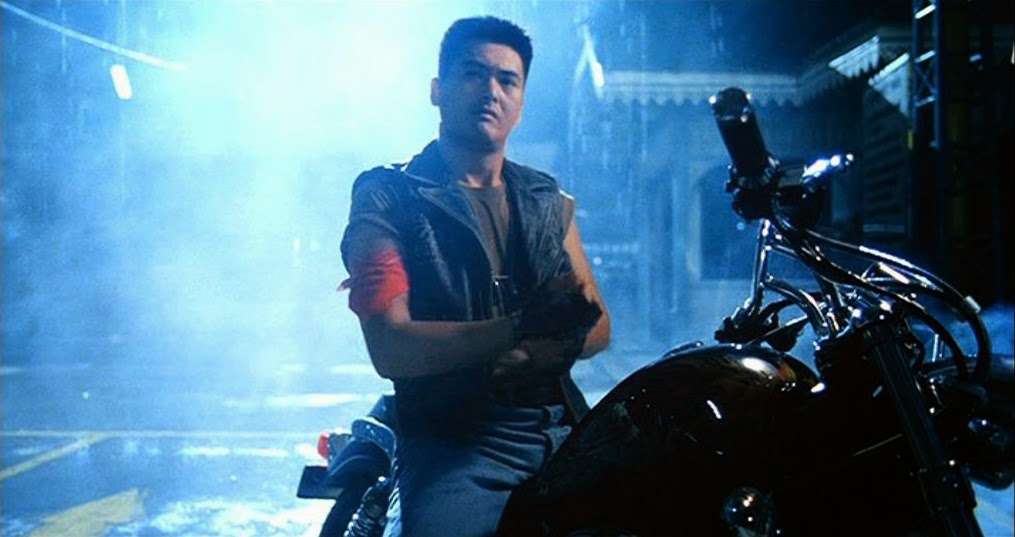
Chow Yun-Fat is most often mentioned in the same breath as director John Woo when discussing Hong Kong action films, and for good reason when you consider the classic films they made together. However, Chow also worked with director Ringo Lam on five different occasions during his Hong Kong heyday. They first worked together in CITY ON FIRE (1987), before moving on to PRISON ON FIRE (1987), WILD SEARCH (1989), and PRISON ON FIRE II (1991). They would work together for the last time in 1992’s FULL CONTACT, which is my personal favorite of their five films.
In FULL CONTACT, Chow plays Jeff, a bouncer at a bar in Thailand, where his girlfriend Mona (Ann Bridgewater) performs nightly interpretive dance / stripper routines. When Jeff’s best friend Sam (Anthony Wong) gets in trouble with a local loan shark, Jeff rides his big motorcycle over and collects Sam, kicks the collective asses of the loan shark and his goons, and even finds the time to slice and dice some wrists with his butterfly knife. The problem is solved for the night, but Jeff, Sam, and their buddy Chung (Chris Li) know that they’re going to have to come up with some cash to satisfy Hung sooner or later. So, Jeff sends Mona back to Hong Kong, while they team up with Sam’s flamboyantly gay, psychopathic cousin Judge (Simon Yam), and his crew made up of Deano (Frankie Chan) and Virgin (Bonnie Fu), to steal a shipment of arms. Unfortunately for Jeff, Judge has made a deal with loan shark Hung to use them for the arms heist, but then kill them once it’s over. After they pull off the job, Judge shoots Chung in the face and tries to kill Jeff, but instead the two men find themselves in an exciting car chase that ends when they both crash outside of an innocent family’s personal residence. They then engage in an epic fight, with a severely injured Jeff escaping into the home as the homeowner’s are brutally gunned down. Judge forces a freaked out, whining, whimpering Sam at gunpoint to go in the house and shoot his friend Jeff, which he does. After Sam walks out of the house, Judge and Deano blow the place all to hell with Jeff managing to get out of the house in just the nick of time with the family’s dog. Shot full of holes and missing a couple of fingers, Jeff must heal and plot his revenge on the friend who betrayed him and stole his girl, as well as the gay psycho who wanted to make love to him before trying his best to kill him!
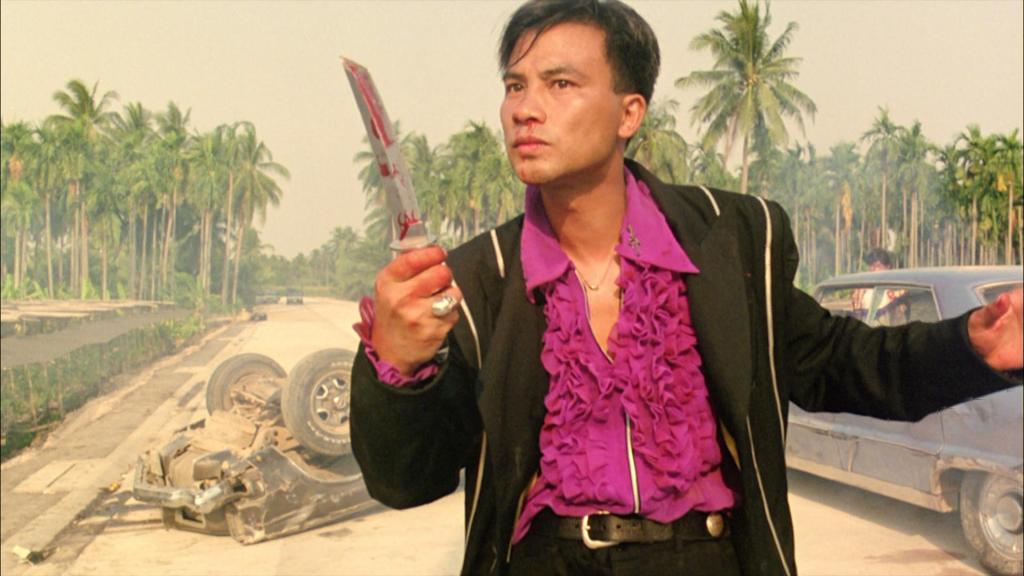
I love the movie FULL CONTACT, but it must be noted that it’s quite different from any of Chow Yun-Fat’s prior action films. First, his character Jeff is quite different than the flawed, but heroic characters he had been playing. In this film, he’s still a major badass as he’s riding his Kawasaki motorcycle and twirling his butterfly knife, but there’s not much that’s heroic about his character. Instead, he’ll do pretty much anything for money, and when he’s betrayed, his motivation is little more than cold, hard vengeance. I say “little more” because he does take care of a funny looking dog, and he does try to get some money to help the young girl that was horrifically scarred for life when her house blew up. These specific actions make him better than the psychos surrounding him. Second, Ringo Lam ramps up the violence to extreme levels. This is one of those films that love blades, and when the blades come out, hands are impaled, skin is sliced, and digits are sure to go flying! The film also likes its guns, and the bullets don’t just make a little red spot when they hit. Rather, there’s a good chance blood is going to graphically splatter everywhere. It’s somewhat nihilistic in its approach to violence. And finally, the characters themselves are so extreme that they don’t seem to exist in the real world, which is quite different from Ringo Lam’s usually more gritty work. Aside from Chow’s extreme badass, Yam is completely over the top as the gay psychopath Judge, Frankie Chan’s Deano is nothing more than a dumb brute, Bonnie Fu’s “Virgin” is a sex obsessed, psycho slut, and Anthony Wong’s Sam swings wildly from a whining wuss to a vicious, remorseless killer. Only Ann Bridgewater’s stripper / girlfriend seems to occupy a place on planet earth. I don’t say any of the above items as a criticism of the film. The things I like most about FULL CONTACT is the different type of action character for Chow, and the extreme action sequences. What this film lacks in style, it makes up for in sheer madness and ultra violence.
The cast and crew of FULL CONTACT is top notch. Chow Yun-Fat and Anthony Wong are both three-time winners of the prestigious Hong Kong Film Award for Best Actor, and Simon Yam has won one himself. Chow and Yam are the real standouts here. While he’s effective in his role, this is not the best example of Anthony Wong’s greatness. For that, I recommend the film BEAST COPS (1998). Director Ringo Lam made incredible films in Hong Kong prior to his death in 2018, winning the Hong Kong Film Award as Best Director for his prior collaboration with Chow Yun-Fat, CITY ON FIRE. It’s so good that Quentin Tarantino paid clear homage to it in RESERVOIR DOGS. Lam would also make several films with Jean Claude Van-Damme of varying quality, but I highly recommend his 1997 film FULL ALERT, with Hong Kong super actor Lau Ching-Wan. It’s incredible. The final person I want to mention is composer Teddy Robin Kwan. From the very opening shot, FULL CONTACT’s rocking soundtrack perfectly matches the action on the screen. There’s a revenge training sequence in the film that plays out to guitar riffs, beating drums, and vocals that get you completely pumped up for revenge. It’s not a surprise that Kwan is also a multiple Hong Kong Film Award winner for Best Original Film Score over the years.
Overall, I easily recommend FULL CONTACT knowing full well that it won’t appeal to everyone. The truth is that Hong Kong audiences of the time were not eager to see Chow Yun-Fat in this different type of role and the film is not one of his bigger hits. With that said, FULL CONTACT has a very solid cult following, with its big stars, great director and extreme action. Anyone interested in Hong Kong films of the 80’s and 90’s has to see this one.
Welcome to Retro Television Reviews, a feature where we review some of our favorite and least favorite shows of the past! On Wednesdays, I will be reviewing the original Love Boat, which aired on ABC from 1977 to 1986! The series can be streamed on Paramount Plus!
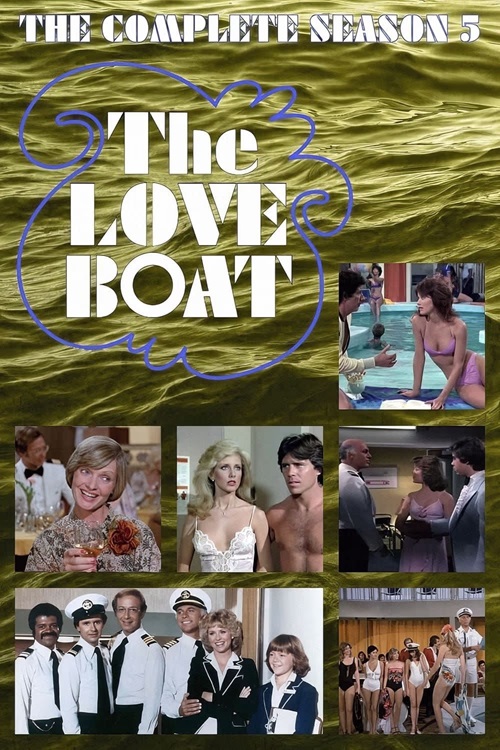
It’s time set sail for adventure!
Episode 5.28 “A Dress To Remember”
(Dir by Robert Scheerer, originally aired on May 8th, 1982)
This week’s episode features three stories and one dress.
The dress, a lovely blue gown, is brought on board by diet doctor Dr. Alfred Farney (Kelly Monteith), who claims that his “muskmullet” diet will lead to Donna Baker (Markie Post) losing 10 pound by the end of the cruise. The proof will be that Donna will be able to fit into the dress. Alfred’s former partner-turned-rival Dr. Tucker Martin (Lyle Waggoner) is also on the ship and his plan is to tempt Donna into eating so much that she’ll instead gain 11 pounds and the dress will rip. Boooo! Shame on both of those doctors! Seriously, Donna looks miserable for the entire cruise. That said, despite the efforts of Dr. Martin, Donna still loses the weight …. in fact, she loses even more than 10 pounds. She loses 11! Doctors Farney and Martin agree to partner up again and Donna, who looks like she’s about to faint, suggests that they celebrate over pizza. The doctors make some money and Donna gets an eating disorder but at least the dress looks good.
That dress goes through a lot over the course of one episode. For some reason, Gopher and Isaac have been tasked with keeping it safe. Why would you trust those two with something important? Actually, Isaac is usually pretty smart and Gopher’s actually been behaving a bit more like a professional than usual this season so I guess they were just having an off-cruise.
Norman Lomax (Bob Denver) wears the dress (and a wig) to keep his ex-father-in-law, Tom (Forrest Tucker), from recognizing him. Tom must be an idiot because Bob Denver in a wig and dress still looks and sounds like Bob Denver. Norman’s ex-wife, Nancy (Brianne Leary), is also on the cruise. Norman tries to win her back.
Finally, Tom falls for Rosie Strickland (Eleanor Parker), who makes her living selling flowers to people boarding the cruise. When Rosie’s daughter (Catherine Parkes,) shows up, Rosie doesn’t want her to know that Rosie isn’t rich. So, the Captain gives her the dress to wear and helps Rosie pretend to be a rich woman. Fortunately, it turns out that Rosie’s daughter loves her regardless of whether or not she’s rich. And so does Tom!
Myself, I’m a little bit concerned by the fact that the Captain just gave away a piece of clothing that belonged to one of the passengers. That doesn’t really seem very professional and it kind of goes against everything that we know about Captain Stubing. He’s a good man but he’s not exactly a rule-breaker. That said, everything works out in the end. Stubing even gets to perform a triple wedding.
The third story, I actually liked it. It’s heart was in the right place, even if it was basically just a remake of Lady For a Day. Eleanor Parker actually gave a really good performance, finding some much needed reality in Rosie’s character. The other two stories were pretty forgettable (or, in Bob Denver’s case, annoying) but Eleanor Parker’s story made up for both of them, making this a very nice and ultimately rather touching cruise.
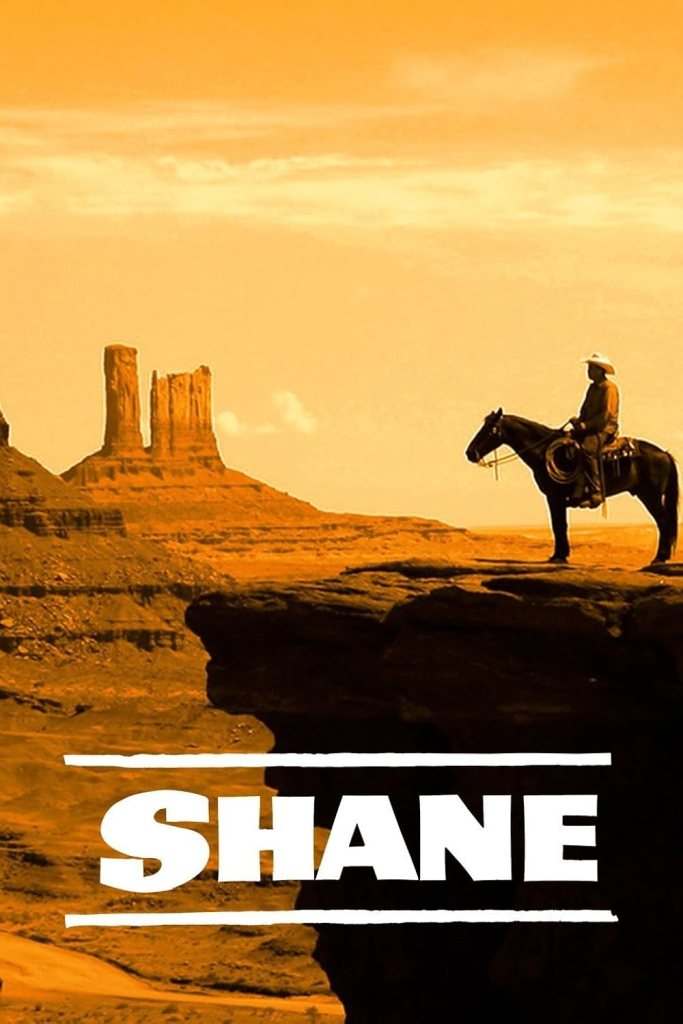
Episode 17, the final episode of this short lived TV series, begins with Rufe Ryker (Bert Freed) in serious need of a cook at his cattle ranch. While lamenting the horrible state of the vittles that he and his men are being forced to consume to Sam Grafton (Sam Gilman), it’s suggested that he consider asking Marian Starett (Jill Ireland) to be his cook. Ryker ends up taking Sam’s advice and heads out to the Starett ranch to see her and even gets invited to stay for dinner. None of this is setting well with Shane (David Carradine) or Tom Starett (Tom Tully), as neither man trusts Ryker, especially since he has spent the better part of the first 16 episodes of the series wanting to take the ranch away from them. They make their feelings very obvious as Ryker plays nice and Marian seems to appreciate his suddenly more caring and complimentary nature. Later at Sam’s bar, Ryker begins telling Sam about how good it would be to have a woman to spend his time with. Sam tells him “You’re talking like a man in love.” It really seems that Ryker may be falling for Marian. He even gets a fresh shave and haircut. Shane walks in on Ryker getting his haircut and gets pissed all over again. He heads back to the ranch and tells Marian, who offers to give Shane his own haircut, that Ryker is “trying to court you,” hoping that she’ll put down the idea. Sensing what Shane is up to, Marian decides to play devil’s advocate and acts like dating Ryker isn’t such a bad idea. It drives Shane crazy, which seems to be making Marian quite happy. Ryker keeps pressing forward, even bringing Marian some excellent peanut brittle. As a jealous Shane tries to warn Marian that Ryker is dangerous, she asks Shane why he cares, clearly wanting him to answer honestly, which he doesn’t. Will Shave ever admit to Marian that he loves her?!! Will Ryker be able to convince her that he can give her a good life at his ranch? Will Tom threaten to kick Shane’s ass if he doesn’t handle his business with Marian? The good news is that all such questions are answered in this final episode.
While episode 17 presents a strange conundrum, Shane vs. Rufe Ryker for Marian’s attention, I must admit that I found it an excellent conclusion to the series for several reasons. First, Rufe Ryker’s best nature is finally revealed. Throughout the series Ryker has been a lot of bluster, but with a couple exceptions, he has mostly been a reasonable man and has even worked with the Starett’s multiple times for the good of the valley. His feelings for Marian bring out a sensitivity and kindness in him that we have not seen before. Being one of the more interesting characters, I liked that he was given even more depth this late in the series. Second, there’s a scene late in the episode where Tom confronts Shane, chews his ass out and tells him he’d kick that same ass if he was a little younger since he’s not “man enough” to take care of his business. So many times people dance around and do everything possible NOT to tell people how they feel in these shows. Not this time, as Tom tells Shane exactly how he feels and he doesn’t pull a punch even slightly. It pisses off an already pissed off Shane even farther, but these are words he needs to hear, and they spur him to action. I’ve mentioned some of Tom Tully’s excellent moments in the past, but he saved the best for last. I found it to be one of the best individual moments of the entire series. Finally, you’d think this storyline and the fact that it’s the very last episode would force Shane to finally tell Marian how he fills about her. I’m not going to spoil the ending, but throughout the entire series, Shane has been shown to be a man of action, not of words, and that aspect of his character remains unchanged to the very end. You’ll have to watch for yourself to find out exactly what I mean with that last statement.
I started watching this series for two reasons; I loved the 1953 movie SHANE with Alan Ladd, and I wanted to watch Jill Ireland in an on-screen role that does not rely on Charles Bronson. After watching every episode, I can confidently state that SHANE is a solid TV series, and that Jill Ireland does a fine job as the beautiful Marian Starett. And even better, it’s been a lot of fun sharing my thoughts with the readers of The Shattered Lens. Thanks to all who have joined me!
 Through the Shattered Lens