Embracing The Melodrama #7: Reefer Madness (dir Louis Gasnier)


Reefer Madness

“The motion picture you are about to witness may startle you. It would not have been possible, otherwise, to sufficiently emphasize the frightful toll of the new drug menace which is destroying the youth of America in alarmingly increasing numbers. Marijuana is that drug – a violent narcotic – an unspeakable scourge – The Real Public Enemy Number One!” — The opening crawl of Reefer Madness (1936)

“”I’ll buy you a soda!” — Drug Dealer Jimmy

“I never drink the stuff!” — Future Drug Addict Bill

Yes, everyone, it’s time to tell your children and maybe light one up because te 8th entry in our series devoted to embracing the melodrama is none other than the 1936 “educational” film, Reefer Madness!

Reefer Madness opens with Dr. Carroll (Josef Forte) talking to a PTA meeting about the dangers of marijuana use among the youth of America.  Dr. Carroll can tell that the PTA doesn’t understand just how dangerous marijuana is so he tells them that he’s going to tell them a story.  Yes, he says, he knows that they’ve probably already read about this story in the newspapers.  But he’s going to tell them all the details that were intentionally left out of the newspapers.  (Damn liberal media….)

As principal of the local high school, Dr. Carroll has noticed some strange things happening.  Some of the students are failing to give 100% in athletic competitions.  Meanwhile, former honors student Bill has been spotted giggling in class while discussing Shakespeare.  Watching all of this, Dr. Carroll can only assume that every student in his high school must be smoking marijuana!  (What Dr. Carroll never seems to mention — or find strange — is that all of the high school’s students appears to be in their 30s and 40s.)

Well, Dr. Carroll is right!  Weed, reefer, marijuana — call it what you will, it has taken over the formerly clean-cut, all-American students and now they’re all a bunch of giggling and murdering addicts.  Perhaps not surprisingly, this leads to murder, tragedy, and unwed pregnancy.  Over the course of 67 minutes, life after life is ruined by marijuana.  Most chillingly, Dr. Carroll informs us that “the next tragedy may be that of your daughter’s… or your son’s… or yours… or yours…or yours!”

According to Reefer Madness, smoking weed will cause you to have an utterly psychotic break from reality, transforming you automatically into a hyperactive, sex maniac who neglects your studies, runs over people in the street, and plays the piano while bugging out your eyes.  All it takes is one little toke to get hooked for life.  As Reefer Madness shows us, addicts can be spotted by the heavy cloud of smoke that forms around their head as they madly puff on their marijuana cigarettes.  In fact, marijuana is such a powerful drug that the addicts in Reefer Madness don’t even have to actually inhale to be effected.  In perhaps the film’s most infamous scene, a hallucinating marijuana addict demands that his piano-playing girlfriend play “faster…faster….FASTER!”

No wonder they call marijuana the “Weed with roots in Hell!”

Obviously, if you’ve ever smoked weed, then you know that Reefer Madness gets it all wrong.  However, the lasting power and appeal of Reefer Madness lies in the fact that even someone who has never smoked weed before in his or her life will watch this film and know that it gets it all wrong.  Reefer Madness is perhaps the most inept and inaccurate portrayal of drug use to ever appear on screen and, as a result, it almost defies criticism.  Yes, the film is thoroughly over-the-top and terrible but its terrible in its own oddly unique way.  As a result, it’s one of those films that simply has to be seen to be believed.

And here’s your chance!

And remember — there’s no hope with dope!
Embracing the Melodrama #6: Grand Hotel (dir by Edmund Goulding)


Poster - Grand Hotel_03

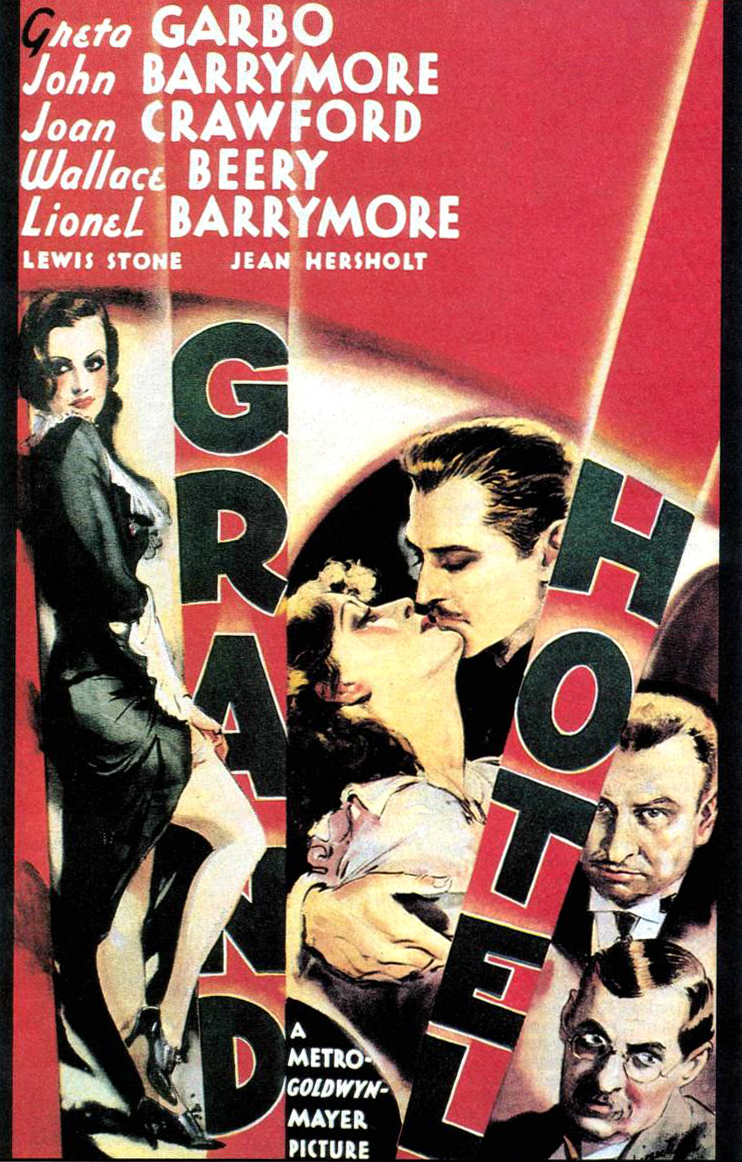
Today, we continue to chronologically embrace the melodrama by taking a look at one of the earliest examples of what would become a Hollywood mainstay, the big budget, all-start soap opera.  Today, we start things off by considering the 1932 best picture winner, Grand Hotel.

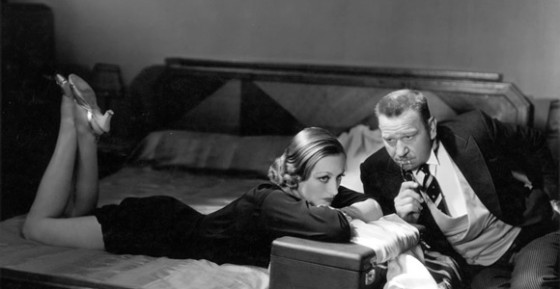
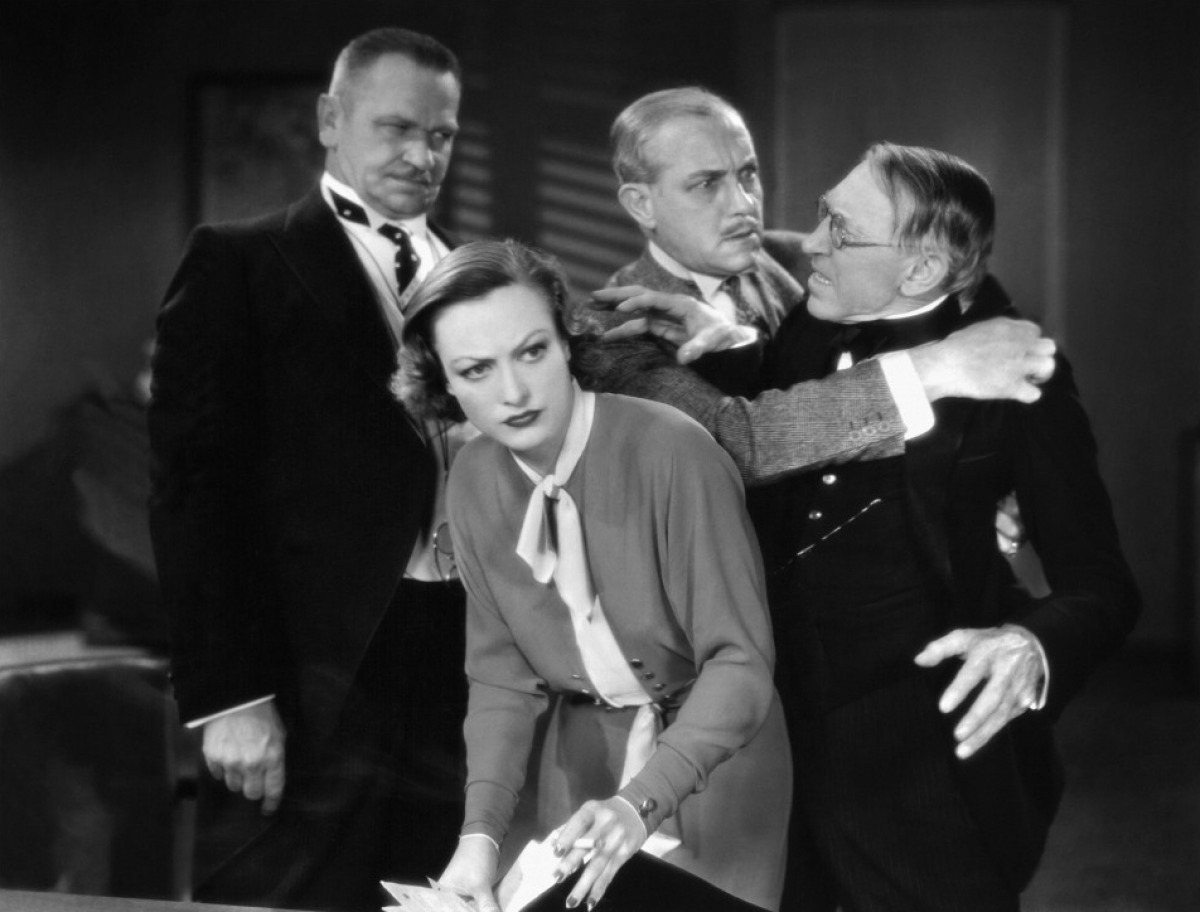
Grand Hotel follows five separate people as they all check into Berlin’s Grand Hotel.  They all have their own lives, their own secrets, and their own dreams.  As the film plays out, these five people will wander in and out of each other’s stories.  Seeing as how this was an MGM film and MGM always promoted itself as being the most glamorous studio in 1930s Hollywood, it’s not surprising that these five characters are played by five of the biggest stars that the studio had under contract.

There’s Flaemmchen (played by Joan Crawford), an aspiring actress who, when we first meet her, appears to be willing to do anything in order to advance her career.  Whenever I watch Grand Hotel, I’m also surprised by how good Joan Crawford is here.  Crawford has become such an iconic character of camp that we tend to forget that she actually was a pretty good actress.  In Grand Hotel, she is perfectly cast as someone who is not quite as amoral as she wants the world to believe.

There’s Preysing (played by Wallace Beery), a greedy industrialist who hires Flaemmchen to be both his administrative assistant and his mistress as well.  Considering that the film is set in Germany, its’ easy to view Preysing as a symbol of the fascism that was sweeping across Europe in the 30s.  I don’t know if that was the intention of the filmmakers but it’s impossible to deny that Preysing is a pretty unlikable character, the type of greedy brute who inspires otherwise intelligent people to do things like run off and join Occupy Wall Street.

Crawford and Beery

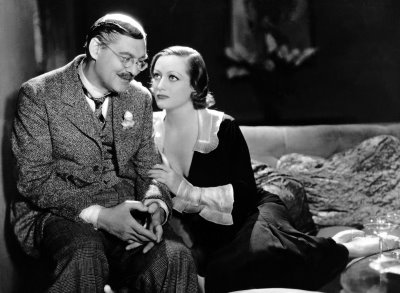
Far more likable is Otto Kringelein (Lionel Barrymore), a meek accountant who used to work for Preysing.  Kringelein is terminally ill and has basically come to the Grand Hotel so that he can at least enjoy a little bit of luxury before he dies.  At the hotel, he meets and falls in love with Flaemmchen.  Lionel Barrymore is so likable here that it’s hard to believe that he would later be best known for playing evil Mr. Potter in It’s A Wonderful Life. 

Barrymore and Crawford

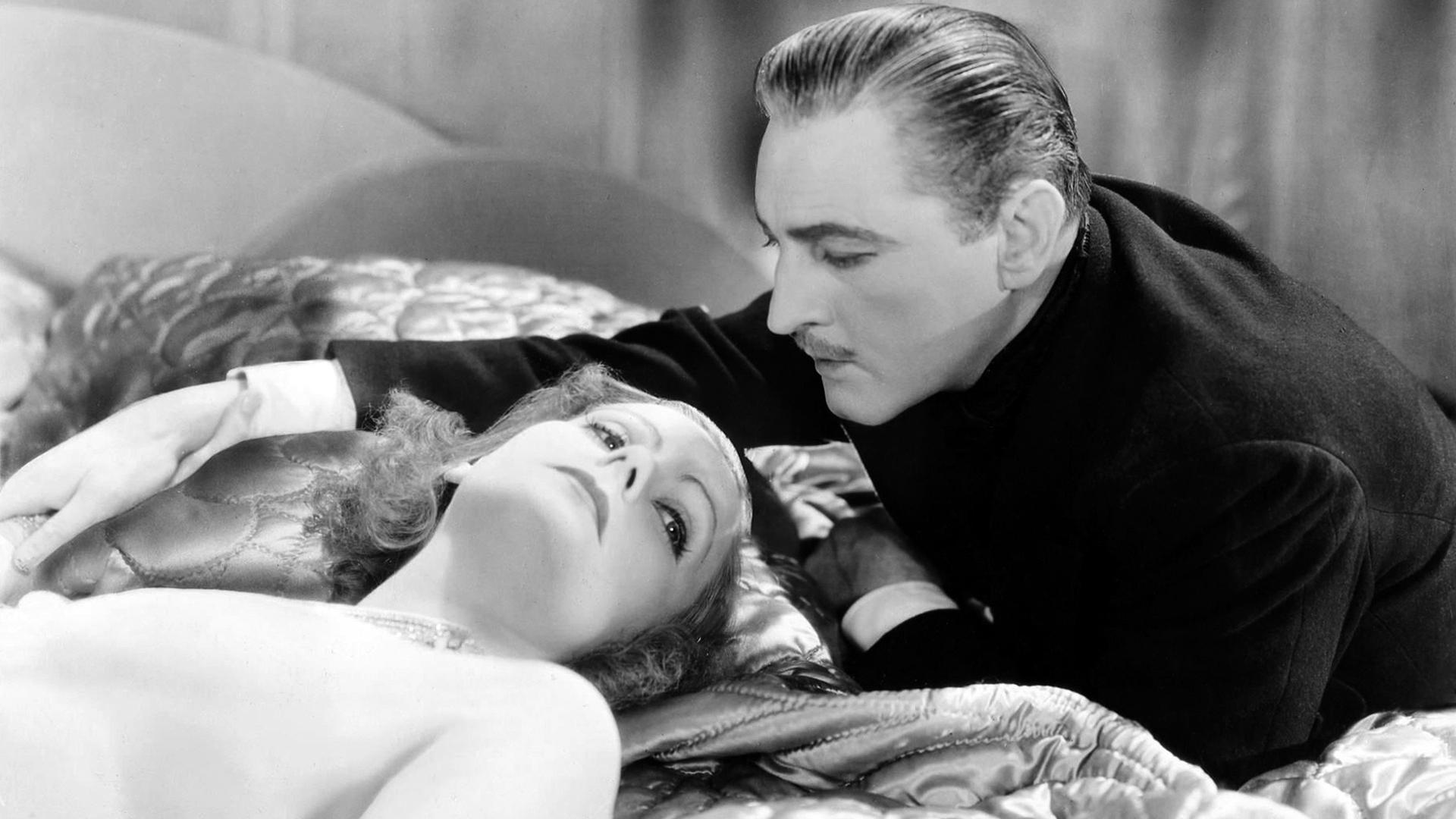
Otto also meets Baron von Giegern (John Barrymore), a penniless nobleman who supports himself as a gambler and an occasional jewel thief.  If you needed proof that this film was made before the enforcement of the strict Production Code began, just consider that the Baron, despite being a criminal, is also the moral center of the film.  John Barrymore gives a charismatic and wonderfully theatrical performance.  The scenes where he and his brother Lionel play off of each other are some of the best in Grand Hotel.

And finally, there’s my favorite of all the characters — Grusinskaya (Greta Garbo), the Russian ballerina who famously says, “I want to be alone.”  She checks into the hotel to try to escape the world and during her stay, she meets and falls in love with the Baron.  Grusinskaya is the character that I most related to, because we’re both dancers and I sometimes want to be left alone as well.

Barrymore and Garbo

I love Grand Hotel!  How couldn’t I?  The costumes, the sets, the actors, the glamour, the melodrama … what’s not to love!?  Incidentally, compared to a lot of other film melodramas from the early 30s, Grand Hotel actually holds up as pure entertainment.  The film moves quickly, much of the dialogue is still sharp and witty, and all of the actors are perfectly cast.  Curiously, Grand Hotel only received one Oscar nomination, for best picture.  However, it’s not surprising that it also won the only award that it was nominated for.

Grand Hotel has been described as being the first ensemble film.  I don’t quite agree with that because, even though it features a large cast and several intersecting storylines, you never forget the fact that you’re essentially watching a bunch of film stars sharing scenes with other film stars.  Eight decades after the film was made, the star power of Garbo, the Barrymores, Joan Crawford, and even Wallace Beery still continues to shine through and, to a large extent, your reaction to the film’s characters is pretty much the same reaction that audiences in the 1930s had to the public personas of the actors playing them.  But, and here’s the thing — it doesn’t really matter.  MGM made Grand Hotel to celebrate star power and, when you’ve got stars like these, can you blame them?

Grand-Hotel-4

Embracing The Melodrama #4: The Cheat (dir by George Abbott)


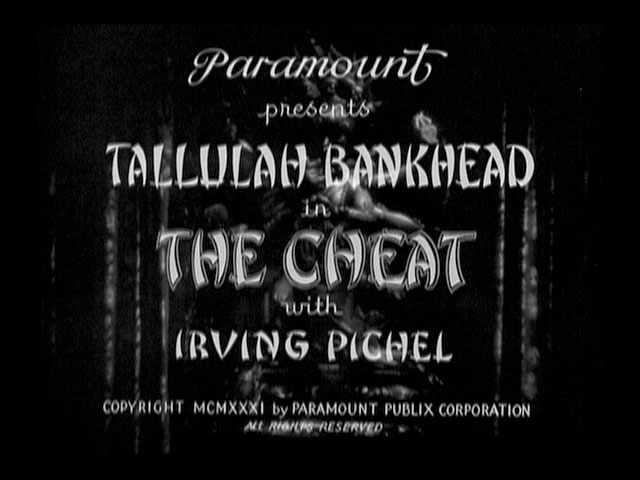
cheat-title-stillIn 1930, in response to claims that its movies were corrupting the youth of America (The more things change, the more they remain the same and all that…), Hollywood adopted the infamous Production Code.  In the days before ratings, the Code told studio filmmakers what they could and could not put on screen.  The Code told Hollywood that all crime must be punished, the only good sex was unseen married sex, that the clergy must be respected, and that the American way of life must be celebrated.  Audiences could get rest assured that, if a film had managed to pass the Code, then that film was safe for impressionable minds.

Though the code was written out in 1930, it was not enforced in 1934.  During those four years (known as the Pre-Code era), filmmakers responded to the looming reality of censorship by directing some of the most outlandishly sordid films that were ever made.  Knowing that they would soon be forced to “play nice,” filmmakers decided to embrace as much sex, violence, suggestive dialogue, and as many tawdry situations as possible.  The end results may have scandalized contemporary audiences but, for those of us today, these Pre-Code films can both be a lot of fun and continue to surprise us with just how far some of them went when it came to embracing the melodrama.

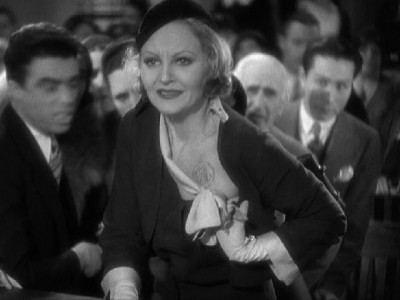
Take for example 1931’s The Cheat.  Tallulah Bankhead plays Elsa Carlyle.  Elsa is married to a boring but decent man named Jeff (Harvey Stephens).  Jeff makes money and then Elsa spends it.  Elsa is also a compulsive gambler and, after making one ill-fated bet at a local casino, Elsa finds herself owing more than she can pay.

That’s when the wonderfully sinister Hardy Livingstone (Irving Pichel) steps into the picture.  Livingstone is a rich man who has spent the last few years living in Japan.  As Livingstone explains after inviting Elsa back to his shadow-filled mansion, he is obsessed with Japanese culture, especially the idea of having his own personal geisha.  (Admittedly, the film itself promotes the simplistic western assumption of just what exactly a geisha is.  The truth is far more nuanced but — in the film’s defense — the brutish Livingstone doesn’t exactly come across like someone who would be smart enough to perceive or appreciate things like nuance.)  Hardy agrees to pay Elsa’s debt if Elsa agrees to become his personal sex slave.  Rather than tell her husband that she lost their money, Elsa agrees.

However, once Elsa returns home, she discovers that one of Jeff’s business deals has paid off.  They’re rich!  And Elsa now has more than enough money to pay back her gambling debts.  Elsa goes back to Hardy and tells him that the deal is off.  Hardy responds by declaring that Elsa is now his property and, to prove it, he literally brands her in a scene that is all the more disturbing because it is seen almost entirely in silhouette.

(Seriously, this was a pretty intense scene!  Eli Roth has nothing on George Abbott!)

As often happened in the 1930s, all of this leads to Elsa shooting Hardy and Jeff confessing that he did it and being put on trial for attempted murder.  The trial itself is pretty much a standard courtroom drama but it is memorable for the scene in which a bunch of courtroom observers are so offended by one witnesses’s testimony that they spontaneously respond by beating the crap out of the accused.

You can find The Cheat (along with 5 other films) on one of my favorite DVDs, the Pre-Code Hollywood Collection.  It’s a film that I highly recommend to anyone who wants to see just how sordid a Pre-Code Hollywood film could truly be.  Along with appealing to our historical curiosity, The Cheat also features an excellent lead performance from the legendary Tallulah Bankhead and a perfectly villainous turn from Irving Pichel.  Finally, like many Pre-Code films, The Cheat serves as an interesting walking tour through the usually hidden recesses of the American psyche.  In short, it’s a valuable portrait of the type of worldview that the Production Code was supposed to banish from existence.

The Cheat

Embracing the Melodrama #3: Body and Soul (dir by Oscar Micheaux)


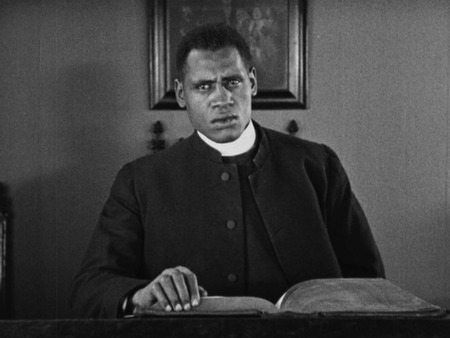
Paul Robeson in Body and Soul

Let’s continue to embrace the melodrama with the 1925 silent “race” film, Body and Soul.

Body and Soul was directed by Oscar Micheaux, who may not be a household name but who is still a very important figure in the development of American film.  Though he may be forgotten today, Micheaux was the first major African-American filmmaker.  At a time when the major studios were only willing to use black actors as comic relief, Micheaux made films that attempted to seriously deal with race relations and provide a realistic portrait of black life in America.  As a result, Micheaux’s films serve as a historical record of a community that, for most of the 20s, was either ignored or condescended to by the majority of American films.  While Micheaux is believed to have directed 26 silent films, only 3 are known to have survived.  Of those three, Body and Soul is the best known and the most acclaimed.

In Body and Soul, Paul Robeson plays an escaped prisoner who, upon finding himself in the predominantly black town of Tatesville, Georgia, takes on the false identity of the Rt. Rev. Isaiah T. Jenkins.  While the majority of the citizens in town take one look at Jenkins’s collar and assume that he must actually be a man of God, Jenkins spends his private time drinking and coming up with schemes to swindle his congregation out of their money.  Jenkins also pursues a member of his congregation, Isabelle (Julia Theresa Russell), despite the fact that Isabelle is in love with the poor but decent Sylvester (who also happens to be Jenkins’ brother and who is also played by Robeson).  It all leads to tragedy, death, murder.  Indeed, for a film that was made and released in 1925, Body and Soul is surprisingly critical of organized religion.  Or, at least, it is until the awkwardly uplifting ending, which is best ignored.

For those of us who were raised on special effects and sweeping camera movements, there’s always a moment of adjustment that comes whenever we start to watch a silent film.  We tend to take cinematic magic for granted and, as a result, we are often surprised by the largely stationary camera, the minimal sets, and the overly theatrical style of performance that largely typifies the silent era.  All of these elements are present in this film but, once you adjust to the style of a different era, Body and Soul actually hold up fairly well.  If nothing else, the film’s portrait of a corrupt and decadent clergy is just as relevant today as it probably was in 1925.  But, to be honest, the film is mostly worth watching for Paul Robeson’s wonderful lead performance.  While he’s a bit on the dull side as Sylvester (but, then again, Sylvester is a dull character), Robeson turns Rev. Jenkins into a charismatic and magnetic force of corruption.  Whereas a lot of other actors (especially in the silent era) would have gone far too overboard with Jenkins’ villainy, Robeson plays up the reverend’s sinister charm.  As a result, Body and Soul remains both a valuable piece of cinematic history and a watchable melodrama.

Watch it below!


Embracing the Melodrama #2: Manslaughter (dir by Cecil B. DeMille)


Manslaughter Orgy

Manslaughter Orgy

You really can’t talk about film melodrama without talking about Cecil B. DeMille.

From a modern perspective, we tend to dismiss DeMille as simply being the director of the fun but undeniably campy version of The Ten Commandments that pops up on TV every Easter.  Those of us who know our Oscar history are usually quick to roll our eyes over the fact that DeMille’s film The Greatest Show On Earth won best picture over High Noon, The Quiet Man, Moulin Rogue, and such unnominated films as Singin’ In The Rain and The Bad and the Beautiful.  For those who know the history of the blacklist, DeMille is a convenient villain — a director who supported the blacklist while other more critically admired directors like John Huston and John Ford spoke out against it.  In fact, it sometimes seems that the only positive thing you hear about Cecil B. DeMille is that, when he showed up playing himself in Sunset Boulevard, he came across as being a nice man.

But, when you actually study the history of American film, it becomes obvious that — even if he’ll never be a critical favorite — Cecil B. DeMille is one of the most important figures in the history of American film.  Starting in 1913, DeMille directed movies for over 43 years.  In many ways, he was one of the first directors to truly understand how to best exploit the commercial possibilities of a good melodrama.  DeMille understood that audiences enjoyed watching sin at the start and during the middle of a film as long as a healthy dose of salvation was present at the end.  That salvation allowed audiences to embrace the sin without having to deal with guilt.  With his early silent films, DeMille established the formula that is still used in cinematic melodrama to this day.

Consider, for example, DeMille’s 1922 film Manslaughter.

Manslaughter tells the story of Lydia (Leatrice Joy), a wealthy young woman who — much like me — likes to drive fast and dance.  As we’re told in one of the opening title cards, “Her proud boast is that life has never stopped her!”  When we first meet Lydia, she’s in her car and she’s racing alongside a train.  When a cop pulls her over for speeding, Lydia nonchalantly bribes him with an expensive bracelet.  (Myself, I always just cry whenever I get stopped for speeding.  It’s just as effective and far less expensive.)

Lydia has a boyfriend, a rather self-righteous district attorney named Daniel O’Bannon (played by Thomas Meighan, a familiar face to those of us who enjoy silent melodrama).  We are informed that Daniel loves Lydia for the “girl he thinks she could be, not for the girl she is.”  Apparently, that’s meant to be romantic.  I don’t know — if a guy ever said that to me, I’d probably slap him.  And then I’d get my boyfriend to beat him up…

As Daniel watches Lydia drink and dance her way through a decadent Christmas celebration (which is captured, in loving and fascinating detail, by DeMille), he tells her, “Don’t you think you better put on the brakes before life does it for you?”

“Modern girls don’t sit home and knit!” Lydia replies.  (You go, Lydia!)

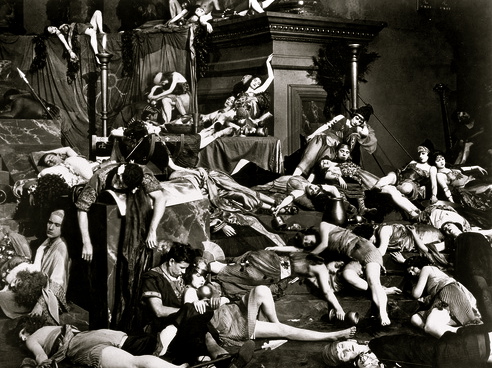
Eventually, Daniel finds himself musing that “we’re no different than Rome.”  He then proceeds to visualize all of the party goers taking part in a massive Roman orgy… (Daniel also visualizes what is reportedly one of the first same sex kisses to ever appear in a mainstream American film.)

Anyway, as you might be able to guess from the title, Lydia eventually kills someone with her reckless driving and guess who ends up prosecuting her in court?  None other than Daniel, who links Lydia’s irresponsible behavior to — you guessed it — the collapse of ancient Rome.  While Lydia find salvation in prison, Daniel starts to embrace the very sin that he originally railed against…

Manslaughter has got a reputation for being one of DeMille’s weaker silent films.  It’s definitely heavy-handed in its moralizing and Meighan, as good as he may have been in films like The Racket, is actually pretty boring here.  However, I still enjoyed Manslaughter, or I should say that I enjoyed the scenes in Manslaughter that unapologetically celebrated the decadence of Lydia’s life.  Leatrice Joy gives a fun and likable performance in those scenes and how can you not enjoy watching people get wild in the 1920s?

Watch Manslaughter below!

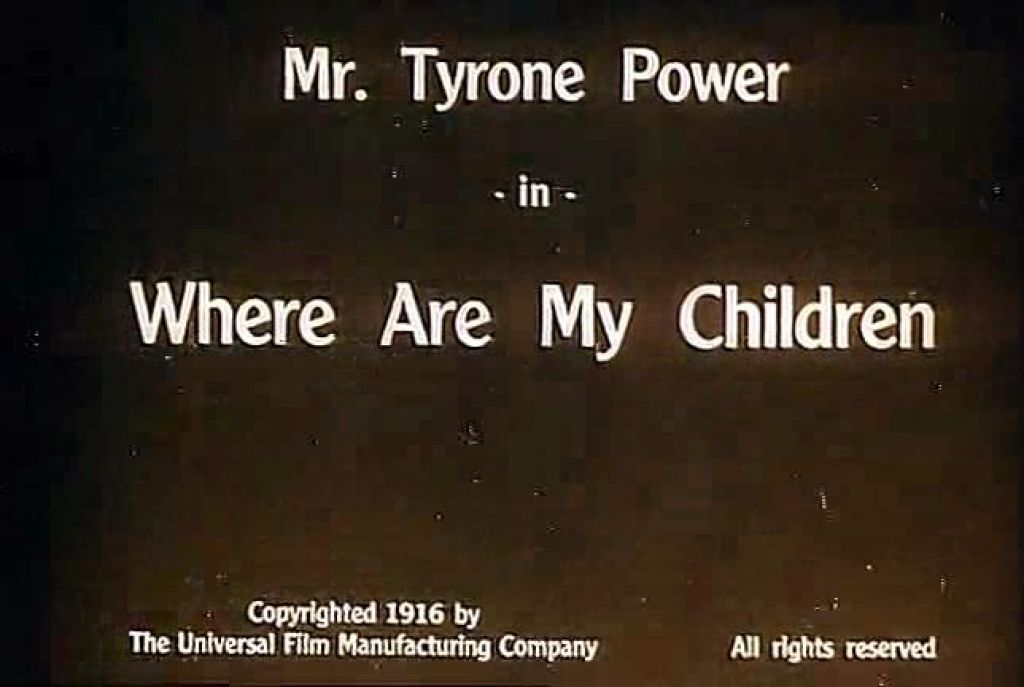
Embracing the Melodrama #1: Where Are My Children? (dir by Phillips Smalley and Lois Weber)


Where Are My Children

I love melodrama, don’t you?

Well, I hope you do because, for the next 10 days, I’m going to be taking a chronological look at fifty of the best (and worst) film melodramas of all time!  I’m going to start with a silent film that’s nearly 100 years old.  Written and directed by Lois Weber, one of the first female filmmakers, Where Are My Children? is a melodramatic look at an issue that is just as controversial today as it was when this film was first released in 1916.

Where Are My Children? tells the story of John Walton (played by Tyrone Power, Sr.), a upright district attorney who feels that all crime could be prevented if only there was a way to stop irresponsible and morally lax people from reproducing.  Walton’s only regret in life is that he and his wife have never had any children of their own.  While Walton is busy dealing with the prosecution of a medical practitioner who has been arrested for distributing pro-birth control literature, his wife is hiding a secret from him.  Because they would rather have social lives than families, she and her friends have been secretly getting abortions…

One of the great secrets of American film history is just how weird much of silent cinema truly was.  I think we tend to assume that because silent movies are old, they also have to be primitive, corny, silly, slow, and out-of-touch.  And, often times, they are!  But, if you’re a serious student of film, you owe it to yourself to watch as many silent movies as you can.  It’s important to know the history of what you love and a film like Where Are My Children? is quite definitely a part of that history.  Add to that, for every five silent films that have been rendered almost unwatchable by the passage of time, there’s going to be one — like Where Are My Children? — that has held up fairly well.  There’s an undeniable pleasure to discovering a silent film that still — despite all the odds — remains interesting.  And, finally, there’s the fact that silent films are often odd in ways that you’d never expect.

Let’s take Where Are My Children? for instance.  This is one of those films that literally opens in Heaven, with a lengthy explanation of how there are three different levels of babies — the “chance” children, the “unwanted” (who, we are told, are constantly sent back to Heaven and have been marked with the “sign of the serpent,”), and then finally there’s the select few children who have been blessed ahead of time “by the almighty.”  Creepy, no?  As the film progresses, it becomes obvious that Where Are My Children? is a pro-eugenics film.  Eugenics, of course, is the horrific idea that only certain, elite people should be allowed to have children, because of course undesirable adults will just have undesirable children who will eventually grow up to undesirable things.

Needless to say, a lot of very evil people have used eugenics to justify doing a lot of very evil things but what is often forgotten (or not even acknowledged) is that during the early 20th century, eugenics was considered to be a very progressive concept.  For all the good work that Margaret Sanger did towards promoting birth control and sex education, she was also a supporter of eugenics.  It was her 1916 arrest and trial for distributing contraception that inspired Phillips Smalley and Louis Weber to make Where Are My Children?

Ironically enough, this film — which, with its pro-sex education message, would probably be considered quite liberal by the cultural standards of 1916 — is probably now best known for being strongly anti-abortion, with Weber and Smalley going as far as to use double exposure (which was quite an advanced technique back in 1916) to show us the children that will never be born to the film’s characters.  It’s the sort of thing that would never happen in a mainstream movie today.  It’s also the sort of thing that a lot of modern progressive audiences will undoubtedly find to be incredibly offensive.  But, speaking as someone who strongly believes in my right to make my own decisions about what I do with my body, I find films like Where Are My Children? to be fascinating.  It has nothing to do with politics and everything to do history.  Where Are My Children? is a valuable time capsule.

Watch it below!

Quick Reviews: ‘Ida’ (dir. Pawel Pawlikowski) & ‘We Are The Best!’ (dir. Lukas Moodysson)


ida_poster-620x353

“Ida”, the best looking film so far this year, is the bittersweet story of a young woman named Anna living in a convent in Poland, waiting for the day when she will take her vows. Before that can happen, a Nun asks her to visit her aunt, the only known relative she has. During that visit she learns that her parents were Jewish and died during the events of WWII. Anna wants to know where they are buried, and so goes on a road trip with her aunt to their old family home to find answers. The journey opens her eyes to the joys and also sorrows of the world as she struggles with coming to terms with the past, present and her future. She now must decide whether she should stick with her devotion to god and err on the side of tranquility and solitude; or to live the life her mother couldn’t, risking pain and loss but possibly finding love and freedom.

It is an already beautiful story made more so through gorgeous cinematography and imagery. The sort that says more in each frame than its dialogue could ever hope to say. It is also the sort of Bergman-esque, quiet and contemplative, European film that I can only imagine will be more rewarding on multiple viewings. The performances are also wonderfully reserved, especially Agata Trzebuchowska who played Anna and has possibly the most mesmerizing eyes I have ever seen. It all adds up to an incredibly rewarding experience. Go see it if you get the chance.

watb

“We Are The Best!”, one of the best films I have seen so far this year, is a wonderful story of youth, rebellion and friendship that perfectly captures the ups and downs of adolescences.

The film revolves around three young girls in Sweden during 1982. They are fans of punk, though all their classmates make a habit of telling them it is dead. One winter, after playing around in their youth club’s rehearsal space, they decide to make their own punk band to spread their own message…mainly how much they hate sports.

Their conflicts throughout this process are rather inconsequential. One of their parents is divorced and focuses more on men than her daughter; another’s is overly religious and restrictive. They are also often picked on in school, question their looks, and have the usual boy trouble one would expect from a film about a group of thirteen-year-olds. What sets this apart from those other films is that these conflicts, as I mentioned, are shown as just minor bumps in the road for these three; it is their love of music and each other, love that could see them through anything, that shines through. Plus, it is all just a whole lot of fun.

It is that wonderful and relatable portrayal of friendship and youth that fills “We Are The Best!” to the brim with warmth and heart. Honestly, if you don’t walk out of the theater with a smile on your face then I can only hope your cold icy heart sees you through the hot summer ahead!!

————————————————-

So, with that said, now that June is almost over here is my list of favorite films so far in 2014 (with trailers!):

1)      Boyhood

2)      We Are The Best!

3)      Under The Skin

4)      Edge of Tomorrow

5)      Ida

6)      The Trip to Italy

7)      The Grand Budapest Hotel

8)      Enemy

Review: True Blood 7.1 “Jesus Gonna Be Here”


Sookie

I have to start out this review of the 7th season premiere of True Blood with an explanation and an apology.

I always like to think that I can write a good review regardless of what else might be going on in my life.  If I took a break from writing every time that I felt less than great, I certainly would not have ever reviewed Black Swan or The Perfect Teacher.  Sometimes, you just have to take your medicine and get things done.  That said, I should let you know that summer has just begun down here in Texas.  Pollen is everywhere and I have spent today battling my allergies.  I am definitely under the weather as I write this review and I apologize if that has effected my ability to properly consider tonight’s episode.

However, for the season premiere of a show that’s known for its complex storylines and huge cast, it doesn’t really seem like there’s much to analyze about what happened tonight.

Don’t get me wrong.  True Blood has always been an uneven show.  For every great episode of True Blood, there’s also a mediocre one.  For every brilliantly drawn and acted character (like Kristin Bauer van Straten’s Pam), there’s been characters who have never quite reached their potential but yet remain in the cast.  For every storyline that worked, there will be memories of Bill getting possessed by Lillith.

In the past, mediocre episodes or creative misfires did not worry me.  I accepted them as being just a part of what happens with all long-running television shows.  I accepted the occasional bad because I knew that the good would be great and I always knew that there was a chance that any creative miscalculations would be corrected in a future season.

However, we’ve now reached a point where there are no more future seasons.  This is it!  Season seven has ten episodes and then True Blood — as a television series — is over.  Rumor has it that there will be a Broadway musical and I’m certainly looking forward to it eventually showing up on the community theater circuit because I really do think that I’d be a natural for it.  But, until then, these final 10 episodes are all that we have left and True Blood — being True Blood — has a lot of storylines that it needs to somehow resolve so that viewers like me don’t feel like we’ve spent the last 7 seasons being set up for an anticlimax.

After all, we don’t want True Blood to end up like Dexter.

That’s why I can’t simply laugh off a mediocre or uneventful episode now.  As I sat through tonight’s premiere, a part of me was thinking that things were moving slowly because the show is setting up the foundation for a proper and satisfying finale.  However, another part of me wanted to scream, “HELLO — WE’VE ONLY GOT 10 EPISODES LEFT!  THESE HAVE TO COUNT!”

And I will admit — though this may have been the headache talking — I did end up hissing at the screen, “Where.  The.  Hell.  Is.  Erik!?”  As we all remember from last season’s finale, Erik was last seen naked on a mountain, bursting into flame as the sun shined down on him.  The important thing, however, is that we never saw Erik explode into red goo.  I chose to believe that Erik is still alive and, apparently, Pam agrees with me because tonight’s episode found Pam in Morocco searching for Erik.  There really weren’t enough scenes featuring Pam but I was happy for what we got of her.  Pam’s snarkiness always brings True Blood to life.  Hopefully, Erik will show up next week.

As for everyone else:

Tonight’s premiere began where season 6 ended.  A group of infected vampires attacked a human-vampire mixer at Bellfluer’s.  During the attack (which was well-filmed but still a bit too chaotic for its own good), vampire Tara is apparently killed and Holly and Arlene are kidnapped by the infected vampires.  Sam, who is now the mayor, orders that all the humans go home with an uninfected vampire, the idea being that the human will feed his vampire in return for protection.  Nobody is really happy with the arrangement and, as quickly becomes apparent, everyone blames Sookie.  What people don’t consider is that Sookie can hear their accusatory thoughts.  At the end of the episode, she goes to church and tells everyone off.  So, it looks like Sookie is once again frustrated with living in Bon Temps and thinking about saying goodbye to all of the drama and going off on her own.  Then again, that’s pretty much what always happens to Sookie.

(Sookie, incidentally, is now in a relationship with Alcide and good for her!  I still have a feeling that she’ll end the show with Sam but when you’ve been through everything that Sookie has, you’ve earned the right to spend a few nights with Alcide.)

Meanwhile, Sheriff Andy and Bill spent the episode looking for the kidnapped humans and I have to say that Andy has actually turned into a badass, even getting to save Bill from a group of human vigilantes.  However, Andy assures Bill that, even if there are temporarily allies, Andy still hates Bill and every other vampire.

Jessica, meanwhile, is stuck outside of Andy’s house, protecting Adelyn.  Despite the fact that Andy ordered his daughter not to invite Jessica inside, Adelyn does allow Jessica to enter to escape both the rising sun and to thank her for protecting her from a random vampire who wanted to drink Adelyn’s blood.  Once inside the house, Jessica nearly attacks Adelyn but manages to stop herself.

And finally, Jason has sex with his vampire girlfriend.  It’s not an episode of True Blood unless Jason is having sex with his vampire girlfriend.

I always enjoy watching True Blood and I’m looking forward to the rest of the season but I have to admit that I was a bit disappointed with tonight’s premiere, which seemed to move slowly and, oddly for True Blood, didn’t really seem to be too concerned with moving any of the show’s dozen or so storylines forward.  Hopefully, future episodes will pick up the pace because, after all, we’ve only got nine more left and they have to count!

And, hopefully, Erik will return.

Soon.

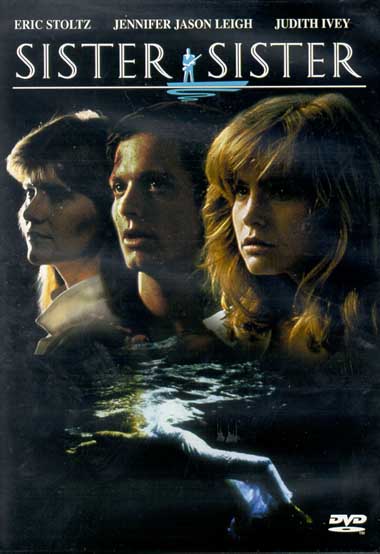
Lisa’s Homestate Reviews: Louisiana and Sister, Sister


Sister,_Sister

My sixth and (to date, anyway) final home state is Louisiana, where my family called Shreveport home from December of 1996 to May of 1998.  Louisiana was the last state I lived in before moving back to Texas, where I’ve remained ever since.

Whenever people find out that I used to live in Louisiana, they always seem to automatically assume that means that I either lived in New Orleans or next door to the family from Duck Dynasty.  They always seem to be somewhat disappointed to learn that I lived in Shreveport, which has a lot more in common with East Texas than with the things that most people visualize when they think about Louisiana.  However, I will always have good memories of Shreveport and let me tell you why.  For most of my childhood, I had a really bad stutter and, as a result, I was extremely shy.  However, shortly after my 12th birthday, my stutter went away.  Whether it was the result of spending hours with speech therapists or if it’s just something that I outgrew, Shreveport will always be the city where I stopped stuttering.  (And, it should be noted, Shreveport may not be New Orleans but it still celebrates Mardi Gras.  It’s just that the celebrations in Shreveport are a bit more …. sedate.)  So, seriously — don’t say a word against Shreveport.

Besides, Shreveport has a wonderful atmosphere all of its own.  In fact, the same thing can be said about all of Louisiana.  With its long history and unique culture, Louisiana is perhaps the most atmospheric state in the union and that atmosphere is perfectly displayed in Sister, Sister, an effective little thriller from 1987.

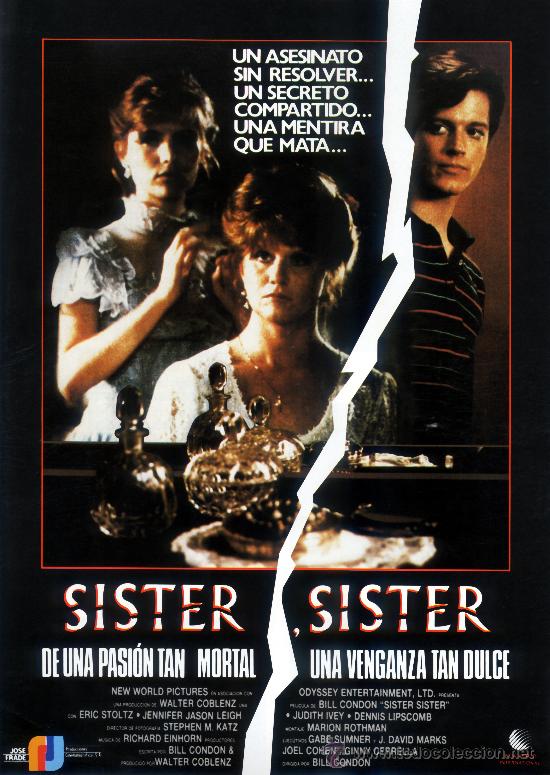
Sister, Sister tells the story of two sisters living in a dilapidated mansion on the bayous.  The older sister, Charlotte (Judith Ivey) is in love with Sheriff Cleve Doucet (Dennis Lipscomb) but she knows she can never marry him because she has to watch and protect her younger sister, Lucy (Jennifer Jason Leigh).  Lucy is mentally unstable and claims that she can communicate with the ghosts that live in the bayous.

Charlotte and Lucy have turned their mansion into the boarding house and they rent a room to Matt (Eric Stoltz), a congressional aide who is taking his vacation in the bayous.  Matt takes an interest in Lucy, which raises the suspicions of Etienne (Bejamin Mouton), a sinister handyman who appears to be obsessed with Lucy himself.  As you can probably guess, nobody in this film is quite who he or she appears to be and it all leads to the uncovering of dark secrets from the past.

So, let’s just start with the obvious.  The plot of Sister, Sister doesn’t make much sense.  If you think about it, you’ll find a lot of improbabilities.  So, my suggestion is that you just don’t think about it.  Instead, watch the film for the performances of Judith Ivey and Jennifer Jason and the atmosphere of the bayous.  Making his directorial debut here, future Twilight director Bill Condon captures a lot of haunting images of the bayou and his direction emphasizes mood over cheap thrills.  The end result is a horror film that might not be scary but it certainly is creepy and stays with you after it’s over.

If nothing else, Sister, Sister is an effective B-movie.  It’s also a nice showcase for my former home state of Louisiana.

Sister, Sister

Lisa’s Homestate Reviews: Colorado and Over the Edge


From August of 1994 to July of 96, my family lived in Longmont, Colorado.  Whenever I think back to living in Colorado or the times that I’ve visited it since, there’s always two things that I remember.  First off, Colorado had the cleanest air that I’ve ever breathed and, for someone like me who grew up with severe asthma, that’s a big deal.  Secondly, Longmont had some great dance teachers.  I may have taken my first dance classes in Texas but I’ve always liked to think that Colorado is where I first truly fell in love with dancing.

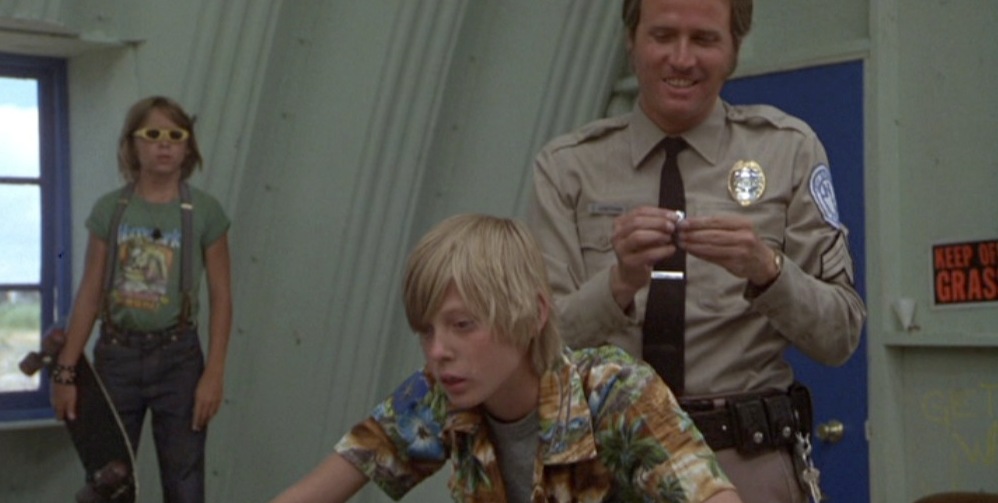
Fortuantely, my family and I lived in Longmont and not New Granada, the setting of the Colorado-shot 1979 film Over the Edge.  New Granada is a planned community, a collection of identical houses and sterile buildings that sit out in the middle of the desert.  The majority of town’s adult population views New Granada as less a home and more of a business opportunity.  When their children misbehave, they worry less about why and more about how that’s going to effect the effort to get a visiting businessman to invest in their town.  The streets of New Granada are patrolled by a fearsome cop with the very appropriate name of Doberman (Harry Northup).  Doberman may claim to be maintaining the peace but, as quickly becomes apparent, he’s just a bully with a uniform.

Is it any wonder then that the teenagers of New Granada are out-of-control?  Between living in a town where there is literally nothing to do other than skip school, smoke weed, and hang out at a dilapidated rec center and having to deal with parents who don’t really seem to want them around, the youth of New Granada are angry and Over the Edge suggests that they have every right to be.

When Mark (Vincent Spano) uses his BB gun to shoot a hole in Doberman’s windshield, Doberman reacts by blaming and harassing Carl (Michael Kramer) and his friend Richie (a very young Matt Dillon).  When Doberman demands that Richie tell him who shot the BB gun, Richie replies, “I only got one law.  Any kid who tells on another kid is a dead kid.”

Things escalate.  When a Texas businessman visits the town, the rec center is closed in an attempt to keep any of the kids from being seen.  Doberman arrests Claude (Tom Fergus) for possessing a gram of hash, which leads to Richie realizing that one of the kids has turned into a snitch.  Doberman’s obsession with finding out who shot the BB gun leads to the death of one of New Granada’s teens. Eventually, the adults of New Granada attend an emergency PTA meeting down at the high school, just to find themselves locked into the building by their children, the majority of whom proceed to riot and destroy the town outside.

Directed by Jonathan Kaplan and based on a true story, Over the Edge is one of the best youth-in-revolt films ever made.  Not only is it well-acted (with Matt Dillion in particular showing a lot of rebellious charisma as Richie) but it’s also unique in that it is totally on the side of the young people.  While Over the Edge does not necessarily endorse the violence that dominates the film’s finale, it also suggests that acting out was perhaps the only option left to the teenagers of New Granada.  That Over the Edge was made in the 70s is obvious as soon as you hear the soundtrack and see the clothes and hairstyles.  However, with its portrayal of both youthful alienation and out-of-control authority, it’s still very relevant today.

It’s a great film with an absolutely hear-breaking ending and it’s one that you should see if you haven’t yet.

The Face of Fascism In Over The Edge

The Face of Fascism In Over The Edge