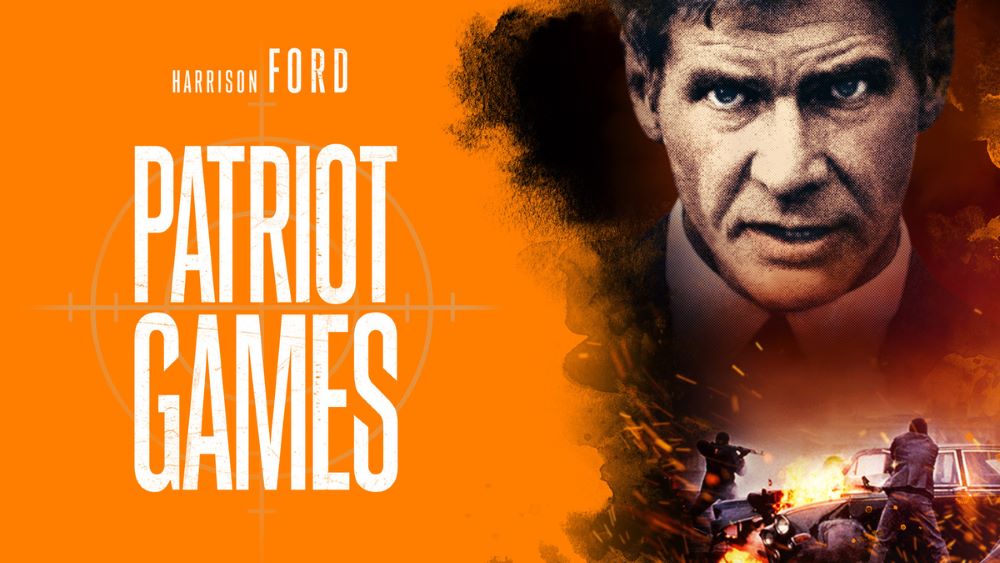
Review: Patriot Games (dir. by Phillip Noyce)


“You don’t know what it’s like to have your life destroyed by one stupid mistake!” — Sean Miller

Patriot Games hits the ground running by thrusting Jack Ryan and his family into the heart of a terrorist ambush on a London street, targeting a key British official tied to the royal family. Harrison Ford plays Ryan as a sharp-minded history professor and former CIA analyst on a simple vacation with his wife Cathy and daughter Sally, but his old Marine training surges up—he charges in, kills two attackers including one terrorist’s brother, and gets winged by a bullet himself. Right away, this setup grabs attention by showing how a random act of guts can boomerang into endless trouble, forcing a guy who craves quiet lectures to dodge bullets and betrayal across oceans, and it plants seeds about whether playing hero is worth the fallout on everyone you love.

Back in Maryland at the Naval Academy, Ryan tries piecing together normalcy, grading papers and dodging CIA calls, but Sean Miller—the captured terrorist whose sibling Ryan killed—gets sprung in a brutal prison convoy hit that leaves cops dead in the dirt. Miller, now laser-focused on payback, reroutes his rogue Ulster splinter group’s rage straight at Ryan’s home front, culminating in a savage freeway pileup where goons ram Cathy’s car off the road, injuring her and Sally badly. Ford nails the shift from composed academic to seething protector, his clenched jaw and urgent phone calls conveying a dad pushed to the brink, while these family-targeted strikes crank the paranoia, transforming everyday drives and school runs into potential kill zones that linger long after the crashes fade.

Sean Bean invests Miller with a coiled, wordless intensity—scarred features and piercing glares that scream obsession without needing speeches, flipping Ryan’s principled stand into the villain’s fuel for a mirror-image crusade. This fictional IRA offshoot rolls with pro-level gear for hits from UK alleys to U.S. suburbs, dodging authorities with insider tips, but their flat-out villainy skips any cracks in loyalty or ideology, turning them into efficient machines rather than messy humans with grudges worth unpacking. Anne Archer holds Cathy together through hospital beds and hushed fears, emerging tougher, as James Earl Jones’ Admiral Greer supplies the gruff guidance that tugs Ryan toward Langley, balancing the intimate home front with globe-spanning spycraft that feels like a real squeeze on one man’s bandwidth.

The camera shifts smoothly from rain-slicked London corners to bright Maryland bays, capturing open spaces that make characters look small and exposed against the sprawl. Gunshots snap clean and engines growl low during pursuits, pulling you deeper into the fray without drowning out the quieter beats. Horner’s soundtrack builds with brooding pipes and driving rhythms that hit hard in the final bay showdown, boats tearing through darkness with bursts of flame from hands-on stunts that pack a punch even now. Action ramps up step by step from early scraps to that watery chaos, mixing smarts with muscle, even if plot points line up a bit too neatly at times.

CIA war rooms buzz with satellite feeds sharpening grainy Libyan camp footage into proof of terror training, a tech showcase that echoes Clancy’s gearhead love and ramps brainpower against brute force without flashy overkill. Ryan hashes out returns to duty with British contacts, including a Sinn Féin type disavowing the extremists, sketching post-Cold War shifts where lone wolves replace nation-states in the threat lineup. Book-to-screen changes crank Ryan’s field time over desk strategy, letting Ford flex rugged moves that thrill audiences but sand off novel layers of naval tactics and alliance chess for punchier pacing.

Ford and Archer capture the raw friction in Ryan’s marriage through tense, whispered spats about diving back into danger, their easy chemistry making the pushback feel lived-in and real rather than scripted melodrama. Miller’s storyline hurtles toward a frantic leap onto Ryan’s rocking boat, boiling his grudge down to savage, no-holds-barred combat amid crashing waves. On-screen locations—from echoing Naval Academy corridors to churning bay waters—breathe life into the settings, casting national pride as a bruising, up-close shield instead of hollow cheers. Subtle audio touches, like distant creaks in the dim Ryan house, crank up the exposed feeling, linking slick production values to gut-punch emotions without piling on the noise.

Those procedural deep dives—poring over red-haired accomplice sketches or grilling shaky informants—add authentic wonkery, like Ryan spotting tells in grainy photos that crack the case wide, but they drag amid family rehab montages where Sally’s recovery mirrors the slow-burn hunt. The baddies’ cartoonish zeal glosses Northern Ireland’s brutal splits, opting for clear-cut evil over thorny politics that could’ve mirrored real headlines from the era, a choice that streamlines tension yet dates the take harshly next to modern nuance. Endgame flips the house siege into a decoy boat trap, Ryan baiting Miller solo on fiery Chesapeake swells, evolving his street-brawl start into tactical payback, though the tidy win lacks the submarine slyness of earlier Ryan yarns.

This swap prioritizes visceral family shields over shadowy sub hunts, hooking casual viewers while purists miss the book’s flowchart plotting, yet it spotlights Ford’s prime reluctant-warrior groove amid practical blasts that crush today’s green-screen slop. Pacing ebbs in alliance huddles, but peaks like the SAS desert wipeout—watched live via infrared ghosts—deliver clinical thrills tying brains to bangs seamlessly.

Taken together, the taut opener, vengeful pursuits, tech-savvy thrills, emotional anchors, dated politics, and solid craftsmanship add up to a clear verdict: Patriot Games is a good film, a reliable ’90s thriller that delivers crowd-pleasing tension and strong leads without reinventing the wheel. It holds up for its practical stunts and intimate stakes, earning replays as Ford’s standout Ryan turn, even if flaws like simplification and lulls keep it from greatness. Worth the watch for anyone craving balanced action with heart.
8 Shots From 8 Films: Special Robert Evans Edition


4 Or More Shots From 4 Or More Films is just what it says it is, 4 shots from 4 of our favorite films. As opposed to the reviews and recaps that we usually post, 4 Shots From 4 Films lets the visuals do the talking!

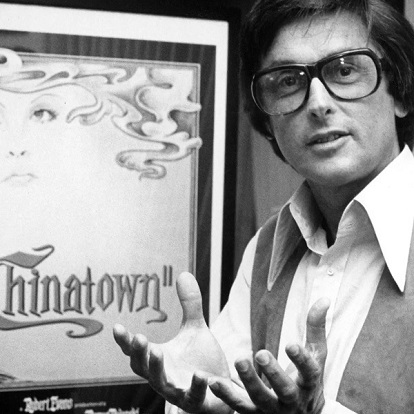
95 years ago today, Robert Evans was born in New York City.  He started out working in his brother’s clothing business but a chance meeting with actress Norma Shearer led to him becoming an actor.  And while Evans, by his own account, was not a particularly good actor, he did prove himself to be very skilled at playing the games of Hollywood.  Evans eventually moved from acting to production, first as an executive at Paramount and then as an independent producer.

He lived a life as glamorous and tumultuous as the stars of his pictures and his memoir, The Kid Stays In The Picture, is considered to be one of the classic show biz autobiographies.  He hung out with cinematic rebels like Jack Nicholson and Robert Towne and counted Secretary of State Henry Kissinger as a friend.  He suggested that Francis Ford Coppola should direct The Godfather and, when Paramount put pressure on Coppola to cut the film down to two hours, it was Evans who famously announced that a two-hour Godfather was nothing more than a trailer.  He lost Ali MacGraw to Steve McQueen and, again by own account, he lost a lot of potentially productive years to cocaine.  (The Cotton Club scandal is one of the wildest in the history of Hollywood, though it should be noted that Evans himself was never charged with any wrongdoing.)  But, for all that he lost, Evans continues to gain admirers as being the epitome of the producer who was willing to take chances.  For all of his flamboyance, Evans had an eye for good material and the willingness to protect his directors.  In many ways, he was as important to the cinematic revolution of the 70s as the directors that he hired.  When Evans passed away in 2019, it was truly the end of an era.

Here, in honor of the birth and legacy of Robert Evans, are 8 Shots from 8 Films that Evans produced, either as studio chief at Paramount or as an independent producer.

8 Shots From 8 Robert Evans Films

Rosemary’s Baby (1968, dir by Romnn Polanski, DP: William A. Fraker)

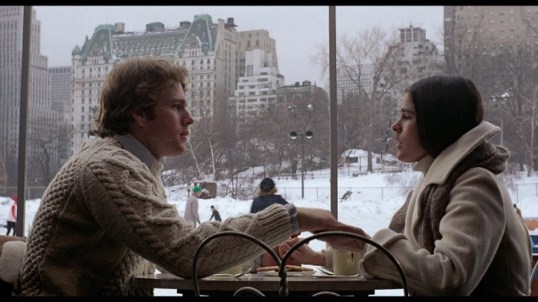
Love Story (1970, dir by Arthur Hiller, DP: Richard Kratina)

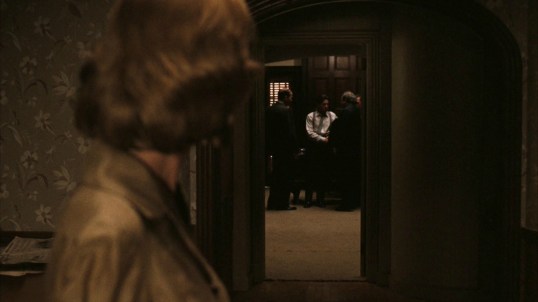
The Godfather (1972, dir by Francis Ford Coppola, Cinematography by Gordon Willis)

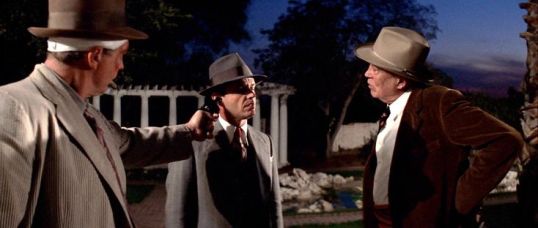
Chinatown (1974, dir by Roman Polanski, DP: John A. Alonzo)

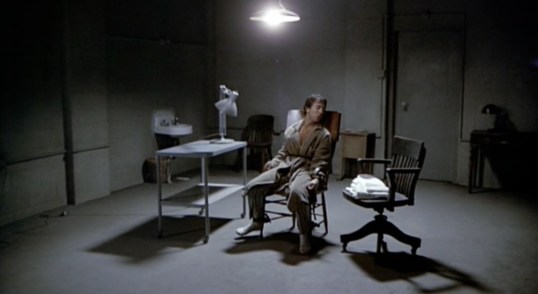
Marathon Man (1976, dir by John Schlesinger, DP: Conrad Hall)

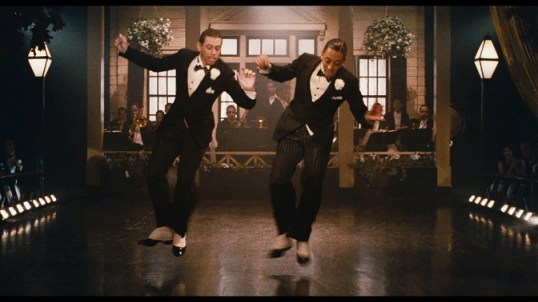
The Cotton Club (1984, dir by Francis Ford Coppola, DP: Stephen Goldblatt)

The Two Jakes (1990, dir by Jack Nicholson, DP: Vilmos Zsigmond)

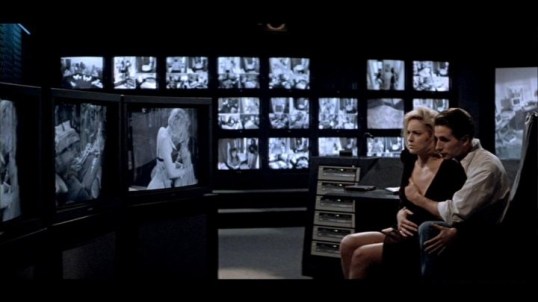
Sliver (1993, dir by Phillip Noyce, DP: Vilmos Zsigmond)

Introducing #Sunday Shorts, with BLIND FURY!


Since Sunday is a day of rest for a lot of people, I’m introducing #SundayShorts, a weekly mini review about a movie I’ve recently watched.

In BLIND FURY, Rutger Hauer does his best Zatoichi impersonation in a loose remake of a 1967 Japanese film called ZATOICHI CHALLENGED. The movie’s strongest quality is its ability to be both a kickass action film and a comic action film. That’s a fine line to walk and BLIND FURY does it exceedingly well.

Fast Facts:

  1. Star Rutger Hauer is probably the greatest Dutch actor of all time where he often starred in the films of director Paul Verhoeven. My favorite of Hauer’s foreign movies is SOLDIER OF ORANGE.
  2. ZATOICHI CHALLENGED, the inspiration for BLIND FURY, stars legendary Japanese actor Shintaro Katsu as a blind masseuse named Zatoichi. Katsu would play this amazing character in 26 films and 100 TV episodes between 1962 and 1989. You owe it to yourself to search out these films.
  3. Former heavyweight boxer Randall “Tex” Cobb plays a heavy in BLIND FURY. In his time, he beat Leon Spinx and went the distance with Larry Holmes.
  4. Australian director Phillip Noyce directed BLIND FURY. He’s an underrated director whose other credits include DEAD CALM, PATRIOT GAMES, and THE BONE COLLECTOR.

I highly recommend BLIND FURY!

Horror on TV: The Hitchhiker 5.1 “The Martyr” (dir by Phillip Noyce)


Tonight’s episode of The Hitchhiker is a stylish homage to noir, starring Meg Foster as a femme fatale who is not quite as blind as she pretends to be.  This episode was directed by Phillip Noyce, who was also responsible for a film about an actual blind person, Blind Fury.  Interestingly enough, that film also featured Meg Foster, though in a very different role than the one that she plays here.

This episode originally aired on April 22nd, 1989.

Last Night Retro Television Reviews: Nightmare Cafe 1.1 “Nightmare Cafe”


Welcome to Late Night Retro Television Reviews, a feature where we review some of our favorite and least favorite shows of the past!  On Mondays, I will be reviewing Nightmare Cafe, which ran on NBC from January to April of 1992.  The entire show is currently streaming on YouTube!

Created by Wes Craven and Thomas Baum, Nightmare Café was an anthology show about a mysterious café and the people who worked there.  The proprietor was played by Robert Englund.  The series only aired for six episodes and apparently, NBC didn’t really give the show much of a chance to find an audience.  Myself, I just recently came across it on YouTube and I’m looking forward to reviewing it over the course of October!

Episode 1.1 “Nightmare Café”

(Dir by Phillip Noyce, originally aired on January 29th, 1992) 

“See those two folks up there?” Robert Englund, playing a sharply-dressed man named Blackie, asks while staring straight at the camera.  “They’re about to get a second chance.  And you know what?  I bet they blow it.”

The two people to whom Blackie is referring are Frank Nolan (Jack Coleman) and Fay Pernovic (Lindsay Frost).  On a foggy night, Fay stops her car on the side of the bridge and jumps into the water below.  Fortunately, Jack already happens to be in the water so he grabs her and pulls her to dry land.  Standing on the deserted road and soaking wet, Fay refuses to say thank you and Frank refuses to mention why he was there to begin with.  However, when they see an all-night café in the distance, they decide to get a cup of coffee.  As they head to the café, Blackie watches them from the shadows.  As they enter the café, the neon sign changes from saying “Night Café” to “Nightmare Café.”

The café appears to be deserted, though in working order.  Jack goes behind the counter finds a chef’s outfit.  Fay finds a waitress outfit.  When she heads into the restroom to change clothes, she briefly hears the sound of a woman crying but, upon entering, she finds no one.  Meanwhile, Jack notices that a TV screen at the front of the café has come to life and …. uh-oh!  He’s suddenly watching what appears to be security footage of Fay removing her wet clothes.  Jack does the right thing and turns the TV off but seriously, what’s happening with this place!?

In the restroom, Fay marvels at how well the waitress uniform fits, almost as if it was made for her.  Suddenly, she hears more crying.  She touches the bathroom mirror and she sees herself sobbing and pulling pills out of a medicine cabinet.

Fay steps back into the main part of the café.  Frank confesses about watching her change on the television.  Fay demands to know what color underwear she was wearing.  “White …. with red hearts on back,” is Frank’s reply.  (For the record, as I sit here typing this, I am wearing black underwear with red hearts on the back.)  Fay accuses him of being a pervert and peeking in on her while she was changing.  Frank turns on the TV in an attempt to prove that he’s not a perv but, instead of showing the restroom, the TV shows the chemical plant where, according to Frank, he works as a night watchman.  He watches as two men steal a barrel of chemical waste and brag about how they’re going to dump it into the harbor.  Frank says that his worst nightmare is seeing something that’s wrong and not doing anything to stop it.  Fay pinches Frank in an attempt to wake him up.  On the TV screen, Frank Nolan tries to stop the men from driving off with the chemical waste.  Frank is fired and then knocked unconscious.

Realizing the Frank has vanished from the café, Fay runs over to a payphone and dials 9-1-1, just to be informed that the number cannot be reached.  Fay opens the door to the café and discovers that she and the café are apparently floating in space!

Returning to the television, Fay sees that, at the chemical plant, Frank is still on the ground and his employer tells a bunch of thugs that he wants them to make Frank watch as they dump the waste into the harbor.  However, once the thugs drive down to the harbor, Frank jumps out of the trunk of their car and into one of the trucks transporting the chemical waste.  The thugs shoot at the truck until it explodes and then decide that it’s time to get a cup of coffee.

Realizing that the thugs might be coming, Fay decides she better pretend to be a real waitress.  She grabs a cup of coffee and walks into the back where she discovers Frank rising out of a water-filled sink.  “You know what?” Frank says, “I don’t think this is your run-of-the-mill all night café!”

Fay congratulates Frank on doing the right thing and standing up to the thugs.  Suddenly, Fay starts to worry about what she saw in the restroom so she and Frank enter and, in the mirror, they see the two thugs approaching the cafe.  Frank and Fay run into the kitchen.  Frank opens a door marked exit and plunges back into the harbor.  Fay closes the door and then opens it again and finds herself staring at a back alley.  Deciding to face the thugs, she heads to the front of the café, where the two thugs demand to know where Frank is.  She tells them that he’s in the ladies room.  They rush into the restroom and suddenly find themselves on a police shooting range with a bunch of cops aiming their guns at them.

“This place has possibilities,” Fay says as the two thugs run from the café.

Suddenly, the TV turns on Fays sees herself in her bedroom, getting dressed for a date.  Frank steps back into the café and watches the TV, barely noticing that Fay has vanished from the café.  While he’s doing this, Blackie steps into the café and, breaking the fourth wall, says, “This ought to be interesting.”

On the television, Fay gets a call from a guy named Al (John D’Aquino) who explains that he’ll be delayed but he’ll see her later.  Frank recognizes Al as being his boss at the chemical plant and then he realizes that Blackie also worked at the chemical plant and was one of the people who always told him not to waste his time reporting the toxic waste dumping.  Blackie holds up a deck of cards and says that whoever pulls the low card will pay for their meal.  Frank says that the only person that he’s betting on is Fay.

On the TV, Fay drives towards Al’s house.  Suddenly, Frank is standing on the side of the road and hitchhiking.  Fay gives him a ride and suddenly, the two thugs pop up and start shooting at them.  Fay speeds off, with Frank in the car.  Fay outmaneuvers the pursuing thugs, who end up crashing their car into the harbor.

Suddenly, Blackie is the only one sitting in the café.  He watches Fay and Frank talk in the car.  Frank tells Fay all about Al and Fay kicks Frank out of the car, not understanding how he could possibly know her name.  Suddenly, Frank is back in the café.  He and Blackie watch as Fay knocks on the door of Al’s penthouse.  No one answers and Frank cheers as Fay starts to walk away.  Suddenly, Blackie appears on the television and unlocks the door so Fay can enter the penthouse.

Fay gives Al a really ugly sweater for his birthday but is then shocked to discover that Al is at the penthouse with another woman (played by Carrie-Anne Moss in an early role), who promptly asks if Fay is the maid.  As Fay heads for the penthouse’s bathroom, one of the thugs shows up and announces that he previous saw Fay at the café.  Meanwhile, Fay searches the medicine cabinet for pills before heading back to her car

Seeing Fay driving towards the harbor on the television, Frank runs out of the café to save Fay again.  But this time, instead of jumping into the harbor, Fay looks at the water and then says that it would be foolish to kill herself over a loser like Al.  Suddenly, Al drives up and Fay and Frank have to jump into the water to avoid getting hit.  However, once they hit the water, Frank realizes that they’re already dead.

Upon figuring this out, Frank and Fay are transported back to the café where Blackie tells them that they’re dead in the real world but they’re alive in the café and now, they get to make a difference in other people’s lives.  Blackie opens the door, to show Frank and Fay that they are once again floating in space and that the Earth in the distance.  Blackie tells them that they’ve been selected by “a higher authority” to help the people who enter the café and “maybe learn a little about yourselves along the way.”  But they’re both dead so what’s left to learn?

Suddenly, Al enters the café.  Blackie tells Al that Frank and Fay are in the restroom.  Al steps into the restroom and suddenly has a vision of Fay testifying against him in court.  Terrified, Al runs from the café but, upon opening the door, he plunges through space and lands in a vat of chemical waste.

A woman (played by Joan Chen of Twin Peaks fame) opens the front door.  “Hi,” she asks, “Are you open?”

Nightmare Café only ran for 6 episodes and anthology shows are notorious for being uneven.  All that considered, I really enjoyed the pilot for Nightmare Café, with its twisty plot, frequently surreal visuals, and — last but not least — Robert Englund having what appears to be a lot of fun as the show’s host.  The pilot was directed by Philip Noyce, who keeps the action moving a great pace.  Even more importantly, from their first scene together, Lindsay Frost and Jack Coleman have a lot chemistry.  I’m looking forward to watching the remaining episodes and seeing where all of this goes!

4 Shots From 4 Films: Special Phillip Noyce Edition


4 Or More Shots From 4 Or More Films is just what it says it is, 4 shots from 4 of our favorite films. As opposed to the reviews and recaps that we usually post, 4 Shots From 4 Films lets the visuals do the talking!

Today, the Shattered Lens wishes a happy 73rd birthday to Australian filmmaker, Phillip Noyce.  It’s time for….

4 Shots From 4 Phillip Noyce Films

Heatwave (1982, dir by Phillip Noyce, DP: Vincent Monton)

Dead Calm (1989, dir by Phillip Noyce, DP: Dean Semler)

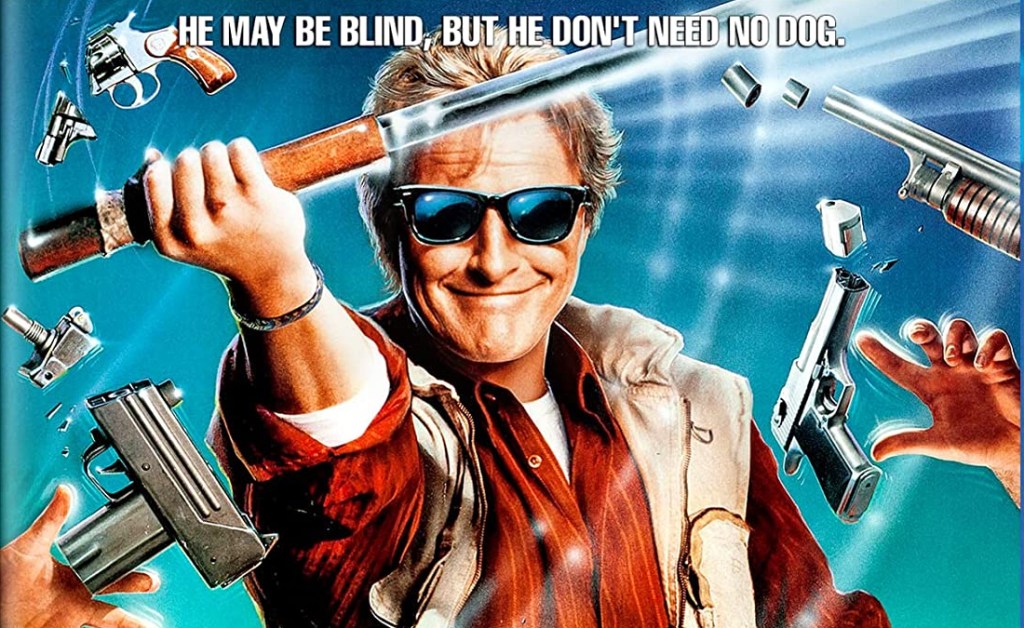
Blind Fury (1989, dir by Phillip Noyce, DP: Don Burgess)

Sliver (1993, dir by Phillip Noyce, DP: Vilmos Zsigmond)

8 Shots From 8 Films: Special Robert Evans Edition


4 Or More Shots From 4 Or More Films is just what it says it is, 4 shots from 4 of our favorite films. As opposed to the reviews and recaps that we usually post, 4 Shots From 4 Films lets the visuals do the talking!

92 years ago today, Robert Evans was born in New York City.  He started out working in his brother’s clothing business but a chance meeting with actress Norma Shearer led to him becoming an actor.  And while Evans, by his own account, was not a particularly good actor, he did prove himself to be very skilled at playing the games of Hollywood.  Evans eventually moved from acting to production, first as an executive at Paramount and then as an independent producer.

He lived a life as glamorous and tumultuous as the stars of his pictures and his memoir, The Kid Stays In The Picture, is considered to be one of the classic show biz autobiographies.  He hung out with cinematic rebels like Jack Nicholson and Robert Towne and counted Secretary of State Henry Kissinger as a friend.  He suggested that Francis Ford Coppola should direct The Godfather and, when Paramount put pressure on Coppola to cut the film down to two hours, it was Evans who famously announced that a two-hour Godfather was nothing more than a trailer.  He lost Ali MacGraw to Steve McQueen and, again by own account, he lost a lot of potentially productive years to cocaine.  (The Cotton Club scandal is one of the wildest in the history of Hollywood, though it should be noted that Evans himself was never charged with any wrongdoing.)  But, for all that he lost, Evans continues to gain admirers as being the epitome of the producer who was willing to take chances.  For all of his flamboyance, Evans had an eye for good material and the willingness to protect his directors.  In many ways, he was as important to the cinematic revolution of the 70s as the directors that he hired.  When Evans passed away in 2019, it was truly the end of an era.

Here, in honor of the birth and legacy of Robert Evans, are 8 Shots from 8 Films that Evans produced, either as studio chief at Paramount or as an independent producer.

8 Shots From 8 Robert Evans Films

Rosemary’s Baby (1968, dir by Romnn Polanski, DP: William A. Fraker)

Love Story (1970, dir by Arthur Hiller, DP: Richard Kratina)

The Godfather (1972, dir by Francis Ford Coppola, Cinematography by Gordon Willis)

Chinatown (1974, dir by Roman Polanski, DP: John A. Alonzo)

Marathon Man (1976, dir by John Schlesinger, DP: Conrad Hall)

The Cotton Club (1984, dir by Francis Ford Coppola, DP: Stephen Goldblatt)

The Two Jakes (1990, dir by Jack Nicholson, DP: Vilmos Zsigmond)

Sliver (1993, dir by Phillip Noyce, DP: Vilmos Zsigmond)

Sliver (1993, directed by Phillip Noyce)


Who here remembers Sliver?

It may be hard to believe it but Sliver was a big deal back in the day.  It was one of Robert Evans’s first producing gigs after getting out of rehab.  It was Sharon Stone’s first film after Basic Instinct.  The script was written by Basic Instinct‘s Joe Eszterhas, back when that was still something that people bragged about.  It featured Tom Berenger, back before he found himself relegated to character roles, and William Baldwin.  Remember William Baldwin?  He was Alec Baldwin’s younger brother.  He looked just like Alec but he never managed to project much of a personality whenever he was onscreen.  Even Stephen Baldwin was a more interesting actor than William.  Still, back in the day, William Baldwin was close to being a star.

William Baldwin’s lack of personality actually works for the role he plays in Sliver.  He’s Zeke, who owns an exclusive high-rise apartment building.  Zeke makes his money designing video games and he’s filled the building with secret video cameras so he can spend all day sitting in front of a wall of monitors and watching his tenants and experiencing their lives without having to get close to them.  Zeke’s a voyeur.  Back in the 90s, the surveillance thing was a big twist.  Today, we take it for granted.  We even applauded Batman for doing the same thing to all of the citizens of Gotham.

Sharon Stone plays Carly, the newest resident of the Sliver.  Carly is a recently divorced book editor snd is lonely and repressed despite being played by Sharon Stone.  She draws the attention of both Zeke and her neighbor, Jack (Tom Berenger).  Both are interested when they discover that Carly has a telescope on her balcony.  “She’s a voyeur!” Jack says.  When Carly gets involved with Zeke, Jack is obsessively jealous.  He insinuates that Zeke had something to do with the death of the previous tenant of Carly’s apartment.

After Basic Instinct, Sharon Stone made a series of films that were designed to show that she actually could act by casting her as characters who were meant to be sexually repressed.  The films never seemed to work because, at the height of Sharon Stone’s 90s stardom, there was nothing about her that suggested that she was repressed in any way.  What made her a star in the first place was that she was so uninhibited and not afraid to be as blunt about sex as any of her male co-stars.  In Sliver, she gives a performance that is somewhere between her vampish work in Basic Instinct and her terrible ice queen performance in Intersection.  At the start of the film, she feels miscast as a straight-laced book editor but her performance gets better once she starts hooking up with Zeke.  Sharon Stone tries, even if she doesn’t succeed.  That’s more than can be said for most of her co-stars.

“Get a life,” Sharon Stone says at the end of the movie and, as far as final lines go, it’s a bad one because it comes out of nowhere and her actions in the final scene don’t fit in with anything that she’s previously said or done in the film.  That’s because the ending was hastily reshot after test audiences disliked the original ending.  Test audiences often have the worst instincts.

Like many things, Sliver was big in the 90s but forgotten today.  It was a popular Blockbuster rental for a while.  VCRs were set for whenever it appeared on Cinemax.  When it first came out, it was all about Sharon Stone.  Today, it’s all about nostalgia.

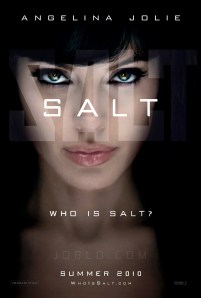
Film Review: Salt (Directed by Phillip Noyce)


I have long come to accept that, when it comes to issues of gender equality, most movies are like Iron Man 2.  If you’ll remember, that’s the film in which Gwynneth Paltrow said she was better suited to be a secretary than a CEO, Scarlett Johansson beat up an army but only because she was given permission ahead of time by a very manly Samuel L. Jackson, Jr., and the world was saved because Robert Downey, Jr. made peace with the patriarchy.  While the inherent sexism of most movies has never ceased to bother me, I’ve come to accept it because I love film. 

(For the record, I enjoyed Iron Man 2 even if I did roll my eyes more than once.)

Still, hope continues to rest at the bottom of Pandora’s box.  With the year only a little more than a half over, American movie screens have played host to a handful of unusually strong and independent female characters.  (It’s the independence that sets them apart.)  From Jennifer Lawrence in Winter’s Bone to Katie Jarvis in Fish Tank to even Kristen Stewart and Dakota Fanning in the Runaways, they have challenged the standard movie stereotype of the weak, ultimately helpless female.  The best known of them is, of course, Noomi Rapace as Lisbeth in The Girl With The Dragon Tattoo and its sequels.  However, if the Girl With the Dragon Tattoo features the strongest woman to appear on American movie screen this year, the just-released Salt features the second strongest.


In Salt, Angelina Jolie plays Evelyn Salt, a CIA agent who is married to Mike (August Diehl), a nice guy who happens to be the world’s leading authority on spiders.  On the day of her wedding anniversary, Salt finds herself tasked with interrogating a Russian defector named Orlov.  As Salt listens (and her fellow agents watch), Orlov tells a story of how, decades earlier, hundreds of Russian children were secretly smuggled into the U.S. where they served as “sleeper” agents, working their way into American society until such time as they might be activated.  Orlov goes to explain that one of these sleeper agents is going to assassinate the President of Russia.  That agent, Orlov adds, is named “Evelyn Salt.”  While Salt’s co-workers react to this accusation by attempting to arrest her, Salt reacts by escaping from custody and fleeing in an attempt to both find her husband, who has mysteriously disappeared, and prove her innocence.

Or is she?  There’s a lot of twists and turns in Salt’s plot and while they don’t always make sense, they’re a lot of fun to watch.  Director Phillip Noyce keeps the action moving and, in the lead role, Angelina Jolie brings a wonderful sense of moral ambiguity to the character that you’re never quite sure whose side she is really on.  Jolie makes the character seem real even when she’s jumping off a bridge and landing on top of a speeding truck without so much as even a bruise as a result.

Admittedly, I enjoyed Salt for much the same reason that I enjoyed the far superior Girl With The Dragon Tattoo.  It was fun to not only see a woman in a movie do stuff that usually only a man is allowed to do but also manage to do all of it a lot more convincingly than most contemporary male action heroes.  With the exception of a very intense torture scene at the start of the film, Salt is never shown with tears in her eyes.  She is never shown begging for mercy.  Most importantly, she is never portrayed as being helpless.  Considering just how much importance society puts into the idea of all women being inherently helpless, movies like Salt are a refreshing change of pace.

Of course, that doesn’t change the fact that pretty much everything Salt did in the film was basically done to save her marriage.  As strong a character as Salt was, its unfortunate that the film had to make sure we understood that it was all due to the purifying love of one man.  It’s as if the filmmakers were worried that if they made Salt too independent, they’d lose the audience and they were probably right.

Still, 2010 may very well be remembered as the year that women in movies were finally allowed to kick some ass.  After an eternity of serving as decorations (with their every action governed by some male filmmaker’s infantile Whore/Madonna complex), women are finally being allowed to do something other than scream and wait to be rescued.  Will this trend continue?  Probably not.  It’s a bit much to ask of a country that can’t even bring itself elect a female President.  However, while it lasts, I’m enjoying the trend and I’ll miss it once it’s over.