Film Review: Patriots Day (dir by Peter Berg)


On April 15th, 2013, a terrible crime was committed.

Two brothers, Tamerlan and Dzokhar Tsarnaev, bombed the Boston Marathon.  I can remember the exact moment when I looked up at the television and I saw the footage of the bomb going off as a group of runners ran across the finish line.  Instinctively, I found myself hoping that the explosion looked worse than it actually was and that no one had been seriously injured.  However, I was then flooded with images of people running in fear while other lay injured and bleeding on the ground.  A photograph of  man who had lost his both his legs was seared into my mind, the nightmarish image of those exposed and shattered bones coming to represent the pure evil that was unleashed on that day.

At first, there was a lot of speculation about who was responsible for the bombing.  Despite the fact that it had all the earmarks of an al-Qaeda operation, many people on the news insisted that the bomb had been set by their favorite boogeymen, the right-wing militias.  (The initial theory was that it was a tax day protest, which is one of the dumbest things I’ve ever heard.)  Three days after the bombing, the first photographs of the Tsarnaev Brothers were released.  Looking at the security footage of Tamerlan placing a bomb on the ground right next to a child who was subsequently killed in the blast, I started to rethink my opposition to the death penalty.

Boston was shut down until the Tsarnaev brothers were tracked down and, along with hating the Tsarnaevs, I found myself fearing that the search for them would normalize the idea of suspending civil liberties.  Tamerlan was gunned down in a fight with police and hopefully, he felt each bullet.  Dzokhar was captured after he attempted to hide in a homeowner’s boat while whining like a little bitch.  Dzokhar is one of three people on the Federal Death Row.  He also has a truly creepy fan club online, though they haven’t been as active as they were in the past.

2016’s Patriots Day is about that tragic day and the subsequent manhunt for the Tsarnaev brothers.  This is another one of Peter Berg’s films about professional, no-nonsense men who have a job to do and who do it well.  Mark Wahlberg plays a cop.  Kevin Bacon plays the FBI agent who heads up the investigation.  John Goodman plays the Boston police commission while Michael Beach makes an appearance as Deval Patrick, the then-governor of Massachusetts who ran a bizarrely overlooked presidential campaign in 2020.  Just as he did with Deepwater Horizon, Berg emphasizes the human cost of the tragedy along with the official efforts to track down the men responsible.  The ensemble comes together impressively, recreating those scary few days and also paying tribute to a city that refused to allow itself to be defeated.  Patriots Day follows the common, blue collar citizens of Boston as they deal with a horrific act of evil.  Even though we all know how the story turned out, the film manages to create a decent amount of suspense as the authorities search for the Tsarnaevs.  As for the brothers themselves, the film portrays them as being initially cocky and eventually pathetic.  To the film’s credit, it doesn’t ask us to consider things from the point of view of the terrorists.  There’s no moral relativism here.  The film knows who deserves to be heard.

Patriots Day is a tribute to the first responders and the citizens of Boston who refused to allow the Tsarnaevs to win.  With so many people now making excuses for terrorism, Patriots Day is a powerful reminder of the human cost of such actions.  The Tsarnaevs through they were striking a blow for their ideology.  Instead, they just reminded us how strong people can be.


April Noir: Collateral (dir by Michael Mann)


In 2004’s Collateral, Jamie Foxx stars as Max, a taxicab driver who is hoping, in those days before Uber, to start his own limousine company.  When we first see him, he’s giving a ride to a federal prosecutor named Annie (Jada Pinkett Smith) and he’s even getting her phone number after he drops her off at work.  Unfortunately, for Max, his next passenger is a bit less friendly.

Vincent (Tom Cruise), with his gray hair that matches his suit, is polite, quiet, and direct when he speaks.  He carries a briefcase with him everywhere that he goes and anyone who tries to take the briefcase soon discovers just how far Vincent will go to hold onto it.  Vincent pays Max $600 to drive him around Los Angeles for the night.  Vincent has a lot of business that he needs to attend to.  Max agrees, not realizing until it’s too late that Vincent is a hired assassin and that his business is killing people.  Vincent has been hired to wipe out a collection of crooks and lawyers and, though Vincent is careful not to reveal his emotions, it’s obvious that he’s looking forward to the challenge.

To his credit, Max doesn’t really have any interest in being a part of Max’s killing spree but he soon finds himself unable to escape from Vincent and being forced to drive from location to location.  Along the way, Vincent and Max engage in debates of both morality and philosophy.  Vincent sees death as just being a part of the job.  Max is horrified, especially when people who haven’t done anything wrong end up as collateral damage in Vincent’s killing spree.  The truth of the matter is that, even if Max hadn’t picked up Vincent, there’s no guarantee that he wouldn’t have picked up some other madman.  As a taxi driver, Max surrenders his control once he unlocks the door and allows someone to get in the backseat.  Sometimes, he gets a passenger like Annie.  Other times, he’s going to get a passenger like Vincent.  Somewhat improbably, Vincent and Annie turns out to be connected and Max’s chance encounter with her becomes even more important.

Because this is a Michael Mann film, Los Angeles is as much a character in this film as Max and Vincent.  Mann captures the shadowy darkness of the city at the night and the feeling that both opportunity and danger could lurk around every corner.  Claustrophobic scenes in the taxi cab are mixed with scenes in an equally claustrophobic (though for different reasons) club.  The film’s haunting final image takes place not in the cab but instead on a train.  Everyone is heading somewhere and, at some point during the film, both Vincent and Max deal with the feeling of having no control over where they’ll end up.

When Collateral first came out in 2004, I remember that a lot of people were shocked to see Cruise playing a villain.  Cruise does give one of his best performances here, playing yet another one of Mann’s cool and efficient professionals.  Strangely enough, Jamie Foxx is the one who was nominated for an Oscar, even though he’s actually a little on the boring side as Max.  (In all fairness, Max is meant to be the conventional member of the film’s involuntary partnership.)  The film is dominated by Cruise and his performance is still powerful to this day.

Film Review: Deepwater Horizon (dir by Peter Berg)


2016’s Deepwater Horizon tells the story of the 2010 explosion that led to the biggest oil spill in American history.

Owned by British Petroleum, the Deepwater Horizon was an oil rig sitting off the coast of Louisiana and Texas.  A series of explosions, which were found to be the result cost-cutting and negligence on the part of BP, killed eleven men, injured countless others, and led to an 87-day oil spill that leaked 210 million gallons of oil into the Gulf of America (or the Gulf of Mexico, as it was known back then.  I know, it can be heard to keep track).  I can still remember when the disaster happened.  It was seen as an early test of the “government-can-fix-anything” philosophy of the Obama era and it pretty much proved the opposite.  Private citizens (including Kevin Costner) offered to help and were rebuffed.  The governor of Louisiana was criticized for ordering the construction of barrier islands, even though they were more effective than was that the federal government was offering up.  The CEO of British Petroleum issued a self-pitying apology.  For a generation coming of political age in 2010, witnessing the government’s ineffective attempts to deal with the oil spill was as radicalizing a moment as the COVID lunacy would be for people coming of age in 2020.

In all the chaos surrounding the oil spill, it was often overlooked that 11 people died in the initial explosion.  In all the rightful criticism that was directed towards British Petroleum, the heroic efforts of the workers on the Deepwater Horizon, all of whom risked their lives to try to prevent the disaster from getting worse, were also often overlooked.  To an extent, Deepwater Horizon corrects that oversight, paying tribute to the men on that rig while also portraying the extent of the environmental disaster caused by BP’s negligence.

The film centers of Jimmy Harrell (Kurt Russell) and Mike Williams (Mark Wahlberg), two engineers who attempt to warn BP execs like Donald Virdrine (John Malkovich) that cutting costs on safety will inevitably lead to disaster.  Russell, Wahlberg, and Malkovich are all ideally cast, with Russell and Wahlberg capturing the spirit of men who try to do their job well and who live their life by the philosophy of not leaving anyone behind.  Malkovich is playing a corporate stooge, the man who many people blamed for the disaster.  But, to his credit, Malkovich is able to turn Virdrine into a complex character.  Virdrine makes terrible mistakes but he never becomes one-dimensional corporate villain.  Though Deepwater Horizon is dominated by its special effects and the explosion is an undeniably intense scene, the film doesn’t forget about the human cost of the disaster.  Russell, Wahlberg, and Malkovich are supported by good performances from Ethan Suplee, Gina Rodriguez, and Kate Hudson.  (Hudson, in particular, deserves a lot of credit for making her thinly-written role into something compelling.)  Kurt Russell does such a good job of capturing Jimmy’s quiet confidence and his expertise that, the minute he’s injured by the explosion, the audience knows that Deepwater Horizon is doomed.  If even Kurt Russell can’t save the day, what hope is there?

Director Peter Berg specialized in films about ordinary people who found themselves caught up in extraordinary situations.  His well-made and earnest films — like Lone Survivor, Patriots Day, and this one — were rarely acclaimed by critics, many of whom seemed to take personal offense at Berg’s unapologetically patriotic and individualistic vision.  Personally, I appreciate Berg’s pro-American aesthetic.  At a time when we were being told that individuals didn’t matter and that everyone should be content with merely being a cog in a bigger machine, Berg’s films came along to say, “This is what team work actually means.”  It’s been five years since Berg’s last film.  Hopefully, we will get a new one soon.


4 Shots From 4 Films: Celebrating The Silhouette


4 Or More Shots From 4 Or More Films is just what it says it is, 4 shots from 4 of our favorite films. As opposed to the reviews and recaps that we usually post, 4 Shots From 4 Films lets the visuals do the talking!

As a photographer, I love a good silhouette shot.  Here are some of my favorites.

4 Shots From 4 Films

Fantasia (1940, Dir. by Samuel Armstrong)

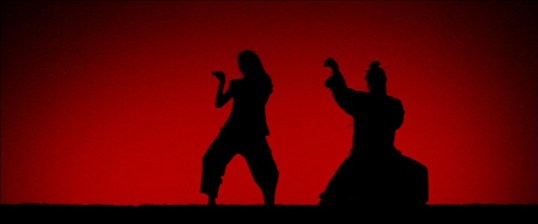
Kill Bill Vol. 2 (2004, Dir. by Quentin Tarnatino)

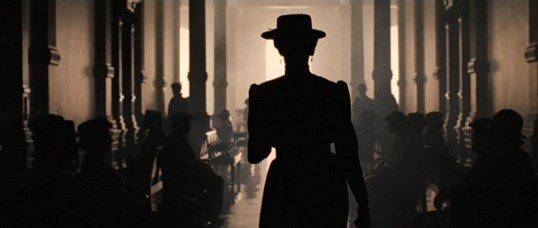
True Grit (2010, Dir. by Joel and Ethan Coen)

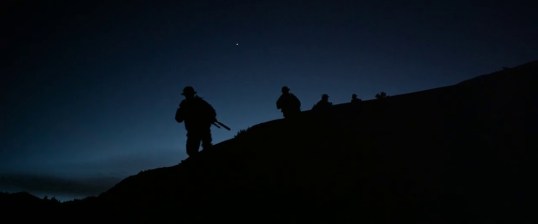
Lone Survivor (2013, Dir. by Peter Berg)

4 Shots From 4 Films: Special Football Edition


4 Or More Shots From 4 Or More Films is just what it says it is, 4 shots from 4 of our favorite films. As opposed to the reviews and recaps that we usually post, 4 Shots From 4 Films lets the visuals do the talking!

Since today is Super Bowl Sunday, it seems appropriate to pay tribute to America’s unofficial holiday with….

4 Shots From 4 Football Films

The Freshman (1925, dir by Fred C. Newmeyer and Sam Taylor, DP: Walter Lundin)

Any Given Sunday (1999, dir by Oliver Stone, DP: Salvatore Totino)

Friday Night Lights (2004, dir by Peter Berg, DP: Tobias Schliessler)

Carter High (2015, dir by Arthur Muhammad, DP: Ron Gonzalez)

4 Shots From 4 Films: Football!


4 Or More Shots From 4 Or More Films is just what it says it is, 4 shots from 4 of our favorite films. As opposed to the reviews and recaps that we usually post, 4 Shots From 4 Films lets the visuals do the talking!

I have to admit that I don’t know much about football but I do know quite a bit about football movies.  Since today is Super Bowl Sunday, it seems appropriate to pay tribute to America’s unofficial holiday with….

4 Shots From 4 Football Films

The Freshman (1925, dir by Fred C. Newmeyer and Sam Taylor, DP: Walter Lundin)

Any Given Sunday (1999, dir by Oliver Stone, DP: Salvatore Totino)

Friday Night Lights (2004, dir by Peter Berg, DP: Tobias Schliessler)

Carter High (2015, dir by Arthur Muhammad, DP: Ron Gonzalez)

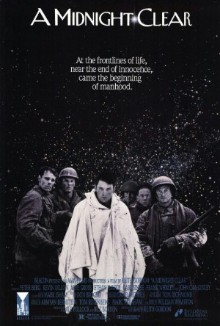
A Midnight Clear (1992, directed by Keith Gordon)


In December of 1944, with the world at war and Christmas approaching, a small U.S. Army Intelligence squad is sent to a deserted chateau near the German lines.  The squad, which was decimated during the Battle of the Bulge, is made up of six young soldiers who all have genius IQs.  They’ve been hardened by war but they’re still young enough to have some hope for the future.  Leading them is “Mother” Wilkinson (Gary Sinise), an officer who cares about his men but who has been mentally struggling with not only the war but also with the recent death of a child back home.

At first, the chateau seems like a perfect sanctuary, a place to wait for the war to end.  But then the Americans discover that there is a regiment of German soldiers nearby.  The Germans are just as young as the Americans and when the two groups meet each other, they don’t fire their guns but instead have a snowball fight.  The Germans say that they know the war is about to end and that they want to surrender before the Russians arrive.  However, the Germans are worried about their families back home and what will happen when word gets back that they’ve surrendered.  They request a staged fight so that it will appear that they were captured in combat.  Almost everyone is down with the plan but it turns out that it’s not easy to fake a war in the middle of a real one.

Based on a novel by William Wharton, A Midnight Clear is one of the best Christmas films that hardly anyone seems to have heard of.  It’s a war film that is more concerned with the men who fight the wars than with the battles. Along with Sinise, the ensemble cast includes Ethan Hawke, Peter Berg, Kevin Dillon, Ayre Gross, Frank Whaley, and John C. McGinley and all of them make an impression, bringing their characters to life.  By the end of the movie, you feel like you know each member of the squad and their individual fates hit you hard.  Some of them make it to the next Christmas and tragically, some of them don’t.  The film starts out almost gently and all of the soldiers are so intent on just letting the war end while they hide out at the chateau that you find yourself believing that it could actually happen.  When reality intrudes, it’s tragic and poignant.  Intelligently directed by Keith Gordon (making his directorial debut), A Midnight Clear is an unforgettable anti-war story that has an amazing final shot.  A Midnight Clear makes an impression on Christmas and every other day.

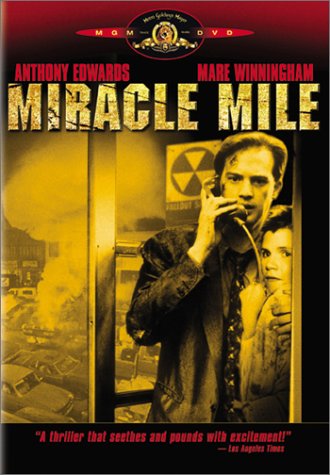
Film Review: Miracle Mile (dir by Steve De Jarnatt)


Last night, as I was watching the 1988 film, Miracle Mile, I found myself thinking about the fact that this film literally could not be made today.

No, it’s not because the film itself is about the treat of nuclear war.  Though nuclear war may no longer be as much of a cultural obsession as it apparently was back in the 80s, the fact of the matter is that the U.S., Russia, the UK, France, and China all still have nuclear weapons.  Pakistan, India, and North Korea all claim to have nuclear weapons.  It’s believed that Israel also has a few.  Iran is apparently working on developing an arsenal.  It’s estimated that there are currently 13,865 nuclear weapons in existence, 90% of which are divided between the U.S. and Russia.  That’s not even counting the threat of a terrorist group setting off a nuclear device.  In short, the threat of nuclear war is still very much a real one.

Instead, what truly makes Miracle Mile stand out as a film of its time, is the fact that almost the entire plot revolves around the character of Harry (played by Anthony Edwards) answering a Los Angeles pay phone at four in the morning.

Why is Harry answering a pay phone at 4 in the morning?  It’s because, earlier, he met Julie (Mare Winningham) at the La Brea Tar Pits and they fell instantly in love.  After spending most of the afternoon together, they made a date to meet at the local diner where Julie worked as a waitress.  Julie’s shift ended at midnight.  Harry went home to get a quick nap before picking her up.  Unfortunately, a power failure — one that was largely caused by Harry carelessly tossing away a cigarette — resulted in Harry’s alarm not going off.  At midnight, while Julie was standing outside the diner, Harry was asleep.

Harry doesn’t wake up until well-past 3 a.m.  After hastily getting dressed, Harry drives down to the diner.  When he arrives, he bumps into a tree and three rats fall off the branches and land on his car, which is a bit of an ominous omen.  (After watching the movie, I did a Google search and discovered that it’s actually not uncommon for rats to hang out in palm trees after dark.  I had no idea.  I’m glad I don’t live near any palm trees.)

By the time Harry arrives, Julie’s already gone.  From the payphone outside the diner, Harry calls Julie and leaves an apologetic message on her answering machine.  (Julie sleeps through it.)  Within minutes of Harry hanging up, the pay phone rings again.  Harry answers it, expecting to speak to Julie.  Instead, he finds himself talking to a panicked soldier who was trying to call his father but who dialed the wrong area code.  The soldier says that a war is about to break out and that everyone is going to die.  Suddenly, Harry hears what sounds like a gunshot.  Another voice gets on the phone and tells Harry to go back to sleep and forget about the call.

Of course, the reason why this story couldn’t take place in 2020 is pretty obvious to see.  No one uses pay phones anymore.  If the movie were made today. Harry would have just Julie on his own phone and then waited for her to call him back.  The soldier would never have misdialed his father’s area code.  Harry never would have gotten the message that the world was about to end and most of the subsequent events in Miracle Mile never would have happened.  Harry would have just sat in the diner and had a cup of coffee and waited for Julie to call until the inevitable happened.  In 2020, that would have been the movie.

So, let’s be happy that this film was made in 1988. during the time when pay phones were everywhere, because Miracle Mile is an excellent film.  Miracle Mile starts out as a romantic comedy, with Anthony Edwards and Mare Winningham making for an incredibly adorable couple.  Then, after Harry answers that pay phone, the movie grows increasingly grim as Harry desperately tries to make his way to Julie and arrange for the two of them to board a plane that a mysterious woman (Denise Crosby) has charted for Antarctica.  The problem, of course, is that in order to reach Julie, Harry is going to need the help of the type of people who are typically up and wandering around at 4 in the morning in Los Angeles.  Several people die as Harry tries to make it to Julie and, smartly, the film doesn’t just shrug off their deaths.  For the majority of the film, Harry isn’t even sure if there’s actually going to be an attack and it’s possible that he’s not only panicking over nothing but that he’s causing others to panic as well.  People are dying because of that phone call and Harry doesn’t even know whether it was real or not.  Even when full scale rioting breaks out, Harry doesn’t know if it’s because the world’s ending or because of a bad joke that he took seriously.  Transitioning from romantic comedy to dark comedy, Miracle Mile eventually becomes a nightmare as it becomes obvious that, even if Harry does reach Julie, escaping the city is not going to be easy.  The sun is rising and the truth is about that phone call is about to revealed….

Miracle Mile is a film that will get your heart racing.  On the one hand, Anthony Edwards and Mare Winningham have such a wonderful chemistry and they’re both just so damn likable that you want them to find each other and stay together.  Even if it means running the risk of being incinerated in a nuclear explosion, you want Harry and Julie to be with each other.  At the same time, you watch the movie with the knowledge that, even if they do manage to reunite, it might not matter because the world’s going to end.  Remarkably, almost everyone who Harry talks to about the phone call believes him when he says that a war is about break out.  Almost all of them have a plan to escape and, as a viewer, you get so wrapped up in the film that it’s only later that you realize that none of their plans made any sense.  Hiding out in Antarctica?  How exactly is that going to work?  Antarctica’s not exactly a place to which you impulsively move.  If there is truly no way to escape the inevitable, perhaps we should just be happy that Julie and Harry found love, even if it was right before the apocalypse.

Film Review: Spenser Confidential (dir by Peter Berg)


Spenser Confidential, which is currently streaming on Netflix, is the latest Mark Wahlberg/Peter Berg collaboration.

It’s a crime film and it’s set in Boston and it will probably remind you every other Boston-set crime film that you’ve ever seen.  It’s got all the usual ingredients.  People sing Sweet Caroline.  A fat gangster wears a tracksuit.  We get a long overhead shot of the streets of Southie and there’s a scene set in an Irish bar.  One of the film’s big scenes takes place at what appears to be a deserted racing track.  (I’ve never been to Boston but, just from the movies, I know that the city is basically made up of Harvard, Southie, and hundreds of deserted race tracks.)  The Red Sox get a shout-out.  And, of course, the movie stars Mr. Boston himself, Mark Wahlberg.  Seriously, if your Boston movie doesn’t feature Mark Wahlberg or an Affleck brother, it might as well just be a St. Louis movie.

In this one, Mark Wahlberg plays Spenser.  Spenser was a cop until a gangster in a tracksuit murdered someone from the neighborhood and the head of homicide tried to bury the case.  This led to an angry Spenser beating the man up in front of his own house.  Spenser was sent to prison, where he served five years as an ex-cop in the general population.  That’s right!  He wasn’t even put in protective custody but somehow, he survived.  Right before Spenser is released from prison, he’s attacked by a Neo-Nazi who is played by Post Malone.  It’s not really that relevant to the overall plot but it does give viewers a chance to say, “Wait a minute …. is that Post Malone?”

Anyway, once he gets out of prison, Spenser moves in with his mentor and former boxing coach, Henry Cimoli (Alan Arkin).  He also gets a new roommate, an aspiring MMA fighter named Hawk (Winston Duke).  After Captain Boylan,  the head of homicide — yes, the same guy that Spenser beat up five years ago, is decapitated by 20 sword-carrying assailants, Spenser is the number one suspect.  Fortunately, for Spenser, another cop commits suicide and it’s quickly announced that the cop who killed himself also killed Boylan.  It’s a murder/suicide!  So, Spenser’s off the hook and I guess the movie’s over, right?

Nope, it doesn’t work like that.  It turns out that Spenser has his doubts about the whole story and he wants to investigate because he has “a strong moral code.”  Unfortunately, as a convicted felon, Spenser is not allowed to become a private investigator.  So, Spenser and Hawk conduct an unofficial investigation, which largely amounts to talking to Spenser’s former partner, Driscoll (Bokeem Woodbine) and getting into a brawl while Sweet Caroline plays in the background.

It’s a Boston thing.

The mystery are the heart of the film pretty much leads exactly where you think it’s going to lead.  For a 2-hour crime thriller, there aren’t exactly a lot of twists and turns to be found in Spenser Confidential, which is a problem.  The mystery’s solution is so obvious that it’s hard not to resent the fact that Spenser is apparently too stupid to figure it out on his own.  There’s an extended scene where he gets attacked by a dog and you know what?  That would have never happened to any other movie detective because every other detective would have figured out who the murderer was long before getting attacked by that dog.

On the plus side, Peter Berg knows how to stage a fight scene and he also knows how to make the best use of Wahlberg’s mix of sensitivity and working class arrogance.  Unfortunately, the rest of the cast is let down by a script that doesn’t give them much to do.  Winston Duke is physically imposing as Hawk but he spends too much of the film standing around and waiting for Spenser to take the lead.  Alan Arkin appears to be having fun in the role of Henry but again, his character is underwritten.  About the only person, other than Wahlberg, who gets to make much of an impression is Iliza Shlesinger, who is cast as Spenser’s ex-girlfriend.  Shlesinger may be playing a stereotype (she’s loud, crude, and has a thick Boston accent) but she fully embraces the character and makes her seem like the only person in the film who actually has a life beyond what’s happening onscreen at any given moment.

Anyway, Spenser Confidential isn’t terrible as much as it’s just forgettable.  It’s a generic Boston crime film and you can probably safely watch it if you’re not looking for something to which you would actually have to pay attention.  Some of the action scenes are well-shot.  If you liked Mark Wahlberg in other films, you’ll probably like him in this.  Whether you enjoy it or not, you’ll probably forget about this film about an hour after watching it.

Stallone Acts: Cop Land (1997, directed by James Mangold)


Garrison, New Jersey is a middle class suburb that is known as Cop Land.  Under the direction of Lt. Ray Donlan (Harvey Keitel), several NYPD cops have made their home in Garrison, financing their homes with bribes that they received from mob boss Tony Torillo (Tony Sirico).  The corrupt cops of Garrison, New Jersey live, work, and play together, secure in the knowledge that they can do whatever they want because Donlan has handpicked the sheriff.

Sheriff Freddy Heflin (Sylvester Stallone) always dreamed of being a New York cop but, as the result of diving into icy waters to save a drowning girl, Freddy is now deaf in one ear.  Even though he knows that they are all corrupt, Freddy still idolizes cops like Donlan, especially when Donlan dangles the possibility of pulling a few strings and getting Freddy an NYPD job in front of him.  The overweight and quiet Freddy spends most of his time at the local bar, where he’s the subject of constant ribbing from the “real” cops.  Among the cops, Freddy’s only real friend appears to be disgraced narcotics detective, Gary Figgis (Ray Liotta).

After Donlan’s nephew, Murray Babitch (Michael Rapaport), kills two African-American teenagers and then fakes his own death to escape prosecution, Internal Affairs Lt. Moe Tilden (Robert De Niro) approaches Freddy and asks for his help in investigating the corrupt cops of Garrison.  At first, Freddy refuses but he is soon forced to reconsider.

After he became a star, the idea that Sylvester Stallone was a bad actor because so universally accepted that people forgot that, before he played Rocky and Rambo, Stallone was a busy and respectable character actor.  Though his range may have been limited and Stallone went through a period where he seemed to always pick the worst scripts available, Stallone was never as terrible as the critics often claimed.  In the 90s, when it became clear that both the Rocky and the Rambo films had temporarily run their course, Stallone attempted to reinvent his image.  Demolition Man showed that Stallone could laugh at himself and Cop Land was meant to show that Stallone could act.

For the most part, Stallone succeeded.  Though there are a few scenes where the movie does seem to be trying too hard to remind us that Freddy is not a typical action hero, this is still one of Sylvester Stallone’s best performances.  Stallone plays Freddy as a tired and beaten-down man who knows that he’s getting one final chance to prove himself.  It helps that Stallone’s surrounded by some of the best tough guy actors of the 90s.  Freddy’s awkwardness around the “real” cops is mirrored by how strange it initially is to see Stallone acting opposite actors like Harvey Keitel, Robert De Niro, and Ray Liotta.  Cop Land becomes not only about Freddy proving himself as a cop but Stallone proving himself as an actor.

The film itself is sometimes overstuffed.  Along with the corruption investigation and the search for Murray Babitch, there’s also a subplot about Freddy’s unrequited love for Liz Randone (Annabella Sciorra) and her husband’s (Peter Berg) affair with Donlan’s wife (Cathy Moriarty).  There’s enough plot here for a Scorsese epic and it’s more than Cop Land‘s 108-minute run time can handle.  Cop Land is at its best when it concentrates on Freddy and his attempt to prove to himself that he’s something more than everyone else believes.  The most effective scenes are the ones where Freddy quietly drinks at the local tavern, listening to Gary shoot his mouth off and stoically dealing with the taunts of the people that he’s supposed to police.  By the time that Freddy finally stands up for himself, both you and he have had enough of everyone talking down to him.  The film’s climax, in which a deafened Freddy battles the corrupt cops of Garrison, is an action classic.

Though the story centers on Stallone, Cop Land has got a huge ensemble cast.  While it’s hard to buy Janeane Garofalo as a rookie deputy, Ray Liotta and Robert Patrick almost steal the film as two very different cops.  Interestingly, many members of the cast would go on to appear on The Sopranos.  Along with Sirico, Sciorra, Patrick, and Garofalo, keep an eye out for Frank Vincent, Arthur Nascarella, Frank Pelligrino, John Ventimiglia, Garry Pastore,  and Edie Falco in small roles.

Cop Land was considered to be a box office disappointment when it was released and Stallone has said that the film’s failure convinced people that he was just an over-the-hill action star and that, for eight years after it was released, he couldn’t get anyone to take his phone calls.  At the time, Cop Land‘s mixed critical and box office reception was due to the high expectations for both the film and Stallone’s performance.  In hindsight, it’s clear that Cop Land was a flawed but worthy film and that Stallone’s performance remains one of his best.