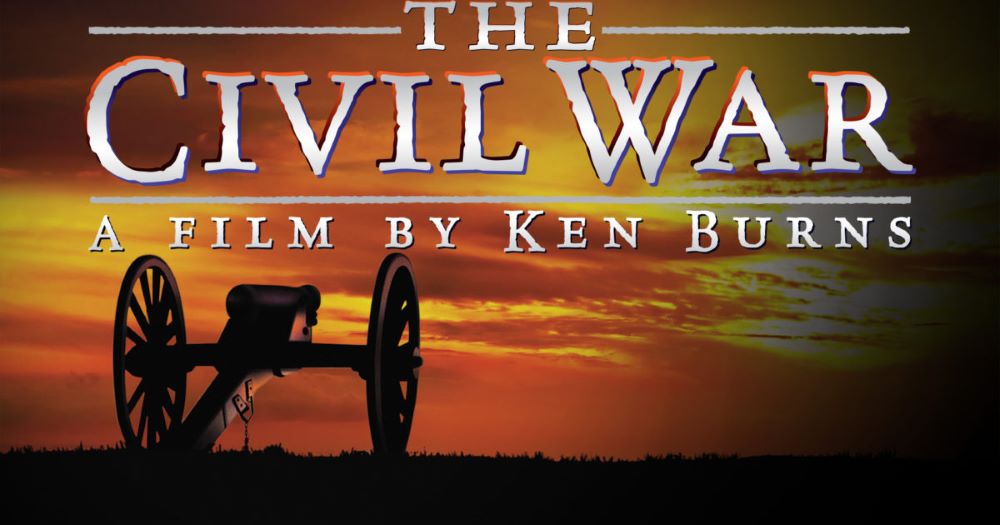
Review: The Civil War (dir. by Ken Burns)


“We are not enemies, but friends. We must not be enemies. Though passion may have strained, it must not break our bonds of affection.” — Abraham Lincoln

Ken Burns’ The Civil War stands as one of those rare documentaries that completely reshapes how people think about both history and the craft of documentary filmmaking. Released in 1990, it’s been over three decades since it first aired, yet it still feels monumental in its reach and emotional resonance. Instead of serving as a dry classroom recounting of battles and dates, it’s an experience that makes you feel the war’s human dimension—the people who fought it, lived through it, and were changed forever by its violence and ideals. Burns manages to take America’s bloodiest conflict and give it a pulse, telling the story not only through historians and statistics but through letters, diaries, and voices that make you feel connected to the 1860s as if it all just happened yesterday.

One of the most defining parts of The Civil War is its look and rhythm. Burns’ now-famous visual style—those slow pans and zooms across black-and-white photographs—became such a signature technique that it’s now built into editing software as “the Ken Burns effect.” It might sound simple, but the way he moves those still images feels like breathing life into ghosts. Every slow zoom on a soldier’s uncertain face, every fade over an empty battlefield, has meaning. Before Burns, most historical documentaries presented facts through re-enactments or stiff academic interviews. Burns dared to make photographs speak on their own. The pacing he uses is hypnotic—deliberate, unwavering, and emotionally tuned to each shot. It’s a visual rhythm that invites reflection instead of speed. The whole thing feels like time itself has slowed down so history can whisper its fullest story.

The narration, provided by David McCullough, ties the sprawling story together with a sense of calm authority. His voice is warm, measured, and almost timeless, acting less like a narrator and more like an old friend who knows the past intimately but never overstates it. McCullough’s presence builds trust—no hype, no theatrics, just thoughtful storytelling. Burns pairs that voice with readings from letters, diaries, and contemporary accounts, delivered by a lineup of talented voice actors like Jason Robards, Sam Waterston, and Morgan Freeman. Their readings never feel like performances; they feel lived in, restrained, and sincere. This combination of voice and image creates a tone that is both haunting and beautiful, one that makes history feel alive but not romanticized.

A huge part of why the series feels so moving is Jay Ungar’s “Ashokan Farewell.” Oddly enough, it’s not a Civil War-era tune at all—it was written in the 1980s—but it fits so organically with the documentary’s mood that it’s impossible to think about the series without hearing it. The plaintive fiddle melody has a mournful warmth, evoking the loss and longing that defines the entire project. Burns and his team used it in just the right measure: when the music plays, it deepens emotion rather than dictating it. Combined with other period-appropriate folk songs, banjo pieces, and hymns, the soundtrack acts as the emotional current guiding the story through landscapes of death, courage, and change.

The structure of The Civil War is deceptively simple but brilliantly executed. Spanning nine episodes and over eleven hours in total, it charts the war from its earliest, uneasy beginnings in the political debates over slavery and statehood through to its catastrophic conclusion and fragile aftermath. Burns understood that history isn’t static; it’s emotional and cumulative. The early episodes almost feel optimistic—the tone of youthful bravado and national pride fills the air as both sides believe the conflict will end quickly. As the series progresses, though, the optimism curdles into fatigue, despair, and grief. By the time the war drags into its later years, the imagery, narration, and music all carry the weight of shared tragedy. You begin to see how idealism eroded into acceptance of horror. The careful pacing of each episode allows viewers to feel that arc not just intellectually but emotionally.

Among the many creative decisions Burns made, choosing to anchor the series around personal letters was perhaps the most effective. Through these letters, anonymous soldiers, wives, and family members speak across time. Their words carry more power than any historian’s commentary could. One of the most unforgettable moments comes from Union officer Sullivan Ballou’s letter to his wife, written shortly before he was killed. His words are devastating in their tenderness and resignation, summing up both love and mortality in a way that feels timeless. Burns threads similar letters throughout the series—from soldiers on both sides, from civilians caught in the middle, and from the enslaved people whose freedom hung in the balance. Their voices form the emotional backbone of the documentary, constantly reminding us that this was not just a war of strategy but a catastrophe of human consequence.

Alongside these voices, there’s a chorus of historians offering perspective and context. Shelby Foote, with his Southern drawl and gift for anecdote, became one of the documentary’s most recognizable figures. His storytelling bridges the gap between scholarship and folklore, even if some critics later accused him of romanticizing the Confederate perspective. Counterbalancing that, historian Barbara Fields provides some of the series’ most profound reflections, particularly regarding race and memory. Her insistence that the war’s legacy continues to shape American identity feels just as relevant now as it did in 1990. Their alternating viewpoints give the documentary balance—emotion on one side, intellect and conscience on the other.

Burns’ handling of tone is one of the most striking things on a rewatch. It’s both deeply romantic in its love of storytelling and brutally realistic in its depiction of suffering. It doesn’t sanitize the war, but it doesn’t exploit it either. You’re never shown battle reenactments, explosions, or gore. Instead, Burns conveys the violence and despair through letters, photos, and silence. He trusts the audience to fill in the horror. That’s uncommon in modern documentary work, where there’s often pressure to explain or dramatize everything. In The Civil War, silence becomes a storytelling device. The pauses between sentences, the long holds on a tattered flag or a battlefield grave, carry meaning. The documentary refuses to rush toward catharsis; it lingers in grief.

In today’s media landscape—where documentaries tend to move fast and fight for attention—Burns’ slower, more contemplative approach stands out. Back in 1990, it riveted viewers. An estimated 40 million people watched it on PBS, an unbelievable number for a historical series on public television. For many Americans, it became their most vivid introduction to their own national history. It made people talk about Gettysburg, Lincoln, emancipation, and the moral aftermath of the war in living rooms across the country. It even sparked renewed interest in Civil War books, memorials, and battlefield preservation. Burns had tapped into something rare: a collective need to understand who Americans are by understanding what nearly destroyed them.

Even decades later, The Civil War holds up both artistically and historically. Watching it now, its moral clarity about slavery as the war’s central cause feels vital, especially in a time when debates over monuments and racial politics remain heated. Burns never let the series fall into the “states’ rights” trap that muddied so many earlier narratives. He continually foregrounded the human cost of defending or destroying the institution of slavery. Still, modern viewers might wish for even more emphasis on the experiences of Black Americans, beyond the selected diaries and Douglass excerpts. The documentary touched these stories with respect but within the limits of its early-1990s format. Later historians have expanded upon what Burns began, but his foundation remains solid.

Technically, the documentary’s aged well. Restored versions bring new clarity to the old photographs, and the audio’s crisp enough to make the letters feel freshly read. The storytelling, slow-moving as it is, rewards patience. It’s not content to skim across major events; it expects you to sit with sorrow, fatigue, and loss. Watching all eleven hours feels like reading an epic novel: it’s best done gradually, letting each episode resonate before starting the next. The cumulative effect isn’t just historical understanding—it’s emotional exhaustion tempered by awe.

The Civil War remains one of the greatest nonfiction works ever broadcast. It’s not simply about battles or leaders but about the psychology of a country divided by ideals and identity. It asks questions rather than delivering verdicts—questions about sacrifice, belief, morality, and what it means to be American. Few documentaries manage to tell old stories in ways that still feel alive, but Burns achieved that through patience, empathy, and an unshakable faith in the power of storytelling. Even now, it’s hard to watch without feeling the echo of those voices—some hopeful, some broken—that seem to reach out from still photographs and faded ink. Burns didn’t just document history; he let history speak for itself. That’s why The Civil War endures.

Perhaps it’s even more important now than when it first aired. In a time when historical revisionism has begun to creep from the fringes into mainstream discourse and when the nation feels dangerously forgetful of its own moral and political lessons, Burns’ documentary serves as both a warning and a reminder. It shows what happens when ideology overtakes humanity and when a country forgets the cost of its own divisions. Watching The Civil War today feels less like revisiting the past and more like confronting the present—proof that the ghosts of that conflict remain, quietly urging us not to repeat what we once swore to never forget.

Film Review: Romeo & Juliet (dir by Simon Godwin)


It’s a shame, really.

RomeoJuliet, which as you can probably guess is a cinematic adaptation of Shakespeare’s classic play about the doomed lovers and the warring families, is one of the best films that I’ve seen this year.  Under normal circumstances, I would probably have it listed as the 2nd best film of the year so far, right underneath The Father.  Unfortunately, RomeoJuliet did not receive a theatrical release.  Instead, in the United States, it was aired on PBS.  Though it was submitted for Emmy consideration, it was unforgivably snubbed when the nominations were announced earlier today.

And that’s a shame because this film adaptation of RomeoJuliet is one of the best that I’ve seen, one that celebrates the story’s theatrical origins while also working as a wonderful display of cinematic artistry.

The production was filmed over 17 days at London’s Royal National Theater.  Because it was filmed at the height of the Coronavirus pandemic, there’s no audience.  Instead, the film opens with a small company of actors, all dressed in modern clothing, walking through the theater.  Director Simon Godwin emphasizes the emptiness of the theater and the almost eerie silence as the actors take their seats around a table and start to recite their lines.  We immediately recognize some members of the cast.  Jessie Buckley plays Juliet while Josh O’Connor plays the role of Romeo.  Adrian Lester is cast as the Prince while Tasmin Grieg plays Lady Capulet.  As the actors recite their lines, they stand up and start to move around the theater and, before our eyes, they transform from being actors to being the characters from Shakespeare’s play.  Suddenly, we’re no longer watching Jessie Buckley and Josh O’Connor.  Instead, we’re watching Romeo Montague and Juliet Capulet.

As the action moves to the stage, Simon Godwin continues to emphasize the eerie emptiness of the theater and the desolate look of the play’s ornate but still rather simple sets.  Even with the presence of the actors, the streets of Verona still seem as deserted as the streets of London and every other major city were during the worst days of the pandemic.  Watching the story unfold, it’s hard not to feel that Romeo and Juliet aren’t just rebelling against their warring families but they’re also rebelling against the sense of hopelessness that afflicted so many people in 2020.  Romeo and Juliet’s refusal to surrender their love takes on an extra poignancy when filmed against the backdrop of the pandemic.  At a time when many people were saying that civilization was collapsing and the world was on the verge of ending, Romeo and Juliet refuse to surrender their love.  If their world is going to end, it’s going to end on their terms.

As opposed to other cinematic adaptations of Shakespeare’s plays, this version of Romeo and Juliet does not attempt to hide its theatrical origins.  Instead, it embraces them, right down to the obviously fake moon that is lowered from the rafters whenever a scene takes place at night.  And yet, the actors give such good performances and Simon Godwin directs with such confidence and skill that the viewer still gets wrapped up in the story.  Like all good works of theater, Romeo & Juliet succeeded in convincing the viewer of two contradictory things, that they’re both watching a production in a London theater and that they’re watching the Capulets and the Montagues as they walk through the deserted streets of Verona.  This production of Romeo & Juliet is one that celebrate both the power of the stage and the power of cinema.  Perhaps most importantly, it celebrates the power of Shakespeare’s classic tale, with the mix of the actor’s modern costuming and Shakespeare’s Elizabethan language reminding us that great art is universal and timeless.

Jessie Buckley and Josh O’Connor both give compelling performances as the film’s doomed lovers, with Buckley bringing a good deal of inner strength to the role of Juliet while O’Connor wisely underplays the scenes that would tempt a lesser Romeo to go overboard.  As opposed to what we often see in lesser productions of this play, Buckley’s Juliet is never foolishly naïve and O’Connor’s Romeo never surrenders to shrill self-pity.  Instead, they’re two lovers who know what they’re getting into but who are still willing to take the risk, even at the most bleak of times.  When Buckley and O’Connor first show up in the film, walking through that empty theater, they look like themselves, two talented performers in their early 30s.  But, as they perform their roles, they transform before our eyes into Romeo and Juliet and it’s thrilling to watch.

One has to applaud the National Theatre for filming this production.  One also has to applaud PBS for airing it in the States.  But still, how I wish Romeo & Juliet had been given a theatrical release or, at the very least, a Netflix or Prime release!  This is a production that I wish more people had seen, a great work of theater, film, and art.

Romeo-and-Juliet-First-look-26.01.21-1-copy-1618268389

My 2012 Emmy Nominations


So, for the past few days, I’ve been happily hopping around my section of the Shattered Lens Bunker and do you know why? 

Because it’s awards season, that’s why!  With the conclusion of the 2011-2012 TV season, Emmy ballots have been mailed and votes are being cast and, come July, we’ll know which shows and performers have been nominated for the 2012 Emmys. 

Before that happens, however, I would like to play a little game called “What if Lisa Was Solely Responsible For Picking the Nominees.”  Here’s how it works — I looked over and studied the complete list of the shows and performances that have been submitted this year for Emmy consideration.  And then, from that list, I picked my personal nominees.

(A complete list of every show and performer that’s been submitted for Emmy consideration can be found here.)

Below are my personal nominations in the major Emmy categories.  Again, note that these are not necessarily the shows and performers that I believe will be nominated.  Instead, these are the shows and performers that I would nominate if I was solely responsible for picking the nominees.

A complete list of my nominations in every single Emmy category can be found here.  (And yes, there’s a lot of Lifetime on the list.  There’s also a lot of Community.)

Best Comedy Series

Bored to Death (HBO)

Community (NBC)

Girls (HBO)

It’s Always Sunny In Philadelphia (FX)

Parks and Recreation (NBC)

Raising Hope (Fox)

Veep (HBO)

Best Drama Series

Boardwalk Empire (HBO)

Breaking Bad (AMC)

The Client List (Lifetime)

Downton Abbey (PBS)

Game of Thrones (HBO)

Homeland (Showtime)

Pan Am (ABC)

Ringer (The CW)

True Blood (HBO)

The Walking Dead (AMC)

Outstanding Miniseries or Movie

Blue-Eyed Butcher (Lifetime)

Cyberbully (ABC Family)

Drew Peterson: Untouchable (Lifetime)

Five (Lifetime)

Girl Fight (Lifetime)

Hatfields & McCoys (History Channel)

The Hour (BBC America)

Of Two Minds (Lifetime)

Outstanding Variety Series

Conan (TBS)

Fashion Police (E)

Key and Peele (Comedy Central)

The Soup (E)

Tosh .O (Comedy Central)

Outstanding Variety Special

Betty White’s 90th Birthday Party (NBC)

Celtic Women: Believe (PBS)

The Comedy Central Roast of Charlie Sheen (Comedy Central)

TV Land Awards (TV Land)

Wendy Liebman: Taller on TV (Showtime)

Outstanding Nonfiction Special

Bobby Fischer Against The World (HBO)

Catholicism: Amazed and Afraid (PBS)

Crime After Crime (OWN)

God Is The Bigger Elvis (HBO)

6 Days To Air: The Making of South Park (Comedy Central)

Outstanding Nonfiction Series

America in Primetime (PBS)

American Masters (PBS)

America’s Most Wanted (Lifetime)

Beyond Scared Straight (A&E)

Inside Story (Biography)

Outstanding Reality Program

Antiques Roadshow (PBS)

Dance Moms (Lifetime)

Kitchen Nightmares (Fox)

Scouted (E)

Storage Wars (A&E)

Outstanding Reality-Competition Program

The Amazing Race (CBS)

The Bachelor (ABC)

Big Brother (CBS)

The Celebrity Apprentice (NBC)

Hell’s Kitchen (Fox)

Project Runway (Lifetime)

So You Think You Can Dance (Fox)

Survivor (CBS)

Outstanding Lead Actor In A Comedy Series

Larry David in Curb Your Enthusiasm (HBO)

Johnny Galecki in The Big Bang Theory (CBS)

Danny McBride in Eastbound and Down (HBO)

Joel McHale in Community (NBC)

Lucas Neff in Raising Hope (Fox)

Jason Schwartzman in Bored To Death (HBO)

Outstanding Lead Actor In A Drama

Steve Buscemi in Boardwalk Empire (HBO)

Bryan Cranston in Breaking Bad (AMC)

Jeffrey Donavon in Burn Notice (USA)

Damian Lewis in Homeland (Showtime)

Andrew Lincoln in The Walking Dead (AMC)

Timothy Olyphant in Justified (FX)

Outstanding Lead Actor In A Miniseries or Movie

Idris Elba in Luther (BBC America)

Rob Lowe in Drew Peterson: Untouchable (Lifetime)

Steven Weber in Duke (Hallmark Movie Channel)

Dominic West in The Hour (BBC America)

Ben Whishaw in The Hour (BBC America)

Outstanding Lead Actress In A Comedy

Zooey Deschanel in New Girl (Fox)

Lena Dunham in Girls (HBO)

Tina Fey in 30 Rock  (NBC)

Julia Louis Dreyfuss in Veep (HBO)

Mary-Louis Parker in Weeds (Showtime)

Martha Plimpton in Raising Hope (Fox)

Outstanding Lead Actress in a Drama

Claire Danes in Homeland (Showtime)

Sarah Michelle Gellar in Ringer (The CW)

Jennifer Love Hewitt in The Client List (Lifetime)

Julianna Margulies in The Good Wife (CBS)

Elizabeth McGovern in Downton Abbey (PBS)

Anna Paquin in True Blood (HBO)

Outstanding Lead Actress In A Miniseries or Movie

Kristin Davis in Of Two Minds (Lifetime)

Anne Heche in Girl Fight (Lifetime)

Rose McGowan in The Pastor’s Wife (Lifetime)

Emily Osment in Cyberbully (ABC Family)

Sara Paxton in Blue Eyed Butcher (Lifetime)

Outstanding Supporting Actor In A Comedy Series

Charlie Day in It’s Always Sunny in Philadelphia (FX)

Danny DeVito in It’s Always Sunny In Philadelphia (FX)

Donald Glover in Community (NBC)

Nick Offerman in Parks and Recreation (NBC)

Danny Pudi in Community (NBC)

Matt Walsh in Veep (HBO)

Outstanding Supporting Actor In A Drama

Bruce Campbell in Burn Notice (USA)

Peter Dinklage in Game of Thrones (HBO)

Giancarlo Espositto in Breaking Bad (AMC)

Michael Pitt in Boardwalk Empire (HBO)

Michael Shannon in Boardwalk Empire (HBO)

Alexander Skarsgard in True Blood (HBO)

Outstanding Supporting Actor In A Miniseries or Movie

Powers Boothe in Hatfields and McCoys (History Channel)

Justin Bruening in Blue-Eyed Butcher (Lifetime)

Mark-Paul Gosselaar in Hide (TNT)

Sir Roger Moore in A Princess For Christmas (Hallmark Movie Channel)

Tony Shalhoub in Five (Lifetime)

Outstanding Supporting Actress In A Comedy

Alison Brie in Community (NBC)

Kristen Chenoweth in GCB (ABC)

Anna Chlumsky in Veep (HBO)

Gillian Jacobs in Community (NBC)

Cloris Leachman in Raising Hope (Fox)

Aubrey Plaza in Parks and Recreation (NBC)

Outstanding Supporting Actress in Drama

Christine Baranski in The Good Wife (CBS)

Kristen Bauer Von Straten in True Blood (HBO)

Kelly MacDonald in Boardwalk Empire (HBO)

Christina Ricci in Pan Am (ABC)

Sophia Turner in Game of Thrones (HBO)

Deborah Ann Woll in True Blood (HBO)

Supporting Actress In A Miniseries or Movie

Tammy Blanchard in Of Two Minds (Lifetime)

Kaley Cuoco in Drew Peterson: Untouchable (Lifetime)

Lisa Edelstein in Blue-Eyed Butcher (Lifetime)

Jessica Lange in American Horror Story (FX)

Jena Malone in Hatfields and McCoy (History Channel)