Retro Television Review: Homicide: Life on the Street 1.4 “Son of a Gun”


Welcome to Retro Television Reviews, a feature where we review some of our favorite and least favorite shows of the past!  On Sundays, I will be reviewing Homicide: Life On The Street, which aired from 1993 to 1999, on NBC!  It  can be viewed on Peacock.
This week, things get emotional on Homicide!

Episode 1.4 “Son of a Gun”

(Dir by Nick Gomez, originally aired on February 10th, 1993)

Officer Chris Thormann (Lee Tergesen), a patrol officer who is friendly with the Homicide detectives and who is a bit of protegee to Steve Crosetti, has been shot.  While Thormann lies in surgery with a bullet in his brain, his wife (Edie Falco, in one of her first television appearances) waits for news from the doctors and tries to avoid the members of the callous press.  Crosetti demands to be put in charge of the investigation into Thormann’s shooting and when Giardello points out, quite correctly, that Crosetti is too close to the victim to be objective, Crosetti strips down to his boxers and shows Giardello the scars left behind by every time that he’s been shot.

It’s an odd scene, one that seems to come out of nowhere in an episode that, up until that moment, had been pretty serious.  Kotto does a great job of capturing Giardello’s horror as Crosetti drops his pants.  It’s obvious that this is not the first time that Crosetti has shown off his scars to get assigned to a certain case.  It’s a scene that shouldn’t work but it does work because not only is it well-acted by Yaphet Kotto and Jon Polito but it also captures the insanity of being a homicide detective.  Just four episodes in, Homicide has already shown that it can be a funny show but the humor is rooted in the darkest corners of the human experience.  To survive as a homicide detective, you have to harden yourself to the point of being callous and you have to be able to see the humor in just about everything.  Crosetti, with his constant analysis of the Lincoln assassination and his inventory of bullet scars, may seem crazy but actually, he’s doing what he has to do to survive.

The episode ends with Thormann alive but in a coma and possibly brain-damaged.  And it ends with the shooter still at large.  Crosetti has received an anonymous tip from someone saying that the killer was a man named Alfred Smith.  But who knows if that’s true.

The Adeena Watson case remains open, as well.  Bayliss and Pembleton are still struggling to figure out how to work together.  Bayliss is too obsessed with the case.  Pembleton is too determined to show up the new guy.  A raid on the apartment where it’s believed Adeena was murdered turns up nothing but more evidence of human misery.  That said, a cheerful guy (played by Paul Schulze) who claims to be an agent for hitmen does give up several of his clients, allowing Howard and Felton to close even more cases.  Even Calpurnia Church (Mary Jefferson), the “black widow” from the pilot, is finally arrested due to the agent’s testimony.

Finally, Stanley Bolander goes on his first date with Dr. Blythe.  Before going on his date, he meets his neighbor, Larry Molera (Luis Guzman).  Larry is a carpenter.  He’s built a coffin that is currently sitting in living room.  Bolander’s date goes well but the nervous Bolander turns down Blythe’s offer to go back to her place with her.  Bolander returns to his apartment, where he discovers that Larry is dead and lying in his coffin.  (Much, who was called when Larry’s body was discovered, is shocked to see Bolander.  Bolander is not happy that Much now knows where he lives.)  Larry’s death inspires Boland to return to Dr. Blythe’s apartment.

This was an emotional episode.  Thormann is clinging to his life while his wife and Crosetti wait for him to wake up.  The recently divorced Bolander finally found the courage to go out with Dr. Blythe.  Bayliss appears to be so obsessed with the Adeena Watson case that he’s struggling to think straight.  This episode takes a look at the mental strain that comes from dealing with crime and death on a daily basis.  It’s well-done, even if it’s not quite as memorable as Night of the Dead Living.  (The stuff with Larry and his coffin was a bit too self-consciously quirky to be as emotionally devastating as the show obviously meant for it to be.)  If I took anything away from this episode, it’s that fate is random.  Officer Thormann has been shot in the head but he survived hours of surgery.  Larry seemed to be healthy but he suddenly died while Bolander was on his date.  Adeena’s killer may never be caught while Calpurnia Church was caught because of an initially unrelated investigation.  Some of the detectives are skilled.  Some of them are not.  But, in the end, they’re all at the random mercy of fate.
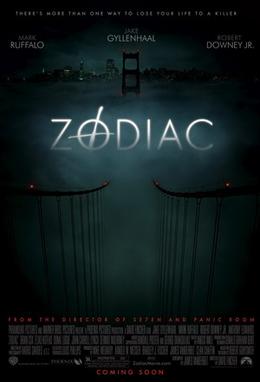
October True Crime: Zodiac (dir by David Fincher)


Who was the Zodiac Killer?

That is a question that has haunted journalists, cops, and true crime fans since the late 60s.  It is known that the Zodiac Killer murdered at least five people in Northern California in 1968 and 1969.  He targeted young couples, though he is also thought to have murdered on taxi driver as well.  What set Zodiac apart from other killers is that he was a prolific letter writer, who sent cards and ciphers to the police and the journalists who were reporting on his crimes.  In one of his ciphers, Zodiac claimed that he had killed 37 people.  Cartoonist Robert Graysmith later wrote two books about his personal obsession with the case.  He estimated that the Zodiac may have been responsible for hundred of murders, up through the 80s.  Of course, reading Graysmith’s first Zodiac book, it’s also easy to suspect that Graysmith reached a point where he saw the Zodiac’s hand in every unsolved murder in the San Francisco area.  Of all the unidentified serial killers in American history, Zodiac is one that most haunts us.  Zodiac was a serial killer who operated in an era when such things were still considered to be uncommon.  Much as Jack the Ripper did during the Victorian Age, Zodiac announced the arrival of a new age of evil.

Zodiac wrote about being a film fan and he was probably happy about the fact that he inspired quite a few films.  1971’s The Zodiac Killer came out while Zodiac was still sending letters to the police and cops actually staked out the theaters showing the film just to see if he  would show up.  Dirty Harry‘s Scorpio Killer was also based on Zodiac, right down to the taunting letters that he sent the mayor and again, one has to wonder if Zodiac ever showed up to watch Clint Eastwood take him down.

And, if Zodiac survived into the 21st Century, one has to wonder if he showed up in the theaters for 2007’s Zodiac.

One of the best true crime films ever made, Zodiac not only recreates the crimes of the Zodiac but it also examines the mental price of obsessing over the one unknown force of evil.  Mark Ruffalo plays Dave Toschi, the celebrity cop who nearly sacrificed his professional reputation in his search for the identity of the killer.  Jake Gyllenhaal plays cartoonist Robert Graysmith, who spends over a decade searching for the Zodiac’s identity and who loses his wife (Chloe Sevigny) in the process.  And Robert Downey, Jr. plays Paul Avery, the crime reporter to whom the Zodiac wrote and who sunk into paranoia and addiction as a result.  This is a film that is less about the Zodiac’s crime and more about how this unknown killer seemed to unleash a darkness that would come to envelope first a city and eventually an entire nation.

As one might expect from a film directed by David Fincher, Zodiac plays out like a filmed nightmare with the starkly portrayed murders being all the more disturbing because they often take place outside, where people would think they would be safe.  (The second murder is especially terrifying, as it plays out without even the sound of background music to allow us the escape of remembering that it’s only a movie.)  Fincher heightens our paranoia but having a different actor play the killer in each scene, reminding us that the Zodiac could literally be anyone.  Indeed, one of the scarier things about Zodiac is that, in the course of his investigation, Graysmith meets so many different people who seem like they could be the killer.  Even if they aren’t the Zodiac, the viewer is left with the feeling that the world is full of people who are capable of committing the same crimes.  The film becomes a journey into the heart of darkness, with the Zodiac becoming both a malevolent force and potentially your next door neighbor.  And with the film’s detailed recreation of the 60s and the 70s, the film becomes a portrait of a country on the verge of changing forever with the Zodaic and his crimes representing all the fear waiting in the future.

Again, as one might expect from a Fincher film, it’s a well-acted film, especially by Robert Downey, Jr.  Zodiac came out a year before Iron Man, when Downey was still better known for his personal troubles than for his talent.  Downey perfect captures his character’s descent into self-destruction, as he goes from being cocky and self-assured to being so paranoid that he’s carrying a gun.  (Paul Avery’s actual colleagues have disputed the film’s portrayal of Avery being mentally destroyed by the Zodiac.)  Ruffalo and Gyllenhaal also do a good job of portraying Toschi and Graysmith’s growing obsession with the case while Charles Fleischer and John Carroll Lynch both make strong (and creepy) impressions as two men who might (or might not) be the killer.

Though the film was not a success at the box office and it was totally ignored by the Academy, Zodiac has built up a strong reputation in the years since its released.  It’s inspired a whole new generation of web sleuths to search for the killer’s identity.  Personally, my favored suspect is Robert Ivan Nichols, an enigmatic engineer who abandoned his former life and changed his name to Joseph Newton Chandler III in the 70s and who committed suicide in 2002.  I think much like Jack the Ripper, the Zodiac’s identity will never be definitely known.  There have been many compelling suspects but most of the evidence seems to be circumstantial.  (That’s certainly the case when it comes to Nichols.)  The Zodiac was thought to be in his 30s or even his early 40s in 1969 so it’s doubtful that he’s still alive today.  In all probability, his identity and his motive will forever remain an unsolvable mystery.

Scenes I Love: Rambo


Watching Ninja Assassin made me think about how much film and special effects technology has advanced to the point that the ways people can die in a film really is only limited by the imagination of the filmmakers involved. My new choice for “Scenes I Love” may make me come across as some gorehound, violence-loving neanderthal (the first two are actually correct but the third is false since I’m homo sapiens), but I love this scene I have chosen because it’s so over-the-top yet holds many truths to the events happening therein.

Rambo was Sylvester Stallone’s attempt to restart the Rambo franchise and to a certain extent he does so. The film was better than the third one and in terms of storytelling was equal to the second one and just a tad short of the original film. It’s a film one will not write to the Academy about, but Stallone brings back the franchise to what made it popular in the first place. He brought the character of John Rambo back to being the self-destructive, self-loathing, war-scarred veteran who just wants to be left alone to live his miserable life, but always gets dragged into one good-intentioned crusade after another.

This scene happens right at the very end and one could say it’s the film’s climactic eruption of testosterone. Rambo literally explodes Burmese soldiers’ bodies through his effective use of a .50 caliber heavy machine gun (and those who think the gun’s effect on people’s bodies was over-the-top…those people would be wrong. That is exactly what a .50 caliber round does to a body. It doesn’t do a body good) and some help from the people he’s trying to rescue. It’s hard not cheer Rambo in this scene after watching these very same soldiers massacre an entire Burmese village, raping captured young women and bayonet little kids before throwing them into a hut’s raging fire.

This scene also shows why the Rambo films have been labeled as nothing but mindless violence trying to make itself to be something profound (he is killing the bad people and trying to save those who are defenseless). I always though this franchise was just about one very angry guy who may or may not be right in the head, but who definitely has a weird sense of right and wrong. Not to mention very good at killing massive amounts of people in very messy ways.

There’s a part halfway in this scene where the higher-than-though leader of the Christian missionary group (who had earlier in the film lectured Rambo for being too violent in saving his and his people’s lives) played by Paul Schulze sees the carnage happening all around him and decides to go all caveman on one soldier who killed one of his congregation. A part of me actually smirked at this part. I knew that no matter how well-intentioned, principled and civilized a man thinks he is there’s something primal deep down inside that wants to commit violence.