Four Fast Guns (1960, directed by William J. Hole, Jr.)


Outlaw Tom Sabin (James Craig) rides into Purgatory, a frontier town that is so dangerous that even the welcome sign warns that those entering should say goodbye to God.

The townspeople take one look Tom and hire him to clean up the town.  The town is controlled by a ruthless saloon owner named Hoag (Paul Richards).  Hoag is a self-styled intellectual and a dangerous man but he is considered to be untouchable because he is crippled and no one wants to be known as the person who shot a man in a wheelchair.  Instead, they would rather hire a stranger to do it for them but Tom has more honor than they originally realized.

Hoag summons three gunmen to kill Tom.  Two of the gunmen prove to be no match for Tom but then he meets the third and is shocked to discover that it’s his own brother, Johnny Naco (Brett Halsey).

Four Fast Guns is a better-than-average B-western.  What sets it apart from other films about strangers being hired to clean up a town is that the characters are portrayed with more depth than usual.  The towns people are not innocent victims but instead want to pay Tom to take the risks and do the dirty work that they’re not willing to do.  Tom is not a cut-and-dried hero and the gunmen who are hired to kill him are not portrayed as being one-dimensional villains.  Johnny Naco may be a killer but he also has a code of honor.  He may be willing to kill his own brother but he’s not willing to see him humiliated.  The wheelchair-bound Hoag is himself a more interesting bad guy than usually shows up in movies like this.  He’s the type of bad guy who quotes Dickens and Whitman while waiting for his hired guns to do their job.  Hoag feels that his cultured background sets him above the rest of the town’s rabble but he ultimately proves himself to be just as petty as those that he looks down on.

Four Fast Guns feels like a forerunner to the morally ambiguous Spaghetti westerns and films like Clint Eastwood’s Unforgiven.  It is essential viewing for fans of the genre.

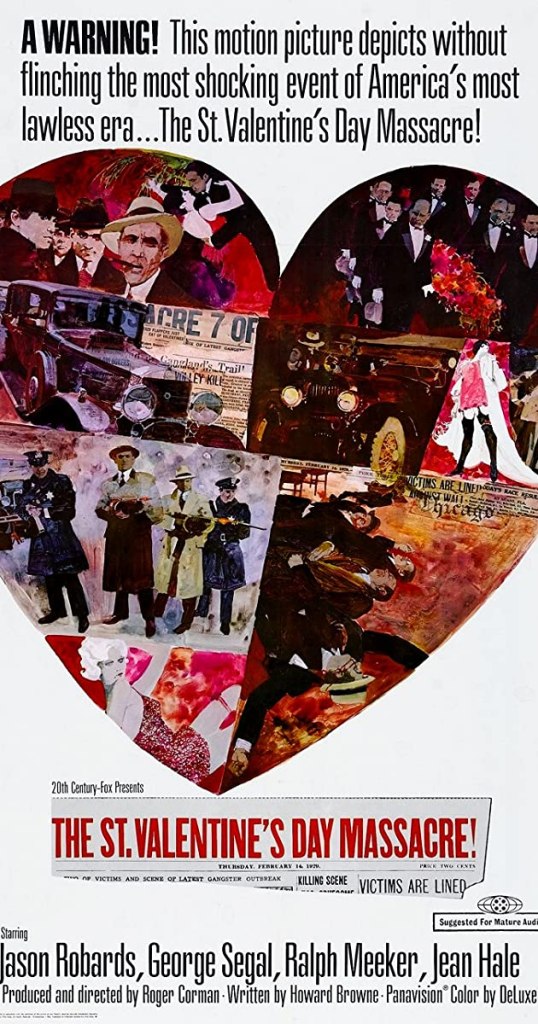
An Offer You Can’t Refuse #18: The St. Valentine’s Day Massacre (dir by Roger Corman)


On February 14th, 1929, seven men were murdered in a garage in Chicago, Illinois.  Five of the seven men were known to be associates of gangster George “Bugs” Moran.  The other two men were considered to be innocent bystanders, a mechanic and a dry cleaner who just happened to enjoy hanging out with gangsters.  Though no one was ever convicted of the crime, it was well-known that the murders were carried out on the orders of Al Capone.

In many ways, the St. Valentine’s Day Massacre was a turning point in America’s relationship with organized crime.  Before the massacre, Capone had become a bit of a folk hero.  He knew how to talk to the press and he was viewed as merely breaking a law (in this case, prohibition) that most people opposed in the first place.  However, after the murders, public opinion soured on Capone.

Some of it was the brutality of the crime.  It’s been said that over five hundred bullets were fired in that garage, all to kill seven defenseless men who were lined up against a wall.  Grisly pictures of the victims were released to the press.  Perhaps if the seven men had been carrying weapons and had been involved in a shootout with their murderers, the public’s reaction would have been different.  But this was a cold-blooded execution.

Personally, I think the fact that the killers disguised themselves as cops also played a role in the public’s outrage.  It was a very calculated move on the part of the killers and it highlighted just how much planning went into the St. Valentine’s Day Massacre.  As well, it undoubtedly made people paranoid.  If a bunch of killer could dress up like cops, who knew who else they could dress up as?

Finally, I think that Capone’s biggest mistake was carrying out the crime on Valentine’s Day.  You don’t murder people on a holiday.  Anyone should know that.  If Capone had waited until February 20th, he probably could have gotten away with it.

The 1967 film, The St. Valentine’s Day Massacre, details the rivalry between Capone and Moran, starting with them fighting for control over the Chicago rackets and ending with the title event.  Moran is played by Ralph Meeker while Jason Robards plays Capone.

Now I know what you’re probably thinking.  Perennial WASP Jason Robards as Al Capone?  That may sound like odd casting and, let’s just be honest here, it is.  However, it actually kind of works.  Robards may not be convincingly Italian but he is convincingly ruthless.  Add to that, one of the major subplots of the St. Valentine’s Day Massacre is that, even as the head of the Chicago Outfit, Capone still feels like an outsider in the world of organized crime because, while he is Italian, he isn’t Sicilian.  Capone feels as if Lucky Luciano and all of the major New York crime bosses look down on him and one reason why he’s so ruthless about taking over Chicago is that wants to show Luciano that he can be just as effective a crime lord as any Sicilian.  Capone feeling out of place in the Mafia is reflected by Robards initially seeming to be out of place in a gangster film.  By the end of the movie, of course, Capone has proven himself and so has Jason Robards.

Robards isn’t the only familiar face to be found in The St. Valentine’s Day Massacre.  Though this film was released by 20th Century Fox, it was directed by Roger Corman and Corman fills the production with members of his stock company.  Dick Miller, Jonathan Haze, and Jack Nicholson all have small roles as gunmen.  Bruce Dern plays the unlucky mechanic who enjoys hanging out with gangsters.  Buck Taylor, Leo Gordon, and Joe Turkel all have small roles.  John Agar plays Dion O’Bannon and is gunned down in his flower store.  Though not members of the Corman stock company, George Segal and David Canary plays brothers who work for Moran.  There’s a lot of characters wandering through this film but Corman makes sure that everyone gets a chance to make an impression.

It’s a good gangster film.  Though he was working with a larger budget than usual, Corman still brought his exploitation film aesthetic to the material and the end result is a violent, melodramatic gangster film that looks really impressive.  The film’s recreation of 1920s Chicago is a visual delight and looking at the well-dressed and stylish gangsters walking and driving down the vibrant city streets, you can understand why organized crime would have such a draw for some people.

The St. Valentine’s Day Massacre is a classic gangster film and a classic Corman film.  It’s an offer you can’t refuse.

Previous Offers You Can’t (or Can) Refuse:

  1. The Public Enemy
  2. Scarface
  3. The Purple Gang
  4. The Gang That Could’t Shoot Straight
  5. The Happening
  6. King of the Roaring Twenties: The Story of Arnold Rothstein 
  7. The Roaring Twenties
  8. Force of Evil
  9. Rob the Mob
  10. Gambling House
  11. Race Street
  12. Racket Girls
  13. Hoffa
  14. Contraband
  15. Bugsy Malone
  16. Love Me or Leave Me
  17. Murder, Inc.


TV Review: Night Gallery 1.3 “The House/Certain Shadows on the Wall”


The third episode of Night Gallery aired on December 30th, 1970.  While Americans were undoubtedly finalizing their plans for a wild New Year’s Eve (because, after all, Nixon was president and every day was a party), NBC and Rod Serling invited viewers to take a tour through a darkened museum, one where every painting told a story.

This episode of Night Gallery featured two stories:

The House (dir by John Astin, written by Rod Serling)

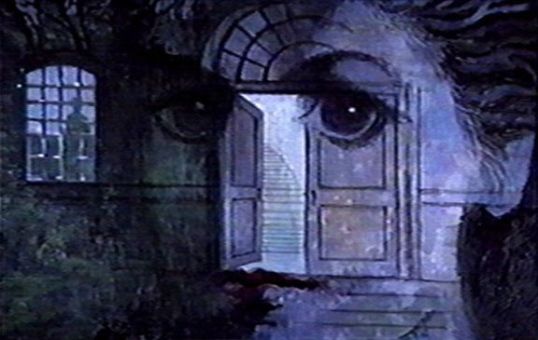
The House opens with Elaine Latimer (Joanna Pettet) talking about a recurring dream.  She’s driving her car through the countryside when she comes across a large house.  Though she’s never seen the house, she finds herself drawn to it, as if she somehow belongs in the house.  As Elaine describes her dream, we come to realize that she’s talking to a psychiatrist (Steve Franken) and that Elaine is recovering from mental breakdown.  Her doctor tells Elaine that the dream is nothing to worry about.

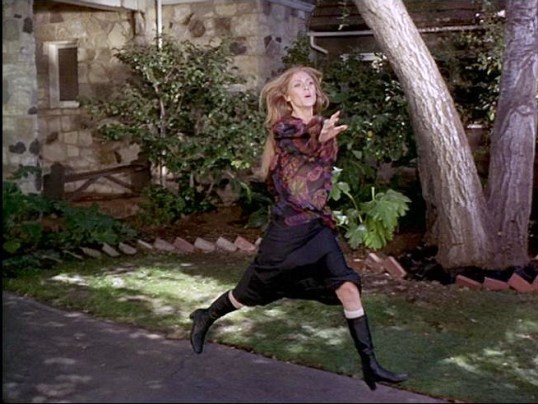
However, when Elaine is driving home, she realizes that the countryside looks familiar.  Soon, she’s pulling up in front of the house from her dreams!  When Elaine gets out of the car, she’s greeted by a real estate named Peugeot (Paul Richards) who asks her if she’s interested in buying the house.  As Peugeot gives her a tour of the estate, he mentions that the house is thought to be haunted….

I liked The House.  It was an atmospheric little tale and, from the minute that Elaine started talking about her dream, the story captured my attention.  (I should admit that I also have recurring dreams about a house that I’ve never actually seen before.)  Admittedly, the story does play out at a very deliberate pace and requires a bit of patience but the dream sequences are effectively surreal and Joanna Pettet gives an empathetic performance in the lead role.

Certain Shadows On The Wall (dir by Corey Allen, written by Rod Serling)

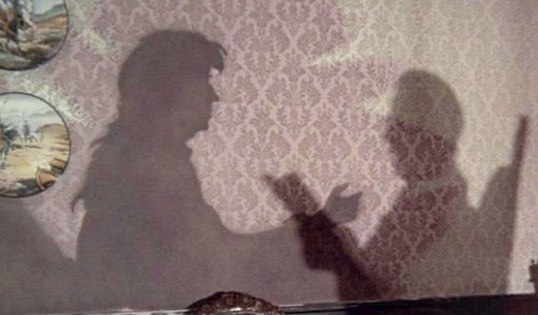
This segment features Agnes Moorehead as the sickly Emma, who is poisoned by her own brother, the despicable Stephen (Louis Hayward).  After Emma’s death, Stephen is shocked to discover that, even though Emma is gone, her shadow remains on the wall.  While Stephen is trying to make sense of that, his other two sisters (played by Grayson Hall and Rachel Roberts) have plans of their own for how to deal with their duplicitous brother.

Like The House, Certain Shadows On The Wall is appropriately atmospheric.  The ending is a bit weak as Stephen gets what he deserves but the shadow itself doesn’t have much to do with his actual fate.  Just when you’re waiting for Agnes Moorehead to make a sudden, ghostly appearance, the story comes to an end.  Still, this is an effective segment and it features excellent work from its ensemble.  I especially liked the performance of Grayson Hall, which features one of the most frightening glares that I’ve ever seen.

The third episode of Night Gallery was a definite improvement over the two that came before it.  Both segments tell intriguing stories, though it’s obvious that the show was still better at coming up with good premises than effective endings.

Previous Night Gallery Reviews:

  1. The Pilot
  2. The Dead Man/The Housekeeper
  3. Room With A View/The Little Black Bag/The Nature of the Enemy

I Escaped From Devil’s Island (1973, directed by William Whitney)


The year is 1918 and the French penal colony, Devil’s Island, is renowned as the world’s most brutal prison.  Hidden away from mainland Europe, it is populated by the worst of the worst.  The prisoners have been sentenced to either spend their life on the island or to die at the blade of guillotine and the guards are all sadists.  Le Bras (Jim Brown) has been sentenced to die but he impresses his fellow inmates by putting up a fight on his way to have his head chopped off.  He doesn’t succeed in escaping but, fortunately for him, the death penalty is abolished mere moments before the blade falls.

Le Bras is alive but he’s still been condemned to spend the rest of his life on Devil’s Island, under the sadistic eye of the head guard, Maj. Marteau (Paul Richards).  However, Le Bras has no intention of being anyone’s prisoner.  He teams up with two other prisoners, a pacifist named Davert (Christopher George) and Jo-Jo (Richard Ely), who, because he is gay, is abused by both the guards and the other prisoners.  The three of them manage to escape from the prison but they still have to make their way through the jungle.  Along the way, they visit a leper colony and Le Bras takes some time to get busy with a native woman.  Meanwhile, Marteau remains hot behind them, determined to capture them and send them back to the prison.

If I Escaped From Devil’s Island sounds familiar, that may be because you’ve seen Steve McQueen and Dustin Hoffman in Papillon.  Papillon was a major studio production with big stars, a huge budget, and an epic running time.  I Escaped From Devil’s Island was a low-budget film starring B-movie stars and with a 90-minute running time that was the exact opposite of epic.  Roger Corman produced I Escaped From Devil’s Island to capitalize on the expected success of Papillon and he started production early enough that I Escaped From Devil’s Island actually beat Papillon to theaters by a matter of weeks.  Corman originally tried to hire Martin Scorsese to direct I Escaped From Devil’s Island.  When Scorsese decided to follow John Cassavetes’s advice and do a personal film instead, Corman ended up hiring William Whitney to direct.  (Scorsese’s personal film turned out to be Mean Streets, so he probably made the right decision.)

I Escaped From Devil’s Island is an entertaining B-movie.  It doesn’t have the epic sweep of Papillon but it does have a fun cast and all the action that you would expect from a 70s Corman production.  Jim Brown was never a great actor but he never claimed to be.  What Brown had was a tremendous physical presence and a confident movie star charisma and both of those are put to good use in I Escaped From Devil’s Island.  Whether he was playing football or beating up bad guys, Jim Brown was always the epitome of cool and that’s especially true in this film.  Christopher George has some good scenes as a pacifist who believes in non-violent resistance and Paul Richards is a great villain but this is a movie that you watch for Jim Brown and he doesn’t disappoint.

As of today, Jim Brown is 84 years old.  As anyone who has seen him interviewed recently can tell you, Jim Brown is still the epitome of cool.  When Jim Brown speaks, whether people agree with him or not, they still shut up and listen.  Happy birthday, Jim Brown!

The Daily Grindhouse: Kiss Daddy Goodnight (dir by Peter Ily Huemer)


To me, Uma Thurman will always be Kill Bill‘s Beatrix Kiddo and, for that reason, she will always be one of my favorite actresses.  Though we take that film and her performance in it for granted now, the fact of the matter is that Kill Bill, Volume 1 was one of the most important milestones in my evolution towards becoming a film fanatic.  I was a senior in high school when I first saw that movie and I had the same insecurities that every 17 year-old girl has.  However, when I watched the Kill Bill films, I felt like I could survive anything.  If Beatrix Kiddo (in the form of Uma Thurman) could survive being shot in the head and come out of her coma kicking ass, then I knew that I could certainly survive breaking up with my boyfriend or getting my period in gym class or waking up with a big zit in the middle of my forehead.

However, even Uma Thurman had to start somewhere and that somewhere, in her case, was with an obscure, low-budget film called Kiss Daddy Goodnight.  Kiss Daddy Goodnight, which also features Steve Buscemi in a small role, is one of those moody, atmosphere-drenched films that always seems to show up in cheap, 10-movie box sets.  I recently watched it as a part of the Night Chills box set and I discovered that it’s not really as terrible as many reviewers claim.

First released in 1987 and looking as if it was produced with a budget of about a $1,000, Kiss Daddy Goodnight  is another one of those oddly fascinating and pretentious grindhouse films that tries to mix art and exploitation.  Shot on location at some of the sleaziest locations in New York City, Kiss Daddy Goodnight is the ennui-drenched story of Laura (17 year-old Uma Thurman).  Laura is an actress who supplements her income by going out at night with a Louise Brooks wig on, picking up rich men, drugging them, and robbing them.  Laura steals an ornate dagger from one of her victims and makes plans to give it to her mom as a birthday present.

Kiss Daddy Goodnight is also the story of Sid (Paul Dillon), a friend of Laura’s who, having previously left for reasons unknown, returns to New York and announces that he’s looking for Laura’s ex-boyfriend, Johnny.  Sid wants to start a band.  Laura tells him that she doesn’t know where Johnny is but she allows Sid to crash at her apartment.  Sid spends most of the movie walking up to random people and asking if they’ve seen Johnny.  He also finds the time to go through Laura’s closet whenever Laura’s not at the apartment.  “Fucking bitch,” Sid randomly exclaims while looking at Laura’s dresses.

Kiss Daddy Goodnight also tells the story of William (Paul Richards), a courtly older man who lives in an apartment with a rabbit and who spends most of his time missing his daughter Lara, who wants nothing to do with him.  William becomes obsessed with Laura, who looks almost exactly like Lara.  We’re never quite sure what William does for a living but he’s rich enough to have a henchman who follows Laura whenever she leaves her apartment.

Finally, Kiss Daddy Goodnight is the story of Johnny who, once Sid does find him, turns out to be played by a very young Steve Buscemi.  Johnny is only on-screen for about 5 minutes but, since he’s played by Buscemi (who, as opposed to Dillon and Richards, can actually act), he becomes a major character by default.  Johnny is the only character in the film who seems to have a life outside of what we’re seeing on-screen.  When Sid says he wants to get the band together again, Johnny says he no longer plays.  When Sid says, “Laura says hello,” Johnny simply gives him a contemptuous stare and turns on the TV.  The camera zooms in on the TV and we spend a few minutes watching football players tackling each other in slow motion.

Yes, Kiss Daddy Goodnight is an odd little film.  While the film’s nominal plot is basically William pursuing Laura while Sid attempts to protect her, the film itself has a random, almost improvised feel to it.  The film is more interested in documenting the weird people around Laura and Sid than in Laura and Sid themselves.  When Sid applies for a job in a seafood place, the camera pans over to the two men in sitting in the booth behind him and we spend a minute listening to them talk about a friend who has been kicked out of a private school in Europe.  When Laura takes a taxi to her apartment, the driver discusses philosophy with her.  The phone number 559-8317 appears throughout the movie, cryptically scrawled on apparently every wall in New York.  No one calls the number or even seems to notice it but it’s there as evidence that Kiss Daddy Goodnight is far more concerned with preserving a specific time and place than with telling a traditional story.  When viewed as a  historic document, Kiss Daddy Goodnight is a success d’estime.

Kiss Daddy Goodnight has a pretty bad reputation.  One need only visit its page on the IMDb to see how little most people seem to think of Uma Thurman’s debut film.  I, however, found it to be a bit more interesting than its reputation would lead one to suspect.  Along with serving as a time capsule of New York City, the film proves that, even early in their respective careers, both Thurman and Buscemi had the talent and charisma necessary to become stars.  If nothing else, just the fact that Uma Turman could go from Kiss Daddy Goodnight to Kill Bill, should give us all hope for the future.

It’s just more evidence that anything is possible.

A Quickie With Lisa Marie: Beneath the Planet of the Apes (dir. by Ted Post)


(WARNING: SPOILERS)

Continuing my look at the original Planet of the Apes film series, we now come to the first sequel, 1970’s Beneath the Planet of the Apes.  Rather blandly directed by Ted Post and featuring only a cameo performance from Charlton Heston, Beneath the Planet of the Apes is rarely given the credit it deserves.  Yes, the first half of the film is rather forgettable but once you get through it, you discover one of the darkest films of the 1970s.

Beneath the Planet of the Apes begins with yet another human astronaut crash landing on the Earth of the future.  This astronaut is Brent and, as played by James Franciscus, he comes across as a slightly more earnest, far less charismatic copy of Charlton Heston’s Taylor.  Brent has been sent in search of Taylor.  Anyway, once he lands on the planet, he is quickly arrested by the apes, meets Zira (Kim Hunter) and Cornelius (David Watson, stepping in for Roddy McDowall), and then escapes with the still-mute Nova (Linda Harrison).  With Nova, Brent makes his way to the Forbidden City where he comes across the ruins of Grand Central Station and discovers that he’s actually on Earth. 

Yes, that’s right.  The first hour of this 95 minutes film is essentially just the first movie all over again.   And yes, this film’s (many) critics are correct when they say that this first hour drags and tests the audience’s patience.  Obviously, Brent may be shocked to discover he’s on Earth but it’s old news to us and many viewers are probably tempted to give up on this film before Brent even figures it out.

But don’t give up!  No, because if you stick with this film you’ll discover that, once Brent figures out where he is, things get really, really fucked up.

Essentially, Brent discovers that the ruins of New York City are now underground.  And in this underground city, there are people.  But they’re not people like Brent or Nova.  No, these are people who have been horribly scarred by radiation.  They’ve also mutated to the extent that they’ve developed the powers of telepathy and mind control.  Under the leadership of Mendez the Tenth (Paul Richards), they spend their time singing hymns to the Alpha/Omega nuclear bomb, or as they call it “The Holy Bomb.”  They keep the Holy Bomb in St. Patrick’s Cathedral.

These mutants capture both Nova and Brent.  Brent is tossed into a cell and who else is there but Taylor?  And Taylor, believe it or not, has become even more sarcastic and scornful than before!  Seriously, Charlton Heston frequently spoke about how much he hated this film and it’s obvious in his performance.  Heston might not have been happy about being there but the audience is because, even if he is busy hating himself, Taylor brings a jolt of life to the film.

And just in time because the Apes, led by Urko (James Gregory), have invaded the forbidden city!  They gun down all the mutants.  Brent , Taylor, and Nova manage to escape their prison and all three of them are promptly gunned down as well.  As he dies, Taylor manages to set off the Alpha/Omega bomb.  We see a blinding white light followed by a somber voice over that tells us: “In one of the countless billions of galaxies in the universe, lies a medium-sized star, and one of its satellites, a green and insignificant planet, is now dead.”

And that’s it!  There’s no final credits, not even a black-out. Instead, on that note, the movie just stops.

Now, seriously, tell me that’s not a great movie.