Embracing the Melodrama #57: Winter’s Bone (dir by Debra Granik)


winters-bone

I can still remember what it felt like, back in 2010, as I stepped out of the theater where I had just watched Winter’s Bone.  I had just spent 100 minutes engrossed in that film’s world and it was somewhat jarring to suddenly find myself back in my world.  The air around me was still.  The clear sky above me seemed to be a totally new shade of blue.  The sounds of passing cars and overheard conversations echoed in my head.  When I walked, I felt as if I was moving at a different, dreamier pace than everyone else, as if I was still only partially back in my world.

That’s the type of film that Winter’s Bone is.  It’s a film about life on the fringes, a portrait of a very real part of America that a lot of people don’t even realize exists.  It’s a film that sticks with you and dares you to try to forget the people who it has introduced you to and the stories that it tells.

Winter’s Bone takes place in the Ozarks, a society and world that is dominated by meth and secrets.  Speaking as someone who still has family who live on the outskirts of the world depicted here, I can say that Winter’s Bone gets both the big picture and the little details right.  Everything from the unbreakable cycle of poverty to the defiant resilience of the people is depicted just as it is.  Make no mistake about it — the people in Winter’s Bone may not have much but they do have their pride.  It’s portrayed best in the scene where meth head Teardrop (John Hawkes) glares down the county sheriff (Garret Dillahunt), letting him know that, regardless of who is wearing the uniform, this is Teardrop’s world.

Teardrop is the uncle of 17 year-old Ree Dolly (Jennifer Lawrence), who is considering joining the army once she graduates from high school but, for now, spends all of her time taking care of her mentally ill mother and her two younger siblings.  Her father, who is one of the county’s best meth cooks, was recently arrested and has a court date approaching.  However, he has apparently skipped bail and disappeared.  When Ree is told that, unless her father shows up for his court date, she and her family will lose their house, Ree sets out to try to find him.

05_Flatbed_1 - JANUARY

Ree, however, knows that her father would never have jumped bail and she also knows that there’s no way he died in a meth lab fire, as some people are claiming.  She knows that her father has been murdered but, unlike Teardrop, Ree has no interest in getting revenge.  She just wants to find his body so she can prove that he’s dead and her family can keep their home.  Unfortunately, even this brings Ree into conflict with the local crime boss.

Taking place on a blasted landscape of dilapidated farms, rusty pickups, and the burned ruins of abandoned meth labs, Winter’s Bone is an unusually powerful piece of Southern gothic. It’s also a film that — unlike a lot of other acclaimed movies — actually gets better with repeat viewings.  When you first see it, you’re overwhelmed by the film’s bleakness.  When it ends, you’re not sure if you should be happy or sad.  The second time, however, you can better appreciate the skill with which director Debra Granik tells her story, the way she frames Ree against the landscape as if Ree was the lone hero in a classic western and how the scenes where Ree searches for her father in a swamp are full of shadows and menace.  The third time, you can better appreciate the performances of characters actors like John Hawkes, Garret Dillahunt, and especially Dale Dickey.  The fourth time, you no longer have any doubts.  Winter’s Bone is one of the best films that you’ve ever seen.

And, through it all, Jennifer Lawrence is there and reminding you why she became a star in the first place.  She may have won her Oscar for Silver Linings Playbook and she may be best known for being the face of The Hunger Games franchise but Winter’s Bone remains Jennifer Lawrence’s best and bravest performance.  Without a hint of vanity or reluctance, Lawrence portrays Ree as a resilient and unsentimental survivor and you can’t help but cheer her on as she refuses to back down to any authority, legal or otherwise.  By the end of the film, you know that Ree is probably as trapped as anyone but you can’t help but hope that she’ll somehow find something better.

If you haven’t seen Winter’s Bone, you need to.
Target Practice

Embracing the Melodrama #43: The Piano (dir by Jane Campion)


I recently watched the 1993 best picture nominee The Piano and all I can say is that it is going to be a struggle to put into words just how much I loved this film.

Taking place in the 19th century, The Piano tells the story of Ada (Holly Hunter), a Scottish woman who hasn’t spoken since she was 6 years old.  Like many things in this enigmatic film, the reason why Ada stopped speaking is never clearly stated.  What is known is that she communicates through sign language and by playing her piano.  While Ada is usually a black-clad and somber figure, she comes to life when she plays the piano.  Ada also has a daughter named Flora, the result of a brief affair that Ada had with one of her teachers.  Unlike her mother, Flora (played by 10 year-old Anna Paquin, long before True Blood) is rarely silent and delights in telling elaborate lies about how her father died.

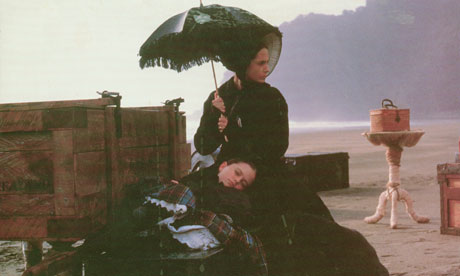
the-piano-01

Ada’s father sells her into marriage to a New Zealand frontiersman named Alisdair (Sam Neill), a man who Ada has never even met.   When Ada and Flora first arrive in New Zealand, they are dropped off on the beach and forced to wait a night until Alsdair can meet them.  In the film’s most hauntingly beautiful scenes, Ada plays her piano on that beach while Ada dances in the surf.  It’s during those scenes that The Piano reveals three of its greatest strengths: the lush cinematography of Stuart Dryburgh, the haunting score composed from Michael Nyman, and the fact that Hunter and Paquin are totally believable as mother and daughter.  Not only is it easy to imagine Paquin growing up to look like Holly Hunter, but the two actresses even manage to perfectly imitate each other’s gestures and facial expressions.  Most of the reviews that I’ve read of  The Piano tend to emphasize the film’s focus on the conflict between the sensual and repressed but to me, the film works just as well as an exploration of the strong bonds that naturally exist between mothers and daughters.  I’m not ashamed to admit that when I look at the picture above, I reminded of how, when I was Flora’s age, I also used to hide behind my mom whenever I saw anyone that I didn’t know coming our way.

When Alisdair does finally show up to take them to their new home, he proves to be a rather cold and distant figure.  It would have been very easy for the film to portray Alisdair as being a completely heartless villain but, as played by Sam Neill, Alisdair is potrtayed as being less a traditional villain and more as just being a painfully unimaginative man who is incapable of understanding why Ada’s piano is so important to her.  To Ada, the piano and its music equals the life and freedom that she’s not allowed to experience.  To Alisdair, the piano is simply a bulky object that will not fit into his small house.  Over Ada’s objections (luckily, Flora is on hand to translate her sign language), Alisdair first leaves the piano on the beach and then agrees to sell it to Baines (Harvey Keitel), another white settler who — unlike Alisdair — is comfortable with the natives and their customs.

Baines, however, allows Ada to come over to his hut and play the piano.  He offers to give the piano back to her — key by key — if she agrees to continue to come to his hut and play while he watches and “pleasures” himself.  Reluctantly, Ada agrees but soon, she and Baines are falling in love.

Needless to say, when Alisdair finds out what has been going on at Baines’s hut, he is not happy.  As he largely considers to be his property, bought and paid for, he also feels that he has the right to decide whether or not she’s capable of playing her piano…

The Piano: Holly Hunter and Anna Paquin

The Piano is a simply an amazing and visually sensual film that is blessed with excellent lead performances from Hunter, Keitel, Neill, and Paquin.  As directed by Jane Campion, The Piano plays out as both a delirious homage to gothic romanticism and a feminist parable about the way that even women who aren’t mute are still punished for expressing their honest desires.

And, of course, there’s that amazing score:

Embracing the Melodrama #32: Ordinary People (dir by Robert Redford)


ordinary_people_oc87rd_1

For the past seven days, I’ve been reviewing — in chronological order — fifty of the most memorable melodramas ever filmed.  We started with a silent film from 1916 and now, we have reached the 80s.  What better way to kick off the decade than by taking a look at the 1980 Best Picture winner, Ordinary People?

Directed by Robert Redford, Ordinary People tells the story of the upper middle class Jarrett family.  On the surface, the Jarretts appear to be the perfect family.  Calvin Jarrett (Donald Sutherland) has a successful career.  Beth (Mary Tyler Moore) keeps a perfect home and appears to be the ideal suburban matriarch.  However, one summer, their oldest son drowns in a sailing accident and their youngest son, sensitive Conrad (Timothy Hutton), attempts to commit suicide.  After spending four months in a psychiatric hospital, Conrad come back home and the family struggles to put their lives back together.  Even though he starts to see a therapist (Judd Hirsch) and starts dating his classmate Jeannine (Elizabeth McGovern), Conrad still struggles with his feelings of guilt over having survived.  Beth’s struggle to maintain a facade of normalcy leads to several fights between her and Conrad with Calvin trapped in the middle.

Among my fellow film bloggers, there’s always going to be a very vocal group that is going to hate Ordinary People because it won the Oscar for best picture over challenging black-and-white films directed by Martin Scorsese (Raging Bull) and David Lynch (The Elephant Man).  They always tend to complain that Ordinary People is a conventional film that tells a conventional story and that it was directed by a very conventional director.  More than once, I’ve seen an online film critic refer to Ordinary People as being a “big budget Lifetime movie.”

Well, you know what?

I love Lifetime.  Lifetime is the best network on television and to me, a big budget Lifetime movie would be the best Lifetime movie of all.  And, at the risk of alienating all of my film-loving friends, if I had to choose between watching Raging Bull and Ordinary People, I’m going to pick Ordinary People every time.  Raging Bull is visually stunning and features great performances but it’s also two hours spent watching an incredibly unlikable human being beating the crap out of anyone who is foolish enough to love him.  Ordinary People may essentially look like a TV show but it’s also about characters that you can understand and that, as the film progresses, you grow to truly care about.

Yes, I do wish that the character of Beth had been given more of a chance to talk about her feelings and it’s hard not to feel that Ordinary People places too much blame on the mother.  But, even so, the film still ends with vague — if unlikely — hope that Beth will eventually be able to move past her anger and reconnect with her family.  The film may be hard on Beth but it never gives up on her.  That’s what distinguishes Ordinary People for me.  In many ways, it’s a very sad film.  It’s a film that was specifically designed to make you cry and I certainly shed a few tears while I watched it.  But, even with its somewhat ambiguous ending, Ordinary People is also a very optimistic movie.  It’s a movie that says that, as much pain as we may have in our life,we can recover and life can go on and it’s okay to be sad and its also okay to be happy.

And that’s an important lesson to learn.

(That said, if I had been alive and an Academy voter in 1981, I would have voted for The Elephant Man.)

And, for all you Oscar lovers out there, here are clips of Timothy Hutton and Robert Redford winning Oscars for their work on Ordinary People.

Embracing the Melodrama #11: All About Eve (dir by Joseph L. Mankiewicz)


Bette Davis

“Fasten your seat belts, it’s gonna be a bumpy night!” — Margo Channing (Bette Davis) in All About Eve (1950)

If you’re a lover of classic films or even if you’re just someone who occasionally watches TCM, chances are that you already know All About Eve.  It’s one of those films that is endlessly quoted and it features at least two performances — Bette Davis’s turn as aging Broadway diva Margo Channing and George Sanders’ acidic theater critic Addison DeWitt — that serve as frequent inspiration for professional impersonators.  It’s the film that was named best picture of 1950 and it continues to hold the record for both the most Oscar nominations overall and it’s the only film in Oscar history to receive four female acting nominations.

Even more importantly, it’s a film that everyone already knows it great.

So, that brings up the question that every film blogger dreads: how do you review a classic film that everyone already knows about?  I’ve often said that it’s easier to review a bad film than a great one.  It’s easy to pinpoint why a film fails but when it comes time to explain why a film is great, it’s often difficult to put to words the intangible qualities that elevate it.

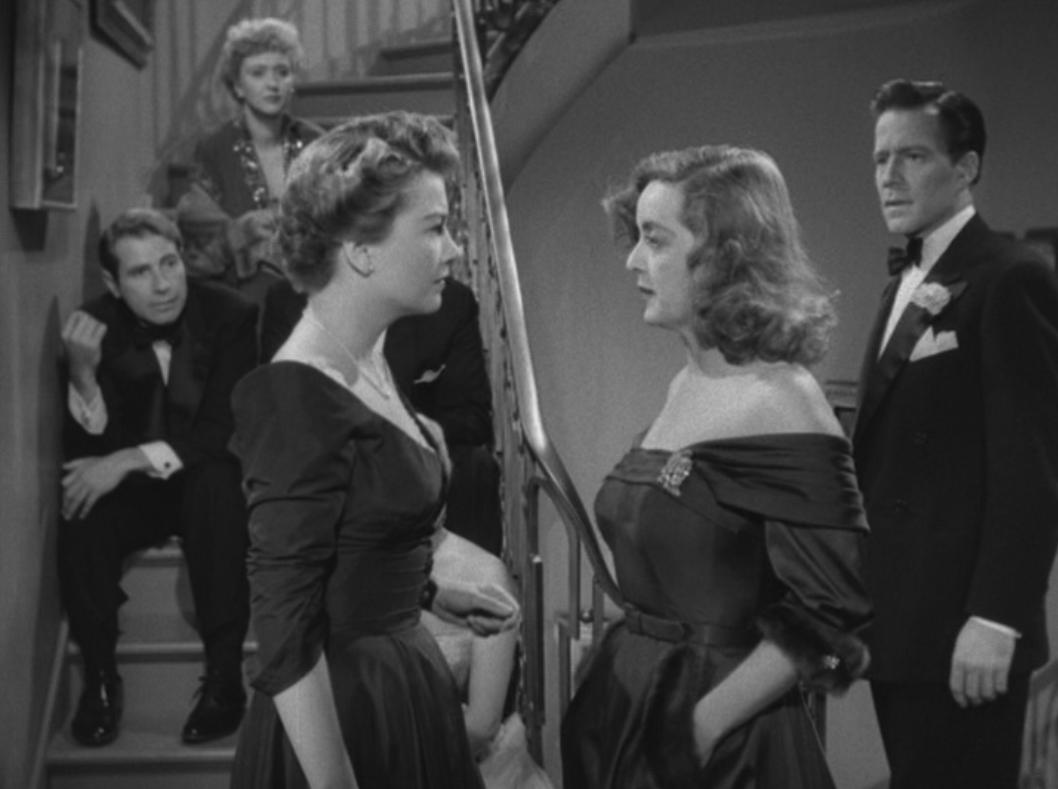
Eve and Margo

For instance, I could tell you that the film has a fascinating plot but that barely only begins to scratch the surface of everything that’s going on underneath the glossy and melodramatic surface of All About Eve.  The movie tells the story of how scheming young actress Eve Harrington (Anne Baxter) becomes a star with the help of Addison DeWitt and at the expense of the talented but aging Margo Channing.  In telling Eve and Margo’s stories, All About Eve explores issues of female friendship and competition, sexuality, and why older men are celebrated while older women are constantly at risk of being pushed to the side for a newer model.  The complexity and power of All About Eve’s storyline can be summed up by the fact that right now, when I watch the film, I relate to Eve but I imagine that  twenty years from now, I’ll rewatch and I’ll relate to Margo.

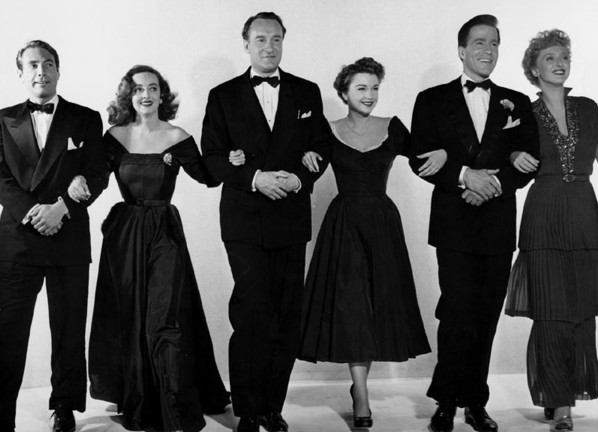
I could tell you that this is a film that is full of bigger-than-life characters and iconic performances but that doesn’t even begin to scratch at the surface of how well-acted and perfectly cast this film is.  Even boring old Hugh Marlowe is a perfect choice for playing boring old playwright Lloyd Richards.  (His wife is played by Celeste Holm.  Reportedly Bette Davis hated working with Celeste Holm but onscreen, their friendship feels very real and poignant and leads to some of the best scenes in the entire film.)  Gary Merrill, who later married Bette Davis, is likable as Margo’s boyfriend and Thelma Ritter is great as Margo’s outspoken assistant, largely because she’s Thelma Ritter and she was always great.  Marilyn Monroe famously makes the most of her minor role in All About Eve, playing an aspiring actress who has a very good reason for calling the butler a waiter.  And then there’s Bette Davis and George Sanders, both of whom are simply brilliant.

My favorite scene from All About Eve

My favorite scene from All About Eve

But to me, the best performance in All About Eve comes from Anne Baxter.  Baxter plays Eve as a perpetually smiling schemer and one of the great pleasures of the film is watching as Eve wrecks passive-aggressive havoc through Margo’s circle of friends.  Just watch the scenes where she deftly manipulates Celeste Holm.  All About Eve is usually referred to as being a vehicle for Bette Davis but if you actually watch the film, you see that the title is absolutely appropriate.  The film really is all about Eve.

And I could always tell you about how wonderfully sardonic the dialogue is but you already know that.  There’s a reason why even people who have never seen the film still quote Margo’s suggestion that everyone fasten their seat belts!

Bette Davis 2

So, in the end, what can I tell you about All About Eve?  Well, all I can really tell you is that it’s a great film and, if you haven’t seen it, you need to make time to learn all about Eve.

AllAboutEvecastpromo

Embracing the Melodrama #6: Grand Hotel (dir by Edmund Goulding)


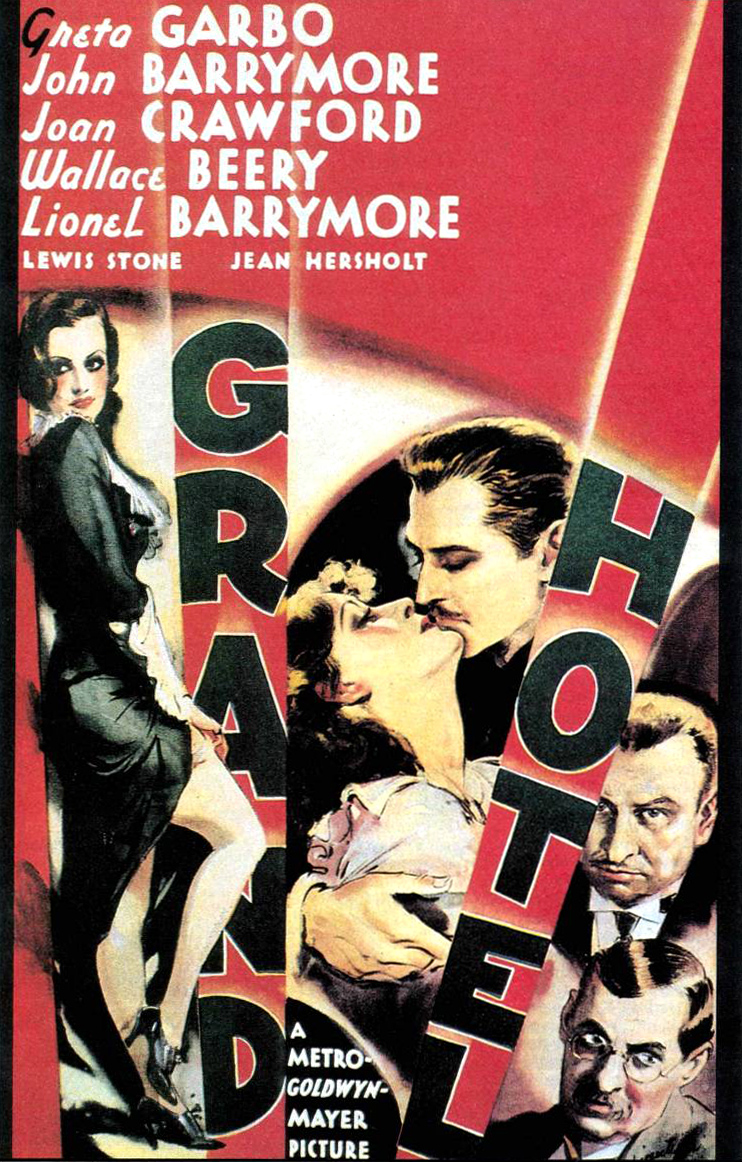
Poster - Grand Hotel_03

Today, we continue to chronologically embrace the melodrama by taking a look at one of the earliest examples of what would become a Hollywood mainstay, the big budget, all-start soap opera.  Today, we start things off by considering the 1932 best picture winner, Grand Hotel.

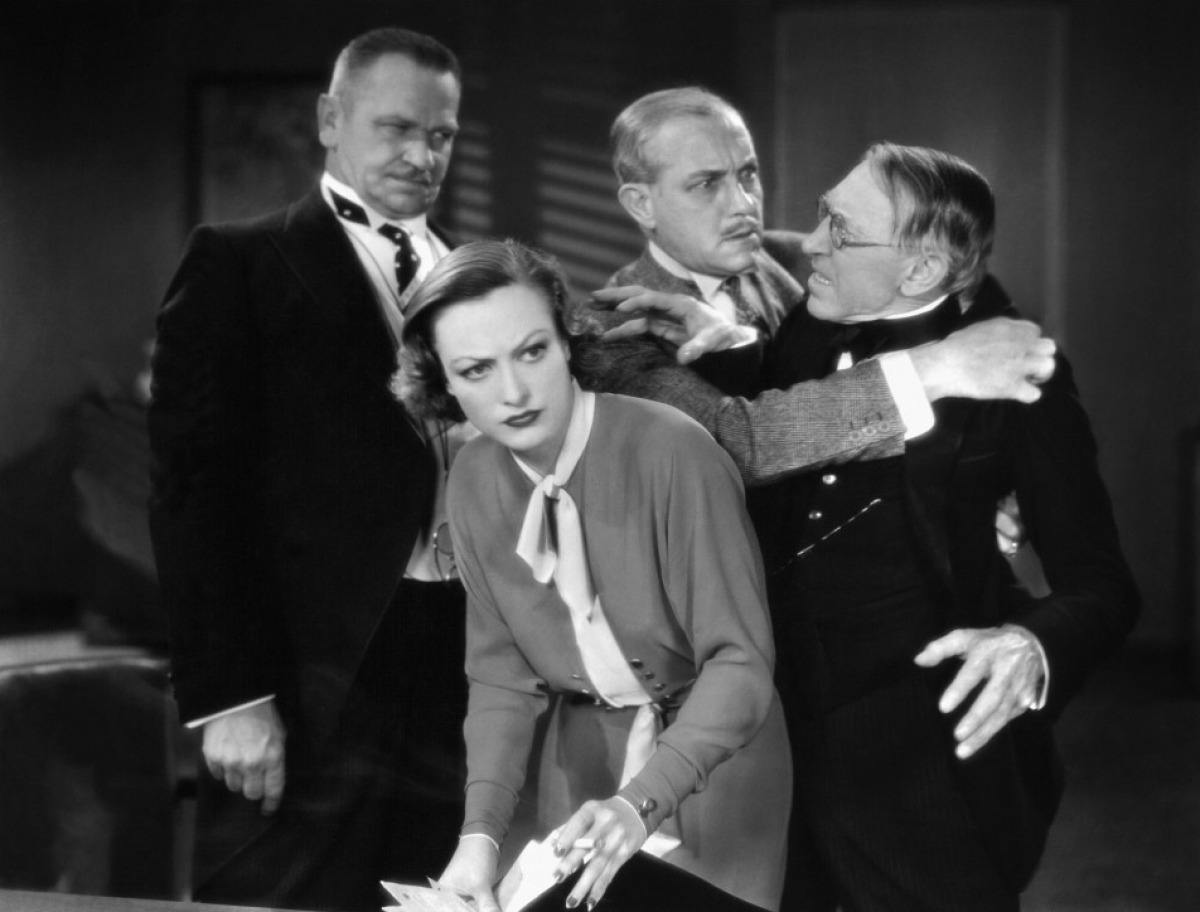
Grand Hotel follows five separate people as they all check into Berlin’s Grand Hotel.  They all have their own lives, their own secrets, and their own dreams.  As the film plays out, these five people will wander in and out of each other’s stories.  Seeing as how this was an MGM film and MGM always promoted itself as being the most glamorous studio in 1930s Hollywood, it’s not surprising that these five characters are played by five of the biggest stars that the studio had under contract.

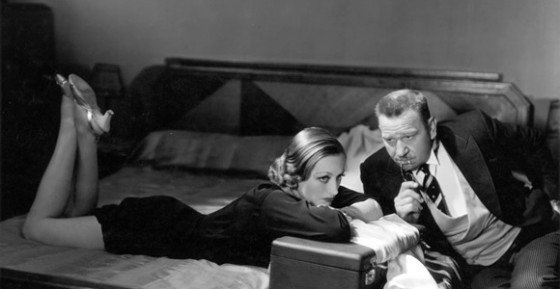
There’s Flaemmchen (played by Joan Crawford), an aspiring actress who, when we first meet her, appears to be willing to do anything in order to advance her career.  Whenever I watch Grand Hotel, I’m also surprised by how good Joan Crawford is here.  Crawford has become such an iconic character of camp that we tend to forget that she actually was a pretty good actress.  In Grand Hotel, she is perfectly cast as someone who is not quite as amoral as she wants the world to believe.

There’s Preysing (played by Wallace Beery), a greedy industrialist who hires Flaemmchen to be both his administrative assistant and his mistress as well.  Considering that the film is set in Germany, its’ easy to view Preysing as a symbol of the fascism that was sweeping across Europe in the 30s.  I don’t know if that was the intention of the filmmakers but it’s impossible to deny that Preysing is a pretty unlikable character, the type of greedy brute who inspires otherwise intelligent people to do things like run off and join Occupy Wall Street.

Crawford and Beery

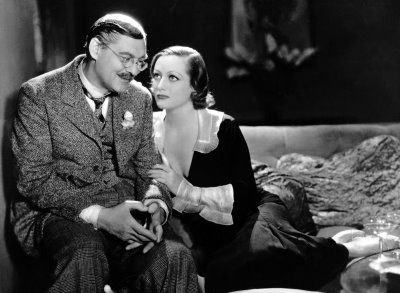
Far more likable is Otto Kringelein (Lionel Barrymore), a meek accountant who used to work for Preysing.  Kringelein is terminally ill and has basically come to the Grand Hotel so that he can at least enjoy a little bit of luxury before he dies.  At the hotel, he meets and falls in love with Flaemmchen.  Lionel Barrymore is so likable here that it’s hard to believe that he would later be best known for playing evil Mr. Potter in It’s A Wonderful Life. 

Barrymore and Crawford

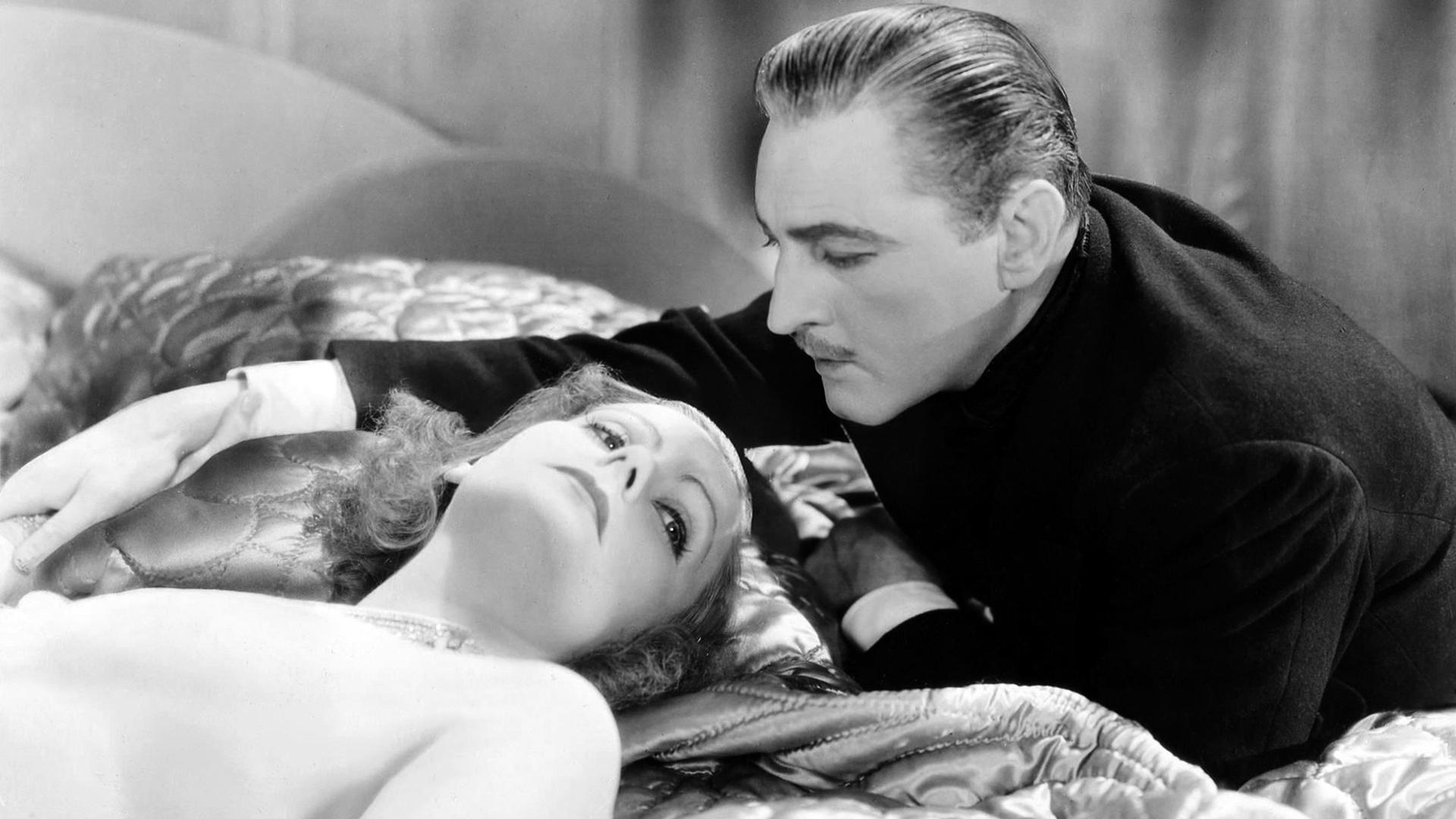
Otto also meets Baron von Giegern (John Barrymore), a penniless nobleman who supports himself as a gambler and an occasional jewel thief.  If you needed proof that this film was made before the enforcement of the strict Production Code began, just consider that the Baron, despite being a criminal, is also the moral center of the film.  John Barrymore gives a charismatic and wonderfully theatrical performance.  The scenes where he and his brother Lionel play off of each other are some of the best in Grand Hotel.

And finally, there’s my favorite of all the characters — Grusinskaya (Greta Garbo), the Russian ballerina who famously says, “I want to be alone.”  She checks into the hotel to try to escape the world and during her stay, she meets and falls in love with the Baron.  Grusinskaya is the character that I most related to, because we’re both dancers and I sometimes want to be left alone as well.

Barrymore and Garbo

I love Grand Hotel!  How couldn’t I?  The costumes, the sets, the actors, the glamour, the melodrama … what’s not to love!?  Incidentally, compared to a lot of other film melodramas from the early 30s, Grand Hotel actually holds up as pure entertainment.  The film moves quickly, much of the dialogue is still sharp and witty, and all of the actors are perfectly cast.  Curiously, Grand Hotel only received one Oscar nomination, for best picture.  However, it’s not surprising that it also won the only award that it was nominated for.

Grand Hotel has been described as being the first ensemble film.  I don’t quite agree with that because, even though it features a large cast and several intersecting storylines, you never forget the fact that you’re essentially watching a bunch of film stars sharing scenes with other film stars.  Eight decades after the film was made, the star power of Garbo, the Barrymores, Joan Crawford, and even Wallace Beery still continues to shine through and, to a large extent, your reaction to the film’s characters is pretty much the same reaction that audiences in the 1930s had to the public personas of the actors playing them.  But, and here’s the thing — it doesn’t really matter.  MGM made Grand Hotel to celebrate star power and, when you’ve got stars like these, can you blame them?

Grand-Hotel-4

And here’s the Cannes Teaser for Foxcatcher!


Speaking of Cannes, Bennett Miller’s Foxcatcher has also been shown at the festival and it got a far more positive reaction than Lost River.  Below is the teaser that was released to coincide with its Cannes premiere.

I think everyone is pretty much assuming that both Foxcatcher and Steve Carell are going to be nominated for Oscars.  The big question, right now, seems to be rather Mark Ruffalo or Channing Tatum will join the list of nominees.  I’m also going to be keeping an eye on Vanessa Redgrave, who has a small role as Carell’s mother.  After all, a Redgrave nomination would be a chance for the Academy to honor a respected actress who might not be appearing in many more films.

(As well, it would be a perfect excuse to get Franco Nero to come to the ceremony!)

As for the trailer below — if nothing else, this movie looks intense.  It’s interesting to see Carell in such a dark role but I fully believe that he’s capable of pulling it off.

Here Are The 19 Films Eligible To Be Nominated For Best Animated Feature


DM2

Oscar season continues!  The Academy today released it’s list of the films that are eligible for Best Animated Feature.  Here are the 19 films that are in the running.

Per Academy Rules, no less than two  and no more than 5 of these films will ultimately be nominated.

Cloudy with a Chance of Meatballs 2
The Croods
Despicable Me 2
Epic
Ernest and Celestine
The Fake
Free Birds
Frozen
Khumba
The Legend of Sarila
A Letter to Momo
Monsters University
O Apóstolo
Planes
Puella Magi Madoka Magica the Movie — Rebellion
Rio: 2096 A Story of Love and Fury
The Smurfs 2
Turbo
The Wind Rises

despicable-me-2-minions-spinoff-movie-universal

Lisa Marie Reviews The Oscar-Nominated Films: Mutiny on the Bounty (dir. by Lewis Milestone)


Mutiny_On_The_Bounty_1962_1

Previously, I reviewed the 1935 Best Picture winner Mutiny on the Bounty, a film that still stands as one of the best adventure films ever made.  However, this was not the only film made about the Bounty to be honored with several Oscar nominations.  In 1962, another version of Mutiny on The Bounty was released and, like its predecessor, received a nomination for Best Picture of the year.  However, while the 1935 Mutiny on the Bounty remains one of the most entertaining films ever made, the 1962 Mutiny on the Bounty is a mess.

As in the 1935 version of the story, we once again follow the HMS Bounty as it sails from England to Tahiti.  Again, the ship’s captain is the tyrannical Capt. Bligh (Trevor Howard) and again, the eventual mutiny is led by Fletcher Christian (Marlon Brando).  While the 1935 version presented Christian as the unquestioned leader of the mutiny, this version features an indecisive Christian who is goaded into leading the mutiny by a seaman named John Mills (Richard Harris).  Whereas the 1935 Fletcher Christian never regretted his decision, the 1962 version seems to regret the mutiny from the moment it occurs and literally spends the rest of the film trying to get the mutineers to agree to return to England with him.

Perhaps the biggest difference between the two versions of Mutiny on the Bounty is that the 1935 version was a 2-hour film that felt shorter while the 1962 remake lasts 3 hours and 15 minutes (including intermission) and feels even longer.  The 1962 version was made at a time when Hollywood was attempting to counteract the influences of European art films and American television by making films that were a thousand times bigger then they needed to be.  Whereas the 1935 Mutiny on The Bounty was all about telling the story as efficiently as possible, the 1962 Mutiny on the Bounty was about telling audiences, at every possible moment, that they couldn’t see anything like this on television or in some French art film.  Audiences in 1962 may very well have been amazed by the endless shots of Tahitians dancing and the Bounty rocking on the ocean but, for modern audiences, the entire film just feels incredibly slow and padded.

Another major difference between the two versions of Mutiny on the Bounty is that Marlon Brando, to be charitable, was no Clark Gable.  Much as Clark Gable could never have been a credible Stanley Kowalski or Vito Corleone, Brando could never have been a convincing Fletcher Christian.  Whereas Gable played Christian as the epitome of masculinity, Brando’s internalized, method approach serves to turn the character into something of a wimp.  It doesn’t help that Brando’s twangy attempt at an English accent sounds like every bad Monty Python impersonation that’s ever been heard in a college dorm room.

The 1962 Mutiny on the Bounty was a notoriously troubled production.  Marlon Brando was reportedly bored with the role of Fletcher Christian (which might explain why he gave such an eccentric performance) and he reportedly used his star status to demand and make constant changes in the script.  The film’s original director, Carol Reed, reportedly quit over frustration with Brando and was replaced by Lewis Milestone.  Milestone, a veteran director who had started his career during the silent era, proved just as ineffectual when it came to controlling Brando.  By the end of the film, Richard Harris was literally refusing to film any scenes opposite Brando.  The end result was that the film went wildly over schedule and over budget.

Despite being reviled by even contemporary critics, Mutiny on the Bounty received seven Oscar nominations, including Best Picture.  The nomination was a triumph for the studio system as MGM reportedly directed all of its employees to vote for the film. That may have been enough to win Mutiny a nomination for best picture but the actual Oscar went to Lawrence of Arabia.

Let’s Second Guess The Academy: 1994 Best Picture


For this week’s edition of Let’s Second Guess the Academy, let’s consider the contest for Best Picture of 1994.

The Academy nominated Forrest Gump, Four Weddings and a Funeral, Pulp Fiction, Quiz Show, and The Shawshank Redemption.  Ultimately, they named Forrest Gump the best picture of 1994. 

Were they right?

Also, which five films would you have nominated for best picture if the five actual nominees had not been options?  Again, you can vote for up to five films.

The 2010 Oscars: Best Documentary: The Toadsuckers Are Narrowing It Down


Here’s some more news from the toadsuckers and dumbfugs who make up the Academy of Motion Pictures Arts and Sciences.  These are the people who give out the Academy Awards and who continue to insist that Crash, Titanic, Gladiator, Braveheart, Gandhi, The Sound of Music, Rocky, American Beauty, The Greatest Show on Earth, and How Green Was My Valley were all great films.  Yes, those people.

Anyway, along with giving out Oscars for best picture, best director, and all the other awards that the general public actually cares about, the Academy also gives out an Oscar for Best Documentary Feature.  Occasionally, this category does get some notice.  For instance, there’s always the chance that Michael Moore will win another Oscar and start foaming at the mouth like a rabid dog again and Al Gore might give another award-winning power point presentation in the near future.  But for the most part, most people just see Best Documentary as just another roadblock on the journey between Best Supporting Actress and Best Picture.

Which is a shame because Best Documentary is usually a pretty fun category to try to predict.  Since hardly anyone has seen (or heard) of the majority of the nominees, you can simply pick one at random, say something vaguely serious-sounding about it, and people will assume that you’re far smarter than you ever possibly could be.  For me, the best thing about the documentary category is that, since you’ll probably never actually see most of the films nominated, your final opinion on the winner is often based on the acceptance speech.  If the documentarian gives a funny or sentimental speech then suddenly you realize that Gabby: The Girl Who Could Have Been is the greatest freaking documentary ever made.  And if his speech is strident or angry or boring then you’ll spend the next week wondering how the Academy could ever honor a piece of trash like Pelosi: Amazon From The Bay.

Anyway, the Documentary Branch of the Academy announced the 15 finalists for the Oscar for Best Feature-Length Documentary of 2010.  From these 15, the final five nominees will be determined.

Here’s the list:

“Client 9: The Rise and Fall of Eliot Spitzer,” Alex Gibney, director (ES Productions LLC)
Enemies of the People,” Rob Lemkin and Thet Sambath, directors (Old Street Films)
Exit through the Gift Shop,” Banksy, director (Paranoid Pictures)
Gasland,” Josh Fox, director (Gasland Productions, LLC)
Genius Within: The Inner Life of Glenn Gould,” Michele Hozer and Peter Raymont, directors (White Pine Pictures)
Inside Job,” Charles Ferguson, director (Representational Pictures)
The Lottery,” Madeleine Sackler, director (Great Curve Films)
Precious Life,” Shlomi Eldar, director (Origami Productions)
Quest for Honor,” Mary Ann Smothers Bruni, director (Smothers Bruni Productions)
Restrepo,” Tim Hetherington and Sebastian Junger, directors (Outpost Films)
This Way of Life,” Thomas Burstyn, director (Cloud South Films)
The Tillman Story,” Amir Bar-Lev, director (Passion Pictures/Axis Films)
Waiting for ‘Superman’”, Davis Guggenheim, director (Electric Kinney Films)
Waste Land,” Lucy Walker, director (Almega Projects)
William Kunstler: Disturbing the Universe,” Emily Kunstler and Sarah Kunstler, directors (Disturbing the Universe LLC)      

If Exit Through the Gift Shop (which is currently my choice for the best film of 2010) had failed to appear on this list, I would have thrown a fit.  Luckily, there it is.  Will it make the final five?  It better.

As for the other finalists, I’ve only seen Restrepo and Waiting for Superman and they’re both deserving of at least a nomination.  However, I’m hoping that the film about William Kunstler gets a nomination just because I’m hoping that whoever presents the award this year will mispronounce Kunstler and get the Academy broadcast fined by the FCA.

It’s also interesting to note that I’ve probably gone to more documentaries this year than any other.  And yet, I’ve only seen 3 of the 15 finalists.  Certainly, I guess I could go see Inside Job this weekend but do I really need a documentary to tell me that the economy is fucked up?  Seriously.  The trailer — featuring Matt Damon interrogating a bunch of Wall Street types — just comes across as being incredibly smug.  Client 9 should be opening up down here in Dallas pretty soon as well and I’ll probably see it but I’m not going to cry if I miss the opportunity to spend two hours with Eliot Spitzer.

To me, the best documentaries of 2010 include — along with Restrepo, Waiting for Superman, and Exit Through The Gift Shop (the best film of 2010, did I mention that?) — Winnebago Man, Joan Rivers: A Piece of Work, The Best Worst Movie, and (arguably) Catfish

The toadsuckers disagree.