It would be hard to overstate how much I loved THE KARATE KID (1984) when I was growing up. The movie came out when I was 10 years old, and I think it would be fair to say that I wanted to be the karate kid. I was a scrawny little runt, and the whole storyline about getting the better of the big bullies appealed to me. Ralph Macchio and Pat Morita will always be special to me because of their roles as Daniel LaRusso and Mr. Miyagi. It’s also fair to say that my very first movie crush was Elizabeth Shue. I thought she was so beautiful as “Ali with an I,” and I still do!
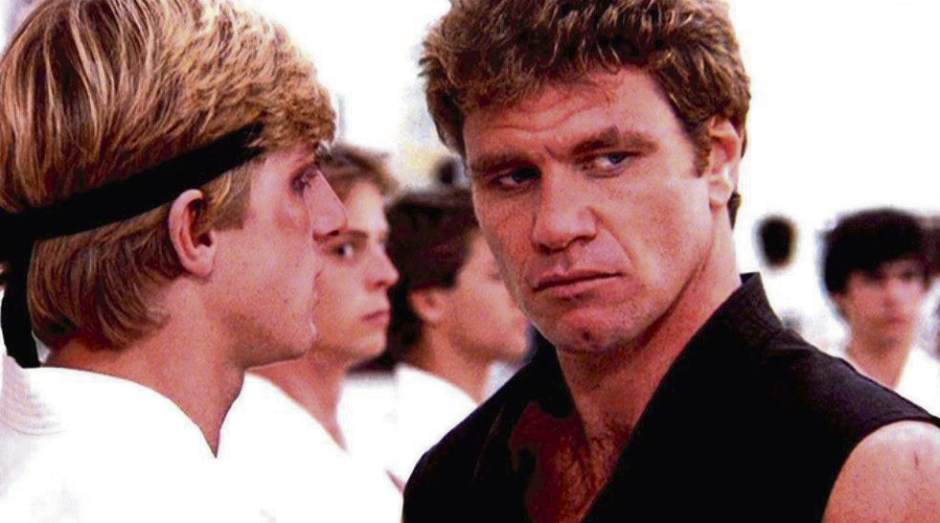
It was so easy to hate Johnny Lawrence (William Zabka) and his band of bullies. The show, COBRA KAI, has finally helped me get over my anger at them. And then there’s Martin Kove as John Kreese, the head of that snake that was cobra kai. He is such an asshole in the movie! When I saw it was his birthday, I had an excuse to share one of my favorite scenes in cinema!
4 Shots From 4 Films is just what it says it is, 4 shots from 4 of our favorite films. As opposed to the reviews and recaps that we usually post, 4 Shots From 4 Films lets the visuals do the talking!
103 years ago, on this date, Pier Paolo Pasolini was born in Italy. His controversial films and his mysterious death continue to inspire debate to this very day. Both the man and his works were full of intriguing contradictions. Pasolini was an atheist who made one of the best Biblical films ever made. He was a communist who made films that celebrated individual freedom and who had little use for the upper class liberals who made up much of the European counterculture of the 1960s. In the end, he was an artist unafraid to challenge all assumptions, whether they were found on the right or the left. His final film, Salo, was the most controversial of his career. It was also projected to be the first part of a trilogy, though those plans were ended by Pasolini’s murder.
It’s time for….
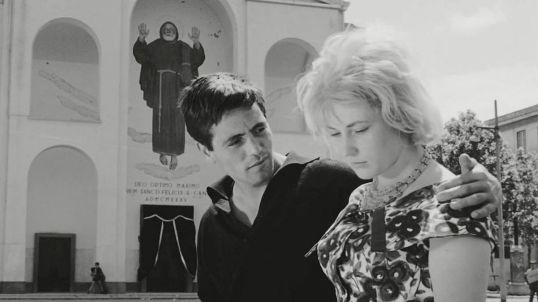
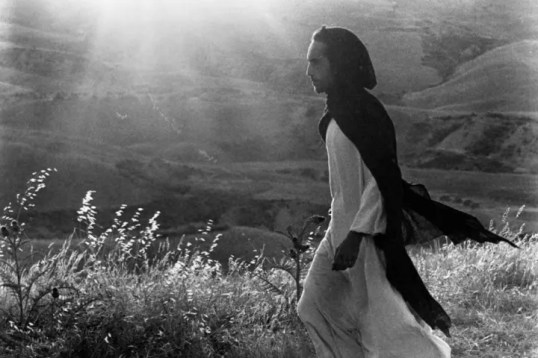
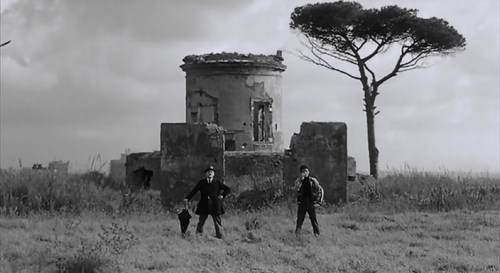
4 Shots From 4 Pier Paolo Pasolini Films
Accatone (1961, dir by Pier Paolo Pasolini, DP: Tonino Delli Colli)
The Gospel According To St. Matthew (1964, dir by Pier Paolo Pasolini, DP: Tonino Delli Colli)
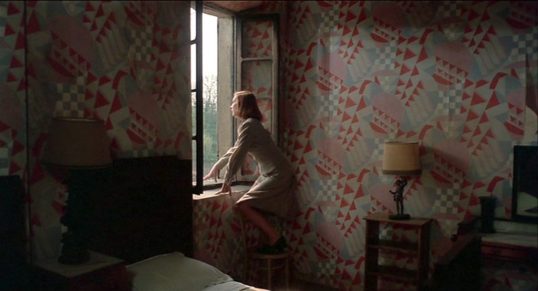
The Hawks and The Sparrows (1966, dir by Pier Paolo Pasolini, DP: Mario Bernardo and Tonino Delli Colli)
Salo (1975, dir by Pier Paolo Pasolini, DP: Tonino Delli Colli)
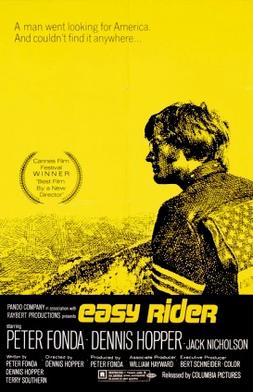
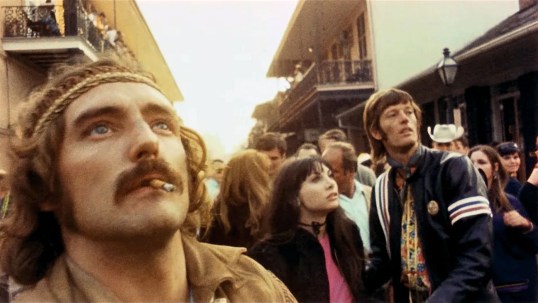
For today’s scene that I love, here is the Mardi Gras sequence from 1969’s Easy Rider. Featuring Peter Fonda, Dennis Hopper, Karen Black, and Toni Basil walking through the streets of New Orleans, this scene was actually filmed during Mardi Gras. Those are real Mardi Gras floats and real Mardi Gras participants staring at the camera. That’s an actual citizen of New Orleans with whom Dennis Hopper appears to have nearly gotten into a fight. Personally, I relate to Toni Basil in this scene. She is having a good time no matter what!
I just love how Toni Basil can’t help but dance, no matter what.
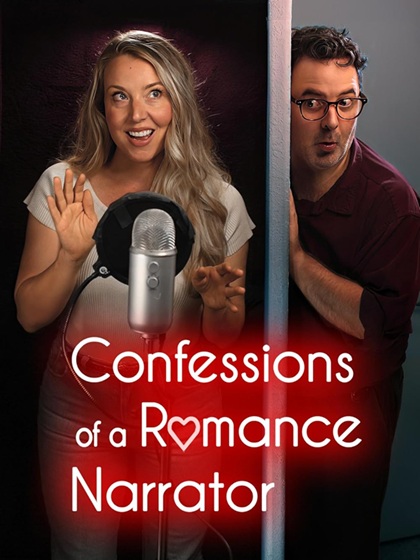
Confessions of a Romance Narrator introduces us to Jasalyn (played by the film’s director, April Grace Lowe).
Jasalyn is a romance audio book narrator, spending her time in her closet with a microphone and reading aloud the chapters of books that depict the type of romances that everyone dreams about but rarely experiences. Jasalyn works hard, trying to make sure that each narration is perfect. She comes up with a different voice for each character. She video chats with her acting coach and, together, they practice the perfect “O” sound while her new upstairs neighbor listens with his pressed to the floor. Jasalyn pines for a co-worker, an egotistical narrator named Richard (Cody Roberts) who doesn’t feel the need to do individual voices for each character because he has …. THE VOICE! And you know what? From the minute that Richard first appeared, I knew he wasn’t good enough for Jasalyn but I probably would have fallen for him too because damn, that man has a sexy voice.
The film’s a comedy so it’s not a surprise that things rarely seem to go Jasalyn’s way. An attempt to leave a flirty message for Richard leads to an author thinking that Jasalyn isn’t professional enough to narrate her book. (Richard, of course, didn’t listen to the message.) Her attempts to look perfect for a facetime call with Richard only leads to Richard calling her back while she’s in the middle of eating a chocolate cake. Her upstairs neighbor (Craig Jessen) is a bit noisy and plays the ukulele. Convinced that Jasalyn is a sex worker, he’s thrilled when she comes up to his apartment to complain about the noise. From the minute we see Jasalyn opening and closing her closet as she attempts to meet an all-important deadline, we know that there’s no way this movie is going to end without featuring her somehow getting trapped in the closet while only wearing a towel. And the movie doesn’t let us down. It’s a lot to happen to one person but, by the end of the movie, you’re convinced that it is something that could all happen to Jasalyn. We’ve all had a friend like Jasalyn. A lot of us have been her at some point in our lives.
Confessions of a Romance Narrator is a breezy and likable 78 minute film, one that examines the life of a romance narrator and includes enough small details that you’re left with no doubt that the film knows what it’s talking about. There are two types of romance narrators, the film tells us in voice-over, those who stand and those who sit. Jasalyn stands but her mom thinks that she sits and sends her a hemorrhoid pillow for her birthday. And, from the minute we see it arrive, we know her loud neighbor is going to be the one to grab it and take it up to her apartment. It’s a bit predictable but it’s cute, much like the film itself. April Grace Lowe gives a likable performance as Jasalyn. The film is, I believe, edited together from a series of 10-minute short films that Lowe made about the character. It’s a likable movie. Much like a good romance novel, it’s fun, quick, and satisfying.
4 (or more) Shots From 4 (or more) Films is just what it says it is, 4 (or more) shots from 4 (or more) of our favorite films. As opposed to the reviews and recaps that we usually post, 4 (or more) Shots From 4 (or more) Films lets the visuals do the talking.
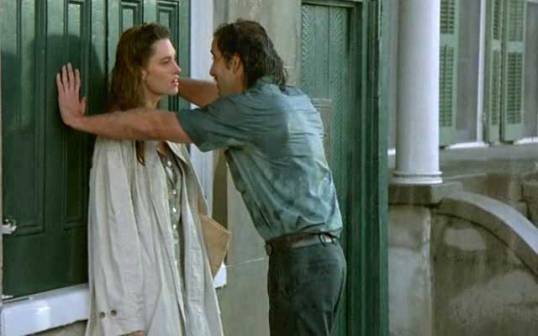
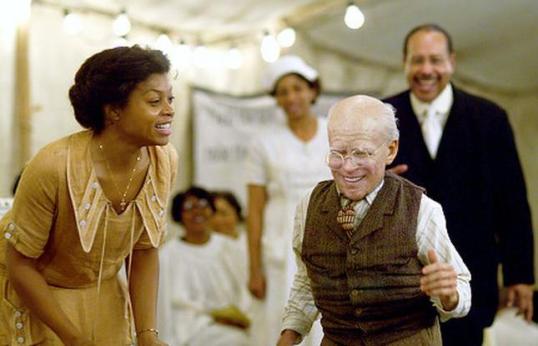
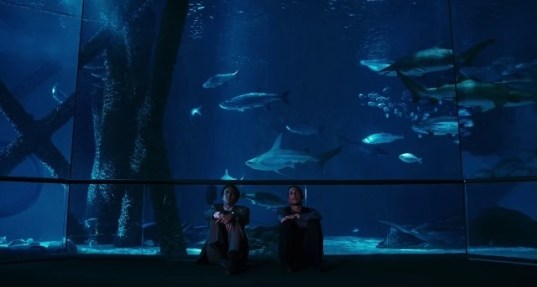
Today, the Shattered Lens pays homage to the greatest of Mardi Gras cities, New Orleans!
4 Shots From 4 New Orleans-Set Films
Easy Rider (1969, dir by Dennis Hopper, DP: Laszlo Kovacs)
Zandalee (1990, dir by Sam Pillsbury, DP: Walt Lloyd)
The Curious Case of Benjamin Button (2008, dir by David Fincher, DP: Claudio Miranda)
Bad Lieutenant: Port of Call New Orleans (2009, dir by Werner Herzog, DP: Peter Zieitlinger)
I was a bit shocked to discover that I’ve neve actually sat down and written up a real review of 1979’s Mad Max for this site. Considering how much I like this film and all the scenes and shots that I’ve share from Mad Max, you would think that I would have at least written about why I like this violent but intriguing film so much. Today is George Miller’s birthday so let’s talk about the film that launched his career.
Mad Max is often described as being a post-apocalypse film but that’s not quite true. It does take place in a “near future,” one in which there seems to be noticeably less people around. The roads of Australia are dominated by crazed punks who have taken their obsession with their cars and motorcycles to the extreme. (Director George Miller trained as a doctor and has said that this film was partially inspired by the auto crash victims who were brought into the emergency room on a nightly basis.) Civilization is on the verge of collapsing but it is still hanging on by a thread. For every Night Rider (Vincent Gil), ranting as he crashes into people, and for every psycho gang leader like Toecutter (Hugh Keays-Byrne), there are people just trying to survive day-to-day. The nightly news is still televised though the news is always so bad that no one seems to pay it much mind anymore. There are still cops, like Max Rockatansky (Mel Gibson) and Goose Rains (Steve Bisley), who patrol the roads in their cars and who do whatever is necessary to chase down the people who appear to be destined to inherit a world that they very much want to destroy. Society still exists but it’s obviously on its last legs and the attempts to maintain some sort of normalcy — laws, news, vacation homes, sexy saxophone playing — can’t hide the fact that the world is coming to a violent end. Max tries to deny that reality until, finally, he has no choice but to accept both the new world and his place in it.
Whenever I watch Mad Max, I’m always surprised by the fact that Mel Gibson almost seems like a supporting character for the majority of the movie. When the movie starts, Max is tightly wound and in control and he doesn’t show much emotion while he’s on the job. The flamboyant and always joking Goose seems like a much more likable protagonist. He’s the guy that the viewer wants to spend time with and, when he ends up getting burned nearly to death by Toecutter and Toecutter’s protegee, Johnny the Boy (Tim Burns, cast as one of the most loathsome characters ever to appear in a film), it’s a shocking moment. Goose had so much life to him. The attention then shifts to Max’s wife, Jessie (Joanne Samuel). When she finds herself being menaced by Toecutter and his gang, it’s alarming because she’s both a mother and she’s eventually isolated from both her family and from Max. We don’t want to see anything bad happen to Jessie. When something bad does happen, we’re more than ready for Max to step up and get some vengeance. And that’s exactly what Max does. One of the film’s most iconic images features Max not even flinching at the sound of an explosion in the distance. He’s gotten his vengeance but at the price of his soul. And, even as the film comes to an end, it’s obvious that nothing can be done to stop society’s collapse. Max has accepted what neither Goose nor Jessie could. There is no safety or society in the new world. There is only the road and the battle to control the remains of the world.
What makes Mad Max such a thrilling film? A lot of it has to do with the stuntwork, which remains truly spectacular to this day. Made in the era before CGI, Mad Max features real cars that are being driven by real people who put themselves into real danger to capture some of the most stunning crashes captured on film. As well, the cast truly brings their characters to life. Tim Burns makes Johnny the Boy into a truly hateful character, one who manages to somehow be both whiny and dangerous at the same time. Joanne Samuel and Steve Bisley are sympathetic as Jessie and Goose. And then you’ve got Mel Gibson, young and on the verge of the superstardom that people now tend to pretend never happened, showing the intensity that would become his trademark as the increasingly unhinged Max. (I love Tom Hardy but, as good as he was in Mad Max: Fury Road, he never came close to capturing the soul-shattering intensity of Gibson’s thousand-yard stare,)
That said, I think the main reason why Mad Max continues to resonate is because it all feels so plausible. One looks at the world of Mad Max and it’s very easy to imagine finding yourself there. Unlike other apocalypse films that often seem to be taking place in an entirely different universe, Mad Max feels like it could be playing out just a few miles away from the closet motorway. For all of the spectacular stunts and flamboyant characters, Mad Max is a film that continues to feel very real. For that, George Miller deserves a lot of credit. Mad Max is a true classic of grindhouse filmmaking, featuring a story that feels more powerful with each passing year.
As some of our regular readers undoubtedly know, I am involved in hosting a few weekly live tweets on twitter and occasion ally Mastodon. I host #FridayNightFlix every Friday, I co-host #ScarySocial on Saturday, and I am one of the five hosts of Mastodon’s #MondayActionMovie! Every week, we get together. We watch a movie. We snark our way through it.
Tonight, for #MondayActionMovie, the film will be 1994’s Tough & Deadly!
It should make for a night of fun viewing and I invite all of you to join in. If you want to join the live tweets, just hop onto Mastodon, pull up Tough & Deadly on YouTube, start the movie at 8 pm et, and use the #MondayActionMovie hashtag!
Today’s scene of the day comes from the original Mad Max, directed by George Miller and starring Mel Gibson as Australia’s favorite apocalypse survivor. In this scene, Max — who is still trying to be a servant of law and order — chases The Night Rider!
The Night Rider has become a bit of a fan favorite, which is saying something for someone who really isn’t in the film for that long. As Mad Max takes place before the total collapse of civilization, it’s temping to see The Night Rider as a harbinger, letting Max and his other police colleagues know what the future for holds all of them.
4 (or more) Shots From 4 (or more) Films is just what it says it is, 4 (or more) shots from 4 (or more) of our favorite films. As opposed to the reviews and recaps that we usually post, 4 (or more) Shots From 4 (or more) Films lets the visuals do the talking.
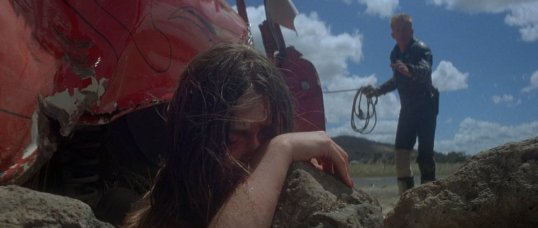
Today the Shattered Lens wishes a happy birthday to one of our favorite people, George Miller! The doctor-turned-director began his cinematic career with 1979’s Mad Max and he’s gone on to become one of the most influential and important filmmakers out there. In honor of George Miller’s birthday, here are….
4 Shots From 4 George Miller Films
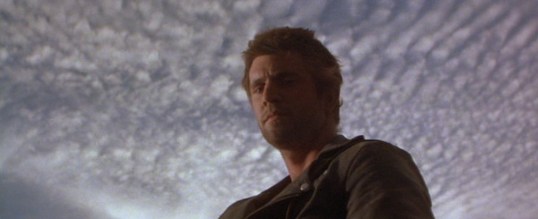
Mad Max (1979, dir by George Miller, DP: Dave Eggby)
The Road Warrior (1981, dir by George Miller, DP: Dean Semler)
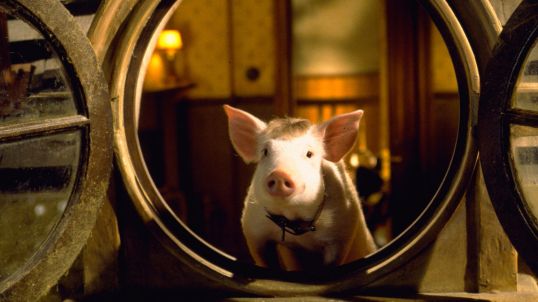
Babe: Pig In The City (1998, dir by George Miller, DP: Andrew Lesnie)
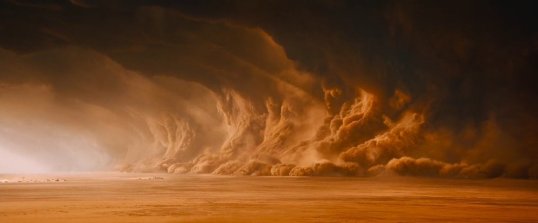
Mad Max: Fury Road (2015, dir by George Miller, DP: John Seale)
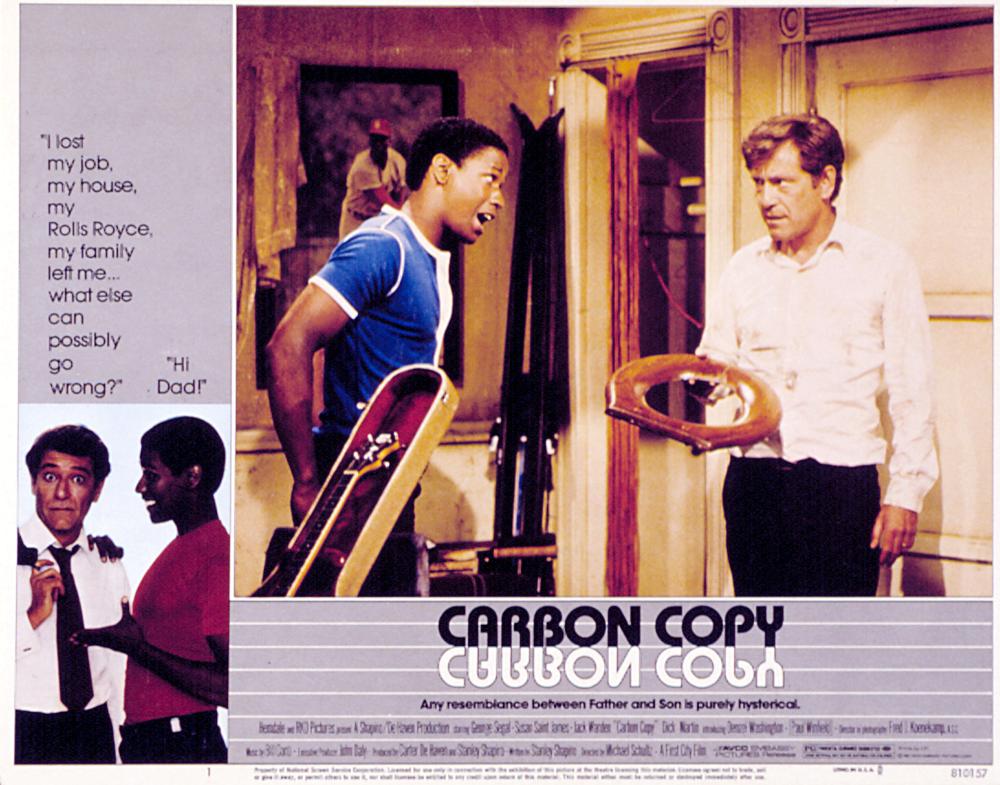
Every Monday night at 9:00 Central Time, my wife Sierra and I host a “Live Movie Tweet” event on X using the hashtag #MondayMuggers. We rotate movie picks each week, and our tastes are quite different. Tonight, Monday March 3rd, we’re watching CARBON COPY starring George Segal, Susan Saint James, Jack Warden, Dick Martin, Paul Winfield, and “introducing” Denzel Washington.
CARBON COPY is the story about a rich, white corporate executive (George Segal) who finds out that he has an illegitimate black son (Denzel Washington). This creates a variety of issues for him at home, at work, and in his social circles.
Although CARBON COPY was chosen by Sierra, I’m looking forward to watching it for the first time for several reasons:
This is the theatrical film debut of one of the all-time great actors in Denzel Washington. Everyone has to start somewhere, and it will be interesting to see Denzel at the very beginning.
George Segal starred in a movie with Rod Steiger called NO WAY TO TREAT A LADY (1968). My dad used to always tell me about this movie. I bought it on DVD and added it to my collection simply because my dad loved it. I even took it to their house one year for our annual Christmas celebration so we could watch it together. That doesn’t have anything to do with CARBON COPY, but it’s always given me a reason to appreciate Segal.
George Segal reportedly turned down the lead role in the film ARTHUR (1981) in order to make CARBON COPY. I enjoyed ARTHUR when I watched it growing up. It will be interesting to see how the two films compare.
Director Michael Shultz also directed movies like COOLEY HIGH (1975), CAR WASH (1976), GREASED LIGHTNING (1977), WHICH WAY IS UP (1977), and BUSTIN’ LOOSE (1981) leading up to CARBON COPY. It will be interesting to see how he handles the material.
So, join us tonight for #MondayMuggers and watch CARBON COPY! It’s on Amazon Prime.
 Through the Shattered Lens