Film Review: Dirty Harry (dir. by Don Siegel)


“Dirty Harry is obviously just a genre film but this action genre has always had fascist potential and it has finally surfaced…Dirty Harry is a deeply immoral movie.” — Pauline Kael

“It’s not about a man who stands for violence.  It’s about a man who can’t understand society tolerating violence.” — Clint Eastwood

I decided that I wanted to review the Dirty Harry film franchise about two seconds after Clint Eastwood finished giving his speech at the Republican National Convention last month. 

It had nothing to do with the politics of Eastwood’s speech because, quite frankly, I think a good film is a work of art and art is always more important than politics.  Instead, as I watched Eastwood give his speech, I was reminded that Clint Eastwood is about as close to a living icon as we have in America.  There aren’t many actors who could get away with giving a speech to an empty chair and, despite the predictable outraged tweets from Roger Ebert, Eastwood is one of them.  And, if Eastwood is an icon, Harry Callahan is perhaps the most iconic role of his career.

Now, I have to admit that, as I started this project, I knew more about Harry Callahan as a character than I did about the films he had actually appeared in.  I had seen both Dirty Harry and The Dead Pool because, for whatever reason, they both seem to turn up on AMC every other week.  I knew that Harry Callahan was a police inspector who was based in San Francisco.  I knew that he was willing to go to extremes when it came to fighting criminals.  I knew that, in his first film appearance, Harry had a really impressive head of hair that had pretty much vanished by the time that he reached his final appearance in The Dead Pool.  And, finally, I knew that, at some point in the film series, Harry growled the line, “Go ahead, make my day.”

So, for me, reviewing every film in the Dirty Harry franchise gave me a chance to discover why Harry has become such an iconic character and why people still ask Eastwood to repeat that “make my day” line.  When I started watching the films, Jeff warned me that the Dirty Harry films got worse as you went along and I discovered that, in many ways, he was right.  But I still enjoyed the experience and I hope that you enjoy reading my reviews over the next few days.

But, first things first.  Let’s take a look at the film that started the entire series, 1971’s Dirty Harry.

I have to admit that it’s a bit intimidating to try to review Dirty Harry because, quite frankly, what’s left to be said about this film?  It’s one of the most influential movies of all time. Any time you see a cop in a TV show or a movie getting yelled at by his superiors for not going “by the book,” it means that you’re watching a movie or an episode that is directly descended from Dirty Harry.  And yet, despite all the imitations, it’s a movie that remains as exciting and visceral today as when it was first released. 

Dirty Harry tells the story of two outsiders, two men who seem to exist solely to reveal the dark impulses of conventional society.  Both of these men are killers and both of these men are motivated by a rage against what they perceive society as being. 

One of these men calls himself Scorpio.  As played by Andy Robinson (who gives one of the definitive cinematic psycho performances here), Scorpio is a jittery mass of nerves, an unkempt man who wears a peace sign as a belt buckle but who also writes letters to the Mayor of San Francisco (played by John Vernon) in which he threatens to kill one innocent person a day unless he’s paid off.  When he first appears, he’s on a rooftop, aiming a rifle at an unaware woman in a swimming pool. At one point, the phallic barrel of rifle seems to be pointed directly at the camera (and by extension, at us in the audience).  When he fires the rifle, we see the mortally wounded woman silently sink under the water.  It’s a scene that still disturbs me every time I see it, one that establishes early on that we’re all potentially vulnerable to the Scorpios of the world.

In the next scene, we see San Francisco Police Inspector Harry Callahan (Clint Eastwood, of course) investigating the crime scene.  The difference between Harry and Scorpio is striking.  Whereas Scorpio is only calm while killing, Callahan inspects the crime scene (and goes through almost the entire film) without showing a hint of emotion.  While Scorpio looks like a madman, Callahan looks like a professional.  And yet, when Callahan foils a bank robbery (and delivers his famous “Do you feel lucky?” monologue to wounded bank robber played by Albert Popwell), it becomes obvious that he does have something in common with Scorpio.  They’re both willing to shoot to kill.  The only difference is that, as a police officer, Callahan is ostracized for his willingness to kill while Scorpio, as an American citizen, is protected by the U.S. Constitution.

It would be foolish to pretend that Dirty Harry isn’t a political film.  One need only watch the scene where a law professor explains to Harry why his pursuit and arrest of Scorpio violated Scorpio’s constitutional rights.  (The way that Eastwood snarls during this scene is priceless.)  As one can tell from the quote from Pauline Kael at the beginning of this review, Dirty Harry was a film that upset a lot of liberals when it was first released (much as Clint Eastwood’s empty chair speech managed to upset Roger Ebert).  However, as the years have passed, Dirty Harry has come to be acknowledged as a classic by critics on both sides of the political divide.

The success of Dirty Harry goes beyond politics.  I think any film students who aspires to direct an action film should be required to watch Dirty Harry a few dozen times before he graduates.  What makes the film work is not just what director Don Siegel does but what he doesn’t do.  As opposed to some of the later films in the franchise, Dirty Harry is a fast-paced film that tells its story with a minimum amount of padding.  It’s hard to think of a single scene that isn’t necessary to tell the story that the film wants to tell.  Even the oft-criticized scene where Harry, on a stake out, spies on some naked lesbians, works as a parallel to Scorpio’s own voyeurism at the start of the film.

Much as in a classic western, Harry and Scorpio are presented as two sides of the same coin.  Both of them are outsiders who refuse to follow the rules of society and the film’s violent and mournful climax is powerful precisely because, by this point, the audience understands that the Scorpios of the world can not exist without the Harrys and vice versa.

Along with generated a lot of controversy, Dirty Harry was a huge box office success.  Not surprisingly, a sequel would follow.

We’ll look at Magnum Force tomorrow.
Scenes That I Love: It’s Time To Change!


Since I previously shared two of my favorite scenes from The Brady Bunch Movie, I figured that today I would share one of my favorite scenes from 1996’s A Very Brady Sequel.  In this scene, the Brady kids abduct Tim Matheson and force him to take part in an elaborate musical number.

Enjoy!

The Daily Grindhouse: The Town That Dreaded Sundown (dir. by Charles B. Pierce)


Down here in Texas, we love our legends and the Phantom Killer is one of the most haunting.  In 1946, as American soldiers were returning from World War II and the country was looking forward to a future of peace and prosperity, an unknown killer stalked the moonlit streets of my former hometown of Texarkana, Texas.  (Technically, of course, Texarkana is located in both Texas and Arkansas.  In Texas, it’s usually assumed that the killer had to be from the Arkansas half of the town.)  From February until May, he attacked 8 people and killed 5 of them.  He stalked lovers who were parking at night and those that survived said that he hid his face underneath a white mask.  Despite the best efforts of both the Texas Rangers and the Texarkana police, the Phantom Killer was never captured and his reign of violence ended just as mysteriously as it began.

(My personal theory is that he ended up moving to California where he later became the Zodiac killer because, seriously, the two cases are so disturbingly similar.  Eventually, he left California and moved to Ohio and, living under a false name, he killed himself in 2002. )

When you read the facts of the Phantom Killer’s murder spree (not to mention all of the rumors and urban legends that have sprung up around the case), the main thing that jumps out at you is just how much it all truly does sound like a low-budget horror film.  Therefore, it’s not surprising to discover that, in 1976, the case served as the basis for just that.  What is surprising is just how effective The Town The Dreaded Sundown is.

The film was directed by Charles B. Pierce, an independent filmmaker who was based in Arkansas.  Pierce had previously directed The Legend of Boggy Creek, a “documentary” that was about the mysterious Bigfoot-like creature who is rumored to live in Fouke, Arkansas.  (Fouke, incidentally, is a town that my family briefly called home though none of us ever saw or heard any Bigfoots wandering about.)  Using the money that he made off of the Boggy Creek film, Pierce wrote, directed, and produced The Town The Dreaded Sundown.

Using the same technique that made The Legend of Boggy Creek such a success, Pierce filmed The Town That Dreaded Sundown on location in Texarkana and, along with established actors like Ben Johnson, Andrew Prine, and Tina Louise Dawn Welles, Pierce cast the film with local citizens.  When seen on screen, it’s obvious that these citizens are not professional actors.  However, what they may lack in talent they make up for authenticity.  (If nothing else, The Town That Dreaded Sundown is a rare Texas-set film in that it doesn’t feature any yankees butchering the dialect.)  The fact that the film is narrated by a grim-sounding narrator only adds to the film’s documentary-like feel.

Admittedly, the film does take some liberties with the story of the Phantom Killer but what’s important is that it’s accurate when it matters.  The film gets the basic facts correct and even the most outlandish of embellishments (such as a scene where the killer uses a trombone to kill one of his victims) don’t detract from the film’s power to frighten and disturb.  If nothing else, these feel like the type of details that one might spontaneously mention while telling an old ghost story.  Unlike a lot of “true crime” films, The Town The Dreaded Sundown never devotes too much time to trying to figure out the killer’s motives or drop hints as to his identity.  Instead, the film emphasizes the fact that the Phantom Killer could never be understood and was never stopped.  He simply existed, a malevolent force of evil.  This makes the film far more effective than it would have been if Pierce had spent the movie trying to explain that which can not be explained.

Unfortunately, The Town That Dreaded Sundown has never been released on DVD but it does show up occasionally on TCM.  Keep an eye out for it!

Scenes That I Love: Good Time Music!


For the past few days, I’ve been sharing some of my favorite scenes from two of my favorite movies from the 90s — The Brady Bunch Sequel (1995) and A Very Brady Sequel (1996).  I’m sure that some people would say that devoting that much time to two films that spoof a terrible show is a bit excessive.

But you know what?

Excess is underrated.

Before I close the book on this celebration of the Brady Bunch films, I wanted to share one more scene that I love.  In this scene from A Very Brady Sequel, the Bradys remind us that flying should be fun!

Enjoy some good time music!

The Daily Grindhouse: Chappaqua (dir. by Conrad Rooks)


At the risk of sounding like every other girl who has ever sat in a corner of Starbucks and spent a few hours writing emo poetry in her Hello Kitty notebook, I love the Beat Generation.  I’ve read all of Jack Kerouac’s novels, Allen Ginsberg’s poems, and William S. Burroughs’ cut-ups.  I’ve even tried to listen to the music of the Fugs and I just recently finished reading the very first Beat novel, John Clellon Holmes’ Go.  It was my interest in the Beats that led to me discovering Chappaqua.

Originally filmed in 1966 and released a year later, Chappaqua was produced, written, and directed by Conrad Rooks.  The son of the president of Avon, Rooks had a lot of money and a lot of addictions.  In 1962, Rooks checked into a European clinic where he detoxed and claimed to have been cured of his drug dependency through something called “sleep therapy.”  Chappaqua is based on his experiences both as a drug addict and a patient and, since Rooks was something of a hanger-on in the American underground art scene, the final film featured cameos from such counterculture figures as Allen Ginsberg and William S. Burroughs.

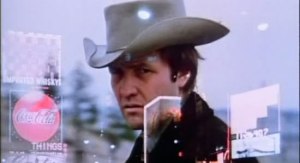
In the film, Rooks plays himself, a young man who is usually seen wandering aimlessly from one location to another.  The film is edited in such a way that you’re never quite sure where Rooks is going to be from one scene to another.  Most famously, the film’s opening features Rooks wandering across the countryside of Nebraska while images (and sounds) of New York’s 42nd Street are superimposed over his face.  Later on in the film, Rooks will just as abruptly turn up walking through the streets of India and meditating with a random guru.  Rooks, it quickly becomes apparent, is a man with no true home, a wanderer who seems to randomly alternate between being lost and being on a mission.

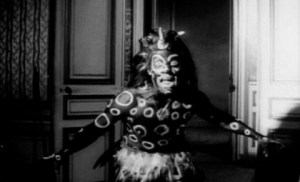
For most of the film, however, Rooks is in a small clinic outside of France.  Along with telling his doctor (played by Jean-Louis Barrault) about how he came to be addicted to drugs and alcohol, Rooks goes through withdrawal and has the surreal hallucinations that dominate the majority of the film.  During one hallucination, Rooks sees himself as a gangster gunning down a midget in a parking garage.  Then, suddenly, Rooks is no longer a gangster and instead, he’s a vampire speaking in an over-pronounced Transylvanian accent.   A druid appears and does a jig in the middle of the Stonehenge and a witch doctor shows up and starts to dance through the halls of the clinic.  Throughout it all, Rooks is haunted by the image of a stunningly beautiful woman (Paula Pritchett) in a white dress, kneeling by a placid lake.  Observing all of this is the menacing figure of Opium Jones (played by William S. Burroughs), who continually encourages Rooks to stay on drugs and who may, or may not, be a figment of Rooks’ imagination.

How to explain the odd (and occasionally frustrating) charm of Chappaqua.  This is truly a pretentious mess of a movie, full of symbolism that is both obvious and willfully obscure.  However, there’s a strange charm to the film’s pretension.  The film may not make much sense but it’s never incoherent.  Largely thanks to cinematographer Robert Frank, the visuals of the film are so strong and striking that they often provide the narrative drive that the film would otherwise lack.  Chappaqua is, ultimately, just a fascinating film to watch.

My main reason for enjoying and recommending Chappaqua, is that the film truly is a time capsule.  Both the film’s strengths and its flaws can be linked back to the fact that it was made in 1966.  It’s a true cultural artifact and, therefore, it is a must-see for anyone who is interested in either the Beats or the counter-culture that was indirectly descended from them.

A Very Late Film Review: Extremely Loud and Incredibly Close (dir. by Stephen Daldry)


Earlier this month, I finally found the time to see Extremely Loud and Incredibly Close, the critically reviled “prestige” picture that was the center of a minor scandal when it received an Academy Award nomination for best picture back in January.

That nomination, by the way, is the only reason that I made a point of DVRing the film when I saw that it was going to be on HBO.  I had already been turned off by the film’s trailer and the subject matter (a little kid trying to make sense of 9-11 by wandering around New York with a mute old man) seemed like the sort of thing that could only have been made effective by a Roberto Rossellini or a Vittorio De Sica.  Say what you will about director Stephen Daldry (and I think that both Billy Elliott and The Reader are excellent films), he’s not an Italian neorealist.  Extremely Loud and Incredibly Close seemed like just the film to bring out his worst instincts as a filmmaker.

Having now finally seen the film, I am sorry to say that my initial instincts were correct.  Extremely Loud and Incredibly Close is the type of film that gives a bad name to good intentions.  This is the type of film that you watch and you know that you should be touched by the subject matter but it just all feels so forced, heavy-handed, and ultimately quite empty.

The film tells the story of Oskar (played by Thomas Horn), a brilliant child who is also a bit abrasive and neurotic.  At one point, Oskar says that he’s been tested for Asperger syndrome but that the tests were “inconclusive.”  What’s interesting about this is that in the book that this film is based on, the possibility that Oskar might be autistic is never stated or even hinted at.  Instead, he’s just an abrasive kid and, to be honest, the film’s decision to make Oskar autistic feels less like characterization and more like narrative laziness.  It’s hard not to feel that the filmmakers introduced autism as a way to avoid dealing with the fact that Oskar (especially as played by Thomas Horn) is perhaps one of the most abrasive and annoying characters in film history.

Oskar’s life falls apart when his father, Thomas (Tom Hanks), is killed on 9-11.  He obsessively listens to the final 6 messages that his father left on the family’s answering machine, even while he hides those messages from his mother (Sandra Bullock).

A year later, Oskar is exploring his father’s closet and finds a vase that has an envelope in it.  Inside the envelope is a key and written on the envelope is the word “Black.”  Convinced that the key is a final message from his father, Oskar looks up the address of every single person in New York whose last name is Black and sets about tracking each one of them down and demanding to know if they knew his father.  Eventually, he’s joined in his quest by a sad-eyed mute (Max Von Sydow) who lives with Oskar’s grandmother.

Extremely Loud and Incredibly Close is based on a novel and the film’s central idea — that Oskar’s quest is his way of trying to make some sort of sense out of the September 11th terrorist attacks — is one that works better as a literary metaphor than as an actual story.  While Oskar’s quest might seem poignant on paper, it becomes narcissistic and rather insensitive when seen on film.  You find yourself wondering why so many New Yorkers are willing to let this obnoxious and rather annoying little brat into the homes, especially when he usually responds to their hospitality by being rude and condescending.

(In the film’s defense, it does try to address that very issue at the end of the movie but it does so in a way that just doesn’t seem that plausible.)

Ultimately, the film feels like a rather crass exploitation of a true-life tragedy and it’s made even more offensive by Daldry’s heavy-handed approach to the material.  This is the type of material that needed more than a hint of realism and instead, Daldry seems to feel that it’s necessary to manipulate us into thinking that 9-11 was a national trauma (as if we didn’t already know that).  The all-star approach that Daldry takes to casting his story also serves to undermine the film’s message.  At moments when you should be wrapped up in the unfolding melodrama, you find yourself saying, “Hey, it’s John Goodman!  There’s Viola Davis!  Oh look!  Jeffrey Wright!”  Extremely Loud and Incredibly Close ultimately feels less like a film about a national trauma and more like a slick Towering Inferno-style disaster flick.

The film’s one saving grace is Max Von Sydow, who dominates this entire film without saying a word or even having that much screen time.  One wishes that Daldry had told his 9-11 story through Von Sydow’s sad eyes and just left the kid at home.

Scenes I Love: Keep On Dancing All Through The Night!


Yesterday, I featured my favorite scene from 1996’s The Brady Bunch Movie.  Today, my scene that I love is my second favorite scene from that same film.  In this scene, the Brady kids save the day (and their house) with this exciting performance of Keep On.

I love the way that the song just fades out when the Bradys stop to take their final bow.

The Daily Grindhouse: Abduction (dir. by Joseph Zito)


Before I went on vacation, I searched through my film collection and I found a banged-up VHS tape that I had ordered off of Amazon a while back.  I had been inspired to order the tape because it contained a movie based on a true crime case that I was oddly obsessed with at that time.  However, as is typical with my obsessions, I had pretty much lost interest by the time the movie actually showed up on my doorstep.  Hence, that tape sat unwatched until last week when I finally curled up on my couch and watched it.

Released in 1975, Abduction is an example of the “Ripped-From-The-Headlines” genre of grindhouse filmmaking.  These films specialized in taking sordid true stories and giving them an even more sordid cinematic interpretation.  They were often advertised as the film that would tell you “the shocking true story!” or “the story that they don’t want you to know.”  Despite a disclaimer at the beginning of the film that informs us that any resemblance to anyone living or dead is “purely coincidental,” Abducted tells us “the shocking true story!” behind the kidnapping of Patricia Hearst.

In 1974, newspaper heiress Patty Hearst was a 19 year-old student at Berkeley who was kidnapped from her apartment by a group of left-wing revolutionaries known as the Symbionese Liberation Army (SLA).  The SLA was led by a charismatic escaped prisoner who called himself Field Marshal Cinque and who announced — via a messages that Hearst read into a tape recorder — that Hearst was being held hostage in the name of social justice.  The police and FBI spent several months unsuccessfully searching for Hearst until one day, the SLA released an audio tape in which Hearst announced that she had now joined the SLA and wanted to be known as Tania.  Hearst was soon robbing banks and went from being a hostage to a wanted criminal.  When she was arrested in 1975, Hearst claimed to have been brainwashed by the SLA and people still debate whether she was a sincere revolutionary, a calculating criminal, or just a weak-willed victim.

One of the more fascinating aspects of the Hearst case is that, a year before Hearst was kidnapped, a book called The Black Abductor  was released.  The Black Abductor tells the story of an heiress named Patricia who is kidnapped by a group of left-wing revolutionaries led by a charismatic escaped prisoner and who eventually decides to join with her violent captors.  No one was sure who actually wrote the book (though it was credited to a “Harrison Chase”) and the FBI apparently investigated whether or not the book had been used as a blue print for the actual kidnapping.

(I actually have a copy of the Black Abductor.  I found it in the nostalgia section of Half-Price Books, mixed in with the usual collection of detective novels, westerns, and tv novelizations.  I squealed a little when I recognized the title and wow, did I ever get the strangest look at the front register when I paid for it.  The book itself is actually pretty boring.)

Abduction, probably in order to avoid a lawsuit from the Hearst family, is officially based on the novel Black Abduction and not the kidnapping of Patty Hearst.  That said, the movie (which was released after Hearst had robbed her first bank but before she was arrested) is totally about the kidnapping of Patty Hearst.

In Abduction, Hearst is called Patricia Prescott and her father is no longer in the newspaper business.  Instead, he’s a real estate developer who is planning to destroy the ghetto and replace it with high-income housing.  Patricia (played by Judith-Marie Beragan) is kidnapped and her older boyfriend is beaten up by a group of revolutionaries.  Patricia is held prisoner in a barren apartment and, in a disturbingly clinical scene, is raped (and filmed) by both the group’s leader (an escaped prisoner, of course) and a female member of the group.  Scenes of Patricia being slowly brainwashed are intercut with scenes of a brutal FBI agent beating up liberal grad students and Patricia’s parents (played by Hollywood veterans Leif Erickson and Dorothy Malone) obsessively watching video tapes of their daughter being sexually assaulted.

Abduction is one of those low-budget, relentlessly sordid films that really can’t stand on its own as a work of art but, never the less, remains a fascinating portrait of the time that it was made.  In true exploitation fashion, the film is deliberately made to appeal to both sides of the cultural divide.  When the FBI agent played by Lawrence Tierney is seen smirking as his partner smacks around a smug leftist, the filmmakers are both appealing to the paranoia of the liberals and providing wish fulfilment for the right.  By the same token, when Patricia stands in a doorway with a smoking shotgun in her hands, it’s an image that’s calculated to be empowering, erotic, and frightening all at the same time.   Like many grindhouse film, Abduction might not be a great (or even good) film but as a reflection of the psyche of the times that produced it, it’s an invaluable document.

Lisa Marie Does Julius Caesar (dir. by Joseph L. Mankiewicz)


As some of you may know, I’ve spent the past two years on a mission.  It is my goal to eventually see and review every single film that has ever been nominated for best picture.  After taking a few months off, I am now ready to continue that quest.  For that reason, I recently sat down and watched the 1953 best picture nominee Julius Caesar.

Julius Caesar is an adaptation of William Shakespeare’s classic play about political intrigue, assassination, and demagoguery in ancient Rome.  (Technically, what follows is full of spoilers but come on, people — it’s Shakespeare!)  The citizens of Rome love their leader, Julius Caesar (played here by a very imperial Louis Calhern) but a group of senators led by Cassius (John Gielgud) fears that Caesar’s popularity will lead to the collapse of the Roman Republic.  Cassius recruits Caesar’s close friend Brutus (James Mason) into a conspiracy to assassinate Caesar on the Ides of March.  However, once the deed has been done and Brutus has explained the motives behind the assassination to the Roman public, the previously underestimated Mark Antony (Marlon Brando) delivers his famous “Lend me your ears!” speech and soon, the people of Rome turn against the conspirators.  In the end, the conspiracy’s efforts to save the Roman Republic instead leads to the birth of the Roman Empire.

Speaking as someone who loves both Shakespeare and history, it was an interesting experience to watch this particular version of Julius Caesar.  As directed by Joseph L. Mankiewicz (who later revisited the material in the infamous 1963 Best Picture nominee Cleopatra), Julius Caesar present a very traditional (and occasionally stagey) interpretation of Shakespeare’s play.  However, by this point, we’ve become so used to Shakespeare being presented with a gimmick (like modern-day costumes, for instance) that the traditional approach almost feels like something new and unexpected.  That said, Julius Caesar is definitely not the Shakespearean film to show to your friends who stubbornly insist that Shakespeare is boring or impossible to follow.  Julius Caesar was obviously made by people who appreciate Shakespeare and that remains the film’s best audience.  

When Julius Caesar was first released in 1953, it received a lot of attention because of the casting of Marlon Brando as Mark Antony.  An outspoken method actor who had been nicknamed “the mumbler” precisely because of his own internalized style of acting, Brando was considered to be too contemporary of an actor to be an effective Shakespearean.  Once the film was released, critics agreed that Brando had proven that, even while mumbling, he made for an electrifying Mark Antony and that, despite only having a few scenes, his charismatic presence dominated the entire film.  Out of an impressive cast, Brando received the film’s only nomination for acting.

It is true that, even when seen today, Brando does dominate the entire film.  He delivery of Mark Antony’s famous oration over Caesar’s bloody corpse remains one of the best Shakespearean performances to have ever been preserved on film.  It’s odd to watch this young, sexy, and energetic Brando and compare him to the legendary eccentric that we all usually think of whenever we hear the man’s name. 

That said, Brando’s performance would not be half as effective if it wasn’t surrounded by the more traditional (but no less compelling) performances of James Mason and John Gielgud.  Mason brings a brooding intensity to the role of Brutus and Gielgud is the Cassius by which all future Cassiuses must be judged.  Their performances might not be as flamboyant as Brando’s but they’re no less important.  Ultimately, the clash between the acting style of Brando and the styles of Gielgud and Mason nicely parallel the conflict over the future of the Roman Republic.

Julius Caesar won the Oscar for best art design and was nominated for picture, actor, cinematography, and original score.  Brando lost the award for best actor to Stalag 17’s William Holdenwhile the Oscar for best picture of 1953 went to a far more contemporary film, From Here To Eternity.  Brando, however, would win best actor the next year for his performance in On The Waterfront. 

Scenes I Love: It’s a Sunshine Day!


Hi there!  You may be reading this post on September 22nd (or even later) but I’m sitting here writing it on August 23rd.  That’s because, starting on the 22nd, I will be on vacation for the next two weeks.  Jeff and I will be traveling America, searching for ghosts, adventure, and love!  YAY!

However, fear not, for I will be checking in from the road and I am also writing up and scheduling a few posts ahead of time.  Like this one!

Since this is the start of my vacation, I felt it would be only appropriate to feature a scene that I love specifically because, every time I see it, it makes me feel incredibly happy.  That scene comes from the 1996 film, The Brady Bunch Movie.

The Brady Bunch Movie is one of my favorite movies of all time and I’m happy to say that it’s one that seems to pop up on cable every few weeks or so.  In the scene below, the Bradys put on their Sunday Best, go to Sear’s, and let us all know that it’s a sunshine day!

(By the way, I recently noticed that Mr. Brady and Mrs. Brady spend most of this scene handling a vibrator.  It only took me a few dozen times to notice.)