Review: Wake Up Dead Man (dir. by Rian Johnson)


“Grace isn’t cheap. It’s bought with blood and fire, not your weak-kneed handshakes with sin.” Monsignor Jefferson Wicks

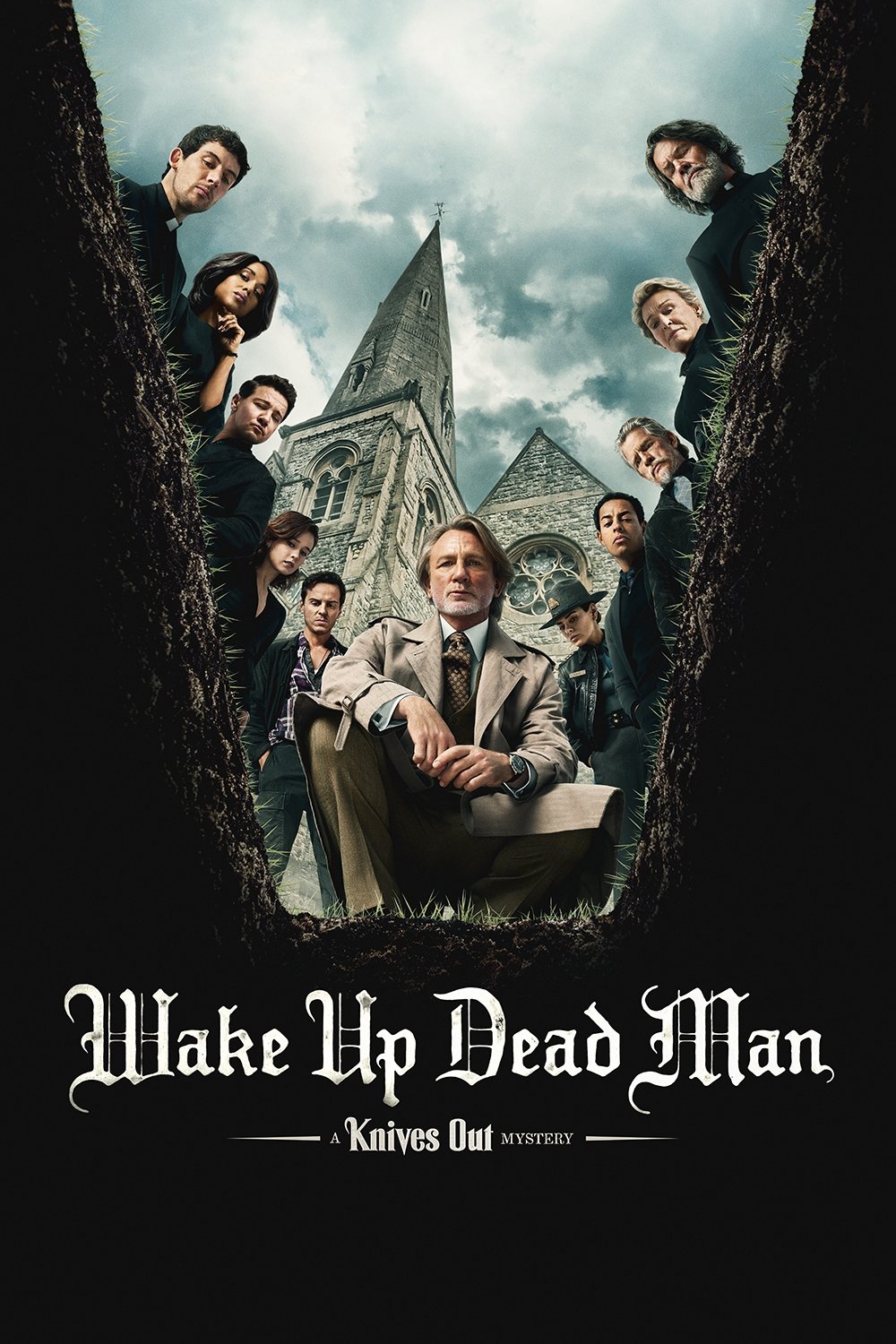
Wake Up Dead Man: A Knives Out Mystery is Rian Johnson’s latest entry in his whodunit series. It reunites Daniel Craig with his charismatic detective Benoit Blanc. The film trades the intimate family drama of the first movie and the over-the-top glamour of the second for a tense, small-town tale of faith, secrets, and an impossible crime at a rural church. It’s an ambitious evolution. Yet it doesn’t always land every punch in the trilogy.

To appreciate where this fits, glance back at the predecessors. The original Knives Out from 2019 burst onto the scene. It updated classic mystery tropes cleverly. The story centered on the death of a wealthy author. The dysfunctional Thrombey family circled like vultures over his estate. Blanc’s folksy charm cut through the lies with surgical precision. He delivered razor-sharp twists. His commentary bit into privilege and entitlement. All this wrapped in a snug, stage-play setup. It felt like a modern And Then There Were None. Every character popped—from Chris Evans’ smirking man-child to Ana de Armas’ wide-eyed nurse. The script’s misdirections kept you guessing until the final gut-punch reveal. It was tight, surprising, and endlessly rewatchable. Humor, heart, and social satire blended into a perfect whodunit package.

Glass Onion: A Knives Out Mystery followed in 2022. It cranked up the scale dramatically. A billionaire’s private island became the playground. A squad of self-important influencers played at being geniuses. The satire shifted gears. It skewered tech elites and performative allyship. Bigger laughs came from set pieces like the glass onion puzzle. Wilder ensemble clashes featured Edward Norton’s bumbling Miles Bron. Blanc unraveled the chaos with gleeful theatricality. Sure, it leaned heavier into farce than the original’s grounded tension. But those oh-so-satisfying reveals kept the momentum roaring. Janelle Monáe’s layered turn helped too. Each film stands alone as a self-contained puzzle. Yet they build Blanc’s legend incrementally. They refresh the murder-mystery playbook. Johnson’s signature flair nods to Agatha Christie roots.

Wake Up Dead Man arrives a few years after those events. Blanc looks more rumpled—bearded and brooding. He carries the visible weight of prior investigations. These have chipped away at his unflappable facade. Detective Benoit Blanc dives into a fresh case. It orbits a magnetic priest, Monsignor Jefferson Wicks. His tight-knit parish sits at Our Lady of Perpetual Fortitude. This is a fading rural church in snow-dusted upstate New York. A baffling death strikes right in the middle of services. It’s a stabbing during a Good Friday ritual. The congregation watches it unfold. It’s framed as an impossible crime with no clear entry or escape. Blanc must sift through hidden motives. He navigates frayed bonds and simmering tensions in the flock. His goal is to expose the culprit. Young assistant priest Rev. Jud Duplenticy becomes an unlikely ally.

Josh O’Connor stands out as Jud. He’s the earnest, ex-boxer priest. He brings raw vulnerability and quiet intensity. This grounds the film’s more outlandish elements. The powerhouse lineup fuels suspicion and sparks. Josh Brolin plays the commanding, domineering Wicks. His sermons blend fire-and-brimstone charisma with manipulative control. Glenn Close is the loyal church pillar Martha Delacroix. She’s his steely right-hand woman. She hides decades of devotion and resentment. Mila Kunis is police chief Geraldine Scott. She’s tough and skeptical but out of her depth. Jeremy Renner plays local doc Dr. Nat Sharp. His bedside manner conceals shadier dealings. Kerry Washington is attorney Vera Draven. She’s sharp-tongued and protective. Thomas Haden Church is reserved groundskeeper Samson Holt. He observes everything with cryptic folksiness. Andrew Scott plays best-selling author Lee Ross. He peddles scandalous exposes on the parish. Cailee Spaeny is the disabled former concert cellist Simone Vivane. Her ethereal presence masks deeper pain. Daryl McCormack is aspiring politician Cy Draven. He’s ambitious and entangled in family webs. Noah Segan pops up as sleazy Nikolai. It’s a fun callback to his earlier roles. This adds series continuity without stealing focus. The ensemble ignites every scene. Clashing agendas and barbed dialogue keep the paranoia boiling.

This installment carves its own distinct path. It embraces a darker, more introspective tone. Think faith-versus-reason noir laced with locked-room impossibility. The setting is a snow-dusted upstate New York parish. This contrasts the polished puzzle-box feel of the originals. The church throbs with simmering divisions. They feel palpably real. Fiery sermons alienate younger parishioners. They drive attendance into the dirt. Whispers hint at buried family fortunes. These tie to the church’s crumbling foundations. Rituals mask exploitation, abuse of power, and grudges. All hide under a veneer of piety.

Cinematographer Steve Yedlin works masterfully. He captures stark contrasts. Candlelit services flicker against vaulted ceilings. Shadowy mausoleums hide grisly secrets. Fog-shrouded grounds host midnight confessions that turn sinister. A cold, wintry palette amplifies isolation. Nathan Johnson’s score blends ominous orchestral swells. It adds subtle choral hints and dissonant organ tones. This creates a haunting vibe. It underscores spiritual unease without overpowering dialogue. Blanc prowls with trademark wit and theatrical flourishes. But a deeper layer emerges. He grapples with existential questions. These involve belief, deception, and waking from illusions. The title ties in directly. It calls amid apparent miracles, staged resurrections, and devilish symbolism. This blurs divine intervention and human malice.

The storyline thrives on classic misdirection. It piles on clues like a stolen devil’s-head knife from the altar. Vanished evidence dissolves in acid. Eerie occurrences hint at the otherworldly. Ghostly apparitions and bleeding statues appear. Then it snaps back to human frailty and greed. The film peels back the parish’s seedy underbelly. Hypocrisy rules the pulpit. Opportunism infects the flock. Buried sins span generations. It avoids preachiness or heavy-handedness. Instead, it fuels interpersonal fireworks. These erupt in confessionals, potlucks gone wrong, and heated vestry arguments.

Highlights abound. Blanc holds probing chats during tense masses. A single hymn masks frantic whispers. Late-night graveyard prowls use flashlights. They reveal half-buried scandals. A pulse-pounding chase winds through labyrinthine catacombs. Jud’s raw confession scenes blend vulnerability with defiance. The unmaskings cascade like dominoes. They form a brilliantly orchestrated finale. This echoes the first film’s precision. But it adds emotional stakes. Themes of redemption, forgiveness, and blind faith’s cost hit hard. They linger longer.

Flaws exist. The runtime stretches past two hours, leading to noticeable drag in the back half where explanatory flashbacks overstay their welcome and blunt the mounting tension. The crowded suspect list feels star-studded to a fault, with the expanded cast and their distinct personalities—from Renner’s oily doc to Washington’s sharp lawyer—often coming across more as a parade of familiar cameos than fully fleshed-out suspects. This dilutes the razor-sharp individual motivations that made the earlier entries so airtight, as some characters blend into the background despite the name recognition.

Craig remains the beating heart. He refines Blanc into a weary yet unbreakable warrior. Twinkling eyes hide hard-earned cynicism and quiet scars. This bridges the series’ growth perfectly. He evolves from wide-eyed newcomer to seasoned truth-seeker. Notably, his performance dials back bombastic Foghorn Leghorn bluster. It drops the scenery-chewing antics from Glass Onion. Instead, it opts for nuanced eccentricities. Subtle drawl inflections shift from playful to piercing. Haunted pauses carry unspoken regrets. Layered glances reveal a detective worn by deceptions. He keeps infectious charm and deductive brilliance.

He bounces off O’Connor’s conflicted priest. Their electric, buddy-cop chemistry grounds the mystery. It adds human connection amid supernatural tinges. Brolin chews scenery as tyrannical Wicks. His booming voice and piercing stare dominate. Close brings steely devotion to Martha. She layers quiet menace under pious smiles. The ensemble delivers scene-stealing turns. Renner’s oily doc has subtle tics. Washington’s lawyer cuts through BS like a blade. Church’s groundskeeper drops cryptic wisdom. Spaeny’s cellist haunts the score. The group dynamic crackles. Suspicion, snark, and alliances build tension. It doesn’t fully match Knives Out‘s intimacy. Nor does it rival Glass Onion‘s ego clashes. Raw charisma and sharp writing carry it far. Tighter arcs would elevate it further.

Behind the camera, Johnson amps visual and thematic style. It reflects the trilogy’s arc masterfully. The debut had cozy, rain-lashed Thrombey manor confines. The sequel brought flashy, tropical island excess. This film offers brooding parish grit. Sacred spaces twist into battlegrounds. Production design captures ecclesiastical opulence turned sinister. Vibrant stained glass casts blood-red shadows. Ancient relics whisper curses. Fog-shrouded grounds pulse with menace. It avoids campy parody. The balance feels reverent yet unsettling.

Dialogue pops with Blanc’s poetic rants. Extended musings explore faith’s illusions. They mirror “dead men walking” through empty rituals. This weaves personal growth into procedural beats. It never halts the pace. Screenplay-wise, it remixes boldly. It expands from domestic squabbles to global posers. Now it targets a fractured flock in dogma and greed. Subtle nods hint at Blanc’s odyssey. No direct sequel hook burdens it. No franchise baggage weighs it down.

In the end, Wake Up Dead Man solidifies the saga. It spins timeless whodunits freshly and vitally. Each outing sharpens the social knife. Targets evolve—from greedy kin to tycoons to holy hypocrites wielding faith. Pacing hiccups hit the bloated third act. The overwhelming ensemble poses challenges. Still, it grabs from the opening sermon-gone-wrong. It rewards with twists, depth, and a hopeful close. This lingers like a benediction. Devotees find layers to chew. Mystery fans geek over mechanics. Newcomers benefit from earlier starts. But this standalone shines. Johnson’s vision evolves fearlessly. Craig’s magnetism deepens. The door cracks for more mayhem. Pop the popcorn. Dim the lights. Let confessions begin.
Wake Up Dead Man: A Knives Out Mystery Trailer


Wake Up Dead Man: A Knives Out Mystery is the third movie in Rian Johnson’s fun and twisty murder mystery series. Daniel Craig is back as the sharp detective Benoit Blanc, who’s got his work cut out for him with a seemingly impossible case this time. The movie is set in a small-town church with some pretty creepy secrets, and Blanc teams up with a young priest to crack the case. The cast is packed with great talent like Josh O’Connor, Glenn Close, Josh Brolin, Mila Kunis, Jeremy Renner, and Kerry Washington, so there’s a lot of star power mixed with sharp writing and those clever twists Johnson’s known for.

The movie mixes mystery, drama, and a bit of dark humor while diving into themes like faith, secrets, and lies. Benoit Blanc has to navigate a tangled web of hidden motives and dark pasts—all wrapped in the spooky atmosphere of the church and its community.

It’s dropping in theaters on November 26, 2025, and then hitting Netflix worldwide on December 12, so it’s definitely one to keep an eye out for whether you’re already a fan or just love a good whodunnit.

Film Review: Gia (dir by Michael Cristofer)


Today is Angelina Jolie’s 50th birthday.

As I sit here writing this, Jolie is very much a respectable figure, one who doesn’t appear in as many movies she once did.  When she does act, it’s almost always in the type of big and rather glossy films that inevitably seem to be destined to be described as potential Oscar contenders.  She’s so identified with the work that she does for UNHCR that it can be argued that she’s even better known now as a human rights activist than as an actor.  (On Wikipedia, her career is listed as being “actress, director, humanitarian.”)  Angelina Jolie has made the move from acting to directing and even though none of her directorial efforts have been especially memorable, they still tend to get a lot of attention because she’s Angelina Jolie.  Angelina Jolie is definitely a part of the establishment and, let me make this very clear, there’s nothing wrong with that!  She’s still a good actress.  She seems to be far more sincere about her activism than many of her fellow Hollywood performers.  Personally, I think the efforts to get her to run for political office have been a little over-the-top (and they seem to have died down after an attempted presidential draft in 2016) but again, she’s earned her success and she deserves it.

That said, it can sometimes be surprising to remember that, before she became so acceptable, Angelina Jolie was Hollywood’s wild child, the estranged daughter of Jon Voight who talked openly about being bisexual, using drugs, struggling with her mental health, and playing with knives in bed.  This was the Jolie who, long before she married Brad Pitt, was married to Billy Bob Thornton and used to carry around a vial of his blood.  This was the Angelia Jolie who had tattoos at a time when that actually meant something and who went out of her way to let everyone know that she was a badass who wasn’t going to let anyone push her around.  This was the Angelina Jolie who was dangerous and unpredictable and who wore her wild reputation like an empowering badge of honor.

That’s the Angelina Jolie who starred in Gia.

Made for HBO in 1998, Gia was a biopic in which Jolie played Gia Carangi, one of the first supermodels.  The film followed Gia, from her unhappy childhood (represented by Mercedes Ruehl as Gia’s mother) to her early modeling days when she was represented by the famous Wilhelmina Cooper (Faye Dunaway) to her struggles with heroin and cocaine to her eventual AIDS-related death.  During the course of her short life, Gia falls in love with a photographer’s assistant named Linda (Elizabeth Mitchell) but, as much as Linda tries to help her, Gia simply cannot escape her demons.

That Gia is a fairly conventional biopic is not a shock, considering that it was directed by the reliably banal Michael Cristofer.  He starts the film with people talking about their memories of Gia and he doesn’t get anymore imaginative from there.  That the film works and is memorable is almost totally due to performances of Elizabeth Mitchell and Angelina Jolie, both of whom give such sincere and honest performances that they make you truly care about Gia and Linda.  Jolie, in particular, portrays Gia as being an uninhibited and impulsive agent of chaos, one who follows her immediate desires and who makes no apology for who she is and what she does.  There’s a lot of physical nudity in this film but the important thing is that Jolie allows Gia’s soul to be naked as well.  There’s nothing hidden when it comes either the character or Jolie’s empathetic and passionate performance.

Jolie won an Emmy for her performance in Gia and her work in this film led to her being cast in 2000’s Girl, Interrupted, the film for which she would win the Oscar for Best Supporting Actress.  Since then, Jolie’s become, as I said at the start of this review, very much a member of America’s cultural establishment.  My hope, though, is that someday, someone will give Jolie a role that will remind viewers of who she was before she became respectable.  I think she still has the talent to take audiences by surprise.

Horror Scenes I Love: Nina Confronts Lily in Black Swan


This scene is from Black Swan, which I reviewed during my first year with the Shattered Lens.  For many, many reasons, this is a film that means much to me.

Nina confronts Lily …. or does she?  Those of you have seen the film know.

Film Review: Boot Camp (dir by Christian Duguay)


Occasionally, if you’re lucky, you come across a film that so totally and completely conforms to your own worldview that you’re forced to wonder if maybe you wrote the script and then somehow forgot about it.

That was certainly the case, for me, when I recently watched 2008’s Boot Camp, a teen melodrama with an anti-authoritarian subtext.  Check out the trailer:

http://www.youtube.com/watch?v=WLzdRTKgFrc

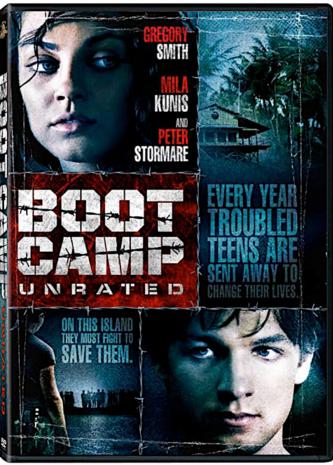
In Boot Camp, Mila Kunis plays Sophie.  Sophie is rich and, in the eyes of her parents, out of control.  She talks back.  She sneaks out of the house.  She hangs out at all the wrong clubs and with all the wrong people.  You know the story.  We’ve all seen the talk shows.  Sophie’s parents are convinced that the only way that they can get Sophie under control is to exile her to what the film calls a “tough love boot camp.”

The boot camp is located on an island, just a few miles away from a luxurious resort.  From the minute Sophie arrives, she is told that escape is impossible and she can only leave after the facility’s founder, Dr. Arthur Hall (Peter Stomare), says that she can.  Some people have been at the camp for years, waiting for Dr. Hall to announce that they’re rehabilitated.

The rest of the film follows Sophie and several other inmates as they try to survive boot camp without surrendering their free will.  It’s not easy.  Though he is more than happy to take their money, Dr. Hall resents the parents and his program is mostly designed to brainwash the inmates into thinking of him as being their new father figure.  The camp is staffed with brutes, sadists, and rapists.  When one inmate drowns, the staff tries to cover up his death.  Eventually, like the inhabitants of the Island of Dr. Moreau, Sophie and the other inmates have no choice but to rise up in rebellion against their masters.

“Tough love boot camps” are a real thing.  They used to be hugely popular with daytime talk show audiences and I know that Dr. Phil still has a ranch to which he sends “out of control” teens.  (I put “out of control” in quotes because, often times, it seems that “out of control” is code for “thinking for yourself.”)  The idea is that rebellious teenagers are sent to the camp, where they get yelled at until they agree to stop being so rebellious.  Over the years, there’s been a lot of debate over whether boot camps actually work.  If I had been sent to a boot camp, I think I would have just lied about my feelings and put on a repentant good girl act just to get the yelling to stop.  I’d be perfectly humble and contrite for three months and then, as soon as I got out of the camp, I’d go back to sneaking out of the house, skipping school, shoplifting, doing drugs, and whatever else got me sent to the camp in the first place.  From what I’ve seen of the whole boot camp experience, it seems to be more about brainwashing than anything else.  What’s the point of having well-behaved children if they can’t think for themselves?

But, then again, boot camps have never really been about  helping the teenagers sent to them.  Instead, they’ve always been about making lousy parents feel better about themselves.  Parents who have spent the last 14 years totally fucking up their children get to pat themselves on the back because they sent their kids to boot camp.  Other adults, bitter over having lost their youth, get to say, “It’s time to teach those ungrateful children to respect authority.”  As for the people who run the boot camps, it’s less about the inmates and more about power and money.

That’s certainly the message of Boot Camp.  In fact, I was taken by surprise to discover just how much Boot Camp conformed to my own thinking on … well, on just about everything.  Make no mistake, Boot Camp is a flawed film.  There’s nothing subtle about Christian Duguay’s direction and, with the exception of Mila Kunis, none of the performances are as memorable as you might hope that they would be.  Peter Stomare is way too obvious in his villainy, giving a performance that belongs in the Overacting Hall Of Fame.  (You’ll find Stomare’s Dr. Hall in the villain wing, right next to Christoph Waltz in SPECTRE.)

But, even with all that in mind, it was impossible for me not to get excited when Sophie and her fellow out-of-control teens finally made their move against their tormentors.  The final third of Boot Camp turns into a celebration of disobedience and rebellion and it was impossible for me not to be thrilled by it.  Considering the increasingly Orwellian nature of American culture, we need more movies that celebrate revolution and individual freedom.  At a time when we’re being told that we “have to do this” or “have to do that,” Boot Camp says, “Nobody has to do anything, beyond what they choose.”

It’s an important message and one that people need to start heeding.


Here Are the Reliably Boring Razzie Nominations!


Yawn!  The Razzies are always so boring!  Here are this year’s predictable nominations.  Talk about them on twitter and impress your friends.

Worst Picture
Fantastic Four
Fifty Shades of Grey
Jupiter Ascending
Paul Blart Mall Cop 2
Pixels

Worst Director
Andy Fickman, Paul Blart Mall Cop 2
Tom Six, Human Centipede 3
Sam Taylor-Johnson, Fifty Shades of Grey
Josh Trank, Fantastic Four
Andy and Lana Wachowski, Jupiter Ascending

Worst Actor
Johnny Depp, Mortdecai
Jamie Dornan, Fifty Shades of Grey
Kevin James, Paul Blart Mall Cop 2
Adam Sandler, The Cobbler and Pixels
Channing Tatum, Jupiter Ascending

Worst Actress
Katherine Heigl, Home Sweet Hell
Dakota Johnson, Fifty Shades of Grey
Mila Kunis, Jupiter Ascending
Jennifer Lopez, The Boy Next Door
Gwyneth Paltrow, Mortdecai

Worst Supporting Actor
Chevy Chase, Hot Tub Time Machine 2 and Vacation
Josh Gad, Pixels and The Wedding Ringer
Kevin James, Pixels
Jason Lee, Alvin and the Chipmunks: Road Chip
Eddie Redmayne, Jupiter Ascending

Worst Supporting Actress
Kaley Cuoco-Sweeting, Alvin and the Chipmunks: Road Chip and The Wedding Ringer
Rooney Mara, Pan
Michelle Monaghan, Pixels
Julianne Moore, Seventh Son
Amanda Seyfried, Love the Coopers and Pan

Worst Screenplay
Simon Kinberg, Jeremy Slater and Josh Trank, Fantastic Four
Kelly Marcel, Fifty Shades of Grey
Andy and Lana Wachowski, Jupiter Ascending
Kevin James and Nick Bakay, Paul Blart Mall Cop 2
Tim Herlihy and Timothy Dowling, Pixels

Worst Remake or Sequel
Alvin and The Chipmunks: The Road Chip
Fantastic Four
Hot Tub Time Machine 2
Human Centipede 3
Paul Blart Mall Cop 2

Worst Screen Combo
Miles Teller, Michael B. Jordan, Kate Mara and Jamie Bell, Fantastic Four
Johnny Depp and his glued-on mustache, Mortdecai
Jamie Dornan and Dakota Johnson, Fifty Shades of Grey
Kevin James and either his Segway or glued-on mustache, Paul Blart Mall Cop 2
Adam Sandler and any pair of shoes, The Cobbler

Razzies Redeemer Award
Elizabeth Banks
M. Night Shyamalan
Will Smith
Sylvester Stallone

Film Review: Blood Ties (dir by Guillame Canet)


So, there’s this fucking movie called Blood Ties and it’s about a lot of fucking guys who live in fucking New York City in the fucking 70s and they’re all kind of a bunch of fuck-ups but they all know how to fucking use the word fuck as both an adjective and an adverb.  That’s the main impression that I took away from Blood Ties, a film that feels a lot like a mash-up of Place Beyond The Pines and every Martin Scorsese film ever made.

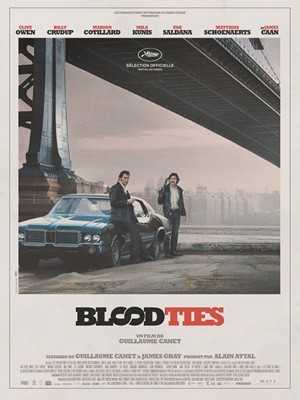
The year is 1974.  After serving several years on a murder conviction, 50 year-old Chris (Clive Owen) has been released from prison.  Chris’s transition back into society is a bumpy one.  For one thing, his ex-girlfriend (Marion Cotillard) is now a prostitute and refuses to let Chris see his children.  Though he gets a new girlfriend (Mila Kunis), he still finds himself struggling to hold down a job and he soon finds himself tempted to once again pursue a life of crime.

What might make that difficult for him is the fact that his younger brother, Frank (Billy Crudup), is now a cop with an old school porn star mustache.  Frank makes little secret of how much he resents his older brother and it isn’t long before the two of them are constantly fighting.  However, Frank has problems beyond Chris.  For one thing, he’s romantically pursuing Vanessa (Zoe Saldana), despite the fact that he earlier put her husband, Anthony (Matthias Schoenaerts), in prison.

In order to keep their dying father (James Caan) happy, Chris and Frank try to put aside their differences.  However, when Frank sees Chris fleeing from the scene of a robbery, it becomes harder and harder for him to ignore his brother’s activities.  Meanwhile, Chris has to decide whether or not to potentially sacrifice his freedom to keep his brother safe from a vengeful Anthony…

When Blood Ties was originally released at the beginning of the year, I considered seeing it but — for some reason — I ended up seeing The Legend of Hercules instead.  (Don’t you hate it when that happens!)  And I have to admit that I had forgotten about Blood Ties until I discovered that we were getting EPIX for free this holiday weekend.  Blood Ties is one of the films that’s currently showing on EPIX and, when I saw it was available, I thought to myself, “I can’t wait to see A Most Violent Year but until that opens up down here in Dallas, why not watch another violent New York period piece?”

And so I watched Blood Ties and … well, bleh.  Actually, bleh may be too harsh of a judgment.  The film is full of fun period details and Billy Crudup gives a really good performance as Frank.  There are some well done action scenes and I appreciated the fact that, for the most part, the film did not try to make violence look glamorous or fun.  The film has a great soundtrack though, for the most part, most of the songs here can also be heard in a countless number of superior Scorsese films.

But, ultimately, Blood Ties is never as good as you want it to be.  The film’s plot is about as predictable as can be and, far too often, scenes that start out interesting quickly degenerate to various characters standing around and yelling at each other.  And while that may often be what happens in real life, it still doesn’t make it particularly interesting to watch.  And then you’ve got poor Clive Owen, a good actor who is seriously miscast here.  Casting Clive Owen as a streetwise New York gangster is a bit like casting Ray Liotta as a member of the Queen’s Guard.  It just doesn’t work.

For those of us hoping for a great New York City crime epic — well, we’re just going to have to keep hoping that A Most Violent Year turns out to be just as good as everyone says it is…

Blood_Ties_poster


Horror On TV: That 70s Show 2.5 “Halloween”


Okay, so technically, this really isn’t horror.  But who cares?  It deals with Halloween traditions and, even more importantly,  I loved That 70s Show.

This episode was originally broadcast on October 26th, 1999.

http://www.youtube.com/watch?v=yYN7v13mVP4

Trailer: Jupiter Ascending


jupiter1

The Wachowskis, Andy and Lana, have a new film set for release in early 2015. Jupiter Ascending was suppose to come out in 2014, but things happened and now it’s been pushed back for a February 2015 release.

Such a drastic delay in release usually means something major on the negative side of the ledger has occurred and the studio in charge of it’s release have little to no faith in the film. Has Warner Bros. Studios lost faith in the latest Wachowski offering? Is Jupiter Ascending the hot mess that it has been rumored about? Is the grandiose space opera the film is being made out to be making studio exec’s nervous?

So, many questions that most people who like to dwell on the in’s and out’s of filmmaking and the business of making them are probably asking themselves.

My only concern is that the Wachowskis have taken the extra time to make the film they set out to make. They’re one of the few filmmakers who seem to always get to do the sort of dream projects that more successful directors rarely get a chance to or even attempt to try. Whether it’s The Matrix, Speed Racer or Cloud Atlas, the Wachowskis have danced to their own tune and for some reason Warner Bros. continue to give them big-budgets after big-budgets to get their next dream project made into reality.

Here’s to hoping Guardians of the Galaxy being such a huge success will help this upcoming space opera turn it’s February release (usually a place where films go to die) into a new addition to the resurgence of the space opera.

Trailer: Oz the Great and Powerful (Super Bowl Exclusive)


OzTheGreatandPowerful

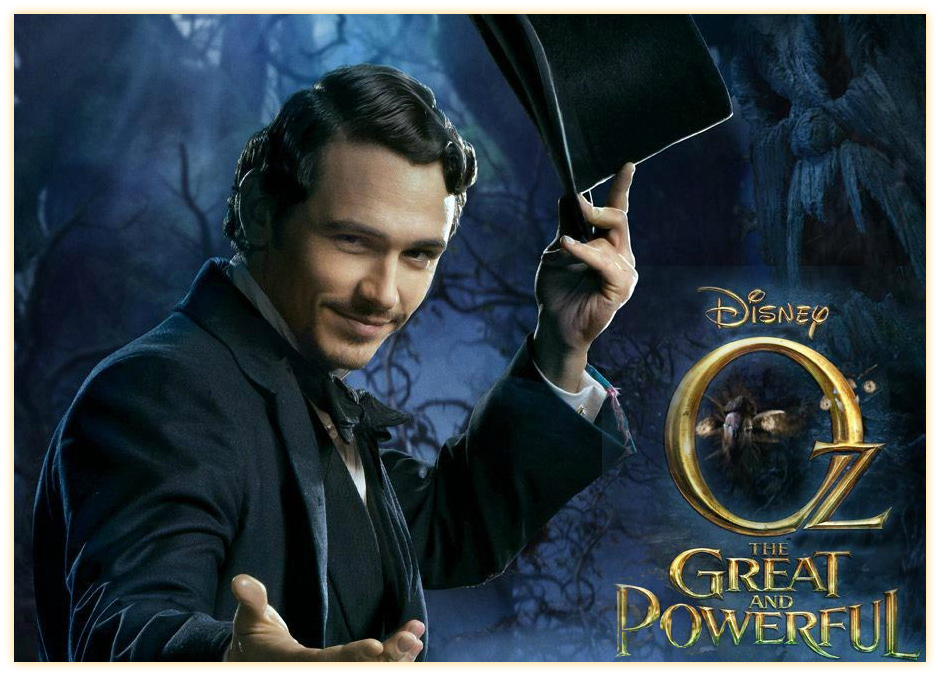
Oz the Great and Powerful is the first film by Sam Raimi since he was removed as director of the Spider-Man franchise. While he tried to go back to his horror roots with the underappreciated Drag Me to Hell he’s back to doing big-budget event films.

The film looks to tell the story of the Great Wizard of Oz prior to Dorothy’s arrival in the original film. James Franco takes on the title role with Mila Kunis, Michelle Williams and Rachel Weisz all taking on the roles of the three witches of Oz. The film’s plot looks to be a sort of hero’s journey as Oscar Diggs must discover his true self once he lands in the otherworldly realm of Oz.

Could this film be a return to fantasy form for Sam Raimi or will it be a film thats visually stunning but spiritually empty like Tim Burton’s Alice In Wonderland?

Only time will tell and while Raimi always delivers a visual treat and an entertaining film they sometimes don’t resonate with the general audience.

Oz the Great and Powerful is set for a March 8, 2013 release date.