Crazy Joe (Peter Boyle) is a gangster with a chip on his shoulder and a self-taught intellectual who can (misquote) Sartre and Camus with the best of them. Sick of being taken for granted, Joe and his brother, Richie (Rip Torn), attempt to challenge the Mafia establishment. The mob sets Joe up and gets him sent to prison. While doing time, Joe befriends a Harlem gangster named Willy (Fred Williamson). Refusing to associate with the other Italian prisoners, Joe allies himself with the black inmates and even helps to start a riot over the prison’s inhumane conditions. When he is released, Joe hits the streets of New York with a vengeance, now backed up by Willy and his criminal organization.
Crazy Joe is based on the life of Joey Gallo, who was briefly a New York celebrity, hobnobbing with actors like Jerry Orbach and writers like Norman Mailer before he was gunned down at Umberto’s Clam Shop in Little Italy. Though the names were changed to protect the guilty, Eli Wallach plays Vito Genovese, Charles Cioffi plays Joe Columbo, and Luther Adler is Joe Profaci. Fred Williamson’s character is based on the infamous Nicky Barnes.
Crazy Joe is a good and violent mix of the gangster, prison, and blaxploitation genres. Despite wearing an unfortunate toupee, Peter Boyle is great at putting the crazy in Crazy Joe and Fred Williamson ups the coolness factor of any movie he appears in. Keep an eye out for Henry Winkler, giving a very un-Fonzie performance as Joe’s right-hand man.
One of my earliest memories of staying up late and watching cheesy movies on local television was the sight of Robert Vaughn standing on a beach and cursing, “Damn you, Kennedy!” An echo effect kicked in, making the line: “Damn you, Kennedy Kennedy Kennedy Kennedy Kennedy!”
The name of the movie was Assignment — Kill Castro and sometimes it seemed like it came on every other night. The movie started with a title crawl that was so lengthy and so set the tone for the entire film that I feel it is worth quoting in its entirety:
From 1961, the year of the Bag of Pigs to today, the Government of the United States has been embroiled in a series of events which have continually led our nation to crisis after crisis and to the brink of war.
ASSIGNMENT — KILL CASTRO, a true story is one of the most confusing and frustrating historical events that might have led to a world power showdown. It happened yesterday! It happened today! It can happen again!
Names of persons and places have been changed to protect the individuals who were called upon to aid their country and in doing so placed their lives in jeopardy.
“I WILL GIVE ALL FOR THE LOVE OF MY COUNTRY … RIGHT OR WRONG! — G.W. Bell, Chief of Carribean (sic) Operations, Central Intelligence Agency”
This motion picture is dedicated to all people who desire to live in a free democratic society.
Robert Vaughn plays Hud, a former CIA agent who was involved in the original Bay of Pigs invasion. When the mysterious Mr. Bell (Raymond St. Jacques) and a gangster named Rossellini (Michael V. Gazzo) agree to finance an operation to kill Fidel Castro, Hud recruits a Key West bar owner named Tony (Stuart Whitman) to take him to Cuba. However, Mr. Bell and Rossellini are just using Hud to secretly smuggle heroin into Florida and, much like John F. Kennedy in 1961, they are planning on abandoning him on the beaches of Cuba.
The main problem with Assignment — Kill Castro is that we already know that Hud is not going to succeed in his mission because Fidel Castro is still alive and probably still bragging about how he sent Tony Montana to Miami. The other problem is that the movie does not make any damn sense. That title crawl was not kidding when it said the story was confusing and frustrating. Everyone is so busy double-crossing everyone else that it is hard to keep track. There has to be a simpler way to get heroin into Florida. Surprisingly, this incoherent movie was written and directed by the legendary editor, Chuck Workman, the same Chuck Workman who puts together those montages for the Oscars.
Kill Castro does have a good cast, though none of them are at their best. Along with Whitman, Vaughn, St. Jacques, and Gazzo, the cast includes Woody Strode, Albert Salmi, and Sybil Danning (whose last name is misspelled Daning in the end credits). Fidel Castro plays himself and the film’s ending is provided by cannibal turtles.
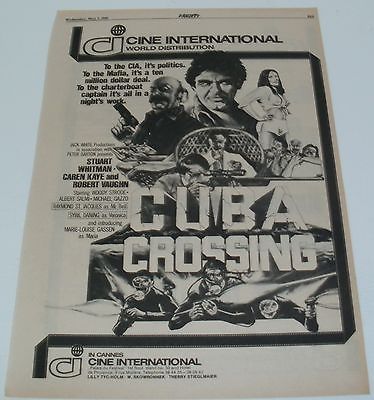
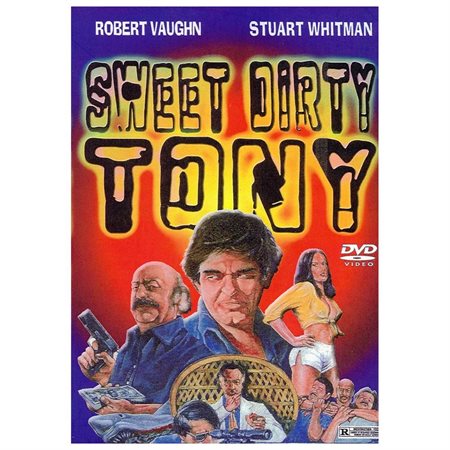
Assignment — Kill Castro was just one of the many titles that this movie was released under.
It was also known as Cuba Crossing,
Key West Crossing, The Mercenaries, and my personal favorite, Sweet Dirty Tony.
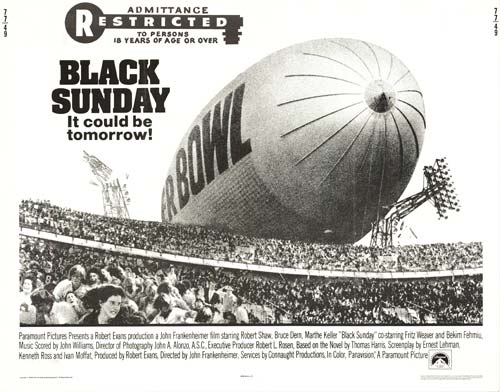
My New England Patriots aren’t in this year’s big game, and I can’t stand that big-headed Peyton Manning, so my interest in tonight’s Super Bowl is minimal. And the halftime show does nothing for me: Coldplay is probably one of my least favorite bands (Beyoncé’s OK, though). So if like me, you’re not planning on spending much time watching Roger Goodell’s season-ending spectacular (can’t stand Goodell, either) may I suggest an alternative, namely John Frankenheimer’s thriller BLACK SUNDAY.
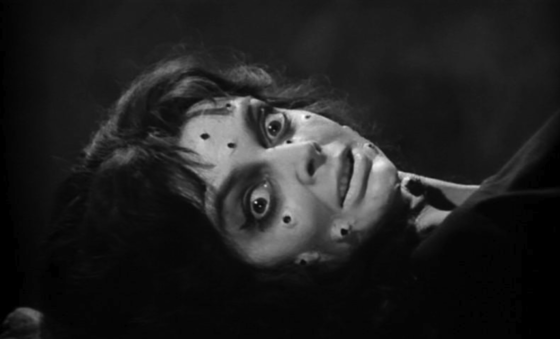
No, it’s not the 1960 Barbara Steele/Mario Bava horror classic, this BLACK SUNDAY is a rousing political thriller about terrorist organization Black September plotting a strike against America at the biggest game of them all, the Super Bowl. Beautiful but deadly terrorist Dahlia (Marthe Keller) has recruited the bitter, unstable blimp pilot Michael Lander (Bruce Dern at his 70’s psycho best) to turn the blimp into the ultimate suicide bomb, with plastique explosives setting…
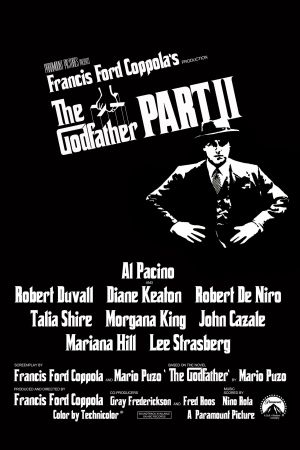
Believe it or not, The Trial of Billy Jackwas not the only lengthy sequel to be released in 1974. Francis Ford Coppola’s The Godfather Part II was released as well and it went on to become the first sequel to win an Oscar for best picture. (It was also the first, and so far, only sequel to a best picture winner to also win best picture.) Among the films that The Godfather, Part II beat: Chinatown, Coppola’s The Conversation, and The Towering Inferno. 1974 was a good year.
Whenever I think about The Godfather, Part II, I find myself wondering what the film would have been like if Richard Castellano hadn’t demanded too much money and had actually returned in the role of Clemenza, as was originally intended. In the first Godfather, Clemenza and Tessio (Abe Vigoda) were Don Corleone’s two lieutenants. Tessio was the one who betrayed Michael and was killed as a result. Meanwhile, Clemenza was the one who taught Michael how to fire a gun and who got to say, “Leave the gun. Take the cannoli.”
Though Castellano did not return to the role, Clemenza is present in The Godfather, Part II. The Godfather, Part II tells two separate stories: during one half of the film, young Vito Corleone comes to America, grows up to be Robert De Niro and then eventually becomes the Godfather. In the other half of the film, Vito’s successor, Michael (Al Pacino), tries to keep the family strong in the 1950s and ultimately either loses, alienates, or kills everyone that he loves.
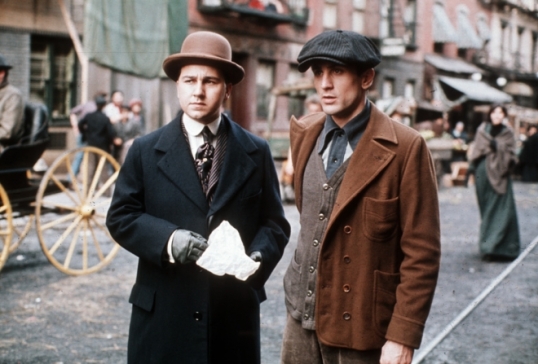
During Vito’s half of the film, we learn how Vito first met Clemenza (played by Bruno Kirby) and Tessio (John Aprea). However, during Michael’s half of the story, Clemenza is nowhere to be seen. Instead, we’re told that Clemenza died off-screen and his successor is Frankie Pentangeli (Michael V. Gazzo). All of the characters talk about Frankie as if he’s an old friend but, as a matter of fact, Frankie was nowhere to be seen during the first film. Nor is he present in Vito’s flashbacks. This is because originally, Frankie was going to be Clemenza. But Richard Castellano demanded too much money and, as a result, he was written out of the script.
And really, it doesn’t matter. Gazzo does fine as Frankie and it’s a great film. But, once you know that Frankie was originally meant to be Clemenza, it’s impossible to watch The Godfather Part II without thinking about how perfectly it would have worked out.
If Clemenza had been around for Michael’s scenes, he would have provided a direct link between Vito’s story and Michael’s story. When Clemenza (as opposed to Frankie) betrayed Michael and went into protective custody, it would have reminded us of how much things had changed for the Corleones (and, by extension, America itself). When Tom Hagen (Robert Duvall) talked Clemenza (as opposed to Frankie) into committing suicide, it truly would have shown that the old, “honorable” Mafia no longer existed. It’s also interesting to note that, before Tessio was taken away and killed, the last person he talked to was Tom Hagen. If Castellano had returned, it once again would have fallen to Tom to let another one of his adopted father’s friends know that it was time to go.
Famously, the Godfather, Part II ends with a flashback to the day after Pearl Harbor. We watch as a young and idealistic Michael tells his family that he’s joined the army. With the exception of Michael and Tom Hagen, every character seen in the flashback has been killed over the course of the previous two films. We see Sonny (James Caan), Carlo (Gianni Russo), Fredo (John Cazale), and even Tessio (Abe Vigoda). Not present: Clemenza. (Vito doesn’t appear in the flashback either but everyone’s talking about him so he might as well be there. Poor Clemenza doesn’t even get mentioned.)
If only Richard Castellano had been willing to return.
Clemenza and Vito
But he didn’t and you know what? You really only miss him if you know that he was originally meant to be in the film. With or without Richard Castellano, The Godfather, Part II is a great film, probably one of the greatest of all time. When it comes to reviewing The Godfather, Part II, the only real question is whether it’s better than the first Godfather.
Which Godfather you prefer really depends on what you’re looking for from a movie. Even with that door getting closed in Kay’s face, the first Godfather was and is a crowd pleaser. In the first Godfather, the Corleones may have been bad but everyone else was worse. You couldn’t help but cheer them on.
The Godfather Part II is far different. In the “modern” scenes, we discover that the playful and idealistic Michael of part one is gone. Micheal is now cold and ruthless, a man who willingly orders a hit on his older brother and who has no trouble threatening Tom Hagen. If Michael spent the first film surrounded by family, he spends the second film talking to professional killers, like Al Neri (Richard Bright) and Rocco Lampone (Tom Rosqui). Whereas the first film ended with someone else closing the door on Kay, the second film features Michael doing it himself. By the end of the film, Michael Corleone is alone in his compound, a tyrant isolated in his castle.
Michael’s story provides a sharp contrast to Vito’s story. Vito’s half of the film is vibrant and colorful and fun in a way that Michael’s half is not and could never be. But every time that you’re tempted to cheer a bit too easily for Vito, the film moves forward in time and it reminds you of what the future holds for the Corleones.
So, which of the first two Godfathers do I prefer? I love them both. If I need to be entertained, I’ll watch The Godfather. If I want to watch a movie that will truly make me think and make me question all of my beliefs about morality, I’ll watch Part Two.
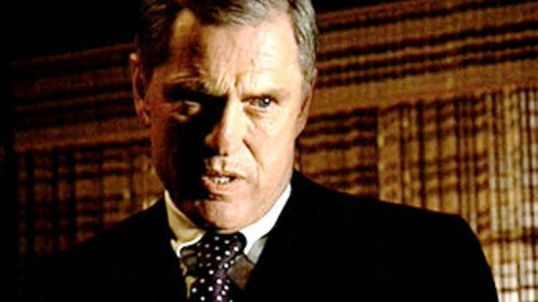
Finally, I can’t end this review without talking about G.D. Spradlin, the actor who plays the role of U.S. Sen. Pat Geary. The Godfather Part II is full of great acting. De Niro won an Oscar. Pacino, Gazzo, Lee Strasberg, and Talia Shire were all nominated. Diane Keaton, Robert Duvall, and John Cazale all deserved nominations. Even Joe Spinell shows up and brilliantly delivers the line, “Yeah, we had lots of buffers.” But, with each viewing of Godfather, Part II, I find myself more and more impressed with G.D. Spradlin.
Sen. Pat Geary doesn’t have a lot of time on-screen. He attends a birthday party at the Corleone Family compound, where he praises Michael in public and then condescendingly insults him in private. Later, he shows up in Cuba, where he watches a sex show with obvious interest. And, when Michael is called before a Senate committee, Geary gives a speech defending the honor of all Italian-Americans.
G.D. Spradlin as Sen. Pat Geary
But the scene that we all remember is the one where Tom Hagen meets Sen. Geary in a brothel. As Geary talks about how he passed out earlier, the camera briefly catches the sight of a dead prostitute lying on the bed behind him. What’s especially disturbing about this scene is that neither Hagen nor Geary seem to acknowledge her presence. She’s been reduced to a prop in the Corleone Family’s scheme to blackmail Sen. Geary. His voice shaken, Geary says that he doesn’t know what happened and we see the weakness and the cowardice behind his almost all-American facade.
It’s a disturbing scene that’s well-acted by both Duvall and Spradlin. Of course, what is obvious (even if it’s never explicitly stated) is that Sen. Geary has been set up and that nameless prostitute was killed by the Corleones. It’s a scene that makes us reconsider everything that we previously believed about the heroes of the Godfather.
For forcing us to reconsider and shaking us out of our complacency, The Godfather, Part II is a great film.
(Yes, it’s even better than The Trial of Billy Jack.)
Today, we continue our look at the Dirty Harry film series by considering the fourth installment in the franchise, 1983’s Sudden Impact.
“Go ahead. Make my day…”
Yes, this is the film where Police Inspector “Dirty” Harry Callahan (played, as always, by Clint Eastwood) delivers that classic one liner. In this case, he says it to a man holding a gun to a waitress’ head. The implication, I guess, is that the gunman would make Harry’s day by killing the innocent woman that he’s holding hostage and therefore, giving Harry an excuse to shoot him in the head. That line really does get to the heart of one of the main themes that runs through all of the Dirty Harry movies in general and Sudden Impact in specific. Harry’s life would be a lot of easier if people would simply stop getting in the way and just let him shoot anyone that he wants to.
At the start of Sudden Impact ,we discover that Harry Callahan is still on the San Francisco police force and Captain McKay (Bradford Dillman) is still his antagonistic boss. Eight years have passed since the end of the Enforcer and Harry is a bit grayer and definitely grumpier. Whereas the previous three films in the franchise made a (minimal) effort to humanize him, the Harry of Sudden Impact is a snarling, forehead vein-throbbing killing machine. After years of dealing with sleazy criminals and weak-willed liberals, Harry now appears to wake up each morning and ask himself, “How many people can I find an excuse to kill today?”
Not surprisingly, all those years of shooting people have apparently made Harry the most targeted man in San Francisco. Within the first 20 minutes of the film, three separate and unconnected groups of criminals attempt to kill Harry. His superiors demand that Harry take a vacation before the entire city of San Francisco is destroyed. Harry snarls in response so his bosses do the next best thing and order him to go to the coastal town of San Paulo to help with an unsolved murder.
San Paulo has a problem. Local lowlifes are turning up dead, shot once in the head and once in the genitals. Along with the gruesome way that they die, all of them seem to be acquainted with a frightening woman named Rae (played by Audrey J. Neenan). The chief of police (Pat Hingle) doesn’t seem to be trying too hard to solve the crimes and he openly resents Harry’s attempts to help. (He’s even less happy about the fact that the mobsters who were trying to kill Harry in San Francisco have followed him out to San Paulo.) Harry, however, is determined to solve the crime even while dealing with the unwanted gift of a rather ugly bulldog (given to him by his latest partner, who is played by series regular Albert Poppwell) and romancing an artist (a rather unconvincing Sondra Locke) who has some very strong thoughts of her own on both the sorry state of the criminal justice system and what should be done to improve it.
Sudden Impact was the only one of the Dirty Harry films to officially be directed by Clint Eastwood. Even if his name wasn’t listed in the opening credits, you would probably be able to guess that Eastwood directed this. From the film’s opening nighttime scene, during which time the screen is almost totally black except for the occasional flash of a gun being aimed, the film features Eastwood’s signature noir-influenced visual style but it doesn’t contain any of the thematic ambiguity that typifies Eastwood’s better films.
Sudden Impact is an entertaining and well-made action film but it’s also my least favorite of the Dirty Harry series. Whereas the first three installments at least tried to play around with figuring out what made Harry tick (and, occasionally, even allowing Harry’s methods to be questioned by sympathetic characters like Chico in Dirty Harry or Kate Moore in The Enforcer), Sudden Impact is content to just to let Harry kill some of the most cardboard villains in the franchise’s history. The end results are crudely effective but ultimately rather forgettable, with none of the eccentric touches that occasionally distinguished the next film in the series, The Dead Pool. There’s a reason why Sudden Impact is best remembered for a one-liner that’s uttered during the film’s first 10 minutes and which doesn’t really have anything to do with anything else that happens in the movie.
Speaking of The Dead Pool, that’s the film we will be looking at tomorrow as we conclude this series on the Dirty Harry franchise.
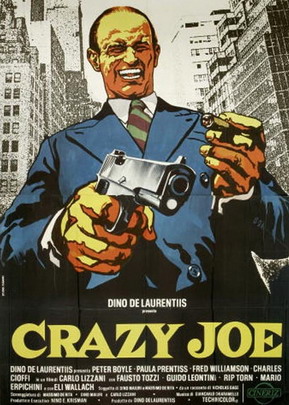 Crazy Joe (Peter Boyle) is a gangster with a chip on his shoulder and a self-taught intellectual who can (misquote) Sartre and Camus with the best of them. Sick of being taken for granted, Joe and his brother, Richie (Rip Torn), attempt to challenge the Mafia establishment. The mob sets Joe up and gets him sent to prison. While doing time, Joe befriends a Harlem gangster named Willy (Fred Williamson). Refusing to associate with the other Italian prisoners, Joe allies himself with the black inmates and even helps to start a riot over the prison’s inhumane conditions. When he is released, Joe hits the streets of New York with a vengeance, now backed up by Willy and his criminal organization.
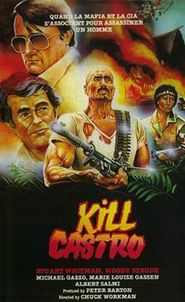 One of my earliest memories of staying up late and watching cheesy movies on local television was the sight of Robert Vaughn standing on a beach and cursing, “Damn you, Kennedy!” An echo effect kicked in, making the line: “Damn you, Kennedy Kennedy Kennedy Kennedy Kennedy!”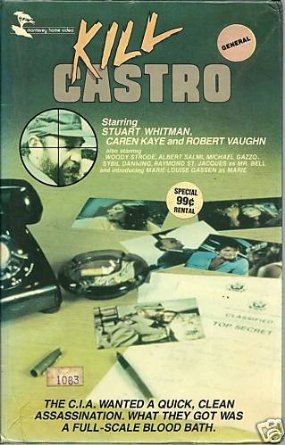

 Through the Shattered Lens