4 Or More Shots From 4 Or More Films is just what it says it is, 4 shots from 4 of our favorite films. As opposed to the reviews and recaps that we usually post, 4 Shots From 4 Films lets the visuals do the talking!
Today, we celebrate the birth and the legacy of the great Austrian director Fritz Lang. Starting his career during the silent era in Germany, Lang was both a proponent of expressionism and an early critic of the Nazis and Adolf Hitler. Despite this and the fact that Lang’s mother was Jewish, Josef Goebbels attempted to recruit Lang to run Germany’s largest film studio, UFA. Lang responded to Goebbels offer by moving to Paris and divorcing his wife, who was an ardent Nazi. Lang eventually found his way to Hollywood, where he worked for the next twenty years. With films like Metropolis, M, Fury, Hangmen Also Die, Scarlet Street, and The Testament of Dr. Mabuse, Lang proved himself to be a master of every genre and his influence is still felt to this day.
In honor of the man and his legacy, here are….
4 Shots From 4 Fritz Lang Films
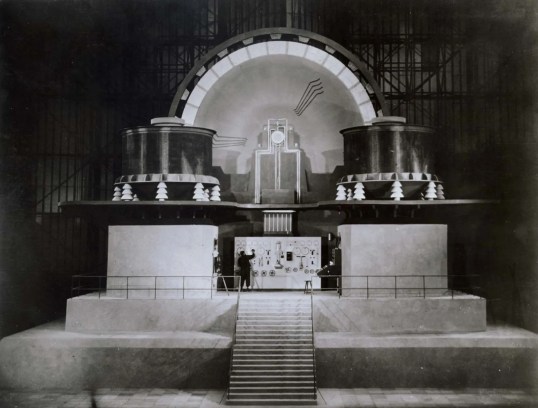
Metropolis (1927, dir by Fritz Lang, DP: Karl Freund and Gunther Rittau)
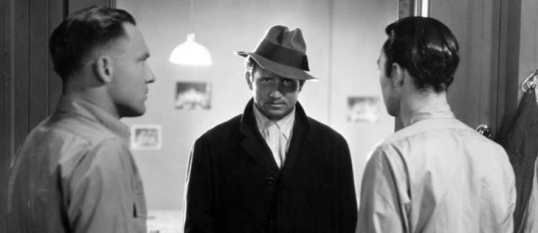
M (1931, dir by Fritz Lang, DP: Fritz Arno Wagner)
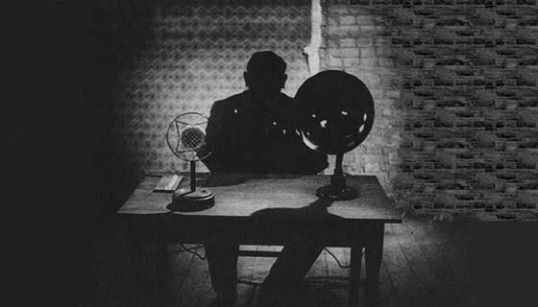
The Testament of Dr. Mabuse (1933, dir by Fritz Lang, DP: Karl Vash and Fritz Arno Wagner)
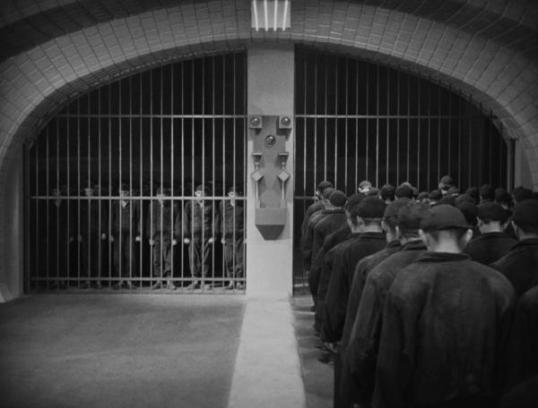
Fury (1936, dir by Fritz Lang, DP: Joseph Ruttenberg)
If pressed, I could certainly make the argument that it could be considered to be at least partially a horror film. It’s work of German Expressionism, a cinematic movement that was definitely an influence on the emerging horror genre. It features a mad scientist named Rotwang (Rudolph Klein-Rogge), who designs a robot that he hopes he can transform into his lost love, a woman who instead chose to be with the wealthy and powerful Joh Fredersen (Alfred Abel). The robot instead adopts the form of the saintly Maria (Brigitte Helm) and becomes a temptress who inspires a violent revolution in Fredersen’s city. At one point, when Fredersen’s son, Freder (Gustav Frohlich), falls ill, he has a hallucination of the machines under the city transforming into a demon the devours the workers. Later, statues of the Seven Deadly Sins come to life. The film ends with the message that “The Mediator Between the Head and the Hands Must Be the Heart,” which is exactly the type of empty slogan that repressive regimes have used to defend their own horrific abuses of power. It’s right up there with John Lennon’s Imagine as far as horrifying ideological statements are concerned. (The world will live as one as long as everyone imagines the exact same thing. Don’t ask what will happen to those who imagine something different than an empty world shaped by ideology.)
That said, Metropolis is, at best, a horror-adjacent film. As much as I want to hammer it into a straight horror film for the sake of October, Metropolis is better describe as being one of the first great science fiction films. Director Fritz Lang creates two visually stunning worlds, one on top of the other. Above ground, the city of Metropolis is all about towering skyscrapers, airplanes (at a time when they were still a novelty), high speed rail, and even the occasional zeppelin. It’s a sleek and beautiful city, where the inhabitants all seem to be rich and everyone is too busy enjoying the gardens and the clubs to truly pay much attention to what is happening beneath them. Underground is where one finds the machines that keep the city moving and also the anonymous workers who often risk their lives to keep those machines from breaking down. Underground, the city is dirty and dark and the workers go about their activities with the realization that things are never going to get better for them. Above ground, Metropolis is paradise but below it, the city is a hellscape.
Joh Fredersen is the man who created and controls Metropolis. His office is in the new Tower of Babel, a symbol of how there’s no communication between Fredersen and those who work underneath the city. He’s not an evil man, as much he’s just one who chooses to remain unaware about the conditions underground. When his son meets and falls in love with the peaceful activist Maria, Fredersen does not listen to either one of them but instead plots on how to discredit her. Fredersen’s old friend Rotwang has a robot but, what Frederson does not know, is that Rotwang has never forgiven Fredersen for marrying the woman that Rotwang loved. Rotwang creates his robot not to discredit Maria but to instead inspire the workers to destroy the machines and kill Fredersen’s son.
(Like so many other Marxist films, Metropolis ultimately doesn’t have much respect for the workers that it tries to uplift. They’re almost all portrayed as being easily led and incapable of thinking for themselves. At best, they’re noble savages. At worst, they’re drones.)
Even seen today, Metropolis remains a technical marvel. The underground scenes, with their emphasis on huge machines that seem to dwarf the men who work on them, are still visually powerful while the above ground scenes still make Metropolis itself look like the type of city where many of us would want to live. The scenes in which the robot is transformed into Maria is a silent spectacle of lights, science and madness. Beyond that, the acting holds up surprisingly well for a silent film. Alfred Abel plays Fredersen not as being a tyrant but instead as just a man who has been rich for so long that he’s no longer aware of how anyone else is living. Rudolf Klein-Rogge turns Rotwang into one of the great mad scientists. And Brigitte Helm leads the worker’s rebellion with a nearly feral intensity. Her dance scene is a classic, with every move meant to seduce the citizens of Metropolis into destroying their own city.
Metropolis remains a visual feast and, over the course of nearly 100 years, it’s inspired countless other science fiction and horror films. Every film that features a dystopian future city owes a debt to Metropolis. It may only be horror adjacent but it’s still worth seeing this October season.
4 Or More Shots From 4 Or More Films is just what it says it is, 4 shots from 4 of our favorite films. As opposed to the reviews and recaps that we usually post, 4 Shots From 4 Films lets the visuals do the talking!
Metropolis (1927, dir by Fritz Lang, DP: Karl Freund and Gunther Rittau)
Since today is National Science Fiction Day, it seems appropriate that today’s scene that I love should come from one of the first great science fiction films! In this scene from Fritz Lang’s Metropolis, we get a look at how the future was imagined in 1927. Lang really was not that far off!
4 Or More Shots From 4 Or More Films is just what it says it is, 4 shots from 4 of our favorite films. As opposed to the reviews and recaps that we usually post, 4 Shots From 4 Films lets the visuals do the talking!
Today, we celebrate the birth and the legacy of the great Austrian director Fritz Lang. Starting his career during the silent era in Germany, Lang was both a proponent of expressionism and an early critic of the Nazis and Adolf Hitler. Despite this and the fact that Lang’s mother was Jewish, Josef Goebbels attempted to recruit Lang to run Germany’s largest film studio, UFA. Lang responded to Goebbels offer by moving to Paris and divorcing his wife, who was an ardent Nazi. Lang eventually found his way to Hollywood, where he worked for the next twenty years. With films like Metropolis, M, Fury, Hangmen Also Die, Scarlet Street, and The Testament of Dr. Mabuse, Lang proved himself to be a master of every genre and his influence is still felt to this day.
In honor of the man and his legacy, here are….
4 Shots From 4 Fritz Lang Films
Metropolis (1927, dir by Fritz Lang, DP: Karl Freund and Gunther Rittau)
M (1931, dir by Fritz Lang, DP: Fritz Arno Wagner)
The Testament of Dr. Mabuse (1933, dir by Fritz Lang, DP: Karl Vash and Fritz Arno Wagner)
Fury (1936, dir by Fritz Lang, DP: Joseph Ruttenberg)
When Louis B. Mayer first proposed setting up what would become the Academy of Motion Picture Arts and Sciences in 1927, he wasn’t really that interested in giving out awards. Instead, he saw the Academy as an organization that would mediate labor disputes between the studios and the unions. He also felt that the Academy could basically be used to improve the film industry’s image, which had taken a hit from the rape trial of Fatty Arbuckle, the overdose of Wallace Reid, and the murder of William Desmond Taylor. When he and the other 35 founders of the Academy met to draw up the organization’s charter, the idea of giving out awards was mentioned only in passing. A committee would be set up to give out yearly awards to honor the best that Hollywood had to offer.
The first Academy Awards ceremony was held in a hotel ballroom in 1928. It occurred at the end of a private dinner and the awards were handed out in 15 minutes. The 2nd ceremony was the first to be broadcast on the radio. It was only when the Academy got around to the third ceremony that the Oscars started to transform into the spectacle that we know today. It was only then that people started to really pay attention to what was and was not nominated for Best Picture. And, as people started to pay attention, they also started to notice and talk about which films and performers were snubbed by the Academy.
Today, for Oscar Sunday, we’re taking a a decade-by-decade look at some notable Oscar snubs. We will start with those first three ceremonies.
1927 — 1928: The General Receives Zero Nominations
For the very first Oscar ceremony, two Best Picture awards were handed out. Wingswon the Oscar for Best Production. Sunrise, meanwhile, won the Oscar for Unique and Artistic Production. Today, Sunrise is better remembered than Wings. Personally, I like both films. Thought it’s nearly a hundred years old, Sunrise remains visually stunning. Wings, meanwhile, features some thrilling aerial footage and a performance from the wonderful Clara Bow.
That said, it’s still a bit unfortunate that Buster Keaton’s The General received not a single nomination, despite being eligible for the Oscars. Today, The General is recognized as being a comedic masterpiece. However, when it was initially released, it struggled at the box office and many in Hollywood resented Keaton’s independent streak. As a result, The General became one of the first films to be snubbed by the Academy.
Metropolis (1927, dir by Fritz Lang, DP: Karl Freund and Gunther Rittau)
1927 — 1928: The Academy Ignores Metropolis
The very first Best Actor winner was Emil Jannings. Jannings was German and struggled with English but, during the Silent Era, that wasn’t a problem. However, the coming of sound petty much ended Jannings’s Hollywood career. He returned to Germany, where he remained a star. He would go on to star in several Nazi propaganda films and was reportedly one of Hitler’s favorite actors. When the war came to an end, Jannings took to carrying his Oscar statuette around with him in the hopes that it would win him favor with the Allies and allow him to avoid having to go through the denazification process. It didn’t work and Jannings retired from acting. He died in Austria in 1950.
Personally, I think it would have been nice if the first Oscars hadn’t honored someone who would later star in Nazi propaganda films. And the Academy had the option to do just that, as Fritz Lang’s Metropolis was released in the United States in 1927. Metropolis was not only one of the first great science fiction films but Lang was one of the many German directors who would come to Hollywood after the Nazis came to power, Honoring Metropolis would have allowed the Academy to honor someone who refused to compromise with the Ministry of Propaganda. Unfortunately, neither Metropolis nor Lang were nominated.
1927 — 1928 and 1928 — 1929: Lon Chaney Is Not Nominated For Best Actor
Poor Lon Chaney. Widely considered to be one of the best actors of the silent era, Lon Chaney, Sr. was never nominated for an Oscar. London After Midnight is a lost film and West of Zanzibar is only partially complete but, speaking as a horror fan, I would have loved it if the Academy could have nominated him for either one of those films. If nothing else, it would have opened the door for the horror genre.
1929 — 1930: The Cocoanuts Is Ignored
Imagine how different Oscar history would have been if the Academy had early on started a tradition of honoring comedy? The Marx Brothers were not fans of their first released film but audiences loved The Cocoanuts. Unfortunately, the Academy was not quite ready to embrace comedy and, as such, this became the first (but not the last) Marx Brothers film to be snubbed.
Agree? Disagree? Do you have an Oscar snub that you think is even worse than the 4 listed here? Let us know in the comments!
Up next: The 1930s brings a depression and a lot more snubs!
4 Or More Shots From 4 Or More Films is just what it says it is, 4 shots from 4 of our favorite films. As opposed to the reviews and recaps that we usually post, 4 Shots From 4 Films lets the visuals do the talking!
Today, we celebrate the birth and the legacy of the great Austrian director Fritz Lang. Starting his career during the silent era in Germany, Lang was both a proponent of expressionism and an early critic of the Nazis and Adolf Hitler. Despite this and the fact that Lang’s mother was Jewish, Josef Goebbels attempted to recruit Lang to run Germany’s largest film studio, UFA. Lang responded to Goebbels offer by moving to Paris and divorcing his wife, who was an ardent Nazi. Lang eventually found his way to Hollywood, where he worked for the next twenty years. With films like Metropolis, M, Fury, Hangmen Also Die, Scarlet Street, and The Testament of Dr. Mabuse, Lang proved himself to be a master of every genre and his influence is still felt to this day.
In honor of the man and his legacy, here are….
4 Shots From 4 Fritz Lang Films
Metropolis (1927, dir by Fritz Lang, DP: Karl Freund and Gunther Rittau)
M (1931, dir by Fritz Lang, DP: Fritz Arno Wagner)
The Testament of Dr. Mabuse (1933, dir by Fritz Lang, DP: Karl Vash and Fritz Arno Wagner)
Man Hunt (1941, dir by Fritz Lang, DP: Arthur C. Miller)
They’ve been giving out Oscars for 91 years and, since the beginning, good films have often been snubbed.
Sometimes, a film is snubbed because it was too groundbreaking to be embraced at the time of its initial release. Sometimes, a film is snubbed because it was directed by the wrong person or it dealt with subject matter that was considered to be too controversial for the Academy to embrace. Sometimes, a film is snubbed because of a lack of publicity or a studio that failed to launch an effective awards campaign. And, sometimes, a good film is snubbed because it’s been a very good year and there’s only so many available slots.
There’s a lot of reasons but what it all come down to is that good films sometimes don’t get nominated for best picture.
So, in honor of those films, I’m going to take a decade-by-decade look at some of the best films that were not nominated for best picture. We’ll start with the 1920s, with the founding of the Academy in 1927. Here are 6 good films from the 20s that were not nominated for best picture!
It (1927, dir by Clarence G. Badger))
One of my favorite silent films of all time, It featured not only one of Clara Bow’s greatest performances but also a storyline that, at the time, was considered to be rather daring. Clara plays a shopgirl who never allows her love for her boss to interfere with her efforts to protect both her roommate and her roommate’s baby from two meddling welfare workers. Though It was not nominated for Best Picture, Clara Bow did star in very first film to win the top award, Wings.
Metropolis (1927, dir by Fritz Lang)
Having been released in the United States in January of 1927, this visionary German film was eligible to be nominated for best picture but it sadly went unnominated. Science fiction was a genre that long-struggled to get any meaningful recognition from the Academy. Fortunately, that appears to have changed a bit over the past few years.
The Jazz Singer (1927, dir by Alan Crosland)
The Jazz Singer has not aged particularly well and it’s impossible not to cringe when Al Jolson shows up in blackface. However, it was the first commercially successful film to incorporate sound recording and, as such, it pretty much changed cinematic history. In fact, it was such a game changer that legend has it that the Academy ruled it ineligible to compete for best picture because it was felt it would be unfair to all of the silent nominees. Instead, The Jazz Singer was given a special honorary award.
The General (1927, dir by Clyde Bruckman and Buster Keaton)
Though Buster Keaton’s Civil War epic was made and screened in 1926, it didn’t receive a wide release until 1927, making it eligible for the first Academy Awards. However, since the initial critical and commercial reaction to the film was rather middling, The General was snubbed. Only later would the film be reevaluated and recognized as a classic screen comedy.
The Road to Ruin (1928, dir by Norton S. Parker)
This low-budget, independently made and distributed film became the second highest grossing movie of 1928, therefore showing that a film made outside the studio system could be a success. With its storyline about a teenage girl who gets caught up in a world of drugs, sex, and general decadence, it established many of the exploitation film tropes that are still in use today. The Road to Ruin was a Lifetime film before Lifetime. For that alone, it should have been nominated.
Pandora’s Box (1929, dir by G.W. Pabst)
G.W. Pabst’s classic melodrama is another film that wasn’t appreciated when it was originally released and therefore, both it and Louise Brooks were snubbed by the Academy. It wouldn’t be until the 1950s that Pandora’s Box finally started to receive the acclaim that it deserved.
Over the past few years, it’s gotten a little bit more common to see science fiction films nominated for best picture. While a sci-fi film has yet to win best picture, it is no longer as much of a shock to see a science fiction film nominated. At least not as much as it is to see a horror film nominated.
That said, it’s still an uphill fight. Here are 10 science fiction films that I feel could and should have been nominated for best picture:
Metropolis (1927)
Fritz Lang’s expressionistic silent epic remains one of the most influential films of all time. Metropolis was eligible to be nominated during the first year of the Oscars, a year in which not one but two awards for best picture were handed out. That Metropolis was nominated for neither Best Production nor Unique and Artistic Picture was a huge missed opportunity.
2. The War of the Worlds (1953)
This film may be over 60 years old but it’s still one of the best alien invasion films ever made. And yes, I prefer the original to the Spielberg version.
“A planet where apes evolved from man?” No, not quite. “YOU BLEW IT UP! GODDAMN YOU TO HELL!” Yes, that’s better. Today, Planet of the Apes may seem more than a little bit campy but it’s still an unusually intelligent social satire. Charlton Heston’s persona has never been better used.
5. 2001: A Space Odyssey (1968)
Can you believe that this classic from Stanley Kubrick was not nominated? Kubrick got a directing nomination but, when it came to picking the best films of the year, the Academy nominated Oliver! and Rachel, Rachel.
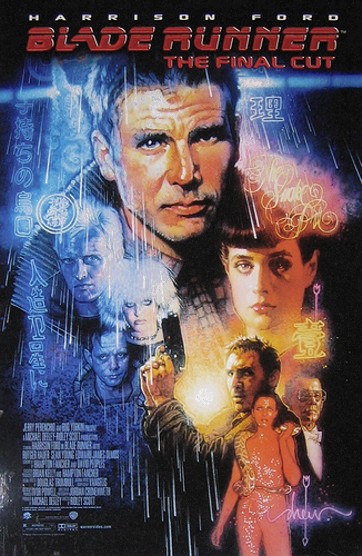
6. Blade Runner (1982)
Blade Runner is today recognized as a classic but it originally received mixed reviews and was ignored by the Academy. At the very least, Rutger Hauer deserved a nomination.
This enigmatic film was probably too bizarre and unsettling for the Academy but Jonathan Glazer’s direction and Scarlett Johansson’s performance make Under the Skin a classic.
Whenever I rewatch Guardians of the Galaxy, I’m happy to discover that it still holds up as a wonderful piece of entertainment. It remains my favorite film of 2014.
On my way home recently, I saw a subway poster for Injustice: Gods Among Us, depicting DC Comics characters The Joker really to take a crowbar to the Green Lantern. That seemed interesting, but when I found out that it was a fighting game, I didn’t expect much. Most of the fighting games I’ve played will just toss a number of characters together and have them fight without any real reason to do so. The only game of recent memory to do anything different was Marvel vs. Capcom 3, where you eventually found yourself doing battle with Galactus, but even then, getting to that point was merely a set of random battles from Point A to Point C. After finding out that Ed Boon, creator of Mortal Kombat was involved, I had a feeling the fighting would be good but still empty.
Injustice’s single player game is done in such a way that it gives every character (24 in all, half heroes / half villains) a chance to shine or fall. I haven’t gone all the way through it, but each chapter of the game focuses on a particular hero and the events in that have him or her confronting an enemy to further push the narrative. While I’m not familiar with the story behind it (I’ve always been more of a Marvel than DC fan), it’s compelling enough that I at least want to know what happens next.
The story starts with the full on destruction of Metropolis at the hands of The Joker. As Batman interrogates him, Superman intervenes and we come to find that The Joker somehow manipulated him into killing Lois Lane and his unborn son. The result of this knowledge causes the scene to end in a way that reflects some of the darker tones of the Warner Animated movies like Batman: Under the Red Hood. It shifts to an alternate universe story where – from what I tell – Superman is the ruler of the world with some of the heroes siding with him and becoming your enemies. Can he be defeated? Only crazy button mashing and timing will tell.
As fighting games go, the mechanics to Injustice are very simple. Rooted in the Mortal Kombat style of fighting, you have your basics. Back lets you block anything coming at you high or from the air. Down blocks low sweeps and kicks. Using the diamond formation of console buttons, your light attacks from the 360’s X button / PS3s Square button. Medium Attacks are the 360s Y button / PS3’s Triangle and Heavy comes from the A button / X on the PS3. It’s a good layout that helps the battle flow fast. Combos are also very easy to execute, most of them being of the quick left, right, button press or down, forward button variety. The B button / Circle acts as a special character feature. I thought this was really cool in that every character has either an ability that can be enhanced – Green Lantern charges his ring, Aquaman creates a water shield or Superman uses the Sun to make him stronger. For those were are less than meta, their gadgets / weapons change. Batman brings in a swarm of mini bats, Nightwing’s escrimas fuse together to form a staff and Wonder Woman switches from her lasso to her sword & shield.
InJustice also uses a meter system similar to Street Fighter IV. As you get hurt or string attacks, this meter will fill up in stages. You can use a stage to pull off more advanced moves or if you allow it max out, you can unleash a Signature Move. Some of them are very cool – Both Superman and The Flash have one that I love to do – while others – like Green Lantern’s and The Joker are smile inducing. These are fun, but it would have been nice to maybe incorporate 2 different ones per character. That’s just me.
The backgrounds are used very well in Injustice. If you happen to be near an object that can be used – say a car that’s parked in front of Wayne Manor, a quick bumper button tap lets you smack your opponent with it or throw it at them. Other stages have multiple levels that let you take the battle high or low and damage your enemy in the process. From the street of Gotham City, I sent Solomon Grundy into a chemical truck that exploded, and sent him flying upwards, bouncing off of various apartments until he landed on the roof of a building. That was downright awesome, and strung together with the right combo just adds to the feeling that you’re working with some pretty powerful characters. I haven’t smiled like that since some of my little brother’s Dragonball Z games. Other locations include the Hall of Justice, The Batcave, Atlantis, Themyscira, Arkham Asylum and The Fortress of Solitude. Some of the other locations have multiple levels that be accessed.
And that power can easily be abused, especially when the game goes online. As previously mentioned, the players are divided between those with superpowered abilities (Shazam, Superman, Green Lantern) and the weapons based fighters. I gave the online game a try, which has a number of different modes. While the one on one battles are nice, I liked the Survivor Mode that puts a player as the one everyone needs to dethrone. What’s sweet here is that you can alternate from a theatre mode that lets you watch two people fight or switch over to the current list of people who have waiting to take on the winner. The reigning champ only has so much health to work with from game to game, and I watched one fellow using Black Adam keep everyone at bay with distance shots. Another used Superman and just kept lasering the opponent. It has room for some cheezy moves, but that’s common with just about any fighter, I think. My Nightwing couldn’t even get close. Then again, I’m not the best fighter in the ring. Every fight you have, whether it’s offline or online gives you some sort of XP, which can be used to unlock and use new Portrait Cards, alternate costumes and backgrounds for your Badge (made popular by Call of Duty).
In terms of problems, the only complaint I have about Injustice is that I hoped there would have been more tailoring to the relationships between the characters. Other than that, the game’s just grand. Marvel vs. Capcom 3 had this system where depending on who you chose and who you were up against, you would get some banter that was character specific. For example, if your tag team of 3 in that game were made up of Thor, Captain America and Iron Man, you’d have an opponent recognize that group as the Avengers. If X-23 faced off against Wolverine, she’d ask him who really was the best at what they do. Injustice does this to a small degree, only happening when you perform a Wager match in a round. Wager matches allow you to bet some of your Meter Power. This results in a scene where the players throw a line at each other before charging at full speed. Whoever wins gains some health. The loser has the opponent’s meter level match his or her damage. Sometimes it works out, other times, it’s just alright. I wanted more of that. My favorite so far is the Nightwing / Joker interaction:
Joker: “I liked you better as Robin.” / Nightwing: “I liked you better in Arkham.”
Overall, Injustice: Gods Among Us is a great game to play if you’re in either into fighting games or are a fan of the DC Universe. I’m curious as to what the downloadable content is going to contain.







 Through the Shattered Lens