A Blast From The Past: You Can’t Take It With You (dir by Kirk Browning and Ellis Rabb)


Our regularly scheduled review of St. Elsewhere will not be posted today so that we may bring you this special presentation….

My retro television reviews will return next week but for now, check out this 1984 production of You Can’t Take It With You, starring the great Jason Robards.  Back in 1938, this play served as the basis of a perfectly charming Frank Capra film.  (It also won best picture of the year.)  This filmed version of the play’s Broadway revival is just as charming.

And now, without further ado, here is You Can’t Take It With You….

Horror Film Review: Eyes of Laura Mars (dir by Irvin Kershner)


The Eyes of Laura Mars opens with Barbra Streisand singing the theme song, letting us know that we’re about to see one of the most 70s films ever made.

Laura Mars (played by a super intense Faye Dunaway) is a fashion photographer who is known for the way that her work mixes sex with violence.  Some people say that she’s a genius and those people have arranged for the publication of a book of her work.  (The book, naturally, is called The Eyes of Laura Mars.)  Some people think that Laura’s work is going to lead to the downfall of civilization.  And then one person thinks that anyone associated with Laura should die.

And that’s exactly what starts to happen.

Laura has visions of her friends being murdered.  Some people believe that makes her a suspect.  Some people think that she’s just going crazy from the pressure.  John Neville (Tommy Lee Jones), the detective assigned to her case, thinks that Laura is a damaged soul, just like him.  Neville and Laura soon find themselves falling in love, which would be more believable if Dunaway and Jones had even the least amount of chemistry.  Watching them kiss is like watching two bricks being smashed together.

There’s plenty of suspects, each one of them more a 70s cliché than the other.  There’s Donald (Rene Auberjonois), Laura’s flamboyant friend.  There’s Michael (Raul Julia), Laura’s sleazy ex-husband who is having an affair with the gallery of the manager that’s showing Laura’s photographs.  And then there’s Laura’s shift-eyed driver, Tommy.  Tommy has a criminal record and carries a switchblade and he always seem to be hiding something but, to be honest, the main reason Tommy might be the murderer is because he’s played by Brad Dourif.

If there’s one huge flaw with the film, it’s that the film never explains why Laura is suddenly having visions.  Obviously, the film is trying to suggest that Laura and the murderer share some sort of psychic connection but why?  (I was hoping the film would reveal that Dunaway had an evil twin or something like that but no.)  The other huge problem that I had is that one of the more likable characters in the film is murdered while dressed as Laura, specifically as a way to distract the killer.  So, that kind of makes that murder all Laura’s fault but no one ever points that out.

Personally, I think this film missed a huge opportunity by not having Andy Warhol play one of the suspects.  I mean, how can you make a movie about a pretentious fashion photographer in the 70s without arranging for a cameo from Andy Warhol?

The other missed opportunity is that the script was written by John Carpenter but he wasn’t invited to direct the movie.  I suppose that makes sense when you consider that Carpenter actually sold his script before he was hired to direct Halloween.  (Both Halloween and The Eyes of Laura Mars came out in the same year, 1978.)  That said, Carpenter would have directed with more of a sense of humor.  Director Irvin Kershner takes a plodding and humorless approach to the material.  When you’ve got a film featuring Faye Dunaway flaring her nostrils and Tommy Lee Jones talking about how sad his childhood was, you need a director who is going to fully embrace the insanity of it all.

With the glamorous background and the unseen killer, The Eyes of Laura Mars was obviously meant to be an American giallo.  Occasionally, it succeeds but again, it’s hard not to feel that an Italian director would have had a bit more fun with the material.  In the end The Eyes of Laura Mars is an interesting misfire but a misfire nonetheless.

Embracing the Melodrama #36: Fatal Attraction (dir by Adrian Lyne)


fatal-attraction

(This review has spoilers because I felt like it and I’ll do whatever the Hell I want.)

Today, we continue embracing the melodrama by taking a look at the 1987 best picture nominee, Fatal Attraction.

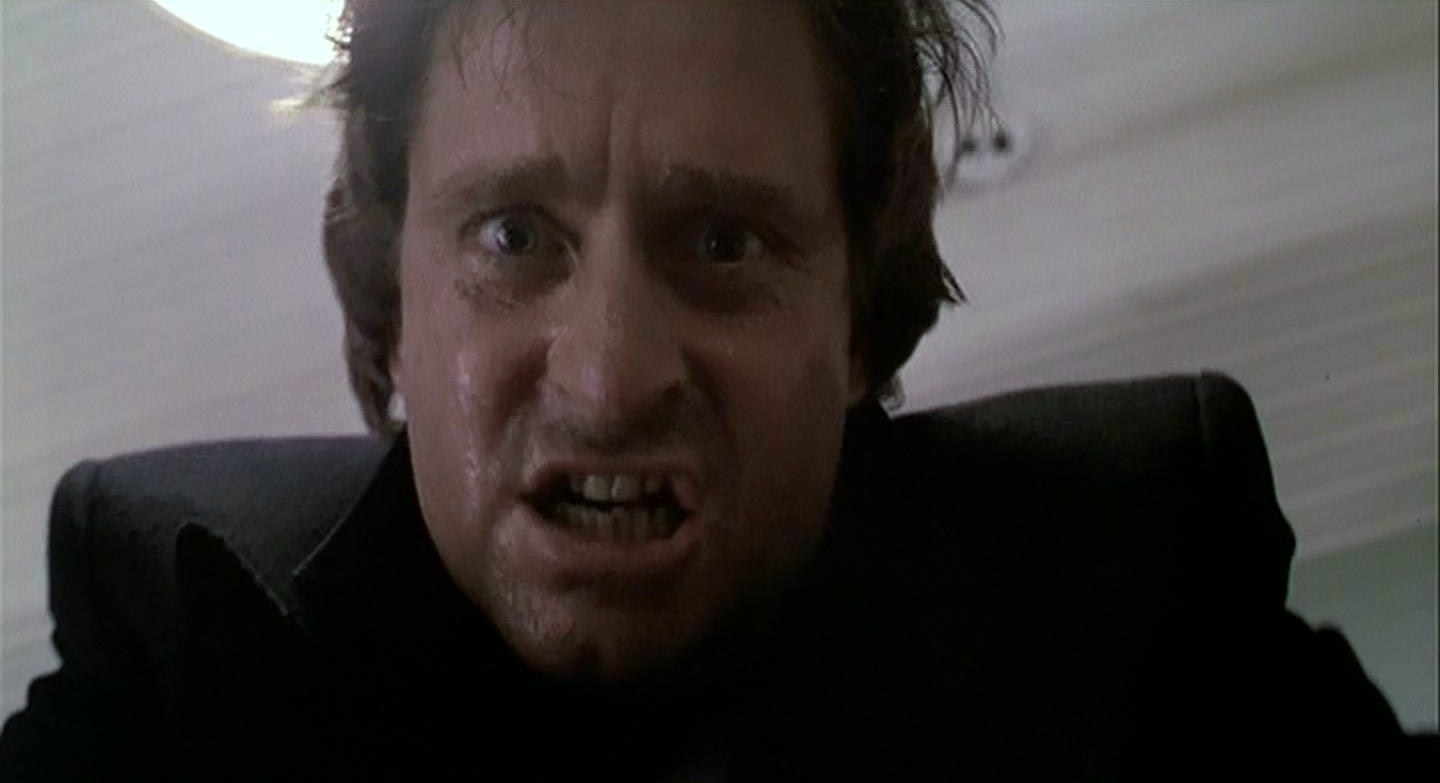
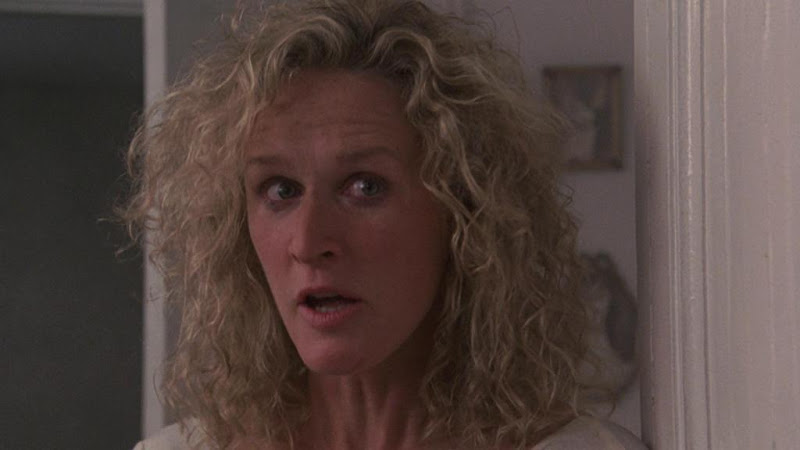
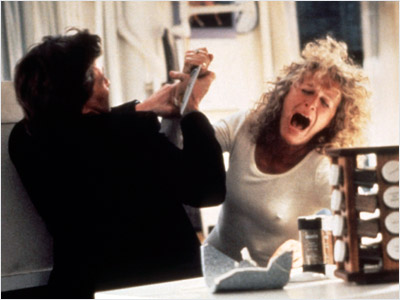
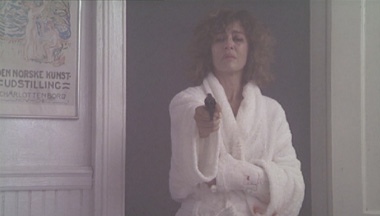
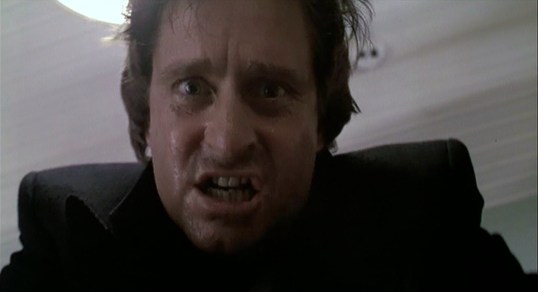
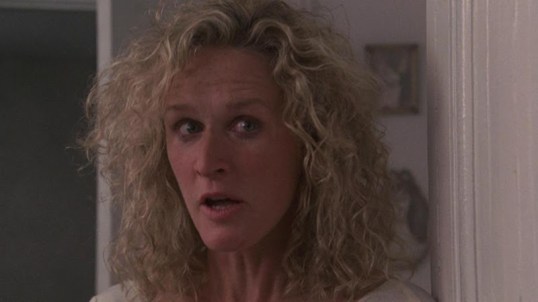
Fatal Attraction opens on a scene of domestic bliss, with lawyer Dan Gallagher (Michael Douglas) and his wife Beth (Anne Archer) in their luxurious Manhattan apartment, getting ready to go out for the night and waiting for the babysitter to arrive.  Dan would appear to have it all: a successful career, a fat best friend, and a beautiful wife.  However, when Beth and their daughter go out of town for the weekend, Dan ends up having an affair with Alex (Glenn Close).  Dan assumes that it was just a weekend thing but Alex is soon stalking Dan.  Trying to escape her, Dan moves his family out to the suburbs but Alex follows them.  Soon, pet rabbits are being killed, Alex is breaking into the house with a knife, and it’s up to Beth to step up and reclaim her man.

I have to admit that I have mixed feelings about Fatal Attraction.  On the one hand, it’s an undeniably well-made film.  It’s well-acted and director Adrian Lyne pushes all of the right emotional buttons and keeps the action moving quickly.  That the film is predictable doesn’t make it any the less effective.  As a lover of horror movies, I appreciated the skill with which Lyne crafted the film’s scare scenes.  Watching the movie, it was easy to see why Fatal Attraction was a huge box office success and why it continues to influence our culture to this very day.
fa05

And yet, at the same time, Fatal Attraction really annoys me.

The film is so well-made and so manipulative that it’s easy to miss the fact that Dan Gallagher is not only never punished for betraying his wife but he’s actually not held responsible for his actions in any way.  Instead, the only person who is truly punished for their transgression is Alex.  The film, after all, makes clear that Alex is the one pursuing Dan.  In fact, it could be argued that when it comes to Dan and Alex, the traditional gender roles have been reversed.  Alex (who, as opposed to the idealized Beth, has a name that is both masculine and feminine) is the aggressive one while Dan is the passive one who gives into temptation and, afterwards, feels guilty.  After admitting his transgression, Dan is allowed to reclaim his manhood and continue on with his perfect life.  However, Alex has no place in conventional society and therefore, she must be destroyed.

And so much the better if she’s destroyed by Beth, a woman who has no problem with accepting a traditionally domestic role.

Far too often, in the past, I know that my girl friends and I always assumed that men were simply incapable of resisting temptation.  Therefore, if your boyfriend cheated on you, it really was not his fault.  He was just being a guy.  Instead, it was the other woman’s fault because she was the one who tempted him.  (And, though we acknowledged this a lot less, it was also his girlfriend’s fault for allowing him to get into a position where he could be tempted in the first place.)  But it was never truly guy’s fault and, as long as you made him suffer for a bit, it was always expected that you would forgive him and take him back.
ff562f_50a74289f9f696cf59a7125eec69b111

That’s the same mentality that runs through Fatal Attraction (not to mention countless daytime talk shows where girlfriends and wives always beat up mistresses while their boyfriend or husband stands over to the side and watches, untouched).  Yes, Dan did cheat on his perfect wife and yes, he feels terrible about it.  But the real threat comes from the woman who pursued him despite knowing that he was married and then, afterwards, had the nerve to demand not to be ignored.  (If anything, the film seems to be suggesting that everything would have been okay if Dan had just fucked someone who works in his office, as opposed to someone who he can’t control through money or the threat of societal shaming.)  When, at the end of the film, Beth shoots Alex, it’s a crowd-pleasing moment but it’s also Beth’s way of reclaiming her man.  Since Dan — being male — can’t be expected to exercise any sort of self-control, it’s the responsibility of Beth to step up and destroy the temptation.

For not respecting the vows of marriage, Alex is a monster who must be destroyed.  Dan, on the other hand, is merely inconvenienced and ultimately, he ends up with a far stronger marriage as a result of having strayed.

In Fatal Attraction, the only thing more dangerous than sex with Alex is examining subtext.
Fatal Attraction-22

Embracing the Melodrama #32: Ordinary People (dir by Robert Redford)


ordinary_people_oc87rd_1

For the past seven days, I’ve been reviewing — in chronological order — fifty of the most memorable melodramas ever filmed.  We started with a silent film from 1916 and now, we have reached the 80s.  What better way to kick off the decade than by taking a look at the 1980 Best Picture winner, Ordinary People?

Directed by Robert Redford, Ordinary People tells the story of the upper middle class Jarrett family.  On the surface, the Jarretts appear to be the perfect family.  Calvin Jarrett (Donald Sutherland) has a successful career.  Beth (Mary Tyler Moore) keeps a perfect home and appears to be the ideal suburban matriarch.  However, one summer, their oldest son drowns in a sailing accident and their youngest son, sensitive Conrad (Timothy Hutton), attempts to commit suicide.  After spending four months in a psychiatric hospital, Conrad come back home and the family struggles to put their lives back together.  Even though he starts to see a therapist (Judd Hirsch) and starts dating his classmate Jeannine (Elizabeth McGovern), Conrad still struggles with his feelings of guilt over having survived.  Beth’s struggle to maintain a facade of normalcy leads to several fights between her and Conrad with Calvin trapped in the middle.

Among my fellow film bloggers, there’s always going to be a very vocal group that is going to hate Ordinary People because it won the Oscar for best picture over challenging black-and-white films directed by Martin Scorsese (Raging Bull) and David Lynch (The Elephant Man).  They always tend to complain that Ordinary People is a conventional film that tells a conventional story and that it was directed by a very conventional director.  More than once, I’ve seen an online film critic refer to Ordinary People as being a “big budget Lifetime movie.”

Well, you know what?

I love Lifetime.  Lifetime is the best network on television and to me, a big budget Lifetime movie would be the best Lifetime movie of all.  And, at the risk of alienating all of my film-loving friends, if I had to choose between watching Raging Bull and Ordinary People, I’m going to pick Ordinary People every time.  Raging Bull is visually stunning and features great performances but it’s also two hours spent watching an incredibly unlikable human being beating the crap out of anyone who is foolish enough to love him.  Ordinary People may essentially look like a TV show but it’s also about characters that you can understand and that, as the film progresses, you grow to truly care about.

Yes, I do wish that the character of Beth had been given more of a chance to talk about her feelings and it’s hard not to feel that Ordinary People places too much blame on the mother.  But, even so, the film still ends with vague — if unlikely — hope that Beth will eventually be able to move past her anger and reconnect with her family.  The film may be hard on Beth but it never gives up on her.  That’s what distinguishes Ordinary People for me.  In many ways, it’s a very sad film.  It’s a film that was specifically designed to make you cry and I certainly shed a few tears while I watched it.  But, even with its somewhat ambiguous ending, Ordinary People is also a very optimistic movie.  It’s a movie that says that, as much pain as we may have in our life,we can recover and life can go on and it’s okay to be sad and its also okay to be happy.

And that’s an important lesson to learn.

(That said, if I had been alive and an Academy voter in 1981, I would have voted for The Elephant Man.)

And, for all you Oscar lovers out there, here are clips of Timothy Hutton and Robert Redford winning Oscars for their work on Ordinary People.