Horror Review: Bone Tomahawk (dir. by S. Craig Zahler)


“What is sacred to a bunch of goddamned savages ain’t no concern of the civilized man! We got permission!” — Buddy

Bone Tomahawk (2015) begins in quiet dread. A still horizon, the whisper of wind across rock, a hint of bone under the dust—the American frontier looms like an unfinished thought. This silence sets the tone for S. Craig Zahler’s remarkable debut, a film that wears the form of a Western only to strip it down to nerve and marrow. It’s a story of decency under siege, of men pushing past the last borders of civilization and discovering that what lies beyond is not the unknown, but the origin of everything they thought they’d overcome.

At first glance, the premise seems familiar. When several townspeople vanish from the small settlement of Bright Hope, Sheriff Franklin Hunt (Kurt Russell) leads a rescue expedition into the desert. Riding with him are three others: the injured but determined Arthur O’Dwyer (Patrick Wilson), whose wife has been taken; his tender-hearted deputy, Chicory (Richard Jenkins), whose chatter and old-fashioned kindness soften the film’s bleak austerity; and the self-assured gunman John Brooder (Matthew Fox), a man equal parts gallant and cruel. Together, they represent the moral cross-section of a civilization still trying to define itself—duty, love, loyalty, arrogance.

Their journey outward becomes one of inward descent. Zahler’s script unfolds at a deliberate pace, steeped in stillness and exhaustion. The first half moves like ritual—meandering conversations, humor worn thin by weariness, the small comforts of campfire fellowship flickering against the vast emptiness around them. It’s here that Bone Tomahawk begins its slow transformation. What starts as a rescue Western gradually becomes something deeper and older. By stripping away the romance of exploration, Zahler reveals the frontier not as a space of discovery, but as a place of reckoning—a mirror of the instincts civilization pretends to have tamed.

The film’s most haunting element is its portrayal of the so-called “troglodytes,” the mysterious group believed to be responsible for the kidnappings. They are less a tribe than an incarnation of the wilderness itself—nameless, wordless, and utterly beyond cultural translation. Covered in ash, communicating through the eerie hum of bone instruments embedded in their throats, they seem less human than ancestral, as though the land itself had dragged them upward from its own depths. Zahler refuses to frame them anthropologically or politically; instead, they represent the primal truth the American frontier sought to bury under its myths of order and progress.

Western films, for more than a century, have mythologized the wilderness as an external force—something to conquer. But the “troglodytes” in Bone Tomahawk feel like the soil’s memory of what came before conquest: the savage necessity that built the very myths used to conceal it. They are the frontier’s unspoken ancestry—what remains after all the churches, taverns, and codes of decency are stripped away. Civilization needs them to remain hidden in the canyons, out of sight and unspoken, because their existence contradicts everything the polite narrative of the Old West stands for. They are what progress denies but cannot erase.

Zahler’s restraint strengthens this allegory. He shoots the desert not as backdrop but as evidence—a geographical wound extending beyond the horizon. The wilderness looks stunning but predatory, its stillness full of threat. Even when the posse’s odyssey is free of immediate danger, there’s the growing sense of being consumed: by the sun, by exhaustion, by the quiet knowledge that the world they’re riding into has no use for their notions of law and virtue. Civilization, here, is a pocket of light surrounded by something much older and hungrier.

That hunger, the need to conquer and consume, connects Bone Tomahawk to its spiritual predecessor, Antonia Bird’s Ravenous (1999). Bird’s film transformed the Donner Party’s historical ghosts into an allegory of Manifest Destiny, equating cannibalism with American expansion—the act of devouring land, life, and self under the guise of progress. Zahler continues that lineage with deliberate starkness. For him, violence in the frontier isn’t just literal; it’s foundational, the unacknowledged currency of civilization. Where Ravenous expressed its critique with mordant humor, Bone Tomahawk speaks in solemn tones, observing how every civilized act—the enforcement of law, the defense of home—rests upon the refusal to see what was consumed to create it.

The “troglodytes” embody that refusal incarnate. They are not villains in the traditional sense; Zahler grants them no ideology or explanation, only the primal fact of their survival. In doing so, he flips the Western’s moral equation: the barbarians at the edge of civilization are not invaders, but reminders of its origins. They are ghosts of the violence that founded the frontier, the unspoken proof that the West was never as far from savagery as it claimed. To look upon them is to glimpse the beginning—the raw, lawless reality America buried beneath the idea of itself.

Kurt Russell, magnificent in his restraint, anchors this tension. His Sheriff Hunt evokes a fading kind of decency: measured, fair, and unwavering even in futility. Russell plays him not as a Western hero but as a man committed to honor in a world that no longer rewards it. His calm authority softens only around those he loves and hardens in the face of what he doesn’t understand. In that measured decency lies the film’s aching question: what happens when morality meets something that does not recognize it?

Patrick Wilson’s O’Dwyer embodies faith’s physical agony—a man driven by devotion, limping through a landscape that punishes his determination. Richard Jenkins provides heart and subtle tragedy; his rambling, almost comical musings on aging and loneliness become the story’s moral texture, the sound of humanity scraping against extinction. And Matthew Fox, in his most precise performance, gives voice to the arrogance of the civilized killer—a man who fashions violence as virtue, believing his elegance excuses his cruelty.

Together, the four men form a living cross-section of the West’s moral mythos. Their journey exposes how fragile those ideals become once separated from the safety of town limits. They embody the dream of order confronting the truth of chaos—and the cost of looking too long into the void beyond it.

Zahler’s filmmaking is remarkably self-assured for a debut, and what stands out most is his willingness to trust stillness. There is no manipulated rhythm, no swelling score to guide emotion. The soundscape is shaped by wind, hoofbeats, crackling fires, and quiet voices rattled by exhaustion. The silence itself becomes a spiritual presence, pressing down on the travelers until conversation feels like resistance. Each scene builds tension not through action, but through waiting—the dread of what remains unseen, what civilization has pretended not to hear.

The violence, when it erupts, is unforgettable. Zahler does not linger voyeuristically, yet the weight of what happens lands with moral precision. The horror feels earned—an eruption of the primal into the civilized. Its purpose is not to shock, but to remind: the line between the men of Bright Hope and the people they fear is thinner than they want to believe. The frontier, as Zahler presents it, is not an untouched wilderness but the graveyard of an ongoing denial—the myth of progress stacked atop the bones of the devoured.

In that way, Bone Tomahawk moves beyond the idea of genre blending. It is not merely a “horror Western,” but a meditation on how those two sensibilities spring from the same source. Both depend on the confrontation between safety and the unknown, belief and disbelief. Both are rituals of fear, structured to reassure yet always at risk of unveiling the truth. Zahler’s greatest achievement is the way he strips away that reassurance. By the film’s final stretch, the promises of civilization—hope, faith, righteousness—have been exposed as fragile constructions built atop an ancient void.

And yet, through all its darkness, Zahler allows a flicker of grace. The film’s humanity endures in small gestures: a conversation interrupted by laughter, a hand extended in kindness, the stubborn persistence of dignity in impossible circumstances. Bone Tomahawk never preaches or offers catharsis, but it does something harder—it bears witness. It shows men maintaining decency not because it protects them, but because it defines them. In that endurance lies the film’s quiet heartbeat.

Like Ravenous before it, Bone Tomahawk reimagines cannibalism and frontier brutality not as aberrations, but as mirrors reflecting a truth about the American project: that every step westward demanded erasure, and that what was erased refuses to stay buried. The “troglodytes” linger not only in the canyons but within the culture that feared them—proof that civilization’s polish has always covered the rough, enduring shape of appetite.

By the end, what remains is not revelation or redemption, but silence—the kind that comes after myth collapses. Zahler’s film leaves its characters and viewers alike to confront the space where civilization ends and something older begins. The desert remains untouched, vast and timeless, holding the secret at the center of all Western stories: that progress has always been haunted by the primitive, that the world we built never left the wilderness—it merely disguised it.

Measured, brutal, and strangely tender, Bone Tomahawk stands as both a reclamation and an undoing of the Western myth. It listens to the echoes of the Old West and answers them not with triumph, but with reckoning. In its dust and silence lies a truth older than law or legend: civilization may light its fires, but there will always be something in the dark watching, waiting—the part of us it never truly left behind.
Horror Trailer: Bone Tomahawk


Bone Tomahawk

We never have enough horror set in the Old West. It’s a setting that should be rife with infinite possibilities for some very scary storytelling.

When we do get Old West horror they tend to be direct-to-video and low-budget affairs. Now don’t get me wrong low-budget horror sometimes are some of the most effective. The closer it gets to it’s grindhouse roots the better. Then again some do end up being a pile of turds that end up getting relegated in the dollar bin at supermarkets.

My hope is that the latest Old West horror starring Kurt Russell will be the former and not the latter.

Bone Tomahawk made it’s premiere at this year’s Fantastic Fest and from all intents and purpose had a very positive reception to it’s genre mash-up of cowboys vs cannibals. Now what better way to follow-up The Green Inferno but with another cannibal fare set in the dusty plains and canyons of the Old West.

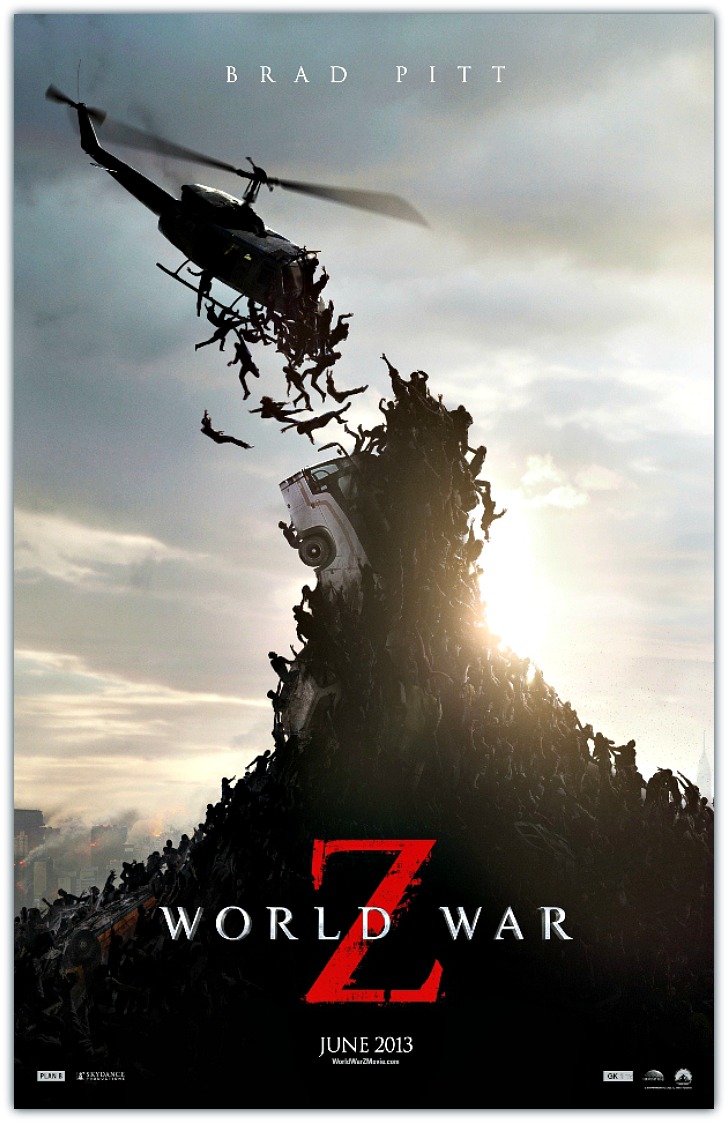
Trailer: World War Z (2nd Official)


WorldWarZ

We see the release of a new trailer for this summer’s epic zombie film based on the equally epic novel of the same name by Max Brooks.

World War Z is already the most expensive zombie film ever made with a budget rumored to be between 125-200 million dollars. Some of this has been due to the delays in filming and most of it seems to stem from a massive rewrite of the third act. Damon Lindelof was first hired to rewrite but due to prior commitments the job went to Drew Goddard. Such a rewrite also meant reshoots had to be done which took another seven weeks of shooting.

All in all, World War Z is one troubled film before it even gets to the general public.

Yet, it is also one of the more anticipated films for this summer. Some from fans of the genre who just can’t get enough of zombie films. Some from people wanting to see just what sort of zombie film ends up with a budget around 200 million dollars. From the trailer we’ve seen some of that money seem to have gone on some massive special effects sequences which includes swarming zombies of the Rage-infected kind. Then again we don’t really see the zombies close-up which tend to make them look like swarming ants from afar. Maybe the look of the zombies themselves have been saved for the release of the film.

This latest trailer actually gives a bit more of the plot of the film which puts Brad Pitt’s UN employee character to travel the world in search for the cause of the worldwide zombie pandemic. The speed by which things happen seems to have compressed all the events in the novel into a film of two hours. This, I’m sure will be a major contention with fans of the novel, but it looks like a decision by filmmaker to try and create a single narrative from a novel that was mostly single-hand accounts of the zombie war from survivors who have no connection with each other whatsoever.

We’ll find out in just under 3 months if this film will be a major flop or succeed despite all the stumbling blocks and problems throughout its production.

World War Z is set for a June 21, 2013 release date.

Trailer: World War Z (Super Bowl Exclusive)


One of the films that was to have it’s day in the Super Bowl ad campaign rush was Paramount Pictures’ troubled epic zombie apocalypse film, World War Z.

Starring Brad Pitt and directed by Marc Forster, the film is an adaptation (very loosely adapted from the novel) of the novel of the same name written by Max Brooks. Anyone who is even remotely interested in the topic of zombie fiction (or that they’re real like certain awesome people) have read this novel and have been highly anticipating the film. When the first trailer was released several months ago the reaction to the changes made from book to film was a resounding “Huh” to “WTF?!” from fans.

Time will not be changing some of these reactions, but from the sudden release of the Super Bowl ad TV spot that the film will show during Sunday’s Big Game it looks like the film will take the basic premise of the novel and go it’s own way. The zombies being CGI when seen from a distance and moving like ravenous army ants (siafu as the Japanese call them which is also what the zombies were called in the novel).

The film seems to want to see the zombie apocalypse first-hand as it occurs and sped things up to bring more action to the proceedings. This is not a bad thing if the film had been titled other than World War Z, but since it needed to use that name the complaints by fans of the novel will continue. Just based on the trailer and this teaser spot alone it looks like there’s something interesting going on in this film that people will either love or hate. I’m hoping I’ll be of the former than the latter.

World War Z is set for a June 21, 2013 release date.

WorldWarZ

Trailer: World War Z (Official)


It’s not hyperbole to say that one of the best horror novels to come out in the past 20 years was written by Mel Brook’s son. A son who wrote comedy scripts for Saturday Night Live. Max Brooks before 2003 was relatively unknown to genre fans. This changed post-2003 with the release of his tongue-in-cheek how-to book, The Zombie Survival Guide. It was a book that was slow to succeed in terms of sales but grew in popularity as more and more fans of the zombie genre heard about it and recommended it to like-minded friends. Just like the subject matter Brooks worte about this guide spread in a geometric pattern and more and more people began to know.

In 2006, Brooks released the companion piece to his best-selling guide with the fictional oral history account of the aftermath of a zombie apocalyptic war and how humanity fought back from the brink of extinction. This novel was World War Z and even before one could say “this book could be made into a film…” the film rights to the book became a hot commodity in Hollywood. In the end, Brad Pitt’s Plan B production company won the right to adapt the novel into a feature-length film.

After several years of trying to create a screenplay from the documentary-style and sprawling narrative of the novel the film finally went into production in mid-2011 with a screenplay that took some of the important events from the novel and set the film during the war itself as it unfolded instead of flashbacks as recounted by those who survived. This change has angered fans of the book and their anger and frustration went up another notch when some leaked on-the-set footage showing the zombies as more of the running-style zombies than the slower ones in the novel.

Another stumbling block pushed the film from a holiday 2012 release date to a summer 2013 release as Paramount looked to having World War Z as part of their 2013 summer blockbuster slate of films. This film has had so much issues and problems that it took to Brad Pitt finally agreeing to headline the cast to get the film finally made. So, instead of a film the chronicles the stories of the war’s survivors a decade after the war ended we now have a film that skews more towards a film that’s heavy on action set-pieces and globe-trotting. Someone on IGN.com has called World War Z (after seeing the attached official trailer) as 2012 with zombies. The first official trailer does seem to make it look like that.

As a fan of the novel I’m saddened by the changes, but I will say that the trailer does make this film look very epic. I’m more than willing to watch this film (who am I kidding I will watch this film and probably more than once or twice.) and look at it as the filmmakers’ own take on the novel. I mean if it turns out to be great on it’s own then hooray. If it sucks then I still have my novel to go back to. Plus, this is the first zombie film that will show the pandemic in global settings and proportions. This will be the first time we get to see this on film and not just on the written page.

My own review of the novel gives an idea just how different the film will be from the source material.

Trailer source: Joblo Movie Network

2 Trailers: The Sessions and Alex Cross


A frequently asked question: When is John Hawkes going to win an Oscar?

Ever since I first saw Winter’s Bone back in 2010, I’ve wondered just when exactly John Hawkes is going to finally win an Oscar.  Unfortunately, he did not win for Winter’s Bone and his chilling work in Martha Marcy May Marlene was ignored.  This year, however, he’s back with The Sessions.  In this film, Hawkes plays a 38 year-old man who is confined to an iron lung and who is attempting to lose his virginity with the help of William H. Macy and Helen Hunt.

The Sessions has been getting a lot of buzz since it premiered on Sundance.  That, quite frankly, makes me wary because I’ve come to learn that you have to take Sundance acclaim with a grain of salt.  If Cannes is where people go to be insanely critical, Sundance has a deserved reputation for going overboard when it comes to praise.  However, I will take a chance on anything featuring John Hawkes and, just judging from the trailer, it looks like both The Sessions and John Hawkes could be contenders when it comes time to hand out Oscar nominations.

A less frequently asked question: When is Tyler Perry going to win an Oscar?

Most people would probably answer that question by replying, “Never,” and they could very well be correct.  I have to admit that I’ve never actually sat through any of Tyler’s Perry’s films and, to be honest, I’ve never really had any desire to.  That said, I’ve always been fascinated by Perry’s success and I can’t help but admire the fact that he’s not shy when it comes to self-promotion.

In the upcoming Alex Cross, Tyler Perry will step into a role that was previously played by Morgan Freeman and, if nothing else, it’ll add fuel to the debate as to whether or not Perry is a legitimate acting talent or just a smart businessman.  To be honest, the trailer for Alex Cross plays less like a movie trailer and more like a commercial for a movie on Chiller.  I think that’s largely because of the presence of TV-movie mainstays like Matthew Fox and John C. McGinley.  Still, chances are, Alex Cross will be the first exposure that I (and a lot of other people) get to Tyler Perry as an actor as opposed to just a personality.