Mardi Gras Film Review: Lady Behave! (dir by Lloyd Corrigan)


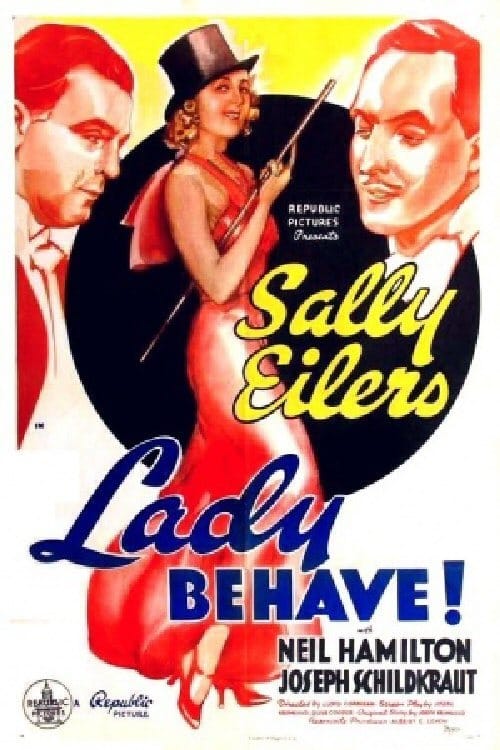
The 1938 film, Lady Behave!, begins with a woman named Clarice (Patricia Farr) getting ready to go out and celebrate Mardi Gras.  Even though Clarice invites her older sister, Paula (Sally Eilers), to come with her, Paula refuses.  Paula has work to do at home.  It’s pretty obvious that this is the way that it’s always been between the two sisters.  Clarice has fun while Paula stays home and waits for her to return.

Fortunately, Clarice does return in the morning.  As she tells Paula, she had a great time during Mardi Gras.  In fact, she had such a great time that she ended up getting married!  She married a wealthy northerner named Stephen Cormack (Neil Hamilton).  The only problem is that Clarice is already married!  She’s totally forgotten that she only recently became the wife of a dissolute playboy named Michael Andrews (Joseph Schildkraut).  By getting married a second time, Clarice has committed bigamy!  She could go to prison for 10 years!

Whatever is Paula to do?

Well, what if she arranges for Clarice to leave the country?

What if she tries to bribe Michael into accepting an annulment?

What if Paula goes up to New York and pretends to be Clarice (because, after all, Stephen was pretty drunk when he married her)?

What is she does all three!?

Of course, when Paula goes up to New York, she discovers that Stephen is out of the country.  She moves into his mansion, where she discovers that his two children — Patricia (Marcia Mae Jones) and Hank (George Ernest) — are convinced that she’s just a gold digger who only wants to steal their father’s money (and, it should be noted, also their inheritance).  When Michael shows up at Stephen’s mansion, he explains to Paula that he needs $10,000 for a horse and he’ll only agree to an annulment if he gets the money.  However, when he meets Patricia and Hank, he tells them that if they pay him $30,000, he’ll help to break up the marriage between Stephen and Paula (who, of course, everyone but Michael thinks is actually Clarice).

Eventually, Stephen shows up and he assumes that Paula actually is Clarice.  Paula and Stephen quickly fall in love and it turns out that Stephen is very serious about his new marriage.  He even wants to take Paula on a honeymoon.  Of course, he thinks Paula is Clarice and Paula is freaking out because they’re not actually married but she wishes that they were.  But, if they did actually get married, Stephen would be guilty of bigamy and then he’d have to leave the country like Clarice and….

Yes, this is one of those somewhat busy screwball comedies where almost every action is motivated by a misunderstanding and where all of the dialogue is extremely snappy.  To be honest, it’s all a bit too hyper.  Though the film originally had a running time of 70 minutes, most of the existing prints are only 57 minutes long.  This film has a lot of plot for only 57 minutes and it’s often difficult to keep track of what’s happening from one scene to the next.  That wouldn’t be a problem if this film starred someone like William Powell and Carole Lombard (or, for that matter, Cary Grant and Myrna Loy) but instead, this film features Sally Eilers and Neil Hamilton, who are likable performers but not quite likable enough to carry the film over it’s rough edges.

On the plus side, Joseph Schildkraut has some very funny scenes as the flamboyant Michael.  And Marcia Mae Jones and George Ernest both do a great work as Stephen’s paranoid children.  They consistently made me laugh.  Otherwise, Lady Behave! is a bit too frantic for its own good.

Mardi Gras Film Review: On Hostile Ground (dir by Mario Azzopardi)


Uh-oh!  New Orleans might be in trouble!

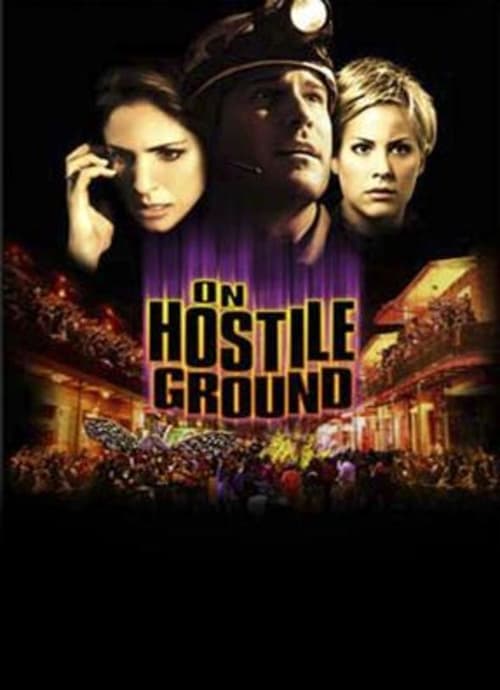
In the 2000 film, On Hostile Ground, John Corbett plays a geologist named Matt Andrews.  Matt has been asked to investigate why two giant sinkholes have suddenly opened in New Orleans.  The mayor’s press secretary, George Regan (Peter Stebbins), hopes that Matt will just do a perfunctory investigation and then declare the sinkholes to be no big deal.  After all, it’s nearly time for Mardi Gras and it would be an economic disaster to cancel this year’s celebration.  One can only assume that, like most movie bureaucrats, Regan has never seen Jaws and therefore doesn’t understand the folly of saying, “We can’t close the city during tourist season!”

However, Matt’s a geologist and he holds himself up to a higher standard.  He doesn’t care about whether or not people get to celebrate Mardi Gras or not.  In fact, just listening to him talk and watching him work, you get the feeling that Matt was probably the guy who, during previous Mardi Gras celebrations, would say, “You guys go without me.  I’ve got to get some work done.”  Anyway, Matt does some investigating and discovers that New Orleans is basically about to collapse into the Earth.  It could happen tomorrow or it could happen 3,000 years from now but it will happen.  Matt also points out that, even if the entire city manages to not sink into the Earth, the sinkholes could cause the levees to collapse and then the entire city would be flooded.  (This movie was made before Katrina.)

Regan hears Matt out and then decides to hide all of his evidence and let Mardi Gras go on as planned.

Can you guess what happens?

There’s a few things that I immediately noticed about On Hostile Ground.

First off, my family lived in Louisiana for about a year and a half.  I’ve been to New Orleans during Mardi Gras.  I can usually tell when a film has actually been shot in Louisiana as opposed to some place nearby like, say, Georgia.  Watching On Hostile Ground, I noticed that it appeared that at least a few of the Mardi Gras scenes had actually been filmed in New Orleans.  There wasn’t quite as much Mardi Gras footage as I was expecting but what there was appeared to be authentic.  However, whenever the action moved outside of the French Quarter, I couldn’t help but notice that the surroundings looked very Canadian and that very few of the extras sounded like they had ever spent any time anywhere near the Big Easy.  In short, it quickly became obvious that the majority of this made-for-television film was shot in Montreal and Toronto.  Canada really can’t pass for Louisiana, much as how they could have never shot an episode of Degrassi in New Orleans.

The other thing I noticed is that, despite New Orleans being below sea level, Matt and his fellow geologists had no trouble finding dry underground caverns underneath the city.  It reminded me a bit of that old X-Files movie where the kids find an underground cavern right outside of Dallas.  Some things just aren’t going to happen, okay?

Anyway, this is one of those low-budget disaster films where everyone refuses to listen to the scientist and disaster follows.  This is the type of film that, nowadays, would probably be made by the Asylum for the SyFy Network.  That said, the Asylum version would probably be a lot more fun because there would be probably be like a sea serpent or killer Mardi Gras floats or something.  This one is just kind of dull and spends too much time on build-up without enough pay-off.

On Hostile Ground is not really worth sacrificing any beads for.


Mardi Gras Film Review: Dixiana (dir by Luther Reed)


Mardi Gras in New Orleans has always been a legendary party.

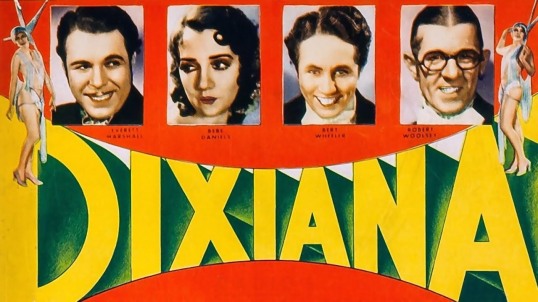
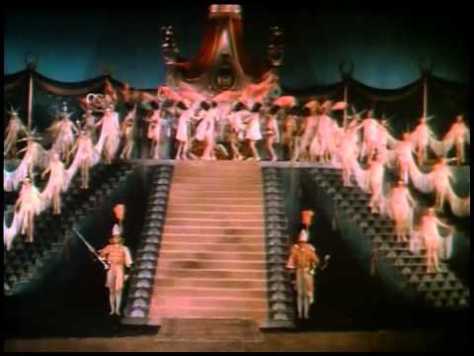
If you doubt me on this, just watch the 1930 film, Dixiana.  Dixiana is all about Mardi Gras.  I mean, there is a plot of sorts but it’s pretty easy to guess that, for audiences in 1930, the promise of a spectacular Madi Gras finale (filmed in technicolor, I might add) was the main appeal of this film.  Dixiana itself takes place in the 1840s so there you have it.  90 years ago, RKO Pictures made a lavish movie about a Mardi Gras celebration that had happened nearly 100 years earlier.  That’s quite a legendary party, no?

As with many pre-Code films about the Antebellum South, it can be a bit awkward to watch Dixiana today.  This is a film that opens on a plantation, with Cornelius Van Horn (Joseph Cawthorn) and his son, Carl (Everett Marshall), discussing how much they enjoy listening to the slaves sing about the Mississippi River.  They’re amazed that the slaves can sing so beautifully about water.  (It doesn’t occur to them that the song was actually about going up the river and finding freedom.)  Cornelius and Carl, we discover, are actually from Pennsylvania.  Cornelius has recently remarried, to the snobbish Birdie (Jobnya Howland) and both he and his son have only recently moved down to her native Louisiana.  Carl and Cornelius are still getting used to life in and the customs of the South.  Cornelius, for instance, explains that he regularly frees some of his slaves and he imagines that’s why they’re always so happy.  But if he really wants them all to be happy why doesn’t he just free them all and maybe stop buying slaves all together?  Let’s just say that Dixiana is not the film to watch if you’re looking for an honest look at American life before the Civil War.

Anyway, if you’re still interested in seeing the film after reading all of that, the majority of Dixiana takes place in New Orleans.  Carl goes into town, does some gambling, and sees a show.  He is immediately smitten with a performer named Dixiana (Bebe Daniels) and he asks her to marry him.  Even though her two best friends, Peewee and Ginger (played by the comedy team of Wheeler and Woolsey), are weary, Dixiana accepts his proposal.  Carl takes Dixiana back to the plantation with him.  Unfortunately, he also takes Peewee and Ginger and they soon let slip that they’re all circus performers.  Birdie is scandalized.  There’s no way her stepson is going to bring shame on the family by marrying a circus performer!

So, Dixiana and her friends head back to New Orleans.  The circus no longer wants her so Dixiana is forced to work in a gambling hall that’s owned by smarmy Royal Montague (Ralf Harolde).  Montague has his own personal interest in Dixiana but she’s still in love with Carl.  So, Royal plots to not only have Dixiana crowned as the Queen of Mardi Gras but also to trick Carl into accept a duel with him.  Montague, of course, plans to pull an Aaron Burr and cheat.  Meanwhile, Peewee and Ginger steal money, kick each other in the backside, and fight a duel of their own….

And really, none of that matters.  In the end, the film’s storyline is mostly just busywork.  The main reason that anyone would want to see this film is for the final 20 minutes, which is when the grainy black-and-white cinematography is replaced by gloriously vibrant technicolor and the Mardi Gras celebrations begin.  There’s singing.  There’s dancing.  There’s even Bill “Bojangles” Robinson, making his film debut and dancing up a storm.  Seriously, 1840s Mardi Gras looked like it would have been fun to attend, even if it does sometimes seem more like a lively cotillion as opposed to the orgy of alcohol poisoning that everyone knows and loves today.

Dixiana is one of those films that’s fallen into the public domain and, as such, it tends to turn up in a lot of cheap DVD boxsets.  There’s quite a few prints out that are completely in black-and-white and which don’t feature the sudden change to color.  That’s a shame because, whatever flaws this film may have, it does make good use of that technicolor during the final 20 minutes.  It’s big and lavish and gorgeous to look at and it’s easy to imagine the valuable escape that it provided for audiences at the start of the Depression.

Today, Dixiana is probably most interesting as a historical document.  It’s not quite as racy as one might expect from a pre-code film but it’s a good example of the type of lavish musicals that were popular among audiences who, in the 30s, used the film as a way to escape from the grimness of reality.  And, if nothing else, it’s proof that Mardi Gras in New Orleans has always been a big deal.

Celebrate Mardi Gras with Louis Armstrong!


gary loggins's avatarcracked rear viewer

Happy Mardi Gras Day! If you can’t get down to Bourbon Street today, here’s the next best thing – jazz great Louis “Satchmo” Armstrong and his band  performing the classic “When The Saints Go Marching In”:

Laissez Les Bons Temps Rouler, Mes Amies! 


View original post

Celebrating New Orleans With The Pulps


Unknown Artist

Tomorrow is Mardi Gras.  For many people, it will be their last chance to celebrate and indulge before the start of Lent.  Though there are annual celebrations across the country, the city that everyone think of when they hear the words “Mardi Gras” is New Orleans.  If you’ve not going to be able to get down to New Orleans this year to celebrate Mardi Gras, don’t worry.  Through the Shattered Lens has got you covered with these New Orleans and Mardi Gras-related pulp covers!

by Bernard Barton

by Earle Bergey

by Harry Bennett

by Mitchell Hooks

by Philip Ronfor

by Rudy Nappi

Artist Unknown

by William George

by Stanley Zuckerberg

New Orleans Film Review: Bad Lieutenant: Port Of Call New Orleans (dir by Werner Herzog)


“Do you think fish dream?”

— Terrence McDonagh (Nicolas Cage) in Bad Lieutenant: Port of Call New Orleans (2009)

Happy Mardi Gras!

Since today is not only Fat Tuesday but also rapidly coming to a close, I think it’s time for me to share one final New Orleans film review.  Admittedly, though this film takes place and was filmed in New Orleans, it doesn’t feature any Mardi Gras scenes.  However, it does feature a lead performance that is perhaps as bizarre as anything that you’re likely to see in the French Quarter tonight.  Of course, I’m talking about Werner Herzog’s 2009 film, Bad Lieutenant: Port Of Call New Orleans.

Whenever I mention this movie to anyone, it only takes a few minutes before they get around to saying, “What was the deal with the iguanas?”  Everyone remembers the two iguanas who would randomly show up throughout the movie.  At one point, they were sitting in a coffee table while Lt. Terrence McDonagh (Nicholas Cage) and Sgt. Stevie Pruit (Val Kilmer) were watching a house across the street.  When McDonagh demanded to know why the iguanas were on his coffee table, Pruit replied, “There ain’t no iguanas.”  McDonagh looked down at them and grinned.  This was followed by several hand-held close-ups of the iguanas, looking around inquisitively while McDonagh kept giving them the side eye.

The iguanas show up a second time, after McDonagh has tricked one gangster into killing another gangster.  “Shoot him again,” McDonagh demands, “his soul’s still dancing!”  Herzog pans over to show us that, indeed, the man’s soul is still dancing next to his corpse.  After the soul gets shot down, an iguana wanders across the floor.

What do the iguanas represent?  Some people think that they actually are meant to be hallucinations.  As the result of a back injury that he received saving a prisoner during Hurricane Katrina, McDonagh has permanent back problems and this has led to him getting hooked on drugs.  The perpetually high McDonagh sees and does a lot of bizarre things over the course of this movie.  Perhaps the iguanas are just a part of his addiction.

Myself, I think the iguanas represent the fact that, no matter what McDonagh and anyone else in New Orleans does over the course of the film, the randomness of nature is going win out in the end.  After all, Bad Lieutenant: Port of Call New Orleans opens with Katrina, which is perhaps the ultimate example of how helpless modern society is in the face of nature’s whims.  The film takes places in neighborhoods that have yet to recover from the flooding.  Every corner of the film is full of physical, emotional, and mental debris.  McDonagh pops pills and snorts cocaine in an attempt to maintain some semblance of control but ultimately, the iguanas are going to show up regardless of how much control he thinks he has.  Just as how Klaus Kinski, at the end of Aguirre, The Wrath Of God, couldn’t keep the monkeys off of his raft, Terrence McDonagh can’t keep the iguanas off of his coffee table.

Bad Lieutenant: Port of Call New Orleans apparently started life as a reboot of Abel Ferrara’s 1992 film, Bad Lieutenant.  The script (which was credited to William M. Finkelstein) is full of moments that mirror scenes from Ferrara’s film.  Once again, the protagonist is a corrupt police lieutenant who spends almost the entire film fucked up on drugs and whose only friend is a prostitute.  Again, there’s a disturbing scene in which the lieutenant harasses a young woman in a parking lot.  Again, the lieutenant has gambling debts and again, the lieutenant has to solve a horrifying crime.

While promoting his film, Herzog always said that 1) he had never seen Bad Lieutenant and 2) he didn’t even know who Abel Ferrara was.  Judging from the way Herzog directs the film, which is the complete opposite of the approach that Ferrara took to similar material, I’m inclined to believe Herzog.  Whereas Ferrara’s film was a grim and humorless plunge into the depths of Hell, Herzog takes an almost satirical approach to the story.  The running joke throughout Herzog’s film is that the bad lieutenant gets results precisely because he is so thoroughly messed up and incompetent.  The final part of Herzog’s film features so many sudden twists and turns that it’s hard not to conclude that Herzog is poking fun at how American crime films always have to wrap everything up within the final fifteen minutes, regardless of how messy or convoluted their plots may be.  Whereas Ferrara’s film featured Harvey Keitel naked and bellowing in soul-searing pain, Herzog gives us Nicolas Cage grinning, laughing, and apparently having a ball.

This has got to be one of Nicolas Cage’s wildest performances.  He yells.  He bulges his eyes.  He grins maniacally at the strangest moments.  He interrogates a suspect while taking hits off a joint.  Because his character has a bad back, Cage moves stiffly, carrying himself almost as if he were a living Golem.  McDonagh may have his demons but, at the same time, he also seems to be having a blast every time we see him.  Wisely, Herzog also allows the character some quieter moments.  When the lieutenant talks about how he used to imagine there was pirate treasure buried in his back yard or when he and an ex-con sit in front of a gigantic fish tank, Cage gets a chance to show that there actually is something going on underneath all of McDonagh’s bluster.  This not only one of Cage’s most over the top performances but also one of his best.

Herzog not only gets the best out of Cage but also the best out of New Orleans.  He may not make New Orleans look beautiful but he still captures the atmosphere that has made New Orleans one of the most legendary cities in the world.  Cage, Herzog, and New Orleans make for a great combination.

Scenes that I Love: Peter Fonda and Dennis Hopper Do Mardi Gras and Drop Acid in Easy Rider!


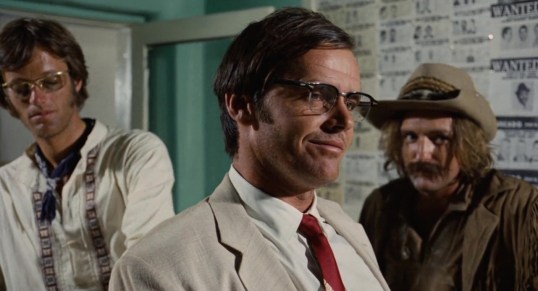
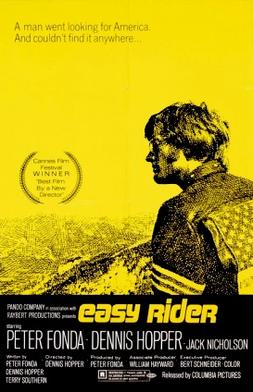
Today, a lot of people have traveled to New Orleans to celebrate Mardi Gras.  Here’s hoping that they have a better time in the city than Billy (Dennis Hopper) and Wyatt (Peter Fonda) had in the 1969 film, Easy Rider.

The scenes below, featuring Hopper, Fonda, Karen Black, and the legendary Toni Basil were actually filmed at Mardi Gras in 1968.  These were among the first scenes that Hopper (making his directorial debut) shot for the film and reportedly, filming was so chaotic that they were also nearly the last scenes to be filmed.  As those who have seen Easy Rider know, Billy and Wyatt spend the entire movie trying to get to New Orleans so that they can visit a famous brothel.  Once they get there, they discover that absolutely nothing lives up to the legend.  The brothel is a sleazy mess.  Mardi Gras is full of bad vibes.  Wyatt has an amazingly bad LSD trip.  (Hopper convinced Fonda to really drop acid before filming the scene, which led some harrowing footage.)  After they leave New Orleans, Fonda and Hopper cross the border into Texas and promptly end up getting blown away by two rednecks in a pickup truck.

Welcome to the sixties!

In the scene below, we get actual footage of 1968’s Mardi Gras.  Just watch all the celebrants who stop to stare at the  camera.

And here is the infamous cemetery scene.  Fonda resisted doing it and the end result is not easy to watch but it’s also one of the most powerful moments in the entire film:

http://www.youtube.com/watch?v=uzAB9CDqZOg

Music Video of the Day: Mardi Gras by Gita (2013, dir by Yonni Lapin)


Yeah, yeah, yeah, I can hear you already.

But Lisa, just because the song is called Mardi Gras that doesn’t mean that it’s about our Mardi Gras…

Okay, you got a point.  But here’s my point: today is Mardi Gras.  And this song is called Mardi Gras.  And I like it.  It’s a fun song to listen to while you’re stuck in traffic.

Besides, if you’re complaining about stuff like that today that means that you’re totally missing the point of Mardi Gras.

Enjoy!

A New Orleans Film Review: J.D.’s Revenge (dir by Arthur Marks)


Ike (Glynn Turman) is a nice guy.  He’s a law student living in New Orleans.  When not studying, he makes money driving a taxi cab.  He has a beautiful and loving wife named Christella (Joan Pringle).  He has a nice but modest apartment.  When we first see Ike, he is calmly and rationally breaking up a fight.  Perhaps the only real complain that can be made about Ike is that he’s actually too nice.  There’s nothing dangerous about Ike.  He works hard.  He studies.  That’s about it.

When Christella and their friends tell him that he needs to take a night off from studying, Ike is reluctant.  However, he finally agrees to go out with them.  They start out at a strip club in the French Quarter and eventually, they end up watching a hypnotist.  Ike is one of the men randomly selected to go up on stage.  Amazingly, rational and mild Ike is easily hypnotized.  The audience loves watching as Ike and the other men all reacts to hypnotic suggestion.  What they don’t know is that, while in his trance, Ike has been … possessed!

That’s right!  The ghost of J.D. Walker has entered Ike.  Who is J.D. Walker?  As we learn from a series of gauzy flashbacks, J.D. Walker was a gangster in the 1940s.  He wore a fedora.  He wore nice suits.  He was every bit as flamboyant as Ike is mild.  But then, one day, J.D. was killed, gunned down by his former business partner, Theotis Bliss (Fred Pinkard).

Soon, Ike starts to act … well, not like himself.  Suddenly, Ike is using 1940s slang.  He’s wearing 1940s clothes.  He’s gambling.  He mugs an old lady who gets in his cab and then abandons her on the wharf.  When his wife asks him why he’s acting like a 1940s gangster, he gets violent.  Soon, Ike is speaking in a different voice and dancing.

What does J.D. want?  He wants revenge against not only the man who shot him but also Theotis’s younger brother, a popular preacher named Elijah (Lou Gossett, Jr.).  As wild as the possessed Ike may be, he’s got nothing on Elijah.  Elijah was a boxer before he became a man of God and he’s still liable to throw a punch or two during his sermons.  Elijah, however, is also rather naive and has no hesitation about inviting J.D. to become a member of his congregation.  Theotis, who is now Elijah’s manager, is a bit more suspicious…

An oddly paced film that never quite escapes the lengthy shadows of all of the horror films that inspired it, J.D.’s Revenge is worth seeing for the performances Glynn Thurman and Lou Gossett, Jr.  Gossett is all energetic charisma in the role of the reverend, giving a performance that features just enough ambiguity that you’re never sure whether you should trust Elijah or not.  Meanwhile, Thurman is very good as the mild-mannered Ike but he seems to be having an absolute blast whenever he gets to play the psychotic J.D.  During the final confrontation between Ike/J.D. and the Bliss Brothers, Thurman’s performance is so bizarre and over the top that you simply cannot stop watching him.

J.D.’s Revenge was filmed in New Orleans, which add a little bit of gothic atmosphere to the film.  As I write this, a lot of our readers may currently be in New Orleans for Mardi Gras.  I wish them all well but I hope they’ll remember the lesson of J.D.’s Revenge.  Just say no to hypnosis!

http://www.youtube.com/watch?v=ANlCUGoGt5w