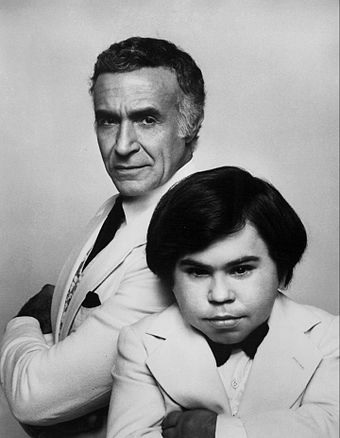
Welcome to Retro Television Reviews, a feature where we review some of our favorite and least favorite shows of the past! On Tuesdays, I will be reviewing the original Fantasy Island, which ran on ABC from 1977 to 1984. Unfortunately, the show has been removed from most streaming sites. Fortunately, I’ve got nearly every episode on my DVR.
This week, we’re reminded that Fantasy Island is apparently the country music capitol of the world.
Episode 6.8 “The Kleptomaniac/Thank God I’m A Country Girl”
(Dir by Don Weis, originally aired on December 11th, 1982)
Fred Simpson (Sherman Hemsley) is a kleptomaniac. Whenever he sees anything shiny, he hears a bong in his head, explosions occur behind his eyes, and he has to steal it. He always returns what he steals and pays back his friends but it’s still ruining his life. No one trusts him. He comes to Fantasy Island looking to be cured. Mr. Roarke assigns Tattoo to keep an eye on Fred on the Island. Unfortunately, Fred is still driven to steal an expensive necklace from courier Emily Carlisle (Roxie Roker). Fred and Tattoo end up in jail! Poor Tattoo!
(Seriously, what did Roarke think would happen when he gave that assignment to Tattoo?)
Now, to be honest, I’m not sure that Fred actually got his fantasy. He and Emily do fall in love and he leaves the Island with her but I’m not sure his kleptomania was cured. Maybe Emily will provide whatever was missing from his life that caused him to steal. This episode is somewhat progressive in that acknowledges that kleptomania is an uncontrollable impulse, one that is usually linked to trauma. (After my parents got divorced, I went through a phase of regularly skipping school so I could shoplift makeup from Target. It was probably a cry for help on my part, though it just seemed like an adrenaline rush at the time.) Still, what happens if Fred and Emily break up? Fred’s got a serious problem and I hate to think that he spent all that money to come to Fantasy Island just so he could go home and get tossed in prison.
Meanwhile, Loretta Wentworth (Loretta Lynn) works at the local Fantasy Island diner. Lorraine Wentworth (Heather Locklear), the daughter that Loretta gave up for adoption years ago, is coming to the Island to meet her mother for the first time. Loretta’s fantasy is to be rich for the weekend. Roarke gives her a nice house and a bunch of servants. Lorraine is impressed until her jerk of a fiancé (Ted McGinley) tries to put the moves on Loretta. In the end, things work out, of course. Lorraine and Loretta grow close. Loretta and her friends board a bus and say they’re going to Nashville so that Loretta can pursue her country music career. How is anyone going to drive from Fantasy Island to Nashville? There’s a big old ocean in the way.
This episode really didn’t do much for me, despite the presence of Heather Locklear and Ted McGinley. It was nice to see Tattoo get involved in someone’s fantasy and Roarke got to give a speech about the true meaning of love but neither fantasy really worked for me. Loretta Lynn was a great singer but a very stiff actress. This trip to the Island was not as memorable as it could have been.
Welcome to Retro Television Reviews, a feature where we review some of our favorite and least favorite shows of the past! On Tuesdays, I will be reviewing the original Fantasy Island, which ran on ABC from 1977 to 1984. Unfortunately, the show has been removed from most streaming sites. Fortunately, I’ve got nearly every episode on my DVR.
This week, season 5 comes to an end.
Episode 5.22 “The Ghost’s Story/The Spoilers”
(Dir by Don Chaffey, originally aired on May 8th, 1982)
The latest batch of guests are arriving and Julie is nowhere to be seen! Perhaps that’s because, as Mr. Roarke explains to Tattoo, Julie is helping out a guest who has an invisibility fantasy. Tattoo and Roarke watch as the guest walks by. His body may be invisible but his pants are not.
This is the final episode of the fifth season and it’s also the final episode in which Wendy Schaal will be credited as a part of the cast. I wasn’t a huge fan of the Julie character but it still seems like a bit of a shame that she didn’t get to do anything in the finale. Then again, this episode doesn’t really feel like a finale. I don’t know what was going on behind the scenes during the fifth season but it’s hard not to feel, with the way that Julie and Tattoo have randomly shown up in different stories, that the season’s episodes were not shown in the order in which they were filmed. Maybe all the Julie episodes were filmed at one time, while Herve Villechazie was off doing something else. Who knows? It’s just been a strange season.
That’s all wonderful and interesting, Lisa …. But what about this week’s fantasies!? you may be asking.
They both feel a bit familiar. That’s not always a bad thing, of course. Fantasy Island is a comfort show and a part of the comfort is knowing that things are always going to play out in a certain way. But, with this episode, both fantasies felt as if they had been done better in the past.
Harry (Bo Hopkins) is a bounty hunter who comes to the Island to track down fugitive Nick Tanner (Robert Fuller). Nick has been accused of robbing a bank and is hiding out on a nearby island. Harry goes to the island but he soon discovers that Nick is innocent and that the real bank robbers have also come to the island in search of Nick. Luckily, there’s a widow named Juliet (Jo Ann Pflug) who is also living on the island. Harry and Nick hide out at her place before they all team up to defeat the real bank robbers. Nick and Juliet fall in love and Mr. Roarke performs one of his trademark wedding ceremonies. Nick and Juliet then board the plane back to America and …. wait a minute, what about Harry? It was his fantasy! We don’t ever see Harry leave Fantasy Island. Maybe he’s still living there.
(Personally, I think he married Julie and that’s why she was no longer working there once season six began. I like that. Consider it to be canon.)
The other fantasy is a haunted house story. Amanda Parsons (Tanya Roberts) comes all the way from Baltimore to spend 24 hours in one of Fantasy Island’s many haunted houses. Two other paranormal investigators attempt to do it before Amanda but they end up fleeing after two minutes. I’m not sure why. The manor looks creepy but it turns out that the ghost is a rather wimpy and not at all frightening guy named Timothy Black (Dack Rambo). Cursed by his own father after Timothy refused to fight a duel with Captain Fitzhugh Ross (John McCook), Timothy has spent two hundred years haunting the old manor. Amanda takes sympathy on him. It turns out that Ross’s descendant is also on the Island. Timothy challenges him to a duel, causing the latest Ross to run in fear. Timothy and his ghost dad (John Myhers) realize it’s okay to be scared of getting shot. Ghost Dad asks Roarke to bring Timothy back to life so that he can pursue his romance with Amanda. Roarke does just that, despite the fact that, in many previous episodes, Roarke has specifically said that he cannot bring the dead back to life.
Usually, I enjoy Fantasy Island‘s haunted house fantasies but this one didn’t do much for me. I think it’s because the ghost was just too wimpy. There’s nothing more annoying than a whiny a dead guy,
And so ends this very odd season. Next week, we being season 6!
Welcome to Retro Television Reviews, a feature where we review some of our favorite and least favorite shows of the past! On Sundays, I will be reviewing the made-for-television movies that used to be a primetime mainstay. Today’s film is 1972’s The Glass House! It can be viewed on YouTube.
The Glass House starts with three men arriving at a location that will define the next few months of their lives.
Brian Courtland (Clu Gulager) is a veteran of the Vietnam War. He spent part of his service working as a guard in the brig. Now that he’s back in the United States and in need of a regular paycheck, he has gotten a job working as a prison guard. Courtland is not naive about where he’s going to be working or who he is going to be working with. But he is an idealist, one who tries to treat everyone fairly and who hopes that he will be able to do some sort of good in his new position.
Alan (Kristoffer Tabori) is a young man who has been arrested for selling marijuana. He is quiet and just hoping to serve his time and then get on with his life. His fellow prisoners have different plans for him.
Finally, Jonathan Paige (Alan Alda) is a liberal professor who, in a moment of rage, accidentally killed a man in a fight. Convicted of manslaughter, Paige enters the prison in a daze and cannot stop flashing back to the one moment that changed his life forever. Paige is assigned to work in the pharmacy, where he meets a prisoner-turned-activist named Lennox (Billy Dee Williams). Paige struggles to retain his humanity despite the harsh conditions.
All three of the men find themselves having to deal with the attentions of Hugo Slocum (Vic Morrow), the predatory “king” of the prison. Slocum expects Paige to help him run drugs though the the pharmacy. Slocum preys on Alan and sends his gang to punish him when Alan refuses Slocum’s advances. And Slocum expects that Courtland will just be another corrupt guard who agrees to look the other way when it comes to Slocum’s activities. Courtland, however, turns out to have more integrity than anyone was expecting.
The Glass House opens with a title card, informing the viewer that the film was shot at an actual prison and that the majority of the people in the film were actual prisoners. Not surprisingly, The Glass House does feel authentic in a way that a lot of other films about incarceration does not. The prison is claustrophobic and dirty, with every crack in the wall reminding the prisoners and the viewer that no one cares about what happens there. The extras have the blank look of men who understand that showing any emotion will be taken a sign of a weakness. Made in 1972, at a time when America was still struggling to integrate, The Glass House takes place in an almost totally segregated world. The black prisoners stick together. The white prisoners stick together. Everyone understands that’s the way that it will always be and, as we see by the end of the film, that’s the way the guards and the warden (Dean Jagger) prefer it because that means almost any incident can be written off as a being “a race riot.”
The real actors amongst the population do a good job of blending into the surroundings. Alda, Williams, and Tabori all give good performance while Vic Morrow is truly menacing in the role of the vicious Slocum. Slocum may not be particularly bright but, because he has no conscience, he is uniquely suited to thrive in a world with no morality. The film’s best performance comes from Clu Gulager, who does a great job of portraying Courtland’s growing disgust with how the system works.
Though it’s over 50 years old, The Glass House is a still a powerful look at life on the fringes. Society, for the most part, doesn’t really care much about what happens to the incarcerated. This film makes a strong case that we probably should. One is left with little doubt that, even if relatively harmless prisoners like Paige and Campbell survive being locked up with men like Slocum, they’ll still be incapable of returning to the “real world” afterwards. The viewer, like Brian Courtland, is left to wonder how much corruption can be tolerated before enough is enough.
Welcome to Retro Television Reviews, a feature where we review some of our favorite and least favorite shows of the past! On Tuesdays, I will be reviewing the original Fantasy Island, which ran on ABC from 1977 to 1986. The entire show is currently streaming on Tubi!
This week, Mr. Roarke tries to kill Tattoo!
Episode 3.3 “Tattoo: The Love God/Magnolia Blossoms”
(Dir by Earl Bellamy, originally aired on Sept. 21st, 1979)
This week’s episode of Fantasy Island opens with Tattoo driving his mini-car across the island and nearly running over a group of Islanders.
Tattoo has every reason to be excited! This week, he is getting his fantasy. Using a fake name (Dr. H.L. Oottat — spell the last name backwards), Tattoo requested a chance to come to the Island and live out his fantasy of being irresistible to women. At first, Mr. Roarke pretends as if he had no idea that Dr. Oottat was actually Tattoo but, by the end of this episode, it’s pretty clear that Roarke not only knew who Oottat was but that he also saw this fantasy as his best chance to kill off his troublesome assistant.
Seriously, how else can you explain how Mr. Roarke grants Tattoo his fantasy. Tattoo wants women to find him attractive. (That’s actually kind of sad. Poor Tattoo!) So, Mr. Roarke arranges for a bunch of native Islanders to mistake Tattoo for their legendary love god, Nooyeeowee.
Words goes out that Nooyeeowee has returned to the Island. A group of Islanders take Tattoo to their village.
The chief explains that, as the Love God, Tattoo is not only responsible for deciding who in the tribe will marry who but that his presence will also guarantee successful fishing expeditions. Unfortunately, Tattoo is also expected to be able to fly. When one of the islanders, jealous because Tattoo has stolen his girlfriend, accuses Tattoo of being a fraud, Tattoo is told to prove his powers by taking flight. Instead, with the help of a native girl, Tattoo gets in a canoe and flees back to the main island.
Mr. Roarke acts as if he’s happy to have his assistant back but let’s be honest here. Mr. Roarke has shown, on numerous occasions, that he cannot be fooled or tricked by anyone. Are we to believe that Mr. Roarke didn’t realize that the letter from Dr. Oottaat was actually from Tattoo? After three seasons of listening to their passive-aggressive banter, it should be obvious to anyone that Roarke and Tattoo actually hate each other. Personally, I think Mr. Roarke was hoping Tattoo wouldn’t be able to escape.
As for the second fantasy, it features Pamela Franklin and Lisa Hartman as two women who want to become Southern belles by returning to what they consider to be the most romantic time and place in US. History, Civil War-era Georgia….
Uhmm…. yeah. This is definitely a fantasy that would not be allowed today. But, back in 1979, Roarke sends the women back to Civil War era Altanta so that they can both pursue a romance with the two Confederates of their dreams. Lisa Hartman falls hard for Dack Rambo, who is made up to look like Clark Gable. Pamela Franklin falls just as hard for Christopher Connelly, who is made up to look like Leslie Howard. Unfortunately, their night at the plantation is ruined by the arrival of an evil Union captain, played by Luke Askew.
Sadly, the fantasy ends before the belles get a chance to marry their men. But no worries! It turns out that the two men were also on the Island to live out their fantasies of fighting for the Confederacy during the Civil War. So, everything works out….
This was a weird episode and, as I mentioned earlier, it’s definitely one that would not be made today. I can only imagine how Twitter, if it had existed back then, would have reacted to the Civil War fantasy and the frequent appearances of Dixie on the soundtrack. To be honest, though, the the two belles were less in love with the Confederacy and more just obsessed with Clark Gable and Leslie Howard. Tattoo’s fantasy was actually the cringier of the two, with Tattoo pretending to be a God just to get laid and its suggestion that the Islanders will basically just worship anyone that they can convince to come to their village.
(Why don’t they worship Mr. Roarke then? I mean, he has literal magic powers!)
As I said, this episode was just very weird. 1979, you know?
Welcome to Retro Television Reviews, a feature where we review some of our favorite and least favorite shows of the past! On Tuesdays, I will be reviewing the original Fantasy Island, which ran on ABC from 1977 to 1986. The entire show is currently streaming on Tubi!
Smiles everyone! Smiles!
Episode 2.11 “Carnival/The Vaudevillians”
(Dir by Georg Stanford Brown, Originally aired on December 2nd, 1978)
Tattoo has come up with a new way to become a millionaire! He’s invented a sleeping bag that he claims can hold two people. Mr. Roarke is a bit skeptical that the small roll of material that Tattoo is holding could possibly be big enough to hold two people. Tattoo tells him that all he has to do is remove a key and the material will inflate. Roarke removes the key and several feathers explode into the air. Tattoo shrugs and says that he obviously has to get back to the drawing board.
“Inventor indeed,” Mr. Roarke says, in a tone that suggests that the only he reason he’s not physically killing Tattoo is because it’s time for them to greet their guests.
(Why is Tattoo always trying to make extra money? Does Fantasy Island not pay well?)
This week, the fantasies are all about reliving the past. Charlie Parks (Phil Silvers) and Will Fields (Phil Harris) used to be stars on Vaudeville but, like so many of the old time entertainers, they’ve now found themselves forgotten. Charlie’s even been put in a nursing home. Still, he manages to make the trip to Fantasy Island, where his fantasy is to be reunited with Will so that they can try to bring Vaudeville back to life.
Unfortunately, it doesn’t quite work. Tattoo loves their corny old jokes but when they perform for a larger audience, they only get a few pity chuckles. Dejected, Charlie plans to return to his retirement home when he and Will are approached by a man who claims that he works for the city of Baltimore. (Oh no! Run!) The man explains that he wants to hire Charlie and Will to perform at nursing homes, where their old-fashioned routines will enliven the golden years of people who don’t like loud music and R-rated movies. Charlie and Will agree. Yay!
Meanwhile, Dorothy Weller (Carol Lynley) is a woman who has spent the past few months in a coma. Now, she’s not sure if the man she thought she loved really existed or if he was just someone she dreamed up while she was in the hospital. Mr. Roarke arranges for her to travel to a recreation of the same Mexican town where she met the mystery man. She finds her former lover, Tom Parnell (Stuart Whitman), on the beach. Tom explains that he is real and he is in love with her. He’s also a spy and there’s an international assassin (an appropriately sinister Luke Askew) after him!
This episode was kind of a mixed bag. The Vaudeville fantasy featured charming performances from Phil Silvers and Phil Harris but their jokes were never quite as funny as Tattoo seemed to think that they were. The spy fantasy was not helped by the casting of the reliably dull Stuart Whitman but the story itself was intriguing and Carol Lynley gave a believable and emotional performance as Dorothy. The end result was a thoroughly pleasant but not altogether memorable trip to Fantasy Island. But really, when it comes to Fantasy Island, hasn’t the appeal always been just how pleasant everything is?
Well, except for the relationship between Tattoo and Mr. Roarke, of course. I still suspect Tattoo is secretly plotting to kill Mr. Roarke and take over the island. Who knows? Maybe that’ll be a future episode. We’ll find out soon!
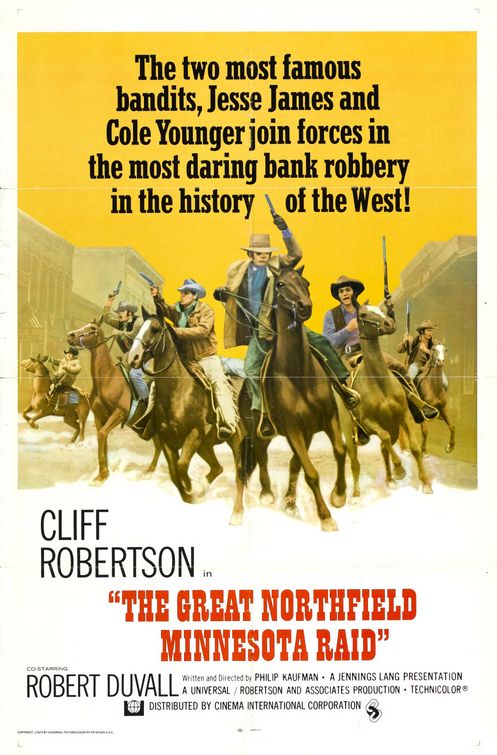
Despite having received pardons from the Missouri legislature in recognition of their military service to the Confederacy, Jesse James (Robert Duvall) and Cole Younger (Cliff Robertson) simply cannot stop robbing banks. The James-Younger Gang has set their sights on the bank in Northfield, Minnesota, which is said to be the biggest bank west of the Mississippi. Cole arrives in Northfield before the rest of the gang and scouts the location. What he discovers is that most of the town’s citizens aren’t putting their money in the bank because they all assume that it will eventually be robbed. With Jesse determined to pull off the crime of the century, Cole and Jesse have to figure out not only how to escape after the robbery but also how to get the people to deposit their money in the bank’s vault in the first place.
Philip Kaufman is a director who made a career out of reinterpreting history (his best known film is The Right Stuff) and, when it was first released in 1972, The Great Northfield Minnesota Raid was a revisionist western that mixed moments of comedy with moments of brutal violence. Today, of course, presenting Jesse James and Cole Younger as being ruthless outlaws is no longer that daring of a narrative choice. In The Great Northfield Minnesota Raid, Robert Duvall plays Jesse as being the western equivalent of a corrupt businessman, sending others to do his dirty work and not accepting any of the consequences for his own bad decisions. Robertson plays Cole as being more a free spirit, an outlaw who is determined to enjoy himself. Both of them give interesting performances but they also seem to be too contemporary for the characters that they’re playing.
Like most revisionist westerns of the early 70s, the film is full of hints that the old west and the time of the outlaws is coming to an end. There’s a steam engine sitting outside of the bank and Kaufman spends almost as much time focusing on people reacting to that as he does on the planning and execution of the robbery. When the robbery does finally occur, it’s not an easy robbery like you might find a 1940s western. Instead, it’s a violent comedy of errors that leaves much of the film’s characters dead or wounded in the streets of Northfield. The contrast between the quirky comedy of the first part of the film and the violence of the robbery is occasionally interesting but it often feels forced. Sometimes, Kaufman seems like he’s trying too hard to be Sam Peckinpah. In the end, Kaufman often doesn’t seem to be sure what he’s trying to say with this film. He seems to be suggesting that Jesse and Cole are soon to be relics of a bygone era but why then cast Duvall and Robertson in the roles and have them play the roles like two mid-level hoodlums in 20th Century New York?
It’s an interesting but muddled film that never quite works. For the definitive film about the James/Younger Gang, check out Walter Hill’s The Long Riders.
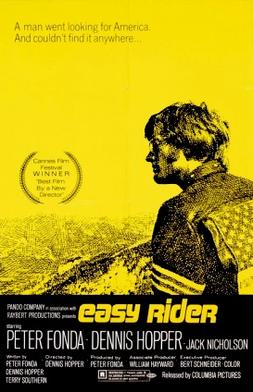
If you are among those who wanted to celebrate Mardi Gras today but couldn’t make it down to New Orleans, fear not! There is a solution to your problem. You can always just watch 1969 counterculture classic, Easy Rider.
Easy Rider features one of the most famous Mardi Gras scenes of all time and adding to the scene’s authenticity is the fact that it was actually shot in New Orleans during the celebration. If you watch the Mardi Gras sequence carefully, you’ll notice that several people on the streets of the French Quarter actually stop and stare directly at the camera. It reminds you that you’re watching a movie but, at the same time, it also reminds you that you’re seeing something authentic. Those weren’t just professional extras pretending to get drunk and glaring at Dennis Hopper and Peter Fonda. Those were people who were actually in the French Quarter for Mardi Gras and who just happened to end up getting included in one of the biggest cult films of all time. If you want to know what Mardi Gras was like in the late 60s, this is the film to watch.
At the same time, after watching Easy Rider, you may be find yourself happy to not be in New Orleans today. As with almost everything else in Easy Rider, Mardi Gras starts out as something exciting and full of promise but it ends as something dark and full of death. One minute, Peter Fonda, Dennis Hopper, Karen Black, and Toni Basil are walking down the streets of New Orleans and having what appears to be a good time. The next thing you know, they’re in a cemetery and Peter Fonda’s sobbing and talking about his mother’s suicide while Toni Basil and Karen Black are freaking out. Of the four of them, only Dennis Hopper appears to not be having a bad trip but then again, Hopper is so naturally spacey in Easy Rider that it’s kind of hard to tell.
The next morning, Fonda and Hopper leave New Orleans on their motorcycles and promptly get blown away by two shotgun-toting rednecks in a pickup truck. It seems a fitting conclusion to a film that celebrates the beauty of the American landscape while, at the same time, suggesting that almost everyone who lives there is a complete and total prick.
Of course, the whole Mardi Gras sequence doesn’t occur until the very end of the film. The majority of the film deals with the journey to New Orleans. Billy (Dennis Hopper) and Wyatt (Peter Fonda) are two motorcycle-riding drug dealers who have just made a small fortune off of selling cocaine to Phil Spector. Billy and Wyatt are heading to New Orleans to celebrate and visit a famous brothel. Wyatt is cool and stoic and always seems to be thinking about something. Billy is Dennis Hopper. Easy Rider is often referred to as being a hippie film but neither Billy nor Wyatt is really a hippie. They’re outsiders and they like to smoke weed but they’re also largely apolitical. They just want to enjoy the open road. If anything, they’re beatniks who were born a year or two too late.
As they ride from California to New Mexico, Billy and Wyatt meet plenty of people along the way. They stop off at a hippie commune and then later, they get harassed by a bunch of rednecks in a diner. The rednecks are menacing while the hippies are annoying. The rednecks throw Wyatt and Billy in jail for “parading without a permit.” The hippies have a mime troupe. The rednecks drive around with shotguns. The hippies try to grow crops in the desert. (I’m enough of a country girl to know that Billy’s right when he scornfully says that nothing that they’re planting is going to actually grow.) The rednecks are ignorant. The hippies are smug. None of them really seem like people that you would want to spend too much time around.
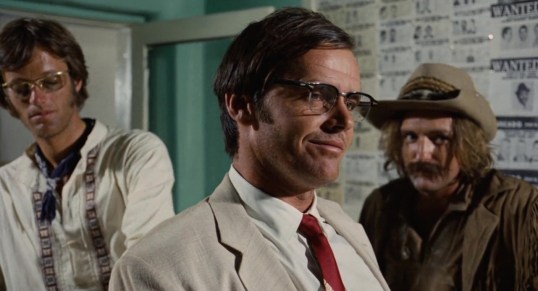
Along the way, Wyatt and Billy temporarily travel with two others. The hitchhiker is played by Luke Askew. We never learn his name but he does play a key role in the film when he gives Wyatt the tab of acid that will eventually ruin Mardi Gras. Meanwhile, George Hanson is an alcoholic lawyer and he’s played by Jack Nicholson. At the time that the film was shot, Nicholson was on the verge of retiring from acting so he could concentrate on directing and writing. He took the role and expected, as almost everyone did, that Easy Rider would just be another biker film. Instead, Easy Rider became a hit and a cultural milestone that not only won Nicholson his first Academy Award nomination but also made him a star.
Interestingly enough, Jack Nicholson is not really that good in Easy Rider. His attempt at a Texas accent is terrible and you never believe him as someone who has never smoked weed before. If anything, Luke Askew gives a far better performance than Nicholson and he actually has more screen time as well. However, I think Nicholson benefited from the fact that George is probably the most likable character in the film. (Depending on how you feel about Billy and Wyatt, you could argue that he’s the only likable character in the film.) He’s not a smug hippie nor is he a murderous redneck. Unlike Wyatt and Billy, he has a job that doesn’t involve selling cocaine to Phil Spector. Whereas Luke Askew’s Hitchhiker seems like the type of guy who would just love to lecture you about why Vietnam is all your fault, George comes across as being a gentle soul. George is a character that viewers can feel safe identifying with, even if Nicholson is never quite convincing as someone so naive that he fears he’ll freak out after taking one hit off of a joint.
Easy Rider‘s critical reputation tends to go up and down, depending on who you’re reading or talking to. There’s a tendency, among many critics, to complain that Fonda acted too little while Hopper acted too much. Personally, I think there’s a lot of hidden wit to be found in Hopper’s performance and I love how annoyed he gets when they’re at the hippie compound. As for Peter Fonda, he may not have been the most expressive actor but he did capture a certain feeling of ennui. For most of the film, it’s hard to tell whether there’s anything actually going on in Wyatt’s head. Then, we follow Wyatt and Billy to that cemetery in New Orleans and we discover that there’s actually quite a bit going on behind Wyatt’s wall of stoicism. After watching Wyatt curse at a statue while sobbing, we understand why he keeps so much hidden.
When it was released in 1969, Easy Rider was a huge box office success and it inspired every major studio to try to duplicate it’s success with a counter culture film of its own. (Hopper was given several million dollars and sent down to Peru to make a follow-up to Easy Rider. The result was The Last Movie, a legendary disaster that temporarily ended Hopper’s career as a director.) Seen today, Easy Rider is undeniably pretentious but always watchable. The scenery is beautiful and the Mardi Gras sequence sets the standard by which all other bad trips should be judged. Most importantly, the film works as a historical document. Everything about it — from the music to the cultural attitudes to even Hopper’s attempts to imitate Jean-Luc Godard in his direction — makes this film into a time capsule. Until they invent a time machine that works, Easy Rider is as close as some of us will ever get to experiencing the end of the 60s.
And finally, it’s the ultimate Mardi Gras film, even if it’s main message seems to be that everyone needs to stay the Hell away from Mardi Gras. Or, at the very least, don’t accept LSD from a scruffy hitchhiker before rolling into New Orleans. Seriously, the more you know….
I’m currently in the process of watching the 36 films that I’ve recorded on my DVR since March. Last night, I was extremely excited as I looked up the 7th film on the DVR and I discovered that I was about to watch the 1977 revenge classic, Rolling Thunder!
Among those of us who love old grindhouse and exploitation film, Rolling Thunder has achieved legendary status. Based on a script by Paul Schrader (though I should point out that Schrader’s script was rewritten by Heywood Gould and Schrader himself has been very critical of the actual film) and directed by John Flynn, Rolling Thunder is quite literally one of the best revenge films ever made. It’s also a great Texas film, taking place and filmed in San Antonio. Quentin Tarantino has frequently cited Rolling Thunder as being one of his favorite films and he even used the name for his short-lived distribution company, Rolling Thunder Pictures.
Rolling Thunder also has one of the greatest trailers of all time. In fact, if not for the trailer, I probably would never have set the DVR to record it off of Retroplex on March 25th. The Rolling Thunder trailer is included in one of the 42nd Street Forever compilation DVDs and, from the minute I first watched it, I knew that Rolling Thunder was a film that I had to see.
Watch the trailer below:
Everything about that trailer — from the somewhat portentous narration at the beginning to the way that Tommy Lee Jones calmly says, “I’ll get my gear,” at the end, is pure genius.
But what about the film itself? Well, having finally seen the film, I can say that Rolling Thunder is indeed a classic. It’s also one of the most brutal films that I’ve ever seen, containing scenes of truly shocking and jarring violence. In fact, the violence is so shocking that it’s also, at times, rather overwhelming. This is one of those films that you will probably remember as being far more violent than it actually is. Because, while Rolling Thunder features its share of shoot-outs and garbage disposal limb manglings, it’s actually a very deliberately paced character study.
When we first meet Maj. Charles Rane (William Devane), he’s sitting on a plane and looking down on San Antonio. He’s in full military dress uniform. Setting across from him, also in uniform, is John Vohden (Tommy Lee Jones). The year is 1973 and Rane and Vohden have both just spent the past seven years as prisoners in a Vietnamese camp. While they were prisoners, they were tortured every day. Now, they’re returning home and neither one of them is quite sure what’s going to be waiting for them.
Over the imdb, you can find a few complaints from people who feel that Rolling Thunder gets off to a slow start. And it’s true that it takes over 30 minutes to get to the pivotal scene where Maj. Rane loses both his hand and his family. But that deliberate pace is what makes Rolling Thunder more than just a revenge flick with a kickass name. That first half-hour may seem to meander but what it’s actually doing is setting both Rane and Vohden up as strangers in their own country.
The film gets a lot of mileage out of comparing Rane to Vohden. Rane is good with words. When he gets off the plane, he gives a perfect (and perfectly empty) speech about how the whole war experience has made a better American out of him. Rane knows how to fool people but it quickly becomes apparent that, on the inside, Rane feels empty.
Vohden, meanwhile, is not an articulate man. He’s not invited to give a speech when the plane lands. Vohden cannot fake the emotions that he does not feel. At first, Rane and Vohden seem to be complete opposites (and the film wisely contrasts Jones’s trademark taciturn style of acting with Devane’s more expressive technique) but eventually, we learn that they’re actually two sides of the same coin. Both of them have been left empty as a result of their wartime experiences and, in the end, Vohden is the only one who can truly understand what’s going on in Rane’s head while Rane is the only one who can understand Vohden. When Rane needs help getting revenge, Vohden is the one that he turns to. It’s not just because Vohden knows how to kill. It’s also because John Vodhen is literally the only man to whom Charles Rane can relate.
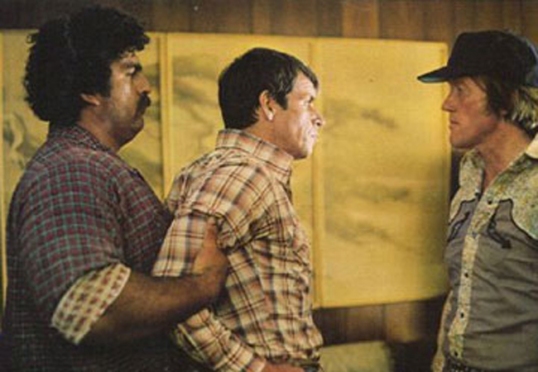
Why does Rane need revenge? After the local bank awards him with 2,000 silver dollars (“One silver dollar for every day you spent in the Hell of Hanoi!,” he is told at the presentation), Rane returns home to discover that a group of men have broken into his house. One of them, known as the Texan (an absolutely chilling performance from James Best), demands that Rane tell them where the silver dollars are hidden. When Rane responds by giving only his name, rank, and serial number, Slim (Luke Askew) reacts by forcing Rane’s arm into the kitchen sink and then turning on the garbage disposal. (A scene was apparently shot that literally showed Rane’s hand getting ripped off by the garbage disposal but it was judged to be too graphic even for this grim little movie.) Even as the disposal mangles Rane’s arm, Rane refuses to tell them where the money is. Instead, he just flashes back to being tortured at the camp and we realize that Rane’s experiences have left him immune to pain.
Of course, the Texan doesn’t realize this. Instead, he glares at Rane and mocks him by declaring him to be “one macho motherfucker.”
When Rane’s wife and son walk in on the men, Slim and the Texan murder them and leave Rane for dead. However, Charles Rane isn’t dead. He survives but he claims that he can’t remember anything about the men who attacked him. It’s only after Rane is released from the hospital and starts to practice firing a shotgun with the hook that has replaced his hand that we realize that Rane does remember. Recruiting a local waitress who also happens to be an amateur beauty queen (Linda Haynes, giving the type of great performance that makes me wonder why I’ve never seen her in any move other than Rolling Thunder) to help, Rane sets out to track down “the men who killed my boy.”
Linda Hayes in Rolling Thunder, giving a great performance in a somewhat underdeveloped role
It’s very telling that Rane continually says that he’s after the men who “killed my boy” but he never mentions his wife. When Rane first arrived home, he had one conversation with his wife. He complained that she had changed her hair and that she wasn’t wearing a bra. “Nobody wears them anymore,” She replied before telling him that, during his seven year absence, she had fallen in love with another man, Cliff (Lawrason Driscoll). And, up until she’s murdered by the Texan, that’s the last conversation that we see Rane have with his wife. Rane still lives in the house and he still tries to talk to his son (even though his son seems more comfortable around Cliff than around Rane) but Rane becomes a stranger to his family. While his wife sleeps in the house, Rane insists on staying out in the garage and continuing to go through the daily routine of calisthenics that he used to maintain his sanity while he was a prisoner.
(When Cliff asks Rane what it was like to be tortured, Rane literally forces Cliff to pull back on his arms in the same way that his Vietnamese captors had to. As I watched these scenes, I was reminded that 2008 presidential candidate John McCain cannot lift his arms above his shoulders as a result of the torture he suffered while a POW.)
When Rane goes to El Paso to recruit Vohden for his mission of revenge, we notice that Vohden also appears to be incapable of speaking to his wife. When Vohden leaves, he says goodbye to his father but not his wife. It’s probably not a coincidence that, when Vohden and Rane find Slim and the Texan, they’re at a brothel, a place where men are in charge, women are subservient, and primal needs are satisfied without the risk of emotional attachment. (It’s also probably not a coincidence that Slim is also identified as having recently returned from Vietnam. He complains that, unlike Rane and Vohden, he was never captured by the enemy and, as a result, he didn’t get a parade when he came back home.) Rolling Thunder is a film about emotionally stunted men who are incapable of interacting in any way other than violence. By the end of the film, you’re left wondering whether Rane’s mission was about revenge or about his own need to destroy.
And what an ending! When I say that the violence in Rolling Thunder is overwhelming, I’m talking about two scenes in particular. There’s the scene where Rane loses his hand and watches as The Texan casually executes his wife and son. And then there’s the ending. The final shootout was quick but it was also so brutal that I was literally shaking by the end of it.
(The scenes leading up the final shootout also featured one of the few humorous moments to be found in this otherwise grim film. When Vohden — who is inside the brothel with a prostitute — starts to put his rifle together, the prostitute asks him what he’s doing. “Oh,” Vohden says, in that perfectly weary way that only Tommy Lee Jones can do, “just going to kill a bunch of folks.”)
I mentioned earlier that Paul Schrader is reportedly not a fan of Rolling Thunder. Apparently, in his original script, Charles Rane was portrayed as being a poorly educated racist, a bit of a prototype for the character that Robert De Niro played in Taxi Driver. Ranes’s final rampage was meant to be an example of the war in Vietnam coming home and it was made much clearer that Rane’s violence was as much fueled by his own racism as by a desire for revenge. Schrader has said that his anti-fascist script was turned into a fascist movie.
A scene from Paul Schrader’s original script
With all due respect to Mr. Schrader (who I think is a very underrated filmmaker), Rolling Thunder is anything but a fascist movie. Instead, it’s a brutal and somewhat disturbing character study of a man who will never truly escape the war in which he fought. The fact that Rane is played by super smooth William Devane (as opposed to the redneck that Schrader apparently envisioned) only serves to make the film’s critique of hyper masculinity all the more disturbing. It’s interesting to note that, on their own, Rane and Vohden are never presented as being particularly likable or heroic. Instead, we root for them because the people who have hurt them are even worse.
This was how Schrader envisioned Johnny and Rane.
Though it may be far different from what Paul Schrader originally envisioned, John Flynn’s Rolling Thunder is a film that works on every level. It is both a visceral revenge film and a character study of a disturbed man. It’s a powerful film that will leave you shaken and it’s one that I will probably never erase from my DVR.
There are some movies that you just don’t dare delete.
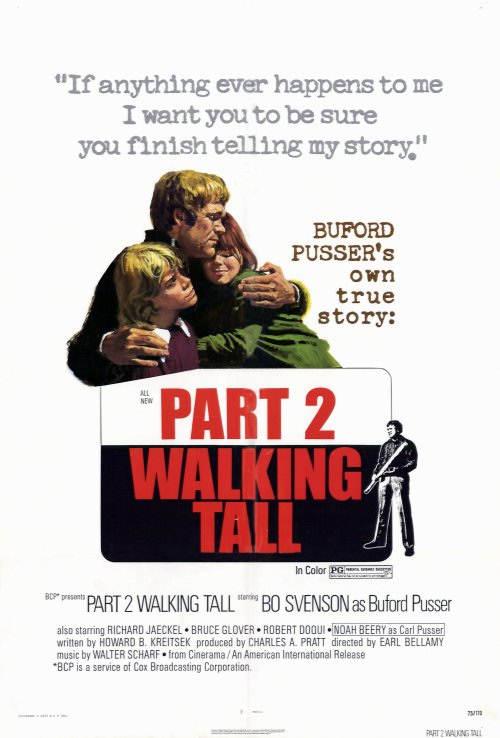
The 1975 southern melodrama Walking Tall Part 2 opens with a voice over telling us that we’re about to see more of the true of story Sheriff Buford Pusser, the Tennessee lawman who carried a big stick, battled the Dixie Mafia, and whose wife was killed in an ambush. Pusser, we learn, died under suspicious circumstances shortly after the release of the film Walking Tall.
Mere hours before he died, Pusser had signed a contract to play himself in Walking Tall Part 2. As a result of Pusser’s car “accident,” the film’s producers were forced to cast an actor as the lawman. Now, it would have made sense to, once again, give the role to Joe Don Baker. After all, he played the role in Walking Tall and I imagine that to most audiences at that time, he was Buford Pusser. However, for whatever reason, Baker was not given the role for a second time. Instead, the role was given to Bo Svenson and, while Svenson does not necessarily do a bad job in the role, he’s still no Joe Don Baker. The difference between Baker and Svenson is the difference between someone being a redneck and someone just pretending.
The film opens almost immediately where Walking Tall ended. Terribly wounded in the ambush that took his wife’s life, Buford is in the hospital and his face is covered in bandages. Townspeople gather outside both his room and his farm and they wonder whether he’ll run for reelection as sheriff. Someone else mentions that Buford has had massive facial reconstructive surgery.
Finally, the bandages are removed and we discover that Buford has turned into Bo Svenson. Now, Svenson and Baker do have enough facial similarities that you can force yourself to believe that surgery could lead to Baker having Svenson’s features. I mean, this isn’t like Mark Ruffalo taking over the role of Bruce Banner from Edward Norton. At the same time, it’s hard not to wonder how reconstructive surgery could have led to Buford Pusser becoming a blonde or, for that matter, apparently growing by 5 inches between Walking Tall and Walking Tall Part 2.
Anyway, Buford’s out of the hospital and, of course, he’s reelected as sheriff. One thing that quickly becomes apparent is that everyone in the world totally loves Buford Pusser. I lost track of how many characters specifically walked up to Buford to tell him that he was a great man and a great sheriff. Nobody complains about Buford’s habit of ignoring civil liberties while enforcing the law. Instead, everyone cheers for him.
(And, just in case the viewer is uncomfortable with the sight of the very white Buford taunting the mostly black moonshiners that he spends the film arresting, Buford’s black deputy constantly says stuff like, “Buford, you’re my kind of sheriff!”)
The only people who don’t like Buford are the local crime lords. They still want Buford dead so they hire a race car driver (Richard Jaeckel) to kill him. The race car driver’s girlfriend (Angel Tompkins) attempts to hit on Buford but Buford has no interest in her. Buford’s about enforcing the law and avenging his wife…
Walking Tall Part 2 is a pretty standard film. Whereas the original Walking Tall had a raw and unpredictable vibe to it, the sequel is predictable and boring. On the plus side, the film was made on location in rural Tennesee and some of the countryside is nice to look at.
As for Buford Pusser, he died before Part Two was released but the character would return in Walking Tall — The Final Chapter.
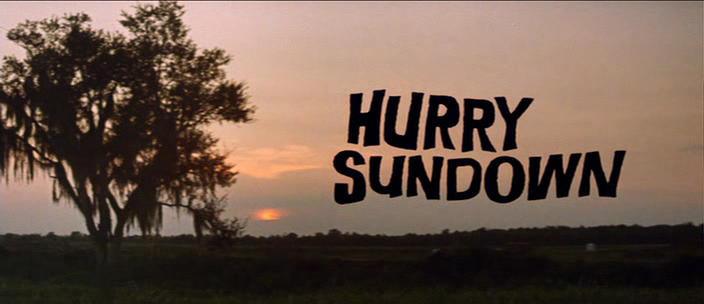
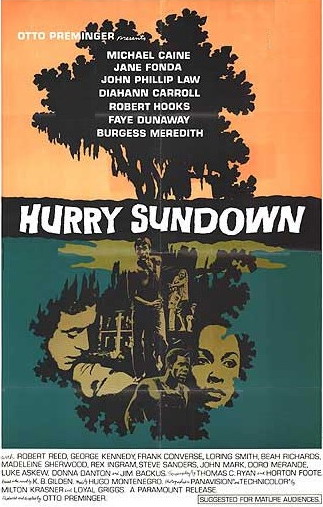
It seems like whenever film bloggers and reviewers are making out a list of the worst films of all time, somebody always mentions Hurry Sundown.
Now, don’t get me wrong. It doesn’t get mentioned as often as Battlefield Earth or Adam Sandler’s latest comedy. And, when it does get mentioned, it’s done with little of the warmth that’s given to Troll 2, The Room, or Birdemic. Instead, one gets the impression that Hurry Sundown is a film so bad that even those of us who appreciate bad films would find little to love about it.
But y’all know me. I’m the type that prefers to judge for herself and I’m also someone who rather enjoys being a contrarian. There’s a reason why one of my most read posts on this site is entitled 10 Reasons Why I Hated Avatar. Add to that, Hurry Sundown was directed by Otto Preminger who also directed one of my favorite films of all time, Anatomy of a Murder. How, I asked myself, could the man who made Anatomy of a Murder possibly also direct one of the worst films of all time? As a result, every time that I saw someone claiming that Hurry Sundown was one of the worst films of all time, I grew more and more determined to someday see the film and judge for myself.
Well, I finally got my chance this weekend. Hurry Sundown was on one of my newest favorite channels, The MOVIES! TV Network. And I proceeded to watch it. I sat through all four hours of this film (that’s including commercials and, oh my God, was I thankful for the distraction that those commercials provided). I watched Hurry Sundown and …. wow. Was it ever bad.
Released in 1967, Hurry Sundown was Otto Preminger’s attempt to take a look at race relations in the deep south. It’s a film full of good, liberal intentions and an apparent lack of knowledge about — well, about everything. As I watched this slow, almost formless blob of a film, I found myself wondering how the director who gave us Laura and Anatomy of a Murder could have possibly directed a film with a gigantic cast but absolutely no interesting characters. I wondered how the director who had been willing to challenge the racist assumptions of 1950s Hollywood by directing Carmen Jones could have been responsible for the corny and subtly condescending look at race relations that was Hurry Sundown.
Hurry Sundown takes place in 1946 and is set in rural Georgia. The war is over, the soldiers are coming home, and nobody in the film can maintain a convincing Southern accent for more than a line or two. (Seriously — I’ve heard a lot of really bad Southern accents in a lot of really bad films but none of those accents were as bad as what I heard in Hurry Sundown.) It’s a brand new world but the South is clinging to the old ways of racism and classism.
Preminger slowly (and clumsily) introduces us to the huge cast of characters who populate the slice of Hollywood Georgia.
There’s the sheriff (George Kennedy) who is so stupid that he can be distracted by an offer of fried chicken. Kennedy actually gives a good comedic performance but his character seems like he belongs in another movie and you have to wonder how civil rights activists in 1967 — many of whom had undoubtedly been arrested and harassed by Southern sheriffs much like this one — reacted to Kenendy’s character being presented as harmless comic relief.
There’s the racist judge (Burgess Meredith) who, much like the sheriff, is presented as being a comedic buffoon as opposed to an actual threat. The judge uses the n-word in every other sentence, which should be shocking and infuriating but, as a result of Meredith’s over-the-top delivery, instead simply comes across as being gratuitous and tasteless.
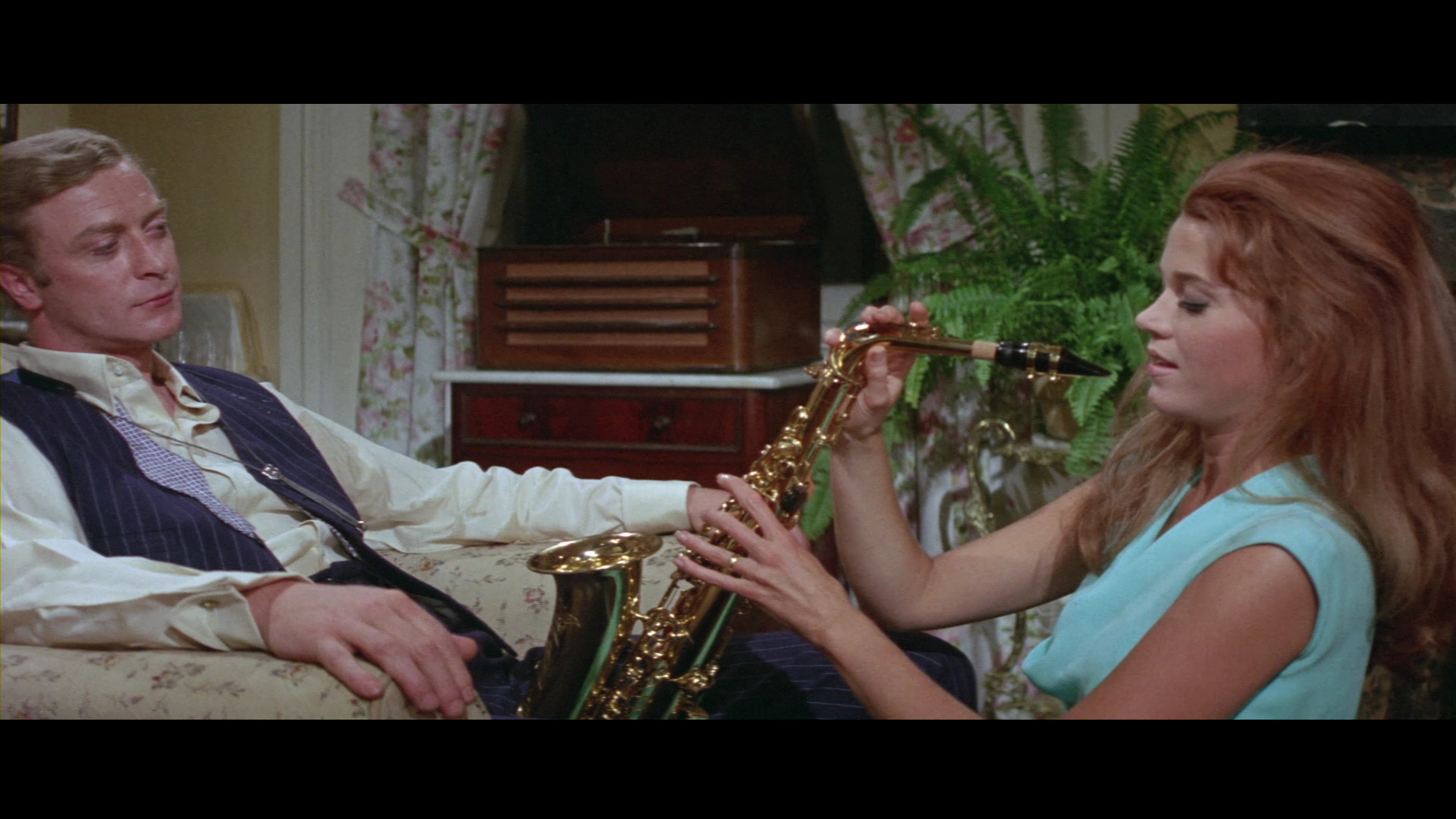
Then there’s Henry. Henry is a businessman who dodged the draft, cheats on his wife, and who has a son who literally spends the entire movie screaming at the top of his lungs. (Whenever that kid was on-screen, I imagined Preminger standing behind the camera and going, “More! More! Scream more!”) Henry is also a racist, though for some reason he loves jazz and often plays the saxophone. I kept waiting for someone in the movie to point out to him that jazz was created by black musicians but nobody did. (If Henry had appeared in Anatomy of a Murder, someone would have.)
Did I mention that Henry is played by Michael Caine? And did I also mention that Caine is the most cockney-sounding Southerner that I’ve ever heard? Because he totally is.
Henry’s wife is named Julie and is played by Jane Fonda. At one point, she suggestively blows on Henry’s saxophone. One can only imagine how audiences in the 60s reacted to that. (Actually, they probably didn’t. They probably just said, “Good thing she’s pretty because she ain’t no musician…”)
Anyway, Harry wants to buy up some farmland but half of that land is owned by Henry’s poor cousin Rad (John Phillip Law) and Rad doesn’t want to move. Rad has just returned from fighting in the war and he views Harry as being a cowardly draft dodger. Rad is married to Lou (Faye Dunaway) and wow, are they ever a boring couple! Dunaway was under a five-picture contract to Preminger when she made this film and apparently, she had such a terrible time on the set of Hurry Sundown that she sued to get out of ever having to make another movie with Otto. Dunaway’s misery comes through in every scene.
The other half of the farmland is owned by Reeve (Robert Hooks), a black farmer whose mother (played by Beah Richards) is Julie’s former mammy. Julie goes down to the farmhouse to convince Reeve to sell and Reeve’s mother responds by having the most (over)dramatic heart attack in the history of cinema. Saddened by death of his mother, Reeve is definitely not going to sell. When he’s not chastely romancing the local teacher (played by Diahann Carroll, who appears to have wandered over from a different, far more glamorous movie), Reeve is singing sprituals and working out in the fields.
One of the things that Reeve does not do — no matter how many times he gets called the n-word or is treated unfairly — is get mad. Rad gets mad. Julie gets mad. A liberal white preacher (Frank Converse) gets mad. But Reeve and the other black characters in the film are never really allowed to get mad or do anything that might make the film’s white audience feel nervous. Watching a film like Hurry Sundown, you can understand why — in just a few more years — Blaxploitation films would suddenly become so popular. It was probably the first time that black film characters were actually allowed to not only get angry over the way they were being treated but to fight back, as opposed to reacting in the Hurry Sundown-way of passive acceptance.
Anyway, Rad and Reeve come together to protect their land and Henry and the evil judge conspire to cheat them out of their land and — well, let’s just say that Hurry Sundown is one of those films that has a lot of plot and very little action. Preminger directs with a stunning lack of pace or grace, the actors deal with a poorly written script by either engaging in histrionics or going catatonic, and Michael Caine’s attempt at a Southern accent will amuse anyone who has ever been south of the Mason-Dixon.
I have to admit that I was really hoping that Hurry Sundown would turn out to be a sordid and tawdry little masterpiece, the type of overheated misfire that you love despite your better instincts. But, no. Hurry Sundown is just boring. The film is such a misfire that it doesn’t even work as a piece of history. The critics were right. Hurry Sundown sucks.







 Through the Shattered Lens