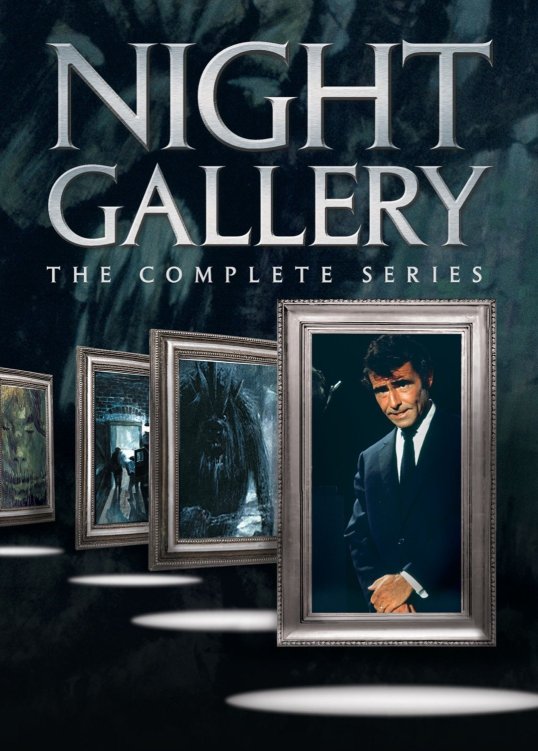
Horror On The Lens: Mazes and Monsters (dir by Steven Hilliard Stern)


Hi there and welcome to October!  This is our favorite time of the year here at the Shattered Lens because October is our annual horrorthon!  For the past several years (seriously, we’ve been doing this for a while), we have celebrated every October by reviewing and showing some of our favorite horror movies, shows, books, and music.  That’s a tradition that I’m looking forward to helping to continue this year!

Let’s get things started with 1982’s Mazes and Monsters!

Based on a best-seller by Rona Jaffe, Mazes and Monsters tell the story of some college students who enjoy playing a game called Mazes and Monsters.  Now, I realize that Mazes and Monsters may sound a lot like Dungeons and Dragons but they are actually two separate games.  One game takes place in a dungeon.  The other takes place in maze, got it?

When the players decide to play the game in some nearby caves, it causes the newest member of the group (Tom Hanks — yes, Tom Hanks) to snap and become his character.  Convinced that he’s living in a world full of monsters and wizard, Hanks runs away to New York.  How does that go?  During a moment of clarity, Hanks calls his friends and wails, “There’s blood on my knife!”

It’s all fairly silly.  There was a moral panic going on about role playing games when this film was made and this film definitely leans into the panic.  But, in its own over-the-top way, it works.  If you’ve ever wanted to see Tom Hanks battle a big green lizard, this is the film for you.  And I defy anyone not to tear up a little during the final scene!

From 1982, here is Mazes and Monsters!  Happy Horrorthon!

Airplane II: The Sequel (1982, directed by Ken Finkleman)


It isn’t the past.  It isn’t the present.  It’s the future.

The moon has been colonized and, on Earth, the Mayflower II is preparing for its first international flight.  It will be carrying passengers from Houston to the lunar station.  Test pilot Ted Striker (Robert Hays) claims that the Mayflower II is not ready to make the trip but he’s been in the Ronald Reagan Hospital For The Mentally Ill ever since he had a nervous breakdown after losing his squadron during “the war.”

Aboard the Mayflower II is Ted’s ex-wife, Elaine (Julie Haggerty), and her new boyfriend, Simon (Chad Everett).  Simon says the Mayflower II is in perfect shape but he also turns into jelly whenever things get too rough.  Piloting the Mayflower II is Captain Clarence Oveur (Peter Graves) and waiting on the Moon is Commander Buck Murdock (William Shatner).  The crew of the Mayflower II is going to have a tough flight ahead of them.  Not only is the shipboard computer making plans of its own but one of the passengers (Sonny Bono) has a bomb in his briefcase.  Also, Ted has broken out of the hospital and is on the flight, boring people with his long stories.

Every successful film gets a sequel and when Airplane! was a surprise hit in 1980, it was inevitable that there would be an Airplane II.  Robert Hays, Julie Haggerty, Lloyd Bridges, Peter Graves, and Stephen Stucker all returned.  Unfortunately, Jim Abrahams, the Zucker brothers, Robert Stack, Kareem Abdul-Jabbar, and Leslie Nielsen did not.  (The directors and Nielsen were all working on Police Squad and their absence is strong felt.)  Airplane II recreates many of the same jokes as the first Airplane! but without the first film’s good nature or genuine affection for the disaster genre.  Airplane! was made for the love of comedy.  Airplane II was made for the love of money and, while there are more than a few amusing moments, the difference is obvious and there for all to see.

Not surprisingly, Airplane II is at its funniest whenever William Shatner is on screen.  In the role of Bud Murdock, Shatner pokes fun at his own image and shows himself to be a good sport.  He’s still not as funny as Leslie Nielsen or Robert Stack in the first film but that’s because, unlike Stack and Nielsen in their pre-Airplane! days, there had always been a hint of self-parody to Shatner, even in his most dramatic roles.  If Stack and Nielsen shocked people by showing that they could do deadpan comedy, Shatner’s performance just confirmed what most suspected, that he had always been in on the joke.  Still, he’s the funniest thing in Airplane II and, whenever I rewatch this movie, I am happy he was there.

Airplane II was a box office failure, which is why the world never got an Airplane III.  Fortunately, the world did get Hot Shots and The Naked Gun.

Horror Film Review: Crimes of Passion (dir by Ken Russell)


The 1984 film, Crimes of Passion, tells the story of three people and their adventures on the fringes of society.  One is just visiting the fringes.  One chooses to work there while living elsewhere.  And the other is a viscous demon of repressed sexuality.

Bobby Grady (John Laughlin) has what would appear to be an ideal life.  He has a nice house in the suburbs.  He appears to have a good job.  He has a lovely wife (Annie Potts) and he has friends who all remember what a wild guy Bobby used to be when he was younger.  Bobby’s grown up and it appears that he’s matured into a life of comfort.  In reality, though, Bobby is frustrated.  He worries that he’s become a boring old suburbanite.  He and his wife rarely have sex.  The commercials on television, all inviting him to dive into the life of middle class ennui, seem to taunt him.  In order to help pay the bills, he has a second job as a surveillance expert.

He’s hired to follow Joanna Crane (Kathleen Turner), an employee at a fashion house who is suspected of stealing her employer’s designs and selling them.  Joanna is describe to Bobby as being cool, ambitious, and always professional.  At work, she always keep her emotions to herself and no one seems to know anything about what she does outside of the office.  There’s no real evidence that Joanna is stealing designs.  Her employer just suspects her because Joanna always seem to be keeping a secret.

Bobby follows Joanna and he discovers that she’s not stealing designs.  Instead, she’s leading a secret life as Chyna Blue, a high-priced prostitute who wears a platinum wig and who tends to talk to like a cynical femme fatale in a film noir.  Bobby becomes obsessed with Chyna, following her as she deals with different johns, the majority of whom are middle class and respected members of society.  Chyna has the ability to know exactly what the men who come to her are secretly looking for.  A cop wants to be humiliated.  A dying man needs someone to care about him.  And one persistent and sweaty customer is obsessed with saving her.

The Reverend Peter Shayne (Anthony Perkins, in twitchy Psycho mode) hangs out on Sunset Strip and tries to save souls.  Those who he can’t save, he kills.  He carries the tools of his trade with him, a bible, a sex doll, and a sharpened dildo.  After Chyna tells him that she doesn’t want anything to do with him or his money or his religion, Shayne grows increasingly more and more obsessed and unbalanced.

The plot is actually pretty simple and not that much different from what one might find in a straight-to-video neo-noir.  What sets Crimes of Passion apart from other films of the genre is the fearless performance of Kathleen Turner and the over-the-top direction of Ken Russell.  Never one to shy away from confusing and potentially offending his audience, Russell fills the film with shocking and frequently surreal imagery.   Grady’s wife would rather watch insanely crass commercials than have sex with him.  (“We just got the cable,” she explains.)  When Shayne first approaches Chyna, the scene plays out in black-and-white and at a pace that would seem more appropriate for a screwball comedy than a graphic horror film.  When Shayne commits one of his first murders, his victim is temporarily transformed into a blow-up doll.  The sex-obsessed dialogue alternates between lines of surprising honesty and moments that are so crudely explicit that it’s clear they were meant to parody what Russell viewed as being America’s puritanical culture.

It’s not a film for everyone, which won’t shock anyone who has ever seen a Ken Russell film.  The film works best when it focuses of Kathleen Turner and her performances as Chyna and Joanna.  John Laughlin is a bit bland as the film’s male lead but that blandness actually provides some grounding for Russell’s more over-the-top impulses.  As for Anthony Perkins, he was reportedly struggling with his own addictions when he appeared in this film and he plays Peter Shayne as being a junkie looking for his next fix.  There’s nothing subtle about Perkins’s performance but then again, there’s nothing subtle about Ken Russell’s vision.

Crimes of Passion has some major pacing issues and, for all of Russell’s flamboyance, his visuals here are not as consistently interesting as they were in films like Altered States and The Devils.  Still, Crimes of Passion is worth seeing for Kathleen Turner’s performance and as a portrait of life on the fringes.  Even a minor Ken Russell film is worth watching at least once.

Horror on TV: Circle of Fear 1.21 “The Ghost of Potter’s Field” (dir by Don McDougall)


While doing research for a story at Potter’s Field, a reporter (Tab Hunter) sees a stranger who looks much like him.  At first, the reporter thinks that it’s a coincidence but then the reporter starts to run into the stranger everywhere.  His friends think that he’s getting upset over nothing.  His girlfriend thinks that he’s in danger.  The reporter knows that he has to figure out who the stranger is and why he’s haunting him.

The second-to-last episode of Circle of Fear aired on March 23rd, 1973.  Tab Hunter is a bit of a bland hero but the episode still had creepy moments.

Enjoy!

Horror on the Lens: Mazes and Monsters (dir by Steven Hilliard Stern)


For today’s horror on the lens, we’ve got the 1982 made-for-TV movie, Mazes and Monsters!

Mazes and Monsters!  Sounds pretty scary, doesn’t it?  Well, have no fear.  Mazes and Monsters is just a role-playing game, one that definitely should not be mistaken for Dungeons and Dragons despite the fact that it’s exactly the same as Dungeons and Dragons.  Except, of course, for the fact that one game takes place in a dungeon and the other takes place in a maze.

A group of rich kids love playing Mazes and Monsters but, when they take it a step too far, it leads to the newest member of their group having a nervous breakdown, fleeing to New York City, and fighting demons that only he can see.  Our delusional hero is played by an actor named Tom Hanks.  Hey, whatever happened to him?

Anyway, Mazes and Monsters is kind of silly.  You’re going to get sick of Chris Makepeace’s hats pretty quickly.  It imagines a world where the most popular and attractive kids on campus just can’t wait to pretend to be clerics and magic users.  And yet, in its own melodramatic way, the film works.  If you’ve ever wanted to see Tom Hanks stab a green demon, this is the film to watch!  This was one of Tom Hanks’s first roles and he already looks a little bit too old to play a college student but his trademark likability is already evident.  When Tom has a moment of clarity and desperately announces that “THERE’S BLOOD ON MY KNIFE!,” it’s impossible for your heart not to ache for him a little.  Finally, as over-the-top as the moral panic about the possibility of LARPers going crazy in New York may be, the ending actually is surprisingly effective.

Enjoy!

https://youtu.be/FpcL-fQNPfQ

TV Review: Night Gallery 1.1 “The Dead Man/The Housekeeper” (dir by Douglas Heyes and John Meredyth Lucas)


As I wrote yesterday, I recently decided to sit down and watch every episode of the horror anthology series, Night Gallery.  Yesterday, I watched and reviewed the pilot movie.  Tonight, I watched the first episode of the weekly series.

Though the pilot originally aired in 1969, Night Gallery did not start to air as a regular series until December of 1970.  The first episode of season one was broadcast on December 16th, 1970.  As all of the episodes did, it stated with Rod Serling walking through a dimly lit museum and inviting the audience to look at a macabre painting.  Each painting was inspired by a different story.  Or were the stories inspired by the paintings?  To be honest, I don’t think the show ever made that clear.

The first episode featured two stories, both of which dealt with mad scientists.

The Dead Man (written and directed by Douglas Heyes)

The first segment was The Dead Man, an enjoyably atmospheric if somewhat difficult-to-follow story about a scientist, a young man with an amazing ability, and the woman who is torn between the two of them.

Carl Betz plays Max Redford, a doctor who has discovered that, under hypnotic suggestion, John Michael Fearing (Michael Blodgett) can simulate any medical condition, no matter how severe.  When Max reveals his discovery to his associate, Dr. Talmadge (Jeff Corey), Talmadge is concerned that Fearing will suffer permanent damage as a result of Max’s experiments.  Nonsense! Max explains.  All he has to do is give Fearing the proper signal and he’ll pop right out of his condition, as good as new.

Max decides to put Fearing to the ultimate test by having him simulate death.  However, when Fearing goes under, he dies for real.  Was it just an accident or did Max — who suspects that Fearing was having an affair with his wife (Louise Sorel) — secretly mean for Fearing to die?

The Dead Man raises some intriguing questions about life, death, and medical ethics.  It also has a quartet of good performances with Carl Betz doing an especially good job as Max.  Michael Blodgett showed up in a lot of early 70s films and TV shows and he was always convincing as a decadent hedonist.  The entire segment is full of creepy atmosphere but the ending is a bit of a let down.  After a great set-up, the segment just kind of fizzles out.
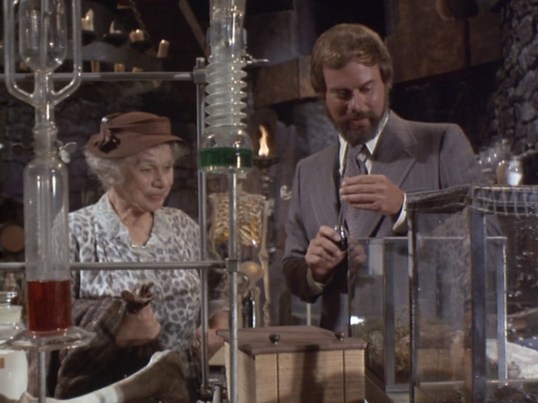
The Housekeeper (written by Heyes, directed by John Meredyth Lucas)

In the second segment, our mad scientist is named Cedric Acton (Larry Hagman).  Whereas Max Redford, in the previous segment, was misguided, Cedric Acton is just crazy.  Through the use of black magic (it involves a frog), Cedric has been experimenting with soul and brain transference.  (There’s an oinking chicken and a clucking pig in his laboratory, just in case anyone’s wondering how the experiments are going.)

Because Cedric loves his wife’s body but hates her personality, he wants to put the soul of his kindly housekeeper (Jeanette Nolan) into the body of his wife, Carlotta (Suzy Parker).  At first, the experiment is a success but things get complicated and …. well, I’m not really sure what it all leads to because this is one of those stories that just kind of ends without really offering up any type of resolution.

The Housekeeper is meant to be a comedy but it’s a bit too mean-spirited to really work.  This segment really calls out for karma to intervene and for Cedric’s soul to end up in something else’s body but instead it just ends with Cedric continuing his experiments.  It’s more than a little dissatisfying.  Larry Hagman does a good job playing Cedric, though.  He’s convincingly crazy.

Especially after the pilot, it’s hard not to be disappointed by the first episode of Night Gallery.  Both stories had potential but they were let down by weak endings.  Oh well.  Hopefully, tomorrow’s episode will be an improvement!
Embracing the Melodrama Part II #68: Mazes and Monsters (dir Steven Hilliard Stern)


M_M_DVDIt’s amazing the things that you find when you randomly search the DVD section of Half-Price Books.  For instance, I found a very cheap DVD of the 1982 made-for-TV film Mazes and Monsters and I simply had to buy it.

Why?

Well, just look at the cover above.  Look at the ominous castle.  Look at the shadowy dragons flying around it.  Look at that Shining-style maze.  Look at the ominous tag line: “Danger lurks between fantasy and reality.”  And especially be sure to look at Tom Hanks gazing serenely over it all.

“Wow,” I thought, “Tom Hanks fights a dragon?  This is something that I’ve got to see!”

Well, there are no dragons in Mazes and Monsters.  There are a few monsters but they’re only briefly seen figments of Tom Hanks’s imagination.  The film is about a group of college students who obsessively play an RPG called Mazes and Monsters.  When one of the students (an annoying genius who wears wacky hats and is played by an actor with the surprisingly poetic name of Chris Makepeace) suggests that they play Mazes and Monsters “for real” in some caverns near the college, it leads to Robbie (Tom Hanks) have a mental breakdown.  Soon, Robbie is convinced that he’s actually a monk.  He breaks up with his girlfriend because he doesn’t want to violate his vow of celibacy.  (Of course, the real fantasy is that a college student obsessed with playing Mazes and Monsters would have a girlfriend in the first place but anyway…)  He keeps seeing imaginary minotaurs lurking in the shadows.  Finally, he runs off to New York on a quest to find “the great Hall.”  It’s up to his friends to find him and hopefully impart an important lesson about the dangerous reality of RPG addiction.

Or something.

Listen, to be honest, if not for Tom Hanks, there would be no reason to watch Mazes and Monsters.  It’s poorly acted.  It’s written and directed with a heavy hand.  There’s some nice shots of downtown New York City but otherwise, it’s visually drab.

But, because Tom Hanks is in it and he’s playing a role that demands that he go totally over-the-top in his performance, Mazes and Monsters is totally worth watching.  If you’ve ever wanted to see Tom Hanks wander around New York City while dressed like a monk, this is the film for you.  If you’ve ever wanted to see Tom Hanks start to tremble while explaining that, as a monk, he’s not allowed to kill minotaurs, this is the movie for you.  Most of all, if you’ve ever wanted to see Tom Hanks shrieking, “THERE’S BLOOD ON MY KNIFE!” while standing in an old school phone booth, this is definitely the movie for you!

Seriously.

Considering that Tom Hanks is currently viewed as being some sort of elder statesman of American film (and, even more importantly, Hanks seems to view himself as being some sort of national treasure), there’s something oddly satisfying about seeing him before he became THE Tom Hanks.  It’s good to be reminded that, at one time, he was just another young actor doing his best in a crappy made-for-TV movie.

http://www.youtube.com/watch?v=6XhxFVF9SZU