Goodfellas is totally a Christmas movie!
Goodfellas is totally a Christmas movie!

In this 1994 made-in-Canada movie, Anthony Denison plays John Gotti. We watch as he goes from being a street boss to Paul Castellano to assassinating Castellano so that he can take over the Gambino crime family. Gotti thinks that he’s the king of New York and he’s convinced that no one will ever bring him down. U.S. Attorney Diana Giacalone (Lorraine Bracco) is determined to prove him wrong. She becomes the first of many prosecutors to try to get Gotti and Gotti reacts by having his attorney launch a series of outrageously misogynistic attacks against her. Gotti doesn’t just want to defeat Diana. He also wants to humiliate her. Diane may have the evidence but Gotti’s got the money. Who will get Gotti?
Now, I guess I could argue here that the horror aspect of this film comes from the crimes that Gotti commits. And it is true that we see Gotti kill a number of people. He’s a sadistic killer, the type who will shoot someone twenty more times than he needs to. As the last of the truly flamboyant gangsters, Gotti would go on to become something of a pop cultural institution. But one should not overlook the fact that, for all of his charisma and bravado, John Gotti was not a nice guy. Of course, I should also point out that none of that charisma is really present in Anthony Denison’s performance as Gotti. As played by Denison, John Gotti — the so-called Teflon Don whose greatest strength was his shamelessness — comes across as being a little boring.
Actually, the scariest thing about this film is Lorraine Bracco’s performance as Diana Giacalone. Bracco does a lot of yelling as Giacalone. Sometimes, it’s understandable. Giacalone is portrayed as being someone who grew up on the same tough streets as Gotti and who resents people like Gotti and the Mafia giving a bad name to Italians in general. The problem is that Bracco yells her lines even when there’s no reason to be yelling. At one point, she discovers that someone screwed up her lunch order and she screams about it as if the world is ending. Visiting her mother (Ellen Burstyn) for the holidays, Giacalone yells at her family. When the verdict comes in, Giacalone yells some more. The yelling is pretty much nonstop and, as a result, one starts to feel that the other U.S. attorneys might have a point when they say that Giacalone is a loose cannon. The film tries to present her as being a strong, no-bullshit woman who is going up against an army of misogynists but there’s more to being strong than just yelling. It would be such a big deal if the film had given her a personality beyond yelling but it doesn’t. I blame the script more than I blame Lorraine Bracco, who can be a very good actress when cast in the right role.
Getting Gotti pretty much hits every Mafia cliche. Whenever anyone drives around the old neighborhood, Italian string music plays. There’s a moment where Giacalone yells that her goal is to make sure that people understand that the Mafia isn’t “Al Pacino looking soulful” in The Godfather. I had to wonder if Giacalone had ever actually watched The Godfather. Seriously, an Italian attacking The Godfather? Who does she think she is, Joe Columbo?
Gotti remains the Gotti film to watch.
First released in 1990 and continuously acclaimed ever since, Goodfellas did not win the Oscar for Best Picture.
I’m always a bit surprised whenever I remember that. Goodfellas didn’t win Best Picture? That just doesn’t seem right. It’s not the other films nominated that year were bad but Goodfellas was so brilliant that it’s hard to imagine someone actually voting for something else. Seriously, it’s hard to think of a film that has been more influential than Goodfellas. Every gangster film with a soundtrack of kitschy tunes from the 6os and 70s owes huge debt to Goodfellas. Every actor who has ever been cast as a wild and out-of-control psycho gangster owes a debt to Joe Pesci’s performance as Tommy DeVito. When Ray Liotta passed away two years ago, we all immediately heard him saying, “I always wanted to be a gangster.” Robert De Niro’s Jimmy Conway remains the epitome of the ruthless gangster. For many, Paul Sorvino’s neighborhood godfather redefined what it meant to be a crime boss. Lorraine Bracco made such an impression as Karen Hill that it somehow seemed appropriate that she was one of the first people cast in The Sopranos, a show that itself would probably have not existed if not for Goodfellas. Frank Sivero, Samuel L. Jackson, Tobin Bell, Debi Mazer, Vincent Gallo, Ileana Douglas, Frank Vincent, Tony Sirico, Michael Imperioli, Tony Darrow, Mike Starr, Chuck Low, all of them can be seen in Goodfellas. It’s a film that many still consider to be the best of Martin Scorsese’s legendary career. Who can forget Robert De Niro smoking that cigarette while Sunshine of Your Love blared on the soundtrack? Who can forget “Maury’s wigs don’t come off!” or “Rossi, you are nothing but whore!?” Who can forget the cheery Christmas music playing in the background while De Niro’s Jimmy Conway grows more and more paranoid after pulling off the biggest heist of his career?
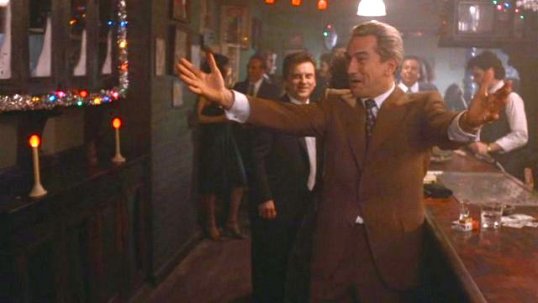
Plus, it’s a Christmas movie!
And yet, it did not win Best Picture.
Myself, whenever I’m sitting behind a garbage truck in traffic, I immediately start to hear the piano coda from Layla. For that matter, whenever I see a helicopter in the sky, I flash back to a coke-addled Henry Hill getting paranoid as he tries to pick up his brother from the hospital. Whenever I see someone walking across the street in the suburbs, I remember the scene where Henry coolly pistol-whips the country club guy and then tells Karen to hide his gun. I always remember Karen saying that she knows that many of her best friends would have run off as soon as their boyfriend gave them a gun to hide but “it turned me on.” It would have turned me on as well. Henry might be a gangster and his friends might be murderers but he doesn’t make any apologies for who he is, unlike everyone else in the world.
But it did not win Best Picture.
How many people have imitated Joe Pesci saying, “How am I funny?” How many times did Pesci and Frank Vincent have to listen to people telling them to “go home and get your fucking shinebox?” A lot of people remember the brutality of the scene where Pesci and De Niro team up to attack Vincent’s crude gangster but I always remember the sound of Donavon’s Atlantis playing on the soundtrack.
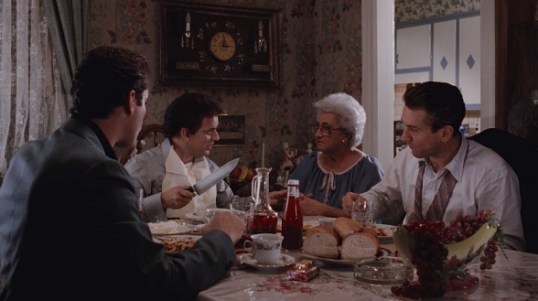
And then there’s Catherine Scorsese, showing up as Tommy’s mom and cooking for everyone while Vincent struggles to escape from the trunk of a car. “He is content to be a jerk,” Tommy says about Henry Hill. Just a few hours earlier, Tommy was apologizing to Henry for getting blood on his floor.
Goodfellas is a fast-paced look at organized crime, spanning from the 50s to the early 80s. Ray Liotta plays Henry Hill, who goes from idolizing gangsters to being a gangster to ultimately fearing his associates after he gets busted for dealing drugs. It’s a dizzying film, full of so many classic scenes and lines that it feels almost pointless to try to list them all here or to pretend like whoever is reading this review doesn’t remember the scene where the camera pans through the club and we meet the members of the crew. (“And then there was Pete The Killer….”) Goodfellas is a film that spend two hours showing us how much fun being a gangster can be and then thirty minutes showing us just how bad it can get when you’re high on coke, the police are after you, and you’ve recently learned that your associates are willing to kill even their oldest friends. No matter how many times I watch Goodfellas, I always get very anxious towards the end of the film. With the music pounding and the camera spinning, with Henry looking for helicopters, and with all of his plans going wrong over the course of one day, it’s almost a relief when Bo Dietl points that gun at Henry’s head and yells at him, revealing that Henry has been captured by the cops and not the Gambinos. Karen desperately running through the house, flushing drugs and hiding a gun in her underwear, always leaves me unsettled. It’s such a nice house but now, everything is crashing down.
There’s a tendency to compare Goodfellas to The Godfather, as their both films that re-imagine American history and culture through the lens of the gangster genre. I think they’re both great but I also think that they are ultimately two very different films. If The Godfather is sweeping and operatic, Goodfellas is the film that reminds us that gangsters also live in the suburbs and go to cookouts and that their wives take care of the kids and watch movies while the FBI searches their home. If The Godfather is about the bosses, Goodfellas is about the blue collar soldiers. The Godfather represents what we wish the Mafia was like while Goodfellas represents the reality.
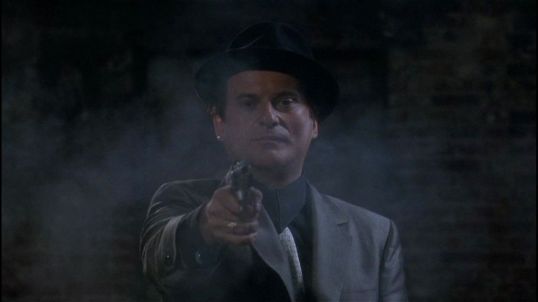
Goodfellas is one of the greatest films ever made but it lost the Best Picture Oscar to Dances With Wolves, a film that left audiences feeling good as opposed to anxious. To be honest, Martin Scorsese losing Best Director to Kevin Costner feels like an even bigger injustice than Goodfellas losing Best Picture. One can understand the desire to reward Dances With Wolves, a film that attempts to correct a decades worth of negative stereotypes about Native Americans. But Scorsese’s direction was so brilliant that it’s truly a shame that he didn’t win and that Lorraine Bracco didn’t win Best Supporting Actress. It’s also a shame that Ray Liotta wasn’t nominated for playing Henry Hill. At least Joe Pesci won an Oscar for redefining what it meant to be a gangster.
Goodfellas is proof that the best film doesn’t always win at the Oscars. But it’s also proof that a great film doesn’t need an Oscar to be remembered.
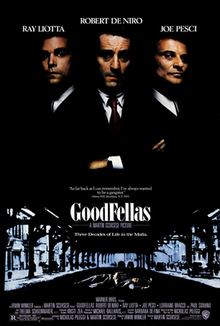
Goodfellas is totally a Christmas movie!
When exactly did Leonardo DiCaprio become a good actor?
That may seem like a strange question because, today, Leonardo DiCaprio is often and rightfully described as being one of the greatest actors around. He regularly works with the best directors in Hollywood, including Martin Scorsese. His performances in The Aviator, The Wolf of Wall Street, and The Revenant should be viewed by any aspiring actor.
And yet, it’s easy to forget that Leonardo DiCaprio has been around forever. Long before he was Martin Scorsese’s go-to actor, he was appearing in movies like Critters 3. He started his career when he was 14 years old and spent a few years appearing in commercials and sitcoms before making his film debut in 1991. (He was 17 when he made his first movie but, as anyone who has seen any of his early movies can attest, he looked much younger.) When you watch those early DiCaprio films, you’re left with the impression of an actor who had some talent but who definitely needed a strong director to guide him. Watching those early DiCaprio films, it’s always somewhat amazing to see both how good and how bad DiCaprio could be, often in the same movie. If a scene called for DiCaprio to be quiet and introspective, he was a wonder to behold. But whenever a scene called for big dramatic moment or gesture, DiCaprio would often become that shrill kid who made you cringe in your high school drama class. I think that part of the problem is that the young DiCaprio was often cast as a passionate artist and, when you’re a certain age, you tend to assume that being a passionate artist means that you spend a lot of time yelling.
Take a film like 1995’s The Basketball Diaries, for instance. In this film, Leonardo DiCaprio plays a real-life poet named Jim Carroll. The film deals with Carroll’s teenage years, which were basically made up of going to Catholic school, writing poetry, playing basketball, committing petty crimes, and eventually getting hooked on heroin. It’s pretty dramatic stuff and, with his face that’s somehow angelic and sardonic at the same time, the young DiCaprio certainly looks the part of a teenager who split his time between private school and the streets. Though the young DiCaprio was way too scrawny to be believable as a star basketball player, he’s convincing in the scenes where he’s writing out his thoughts and his poems.
But then, Jim’s best friend (played by Michael Imperioli) dies of leukemia and a despondent Jim goes from pills and inhalants to heroin and both the film and DiCaprio’s performance quickly goes downhill. Playing drug addiction (and, even worse, drug withdrawal) tends to bring out the worst instincts in even the best actors and that’s certainly the case with DiCaprio’s performance in The Basketball Diaries. Suddenly, Leo is shaking and yelling in that shrill way that he used to do and, when he has gets emotional, he overplays the emotions to the extent that you can actually hear the snot being sorted back up his nostrils and you, as the viewer, start to get embarrassed for him. As soon as Jim starts screaming at his mother (played by Lorraine Bracco), you really wish that the director or the writer or maybe the other actors had stepped in and said, “Leo …. dial it down a little.” If you need proof that DiCaprio’s a far better actor today than he was in 1995, just compare Leo on drugs in The Basketball Diaries to Leo on drugs in The Wolf of Wall Street.
When The Basketball Diaries does work, it’s usually because of the actors around DiCaprio. In one of his earliest roles, Mark Wahlberg has such an authentic presence that you kinda wish he and DiCaprio had switched roles. (Yes, there was a time when Mark Wahlberg was a better actor than Leonardo DiCaprio.) Bruno Kirby is chilling in a few cringey scenes as Jim’s basketball coach. Ernie Hudson bring some welcome gravitas to the role of an ex-junkie who tries to help Jim straight out. And then there’s poor Lorraine Bracco, bringing far more to the role of Jim’s underappreciated mother than was probably present in the script.
The Basketball Diaries is one of those films that seems profound when you’re like 15 and you come across it playing on TBS at like 2 in the morning. Otherwise, it’s mostly interesting as evidence that, over the past 20 years, Leonardo DiCaprio has certainly grown as an actor.

Last night, my BFF and I were searching for a movie to watch. As we were looking through what was available on demand, we came across a film from 1987 called Someone To Watch Over Me. The film was described as being a romantic thriller about a “happily married cop who becomes infatuated with the wealthy and beautiful woman he’s been assigned to protect from a death threat.”
“This sounds like it might be good,” I said, “Plus, it’s directed by Ridley Scott and he’s good … sometimes.”
“Who’s in it?” my BFF asked.
“Tom Berenger.”
“Who?”
“He was in Inception.”
“Who did he play in Inception? Was he the rich guy or was he one of Leonardo DiCaprio’s friends?”
“Neither. He was just kinda there.”
Anyway, whether it was the Inception-connection or the fact that my friend was tired of listening to me obsessively read the description of every single film that was available on demand, we decided to watch Someone To Watch Over Me.
And you know what?
It’s no Inception but Someone To Watch Over Me is still a fairly entertaining little film.
In Someone To Watch Over Me, a youngish Tom Berenger plays Mike Keegan, a New York cop who has just been promoted to detective. When wealthy socialite Claire Gregory (Mimi Rogers) witnesses a murder, Mike is among the detective assigned to guard her. Though the resolutely blue-collar Mike and the sophisticated Claire come from different backgrounds, they both find themselves attracted to one another. For Mike, Claire represents the type of lifestyle that he can only dream of. For Claire, Mike is the opposite of the pretentious and vapid men that usually surround her. Unfortunately, a sinister gangster is attempting to kill Claire and Mike’s down-to-earth wife Ellie (played by Lorraine Bracco) will kill him if she ever finds out.
Now, let’s make one thing clear. The plot of Someone To Watch Over Me is just as predictable as you think it is. As you read my summary, you probably guessed every single thing that happens in the film. There are no surprises and there are no twists. Everything in the movie plays out exactly the way that you’re expecting it too.
And yet, as predictable as it was, I still enjoyed Someone To Watch Over Me. One reason was because of a scene in which Ellie reacts to Mike’s self-serving apologies by punching him in the face. Lorraine Bracco — who is great in this film — throws that punch as if the fate of every woman on the planet’s self-respect depended upon it. When she strikes out at her husband, it changes the film. It’s no longer a film about romance. Instead, it becomes a film about adultery. Even while the film itself tries to play up the romance between Claire and Mike, both Ellie and Lorraine Bracco refuse to be pushed to the side. After sitting through so many films that feature women nobly stepping aside so that their significant other can find happiness with his “true love,” it was refreshing to see Ellie call Mike out on his sanctimonious bullshit.
Secondly, I enjoyed Someone To Watch Over Me because it truly is a time capsule of the time when it was made. I was born in 1985, which perhaps is why I’ve always been fascinated by 80s films. If nothing else, they give me a chance to see what was going on in the rest of the world while I was busy learning how to walk. Someone To Watch Over Me was released in 1987 and everything about it — from the fashion to the celebration of wealth and glamour to Ridley Scott’s artfully composed shots of New York at night to the vaguely cokey vibe given off by some members of the supporting cast to the landline phones — made me feel as if I had stepped into my own personal time machine.
So, in the end, Someone To Watch Over Me is not exactly a great or even a memorable film. However, I’m still glad we watched it.
 Through the Shattered Lens