4 (or more) Shots From 4 (or more) Films is just what it says it is, 4 (or more) shots from 4 (or more) of our favorite films. As opposed to the reviews and recaps that we usually post, 4 (or more) Shots From 4 (or more) Films lets the visuals do the talking.
Today is Francis Ford Coppola’s birthday! Coppola is a bit of a controversial figure among some film scholars. While everyone agrees that, with the first two Godfathers, he directed two of the greatest films of all time (and some people would include Apocalypse Now on that list as well) and that he was one of the most important directors of the 70s, his post-Apocalypse Now career is often held up as a cautionary tale. Some say that Coppola’s career suffered because of his own excessive behavior and spending. Others argue that he was treated unfairly by a film industry that resented his refusal to compromise his vision and ambitions. Personally, my natural instinct is to always side with the artist over the executives and that’s certainly the case with Coppola. Coppola has only completed four films since the start of this current century and three of them were not widely released. Say what you will about the films themselves, that still doesn’t seem right. This year will bring us a new Coppola film, Megapolis. I know that we’re all hoping the best.
Regardless of how one views his latter career, Coppola is responsible for some of the best and most important films ever made. And today, on his birthday, it’s time for….
4 Shots From 4 Francis Ford Coppola Films
The Godfather (1972, dir by Francis Ford Coppola, DP: Gordon Willis)
The Conversation (1974, dir by Francis Ford Coppola, DP: Bill Butler)
The Godfather, Part II (1974, dir by Francis Ford Coppola, DP: Gordon Willis)
Apocalypse Now (1979, dir by Francis Ford Coppola, DP: Vittorio Storaro)
Welcome to Late Night Retro Television Reviews, a feature where we review some of our favorite and least favorite shows of the past! On Saturdays, I will be reviewingthe Canadian sitcom, Check it Out, which ran in syndication from 1985 to 1988. The entire show is currently streaming on Tubi!
Today, we start a new season of Check It Out!
Episode 2.1 “Getting to Know You”
(Dir by Alan Erlich, originally aired on October 3rd, 1986)
The second season of Check It Out! opens with some changes at Cobb’s Grocery store.
Howard now has a mustache. Tonya Williams and Henry Beckman are no longer listed in the opening credits so I guess Jennifer and Alf have moved on from working at the store. Gordon Clapp, however, is now listed in the opening credits so Viker, who was one of more consistently funny characters during the first season, is now a series regular.
The episode opens with zero customers in the store. Due to a broken waterline, the store’s parking lot has been taken over by a bunch of construction workers. Howard calls them “apes.” Marlene is sick of them hitting on her whenever she comes to work. Christian thinks he could take them on. And Mrs. Cobb is demanding that Howard lay off two employees to help offset costs.
Howard could always point out that, with Jennifer and Alf gone, the store now only has seven employees but he doesn’t. Instead, he follows Edna’s advice and sits down for one-and-one interviews with his employees and gets to know them. Howard thinks that he’ll be able to find an employee who doesn’t really need the job but instead, he discovers that all of his employees are wonderful people. Marlene cries about how difficult her life has been lately. Murray talks about how both of his parents are out of work. Leslie volunteers to give up his job and Howard is so touched that there’s no way he can possibly accept Leslie’s offer. Jack Christian, who is usually pretty self-centered and obnoxious, seems like an easy choice but then he gets beaten up defending Marlene from the construction workers.
Finally, Howard realizes that there’s only one thing he can do. He lays off Edna and then he lays himself off. He announces that he and Edna are going on vacation and they’ll be back in four months. Ummm …. look, I’ll be honest. I’ve never been through the experience of being fired or laid off so I don’t really fully understand how it all works. Isn’t Howard kind of taking a risk here? I mean, I guess Howard is assuming that Christian will just fill in for four months and then Howard and Edna will return and everything will go back to normal. But what if Mrs. Cobb hires a new manager? What if she doesn’t want to take back Howard and Edna? I mean, to me, it sounds like Howard basically just quit his job and forced Edna to quit her’s as well. But everyone in the store seems to be convinced that Howard will be back in just a few months.
I guess my point is that Check it Out! doesn’t seem like it was always 100% realistic.
Anyway, this episode was okay. It reintroduced all the characters and gave us a chance to get reacquainted with them, as any season premiere should. Gordon Clapp, Jeff Pustil, and Kathleen Laskey all had moments that made me smile. Those three have the ability to make even the simplest of lines funny. During the first season, Don Adams could occasionally be a bit overly frantic as Howard. For the second season premiere, though, his performance felt a bit toned down and it no longer felt as if he and the show were begging for laughs. Still, I just can’t get over that ending. Edna was so excited that her boyfriend essentially put her future employment at risk.
Here’s a few thoughts on what I watched this week. (Most of this week was taken up with movies as opposed to television.)
Dirty Pair Flash (YouTube)
Yuri and Kei tried to capture a notorious con artist but instead ended up getting stranded in the middle of the wilderness with him. This is the first episode of Dirty Pair Flash where I’ve actually been able to follow the plot and I have to admit it was pretty amusing. I relate to Yuri. We have a similar attitude towards life and I appreciated her efforts to stay positive.
Dr. Phil (YouTube)
Dr. Phil talked to a cheating husband and the wife who got revenge by having an affair of her own. Phil seemed fairly annoyed with both of them and I really can’t blame him.
Geraldo (YouTube)
In an episode from the late 80s, Geraldo Rivera talked to teenagers on death row, all of whom claimed to be former Satanists. I didn’t believe a word of it. One of the teens that Geraldo talked to ended up going to Oklahoma’s gas chambers ten years later so I guess the whole Satanism scam didn’t work for him. Myself, I’m just wondering how long Geraldo Rivera has been around.
It’s Always Sunny In Philadelphia (Hulu)
Heh heh, the bowling episode. Dee finally knocked over a pin, just to discover that everyone had already left to go find something better to do. I laughed.
Law & Order (Thursday Night, NBC)
This week, via Peacock, I got caught up on the last three episodes of Law & Order. They were, as is typical of this show, uneven. The first episode that I watched dealt with a shooting at a hospital and it was well-done. The second episode was yet another one about a murdered millionaire and a dominatrix and it was enjoyably trashy. The third episode was a take on the death of Jordan Neely and it felt a bit like Leftist fanfic, straight down to portraying the Daniel Penny stand-in as being a secret white supremacist.
I continue to enjoy Reid Scott’s performance as the newest cop. Tony Goldwyn has now taken over as District Attorney and I guess he’ll be okay, though it’s going to be difficult to replace Sam Waterston. Neither Price nor Maroun seem like they were worth Jack resigning to protect.
Night Court (Peacock)
I finished up Night Court’s second season this week. I’m not really sure why I felt the need to watch the remaining episodes, because I laughed even less while watching the second season than I did while watching the first season. I think the main problem with this show is that there’s really no room for the characters to develop. Abby will always have to be impossibly naive or the show will have to totally change direction. Dan will always have to be a cynic or the show won’t work. The supporting characters all have to be one-dimensional or the show will be thrown off-balance. It’s just not a very good show, despite the best efforts of Melissa Rauch and John Larroquette.
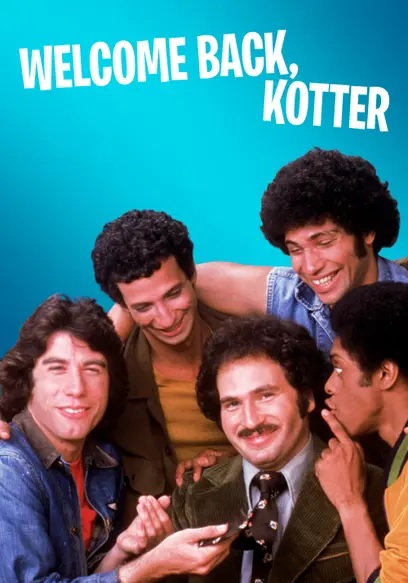
Welcome to Retro Television Reviews, a feature where we review some of our favorite and least favorite shows of the past! On Saturdays, I will be reviewing Welcome Back Kotter, which ran on ABC from 1975 to 1979. The entire show is currently streaming on Tubi!
This week, Arnold Horshack becomes the mad prophet of the air waves.
Episode 3.16 “Sweatwork”
(Dir by Bob Claver, originally aired on December 22nd, 1977)
At the new apartment, Gabe tells Julie about his Uncle Herman. “He’s a sports mechanic,” Gabe explains, “He fixes basketball games.”
Hey, that’s illegal!
Meanwhile, at the school, Woodman asks to meet with Freddie. Freddie agrees, even though Woodman has been acting strangely. Woodman enters the classroom and immediately asks for a high five, holding up his hand and saying, “Right on, bro. Skin me.”
Woodman is excited because the school board is giving money to every high school to start a radio station. And the station that gets the highest ratings will receive a trophy. Buchanan High has never won a trophy before. Because Freddie has radio experience, Woodman want Freddie to be in charge of Buchanan’s station. Freddie agrees.
“That’s groovy!” Woodman says.
Juan Epstein and Darth Vader at the station
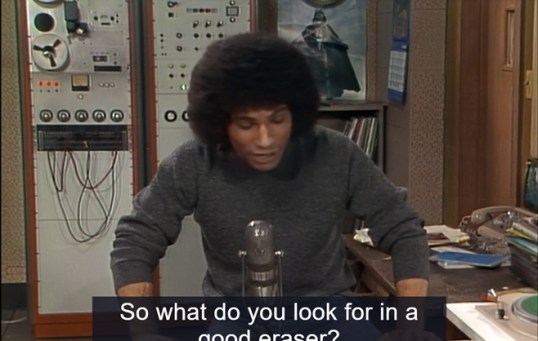
Freddie makes Epstein the consumer repairs reporter while giving Horshack the lead anchor role. (Vinnie is also said to be a reporter but John Travolta is never actually seen in this episode.) Unfortunately, Horshack turns out to be ratings poison.
“He reminds me of Tokyo Rose,” Woodman says, while listening to Horshack. “Bye bye, young G.I.”
Freddie follows Woodman’s orders and fires Horshack but he does agree to allow Horshack one more broadcast to say goodbye. Grabbing the microphone, Horshack asks his listeners to go to their windows and shout, “I’m fed up, Arnold …. AND I DON’T CARE WHO KNOWS IT!”
Suddenly, Horshack is ratings gold. He’s the mad prophet of the air waves. He has fans who hang on his every word. But when Horshack announces that the teachers should not be given a raise, he is invited to the Kotter apartment. Gabe tells Horshack that he has meddled in the primal forces of nature and “YOU WILL ATONE!”
Horshack drops his anti-teacher rhetoric and goes back to being a normal, boring broadcaster. His ratings crash. Woodman vengefully announces that Horshack will be kept after school.
“This has been the story of Arnold Horshack,” Gabe says, “the only man kept after school for bad ratings.”
The episode ends with Gabe telling Woodman about how his Uncle Simon was buried in a rented tux and his father has to pay $15 a month as a result. Woodman finds the joke to be hilarious and laughs so much that even Gabe starts to get nervous.
This episode, which you’ve already guessed was a parody of Network, had its moments. Gabe is barely in this sone but I did enjoy his take on Ned Beatty’s famous monologue. And any episode that features a lot of Woodman is going to be enjoyable because John Sylvester White was always delightfully unhinged in the role. In the end, how one reacts to this episode will depend on how much tolerance one has for Ron Pallilo’s performance as Arnold Horshack. By the time the third season came around, Pallilo’s performance in the role had gone from eccentric to cartoonish and a little of Horshack tended to be a lot. Personally, I think Epstein should have been this episode’s Howard Beale. That said, I chuckled quite a bit while watching this episode. It was certainly better than the radio station episodes of Saved By The Bell.
Next week, Gabe freaks out when the Sweathogs are taught by a computer! A.I. has been around a lot longer than I thought.
As some of our regular readers undoubtedly know, I am involved in a few weekly live tweets on twitter. I host #FridayNightFlix every Friday, I co-host #ScarySocial on Saturday, and I am one of the five hosts of #MondayActionMovie! Every week, we get together. We watch a movie. We tweet our way through it.
Tonight, at 9 pm et, Tim Buntley will be hosting #ScarySocial! The movie? 2014’s Exists!
If you want to join us this Friday, just hop onto twitter, start the movie at 9 pm et, and use the #ScarySocial hashtag! I’ll be there tweeting and I imagine some other members of the TSL Crew will be there as well. It’s a friendly group and welcoming of newcomers so don’t be shy.
Welcome to Late Night Retro Television Reviews, a new feature where we review some of our favorite and least favorite shows of the past! On Fridays, I will be reviewing Friday the 13th: The Series, a show which ran in syndication from 1987 to 1990. The show can be found on YouTube!
This week, Ryan discovers that Uncle Louis’s latest victim is his own father!
Episode 1.24 “Pipe Dreams”
(Dir by Zale Dalen, originally aired on July 11th, 1988)
Ryan has been invited to the wedding of Connie (Marion Gilsenan) and Ray Dallion (Michael Constantine). Ray is Ryan’s estranged father. As Ryan explains it to Micki, this is only the latest of Ray’s many marriages. Ray has spent his entire life trying to get rich and he often neglected his son while pursuing his dream. Ray will do anything to get rich. Ryan feels that there are more important things than money, like tracking down cursed antiques. Ryan decides to go the wedding but he brings his cousin Micki along with him for moral support. I mean, considering that Micki has just lost twopotential husbands in a row, why wouldn’t she want to attend a wedding?
As the result of inventing a new type of gun, Ray has come into money. Ryan is horrified that his father would get rich off of weaponry but Ray explains that he was inspired by Uncle Louis. If Louis could get rich just by running a rinky dink antique store, why can’t Ray get rich from his inventions? Ryan explains that Uncle Louis got rich by selling cursed antiques and selling his soul to the Devil and now, Ryan and Micki spend all of their time traveling around the country (which is totally Canada, regardless of what the show occasionally claims) and trying to undo Louis’s evil. Ray doesn’t seem to be particularly surprised by any of this.
Ray has an antique of his own, a pipe that Louis gave to him. Whenever Ray smokes the pipe, it produces an orange smoke that disintegrates anyone that it surrounds. You know that gun that Ray invented? Well, it turns out that he didn’t actually invent it. Instead, he stole it after using his magic pipe to kill the original inventor. When Jack shows up for the wedding and informs Ryan of all of this, Ryan cannot believe it. He may be estranged from his father but Ryan can’t accept that he’s turned evil. But, as we all know from previous episodes, using the cursed antiques is like getting hooked on drugs. Once you use it once, you become addicted to using it again and again.
This is yet another episode of Friday the 13th that ends with a freeze frame of someone sobbing. In this case, it’s Ryan crying. As easy as it id to poke fun at how often Ryan and Micki end up either sobbing or staring at the camera with a forlorn look on their face, it’s actually a sign of the show’s intelligence that it realizes and acknowledges that dealing with cursed antiques is going to take a mental and emotional toll on someone. Both Ryan and Micki has lost a lot of people this season. In this episode, Ryan loses his father and, due to the performances of John D. LeMay and Michael Constantine, it definitely carries an emotional punch. Like so many of the “villains” on this show, Ray was not inherently evil. Instead, he was a man who lost his soul due to Louis’s evil deal with the Devil. The best episodes of Friday the 13th are tragedies and that’s certainly the case with this episode.
That’s the question at the heart of the 1975 film, The Man In The Glass Booth.
When we first meet Arthur Goldman (Maximilian Schell), he is a wealthy businessman who lives in a Manhattan high-rise and who appears to rarely leave the safety of his penthouse. He is waited on by two assistants, Jack (Henry Brown) and Charlie (Lawrence Pressman), both of whom he talks to and treats as if they are members of his own family. His most frequent visitor is his psychiatrist, Dr. Weissburger (Robert H. Harris), who frequently stops by and asks Arthur if he’s been taking his medication.
Arthur Goldman is a man who loves to talk. Indeed, the first hour of the film feels almost like a nonstop monologue on the part of Goldman, with just occasional interjections from the other characters. Goldman was born in Germany. He talks about how, when he was young, he and his family were sent to a concentration camp and it was there that he witnessed the murder of his father by the camp’s sadistic commandant, Dorff. Dorff is one of the many Nazis who disappeared to South America at the end of the war.
When Goldman spots a car that always seems to be parked across the street from his building, he becomes paranoid. He says that he’s being watched and even suggests that Dorff has come to capture him. Instead, it turns out that Mossad come for him. As the agents explain it to Charlie, dental records prove that Arthur Goldman is actually Commandant Dorff. Goldman/Dorff is taken back to Israel to stand trial for his crimes.
Are Arthur Goldman and Dorff the same man? Once in Israel, Goldman tells anyone who will listen that he is Dorff and that he feels no guilt for his actions. He insists on being allowed to wear his SS uniform during the trial. Because of threats to his safety, a booth made of bullet-proof glass has been placed in the courtroom. As the trial commences, The Man in the Glass Booth continues to rant and rave and declare his guilt. However, the prosecutor (Lois Nettleton) comes to doubt that the man is who he says he is.
The Man In The Glass Booth is based on a novel and play by Robert Shaw. (The same year that The Man In The Glass Booth was released, Shaw played Quint in Jaws.) The film was produced as a part of an experiment called American Film Theatre, in which well-known plays would be adapted to film and then would be shown at 500 participating movie theaters in America. Each production would only be shown four times at each theater and subscriptions were sold for an entire “season” of films. It sounds like an interesting experiment and the type of thing that I would have enjoyed if I had been around back then. Today, of course, these productions would have just premiered on a streaming service.
The Man In The Glass Booth is a film that very much feels like a filmed play. There are only three locations — Goldman’s penthouse, his cell, and the courtroom where he is put on trial. The three act structure is very easy to spot. Maximilian Schell’s performance is also very theatrical. In fact, it’s so theatrical that, for the first hour or so, I found myself wishing that he would just stop talking for a few second or two. He was so dramatic and so flamboyant and so intentionally over-the-top that he became somewhat exhausting. But, during the second hour, I came to see that all of that “overacting” was actually setting up the film’s final act. Schell talks so much that, when he finally does find himself unable to explain himself, it’s a shocking moment and one that perfectly captures not just the evil of the Nazis and the Holocaust but also how the legacy of that evil lives on after the fall of the Third Reich and the deaths of the majority of the Holocaust’s perpetrators. At that moment, I realized that The Man In The Glass Booth never stopped speaking because silence would force him to confront the horrors of the past and the trauma, guilt, and uncertainty lurking in his subconscious. Maximilian Schell was nominated for an Oscar for his performance here and, by the end of the film, I totally understood why.
The Man In The Glass Booth requires some patience. Actually, it requires a lot of patience. However, those who stick with it will discover an intelligent and thought-provoking film about not only the horror of the past but also how those in the present deal with and rationalize those horrors. Though the film is a bit too stagey for its own good, it’s also one that sticks with you even after the curtain falls and the end credits roll.
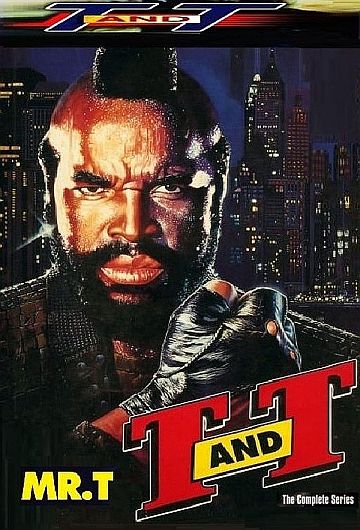
Welcome to Retro Television Reviews, a new feature where we review some of our favorite and least favorite shows of the past! On Fridays, I will be reviewing T. and T., a Canadian show which ran in syndication from 1987 to 1990. The show can be found on Tubi!
This week, Terri and Turner take down the loathsome head of a halfway house.
Episode 3.3 “Halfway to Nowhere”
(Dir by Don McCutcheon, originally aired January 20th, 1990)
Roman (Louis Ferreira) is an angry young man who is on parole and who has been living at a halfway house that is run by Eddy (Danny Pawlick). When Roman discovers that Eddy has been harassing Roman’s girlfriend, Sissy (Krista Bridges), Roman attacks Eddy. Eddy kicks Roman out of the halfway house and attempts to have him sent back to prison.
Terri just happens to be in the police station when Roman is brought in and, just like Amy used to do before her mysterious disappearance, Terri declares herself to be Roman’s attorney. (One gets the feeling that the show’s producers just crossed out Amy’s name on a bunch of scripts and wrote in “Terri.”) Roman turns out to be a terrible client who refuses to talk to anyone, including the attorney who is trying to keep him out of jail. Terri finally calls up T.S. Turner and asks him for help.
Turner’s reaction is to growl about how late it is.
Seriously, what’s going on with Turner this season? He’s in an even worse mood than usual. Maybe he’s mad because Amy has mysteriously vanished without explanation. After all, Turner owed Amy. Amy was the one who got him out of prison. It made sense that Turner would always be willing to drop everything to help out Amy. Terri is just some random lawyer who has shown up out of nowhere.
Terri, it should be said, is not a very good lawyer. At the parole hearing, she puts Eddy on the stand and asks him a bunch of questions, despite not having a clue as to how Eddy is going to respond. She also dramatically announces that she will be calling Sissy as a witness before she knows whether or not Sissy has agreed to testify. When Turner steps into the courtroom without Sissy and shakes his head because Sissy refuses to testify, Terri is forced to walk back her words. I doubt that parole board appreciated that and they probably took their frustration out on Terri’s client.
In the end, Sissy does agree to wear a wire and Eddy stupidly talks about all the crimes that he’s committed as the head of a halfway house. Eddy ends up getting arrested and Sissy and Roman are reunited briefly. That said, it appears that Roman is still going to go back to jail because Terri is a terrible attorney.
On the plus side, this episode featured one of the most loathsome villains to ever show up on T&T and it was satisfying to watch Terri and Turner take him down. On the other hand, it would have been even more satisfying if Terri wasn’t terrible at her job and if Turner didn’t seem to be annoyed by even having to be in her presence. This episode was a mixed bag but at least it looked like Eddy was going away for a long time.
As some of our regular readers undoubtedly know, I am involved in a few weekly live tweets on Twitter and Mastodon. I host #FridayNightFlix every Friday, I co-host #ScarySocial on Saturday, and I am one of the five hosts of #MondayActionMovie! Every week, we get together. We watch a movie. We tweet our way through it.
Tonight, at 10 pm et, we’ve got 1987’s The Barbarians!
If you want to join us this Friday, just hop onto twitter, start the movie at 10 pm et, and use the #FridayNightFlix hashtag! It’s a friendly group and welcoming of newcomers so don’t be shy.
The Barbarians is available on Prime and Tubi! See you there!
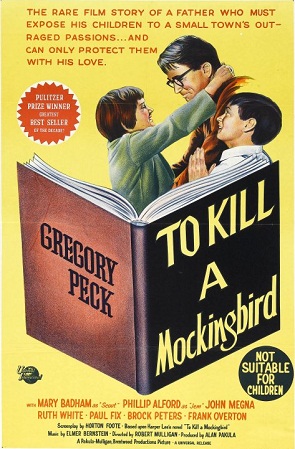
108 years ago today, the actor Gregory Peck was born in San Diego, California. With his deep voice and his Lincolnesque profile, Peck was always best cast as a man of integrity who was willing to take a stand, even if it meant going against the majority. That made him ideal for the role of attorney Atticus Finch in 1962’s To Kill A Mockingbird.
Today’s scene that I love comes from that film. In this scene, Atticus makes his closing statement in the murder trial of Tom Robinson. While Atticus is speaking to the jury, Gregory Peck is speaking to the audience in the theater (and later, in front of the television). Reportedly, Peck only needed one take to perfectly deliver his speech.



 Through the Shattered Lens