Brad reviews DEATH HUNT (1981), starring Charles Bronson, Lee Marvin, Carl Weathers, and Andrew Stevens! 


Today is actor Andrew Stevens’ 70th birthday. I grew up watching Stevens in the Charles Bronson films 10 TO MIDNIGHT (1983) and DEATH HUNT (1981), the movie I’m reviewing today. I also enjoyed watching him in Brian De Palma’s THE FURY (1978). Later in his career he stepped behind the camera where he produces and directs mostly low budget films. As of this writing, he’s still going strong, and he’s built quite a nice career. And for me, my appreciation all started because he worked with Charles Bronson when he was in his twenties!

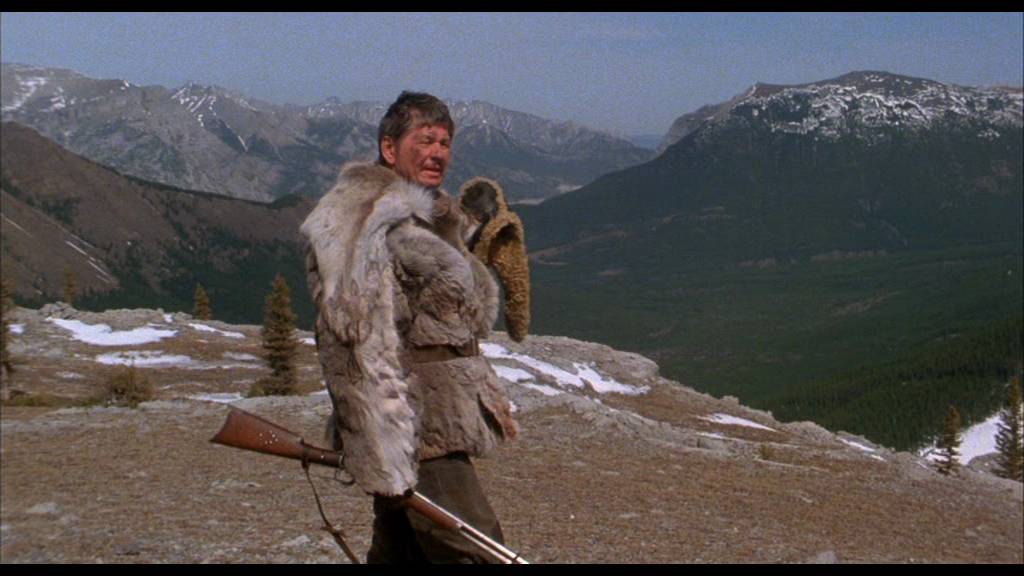
In the “based on a true story” DEATH HUNT, Charles Bronson plays trapper Albert Johnson, who lives in the Yukon Territory in the year of 1931 and just wants to be left alone. Early in the film, Johnson comes across a vicious dogfight and rescues one of the participants who’s almost dead. The problem is that the dog belongs to a piece of shit named Hazel (Ed Lauter), and even though Johnson pays him for the dog, Hazel heads to town and tells Sergeant Edgar Millen (Lee Marvin), of the Royal Canadian Mountain Police, that Johnson stole his dog. Millen doesn’t have time for Hazel’s B.S., so he tells him to go on. Millen would rather drink whiskey and hang out with his friends and co-workers in town. These people include the experienced tracker Sundog, aka George Washington Lincoln Brown (Carl Weathers), a young fresh-faced constable with the RCMP named Alvin Adams (Andrew Stevens), his latest lover Vanessa McBride (Angie Dickinson), and everyone’s favorite sidepiece, the Buffalo woman (Amy Marie George). Not willing to let things slide, Hazel and his men go up to Johnson’s cabin and start some more trouble, and one of his buddies gets his scalp shot off by the more than capable Johnson. Even though the entire mess has been started by Hazel and his crew of goons, who include character actors William Sanderson and Maury Chaykin, Millen is forced to try to bring Johnson in, so they can straighten everything out. When it seems Johnson may be about to go in with Millen, one of Hazel’s dumbass men opens fire, and all hell breaks loose. In the aftermath, Johnson escapes, kicking off a massive manhunt across the mountains and wilderness of the Yukon Territory! 
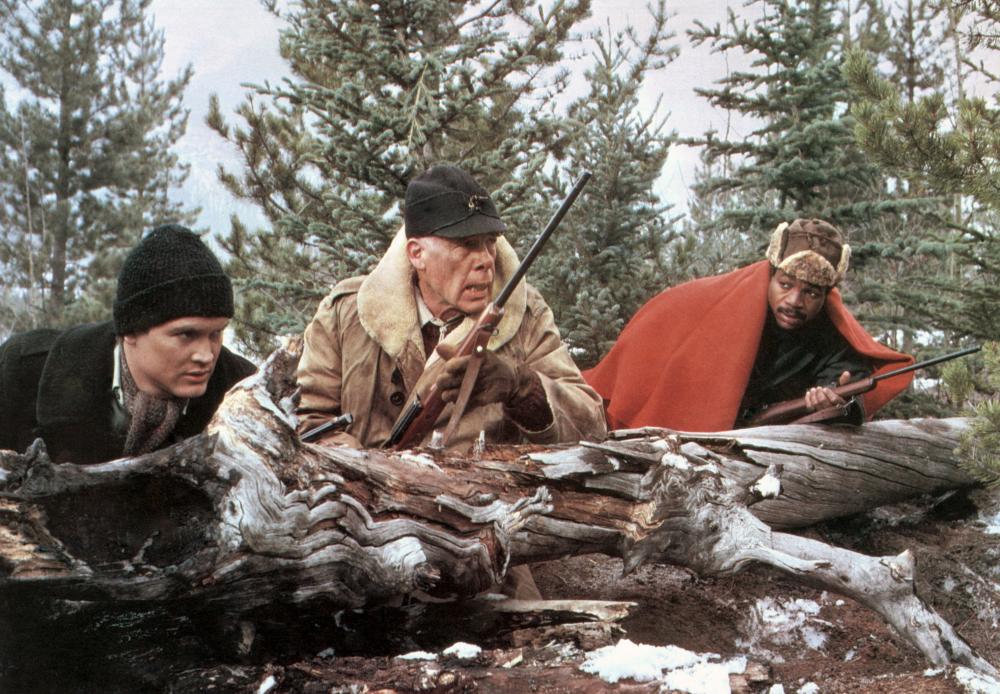
DEATH HUNT is an awesome film, primarily because it pairs Charles Bronson, as the tough mountain man, against Lee Marvin, as the seasoned lawman who probably has only one chase left in him. This is a match made in heaven, and even though the two stars share little screen time, the icons dominate each frame of the film. Their characters respect each other and you get the feeling the two men, who couldn’t be more different in real life, probably felt the same way about each other. The remainder of the cast is filled with so many recognizable names and faces. I’d say the the best performances outside of Bronson and Marvin come from Carl Weathers, Andrew Stevens and Ed Lauter. I like the camaraderie that Weathers shares with Marvin, and of course he’s a lot of help when the action starts. Initially, Stevens seems like he’s going to be another “new kid” who’s too inexperienced to be of much help, but he proves to be more than capable by the end of the film. And good grief is Lauter good at playing a piece of crap! Everything about Hazel is cruel, sadistic, and ignorant, and he plays the part perfectly. A scene where a bullying Hazel gets his comeuppance at the hands of the young Adams (Stevens), is a highlight of the film. Sadly, Angie Dickinson, one of the most beautiful women in the history of cinema, is somewhat wasted in her small, unimportant role. I still like seeing her though, even if the part is beneath her. 

Aside from the phenomenal cast that Director Peter R. Hunt (DR. NO and THUNDERBALL) was able to assemble, there are other good reasons to watch DEATH HUNT. I love movies that are filmed outside of the city, and you can’t get much further out of the city than the Canadian Rocky Mountains. This setting provides plenty of beauty, but its frozen landscape and bitter conditions also allow for a sense of loneliness, isolation and desperation to seep in for the various characters as the manhunt stretches out over time. There is also some rugged and violent action spread out through the film. I was caught off guard the first time I watched the film by some of the more graphic violence in the action scenes. I’ve already mentioned Bronson’s character basically blowing a guy’s head off, and there’s another scene involving William Sanderson getting his arm caught in a trap. These scenes make my toes curl up just thinking about them. The action highlight occurs when the men think they have killed Johnson in an explosion, to only have him emerge from the smoke and flames of his decimated cabin with slow motion shotgun blasting. It’s an incredibly badass moment in the movie and in Bronson’s overall filmography. Finally, the story is interested in contrasting the old ways of doing things, as exemplified by Bronson and Marvin, versus the new ways of doing things, as exemplified by the young Stevens and a hotshot pilot (Scott Hylands) who is called in to help with the search. Edgar Millen is somewhat of a dinosaur who isn’t ready to truly move into the 20th century. He wants to catch Johnson through old-fashioned, out maneuvering him in the wilderness, while Stevens’ character brings in a radio and the expertise to use it, and Hylands tries to locate him and gun him down from high in the sky. These two schools of thought clash and play out to varying degrees of success and failure as the chase rushes toward its conclusion.

DEATH HUNT is not a perfect film by any stretch of the imagination, but it’s been one of my favorite Bronson films since I first saw it the mid to later 80’s. Just seeing Bronson and Marvin together on screen, in a rugged, violent, badass story, goes a long way with me. It’s as simple as that! See the trailer below:
Film Review: The Outlaw Josey Wales (dir by Clint Eastwood)


Towards the end of 1976’s The Outlaw Josey Wales, Josey (played by Clint Eastwood) says, “I guess we all died a little in that damned war.”

He’s referring to the American Civil War and the film leaves you with no doubt that Wales knew what he was talking about.  A farmer living in Missouri, Josey Wales wasn’t involved in the Civil War until a group of guerillas, the Redlegs, raided his home and killed his family.  Seeking vengeance, Wales joined the Bushwackers, a group of Confederate guerillas that were led by the infamous “Bloody Bill” Anderson.  After Anderson’s death and the South’s surrender, Senator James H. Lane (Frank Schofield) offers amnesty to any of the Bushwackers willing to surrender and declare their loyalty to the United States.  Fletcher (John Vernon), the leader of the surviving Bushwackers, thinks it’s a good idea and his men eventually agree to surrender.

Everyone except for Josey Wales.

Fletcher tells Josey that he’ll be an outlaw and that Lane will send his men to capture and execute him.  “I reckon so,” Josey Wales replies.  It’s not that Josey was particularly a fan of the Confederate cause.  Instead, having lost his family and his home and having seen hundreds of men killed, Josey no longer cares.  He’s got a death wish, something that becomes apparent when he later sneaks over to Lane’s camp and discovers that the leader of the Redlegs, Terrill (Bill McKinney), has been made a captain in the Union Army.  The surrendering Bushwackers, with the exception of Fletcher and a young man named Jamie (Sam Bottoms), are gunned down as they swear allegiance to the United States.  Joey springs into action, hijacking a Gatling gun and mowing down soldiers.  It’s a suicidal move and Josey appears to be willing to die, until he sees that Jamie has been wounded.  Josey and Jamie go on the run, pursued by soldiers and bounty hunters.

It sounds like the start of typical Clint Eastwood film and, make no mistake about it, The Outlaw Josey Wales features everything that most people have come to expect from Eastwood.  Josey Wales is an expert shot, often firing two guns while charging forward on his horse.  Josey has a way of words, explaining the purpose of getting “plain man dog mean” and telling a bounty hunter that there are better ways to make a living.  The main difference, though, is that Josey is no longer seeking revenge.  He’s lost his family and his home and he knows nothing is going to bring them back.  He sought revenge during the Civil War and saw so many people killed that, much like Jimmy Stewart in Broken Arrow, he just wants to disappear from civilization.

The problem is that men like Lane and Terrill have no intention of letting Josey Wales disappear.  The sociopathic Terrill sees it as almost being his God-given duty to kill Josey Wales and anyone else that he dislikes.  The bounty hunters are also after Josey Wales.  As Fletcher explains it, bounty hunting is the only way that many former soldiers can make money and feed their families.  As Josey moves through the southwest, his legend grows.  Every town that Josey stops in, he hears stories about the growing number of men that he has supposedly killed.

Josey also discovers that he can’t do it all alone.  He soon finds himself as a part of a new family, a collection of misfits that don’t have a home in Senator Lane’s America.  Lone Waite (Chief Dan George) is an elderly Cherokee man who suggests that Josey head for Mexico.  Little Moonlight (Geraldine Keams) is a Navajo woman who Josey rescues from two bounty hunters.  Sarah Turner (Paula Trueman) and her granddaughter, Laura Lee (Sondra Locke), are rescued from Comancheros.  Josey negotiates the release of two of Sarah’s ranch hands and befriends Chief Ten Bears (Will Sampson) while doing so.  Slowly, Josey comes out of his shell and starts to embrace life once again.  Josey goes from searching for death to searching for peace.

It’s one of Eastwood’s best films, ending on a note of not violence but instead sad regret.  It’s not only a portrait of a man learning to embrace life but it’s also a portrait of a country trying to figure out how to come back together after the bloody savagery of the Civil War.  Some, like Fletcher and Josey, want to move on.  Others, like Terrill, don’t have an identity beyond fighting and killing.  Eastwood gives a good performance but, as a director, he gives every member of the cast a chance to shine.  If you only know John Vernon as Dean Wormer from Animal House, his sad-eyed performance here will be a revelation.

Originally, The Outlaw Josey Wales was meant to be directed by Phillip L. Kaufman but Eastwood felt that Kaufman was taking too long to set up his shots and worrying about details that really didn’t matter.  Reportedly, while Kaufman was away from the set, spending hours searching for a historically-correct beer bottle to be used in a bar scene, Eastwood directed the scene himself and then convinced producer Robert Daley to fire Kaufman and allow Eastwood to direct the film.  (Kaufman also objected to the script’s anti-government subtext but seriously, that’s pretty much the subtext of every film that Eastwood has ever been involved with.)  The DGA later instituted a rule that, on productions in which the director was fired,  the replacement could not be a member of his crew or an actor in the cast but that was too late to help out Kaufman.

(Rumor has it that another reason Kaufman was fired was because he and Eastwood both “liked” Sondra Locke.  This was the first of six films that Eastwood and Locke would do together.)

To be honest, I think it worked out in the film’s favor.  It’s a little surprising that someone other than Eastwood was ever considered as director to be begin with, so perfectly does the story and the lead character fit with Eastwood’s persona.  Eastwood captures both the beauty of the untouched land and also the bloody violence of combat.  In many ways, this film almost feels like a prequel to UnforgivenThe Outlaw Josey Wales is Eastwood at his best.

Film Review: Kelly’s Heroes (dir by Brian G. Hutton)


1970’s Kelly’s Heroes takes place in France during the Second World War.  The American army is moving through the country, liberating it town-by-town.  Private Kelly (Clint Eastwood) is a former lieutenant who was busted down in rank after leading a disastrous raid on the wrong hill.  (It was the fault of the generals but Lt. Kelly was set up as a scapegoat.)  When Kelly learns that the Germans are hiding a huge amount of gold in an occupied town, he gathers together a team of weary soldiers, misfits all, and plans to go AWOL to steal the gold for themselves.

Kelly’s Heroes was one of the big budget studio films that Eastwood made after finding stardom in Europe with Sergio Leone’s Spaghetti westerns.  This is very much an ensemble film, in the vein of The Dirty Dozen.  Indeed, Eastwood’s co-star, Telly Savalas, was in The Dirty Dozen.  Here, Savalas plays Big Joe, the sergeant who isn’t sure that he wants to put his men in danger for gold that may or may not exist.  Don Rickles plays Crapshoot who is …. well, imagine Don Rickles in the middle of World War II and you have a pretty good idea of who Crapshoot is.  Stuart Margolin, Harry Dean Stanton, Perry Lopez, Gavin MacLeod shows up as soldiers.  Carroll O’Connor plays the bombastic general who mistakes Kelly’s attempts to go AWOL for a brilliant tactical maneuver,  Like all of the senior officers in this film, O’Connor’s general is a buffoon.  Kelly’s Heroes was made during the Vietnam War and, much like Patton (released the same year), it attempts to appeal to both the establishment and the counterculture by making the heroes soldiers but their bosses jerks.

And that brings us to Donald Sutherland, who plays a tank commander named Oddball.  You may not have know this but apparently, there were hippies in the 40s!  Actually, I don’t think that’s true but there’s really no other way to describe Oddball than as a Hollywood hippie.  He’s a blissed-out, spacey guy who thinks nothing of accidnetally driving his tank through a building.  The films ask us to believe that the long-haired and bearded Oddball is a World War II tank commander and Sutherland is such a likable presence that it’s temping to just go with it.  Oddball was obviously included to bring in “the kids” but he does generate some needed laughs.  This is a very long movie and the comedic moments are appreciated.

Kelly’s Heroes is two-and-a-half hours long and it definitely could have been shorter.  Director Brian Hutton allows some scenes to drag on for a bit too long and he sometimes struggles to balance the moments of comedy with the moments of violent drama (quite a few character dies) but he does get good performances from his ensemble.  Eastwood’s taciturn acting style is nicely matched with Savalas’s more expressive style and it’s hard not smile at Don Rickles, insulting everyone as if they were guests at Joe Gallo’s birthday party.  The film, at times, doesn’t seem to know if it wants to be a satire or a straight heist film but the cast keep things watchable.  Eastwood even gets to show a few hints of the dry sense of humor that always hid behind the perpetually bad mood that often seemed to hang over him in his early films.  Whatever flaws the film may have, it was a box office success.  One year after this release of Kelly’s Heroes, Eastwood would make history as Dirty Harry.

The TSL Horror Grindhouse: Ruby (dir by Curtis Harrington)


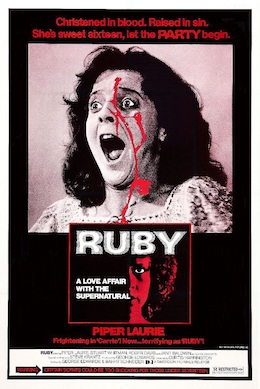
The 1977 film, Ruby, opens with a scene set in 1935.  The Great Depression is still raging and the only people making money are industrialists like Joseph P. Kennedy and gangsters like Lucky Luciano and Frank Costello.  In the Florida swamps, gangster Nicky Rocco (Sal Vecchio) is betrayed by both his gang and his pregnant girlfriend, Ruby (Piper Laurie).  As Nicky’s bullet-ridden body sinks into the bayou, Ruby goes into labor and gives birth to Leslie.

16 years later, Ruby owns her own drive-in.  The theater employs several members of the old gang and Ruby is herself married to one of Nicky’s former partners, the crippled and blinded Jake Miller (Fred Kohler, Jr.).  Ruby’s lover is another former member of the gang, Vince Kemper (Stuart Whitman).  Leslie, meanwhile, is now 16 years old and has never spoken a word in her life.  Ruby laments that she never made it as a lounge singer but she does a good job running the theater and it seems to be a popular place to see movies.  She’s even able to show Attack of the 50 Feet Woman, even though that film came out in 1958 and Ruby is set in 1951.  That’s the power of having mob-connections, I guess.

When strange things start to happen at the theater, it could just be a case of Ruby having bad luck and the former gangsters that she’s hired not being particularly good at their jobs.  Or maybe it has something to do with the fact that Nicky swore to get revenge on everyone with his dying breath.  One employee is found hanging in a projection booth.  Another is found hanging from a tree.  Another is left in a cold drink machine and the lady who puts in a quarter to get a cup of tea instead gets a cup of blood.  While Ruby might be in denial about the fact that her business is obviously cursed, Vince realizes that something has to be done so he brings a psychic/exorcist named Paul Keller (Roger Davis, who also provides some narration at the start of the film).

Of course, it’s not just ghosts that Ruby and the gang have to worry about.  Leslie is acting strange as well!  At one point, Leslie even speaks but it’s not with her voice.  It’s with Nicky’s voice!  Leslie has been possessed and soon, Nicky himself is appearing on the drive-in’s screens and repeating, “I love you, I love you.”

Ruby is a real mess of a film, one that attempts to rip-off The Exorcist while tossing a bit of Carrie in as well.  Director Curtis Harrington plays up the campier aspects of the story and Piper Laurie gives a scenery-chewing performance that suggests that she realized it was pointless to try to take anything about Ruby seriously.  Stuart Whitman plays Vince as being the most well-meaning but also the most clueless man in Florida while poor Roger Davis is stuck with the most earnest role in the film and, as such, gets the unenviable task of trying to explain what’s going on in a rational manner.  There’s nothing rational about Ruby, which goes from being a film about gangsters to being a film about ghosts to being a film about possession without even stopping to catch its breath.  It’s a deeply silly film but one gets the feeling that it was made to be silly.  Ruby works as long as you just accept the weirdness of what you’re watching while you’re watching it and you don’t give it too much thought afterwards.

Horror on TV: Kolchak: The Night Stalker 1.3 “They Have Been, They Are, They Will Be….” (dir by Allen Baron)


On tonight’s episode of Kolchak, Carl investigates a series of mysterious thefts which could very well be connected to a series of mysterious murders.

Needless to say, it’s all very mysterious.

Kolchak is often cited as having been an influence on The X-Files and you can certainly see why in this episode.  While I don’t want to spoil the nature of this episode’s monster, I will say that this episode will be enjoyed by conspiracy fans everywhere.

Enjoy!

http://www.youtube.com/watch?v=7PxeNM5soIc

A Movie A Day #259: Take This Job And Shove It (1981, directed by Gus Trikonis)


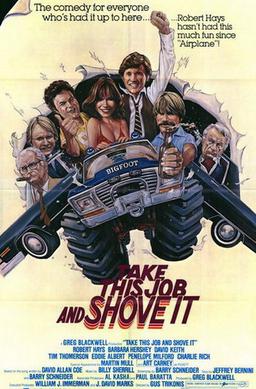
Originally from a small town in Iowa, Frank Macklin (Robert Hays) is a hotshot young executive with The Ellison Group.  When Frank is assigned to manage and revitalize a failing brewery in his hometown, it is a chance for Frank to rediscover his roots.  His childhood friends (played by actors like David Keith, Tim Thomerson, and Art Carney) may no longer trust him now that Frank wears a tie but it only takes a few monster truck rallies and a football game in a bar for Frank to show that he is still one of them.  However, Frank discovers that the only reason that he was sent to make the brewery profitable was so that his bosses could sell it to a buffoonish millionaire who doesn’t know the first thing about how to run a business.  Will Frank stand by while his bosses screw over the hardworking men and women of the heartland?  Or will he say, “You can take this job and shove it?”

Named after a country music song and taking place almost entirely in places stocked with beer, Take This Job And Shove It is a celebration of all things redneck.  This movie is so redneck in nature that a major subplot involves monster trucks.  Bigfoot, one of the first monster trucks, gets plenty of screen time and, in some advertisements, was given higher billing than Art Carney.

A mix of low comedy and sentimental drama, Take This Job And Shove It is better than it sounds.  In some ways, it is a prescient movie: the working class frustrations and the anger at being forgotten in a “booming economy” is the same anger that, 35 years later, would be on display during the election of 2016.  Take This Job And Shove It also has an interesting and talented cast, most of whom rise above the thinly written dialogue.  Along with Hays, Keith, Thomerson, Bigfoot, and Carney, keep an eye out for: Eddie Albert, Royal Dano, James Karen, Penelope Milford, Virgil Frye, George “Goober” Lindsey, and Barbara Hershey (who, as usual, is a hundred times better than the material she has to work with).

One final note: Martin Mull plays Hays’s corporate rival.  His character is named Dick Ebersol.  Was that meant to be an inside joke at the expense of the real Dick Ebersol, who has the executive producer of Saturday Night Live when Take This Job and Shove It was filmed and who later became the president of NBC Sports?