Retro Television Review: St. Elsewhere 2.12 “Hearing”


Welcome to Retro Television Reviews, a feature where we review some of our favorite and least favorite shows of the past! On Fridays, I will be reviewing St. Elsewhere, a medical show which ran on NBC from 1982 to 1988.  The show can be found on Hulu and, for purchase, on Prime!
This week, Peter White faces the judgment of the medical board.

Episode 2.12 “Hearing”

(Dir by Charles Braverman, originally aired on February 1st, 1984)

At his disciplinary hearing for giving a controlled substance to an undercover officer, Dr. White lies to protect Shirley Daniels.  Even though Shirley tossed him the keys to the drugs on that night, White says that he took the keys without Shirley noticing.  It’s a rare case of Dr. White actually trying to help someone else.  It gets Shirley off the hook but it leads to Dr. White receiving a two-year suspension from working in an ER or prescribing medicine.  Westphall and Auschlander both agree that Dr. White’s career is probably over but Westphall, who has been White’s biggest supporter since he returned from rehab, says that they’ll find a place for him in the hospital.

The new X-ray tech, Lee Tovan (Robert Daniels), cannot hear.  His supervisor (Raymond Singer) claims that Lee is too difficult to work with.  Westphall pledges to support Lee, no matter how much his supervisor complains.

Victor meets Roberta’s wealthy parents and, to everyone’s shock (especially his), he manages to charm them.  Victor also asks Dr. Craig if he can use his house for the wedding.  Dr. Craig misunderstands and thinks that Victor is asking him to be his best man.  Victor explains that he’s already asked his friend, “Dogger,” to be best man.  Craig rolls his eyes but agrees to let Victor use the house.

Finally, Dr. Auschlander asks Fiscus to help him get some marijuana to help with his chemo side effects.  Fiscus tries and fails to call his old college weed guy and then asks Luther if he knows anyone who deals drugs.  Luther rightly points out that Fiscus is stereotyping him but he still manages to get Auschlander a baggie of joints.  Auschlander gets high.  For a first time smoker, he gets REALLY high!  He also ultimately decides that marijuana is not for him.

This episode was a bit uneven.  I liked the irony of White saving Shirley, just to potentially lose his own career as a result.  (Saying that he stole the keys probably didn’t help his case.)  Victor’s wedding storyline has been kind of dragged out more than it needs to be but it’s still entertaining to watch Dr. Craig get frustrated with him.  Norman Lloyd was adorable playing stoned.  But the storyline about the deaf x-ray tech was sabotaged by some very bad acting and some very heavy-handed writing.  That was a shame.

Next week, Victor Ehrlich gets married!
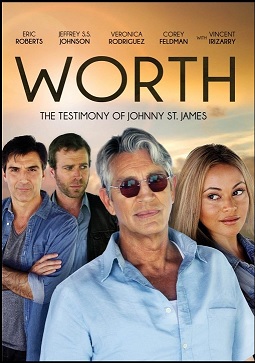
 

June Positivity: Worth: The Testimony of Johnny St. James (dir by Jenn Page)


First released in 2012, Worth is a film about a hostage situation.

Ugh.

Listen, I’m just going to be honest with you here.  With a few obvious exceptions (i.e., Dog Day Afternoon), I am not a huge fan of films about hostage situations.  It doesn’t matter how talented the cast may be or how much the director tries to keep things interesting.  Usually, as soon as the hostage taker pulls that gun and yells, “Nobody move!,” whatever narrative momentum that the film may have had going comes to a screeching halt and thing proceed to get very stagey.  The audience is expected to sit through at least 90 minutes of wailing hostages, feverish monologues, and Stockholm syndrome.  And, of course, we can’t forget the SWAT team threatening to kill both the hostage taker and the hostages while a harried negotiator tries to bring everything to a peaceful solution.  It’s all very predictable and usually a bit tedious to sit through.

Worth is also a film about alcoholics so double ugh.  I’m not a huge fan of alcoholics or films where people spend all of their time giving speeches about why they started drinking and what happened to make them hit rock bottom.  Don’t get me wrong.  There’s been a lot of great films made about alcoholism but there’s also been a lot of films that seem to exist to remind us of just how whiny alcoholics can be.  Mixing alcoholics and hostages is rarely a good thing.

On the plus side, Worth has got Eric Roberts in it.  No, Roberts does not play the hostage taker.  Nor does he play one of the hostages.  Roberts ends up with the unenviable task of having to negotiate with the hostage taker.  Eric Roberts’s role is not a big one.  One gets the feeling that it probably took two days (maybe three) for him to shoot all of his scenes.  Still, his role here is bigger (and more important) than his role in Amityville Death House.

Worth’s main character is Johnny St. James (Jeffrey Johnson), a former seminarian who ended up becoming a cop.  Ten years ago, Johnny’s pregnant wife was killed by a drunk driver and Johnny himself has been an alcoholic ever since.  Johnny is finally ready to attend his first AA meeting and his friend and partner, Hickey (Eric Roberts), tags along for moral support.  While Johnny is inside the church for the meeting, Hickey is the one who waits in the car and calls into headquarters and tells the chief that Johnny’s at an emergency dental appointment.

Unfortunately, Johnny discovers that the AA meeting is being led by Earl (Vincent Irizarry), the man who was driving the car that struck and killed Johnny’s wife.  Earl did several years in prison and became a minister during his time behind bars.  Earl may not recognize Johnny but Johnny automatically knows who Earl is.  Johnny sits in the back of the church, listening as the other members of the group give their testimony.  After listening to Chad (Corey Feldman) talk about how difficult it is to be sober, Johnny snaps, pull out his gun, and — ugh — the hostage situation begins.

The movie starts out well, with both Eric Roberts and Vincent Irizarry offering up strong supporting performances.  I mean, even Corey Feldman isn’t that bad.  But as soon as Johnny pulls that gun and starts shouting and bullying everyone and barking out orders, the film turns into a bit of an endurance test.  There’s only so much time that someone can spend listening to one guy yell at people about not moving before mentally checking out.  Johnny traps himself in that church as soon as he pulls that gun but the film also traps itself by not leaving itself anywhere else to go.  Johnny has a tragic backstory and the film does share an important message about the power of forgiveness but Johnny himself was such an annoying character than even I wanted the SWAT team to storm the church and take that douchebag out.

Worth was no Dog Day Afternoon.

Previous Eric Roberts Films That We Have Reviewed:

  1. Star 80 (1983)
  2. Blood Red (1989)
  3. The Ambulance (1990)
  4. The Lost Capone (1990)
  5. Love, Cheat, & Steal (1993)
  6. Love Is A Gun (1994)
  7. Sensation (1994)
  8. Dark Angel (1996)
  9. Doctor Who (1996)
  10. Most Wanted (1997)
  11. Mr. Brightside (2004)
  12. Six: The Mark Unleased (2004)
  13. Hey You (2006)
  14. In The Blink of an Eye (2009)
  15. The Expendables (2010) 
  16. Sharktopus (2010)
  17. Deadline (2012)
  18. Miss Atomic Bomb (2012)
  19. Lovelace (2013)
  20. Self-Storage (2013)
  21. This Is Our Time (2013)
  22. Inherent Vice (2014)
  23. Road to the Open (2014)
  24. Rumors of War (2014)
  25. Amityville Death House (2015)
  26. A Fatal Obsession (2015)
  27. Stalked By My Doctor (2015)
  28. Joker’s Poltergeist (2016)
  29. Stalked By My Doctor: The Return (2016)
  30. The Wrong Roommate (2016)
  31. Stalked By My Doctor: Patient’s Revenge (2018)
  32. Monster Island (2019)
  33. Seven Deadly Sins (2019)
  34. Stalked By My Doctor: A Sleepwalker’s Nightmare (2019)
  35. The Wrong Mommy (2019)
  36. Free Lunch Express (2020)
  37. Her Deadly Groom (2020)
  38. Top Gunner (2020)
  39. Just What The Doctor Ordered (2021)
  40. Killer Advice (2021)
  41. The Poltergeist Diaries (2021)
  42. My Dinner With Eric (2022)

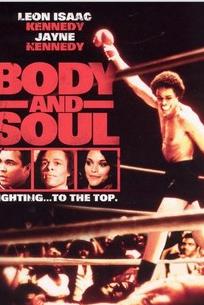
A Movie A Day #314: Body and Soul (1981, directed by George Bowers)


When his little sister falls ill with sickle-cell anemia, Leon Johnson (Leon Isaac Kennedy) has to make a decision.  He can either finish his education, graduate from medical school, and treat her as a doctor or he can drop out of school, reinvent himself as “Leon the Lover,” and make a fortune as a professional boxer!  At first, Leon’s career goes perfectly.  He is winning fights.  He is making money.  He has a foxy new girlfriend (played Leon Isaac Kennedy’s then-wife, Jayne Kennedy.)  But then the fame starts to go to Leon’s head.  He forgets where he came from.  He’s no longer fighting just to help his sister.  Now, he’s fighting for his own personal glory.  When Leon finally gets a title shot, a crooked boxing promoter known as Big Man (former JFK in-law Peter Lawford, looking coked up) orders Leon to take a dive.  Will Leon intentionally lose the biggest fight of his life or will he stay in the ring and battle Ricardo (Al Denava), a boxer so evil that he literally throws children to the ground?  More importantly, will he make his trainer (Muhammad Ali, playing himself!) proud?

Leon Isaac Kennedy, Muhammad Ali, and Peter Lawford all in the same movie!?  No surprise here, it’s a Cannon film.  Leon Isaac Kennedy was best known for playing a jailhouse boxer in the Penitentiary films and he was a good actor with charisma to burn so it probably made perfect sense to not only cast him in a remake of John Garfield’s Body and Soul but to let him write the script too.  The end result is a film that is too heavy-handed to be taken seriously but it is still an entertaining movie.  Body and Soul leaves not a single sports cliché unused but Kennedy was a convincing fighter and the boxing scenes are well-directed.  Muhammad Ali did a better job playing himself here then he did in The Greatest.  All in all, Body and Soul is a good movie for fight fans.

Body and Soul was not a box office success and Kennedy ended his film career a few years after it was released.  He is now the head of Leon Kennedy Ministries, Inc of Burbank, California.


Shattered Politics #19: To Kill A Mockingbird (dir by Robert Mulligan)


To_Kill_a_Mockingbird_poster

So, I guess I should explain why I’m including the classic 1962 film (and best picture nominee), To Kill A Mockingbird, in this series of reviews of films about politicians.  After all, while To Kill A Mockingbird dealt with the issue of racism in Alabama in a surprisingly honest manner, it doesn’t feature any elected officials.  Nobody shows up playing Gov. Benjamin J. Miller or President Franklin Roosevelt.  Instead, this film is about a wise lawyer named Atticus (Gregory Peck), an innocent man named Tom (Brock Peters), a girl named Scout (Mary Badham) and her older brother Jem (Philip Alford), and a mysterious recluse named Boo (Robert Duvall).

However, if you’ve read Harper Lee’s wonderful novel, then you know that Atticus is not just the smartest man in Maycomb, Alabama.  He’s also a member of the Alabama state legislature and his political career is a fairly important subplot in the book, with him occasionally having to leave home so he can go down to Montgomery and help to write the budget.  (Incidentally, Harper Lee’s father actually was a member of the Alabama House of Representatives.)

In the film, no mention of Atticus being a member of the state legislature is made but I still choose to believe that he was.  Because, as played by Gregory Peck, Atticus Finch is exactly the type of man who you would want to think of as serving in government.  He’s wise, compassionate, and firm.  For much of To Kill A Mockingbird, he is literally the only sane adult in Maycomb.  He’s the only attorney willing to defend Tom Robinson when Tom is accused of raping a white girl.  When a mob shows up to lynch Tom, Atticus is the only adult willing to stand up to them.  (Fortunately, Jem also runs up and shames the mob by reminding them that she goes to school with their children.)  And, in court, it is Atticus who proves that Tom is innocent.

When Tom is still convicted, what makes it all the more devastating is that wise and compassionate Atticus doesn’t seem to be surprised as all.  If even Atticus feels that there is no hope for a black man to get a fair trial from an all-white jury, the film seems to be saying, then there truly is no hope.

Of course, the film is not just about Atticus.  It’s about Scout and Jem and their friend Dill (John Megna) and how the three of them grow up and learn the truth about their world.  Watching them from behind the closed doors of his house is the mysterious and reclusive Boo Radley.  When Boo shows up towards the end of the film, I always find tears in my mismatched eyes.  Boo is played, in his film debut, by Robert Duvall.  Duvall doesn’t say a word but he still makes an incredible impression as the shy and withdrawn Boo.

So, I may be cheating a lot by including To Kill A Mockingbird in this series of reviews.  Oh well.  Who am I to turn down a chance to rewatch it?  To Kill A Mockingbird is just a great film.