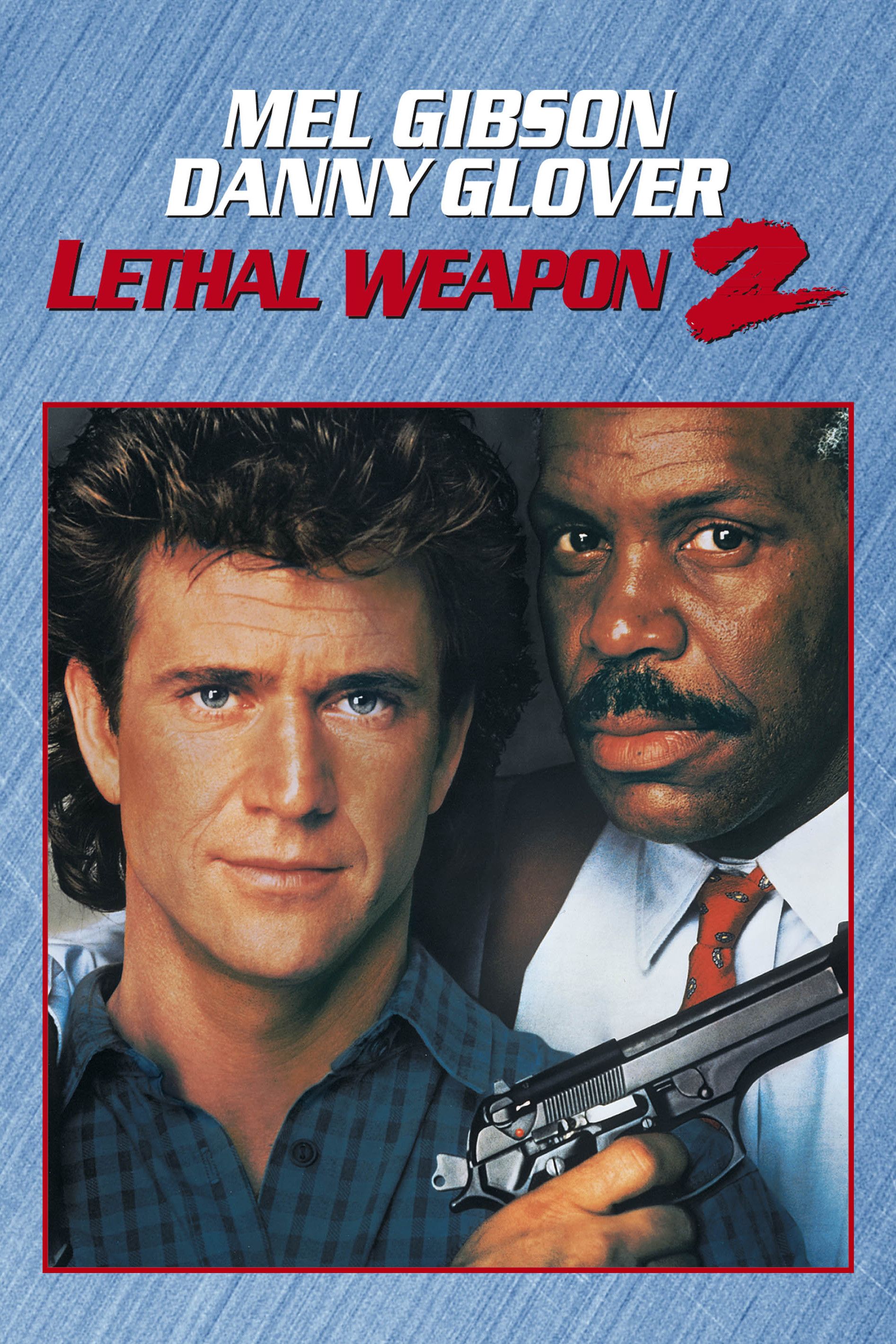
Review: Lethal Weapon 2 (dir. by Richard Donner)


“We’re back, we’re bad. You’re black, I’m mad. Let’s go!” — Martin Riggs

Lethal Weapon 2 is the kind of sequel that doesn’t really try to reinvent what worked the first time so much as crank the volume on everything: the action is bigger, the jokes come faster, and the chaos feels almost constant. Depending on what you loved about Lethal Weapon, that approach delivers more of the high-energy partnership in a flashier package. It’s a confident, very entertaining 80s action movie that knows it’s a sequel and leans into the spectacle that status allows.

Plot-wise, Lethal Weapon 2 wastes no time reminding you what this world feels like. It drops Riggs and Murtaugh into a wild car chase almost immediately, and from there the story locks onto a case involving South African diplomats hiding behind apartheid-era “diplomatic immunity” while running a massive drug and money-laundering operation. It’s a cleaner, more high-concept hook than the original’s murkier web of Vietnam vets and heroin smuggling, and the script makes the villains broad on purpose, almost cartoonishly arrogant, to give the audience someone very easy to hate. The trade-off is that the plot feels a bit more mechanical this time; you always know who the bad guys are and what the destination is, so the film’s real energy comes from the detours, jokes, and set-pieces rather than any mystery.

One of the big shifts from Lethal Weapon to Lethal Weapon 2 is tone. The first film balanced brutal violence and dark humor with a surprisingly heavy focus on Riggs’ suicidal grief and Murtaugh’s fear of getting too old for the job. The sequel keeps those elements in the background but leans harder into banter, slapstick timing, and outrageous gags like the now-famous exploding toilet sequence, with Richard Donner’s direction pushing the script toward action comedy. It’s still R-rated and not shy about blood or cruelty, but the emotional intensity is dialed down compared to the original’s raw edges.

Mel Gibson and Danny Glover remain the anchor, and their chemistry is as sharp as ever. Gibson’s Riggs is still reckless and unhinged, but there’s a looser, more playful side to him this time; he’s less haunted and more of a live-wire prankster until the story gives him something personal to latch onto. Glover’s Murtaugh continues to be the grounded center, constantly exasperated and always half a step away from just walking off the job, and the film has a lot of fun putting his straight-man persona through increasingly humiliating situations while still letting him be competent when it counts. Compared to the first film, where their partnership slowly thawed from suspicion to genuine trust, Lethal Weapon 2 starts from “these guys are already a team” and builds its best moments from how comfortably they now bounce off each other.

The biggest new ingredient is Joe Pesci as Leo Getz, a federal witness turned tagalong who basically functions as the franchise’s third stooge. Pesci leans into the motor-mouthed, paranoid, endlessly complaining energy that would become his signature, and his presence tips some scenes from gritty cop story into broad comedy. He undercuts tension at times, but he also gives the movie a different rhythm, especially in the quieter in-between beats where the first film might have lingered more on Riggs’ inner damage.

In terms of action, Donner clearly has more money and confidence to play with, and it shows. The chases are bigger, the shootouts are staged with a slicker sense of geography, and there’s a steady escalation in scale that makes the film feel like a genuine summer sequel rather than just another mid-budget cop movie. The original had a grimy, street-level intensity, with brutal fistfights and sudden bursts of violence; Lethal Weapon 2 is more interested in creative set-pieces, crowd-pleasing payoffs, and moments designed to make an audience cheer. It’s less intimate, but it is rarely dull.

Where the film lands in a more complicated space is its attempt to keep some emotional stakes alive while also going bigger and funnier. Riggs’ grief over the loss of his wife is still part of his character, and the story finds ways to poke at that wound again, including a new relationship that lets him imagine some kind of future beyond the constant death wish. Those beats are there to echo what worked so well in the first movie, but they have less room to breathe, often getting squeezed between an action scene and a joke instead of shaping the entire film’s tone. You can feel the push and pull between wanting to keep the darker emotional spine and delivering the kind of lighter, more easily marketable sequel a studio would understandably chase.

The villains themselves are effective in that pulpy 80s way: not nuanced, but very punchable. Arjen Rudd, with his smug talk of “diplomatic immunity,” is a villain designed to make audiences grind their teeth, and his main henchman adds a physically intimidating, quietly sadistic presence to the mix. Compared to the original’s more grounded ex-military antagonists, these guys feel one step closer to Bond territory, and that shift mirrors the film’s overall move toward heightened, almost comic-book stakes. What the sequel loses in plausibility, it gains in revenge-fantasy satisfaction.

When stacked directly against Lethal Weapon, the second film feels like a classic case of “if you liked hanging out with these characters once, here’s more time with them.” The original is tighter, more emotionally focused, and arguably more distinctive, with a stronger sense of danger and genuine unpredictability around Riggs’ mental state. Lethal Weapon 2 smooths some of those jagged edges and replaces them with quips, bigger set-pieces, and a more overtly crowd-pleasing structure, which makes it an easier, more consistently fun watch but also a slightly less resonant one. It is still a good film, but in many ways it is also the moment where the franchise shifts from a character-driven cop thriller with action to a full-on action-comedy machine.

As a fair, middle-of-the-road assessment, Lethal Weapon 2 works very well on its own terms and delivers exactly what most people want out of a late-80s buddy-cop sequel. The chemistry is intact, the action is energetic, and the film moves with the kind of confident pace that never really lets you get bored. At the same time, the tonal tilt toward broader humor and more cartoonish villains means it doesn’t quite have the same staying power or emotional punch as Lethal Weapon, especially if what hooked you the first time was how wounded and volatile it all felt. For fans of the original, it’s an enjoyable continuation—a louder, flashier second round that may not hit as hard, but still knows how to entertain.

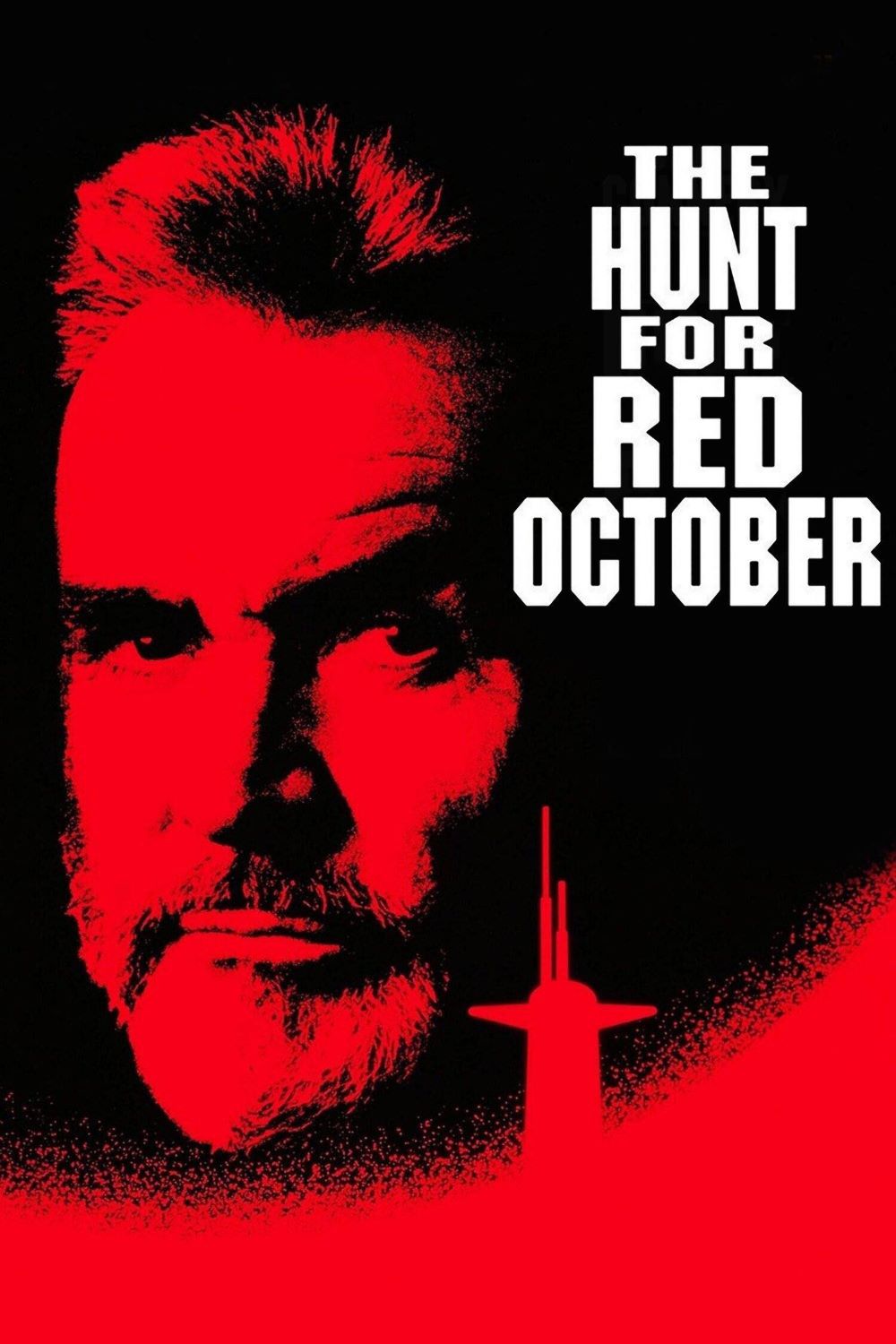
Review: The Hunt for Red October (dir. by John McTiernan)


“I’m a politician. Which means that I am a cheat and a liar, and when I’m not kissing babies, I’m stealing their lollipops.” — Dr. Jeffrey Pelt, National Security Advisor

The Hunt for Red October glides into the tail end of Cold War cinema like a stealthy sub cutting through midnight swells, packing a smart mix of spy intrigue and nail-biting underwater showdowns that keep you locked in from the opening credits. Directed by John McTiernan, fresh from helming Die Hard, this 1990 adaptation of Tom Clancy’s doorstopper novel smartly distills pages of naval geekery into a taut, propulsive thriller where Soviet skipper Marko Ramius—Sean Connery in full brooding mode—pilots the formidable Red October, a behemoth sub with a hush-mode propulsion system that ghosts past detection like a shadow in fog.

McTiernan shines in wrangling the script from Clancy’s tech-heavy tome, slicing through the babble to propel the story with crisp momentum and unrelenting suspense, turning potential info-dumps into pulse-quickening beats that hook casual viewers and sub nerds alike. The premise grabs fast: Ramius’s bold maneuvers ignite a transatlantic frenzy, with U.S. and Soviet forces locked in a paranoid standoff over what looks like an imminent crisis. That ’80s-era distrust simmers perfectly here, crammed into a runtime that pulses with fresh urgency decades later, amplified by those dim-lit sub corridors in steely teal tones that squeeze the air right out of the room.

Alec Baldwin embodies Jack Ryan as the reluctant brainiac from CIA desks, sweaty and green around the gills yet armed with instincts that cut through official noise like a periscope through chop. Pulled from family downtime—teddy bear in tow—he injects everyday stakes into the global chessboard, proving heroes don’t need camo or cockiness, just smarts and stubbornness. Connery’s Ramius dominates as a haunted vet with a personal chip on his shoulder, steering a tight-knit officer corps including Sam Neill’s devoted second-in-command, their quiet bonds hinting at deeper loyalties amid the red menace.

Standouts fill the roster seamlessly: James Earl Jones lends gravitas as the steady Admiral Greer backing Ryan’s wild cards; Scott Glenn commands the American hunter sub with laconic steel; Jeffrey Jones brings quirky spark to the sonar savant whose audio tricks flip the script on silence. The dialogue crackles with shorthand lingo and understated jabs, forging a crew dynamic that’s as pressurized as the hull plates, pulling you into hushed command post vibes without a whiff of cheesiness.

​​

McTiernan elevates the genre by leaning on wits over blasts—thrilling pursuits deliver without dominating, letting mind games and split-second calls drive the dread, all while streamlining Clancy’s minutiae into seamless propulsion. Gadgetry gleams without overwhelming: the sub’s whisper-quiet tech sparks clever cat-and-mouse in hazard-filled depths, ramping uncertainty to fever pitch. Pacing builds masterfully from war-room skepticism—Ryan battling brass skepticism—to heart-in-throat ocean dashes, every frame taut as a bowstring. Practical models and effects ground the peril in gritty tangibility, no digital gloss, evoking Ice Station Zebra‘s frosty traps but streamlined into a relentless machine that dodges the older film’s drag. It’s a clinic in balancing spectacle and smarts, where tension coils from isolation’s cruel math: one ping too many, and it’s lights out.

On the eyes and ears front, the movie plunges into submersed nightmare fuel—consoles pulsing crimson in battle stations, scopes piercing mist-shrouded waves, silo bays looming like sleeping leviathans. McTiernan tempers his action flair for thinker-thrills; Basil Poledouris’s great orchestral score surges with iconic power through the chases—those brooding horns, choral swells, and rhythmic pulses echoing engine throbs have etched into legend, pounding your chest like incoming cavitation and elevating every dive. Audio wizardry seals the immersion: hull groans, ping echoes, bubble roars craft a metallic tomb where errors echo eternally. Flaws peek through—early scenes drag with setup chatter, foes skew broad-stroked—but the core hunt erases them, surging to a sharp, satisfying close that nods to Ryan’s budding legend without overplaying the hand.

’90s tentpole lovers and thaw-era history fans find a benchmark here, as the film plays the long con of trust amid torpedoes, fusing bombast with nuance that reboots chase in vain. It bottles superpower jitters spot-on—frantic commands clashing with strike debates—yet softens adversaries via Connery’s world-weary depth and Neill’s subtle conviction. Endless rewatches uncover gems: crew hints dropped early, sonar hacks foreshadowing real tech leaps. Baldwin’s grounded Ryan—chopper-barfing, suit-clashing, chaos-navigating—earns triumphs the hard way, contrasting Das Boot‘s bleak grind with upbeat ingenuity that feels won, not waved. Poledouris’s motifs linger post-credits, a symphonic anchor boosting replay pulls.

Endurance stems from mastering sub-horror’s essence: solitude sharpening choices, where flubs invite apocalypse. Ramius embodies defector realism—war-weary idealist mirroring history’s turncoats—while Clancy’s specs (sub classes, velocities) anchor without anchoring down. McTiernan sidesteps flags; zero flag-waving, pure operator craft in dodges and climactic finesse that blends brains with boom. Quirks delight—the premier’s bluster, aides’ cool calculus—padding a 134-minute gem that exhales you surfacing, amped. Expands on score’s role too: “Hymn to Red October” choral rise mirrors Ramius’s quiet rebellion, threading emotional undercurrents through mechanical mayhem, a Poledouris hallmark outlasting the film.

Bottom line, The Hunt for Red October captivates via cerebral kick—shadow games in fluid physics, intellect over muscle, audacious plays punking empire folly. Sparks post-view chin-strokes on allegiances and risks. Connery’s gravelly “One ping only, Vasily” endures as gold; storm-watch it, trade sofa for sonar station—raw thrill spiked with savvy. Sub saga staple? This silent stalker nails every target.

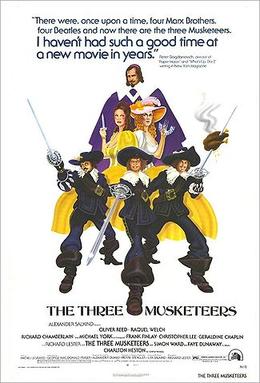
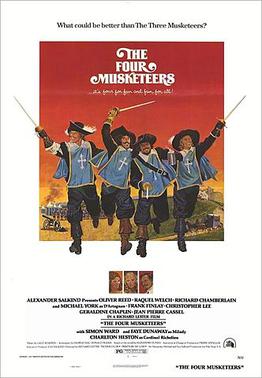
The Three Musketeers (1973, directed by Richard Lester) and The Four Musketeers (1974, directed by Richard Lester)


In 1973, director Richard Lester and producer Ilya Salkind decided to try to get two for the price of one.

Working with a script written by novelist George McDonald Fraser, Lester and Salkind had assembled a once-in-a-lifetime cast to star in an epic film adaptation of Alexandre Dumas’s The Three Musketeers.  Michael York was cast as d’Artagnan, the youthful swordman who goes from being a country bumpkin to becoming a King’s Musketeer.  His fellow musketeers were played by Oliver Reed, Richard Chamberlain, and Frank Finlay.  Faye Dunaway and Christopher Lee were cast as the villains, Milady and Rochefort.  Charlton Heston played the oily Cardinal Richelieu.  Geraldine Chaplin played Queen Anne while Simon Ward played the Duke of Buckingham.  Comedic relief was supplied by Roy Kinnear as d’Artagnan’s manservant and Raquel Welch as Constance, d’Artagnan’s klutzy love interest.  The film was a expensive, lushly designed epic that mixed Lester’s love of physical comedy with the international intrigue and the adventure of Dumas’s source material.

The only problem is that the completed film was too long.  At least, that’s what Salkind and Lester claimed when they announced that they would be splitting their epic into two films.  The cast and the crew, who had only been paid for one film, were outraged and the subsequent lawsuits led to the SAG ruling that all future actors’ contracts would include what was known as the Salkind clause, which stipulates that a a single production cannot be split into two or more films without prior contractual agreement.

But what about the films themselves?  Both The Three Musketeers and The Four Musketeers are currently available on Tubi.  I watched them over the weekend and, of the many films that have been made out of Dumas’s Musketeer stories, Richard Lester’s films are the best.  Lester captures the swashbuckling spirit of the books while also turning them into two films that are easily identifiable as Lester’s work.  There’s a lot physical humor to be found in Lester’s adaptation, especially during the first installment.  d’Artagnan runs through the streets of Paris, convinced that he has been insulted by the haughty Rochefort.  d’Artagnan manages to get challenged to three separate duels, all to take place on the same day.  After his first swordfight as a member of the Musketeers, d’Artagnan tries to tell the men that he wounded about an ointment that will help them with their pain.  Raquel Welch also shows a genuine flair for comedy as Constance, which makes her fate in the second film all the more tragic.

For all the controversy that it caused, splitting the story into two films was actually the right decision.  If The Three Musketeers is an enjoyable adventure film, The Four Musketeers is far more serious.  In The Four Musketeers, Oliver Reed’s melancholic Athos steps into the spotlight and his story of his previous marriage to the villainous Milady casts his character in an entirely new light.  In The Four Musketeers, the combat is much more brutal and the humor considerably darker.  Likable characters die.  The Musketeers themselves commit an act of extrajudicial brutality that, while true to Dumas’s novel, would probably be altered if the film were made today.  From being a naive bumpkin in The Three Musketeers, The Four Musketeers finds d’Artgnan transformed into a battle weary soldier.

The cast is fabulous.  This is a case of the all-star label living up to the hype.  Oliver Reed, Frank Finlay, and Richard Chamberlain all seems as if they’ve been riding and fighting together for decades.  Christopher Lee plays Rochefort as being an almost honorable villain while Faye Dunaway is a cunning and sexy Milady.  What truly makes the film work, though, is the direction of Richard Lester.  Lester stay true to the spirit of Dumas while also using the material to comment on the modern world, with the constant threat of war and civil uprising mirroring the era in which the films were made.  Interestingly enough, Richard Lester first became interested in the material when Ilya Salkind reached out to the Beatles to try to convince them to play the Musketeers.  While the Beatles were ultimately more interested in a never-produced adaptation of The Lord of the Rings, Richard Lester was happy to bring Dumas’s characters to life.

Both The Three Musketeers and The Four Musketeers are currently on Tubi, for anyone looking for a truly great adventure epic.

The Strange Case Of The End Of Civilization As We Know It (1977, directed by Joseph McGrath)


It should have been so much funnier.

After someone is obviously meant to be Henry Kissinger (played by Ron Moody) is assassinated when he loses his diary and extends the wrong greeting to a welcoming party in the Middle East, someone claiming to be a direct descendant of the infamous Prof. Moriarty sends a letter to the U.S. President (Joss Ackland) taking responsibility and claiming that it’s the first step in a plan to control the world.

Who better to stop the descendant of Moriarty than the descendant of Moriarty’s greatest enemy?  Arthur Sherlock Holmes (John Cleese) operates out of Baker Street with Dr. Watson (Arthur Lowe), who is bionic, and their housekeeper, Miss Hudson (Connie Booth).  Holmes solution to bringing out Moriarty is to host a gathering of the world’s greatest detectives and to dare Moriarty to try to take them out with one fell swoop.  Soon, everyone from Sam Spade to Columbo to McCloud is showing up at Baker Street.

This is a joke-a-minute comedy.  The jokes that work are funny but, unfortunately, there aren’t many of them.  Some bits, like Joss Ackland’s impersonation of Gerald Ford, start off well and then go on for too long.  Other bits, like the famous TV detectives showing up at Baker Street, have potential but fail due to poor execution.  Unfortunately, much of the humor is just not that clever to begin with, which is not something that anyone would expect from a script co-written by John Cleese.  As an actor, John Cleese is funny but underused, playing Sherlock Holmes as being an even denser version of Basil Fawlty.  Arthur Lowe’s comedic befuddlement is consistently amusing but I wish the script has done more with the idea of him being bionic.  Connie Booth is both funny and sexy and the best reason to watch this misfire.

The TSL Grindhouse: Project Shadowchaser (dir by John Eyres)


The 1992 film, Project Shadowchaser, takes place in the near future.  It’s a time when cyborgs are a common sight and criminals are frozen and sent to a cryogenic prison.  At the same time, it’s close enough to the present that the FBI is still America’s main law enforcement agency and the President is still a powerful enough figure that terrorists would want to abduct his daughter.  It’s also close enough to the present that terrorists are still learning how to do their job from watching Die Hard.

Romulus (Frank Zagarino) is a cyborg who takes a hospital hostage, all to track down the president’s daughter, Sarah (Meg Foster).  The FBI feels that only the hospital’s architect, Mr. Dixon, can figure out the best way for the FBI’s strike force to enter the hospital.  Unfortunately, Mr. Dixon broke the law and has been put on deep freeze.  When the stoner who runs the cryogenic prison is told to thaw out Mr. Dixon, he screws up and accidentally unfreezes DeSilva (Martin Kove), a former football quarterback.

Knowing a good thing when he sees it, DeSilva pretends to be Dixon but, once he and the strike force enter the building, it become apparent that DeSilva/Dixon has no idea what he’s talking about.  All of the members of the strike force are killed when an elevator explodes.  Only DeSilva survives and now, whether he wants to or not, he’s going to have to battle the terrorists and save the President’s daughter!  It’s a good thing that she’s a football fan.

What a dumb movie this turned out to be!  Seriously, you can add all of the sci-fi elements to your Die Hard rip-off that you want to, a Die Hard rip-off is still a Die Hard rip-off and it’s hard to think of any other film (with the possible exception of No Contest) that so slavishly follows the Die Hard formula.  There’s nothing particularly surprising to be found in Project Shadowchaser.  The minute that Kinderman (Joss Ackland) shows up and declares that he’s taking over the operation from FBI agent Trevanian (Paul Koslo), it’s obvious that he’s going to turn out to be the one behind Romulus’s actions.  And from the minute that DeSilva meets Sarah, it’s obvious that they’re destined to fall in love.

I like Martin Kove on Cobra Kai and Kove brings a similar self-awareness to his role as DeSilva.  At times, Kove appears to almost be winking at the audience, as if he’s saying, “Hey, I can’t believe I’m in this movie either.  What are you going to do?”  Unfortunately, Kove often seems to be the only person in the film who is really in on the joke.  Needless to say, Project Shadowchaser is no Cobra Kai.

That said, I did appreciate the fact that the film’s entire plot hinged on a government employee accidentally unfreezing the wrong guy.  As a portrait of bureaucratic incompetence, Project Shadowchaser works perfectly.  I mean, let’s be honest.  If there ever was a cryogenic prison, the wrong people would probably be getting unfrozen all the time.  No one’s going to keep track of who is in which pod.

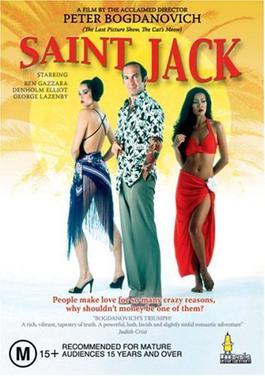
The Unnominated: Saint Jack (Dir by Peter Bogdanovich)


Though the Academy of Motion Picture Arts and Sciences claim that the Oscars honor the best of the year, we all know that there are always worthy films and performances that end up getting overlooked.  Sometimes, it’s because the competition too fierce.  Sometimes, it’s because the film itself was too controversial.  Often, it’s just a case of a film’s quality not being fully recognized until years after its initial released.  This series of reviews takes a look at the films and performances that should have been nominated but were, for whatever reason, overlooked.  These are the Unnominated.

In 1979’s Saint Jack, Ben Gazzara stars as Jack Flowers.  Jack was born in Brooklyn in 1931, a first-generation Italian-American.  Though Jack himself prefers to keep his past something of a mystery, it’s implied that his family had less-than-savory “connections.”  Jack served in the Korean War.  After the war, he served in the Merchant Marine and spent a while trying to pursue a career as a writer.  Now, in the early 1970s, Jack lives in Singapore.

What does Jack do in Singapore?  He seems to know everyone and everyone seems to like him, with the exception of a few members of a Chinese triad who view Jack as being their competition.  Jack is friendly and he knows how to talk to people.  With the Vietnam War waging, Singapore is full of American soldiers on R&R and Jack is always willing to help set them up with companionship during their stay.  He does the same thing for the businessmen who stop off on the island.  At the same time, if someone just wants to play a game of squash, Jack can direct them to nearest health club.  Whatever someone needs, Jack know how to get it.

This episodic film is largely a character study, following Jack over three eventful years of his life.  We learn a lot about Jack just from watching his interactions with his friend William (Denholm Elliott), an alcoholic accountant who visits Singapore once a year and who is one of the few people with whom Jack is comfortable just being himself around.  For all of his friendliness and good humor, Jack never quite lets anyone get too close to discovering who he really is.  In many ways, Jack feels trapped in Singapore.  He’s getting older and the world around him is changing and becoming less safe.  Jack’s true goal is to open his own brothel, make a fortune, and eventually return to Brooklyn a rich man.  At times, with the help of the CIA and a shady businessman (played by the film’s director, Peter Bogdanovich), it appears that Jack is going to do just that.  But when his business associates put pressure on Jack to help them blackmail a gay U.S. Senator (played by George Lazenby, of On Her Majesty’s Secret Service fame), Jack is forced to finally decide how far he’s willing to go to achieve his dream.

The film works best as a showcase for Ben Gazzara, the character actor who may be best remembered for his over-the-top villainous turn in Roadhouse but who also gave excellent performances in films that rarely got the appreciation that they deserved.  Starting his career as the accused killer in Anatomy of a Murder, Ben Gazzara brought his trademark intensity to several independent and mainstream films.  He was a favorite of John Cassavetes.  Over the course of his long career, Gazzara was never nominated for a single Oscar, though he certainly deserved to be nominated for one here.  I would rate his work in Saint Jack as being superior to the performance that won that year’s Oscar, Dustin Hoffman’s rather self-satisfied turn in Kramer vs. Kramer.  From the minute that Gazzara appears onscreen, he simply is Jack.  The film was shot on location in Singapore and Gazzara walks through the streets with the an appealing confidence.  As Jack, he’s a likable raconteur but, in the film’s quieter moments, Gazzara allows us to see just how alone Jack actually is.  Jack may know every corner of Singapore but he also knows that it will never truly be where he belongs.  There’s a particular poignance to Gazzara’s scenes with Denholm Elliott.  Jack and Bill are two very different men but they share a desire to return to their homes.

Saint Jack should have been a comeback for Peter Bogdanovich, the film critic-turned-director who got off to a strong start with Targets and The Last Picture Show but whose career floundered as the 70s moved on.  Following the Oscar-nominated Last Picture Show and Paper Moon, Bogdanovich directed three big budget films — Daisy Miller, At Long Last Love, and Nickelodeon — that all failed at the box office.  Finding himself a sudden pariah in Hollywood, Bogdanovich returned to his low-budget roots with Saint Jack, getting funding from Roger Corman and directing the film in a gritty, cinéma vérité-style.  Roger Ebert loved the film, declaring that it proved that Bogdanovich was still a director worthy of appreciation.  Unfortunately, the film was never widely distributed and it proved to be another box office disappointment for Bogdanovich.  Sadly, the film was also ignored by the Academy, despite award-worthy performances from both Gazzara and Elliott.

Bogdanovich, who was born 84 years ago on this date, would often be cited as a cautionary tale for other directors who peaked early and spent the rest of their career on a downward slope.  That’s not quite fair to Bogdanovich, who did continue to direct good films like Saint Jack, Mask, and The Cat’s Meow.  Before he passed away in 2022, Bogdanovich found new popularity as both a character actor and as a frequent guest on TCM.  And, fortunately, his films have come to be better appreciated with age.  Saint Jack may not have gotten the attention it deserved in 1979 but it has since been rediscovered and rightfully acclaimed.

Previous entries in The Unnominated:

  1. Auto Focus 
  2. Star 80
  3. Monty Python and The Holy Grail
  4. Johnny Got His Gun

Music Video of the Day: Always On My Mind, performed by Pet Shop Boys (1988, directed by Jack Bond)


In 1987, ITV commemorated the 10-year anniversary of the death of Elvis Presley by airing Love Me Tender, a special that featured popular British acts covering songs that were originally made famous by Elvis.  Pet Shop Boys’s synth-pop version of Always on My Mind proved to be the unexpected hit of the program and the band released the song as a single.  It went on to become the UK’s Christmas number one single for the year.

It was also featured in It Couldn’t Happen Here, a surreal film that starred Pet Shop Boys and which was directed by documentarian Jack Bond, who had started his career with a ground-breaking film about Salvador Dali and who later became famous for his work with The South Bank Show.  The subsequent music video was lifted from the film.  In the movie and the video, Chris Lowe and Neil Tennant are driving a taxi cab.  They stop to pick up a passenger, an older man played by Joss Ackland.  (In the movie, there’s an earlier scene in which Lowe and Tennant hear a news report about an escaped killed who matches their new passenger’s description.)  While their passenger rambles on, Lowe and Tennant turn on the radio and listen to the song, which leads to several other clips from the film.  And while the critics may not have cared much for It Couldn’t Happen Here, the band’s version of Always On My Mind remains a popular classic.

Enjoy!

The TSL’s Horror Grindhouse: Rasputin, The Mad Monk (dir by Don Sharp)


In turn of the century Russia, there lived a man named Grigori Rasputin.

He was a monk, though some considered him to be more a servant of the devil than of God.  Legend has it that he was a man who rarely bathed and who made it a point to live in the wild, a part of nature.  His hair was long and unkempt and he was known for his wild eyes.  Depending on who is telling the story, Rasputin’s stare is described as either being seductive or frightening.  Rasputin had a reputation for being a great healer, as well as a great seducer.  (It is said that Rasputin offered up as his defense that it was necessary to sin so that he could be forgiven by God.)

Despite being a controversial figure (and, in the eyes of same, an instrument of the devil), the charismatic Rasputin became well-known in Russian social circles.  In fact, the stories of his powers as a healer eventually reached the household the Tsar.  The Tsar’s son suffered from hemophilia and was frequently ill.  Rasputin was brought into the royal palace to cure him and, according to contemporary accounts, he was somehow able to do just that.  It was said that only Rasputin could stop the boy’s bleeding.

It was also said that Rasputin grow to have a good deal of influence over the Tsarina.  In fact, he was seen as having so much influence that certain members of the royal court started to view him as being a threat to their own power.  On December 30th, 1916, Rasputin was murdered.  There are many stories about how Rasputin was murdered but it’s generally agreed that the conspirators first tried to poison him, just to discover that Rasputin was apparently immune to cyanide!  Eventually, Rasputin was shot twice and then dumped in the Malaya Nevka River.  Stories about how difficult it had been to kill Rasputin only added to his legend.

After his death (and the subsequent communist revolution that led to the murders of the Tsar and his family), Rasputin became a legendary figure.  Because of his connection to the occult, it’s perhaps not surprising that he’s also been the subject of a number of biopics.  Everyone from Klaus Kinski to Lionel Barrymore to Alan Rickman has played the mad monk.  (Apparently, Leonardo DiCaprio has been attached to an up coming film about Rasputin.)

And then there’s Christopher Lee.  Christopher Lee played Rasputin in the 1966 Hammer Film, Rasputin, The Mad Monk.  It’s probably one of Lee’s best performances, as well as one of his most lively.  Lee plays Rasputin as being a cunning charlatan, one who may act like a madman but who always know exactly what he’s doing.  The film makes perfect use of Lee’s imposing physical presence and, when Rasputin uses his powers of hypnotism, Lee stares with such intensity that you never doubt that he’s a man who knows how to get exactly what he wants.  Lee makes you believe that, through sheer willpower, Grigori Rasputin very well could have become one of the most important men in Russia.

As for the film itself, it’s a briskly paced retelling of Rasputin’s final years, hitting all of the expected points without ever digging too far beneath the surface.  Rasputin cures the sick and seduces their mothers, wives, and sisters and uses his powers of hypnotism to hold most of St. Petersburg under his control.  Many of the usual Hammer performers (including Barbara Shelley, as the Tsarina’s servant and Joss Ackland as a bishop) make an appearance and the fact that no one makes the least bit of effort to sound Russian just adds to the film’s charm.  It’s an entertaining look at a fascinating historical story and, most importantly, it features Christopher Lee at his chilling best.

A Movie A Day #226: Citizen X (1995, directed by Chris Gerolmo)


How do you solve a crime in a society that refuses to admit that crime exists?

That is the dilemma faced by Viktor Burakov (Stephen Rea) in the fact-based film, Citizen X.  Burakov is a forensic expert in the Soviet Union.  In 1982, when a dead body is found on a collective farm, Burakov is assigned to investigate.  When seven more bodies are discovered, Burakov is convinced that he is dealing with a serial killer.  The problem is that the official Soviet position is that crime and, especially, serial murder are a product of western decadence.  With his superiors refusing to accept that a serial killer could be active in the USSR, Burakov is driven to the point of insanity as he both tries to stop the murders and keep his job.  Fortunately, he has the Machiavellian Col. Fetisov (Donald Sutherland) on his side but, even with Fetisov’s protection, Burakov is no closer to tracking down the murderer.

Citizen X is based on the crimes of Andrei Chikatilo.  From 1978 to 1990, Chikatilo committed at least 57 murders, with several of his victims being young children.  Though many were suspicious of him, Chikatilo was protected by both his membership in the Communist party and the government’s refusal to allow most of his crimes to be publicly reported.  It was only during the reforms of Perestroika that authorities were allowed to thoroughly investigate Chikatilo’s crimes.  Chikatilo was arrested in 1992 and executed, via a gunshot to the back of his head, in 1994.  In Citizen X, Chikatilo is played by Jeffrey DeMunn, who gives a very good and disturbingly plausible performance as the monstrous killer.

Made for HBO, Citizen X is a low-key but thought-provoking recreations of not just Chikatilo’s crimes but the atmosphere that allowed him to go undetected,  Along with DeMunn, both Rea and Sutherland give great performances.  (Sutherland won an Emmy.)  Max Von Sydow also appears, playing a psychologist who is given the unenviable task of trying to enter Chikatilo’s mind.

A Movie A Day #80: The Palermo Connection (1990, directed by Francesco Rosi)


Carmine Bonavia (James Belushi) is an idealistic New York City councilman who wants to be mayor.  Despite an easily understood slogan — “Make A Difference!” — his reform campaign is running behind in the polls.  Having nothing to lose, Carmine announces that he supports the legalization of drugs.  By taking out the profit motive, the Sicilian Mafia will no longer have any incentive to sell drugs in the inner city.  Carmine shoots to top of the polls.  Now leading by 11%, Carmine marries his campaign manager (Mimi Rogers) and returns to his ancestral home of Sicily for a combination honeymoon and fact-finding tour.  The Mafia, realizing that Carmine is serious about legalizing drugs, conspires to frame him for the murder of a flower boy.  If that doesn’t work, they are willing to resort to other, more permanent, methods to prevent Carmine from ever becoming mayor.

The Palermo Connection is an unfairly overlooked film from Francesco Rosi, an Italian director who specialized in political controversy.  Though The Palermo Connection was sold as a thriller, Rosi was more interested in showing how organized crime, big business, government corruption, the war on drugs, and the poverty of the inner cities are all intricately connected.  When Carmine arrives in Palermo, Rosi contrasts the outer beauty of Sicily with the desperate lives of the junkies living there.  The pace may be too slow for action movie fans but Rosi gives the audience much to think about.  This is probably the last film you would ever expect to star James Belushi but he gives a strong and committed performance as Carmine.

The Palermo Connection, which was co-written by Gore Vidal, is a good film that predates The Wire in its examination of how greed, drugs, poverty, and racism all come together to victimize the most marginalized members of society.