Film Review: Starman (dir by John Carpenter)


John Carpenter has directed 18 features film, from 1974’s Dark Star to 2010’s The Ward.  Some of his films have been huge box office successes.  Some of his films, like The Thing, were box office flops that were later retroactive recognized as being classics.  Carpenter has made mainstream films and he’s made cult favorites and, as he’s always the first to admit, he’s made a few films that just didn’t work.  When it comes to evaluating his own work, Carpenter has always been one of the most honest directors around.

Amazingly, Carpenter has only directed one film that received an Oscar nomination.

That film was 1984’s Starman and the nomination was for Jeff Bridges, who was one of the five contenders for Best Actor.  (The Oscar went to F. Murray Abraham for Amadeus.)  Bridges played the title character, an alien who is sent to Earth to investigate the population and who takes on the form of the late husband of Jenny Hayden (Karen Allen).  The Starman takes Jenny hostage, though its debatable whether or not he really understands what it means when he picks up her husband’s gun and points it at her.  He and Jenny drive across the country, heading to Arizona so that he can return to his ship.  Pursued by the government (represented by the sympathetic Charles Martin Smith and the far less sympathetic Richard Jaeckel), the Starman learns about emotions, eating, love, and more from Jenny.  Jenny goes from being fearful of the Starman to loving him.  Carpenter described the film as being It Happened One Night with an alien and it’s not a bad description.

After Jenny and the alien visitor make love in a boxcar, the Starman says, “I gave you a baby tonight,” and that would be an incredibly creepy line coming from a human but it’s oddly charming when uttered by an alien who looks like a youngish Jeff Bridges.  Bridges definitely deserved his Oscar nomination for his role here.  Speaking with an odd accent and moving like a bird who is searching for food, Bridges convincingly plays a being who is quickly learning how to be human.  The Starman is constantly asking Jenny why she says, does, and feels certain things and it’s the sort of thing that would be annoying if not for the way that Bridges captures the Starman’s total innocence.  He doesn’t mean to be a pest.  He’s simply curious about everything.

Bridges deserved his nomination and I would say that Karen Allen deserved a nomination as well.  In fact, it could be argued that Allen deserved a nomination even more than Bridges.  It’s through Allen’s eyes that we see and eventually come to trust and then to love the Starman.  Almost her entire performance is reactive but she makes those reactions compelling.  I would say that Bridges and Allen deserved an Oscar for the “Yellow light …. go much faster” scene alone.

Carpenter agreed to make Starman because, believe it or not, The Thing had been such a critical and commercial flop that it had actually damaged his career.  (If ever you need proof that its best to revisit even the films that don’t seem to work on first viewing, just consider Carpenter’s history of making films that were initially dismissed but later positively reevaluated.  Today, The Thing, They Live, Prince of Darkness, and In The Mouth of Madness are all recognized as being brilliant films.  When they were first released, they all got mixed reviews.)  Carpenter did Starman because he wanted to show that he could do something other than grisly horror.  Starman is one of Carpenter’s most heartfelt and heartwarming films.  That said, it also features Carpenter’s trademark independent streak.  Starman not only learns how to be human but, as a result of the government’s heavy-handed response to his arrival, one can only assume that he learns to be an anti-authoritarian as well.

Starman is one of Carpenter’s best films and also a wonderful showcase for both Karen Allen and Jeff Bridges.

Retro Television Review: St. Elsewhere 1.3 “Down’s Syndrome”


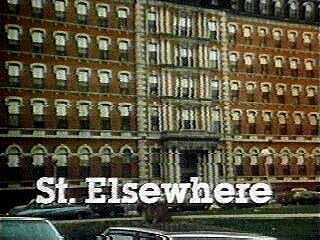
Welcome to Retro Television Reviews, a feature where we review some of our favorite and least favorite shows of the past! On Fridays, I will be reviewing St. Elsewhere, a medical show which ran on NBC from 1982 to 1988.  The show can be found on Hulu!

This week, we get to know a very bad doctor.

Episode 1.3 “Down’s Syndrome”

(Dir by Mark Tinker, originally aired on November 16th, 1982)

St. Eligius is home to several doctors, some of whom are good at their job and some of whom are really, really bad.

One of the bad ones appears to be Dr. Peter White (Terrence Knox), a resident who was in the background during the previous two episodes but who was at the center for a good deal of this episode.  Peter has a terrible bedside manner, absolutely no social skills, and his knowledge of medicine appears to be subpar at best.  When a homeless man comes in and complains of pain, Peter gives him a dose of potassium that nearly kills him.  (Only the quick thinking of Dr. Ehrlich — who himself hardly appears to be the perfect doctor — keeps the patient alive.)  Dr. White seems to be overwhelmed and it certainly doesn’t help that his wife is constantly calling the hospital and demanding to speak to him about every little thing.  That said, it’s hard to have much sympathy for Dr. White.  Yes, he’s overwhelmed but his mistakes nearly kill a man.

I have to admit that, as I watched Dr. Peter White on this week’s episode, I kept thinking about some of the doctors who treated my father after he had his car accident in May.  Whenever I spoke to them, they would brusquely answer my questions, usually in technical language that reflected that it had been a long time since they talked anyone who hadn’t gone to medical school.  At the time, I made the same excuses for them that I just made for Dr. White.  They were young, they were busy, and they were overwhelmed.  After my father died, though, I stopped making excuses for them and I instead just accepted that they weren’t very good at their job.  And perhaps Dr. White should admit the same.

It doesn’t help that Dr. White is contrasted with Dr. Auschlander, a kind and elderly liver specialist who is battling cancer but who still manages to treat all of his patients with kindness and respect.  The episode made it clear that all of the residents should hope to become a doctor like Dr. Auschlander.  While Peter snaps at his patients and nearly kills a man, Auschlander takes the time to play cards with a woman who is dying.  We should all be so lucky as to have an Auschlander in our life.

Finally, Brian Whitehill (Tony Bill) and his pregnant wife, Denise (Maureen Whitehill) are informed that their baby will be born with Down’s Syndrome.  In a scene that brings to mind Icelandic eugenics, Brian suggests that Denise get an abortion but Denise refuses, especially when she learns that she’s going to have a son.  (She already has two daughters.)  A day later, Brian comes home from work and tells Denise that he’s realized that she’s right and he’s prepared to be the father of a special needs child.  Denise replies that she had the abortion earlier in the day.  Seriously, what a depressing story!  That said, I respected what the show was doing here.  The patients are just as important as the doctors.

(And while Denise is getting an abortion, Dr. Morrison is learning that he’s going to be a father and, in contrast to Brian Whitehill, joyfully cheering in the hospital stairwell.)

As with the previous episode, there was a lot going on in the background.  Dr. Beale attempted to analyze terrorist Andrew Reinhardt (Tim Robbins), who is still basically acting like an arrogant prick.  Kathleen McAllister, the victim of Reinhardt’s attack, is still in a coma.  Dr. Westphall gave a tour of the hospital to two community leaders who both suggested that St. Eligius should shut down and move its operations to a wealthier neighborhood.  Dr. Fiscus got a blow job in an elevator from Kathy Martin.  (“Going down?” Fiscus asked the next guy who got on the elevator.)  It was a busy day at the hospital!  It was a good episode, even if it didn’t really have any of the big wow moments that the previous two episodes featured.  This episode was more about following a few days in the life of a hospital and the emphasis was on the nonstop flow of patients and doctors, some of whom were doing their best and some of whom were on the verge of giving up.  In the end, the main thing I took away from this episode was that there may not be enough Aucschlanders to make up for all the Peter Whites.