4 Or More Shots From 4 Or More Films is just what it says it is, 4 shots from 4 of our favorite films. As opposed to the reviews and recaps that we usually post, 4 Shots From 4 Films lets the visuals do the talking!
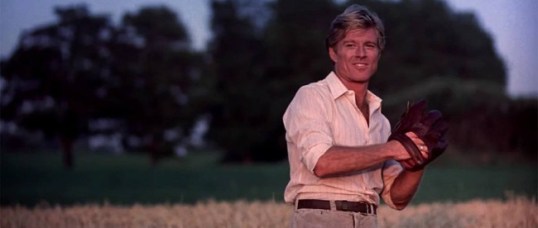
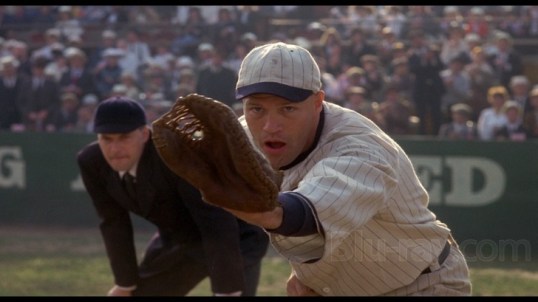
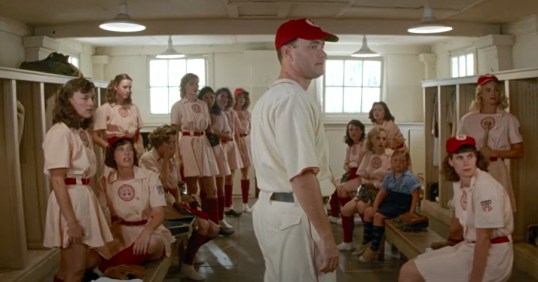
Happy Opening Day! Here are 4 shots from 4 films about my favorite sport!
4 Shots From 4 Baseball Films
The Natural (1984, Dir. by Barry Levinson)
Eight Men Out (1988, Dir. by John Sayles)
A League Of The Own (1992, Dir. by Penny Marshall)
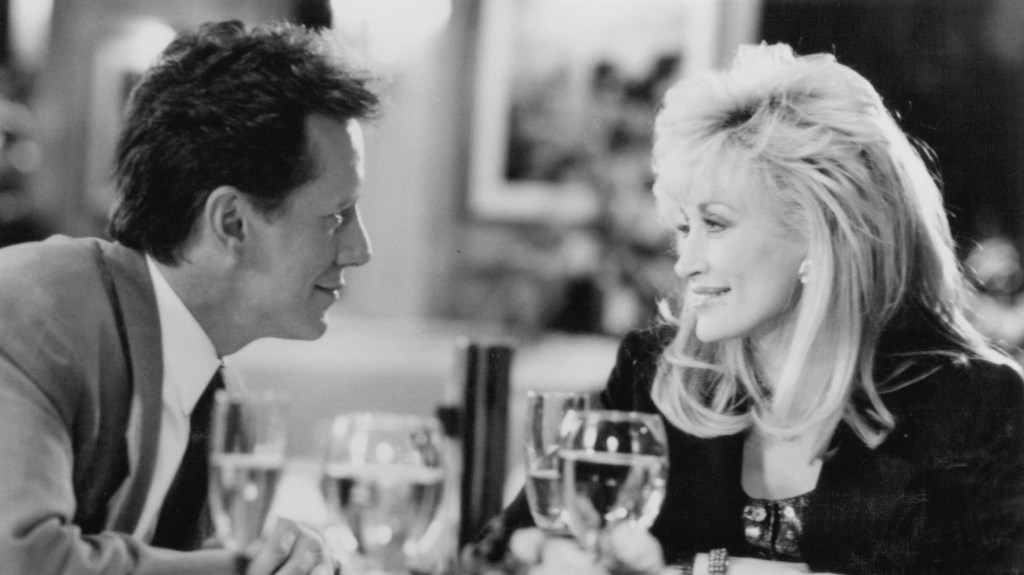
STRAIGHT TALK opens with Shirlee Kenyon (Dolly Parton) having a bad day in the town of Flat River, Arkansas. First, she gets fired from her job at a dance studio because she likes to talk to the customers more about their problems than she does teaching them to dance. Then she goes home to her lazy, unemployed boyfriend Steve (Michael Madsen), who’s more interested in drinking beer and bowling than talking to her. She tells him she wants to leave town and go to Chicago for a fresh start. He heads to the bar, so she packs her bags and heads to the Windy City. Upon arriving, she finds a job as a receptionist at a local radio station. Through a case of mistaken identity that can only happen in the movies, Shirlee finds herself on air as “Dr. Shirlee,” where she begins fielding calls from people with all kinds of problems. With her homespun wisdom, Dr. Shirlee soon finds herself to be the toast of Chicago. Feeling guilty that the station is advertising her as a “Doctor” when she’s not, Shirlee reluctantly continues on when her boss Alan (Griffin Dunne) convinces her she’s a “doctor of the heart.” Alan takes that simple lie and creates an entire fake public identity for Shirlee. When reporter Jack Russell (James Woods), in serious need of a story, senses that something’s not adding up with Dr. Shirlee, he convinces his editor Milo Jacoby (Jerry Orbach) to let him try to get close to the city’s new star to see if he can dig up some dirt. As he gets to know her, however, he’s charmed just like the rest of city and the two begin to fall in love. With Shirlee feeling guilty about being marketed as someone she’s not, and with Jack feeling bad about deceiving her for a scoop, is there any chance that their love can survive when the truth finally comes out?
STRAIGHT TALK is one of those movies that lives or dies based on whether or not you like its stars. This early 90’s romantic comedy was made for Dolly Parton’s fans, of which there are many. She looks beautiful, she has a great wardrobe, she sings the catchy soundtrack tunes, and she dispenses down-home country wisdom in a way that only Dolly can. And then there’s James Woods as the cynical reporter / love interest. Not traditionally handsome or known for his performances in romantic comedies, he brings his unique style to the role, and somehow it really works. As a huge fan of Woods, I may be a little biased, but I think that he has a great chemistry with Dolly. There does seem to be some basis for my claim as the two seemed to really enjoy each other on the set. Dolly has been quoted as saying that he’s “a great kisser” and a “thrill to be around.” Woods recently posted on social media that “Dolly Parton is the nicest person I’ve ever worked with…. She’s everything you imagine and so much more. Anybody who’s ever spent any time with her absolutely adores her.” I think these genuine feelings show through on the screen and provide levels of entertainment that transcend what’s on the pages of the script.
Aside from the excellent chemistry of its leads, STRAIGHT TALK does lean hard into romantic comedy cliches, and honestly that’s okay with me. I enjoyed the familiar plot lines… Will Shirlee become a star in the big city? Will reporter Jack expose her past? Will the two fall in love? Will her old boyfriend Steve show up? Will her “on-air” advice cause some unexpected problems? Well, of course, on all accounts! As these well worn stories play out against the backdrop of an early 90’s movie version of Chicago, I enjoy the movie for what it is, an entertaining fluff piece. The interesting supporting cast (Griffin Dunne, Michael Madsen, Jerry Orbach, John Sayles, Spalding Gray, etc.) do their jobs well, further enhancing my appreciation of the movie.
With all that said, I do recognize that the joy of movies is purely a subjective experience, and if you’re not a fan of Dolly Parton, you probably won’t enjoy STRAIGHT TALK. It’s not a great movie in traditional terms, but it is a great “Dolly Parton” movie. I like Dolly, and I especially enjoy her relationship with James Woods within the film, so this is another one of those movies from my youth that I like to watch every few years. I enjoy it every single time.
BREAKING IN (1989) opens with veteran safecracker Ernie Mullins (Burt Reynolds) pulling a job at a rich guy’s house, only to be surprised when a young, amateurish thief named Mike (Casey Siemaszko) turns up at the same place to raid the fridge. Immediately taking a liking to the kid, Ernie decides to offer Mike a chance to learn his trade. Thus begins a partnership, and odd-couple friendship, where the two men pull a series of jobs together, with Ernie passing on his knowledge to his young protege who seems to be enjoying the sudden influx of cash into this life. Unfortunately, the generation gap causes some problems as Mike doesn’t necessarily take heed to Ernie’s advice to never being too greedy or flashy. Soon, Mike is renting high rise apartments and buying fancy cars with cash. When they pull a big job on the 4th of July, will Mike’s less than frugal ways drag them both down?!
Written by the excellent, independent writer and director John Sayles (MATEWAN, EIGHT MEN OUT) and directed by Scottish director Bill Forsyth (LOCAL HERO), BREAKING IN is a reminder of just how great Burt Reynolds is in the right role. In his 50’s at the time this was filmed, Reynolds gives a relaxed, lived-in, character performance that comes across as effortlessly cool, and he does it without having to rely on his trademark charm and big grin. The late 80’s were a time when Burt was no longer a box office superstar, and BREAKING IN seems to be an unjustly forgotten entry in his hugely successful career. After this, Burt would find TV success on EVENING SHADE, and he’d be nominated for an Oscar for his role in BOOGIE NIGHTS (1997), but his Ernie Mullins stands out to me as one of his last great film roles. Casey Siemaszko is good as Mike, but this is Reynolds’ show and he’s overshadowed even in a solid performance. As far as the other supporting performances, Sheila Kelley stood out to me as a sharp-tongued prostitute who Siemaszko falls in lust with. The poem she shares about a man’s “balls” is a highlight of the film as far as I’m concerned, and further illustrates the quality of Sayles’ screenplay!
I like the way that BREAKING IN feels low-key, even as the characters engage in their various criminal heists. This can be credited to director Bill Forsyth who turns what could have been a standard master / apprentice crime film into something that feels somewhat realistic. The pacing is slow as Reynolds passes on his knowledge, and for some people it may be too slow, but that’s one of the things I really liked about the movie. The two men really get to know each other. That way, when they have disagreements and blow ups a couple of times, they’re still able to respect each other and patch things up. That’s how things are in the real world, as opposed to most movies where a simple disagreement will almost certainly lead to ridiculous consequences. BREAKING IN respects its characters in a way that’s unique to most crime films.
At the end of the day, BREAKING IN is a gem that is at its best as a lighthearted character study of a professional thief whose time is passing him by. Burt Reynolds rarely got to play roles this subtle, and I think he made the most of the opportunity. As a big fan of Reynolds, I highly recommend this one.
1980’s Alligator begins in 1968. While on vacation in Florida, a teenage girl named Marisa Kendall purchases a baby alligator named Ramon. When she returns home to Chicago, her jerk of a father flushes Ramon down the toilet.
12 years pass. Marisa (Robin Riker) becomes a herpetologist. As for Ramon, he actually survives being flushed down the toilet and thrives in the sewer. He eats the carcasses of animals that had been a part of an experiment involving a growth serum. The serum had the desired effect of making the animals bigger but it also increased their metabolism to the extent that they became aggressive and had to eat constantly. Evil industrialist Slade (Dean Jagger) is convinced that, by tossing the carcasses in the sewer, he’s ensured that no one will ever find out about the experiments. Instead, he’s turned Ramon into a giant alligator who is always hungry. Soon, the super-intelligent alligator is ambushing and eating sewer workers.
Burned-out Detective Dave Madison (Robert Forster) teams up with Marisa to solve the mystery of why so many body parts are turning up in the sewers. It’s not easy. No one wants to admit that there might be a giant alligator living under the city. Everyone wants to believe that’s just an urban legend. But, after a tabloid reporter (Bart Braverman) manages to snap a few photographs of Ramon before being devoured, the police are forced to deal with the fact that they’ve got an alligator on their hands. As Slade continues to try to cover up his involvement, big game hunter Colonel Brock (Henry Silva) comes to town and announces that he will be capturing the alligator.
Directed by Lewis Teague and written by John Sayles, Alligator is a dark comedy disguised as a horror film. While numerous people get eaten and the film ends on a properly ominous note, Alligator is obviously not meant to be taken seriously. The cast is full of good actors who send up their own images. That’s especially true in the case of Henry Silva, who appears to be having a blast as the hyper macho Colonel Brock. Robert Forster, meanwhile, delivers his lines with a self-aware weariness that seems a bit more appropriate for a noir hero than a film about a detective investigating a giant alligator. One reason why the film works is because Forster, Silva, and the rest of the cast understood exactly what type of film they were appearing in and they delivered their overheated lines with just enough wit to let the viewer know that the film was in on the joke. The big and somewhat stiff-looking alligator may not look entirely real and it may move somewhat awkwardly but ultimately, it’s the most likable character in the movie. It just wants to relax in the sewers but, every few minutes, someone else is bugging him.
When first released, Alligator struggled at the box office but it has since gone on to become a cult favorite. Quentin Tarantino is a self-described fan and he had said he was inspired to cast Robert Forster as Max Cherry in Jackie Brown after seeing him as Dave Madison in this film. That’s not bad for a movie about a giant alligator!
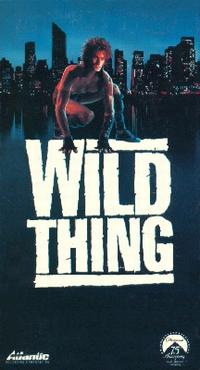
After his hippie parents are murdered by a drug dealer named Cutter (Robert Davi!), a young boy is taken in and raised by a homeless woman (Betty Buckley). The boy eventually grows up to be Wild Thing (Robert Knepper), an urban Tarzan who jumps from rooftop to rooftop at night and who protects the neighborhood for evil doers (like Cutter). A social worker (Kathleen Quinlan) hears the legend of Wild Thing and eventually finds him. She continues his education, explaining to him why people do the “body bump.” Carrying a bow and arrow and accompanied by a surprisingly loyal cat, Wild Thing fights the bad guys and seeks revenge for his parents.
WildThing is one of those movies that should be incredibly bad but somehow it isn’t. John Sayles was one of three writers to work on the script (Sayles was the only one to get credit) and the film has a self-aware sense of humor similar to the scripts that Sayles wrote for films like Alligator, Battle Beyond The Stars, and Piranha. A young Robert Knepper is probably about as convincing as anyone could be as an urban Tarzan who speaks broken English and who carries a bow and arrow as he makes his way across the rooftops of his neighborhood. As always, Robert Davi is a good villain. Davi knows that he’s appearing in a live action comic book and he gives an appropriate performance.
WildThing is a surprisingly enjoyable movie and yes, the song WildThing is heard in the movie but not as much as you might think. There’s a few scenes where the song starts to play and is then cut off, as if the movie is teasing our expectations. I just wish Sam Kinison had been invited to perform his version.
1986’s Something Wild opens with Charlie Driggs (Jeff Daniels) eating lunch in a New York diner.
Charlie is a stockbroker. He wears a suit. He’s quiet and mild-mannered. He just got a promotion at work. He carries a picture of his kids in his wallet. Everything about Charlie shouts that he’s a nice guy who is extremely conventional in his outlook and behavior. But then, Charlie sneaks out of the diner without paying and is spotted by a woman (Melanie Griffith) who says that her name is Lulu.
Dressed in black and with a brunette bob that makes her look like Louis Brooks (and which is later revealed to be a wig), Lulu chases after Charlie. She offers him a ride back to his job, downtown. However, when Charlie gets in the car, Lulu instead speeds off towards New Jersey. Lulu grabs Charlie beeper and throws it away. (I guess that was the 80s equivalent of stealing someone’s phone.) She stops off at a liquor store and robs the place while Charlie unknowingly waits out in the car. She takes him to a motel and, after handcuffing to the bed, has sex with him and calls his office….
And then the film takes an unexpected turn. What started out as one of those NSFW stories that occasionally cropped up on Internet message boards suddenly turns into a quirky slice of Americana. Lulu and Charlie head to Pennsylvania for Lulu’s high school reunion. Lulu reveals that her real name is Audrey and she’s actually blonde. Audrey introduces Charlie to her family as being her husband and Charlie plays along with her. At the reunion, Charlie turns out to be just as skillful a liar as Audrey. But there’s nothing particularly mean-spirited about their lies. Audrey wanted to be able to brag about having a wonderful husband at her reunion and Charlie, whose wife left him for a dentist, wanted to pretend that he was still married and still a regular part of his children’s lives. The reunion itself is a masterful set piece, one in which director Jonathan Demme balances his trademark quirky humor with a genuine love for small town American. With the old school bands playing in front of an American flag, Demme transforms the reunion into a metaphor for everything good about this country. It’s a place where two lonely people can find each other. The weekend may have started out like a middle-aged man’s fantasy but Charlie finds himself falling in love with the real Audrey. It’s very sweet and humorous and it makes you feel good about life in general….
And then Ray shows up and the film takes another unexpected turn. Played by Ray Liotta, Ray is Audrey’s ex-husband. He’s a charmer, as one might expect from a character played by a young Ray Liotta. Ray is friendly with Charlie, telling him stories about how wild Audrey was in high school. It’s only as the night progresses that it becomes obvious that Ray is a sadistic sociopath and he wants Audrey back.
The violence in the film’s second half is a bit jarring. After the good-natured, screwball comedy of the film’s first 50 minutes, it’s shocking to suddenly see Ray pistol-whipping a clerk and then breaking Charlie’s nose. At the same time, meeting Ray allows us to know what it was that attracted Audrey to Charlie. Charlie is the opposite of Ray, a good man who truly cares about other people. Ray is the type of bad boy who is very attractive when you don’t know any better. Charlie is the guy who seems conventional but, underneath it all, turns out to be something wild as well.
Directed by Jonathan Demme, SomethingWild has a good eye for the quirkiness of America. It portrays the world out of New York with love and none of the condescension that tends to show up in so many other road trip movies. Daniels, Griffith, and the much-missed Ray Liotta all gives performance that take the viewer by surprise. None of them are who we originally assume them to be and Griffith’s deconstruction of the type of character who would later be termed a “manic pixie dream girl” is probably her best and most honest performance. Even Ray, for all his violent tendencies, has moments of humanity. Something Wild is a celebration of life, rebellion, and love. Like Charlie and Audrey, it’s more than worth taking a chance on.
4 Or More Shots From 4 Or More Films is just what it says it is, 4 shots from 4 of our favorite films. As opposed to the reviews and recaps that we usually post, 4 Shots From 4 Films lets the visuals do the talking!
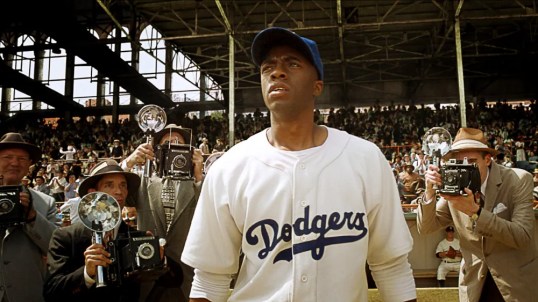
Here are 4 shots from 4 films about my favorite sport!
4 Shots From 4 Baseball Films
Eight Men Out (1988, Dir. by John Sayles)
A League Of The Own (1992, Dir. by Penny Marshall)
42 (2013, Dir. by Brian Hegeland)
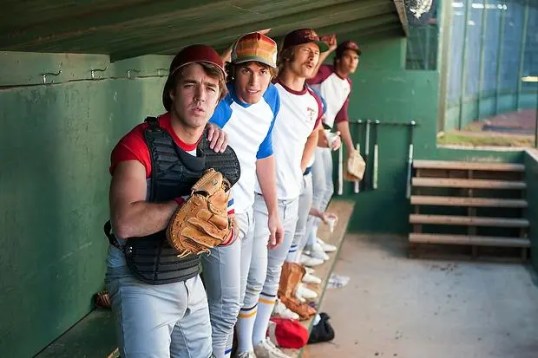
Everybody Wants Some!!! (2016, Dir. by Richard Linklater)
The 1981 film, The Howling, takes place at The Colony.
The Colony is a lovely place, a nice resort out in the middle of the countryside. It’s a place that celebrity therapist George Waggener (Patrick Macnee) sends his clients so that they can recover from trauma. It’s a bit of a grown-up version of the ranch to which Dr. Phil used to send juvenile delinquents. Of course, the Colony is full of adults and they’re an eccentric bunch. I mean, one of them — named Erle Kenton — is actually played by John Carradine! That’s just how eccentric the place is. Sheriff Sam Newfield (Slim Pickens) keeps an eye on the place but everyone knows that there’s nothing to worry about when it comes to The Colony. Dr. Waggner does good work.
Karen White (Dee Wallace) is a Los Angeles news anchor who was held hostage by a serial killer named Eddie Quist (Robert Picardo). While she was with Eddie, she was forced to not only watch videos of Eddie’s crimes but she also saw something happen with Eddie that terrified her to such an extent that she has blocked it from her mind. Karen was rescued by the police but she is haunted by nightmares. Dr. Waggner arranges for Karen and her husband, Bill Neill (Christopher Stone, who was married to Dee Wallace when they co-starred in this film), to spend some time at the Colony.
Bill loves the Colony, especially after he attracts the eye of Marsha (Elisabeth Brooks), the resort’s resident seductress. Karen, however, is less enamored of the place. The Colony feels off to her and she’s not happy about the howling in the distance or the fact that Bill has suddenly started to grow distant from her. Could it be that The Colony is actually crawling with werewolves and that Bill has become one of them? (It’s totally possible and, to The Howling‘s credit, it doesn’t waste any time letting us know that.) Karen’s friend, Terry Fisher (Belinda Balanski), and her boyfriend, Chris Halloran (Dennis Dugan), do some research of their own into Eddie Quist, The Colony, and whether or not werewolves exists and they meet a helpful bookstore owner named Walter Paisley (Dick Miller).
To understand the approach that director Joe Dante and screenwriter John Sayles take to The Howling, one needs to only consider the names of some of the characters. George Waggner. Bill Neill. Terry (which can be short for Terence) Fisher. Fred (or is that Freddie) Francis. Erle Kenton. Sam Newfield. Jerry Warren. All of these characters are named after horror film directors. This is the type of werewolf film where Chris Halloran has a copy of The Three Little Pigs sitting on his desk. Veteran actors like Kevin McCarthy, John Carradine, Slim Pickens, and Kenneth Tobey show up in small roles. Roger Corman mainstay Dick Miller plays yet another character named Walter Paisley and he kicks Forrest J. Ackerman out of his bookstore. Roger Corman himself plays a man making a phone call. After a werewolf is shot on live TV, the program immediately cuts to a dog food commercial and we see a blank-faced child telling his unconcerned parents that someone just turned into a wolf. The Howling was made by people who obviously love B-horror and that love is present in every frame of the film.
Like Dante’s Piranha, The Howling is a film with a sense of humor but it’s not a comedy. The werewolves are still impressive, even forty-two years after the film was first released. The character of Eddie Quist (“I’m going to give you a piece of my mind”) is a terrifying monster and the sight of his signature smiley face will fill you with dread, especially when it shows up in a place where it really shouldn’t be. The film cynically ends on a note of noble sacrifice that will apparently not make much difference, with the suggestion being that human beings are either too distracted or too jaded to realize that there are monsters among them. The Howling is a fast-paced and well-directed homage to B-horror and it’s still terrifically entertaining.
I have to admit that I’m not really a huge fan of Bruce Springsteen or his working class posturing. (At this point, the majority of the people who he sings about will never be able to actually afford to see him in concert.) But I will acknowledge that the people who like Bruce Springsteen tend to really, really, really like him. And there’s something to be said for that.
Anyway, I picked today’s music video of the day because I watched Airlast night and I was really impressed by Jason Bateman’s monologue about how few people actually listen to Born in the USA‘s rather dark lyrics. This video was directed by John Sayles, another person who has made a career out of claiming to be the voice of the working class.
At the height of the Vietnam War, the U.S. Government came up with a plan that could have changed the course of the war.
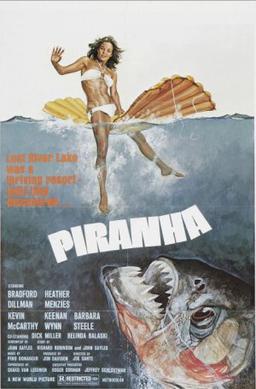
What if the government developed gigantic, super-fast, occasionally jumpy piranha? And what if they set those killer fish loose in the rivers of Vietnam? Would those fish swim through North Vietnam and take out the VC? Sadly, the war ended before the government got a chance to test out Operation Razorteeth. With the war over, the government was stuck with a bunch of killer fish. Scientist Robert Hoak (Kevin McCarthy) ignored all orders to destroy his mutant fish because they were his life’s work. (Awwwwwwwww!) He kept an eye on them and did everything he could to prevent them from getting into the nearby river.
Unfortunately, Dr. Hoak’s best wasn’t good enough. Because the piranha have gotten loose and now they’re making their way down to the river! They start out eating skinny dipping teenagers, fisherman, and Keenan Wynn. (They’re good enough not to eat Wynn’s adorable dog, which I appreciated.) Further down the river, there’s a summer camp and a water park! It’s definitely not safe to get back in the water but sadly, that’s what several people insist on doing throughout this film. Even when the water is full of blood, people will jump in. (It’s easy to be judgmental but it is a pretty river. I don’t swim but I honestly wouldn’t mind living near a river that looked that nice. Instead, I have to make due with a creek.)
Floating down the river on a raft and trying to warn everyone is the unlikely team of Maggie (Heather Menzies) and Paul (Bradford Dillman). Maggie is a detective who has come to town to track down the two teenage skinny dippers who were eaten at the start of the film. Paul is a drunk. Well, technically, Paul is a wilderness guide and he does spend the entire movie wearing the type of plaid shirt that would only be worn by someone who goes camping every weekend but really, Paul’s main personality trait seems to be that he enjoys his booze. Paul’s daughter is away at the summer camp. Yes, that’s the same summer camp that’s about to be visited by a school of piranha. AGCK!
Produced by Roger Corman and obviously designed to capitalize on the monster success of Jaws, Piranha was an early directorial credit for Joe Dante. Dante would later go on to direct films like The Howling and Gremlins. Piranha was also an early screenwriting credit for the novelist John Sayles, who would use his paycheck to launch his own directing career. As a director, Sayles specializes in politically-themed ensemble pieces, which is something you might not guess while watching Piranha. (Piranha does have an anti-military subplot but then again, it’s a film from the 70s so of course it does.) Like the best of Corman’s film, Piranha works because it sticks to the basics and it delivers exactly what it promises. Piranha promises killer fish biting away at anyone dumb enough to get in the water and that’s what it gives us. As an added bonus, we also get some occasionally witty dialogue and Joe Dante’s energetic, self-aware direction.
As is typical with the films of both Corman and Dante, the cast is full of familiar faces. Along with Kevin McCarthy as the mad scientist and Keenan Wynn as the eccentric fisherman, Dick Miller shows up as the waterpark owner. Richard Deacon, who made a career of playing bosses and neighbors on various sitcoms in the 50s and 60s, plays the father of a missing teenager. Director Paul Bartel plays the head of the summer camp, who may be a jerk but who still heroically jumps in the water to save several campers. (Bartel’s moment of heroism is one of Piranha’s best scenes and, significantly, it’s played without irony. You’ll want to cheer for the guy.) Finally, the great Barbara Steele plays the government scientist who shows up to clean up Operation Razorteeth.
Piranha is simple but entertaining. Dante’s direction is energetic and, despite the film’s self-referential tone, the killer fish are just savage enough to be scary. It’s a film that tell us not to get back in the water but which understands that the temptation might just be too strong.


 Through the Shattered Lens