1976’s The Cassandra Crossing opens with a shot of the headquarters of the World Health Organization in Geneva, Switzerland. Though the film (and the shot) may be from the 70s, one look at the ugly brutalism of the WHO’s headquarters is all it takes to understand the mentality that, nearly 50 years later, would lead to the organization serving as China’s mouthpiece during the COVID pandemic.
Three Swedish terrorists attack the American mission at the WHO. One of them is killed by a guard. Another immediately falls victims to an unidentified disease that is apparently a new form of the Bubonic plague. The third (Lou Castel) escapes and boards a train that is heading for Sweden. Two Americans, Col. MacKenzie (Burt Lancaster) and Major Stack (John Phillip Law), and Swedish doctor Elena Stadner (Ingrid Thulin), try to figure out how to stop the spread of the infection.
While the infected terrorist lurches around the train, the passengers go through their own personal dramas. Renowned neurologist Jonathan Chamberlain (Richard Harris) flirts with his ex-wife, writer Jennifer Rispoli (Sophia Loren). Wealthy Nicole Dressler (Ava Gardner, whose voice sounds like a cigarette ad) boards the train with her heroin-addicted younger boyfriend, Robby Navarro (a long-haired, dark glasses-wearing Martin Sheen, acting up a storm and apparently having a lot of fun for once). Herman Kaplan (Lee Strasberg) is a regular on the train, a Holocaust survivor who enjoys a good chess game with the conductor, Max (Lionel Stander). Haley (OJ Simpson) is a narcotics agent who is disguised as a priest. Susan (Ann Turkel) is the hippie who just wants to have sex with her boyfriend (Ray Lovelock) but who keeps getting interrupted by other passengers. When she complains about already having had to already deal with one “sweaty pervert” during the day, Chamberlain replies, “Which sweaty pervert?” By this point, Chamberlain knows about the infected man and is trying to track him down before he can infect anyone else on the train.
The Cassandra Crossing is several films in one. It’s an all-star disaster film. It’s medical thriller. Once Col. MacKenzie decides that the best way to deal with the train (and to cover-up the fact that America was researching germ warfare) would be to send the train over the infamous Cassandra Crossing, an unstable bridge that is on the verge of collapse, it becomes a conspiracy thriller. It’s all a bit ludicrous, though in this post-pandemic age, there is definitely a renewed power to the images of Hazmat suit-wearing soldiers carrying submachine guns and threatening to kill anyone who resists going into quarantine. When it comes to films that make Hazmat suits look menacing, The Cassandra Crossing can proudly stand with George Romero’s The Crazies and Zombi 3.
Of course, with any disaster film, the real purpose of the movie is to gather together a collection of familiar faces and then allow the viewer to spend two hours trying to guess who will survive and who will not. The cast is full of actors who all probably deserved a better script. Richard Harris, Burt Lancaster, and Ingrid Thulin all look somewhat embarrassed. Ava Gardner and Martin Sheen fully embrace the melodrama. In fact, it’s hard for me to think of any other movie where Sheen actually seemed to be having as much fun as he does while playing the drug-addicted, prone-to-histrionics mountain climber in The Cassandra Crossing. As was typical of his film career, O.J. Simpson gives a very earnest performance. He’s not exactly good but it’s obvious that he’s trying really hard and it would make him likable if not for the fact that he’s O.J. Simpson, just 20 years away from getting away with murder. Out of the ensemble cast, Lionel Stander, Lee Strasberg, and Sophia Loren are the one who probably come the closest to actually giving good performances. Loren’s husband, Carlo Ponti, produced the film with Sir Lew Grade and Loren gives a performance that is blessed with the confidence of knowing her career had survived far worse than The Cassandra Crossing.
The Cassandra Crossing is the epitome of a film that’s not necessarily good but which is definitely entertaining. Between the drama-stuffed plot and the overwritten dialogue and the performances of Gardner and Sheen, it’s campy in the way that only an overproduced 70s disaster film can be. For certain viewers, there’s undoubtedly a lot of joy to be found in the scenes in which the passengers finally start to stand up to the authoritarians trying to force them into quarantine. That said, this is one of those films where we’re not meant to get particularly upset about hundreds of innocent people dying just because the main characters managed to come through unscathed. The film’s ending is right up there with Man of Steel as far as needless destruction is concerned. Fortunately, the ending also features some terrible miniature shots, all of which remind us not to take it all too seriously.
To paraphrase another 70s film: “Forget it, Jake. It’s The Cassandra Crossing.“
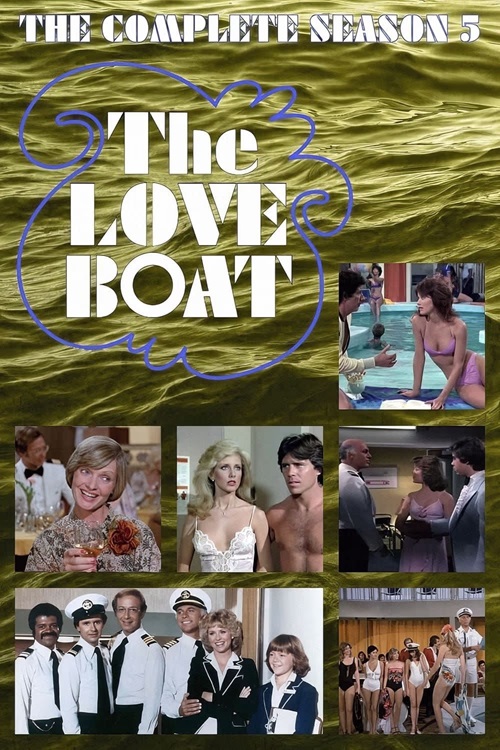
Welcome to Retro Television Reviews, a feature where we review some of our favorite and least favorite shows of the past! On Wednesdays, I will be reviewing the original Love Boat, which aired on ABC from 1977 to 1986! The series can be streamed on Paramount Plus!
This week, Julie wears a wig!
Episode 5.16 “Green, But Not Jolly/Past Perfect Love/Instant Family”
(Dir by Richard Kinon, originally aired on January 30th, 1982)
“Where’s Julie?” Captain Stubing demands and he’s got good reason. The Love Boat is only a few minutes away from setting sail. The passengers are checking in and being given directions to their cabins. And yet, Julie McCoy — the cruise director — is nowhere to be seen!
Fire him, Captain! Seriously, she’s been erratic this entire season and she seems to have a permanent cold so it’s time to get a new cruise director.
Julie shows up at the last minute. She reveals that she’s late because she went to see her hair dresser. And now, she’s a platinum blonde! She says that she’s proud of her new look. The rest of the crew pretends to like it. As for those of us watching, it’s hard not to notice that Julie is actually just wearing a very obvious wig.
Watching this episode, I couldn’t help but think about the fact that, according to a documentary about the show that I recently watched on Tubi, Lauren Tewes was dealing with a fairly serious cocaine problem during the fifth season. I don’t say that suggest anything bad about Lauren Tewes. From what I’ve read, cocaine was everywhere in the 80s and she’s hardly the only performer from the time to get into trouble with it. (Tewes, it should be noted, went to rehab and cleaned herself up.) Instead, I point that out because a lot of Julie’s actions during the fifth season seem as if they’re best explained by Julie being under the influence. The moodiness, the impulsivity, the fact that she suddenly doesn’t seem to be all that focused on her job, I think Julie had a problem! Her hair isn’t platinum blonde. It’s cocaine white!
Gopher eventually works up the courage to tell her that her new hair color is not flattering. (And, to be honest, he’s right.) Gopher gives her some hair dye that he picked up — uh oh! — and Julie uses it — JULIE, WHAT ARE YOU DOING!? — and she wakes up the next morning with green hair. Julie spends the rest of the cruise in her cabin while the rest of the crew feels guilty. Even Vicki has a hard time talking to Julie with her green hair. Then the rest of the cruse decides to die their hair green in solidarity with Julie, just to discover hat Julie’s hair has gone back to its natural color….
Yeah, it’s silly but I kind of enjoyed the storyline. I like stories about the crew and the members of the cast had enough chemistry that they could even carry a story as silly as this one. They’re a fun group to watch.
As for the other two stories, Lynda Day George boards the ship with her hyperactive son (a young Corey Feldman). She meets a high school coach (John Philip Law) who is not scared by her son. This was a predictable story but I’m a horror fan and an Italian movie fan so seeing George, Feldman, and Law interacting made up for any narrative flaws.
The third story starred Bert Convy and Tanya Roberts and it was about reincarnation. I don’t believe reincarnation, mostly because people who claim to remember their past lives never remember anything boring. Instead, they always remember being members of French royalty or the mistress of a Spanish pirate. As for this story, Convy lies and tries to convince Roberts that they were lovers in a past life. But then he has black-and-white visions of a chandelier falling on Roberts. Maybe they were once lovers at another time! Honestly, who cares?
This was an above average cruise. I’m glad Julie finally took off that wig.
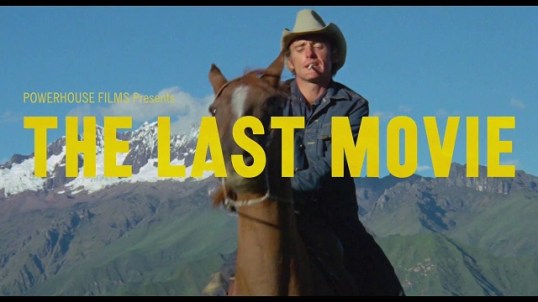
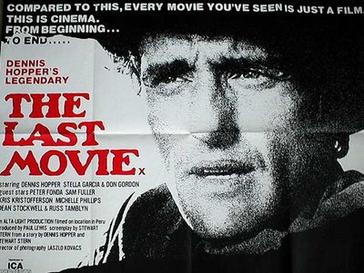
The story behind the making of 1971’s The Last Movie is legendary. It’s also a bit of a cautionary tale.
In 1969, Hollywood was stunned by the box office success of an independent, low-budget counter-culture film called Easy Rider. Easy Rider not only made a star out of Jack Nicholson but it was also the film that finally convinced the studios that the way to be relevant was not to continue to crank out big budget musical extravaganzas like Doctor Doolittle and Hello, Dolly! Instead, it was decided that the smart thing to do would be to hire young (or, at the very least, youngish) directors and basically just let them shoot whatever they wanted. The resulting films might not make much sense to the executives but, presumably, the kids would dig them and as long as the kids were paying money to see them, everyone would continue to get rich. Because Dennis Hopper had directed Easy Rider, he suddenly found himself very much in demand as a director.
Of course, almost everyone in Hollywood knew Dennis Hopper. Long before he became an icon of the counter-culture, Dennis Hopper had been a part of the studio system. John Wayne even referred to Hopper as being his “favorite communist.” Everyone knew that Dennis could be a bit arrogant. Everyone knew that Dennis was very much into drugs and that, as a result, he had a reputation for being a bit unstable. Everyone knew that Dennis Hopper deliberately cultivated an image of being a bit of a wild man and a revolutionary artist. But Dennis Hopper had just directed Easy Rider and Universal was willing to give Hopper some money to go down to Peru and direct his follow-up.
The Last Movie was a film that Hopper had been planning on making for a while. The film’s original script told the story of an aging and broken-down stuntman named Kansas who retires to Mexico and searches for a gold mine with a friend of his. Hopper first tried to get the film going in 1965, with Montgomery Clift in the lead role. After Clift died, Hopper tried to interest John Wayne in the starring role but, though Wayne enjoyed having Hopper in his films so that he could threaten to shoot him whenever Abbie Hoffman said something shocking, he had no interest in being directed by him. When Universal finally agreed to put up the money for the film, Hopper offered the lead role to Jack Nicholson. Nicholson turned it down and told Hopper that it was obvious that Dennis wanted to play the role himself. Dennis decided that he agreed with Nicholson and he cast himself as Kansas. Dennis also made the fateful decision to not only change the story’s setting to Peru but to also film on location.
Dennis and a group of friends flew down to Peru, which, at that time, was the cocaine capitol of the world. Drug use was rampant on the set, with Dennis reportedly being one of the main offenders. The cast and crew filmed during the day and partied at night and no one was particularly sure what the film was supposed to be about. Amazingly, Hopper finished filming on schedule and within budget but, much as he did with Easy Rider, he also overfilmed and ended up with 40 hours of footage. Not wanting to be bothered by the studios, Hopper edited the footage in his compound in Taos, New Mexico. Working slowly and continuing to consume a large amount of drugs and alcohol, Hopper still managed to put together a film that had a straightforward storyline. When Hopper showed his initial cut to filmmaker Alejandro Jodorowsky, the director of El Topo accused Hopper of being too conventional in his approach, which led to Hopper chopping up the film and reassembling it. Finally, after spending over a year working with the footage, Hopper turned in his final edit.
Universal had no idea what to make of the film that Hopper delivered to them. Still, they released it with the hope that the same crowd that loved Easy Rider would embrace The Last Movie. While the film did win an award at the Venice Film Festival, critics hated it and, even worse, audiences stayed away. The film’s reception was so overwhelmingly negative that Hopper found himself largely exiled from Hollywood, with only a few directors (like Francis Ford Coppola) willing to take the chance of working with him. It wasn’t until the 80s, when he finally got clean and sober, that Dennis Hopper was able to reestablish himself as a character actor and, ultimately, a beloved cultural institution.
But what about The Last Movie? Was is it really as bad as the critics claimed? Or was it, as some more recent reviewers have suggested, an unacknowledged masterpiece that was ahead of its time? I recently watched The Last Movie to find out for myself.
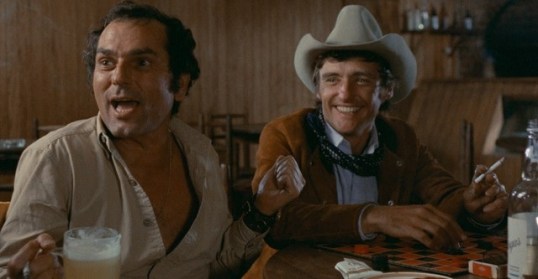
Despite its reputation, The Last Movie gets off to a pretty strong start. Samuel Fuller (playing himself) is directing a hilariously over-the-top and violent western in the mountains of Peru. Kansas (Dennis Hopper) is working as a stuntman. He’s fallen in love with a local sex worker named Maria (Stella Garcia). Kansas is meant to be an aging Hollywood veteran, someone who has broken a lot of bones and who carries a lot of aches as a result of his line of work. (One can see why Hopper initially imagined an actor like John Wayne in the role.) He knows that this is going to be his last job and, as we see over the first 25 minutes of the film, he feels alienated from the rest of the cast and crew. Admittedly, Hopper does appear to be a bit too young for the role. The ideal Kansas would have been someone like Ben Johnson, L.Q. Jones, or perhaps Warren Oates. But, still, Hopper does a good job of capturing Kansas’s mixed feelings about the western that’s being filmed around him.
A lot of familiar faces pop up in the film’s fictional western. Dean Stockwell plays an outlaw. Jim Mitchum, Russ Tamblyn and Kris Kristofferson plays his associates. Peter Fonda is the youthful sheriff. Michelle Phillips is the daughter of the town’s banker and apparently, she’s also the girlfriend of one of the outlaws. We watch as the actors pretend to shoot guns and kill each other while the cameras are rolling, just to get up off the ground once “Cut” is yelled. When a local Indian who has been cast as an extra grows upset at the violence, an assistant director explains to him that no one really dies while the cameras are rolling. When shooting wraps, the film company goes home but Kansas stays behind with Maria. One day, the local priest (Tomas Milian) warns Kansas that the local indigenous people have moved into the abandoned film set and are trying to shoot their own movie. Kansas discovers that they have built wooden cameras and wooden boom mics and that their chief is giving orders in the style of Sam Fuller. They’re also firing the guns that the Americans left behind.
The first part of the film works quite well. Hopper’s camera captures the beautiful and isolated Peruvian landscape. The violent western is a pitch perfect and affectionate parody of a generic studio film. Though Hopper is a bit too young for the role, he still does a good job of capturing Kansas’s alienation from his fellow Americans. Even more importantly, the first part of the film seems to have an identifiable theme. The American film crew invaded an isolated part of Peru and changed the culture of the natives without even realizing it. Now, they’ve left but the natives are still dealing with the after effects of the American “invasion.” It’s easy to see, within that part of the story, a critique of both American culture and American foreign policy.
The second part of the film is where things start to fall apart. Kansas meets an old friend named Neville (Don Gordon). Neville has discovered a gold mine in the Peruvian mountains. With Kansas as his partner, he tries to get a businessman named Harry Anderson (Roy Engel) to invest in it. Kansas and Neville try to impress Harry and his wife (Julie Adams, best-known for being stalked by The Creature From The Black Lagoon). Kansas and Neville take the Andersons to a brothel and, in the process, Kansas offends Maria. Kansas then paws Mrs. Anderson’s fur coat and mentions that human beings are covered in hair. For all of their efforts, Harry will not invest, no matter how desperately Neville begs him to reconsider.
The second part of the film drags, with many of the scenes being obviously improvised between Hopper, Gordon, Garcia, Engel, and Adams. Unfortunately, the improved conversations aren’t particularly interesting and they tend to go on forever. Usually a reliable character actor, Don Gordon ferociously chews the scenery as Neville and it doesn’t take long before one grows tired of listening to him yell. (Gordon was far more impressive in Hopper’s Out of the Blue.) With the use of improvisation and overlapping dialogue, the second half of the film tries to feel naturalistic but instead, it’s a migraine-inducing method exercise gone wrong. It’s also during the second part of the film that a “scene missing” title card flashes on the screen, an indication that the discipline that Hopper showed as a director during the beginning of the film is about to be abandoned.
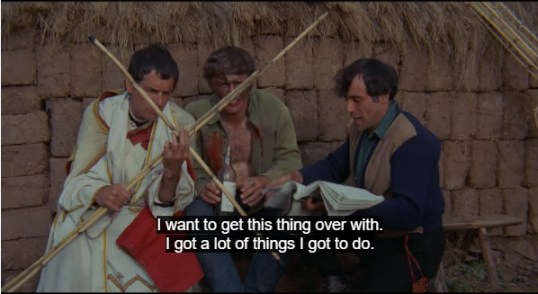
Finally, the third part of the film — well, who knows? The final 25 minutes of the film is collection of random scenes, some of which may be connected and some of which may not. The natives have decided that the only way to properly end their “film” is to kill Kansas. Kansas is shot several times and rides away on his horse. Suddenly, Kansas is back at his home and Maria is taunting him for getting shot. Then, Kansas is riding his horse again. Then suddenly, Dennis Hopper and Tomas Milian are laughing at the camera. A script supervisor tries to get Dennis to look at the shooting schedule while Dennis drinks. This happens:
Milian points out that the blood on Hopper’s shirt is dry. Hopper looks at his shoulder, where Kansas was previously shot, and says that someone needs to add his scar before he can shoot the scene. Ah! So, now we’re acknowledging that it’s all just a movie. Thanks, Dennis! Suddenly, Dennis is Kansas again and he’s collapsing over and over again in the dust. He appears to be dead but no, now he’s Dennis again and he’s standing up and smiling at the camera. And now, he’s singing Hooray for Hollywood. And now, suddenly, Kansas and Neville are talking about The Treasure of the Sierra Madre and then….
Well, let’s just say that it goes on and on before finally ending with a scrawled title card.
It’s a disjointed mess and it’s all the more frustrating because the first 30 minutes of the film is actually pretty good. But then, Dennis apparently remembered that he was supposed to be the voice of the counter-culture and he gave into his most pretentious impulses. Of course, just because a film is a mess, that doesn’t mean that it can’t be entertaining. And again, the first part of the film is entertaining and third part of the film is weird enough that it’ll hold most people’s attention for at least a few minutes. But the middle section of the film is so slow and pointless that it pretty much brings down the entire film.
In the end, what is The Last Movie about? In The American Dreamer(a documentary that was filmed while Hopper was editing The Last Movie in New Mexico), Hopper spends a lot of time talking about revolution and taking over Hollywood but The Last Movie is hardly a revolutionary film. The film is at its most alive when it is focused on the shooting of its fictional western. For all the satirical pokes that The Last Movie takes at the studio system, it’s obvious that Hopper had a lot of affection for Old Hollywood and for directors like Sam Fuller. Kansas may say “Far out,” but he’s hardly a hippie. Even the film’s jumbled finale seems to be saying, “It’s all Hollywood magic!” In the end, the film’s call for a new style of cinema is defeated by its love for the old style of cinema.
Instead, I think The Last Movie works best when viewed as a portrait of paranoia. Hopper himself admitted that he was naturally paranoid and the heavy amount of drugs that he was doing in the 70s didn’t help. One reason why Hopper filmed in Peru and edited in New Mexico was so the studios couldn’t keep track of him and, while directing, he worried about being arrested by the Peruvian secret police. As an actor, Hopper plays Kansas as being someone who views the world with caution and untrusting eyes. He doesn’t trust the other members of the film crew. He loves Maria but he’s still convinced that she’s going to betray him. Even the natives ultimately try to destroy him and the script supervisor tries to get him to stick to the shooting schedule. The film works best as a disjoined portrait of one man’s paranoid and fatalistic world view.
The Last Movie pretty much ended the studio’s attempts to harness the counter-culture by giving money to self-described revolutionaries. The new wave of directors — like Spielberg and Lucas — may have shared Hopper’s then-politics but they weren’t looking to burn down the system. (Hopper himself later became a Republican.) The Last Movie may not have been the literal last movie but it was, for a while at least, the last of its kind.
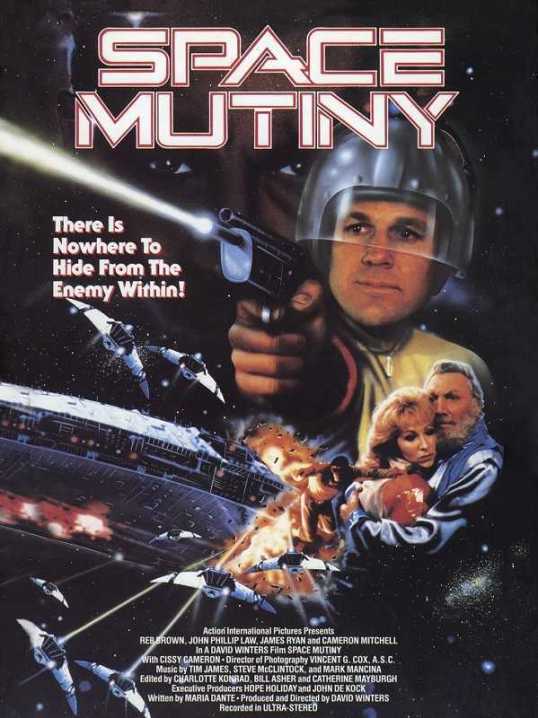
Space Mutiny, a sci-fi epic from 1988, is full of dialogue about all sorts of political and philosophical concerns but none of it is quite as memorable as the quote above. Dave Ryder says, “Argggggh!” a lot over the course of Space Mutiny. He’s the newly appointed head of security for the Southern Sun, a gigantic spaceship that has spent the last 260 years traveling from Earth to a new planet. Being head of security is important because there are some people on the Southern Sun who are plotting a mutiny. Dave Ryder decides that the most effective way to battle the mutineers is to yell loudly and frequetly. “ARGGGGGH!’ Ryder yells whenever he’s being shot at. “ARGGGGGGGH!” he screams when he finds himself on a very slow and gradual collision course with the head of the mutineers.
When Dave isn’t saying stuff like, “Argggggh!,” he’s saying stuff like, “Go! Go! Go!” When the bad guys open fire on him and his men, it’s time for them to “Go! Go! Go!” When the mutineers are being chased, Dave is quick to tell everyone to “Go! Go! Go!” He’s like the physical fitness trainer from Hell. He never actually yells “Feel the burn!” but you can be damn well sure that he’s thinking it. In fact, there’s a point in the movie where “Feel the burn!” actually would have been a good line. Dave and his girlfriend, Lea (Cissie Cameron), set a mutineer on fire. It’s actually a bit of a sadistic scene and it doesn’t come across as being the big hero moment that it’s obviously meant to be. But, then again, Dave isn’t yelling because he’s a nice guy. He’s yelling because he’s played by Reb Brown. Reb Brown yelled all the way through Strike Force Commando. Why wouldn’t he do the same for Space Mutiny?
Of course, Dave isn’t the only person barking out orders on the Southern Sun. Cameron Mitchell plays the ship’s captain, a wise old man who looks like Santa Claus. John Phillip Law is Kalgon, the main mutineer. He laughs a lot. Cissie Cameron is the captain’s daughter. She falls for Ryder, despite the fact that she appears to be old enough to be Ryder’s mother. (In real life, Reb Brown and Cissie Cameron are married and Cissie is only a few years older than Reb. In Space Mutiny, she’s stuck with an unflattering hair style and is made up to look like an aging cheerleading coach.) There’s also a woman who works on the ship’s bridge. She’s killed in one scene, just to mysteriously turn up alive in the scene that follows. In space, no one can hear the script supervisor. Finally, there’s a group of alien witches who board the ship and spend the entire movie dancing in front of a ball of electricity. Since they don’t actually interact with any of the main characters, it’s obvious that they were added to pad out the film’s running time.
One of the more interesting things about Space Mutnity is that Kalgon actually has a point. It does seem kind of stupid to spend several hundred years traveling to just one planet when there’s other planets nearby that the ship could just as easily reach. Indeed, the mission of the Southern Sun never makes that much sense and the Captain seems to be delusional in his insistence that it does. The Captain’s unending faith and his long-flowing beard makes him come across like a minor biblical prophet, the type who always had to ask a major prophet to interpret his visions for hm. The Captain does not come across like someone who really knows what he’s doing. I don’t care how much Ryder screams, Kalgon had a point!
Today, Space Mutiny is best known for being featured on an episode of Mystery Science Theater 3000 and for later being taken apart by the Rifftrax crew. Space Mutiny, though, is such an extremely silly movie that you really don’t even need any professionals to help you snark your way through it. The film offers up such a treasure trove of material then even the most humorless among your friends will be a comedic genius by the time it ends. It’s a fun movie, made even more so by the fact that the filmmakers apparently meant for the film to be taken seriously. There’s a lot of talk about important issues like freedom, duty, and faith. In the end, what you’ll remember is the screaming.
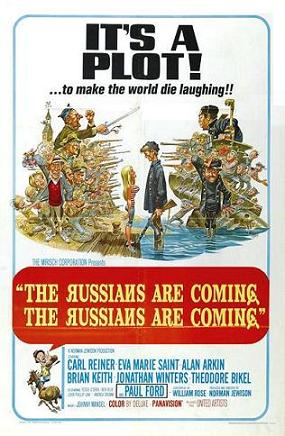
Earlier tonight, I watched a 1966 film called The Russians Are Coming, The Russians Are Coming.
It’s a cheerful comedy about what happens when the captain (played by Theodore Bikel) of a Russian submarine decides that he wants to take a look at the United States. Though he was only planning to look at America through a periscope, he accidentally runs the submarine into a sandbar sitting near Gloucester Island, which itself sits off the coast of Massachusetts. The captain sends a nine man landing party, led by Lt. Yuri Rozanov (a youngish Alan Arkin, making his film debut and receiving an Oscar nomination for his efforts), to the island. Their orders are simple. Yuri and his men are too either borrow or steal a boat that can be used to push the submarine off the sandbar. If they run into any locals, they are to claim to be Norwegian fisherman.
Needless to say, things that don’t quite go as planned. The first Americans that Yuri and his men meet are the family of Walt Whitaker (Carl Reiner), a vacationing playwright. Walt’s youngest son immediately identifies the Norwegian fisherman as being “Russians with submachine guns.” When Walt laughingly asks Yuri if he’s a “Russian with a submachine gun,” Yuri produces a submachine gun and promptly takes Walt, his wife (Eva Marie Saint), and his children hostage.
Yuri may be a Russian. He may officially be an enemy of America. But he’s actually a pretty nice guy. All he wants to do is find a boat, keep his men safe, and leave the island with as little drama as possible. However, the inhabitants of the island have other plans. As rumors spread that the Russians have landed, the eccentric and largely elderly population of Gloucester Island prepares for war. Even as Police Chief Mattocks (Brian Keith) and his bumbling assistant, Norman Jonas (Jonathan Winters), attempt to keep everyone calm, Fendall Hawkins (Paul Ford) is organizing a militia and trying to contact the U.S. Air Force.
Meanwhile, Walt’s babysitter, Allison (Andrea Dromm) finds herself falling in love with one of the Russians, the gentle Alexei Kolchin (John Phillip Law).
As I said at the start of this review, The Russians Are Coming, The Russians Are Coming is a cheerful comedy, one with a rather gentle political subtext, suggesting that the majority of international conflicts could be avoided if people got to know each other as people as opposed to judging them based on nationality or ideology. There’s a rather old-fashioned liberalism to it that probably seemed quite daring in 1966 but which feels rather quaint today. Sometimes, the comedy gets a bit broad and there were a few times that I found myself surprised that the film didn’t come with a laugh track. But overall, this is a well-acted and likable little movie.
As I watched The Russians Are Coming, The Russians Are Coming (and, as someone who is contractually obligated to use a certain number of words per review, allow me to say how much I enjoyed the length of that title), I found myself considering that the film would have seemed dated in 2013 but, with all the talk of Russian hacking in the election and everything else, it now feels a little bit more relevant. Not a day goes by when I don’t see someone on twitter announcing that the Russians are coming. Of course, if the film were released today, its optimistic ending would probably be denounced as an unacceptable compromise. Peaceful co-existence is no longer as trendy as it once was.
Another interesting thing to note about The Russians Are Coming, The Russians are Coming: though the film was written by William Rose (who also wrote another example of mild 1960s feelgood liberalism, Guess Who’s Coming To Dinner), it was based on a novel by Nathaniel Benchley. Benchley was the father of Peter Benchley, the author of Jaws. It’s easy to see the eccentrics of Gloucester Island as distant cousins of the inhabitants of Amity Island.
As previously stated, The Russians Are Coming, The Russians Are Coming was nominated for best picture but it lost to the far more weighty A Man For All Seasons.


 Through the Shattered Lens